
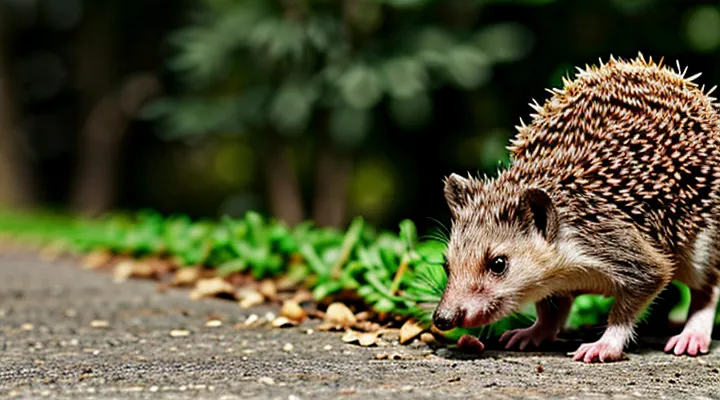
Understanding Hedgehog Natural Diet
Insectivores at Heart
Primary Food Sources in the Wild
Hedgehogs in natural habitats rely principally on invertebrates. Their diet consists chiefly of earthworms, beetles, slugs, and caterpillars, which provide the protein and moisture required for growth and reproduction. Small vertebrates occasionally supplement this intake; however, the frequency of such predation remains low.
- Earthworms: most abundant prey, high in protein.
- Beetles and larvae: diverse species, readily captured.
- Slugs and snails: source of calcium.
- Ants and termites: opportunistic consumption.
- Occasional vertebrates: includes small rodents such as mice, but these represent a minor proportion of overall food consumption.
Field observations confirm that mouse predation occurs sporadically, usually when larger invertebrate supplies are scarce. The energetic cost of capturing a mammal often outweighs the nutritional benefit, limiting mice to an incidental rather than primary food source.
Nutritional Needs and Adaptations
Hedgehogs are insectivorous mammals whose digestive system is optimized for small, protein‑rich prey. Their stomach secretes strong acids that rapidly break down exoskeletons, while a short intestinal tract limits fermentation of fibrous material. Consequently, the diet must supply adequate protein, essential amino acids, and moderate fat to sustain metabolic demands and thermoregulation.
Key nutritional components include:
- Protein (30‑40 % of dry matter): Derived from insects, worms, and occasional vertebrate tissue. Provides amino acids necessary for muscle maintenance and immune function.
- Fat (5‑10 % of dry matter): Supplies energy for nightly foraging and hibernation preparation. Insects contribute variable lipid levels; supplemental insect oil can balance deficits.
- Calcium and phosphorus (ratio ≈ 1.2 : 1): Essential for skeletal health; insects contain low calcium, so calcium‑rich supplements are required.
- Vitamins A, D, and E: Support vision, calcium metabolism, and antioxidant defenses. Natural sources include beetles and moths; commercial hedgehog mixes often fortify these vitamins.
Adaptations enable hedgehogs to exploit opportunistic prey such as small rodents. Their sharp incisors can penetrate soft flesh, and their flexible jaws accommodate varying prey sizes. However, vertebrate meat lacks the chitinous exoskeleton that stimulates gastric acid production, potentially reducing digestive efficiency if it dominates the diet. Occasional mouse consumption supplies additional protein and fat but must be balanced with insect intake to maintain optimal gut flora and nutrient absorption.
In captivity, replicating wild nutritional patterns involves offering a diverse insect roster (crickets, mealworms, beetles) supplemented with calcium powder and occasional vertebrate treats. Monitoring body condition and adjusting proportions prevents obesity, calcium deficiency, and gastrointestinal upset.
Opportunistic Foraging Behavior
Seasonal Variations in Diet
Hedgehogs adjust their food intake according to the seasonal availability of prey. In spring, abundant earthworms, beetle larvae, and newly hatched insects dominate the menu. Small mammals, including juvenile mice, are rarely encountered because rodent populations have not yet peaked.
Summer brings a surge of flying insects—midges, flies, and moths—providing high‑protein resources. Hedgehogs increase foraging activity during warm nights, focusing on these abundant arthropods. Occasional capture of mice occurs when ground‑dwelling rodents are active, but insects remain the primary source of calories.
Autumn marks the decline of insect abundance. Hedgehogs shift toward more resilient prey such as slugs, snails, and larger arthropods that persist into cooler weather. Rodent activity rises as mice store food and increase movement, offering hedgehogs a supplemental protein source. Small mouse captures become more frequent, supplementing the reduced insect intake.
Winter imposes scarcity of most invertebrates. Hedgehogs enter a state of reduced metabolic demand, relying on stored body fat and occasional opportunistic feeding. When thaw periods expose ground insects or when mice seek shelter in hedgerows, hedgehogs may capture them, but overall intake is minimal.
Typical seasonal diet composition:
- Spring: earthworms, beetle larvae, springtails; occasional juvenile mice.
- Summer: flying insects (midges, moths), beetles; rare mouse prey.
- Autumn: slugs, larger beetles, spiders; increased mouse opportunism.
- Winter: limited insects, occasional mouse captures during warm spells.
The pattern reflects hedgehogs’ opportunistic feeding strategy, with mouse consumption rising when invertebrate supplies dwindle, particularly in late autumn and mild winter intervals.
Impact of Habitat on Food Availability
Hedgehogs occupy a range of environments, from dense woodlands to suburban gardens. Each habitat determines the abundance of insects, worms, and small vertebrates that constitute their diet. Consequently, the likelihood of a hedgehog capturing a mouse varies with local prey density.
- Forest floor with rich leaf litter: high in earthworms and beetle larvae; mouse presence low, making rodents a rare supplement.
- Agricultural margins with hedgerows: moderate insect populations; occasional field mice increase the chance of rodent consumption.
- Urban parks and gardens: diverse invertebrate sources; resident mouse populations can rise during winter, providing occasional protein sources for hedgehogs.
- Coastal dunes with sparse vegetation: limited invertebrate diversity; small mammal activity may be the primary protein source when insects are scarce.
Seasonal shifts amplify habitat effects. Spring and summer promote insect breeding, reducing reliance on vertebrate prey. Autumn and winter depress invertebrate activity, prompting hedgehogs to expand their diet to include available mice if present.
Overall, habitat structure directly influences the spectrum of food items hedgehogs encounter. Environments that support abundant invertebrate communities limit the necessity for mouse predation, whereas habitats with reduced invertebrate biomass increase the probability that hedgehogs will supplement their diet with small mammals.
Do Hedgehogs Eat Mice? Dispelling the Myth
Hedgehog Predatory Capabilities
Hunting Techniques and Limitations
Hedgehogs locate prey primarily through acute olfactory sense. At night, they follow scent trails left by insects, worms, and small vertebrates. Their short, sturdy limbs enable quick, low‑profile sprints across leaf litter, allowing them to seize unsuspecting organisms before they retreat. When a potential target is detected, the hedgehog uses its sharp teeth to deliver a swift bite, often targeting the neck or head to immobilize the animal. The animal’s spines provide defensive protection during close encounters, discouraging larger predators from interfering.
Key hunting techniques
- Scent tracking to pinpoint hidden prey.
- Rapid, ground‑level pursuit in low‑visibility conditions.
- Precise biting to subdue small vertebrates.
- Use of spines for self‑defense while feeding.
Limitations constrain the range of prey hedgehogs can successfully capture. Their small mouth opening restricts the maximum size of consumable animals; rodents larger than a typical field mouse exceed this threshold. Digestive physiology favors high‑protein, low‑fat insects; processing mammalian muscle tissue requires longer gastric retention, reducing feeding efficiency. Additionally, nocturnal activity reduces encounters with diurnal rodents, and the hedgehog’s limited visual acuity impairs detection of fast‑moving vertebrates. Consequently, while occasional consumption of small mice occurs, it remains an infrequent component of the hedgehog’s diet.
Preferred Prey Size
Hedgehogs are opportunistic feeders that select prey according to size, shape, and ease of handling. In the wild, the typical prey range falls between 2 cm and 6 cm in length, corresponding to insects, worms, and small vertebrates that can be swallowed whole or broken into manageable pieces. Items larger than 6 cm often exceed the animal’s gape and present a risk of injury, leading hedgehogs to avoid them.
- Invertebrates such as beetles, caterpillars, and earthworms usually measure 1–5 cm and constitute the bulk of the diet.
- Small vertebrates, including juvenile rodents, are rarely taken; they generally exceed the preferred size threshold.
- Occasionally, a hedgehog may attempt a mouse of 5–7 cm, but success depends on the mouse’s age and condition, and the effort required often outweighs the nutritional benefit.
Overall, hedgehogs demonstrate a clear preference for prey that fits within a narrow size window, prioritizing items that can be processed quickly and safely. This preference explains why mice are not a common component of their regular diet.
Dietary Habits and Observed Behavior
Scavenging vs. Active Predation
Hedgehogs encounter small vertebrates primarily through two feeding strategies: opportunistic scavenging of dead or weakened prey and deliberate hunting of live animals. Scavenging requires minimal energy expenditure; the animal locates carrion using scent and consumes readily available tissue. Active predation involves detection, pursuit, and subjugation of live prey, demanding coordination of sensory cues, rapid movement, and the use of sharp teeth to overcome defenses.
-
Scavenging:
- Relies on olfactory detection of decay.
- Provides nutrient‑dense protein with low risk of injury.
- Occurs sporadically, depending on availability of dead rodents.
-
Active predation:
Field observations and stomach‑content analyses show that hedgehogs more frequently ingest mouse carcasses than capture live mice. When live rodents are pursued, success rates are lower, reflecting the animal’s morphological adaptation for foraging on invertebrates rather than sustained vertebrate hunting. Consequently, scavenging represents the dominant method by which hedgehogs acquire mammalian protein, while active predation remains a secondary, occasional behavior.
Rare Instances and Misinterpretations
Hedgehogs occasionally capture small rodents, but documented cases are scarce. Field observations report isolated incidents where a hedgehog seized a juvenile mouse, typically weighing less than 10 g. Such events occur in habitats where insect prey is depleted, prompting opportunistic predation. The predatory act involves the hedgehog using its snout to grasp the mouse and delivering a quick bite to immobilize it.
Common misconceptions stem from anecdotal reports and misidentified prey. Frequently, owners mistake shredded food or carcasses of insects for mouse remains, leading to the belief that rodents form a regular part of the diet. Misinterpretation also arises when hedgehogs transport dead insects in their mouths; observers may assume the animal is handling a mouse. Clarifying these errors requires careful examination of stomach contents or fecal analysis, which consistently show insects as the dominant food source.
- Verified mouse consumption: < 5 % of examined stomach samples.
- Situational trigger: reduced insect availability.
- Primary misinterpretation source: visual confusion with insect carcasses.
Why the Misconception Persists
Cultural References and Folklore
Hedgehogs surface repeatedly in myth and literature, often linked to their feeding habits. Traditional tales describe the animal as an insectivore, yet some narratives attribute predatory behavior toward small mammals.
- In European folklore, Aesop’s fable “The Hedgehog and the Snake” emphasizes the hedgehog’s defensive spines rather than its diet, but later medieval bestiaries list mice among its prey.
- British folk songs occasionally reference hedgehogs “snatching mice from barns,” reflecting agrarian concerns about rodent control.
- Russian proverbs describe the hedgehog as “the night’s gardener,” implying consumption of garden pests, while also noting occasional mouse captures.
Asian traditions offer parallel motifs. Chinese mythological texts portray the hedgehog as a guardian of grain stores; the creature’s appetite is said to include insects and, on rare occasions, field mice that threaten crops. Japanese haiku frequently liken the hedgehog’s nocturnal foraging to a silent hunter, without specifying prey type.
Contemporary media perpetuates mixed images. Children’s picture books depict hedgehogs munching on worms, yet animated series sometimes show them chasing mice for comic effect. Film adaptations of classic fairy tales occasionally include a scene where a hedgehog swallows a mouse, reinforcing the ambiguous cultural perception.
Overall, cultural references oscillate between portraying hedgehogs as strict insect eaters and attributing occasional mouse consumption, illustrating the fluid nature of folklore regarding the animal’s diet.
Similarities with Other Small Mammals
Hedgehogs primarily consume insects, worms, and other invertebrates, yet they also capture vertebrate prey when opportunities arise. Their opportunistic feeding strategy aligns with several other diminutive mammals that share overlapping habitats.
- Both hedgehogs and shrews frequently ingest small vertebrates, including juvenile rodents, alongside their invertebrate intake.
- Voles and field mice exhibit omnivorous tendencies, supplementing seed and plant consumption with occasional animal protein, mirroring hedgehog flexibility.
- All these species possess high metabolic rates that demand frequent meals, prompting swift response to transient prey such as mice.
- Their nocturnal or crepuscular activity patterns increase encounters with similarly active rodent populations.
- Dental morphology, though varied, supports the processing of both soft-bodied insects and the tougher tissue of small mammals.
These parallels underscore a common ecological niche: small mammals that prioritize protein-rich resources while retaining a broad dietary spectrum to adapt to fluctuating prey availability.
The Dangers of Feeding Incorrect Foods
Health Risks of Unsuitable Diet
Digestive Issues and Illnesses
Hedgehogs primarily consume insects, but occasional ingestion of small vertebrates such as mice occurs in the wild and in captivity. When a hedgehog eats a mouse, the digestive system is exposed to different challenges than those presented by its usual prey.
Potential complications include:
- Parasite transmission (e.g., tapeworms, roundworms) from the mouse’s tissue.
- Bacterial infection caused by pathogens like Salmonella or Listeria.
- Mechanical obstruction if bone fragments are not adequately broken down.
- Nutritional imbalance due to excess protein and fat relative to the hedgehog’s dietary requirements.
Clinical signs of gastrointestinal distress manifest as vomiting, watery or tarry stool, reduced fecal output, abdominal swelling, and loss of appetite. Persistent symptoms warrant veterinary examination, as untreated conditions can progress to dehydration, electrolyte disturbances, or septicemia.
Preventive strategies focus on diet management and health monitoring:
- Offer commercially formulated hedgehog food supplemented with insects, fruits, and vegetables.
- Provide pre‑killed, appropriately sized mouse meat only under veterinary guidance.
- Conduct regular deworming and parasite screening.
- Observe daily feeding behavior and stool consistency; intervene promptly at the first indication of abnormality.
Adhering to these practices minimizes the risk of digestive disorders associated with the occasional consumption of mice.
Nutritional Deficiencies
Hedgehogs require a diet high in protein, low in fat, and balanced with vitamins A, D, E, and B‑complex, as well as minerals such as calcium, phosphorus, and iron. Commercial insect‑based foods and occasional fresh insects meet most of these needs, while supplemental fruits and vegetables provide essential micronutrients.
Mice, when offered, supply protein and fat comparable to insects but lack sufficient calcium and vitamin D. Relying on rodents as a primary food source can lead to:
- Calcium deficiency, manifested by brittle spines and weakened muscles.
- Vitamin D shortage, resulting in poor calcium absorption and skeletal abnormalities.
- Imbalanced omega‑3 to omega‑6 fatty acids, increasing inflammation risk.
Observing a hedgehog’s coat condition, activity level, and skeletal health helps identify deficiencies early. Corrective actions include:
- Adding calcium‑rich supplements (e.g., crushed cuttlebone) to meals.
- Providing vitamin D sources such as fortified cat food or regulated sunlight exposure.
- Balancing fat intake with insect protein and limiting mouse portions to occasional treats.
Ensuring a varied diet that prioritizes insect protein, supplemented with appropriate vitamins and minerals, prevents the nutritional gaps associated with regular rodent consumption.
Promoting a Healthy Hedgehog Environment
Recommended Foods for Wild Hedgehogs
Wild hedgehogs thrive on a diet that mirrors the natural prey they encounter in gardens, woodlands, and hedgerows. Providing food that reflects this variety supports their health, immune function, and reproductive success.
- Invertebrates: earthworms, beetle larvae, slugs, and snails. Rich in protein and essential fatty acids, they form the core of a wild hedgehog’s intake.
- Insects: crickets, mealworms, and grasshoppers. Offer high‑quality protein and are easily digested.
- Molluscs: small, live or freshly killed mussels and clams. Supply calcium and trace minerals.
- Fruits: apples, berries, and sliced pears. Provide vitamins and antioxidants; serve as occasional supplements rather than staples.
- Vegetables: carrots, peas, and pumpkin. Contribute fiber and micronutrients; serve in modest portions.
- Nuts and seeds: unsalted sunflower seeds and hazelnuts. Deliver healthy fats; limit quantity to avoid digestive overload.
Feeding should occur at dusk, aligning with the hedgehog’s nocturnal activity. Offer small, fresh portions each night and remove uneaten items before sunrise to prevent spoilage and attract predators. Seasonal adjustments are advisable: increase insect availability in spring and summer, and supplement with higher‑energy foods such as nuts during autumn when hedgehogs accumulate fat reserves for winter.
Avoid processed foods, dairy products, raw meat, and sugary treats. These items can cause gastrointestinal distress, obesity, or metabolic disorders. While hedgehogs are capable of consuming small rodents, such prey is not a primary component of a wild diet and should not be relied upon as a regular food source.
Creating a Safe and Supportive Habitat
A well‑designed enclosure provides the foundation for a hedgehog’s health and natural behavior. Proper dimensions, secure ventilation, and stable temperature reduce stress and prevent injury.
The enclosure should measure at least 90 × 60 cm for a single adult, with a minimum height of 45 cm. Continuous airflow prevents respiratory problems; a temperature range of 22‑26 °C maintains metabolic efficiency. Provide a lockable lid to protect against escape and predators.
Key interior elements include:
- A deep layer of dust‑free, absorbent bedding (e.g., shredded paper) for burrowing.
- Multiple hideaways such as wooden boxes, cork tunnels, or overturned pots.
- A solid, non‑slippery floor area for climbing and exercise.
- A shallow water dish refreshed daily.
Dietary planning must reflect the hedgehog’s carnivorous nature while ensuring safety. Primary foods are high‑protein insects (crickets, mealworms), earthworms, and commercially formulated hedgehog pellets. Small mammals, including mouse carcasses, can be offered occasionally, but only if sourced from reputable suppliers that guarantee freedom from parasites and diseases. Wild‑caught mice pose a significant health risk and should never be introduced.
Regular cleaning of bedding, feeding dishes, and hideouts eliminates bacterial buildup. Observe the animal for signs of digestive upset, weight loss, or respiratory distress, and adjust habitat conditions promptly. Monitoring these parameters sustains a secure, supportive environment that aligns with the species’ nutritional needs.