
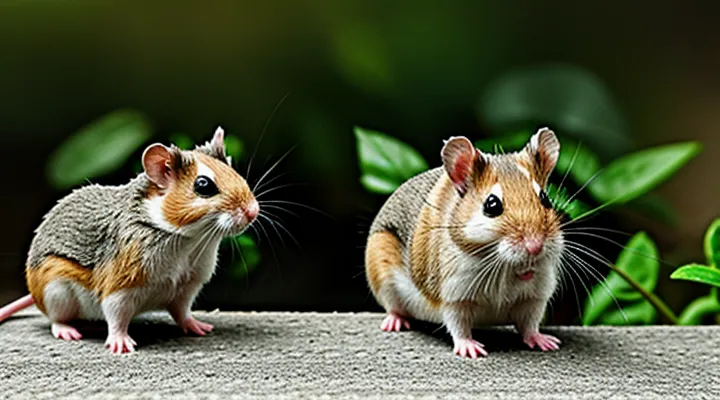
Understanding the Common Misconception
The Visual Similarities
Hamsters and mice share several outward characteristics that often lead to misidentification. Both belong to the order Rodentia, yet their external morphology displays distinct patterns.
- Body length: hamsters typically measure 8–18 cm, while mice range from 6–10 cm; overlap occurs in smaller hamster species.
- Fur texture: hamsters possess dense, coarse fur; mouse fur is finer and softer.
- Coloration: both exhibit brown, gray, or black hues, but hamsters frequently show dorsal striping or mottling absent in most house mice.
- Tail: mice have long, hairless tails proportionate to body length; hamsters feature short, stubby tails often concealed by fur.
- Ears: mouse ears are proportionally larger and more exposed; hamster ears are smaller, rounded, and partially covered by hair.
- Facial structure: hamsters display a broader, more robust skull with pronounced cheek pouches; mice present a slender skull and lack such pouches.
These visual cues, while overlapping in size and coloration, provide reliable criteria for distinguishing the two rodents in field observations and taxonomic assessments.
Key Distinctions: Hamsters vs. Mice
Size and Body Shape
Hamsters measure between 5 cm and 15 cm in body length, depending on species; common pet varieties such as the Syrian hamster average about 12–15 cm. Mice range from 6 cm to 10 cm, but their tail adds another 6–10 cm, giving a total length often exceeding that of a hamster.
- Body build: hamsters possess a compact, stocky torso with a low center of gravity; mice display a slender, elongated frame.
- Tail: hamsters have a vestigial tail, typically under 2 cm, covered with fur; mice have a long, hairless tail that can be equal to or longer than the body.
- Ears: hamster ears are rounded and relatively small, set low on the head; mouse ears are larger, pointed, and positioned higher.
- Cheek pouches: hamsters feature expandable cheek sacs used for food transport; mice lack such structures.
These morphological differences support the classification of hamsters as a distinct rodent family rather than a subgroup of mice. The size range and body architecture align hamsters more closely with other members of the subfamily Cricetinae, separating them from the Murinae lineage that includes typical mice.
Tail Length and Appearance
Hamsters possess tails that differ markedly from those of typical mice. The average hamster tail measures between 1 cm and 3 cm, often appearing as a short, fleshy appendage covered with sparse, hair‑like bristles. In contrast, mouse tails generally extend 7 cm to 10 cm and display a thin, naked surface with a uniform fur coat.
Key morphological traits of hamster tails:
- Length: 1–3 cm, rarely exceeding 4 cm.
- Shape: Rounded, slightly thicker at the base, tapering to a blunt tip.
- Surface: Covered with fine, wiry hairs; skin may show a pinkish hue.
- Visibility: Often concealed beneath the animal’s fur, giving the impression of a virtually tailless body.
Mouse tail characteristics:
- Length: 7–10 cm, proportionally longer relative to body size.
- Shape: Cylindrical, uniformly slender.
- Surface: Mostly naked, with a thin layer of short hair along the dorsal side.
- Visibility: Prominent, used for balance and thermoregulation.
These distinctions support the classification of hamsters as a separate taxonomic group rather than a subcategory of mice. The reduced, bristled tail reflects adaptations to a burrowing lifestyle, whereas the elongated, bare mouse tail aligns with an arboreal and exploratory niche.
Cheek Pouches: A Hamster's Unique Feature
Cheek pouches distinguish hamsters from most rodents, providing a storage system that influences feeding behavior and ecological adaptation. The pouches are expandable extensions of the oral cavity, lined with a thin mucous membrane and capable of inflating to volumes equal to the animal’s body size. When foraging, a hamster can gather seeds, grains, and insects, then seal the pouches to transport food to a safe location for consumption or caching.
Key characteristics of hamster cheek pouches include:
- Muscular walls that contract to expel contents rapidly.
- A dorsal opening that closes with a tight, flap‑like seal, preventing loss of material.
- Independent control of each side, allowing simultaneous loading and unloading.
- Ability to maintain moisture balance, protecting delicate seeds from desiccation.
These features support the hamster’s classification as a distinct taxonomic group rather than a subtype of mouse. The specialized pouch system reflects evolutionary divergence, aligning hamsters with the subfamily Cricetinae, which shares this adaptation. Comparative anatomy shows that typical mice lack comparable oral extensions, reinforcing the separation at the species level.
In captivity, cheek pouch health serves as an indicator of overall well‑being. Overfilling can cause stretching or rupture, while blockage may lead to infection. Proper diet management and regular observation of pouch condition are essential for maintaining the animal’s physiological integrity.
Overall, cheek pouches represent a unique morphological trait that contributes to hamsters’ feeding efficiency, predator avoidance, and taxonomic identity. Their presence underscores the species’ distinct evolutionary path within the rodent order.
Behavioral Differences
Hamsters exhibit distinct behavioral patterns that separate them from typical murine species. Their activity peaks during nighttime, while most mice display crepuscular or diurnal tendencies. This nocturnal orientation influences feeding schedules, exploration, and interaction with the environment.
Social organization diverges sharply. Hamsters are fundamentally solitary, establishing exclusive territories and defending them aggressively when other individuals approach. In contrast, many mouse species maintain flexible social structures, ranging from loose colonies to cooperative breeding groups.
Key behavioral differences include:
- Burrowing depth – Hamsters construct extensive underground chambers, often extending several feet, whereas mice create shallow nests or use existing cavities.
- Food storage – Hamsters amass sizable caches of seeds and grains within cheek pouches before depositing them in dedicated hoarding sites; mice typically consume food shortly after acquisition.
- Grooming frequency – Hamsters perform meticulous self‑grooming multiple times per hour, reducing parasite load; mice groom less frequently and rely more on communal nesting for hygiene.
- Territorial aggression – Hamsters display pronounced defensive actions, such as biting and lunging, when intruders breach their burrow; mice exhibit milder avoidance behaviors and may retreat rather than confront.
- Exploratory drive – Hamsters explore their surroundings methodically, often following established tunnel networks; mice tend to exhibit rapid, erratic movements when navigating new terrain.
The Scientific Classification of Hamsters
Kingdom, Phylum, Class, Order
Hamsters belong to the animal kingdom, a group defined by multicellular, eukaryotic organisms that ingest organic material for energy.
They are placed in the phylum Chordata, characterized by a dorsal nerve cord, a notochord, and, in most members, a vertebral column.
Within this phylum, hamsters are classified as mammals (class Mammalia), distinguished by hair, three middle ear bones, and mammary glands that produce milk for offspring.
Their order is Rodentia, a large group of gnawing mammals possessing continuously growing incisors.
- Kingdom: Animalia
- Phylum: Chordata
- Class: Mammalia
- Order: Rodentia
These hierarchical categories separate hamsters from mice at the order level, confirming that they are distinct species within the rodent lineage.
Family: Cricetidae
Subfamily: Cricetinae - The True Hamsters
The subfamily Cricetinae comprises the true hamsters, a distinct lineage within the family Cricetidae. Members of this group share a set of morphological and genetic traits that separate them from other rodent families, such as Muridae, which includes true mice and rats.
Key characteristics of Cricetinae include a stout body, short tail, large cheek pouches extending to the shoulders, and a dental formula of 1.0.0.3/1.0.0.3. These features, combined with a chromosome number ranging from 22 to 44, provide reliable criteria for taxonomic identification.
Genera recognized within Cricetinae are:
- Cricetulus – dwarf hamsters of arid regions
- Mesocricetus – larger species such as the Syrian hamster
- Phodopus – dwarf hamsters native to Central Asia
- Tscherskia – the Chinese hamster, the sole member of its genus
- Mesocricetulus – a monotypic genus with the Golden hamster
Phylogenetic analyses based on mitochondrial and nuclear DNA place Cricetinae as a sister clade to the subfamily Arvicolinae (voles and lemmings). Divergence estimates suggest that the hamster lineage separated from murid rodents approximately 15–20 million years ago, a timeframe supported by fossil records of early cricetine forms.
Ecologically, cricetine hamsters occupy a range of habitats from deserts to temperate grasslands. Their omnivorous diet, nocturnal activity pattern, and burrowing behavior reflect adaptations that have facilitated successful colonization across Eurasia and, through human-mediated introduction, into other continents.
Genera and Species of Hamsters
Syrian Hamster («Mesocricetus auratus»)
Syrian hamsters (Mesocricetus auratus) belong to the order Rodentia, family Cricetidae, subfamily Cricetinae, and are the sole domestic representative of the genus Mesocricetus. Their taxonomic position separates them from the true mice, which reside in the family Muridae, genus Mus, and related genera.
Key distinctions between Syrian hamsters and mice include:
- Family affiliation: Cricetidae (hamsters) vs. Muridae (mice).
- Genus: Mesocricetus (hamsters) vs. Mus and related genera (mice).
- Dental formula: 1.0.0.3/1.0.0.3 in hamsters; 1.0.0.3/1.0.0.3 in mice, but enamel thickness and cusp patterns differ markedly.
- Chromosome count: 2n = 44 in Syrian hamsters; 2n = 40 in common house mice.
- Body size: Adult Syrian hamsters reach 15–18 cm in length; typical house mice average 7–10 cm.
- Tail morphology: Hamsters possess a short, stubby tail (1–2 cm); mice have a long, hairless tail proportional to body length.
- Reproductive cycle: Syrian hamsters are seasonal breeders with estrous cycles averaging 4 days; mice breed year‑round with estrous cycles of 4–5 days.
Genetic analyses confirm that the divergence between Cricetinae and Muridae occurred approximately 12–15 million years ago, supporting the classification of hamsters as a separate lineage rather than a subgroup of mice. Consequently, Syrian hamsters represent a distinct species with unique morphological, genetic, and reproductive characteristics that justify their placement outside the mouse clade.
Dwarf Hamsters («Phodopus», «Cricetulus», «Allocricetulus», «Tscherskia»)
Dwarf hamsters belong to several distinct genera within the subfamily Cricetinae, each characterized by specific morphological and genetic traits. The genus Phodopus includes the most widely kept dwarf species, such as the Campbell’s dwarf hamster (Phodopus campbelli) and the Winter White dwarf hamster (Phodopus sungorus). These animals exhibit a compact body, short tail, and a skull structure that separates them from true mice (family Muridae).
-
Cricetulus – represented chiefly by the Chinese hamster (Cricetulus griseus), this genus displays a slightly larger size than Phodopus and a longer tail proportion. Genetic analyses place it firmly within the hamster clade, distinct from murid rodents.
-
Allocricetulus – the narrow‑banded dwarf hamster (Allocricetulus curtatus) exemplifies this group, featuring a narrow cranial width and a pelage pattern unique among dwarf hamsters. Molecular phylogeny confirms its affiliation with Cricetinae rather than with Mus or Rattus genera.
-
Tscherskia – the long‑tailed dwarf hamster (Tscherskia triton) possesses the longest tail of any dwarf hamster, approaching the length of some mouse species. Despite this similarity, dental formulae and chromosomal counts align it with hamster taxonomy.
Collectively, these genera illustrate the diversity within dwarf hamsters and reinforce their classification as a separate lineage from murid rodents. Their distinct skeletal morphology, genetic markers, and reproductive biology provide clear criteria for taxonomic separation, supporting the view that dwarf hamsters constitute a unique group within the hamster family rather than a subset of mice.
The Classification of Mice
Family: Muridae
The family Muridae comprises the true mice, rats, gerbils, and related rodents. It is the largest mammalian family, containing over 700 species distributed worldwide. Members share several diagnostic characteristics:
- Dental formula I 1/1, C 0/0, P 0/0, M 3/3, with continuously growing molars.
- Skull morphology featuring a narrow rostrum and a well‑developed infraorbital foramen.
- Tail length generally equal to or exceeding body length, often covered with scales.
Hamsters do not belong to Muridae. They are classified within the family Cricetidae, subfamily Cricetinae. This placement reflects distinct anatomical and genetic traits:
- Dental pattern includes a single pair of incisors and three molar rows, but occlusal enamel differs from Muridae.
- Skull exhibits a broader rostrum and a reduced infraorbital foramen.
- Tail is short, often hidden beneath fur, contrasting with the long, scaly tails of murids.
The taxonomic hierarchy for a common hamster is:
Order Rodentia → Superfamily Muroidea → Family Cricetidae → Subfamily Cricetinae → Genus Mesocricetus → Species M. auratus (Syrian hamster).
In contrast, the house mouse follows:
Order Rodentia → Superfamily Muroidea → Family Muridae → Subfamily Murinae → Genus Mus → Species M. musculus.
Thus, while hamsters and mice share the superfamily Muroidea, their family-level classification diverges, confirming that hamsters constitute a separate lineage from true mice.
Subfamily: Murinae - The Old World Mice and Rats
The subfamily Murinae comprises the Old World mice and rats, a diverse group within the family Muridae. Members share a set of morphological traits: a dental formula of 1.0.0.0/1.0.0.0, elongated incisors, and a well‑developed auditory bulla. Their distribution spans Europe, Asia, and Africa, extending to many islands where they have been introduced.
Key genera include:
- Mus – true mice, widespread in temperate zones.
- Rattus – true rats, notable for species such as R. rattus and R. norvegicus.
- Apodemus – field mice, prevalent in forested habitats.
- Micromys – dwarf mice, specialized for grassland microhabitats.
Ecologically, murine species occupy a range of niches, from agricultural fields to urban environments. They exhibit rapid reproductive cycles, high population turnover, and adaptive foraging behavior, which contribute to their success as commensal and pest organisms.
In taxonomic terms, hamsters belong to the subfamily Cricetinae, not Murinae. This distinction rests on differences in cranial structure, chromosome number, and phylogenetic analyses that place hamsters outside the Old World mouse‑rat lineage. Consequently, while both groups are rodents, they represent separate evolutionary branches within the order Rodentia.
Evolutionary Paths and Ancestry
Divergent Evolution
Hamsters and mice share a common ancestor that lived millions of years ago. Over time, populations adapted to different ecological niches, leading to separate evolutionary pathways. This process exemplifies divergent evolution, where related lineages acquire distinct traits while retaining a shared genetic foundation.
Genetic analyses reveal that hamster lineages diverged from murine ancestors roughly 20–25 million years ago. The separation is evident in chromosomal counts, mitochondrial DNA sequences, and specific gene families related to metabolism and sensory perception. These molecular differences support classification of hamsters as a distinct family, Cricetidae, rather than as members of the Muridae family that includes true mice.
Morphological distinctions reinforce the genetic evidence. Key features include:
- Robust, cheek‑pouch development for food storage.
- Shorter tail length, often absent in many hamster species.
- Larger, more rounded ears adapted for arid habitats.
- Dental patterns with broader incisors suited for grinding seeds.
Behavioral adaptations also diverge. Hamsters exhibit solitary, nocturnal activity patterns and store food for extended periods, whereas many mouse species display social structures and continuous foraging.
The cumulative data—genetic, anatomical, and behavioral—demonstrate that hamsters have followed a divergent evolutionary route, resulting in a taxonomic status separate from mice. This classification reflects the broader principle that shared ancestry does not guarantee identical species identity; evolutionary pressures can produce markedly different organisms from a common lineage.
Common Rodent Ancestor
The evolutionary lineage that gave rise to modern rodents traces back to a small, nocturnal mammal that lived during the early Eocene, approximately 55 million years ago. Fossil evidence places this progenitor within the superfamily Muroidea, which later diversified into several families, including Muridae (true mice and rats) and Cricetidae (hamsters, voles, and New World rats).
Key characteristics of the common ancestor include:
- Body length under 10 cm, with a compact skull and robust jaw muscles.
- Dental formula of 1.0.0.3/1.0.0.3, indicating a single pair of incisors per quadrant, a hallmark of all rodents.
- Adaptations for seed and grain consumption, such as ever‑growing incisors and a strong masseter musculature.
- Arboreal‑to‑ground locomotion flexibility, reflected in limb morphology capable of both climbing and burrowing.
These traits persisted through successive radiations, allowing the lineage to split into distinct clades. One branch evolved into the Muridae, producing the mouse and rat groups, while another gave rise to the Cricetidae, where hamsters emerged as a separate evolutionary path. Genetic analyses confirm that hamsters share approximately 85 % of their genome with murid rodents, underscoring a common ancestry but also highlighting sufficient divergence to warrant distinct family status.
The divergence event that separated hamsters from their murid relatives occurred in the late Oligocene, roughly 23 million years ago. During this period, ecological pressures favored the development of cheek pouches, enhanced burrowing behavior, and a more solitary lifestyle—features that distinguish hamsters from mice. Consequently, although both groups descend from the same early rodent ancestor, the accumulated morphological and genetic differences justify classification of hamsters as a separate species group rather than a subtype of mouse.
Adaptations for Survival
Hamsters exhibit a suite of adaptations that enable them to thrive in arid and temperate environments. Their compact bodies reduce surface area, limiting heat loss and water evaporation. Dense fur provides insulation against temperature extremes, while a short, hair‑covered tail eliminates a vulnerable appendage common in many rodents.
Burrowing behavior constitutes a primary survival strategy. Strong forelimb muscles and curved claws allow rapid excavation of extensive tunnel systems, which serve as shelters from predators, temperature fluctuations, and desiccation. Within these chambers, hamsters store food caches, ensuring access to nourishment during periods of scarcity.
Physiological mechanisms further support endurance. The kidneys concentrate urine, conserving water and producing minimal waste. A high metabolic rate enables quick digestion of seeds and grains, converting stored energy into body fat that can be mobilized during lean seasons. Seasonal fur thinning and thickening adjust insulation without altering body core temperature.
Key adaptations include:
- Cheek pouches that expand to transport large food items back to the burrow.
- Scent glands on the flank and dorsal region, marking territory and signaling reproductive status.
- Acute nocturnal vision and whisker sensitivity, enhancing navigation in low‑light conditions.
- Ability to enter torpor, lowering metabolic demand when ambient temperatures drop sharply.
Collectively, these morphological, behavioral, and physiological traits distinguish hamsters from typical mice, reinforcing their classification as a separate taxonomic group.
Debunking the «Mouse» Myth
Genetic Differences
Genetic analyses reveal that hamsters and mice belong to distinct families within the order Rodentia. Hamsters are members of the subfamily Cricetinae, while mice are classified under the subfamily Murinae. This taxonomic separation reflects differences in chromosome number, genome organization, and specific gene sequences.
- Chromosome count: Syrian hamsters possess 44 chromosomes (22 pairs), whereas the common house mouse has 40 chromosomes (20 pairs).
- Mitochondrial DNA: Hamster mitochondrial genomes display unique control-region motifs not found in murine counterparts, indicating divergent evolutionary pathways.
- Protein‑coding genes: Comparative studies identify over 2,000 orthologous genes with divergent amino‑acid substitutions that affect metabolism, olfactory receptors, and reproductive hormones.
- Gene‑regulatory elements: Hamsters exhibit species‑specific enhancer regions regulating hibernation‑related pathways, absent in mouse genomes.
Whole‑genome sequencing confirms that the overall nucleotide divergence between the two groups exceeds 10 %, a level comparable to that separating other well‑established rodent families. Phylogenetic trees constructed from conserved gene sets place hamsters on a branch distinct from mice, supporting their status as a separate species rather than a mouse variant.
These genetic distinctions underpin morphological and behavioral differences, reinforcing the classification of hamsters as an independent taxonomic group within rodents.
Reproductive Biology
Hamsters belong to the subfamily Cricetinae, a lineage distinct from the Murinae that includes true mice. Reproductive biology provides critical evidence for this separation.
Females reach sexual maturity at 4–6 weeks, depending on species, and exhibit a rapid estrous cycle lasting 4 days. Ovulation is induced by copulation, a trait shared with many murine rodents but differing in hormonal regulation patterns. Gestation periods range from 16 days in dwarf hamsters to 21 days in Syrian hamsters, shorter than the typical 19–21 days observed in laboratory mice. Litter sizes vary widely, from 1–3 in dwarf species to 8–12 in larger hamsters, reflecting divergent reproductive strategies.
Key reproductive characteristics that distinguish hamsters from mice include:
- Monoestrous versus polyestrous cycles – most hamster species produce a single estrus per breeding season, whereas mice cycle continuously.
- Lactational amenorrhea – hamsters experience a longer postpartum infertility period, often exceeding 30 days, compared with the brief lactational suppression in mice.
- Sperm morphology – hamster sperm display a pronounced hook and a distinct midpiece structure, while mouse sperm possess a more streamlined head and flagellum.
These physiological and anatomical differences reinforce the taxonomic separation of hamsters from mice, supporting their classification as a separate family within Rodentia.
Ecological Niches
Hamsters occupy distinct ecological niches that differentiate them from typical murine rodents. Their habitats range from arid steppes to semi‑desert regions, where burrowing provides thermal regulation and protection from predators. In contrast, many mice thrive in mesic environments, including grasslands and human‑associated habitats.
Key niche characteristics of hamsters include:
- Burrow architecture: Complex, multi‑chamber systems that store food caches for periods of scarcity.
- Dietary specialization: Preference for seeds, grains, and tubers, supplemented by occasional insects; digestive adaptations favor high‑energy storage.
- Activity pattern: Primarily nocturnal, reducing competition with diurnal rodents and aligning with cooler temperatures.
- Reproductive strategy: Seasonal breeding cycles synchronized with resource availability, resulting in limited litters per year.
- Territoriality: Aggressive defense of burrow entrances and foraging zones, limiting overlap with sympatric mouse populations.
These ecological parameters support the classification of hamsters as a separate taxonomic group rather than a subcategory of mice, reflecting divergent evolutionary pressures and functional roles within their ecosystems.
The Importance of Correct Classification
Pet Care and Husbandry
Hamsters belong to the subfamily Cricetinae, a distinct branch of rodents separate from the genus Mus that includes common house mice. Recognizing this taxonomic distinction informs proper husbandry because physiological and behavioral traits differ from those of true mice.
Adequate housing requires a cage with a minimum floor area of 450 cm² per animal, solid flooring to prevent foot injuries, and a secure lid to block escape. Bedding should be absorbent, dust‑free, and changed weekly; suitable materials include shredded paper or aspen shavings. Nesting material such as cotton squares or tissue paper encourages natural burrowing behavior and aids thermoregulation.
Nutrition centers on a balanced commercial hamster mix supplemented with fresh vegetables, occasional fruit, and a protein source like boiled egg or mealworm. Water must be supplied in a sipper bottle with a stainless‑steel tube to avoid contamination. Treats should not exceed 5 % of daily caloric intake.
Health maintenance includes:
- Weekly inspection of teeth, claws, and fur for signs of overgrowth or lesions.
- Monthly weight measurement; a healthy adult hamster typically ranges from 80 g to 150 g, depending on species.
- Biannual veterinary check‑up focusing on respiratory health, given the susceptibility of Cricetinae to sinusitis.
Exercise provision consists of a solid‑wheel (minimum 8 inch diameter) and tunnels that mimic natural burrow systems. Enrichment items such as chew blocks, cardboard tubes, and safe wooden toys stimulate foraging instincts and reduce stereotypic behaviors.
Breeding protocols differ from those applied to mice. Females enter estrus every four days, but successful mating requires synchronization of cycles and provision of a quiet, dimly lit environment. Litters should be separated from the dam after birth to prevent cannibalism, and newborns require hand‑feeding only if the mother is unable to nurse.
By aligning care practices with the hamster’s unique classification, owners ensure optimal welfare, minimize disease risk, and promote natural behaviors that reflect the species’ evolutionary lineage.
Scientific Research and Conservation
Scientific investigations using mitochondrial DNA and nuclear markers demonstrate that hamsters form a monophyletic clade separate from the Muridae family that includes true mice. Phylogenetic trees consistently place Cricetidae, the family containing hamsters, as a sister group to Muridae, confirming distinct evolutionary pathways. Morphological analyses support this separation: hamsters exhibit specialized cheek pouches, a robust cranial structure, and a unique dental formula absent in Mus and related genera.
Research on captive breeding and wild population dynamics reveals that accurate taxonomic placement influences legal protection. Species classified outside Muridae often qualify for separate conservation assessments under the IUCN Red List. Consequently, several hamster species receive higher threat categories than if they were grouped with abundant mouse taxa. Conservation programs prioritize habitat preservation in arid and steppe regions where hamsters maintain ecological functions such as seed dispersal and soil aeration.
Key actions derived from scientific findings include:
- Monitoring genetic diversity across fragmented habitats to detect inbreeding depression.
- Implementing protected areas that encompass native burrow networks and foraging grounds.
- Supporting ex‑situ breeding colonies that retain wild‑type genetic profiles for potential reintroduction.
- Engaging local communities in sustainable land‑use practices that reduce pesticide exposure, a known mortality factor for hamster populations.
Future studies aim to refine species delimitations within Cricetidae, assess climate‑driven range shifts, and evaluate the effectiveness of current legal frameworks. Precise classification remains essential for allocating resources, guiding policy decisions, and preserving the biodiversity represented by hamster species.
Understanding Biodiversity
The classification of hamsters illustrates how species diversity is organized and measured. Hamsters belong to the family Cricetidae, subfamily Cricetinae, distinct from the Muridae family that includes true mice. This separation is based on morphological traits such as cheek pouch development, dental formula, and tail length, as well as genetic markers identified through mitochondrial DNA analysis.
Understanding biodiversity requires recognizing such taxonomic boundaries. Accurate species identification supports ecological monitoring, conservation planning, and the assessment of ecosystem health. When a group is misidentified, data on population trends, habitat requirements, and disease vectors become unreliable, compromising management decisions.
Key criteria used to differentiate hamster species from mouse species include:
- Presence of expandable cheek pouches for food storage.
- Short, hair‑covered tail versus the longer, sparsely furred tail of mice.
- Dental arrangement: hamsters have a single pair of continuously growing incisors per quadrant, while mice exhibit a different occlusal pattern.
- Chromosomal count and specific gene sequences revealed by molecular phylogenetics.
These characteristics demonstrate how biodiversity assessment hinges on precise morphological and genetic evidence. By applying the same rigorous standards across taxa, biologists can map the full spectrum of life, track evolutionary relationships, and allocate resources to preserve distinct lineages.