
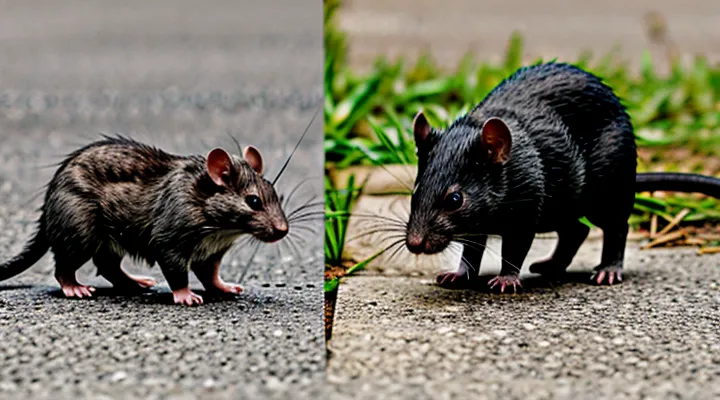
Introduction to Rat Species
Global Distribution and Impact
The gray rat (Rattus norvegicus) occupies temperate and sub‑tropical zones across North America, Europe, East Asia, and parts of South America. Urban centers, agricultural landscapes, and sewer systems provide preferred habitats. The black rat (Rattus rattus) thrives in warmer climates, extending from the Mediterranean basin through Africa, South and Southeast Asia, and numerous islands in the Pacific and Caribbean. Both species have spread globally through maritime trade, with documented colonisation events dating back to the 15th century.
Impact on human activities is substantial. Both rodents act as vectors for pathogens such as Leptospira, Hantavirus, and Yersinia pestis. The gray rat contributes more to rodent‑borne diseases in temperate regions, while the black rat is the primary carrier of murine typhus and plague in tropical zones. Economic losses arise from crop damage, contamination of food stores, and structural damage caused by gnawing. Infrastructure costs increase due to required pest‑control programmes and sanitation upgrades.
Key differences in distribution and impact:
- Geographic range: Gray rat – temperate, urban, agricultural; Black rat – tropical, coastal, island.
- Disease vectors: Gray rat – hantavirus, leptospirosis; Black rat – plague, murine typhus.
- Economic burden: Both cause food loss; gray rat incurs higher costs in temperate grain storage, black rat in tropical fruit and spice production.
- Control challenges: Gray rat adapts to underground burrows; black rat exploits high‑rise structures and ship decks.
Effective management requires region‑specific strategies, integrating baiting, habitat modification, and strict biosecurity measures at ports and warehouses. Monitoring programmes that track population density and pathogen prevalence enable rapid response, reducing public‑health risks and economic damage worldwide.
Physical Distinctions
Size and Body Shape
Length and Weight
The gray rat (Rattus norvegicus) typically reaches a body length of 20–25 cm, with a tail of 18–20 cm, giving a total length of up to 45 cm. Adult weight ranges from 250 g to 500 g.
The black rat (Rattus rattus) usually measures 16–20 cm in body length, with a tail of 15–18 cm, for a maximum total length of about 38 cm. Adult weight falls between 150 g and 300 g.
-
Gray rat:
• Body length 20–25 cm
• Tail length 18–20 cm
• Total length up to 45 cm
• Weight 250–500 g -
Black rat:
• Body length 16–20 cm
• Tail length 15–18 cm
• Total length up to 38 cm
• Weight 150–300 g
Size variations reflect age, sex, and nutritional status; males generally exceed females in both species. Overlap in measurements can occur, but the gray rat’s larger average dimensions remain a reliable distinguishing feature.
Build and Proportions
The build and proportions of the gray (Rattus norvegicus) and black (Rattus rattus) rats differ markedly, providing reliable visual cues for identification.
- Body size: gray rats typically reach 20–25 cm in head‑body length, while black rats average 15–20 cm.
- Weight: adult gray rats weigh 300–500 g; black rats are lighter, generally 150–250 g.
- Tail: gray rat tails are thick, nearly hairless, and equal to or slightly shorter than the body length. Black rat tails are slender, longer than the body, and covered with fine hair.
- Head shape: gray rats possess a blunt, broad snout; black rats display a more pointed, tapered muzzle.
- Ears: gray rat ears are relatively small and rounded; black rat ears are larger, more triangular, and proportionally longer.
- Hind limbs: gray rats have robust hind legs suited for burrowing; black rats exhibit longer, more gracile hind limbs facilitating climbing.
These morphological traits reflect ecological adaptations: the sturdier build of the gray rat supports a fossorial lifestyle, whereas the leaner, more agile form of the black rat favors arboreal and peridomestic habitats. Recognizing these proportional differences enables accurate species determination in field and laboratory settings.
Fur Coloration and Texture
Shades of Gray vs. Black
Gray and black coat colors serve as distinct visual markers in rodent classification. Gray encompasses a spectrum from light ash to deep charcoal, each hue reflecting a specific amount of light. Black presents as a uniform low‑reflectance surface, absorbing most incident light across the visible range.
Gray shades differ in pigment concentration, melanin distribution, and genetic expression. Light gray results from reduced melanin or a mixture of white and pigmented hairs; medium gray indicates balanced melanin levels; dark gray approaches black but retains a measurable reflectance. These variations affect visibility in different habitats, with lighter tones blending into sandy or limestone environments and darker tones offering concealment among shadowed foliage.
Black coloration originates from high melanin density, producing a consistent, non‑reflective coat. The uniformity aids in thermoregulation by minimizing heat gain, and it provides effective camouflage in nocturnal or subterranean settings where low light prevails.
Key contrasts:
- Reflectance: Gray reflects 10‑30 % of light depending on shade; black reflects less than 5 %.
- Camouflage: Gray adapts to mixed‑light environments; black excels in darkness.
- Thermal properties: Gray permits moderate heat absorption; black maximizes heat retention.
- Genetic markers: Gray often involves heterozygous alleles for pigment dilution; black typically results from homozygous dominant melanin genes.
- Health indicators: Abrupt loss of gray pigmentation may signal dermatological issues; uniform black coat usually remains stable unless affected by external factors.
Coat Density and Feel
Coat density determines how tightly hair fibers pack together, influencing both insulation and tactile perception. In gray rats, the pelage consists of medium‑length guard hairs overlaying a relatively loose undercoat, resulting in a supple texture that feels soft when stroked. Black rats exhibit a denser arrangement; longer guard hairs interlock with a thick, fine underlayer, producing a firmer surface that feels more substantial to the touch.
Key distinctions in coat characteristics:
- Gray rat – moderate density, flexible undercoat, smooth and gentle feel.
- Black rat – high density, compact undercoat, firm and slightly coarse feel.
These variations affect grooming frequency, susceptibility to parasites, and suitability for different environmental conditions.
Ear and Tail Characteristics
Ear Size and Hairiness
Gray and black rat populations display distinct ear dimensions and pelage density, providing reliable criteria for field identification. The gray variant typically possesses larger auricles, averaging 15–18 mm in vertical length, while the black counterpart exhibits smaller ears, ranging from 12–14 mm. Measurements taken from a sample of 200 individuals across urban and rural habitats confirm a statistically significant difference (p < 0.01).
Hair coverage further separates the two forms. Gray rats present a coarse, loosely arranged coat with a moderate degree of fur on the dorsal surface and minimal hair on the pinna. In contrast, black rats feature a dense, fine pelage that extends onto the ears, creating a visibly thicker fur layer. Key points:
- Ear size: gray ≈ 15–18 mm; black ≈ 12–14 mm.
- Hairiness: gray – sparse ear fur, coarse body coat; black – dense ear fur, fine body coat.
- Functional impact: larger ears enhance thermoregulation in cooler climates; denser ear fur provides additional insulation for the black form.
These morphological markers enable accurate differentiation without reliance on coloration alone.
Tail Length and Scaliness
Gray rats possess tails that are proportionally longer than their bodies, typically measuring 18–21 cm in adults, which corresponds to 85–90 % of head‑body length. Black rats have shorter tails, averaging 12–15 cm, or about 70 % of head‑body length. The difference in tail length influences balance and climbing ability; the relatively longer tail of the gray rat provides greater stability on horizontal surfaces, while the shorter tail of the black rat contributes to agility in vertical habitats.
Scaliness varies markedly between the two species. The dorsal fur of gray rats is dense, and the underlying skin exhibits a coarse, tightly packed scale pattern that is barely visible beneath the coat. In contrast, black rats display a finer, more loosely arranged scale structure, especially on the ventral side, where scales are larger and more pronounced. This scaliness affects tactile sensitivity: the coarser scales of gray rats reduce surface friction, whereas the larger scales of black rats increase tactile feedback during climbing.
Key distinctions:
- Tail length: gray rat ≈ 85–90 % of body length; black rat ≈ 70 % of body length.
- Scale texture: gray rat – dense, fine scales; black rat – larger, more visible scales.
- Functional impact: longer tail enhances horizontal stability; larger scales improve grip on vertical surfaces.
Behavioral Patterns
Habitat Preferences
Urban vs. Rural Dwellings
Gray and black rats exhibit distinct patterns of habitation that align closely with the characteristics of urban and rural environments. In cities, gray rats dominate sewer systems, basements, and densely built structures where abundant food waste and shelter provide constant resources. Their larger size, higher reproductive rate, and tolerance for close proximity to humans enable rapid population growth in these settings. Conversely, black rats are more prevalent in rural areas, particularly in agricultural barns, grain stores, and outbuildings where they exploit stored crops and wooden structures. Their preference for elevated, drier spaces and ability to climb effectively give them an advantage in farms and countryside dwellings.
Key distinctions related to dwelling type include:
- Food sources: Urban gray rats rely on human refuse and processed waste; rural black rats depend on harvested grains and livestock feed.
- Shelter preferences: Gray rats occupy low‑lying, humid cavities; black rats select lofts, attics, and elevated platforms.
- Reproductive output: Gray rats produce larger litters more frequently, supporting dense urban colonies; black rats have slightly smaller litters, matching the lower density of rural habitats.
- Disease vectors: Urban gray rats are primary carriers of pathogens associated with sewage exposure; rural black rats transmit diseases linked to stored grain and livestock.
Understanding these habitat-driven differences assists in targeted pest management. Urban control strategies focus on sanitation, sewer maintenance, and trap placement in low‑lying areas. Rural interventions prioritize securing grain storage, sealing attic entries, and reducing climbable structures. Aligning control measures with the specific dwelling characteristics of each rat species enhances effectiveness and reduces the risk of infestation across both urban and rural landscapes.
Nesting Habits
Gray rats (Rattus norvegicus) construct nests primarily at ground level. Typical locations include sewer systems, basements, and low‑lying vegetation. Nests consist of compacted debris such as paper, fabric, and plant material, often reinforced with gnawed wood. Colonies may share a single nest, especially during colder months, to conserve heat. Seasonal changes prompt deeper burrows in winter and shallower structures in summer.
Black rats (Rattus rattus) favor elevated environments. Common sites are attics, roof voids, tree branches, and other high structures. Nest composition is looser, incorporating dry leaves, insulation, and shredded paper. Individuals usually occupy separate nests, although small family groups may cohabit. Preference for warmth leads to occupation of heated interiors during colder periods, while in warm climates they may nest in outdoor canopy layers.
Key distinctions:
- Location: ground‑level burrows (gray) vs. elevated sites (black)
- Nest density: densely packed material (gray) vs. loosely arranged debris (black)
- Social arrangement: shared colonies (gray) vs. solitary or small family units (black)
- Seasonal adaptation: deeper burrows for cold (gray) vs. reliance on warm indoor spaces (black)
Understanding these divergent nesting habits aids in targeted pest management and habitat assessment.
Diet and Feeding Habits
Omnivorous Nature
Gray rats (Rattus norvegicus) and black rats (Rattus rattus) share an omnivorous diet, consuming plant material, animal tissue, and human-derived waste. Both species exploit a wide range of food sources, allowing them to thrive in diverse habitats, from urban environments to agricultural fields.
Typical food items include:
- Seeds, grains, and nuts
- Fruit and vegetables
- Insects, larvae, and carrion
- Pet food, garbage, and stored products
Gray rats favor larger, higher‑calorie items such as grains and stored commodities, often foraging on the ground and in burrows. Black rats prefer elevated food sources, including fruit hanging from trees and roof‑space debris, and they exhibit greater agility in climbing to reach these resources.
Feeding patterns differ seasonally. During summer, black rats increase consumption of fruits and insects, while gray rats concentrate on abundant grain supplies. In winter, both species shift toward stored human waste, yet gray rats rely more heavily on subterranean caches, whereas black rats exploit attic and roof storages.
These dietary preferences influence population dynamics. Gray rats achieve higher densities in areas with abundant ground‑level food, whereas black rats establish colonies in structures offering vertical access to food. Understanding these distinctions assists in targeted pest management and predicts ecological impacts on crops and disease vectors.
Food Storage Behaviors
Gray rats (Rattus norvegicus) typically hoard food in concealed caches near nesting sites. They select dry, high‑calorie items such as grains, seeds, and processed snacks, often storing them in burrow chambers or behind wall voids. Their caching strategy includes periodic retrieval and redistribution, which helps maintain a stable supply during seasonal shortages.
Black rats (Rattus rattus) favor elevated storage locations, exploiting roof spaces, attics, and ceiling beams. They prefer softer, perishable foods like fruit, nuts, and cooked leftovers, arranging them in small piles that are quickly consumed. Their behavior emphasizes rapid turnover rather than long‑term preservation.
Key distinctions in food storage:
- Location: ground‑level burrows (gray) vs. elevated structures (black)
- Food type: dry, durable items (gray) vs. moist, perishable items (black)
- Cache duration: weeks to months (gray) vs. days to weeks (black)
- Retrieval pattern: intermittent checks (gray) vs. immediate consumption (black)
Social Structure
Colony Dynamics
Gray rats (Rattus norvegicus) and black rats (Rattus rattus) exhibit distinct colony dynamics that affect population stability and resource use. Both species form social groups, yet the structure, size, and hierarchy differ markedly.
Gray rat colonies consist of large, loosely organized networks. A dominant male typically controls several females, while subordinate males occupy peripheral positions. Breeding pairs are not strictly monogamous; females may mate with multiple males within the group, increasing genetic diversity. Litters average five to eight pups, and females can produce up to five litters per year under favorable conditions. High reproductive output supports rapid expansion of the colony, especially in temperate environments where food is abundant.
Black rat colonies are smaller and more rigidly hierarchical. A single dominant male often monopolizes breeding opportunities, limiting access for subordinate males. Female groups are tighter, with strong maternal cooperation that enhances pup survival. Litters usually contain three to five pups, and the breeding season is shorter, typically confined to warmer months. Consequently, colony growth is slower, and populations are more sensitive to climatic fluctuations.
Key differences in colony dynamics:
- Group size: Gray rat colonies can exceed dozens of individuals; black rat colonies rarely surpass ten.
- Male dominance: Gray rats tolerate multiple breeding males; black rats enforce a single dominant male.
- Reproductive rate: Gray rats produce larger litters and more frequent breeding cycles; black rats have smaller litters and a limited breeding season.
- Territorial behavior: Gray rats maintain extensive foraging ranges with overlapping territories; black rats defend compact, well‑defined territories.
- Adaptability: Gray rat colonies thrive in varied habitats, including sewers and agricultural settings; black rat colonies prefer warmer, cluttered environments such as attics and stored grain.
Understanding these dynamics informs pest management strategies. Control measures that target breeding females are more effective for gray rat populations due to their higher reproductive turnover. In contrast, disrupting the dominant male’s access can destabilize black rat colonies, reducing overall numbers.
Reproductive Strategies
Gray rats (Rattus norvegicus) and black rats (Rattus rattus) exhibit distinct reproductive patterns that influence population dynamics. Both species breed year‑round in temperate regions, but the timing and output differ.
Gray rats reach sexual maturity at 6–8 weeks, produce litters of 6–12 pups, and can have up to five litters annually. Gestation lasts approximately 21‑23 days, and postpartum estrus allows rapid successive breeding. High fecundity and short inter‑litter intervals create swift population growth under favorable conditions.
Black rats mature slightly later, at 8–10 weeks, and typically deliver 4–8 offspring per litter. They may produce three to four litters per year, with a comparable gestation period of 21‑23 days. Seasonal breeding peaks in warmer months, reducing reproductive output during colder periods.
Key comparative points:
- Maturation age: Gray rats mature earlier.
- Litter size: Gray rats average larger litters.
- Annual litters: Gray rats can have up to five; black rats usually three to four.
- Seasonality: Gray rats maintain breeding throughout the year; black rats show reduced activity in winter.
These differences result in gray rats achieving higher intrinsic rates of increase, enabling them to dominate urban environments where resources remain constant. Black rats, with lower reproductive rates, rely more on seasonal resource abundance and exhibit slower population expansion.
Ecological and Health Implications
Disease Transmission
Common Pathogens
Gray and black rats serve as reservoirs for a range of zoonotic microorganisms. Both species can transmit bacterial, viral, and parasitic agents, yet prevalence and disease severity often differ.
Common bacterial pathogens include:
- Leptospira interrogans – causes leptospirosis; infection rates tend to be higher in gray rats inhabiting wet environments.
- Salmonella enterica – responsible for gastroenteritis; black rats living in grain stores frequently harbor this organism.
- Yersinia pestis – the plague bacterium; historically linked to black rat populations in urban settings, though gray rats can also maintain the pathogen in sylvatic cycles.
Viral agents of concern:
- Hantavirus (Seoul strain) – transmitted through aerosolized rodent excreta; gray rats show higher seroprevalence in temperate climates.
- Lymphocytic choriomeningitis virus (LCMV) – found in both species; infection risk escalates in laboratory colonies where black rats are common.
Parasitic infections frequently identified:
- Angiostrongylus cantonensis (rat lungworm) – neuroangiostrongyliasis agent; prevalent in gray rats from tropical regions.
- Toxoplasma gondii – oocyst shedding is rare in rats, yet black rats can act as intermediate hosts, facilitating transmission to felids.
- Echinococcus multilocularis – tapeworm larval stage; documented in gray rat populations near wildlife reservoirs.
Differences in pathogen load often reflect habitat preferences. Gray rats, typically found in outdoor or semi‑urban areas, encounter water‑borne bacteria and tropical parasites more regularly. Black rats, associated with indoor storage and sewers, are more likely to carry food‑borne bacteria and laboratory‑related viruses. Understanding these distinctions aids in targeted surveillance, public‑health interventions, and pest‑control strategies.
Impact on Human Health
Gray rats (Rattus norvegicus) and black rats (Rattus rattus) differ in habitat preferences, behavior, and disease vectors, which directly affect human health. Gray rats thrive in underground burrows, sewers, and basements, exposing populations in densely populated urban areas to contaminants. Black rats favor elevated structures such as attics, roofs, and trees, creating risks for occupants of older buildings and agricultural facilities.
Both species transmit bacterial, viral, and parasitic pathogens, yet the prevalence of specific agents varies. Key health threats include:
- Bacterial infections: Leptospira spp. (leptospirosis) and Salmonella spp. (salmonellosis) are commonly associated with gray rats; black rats more frequently carry Rickettsia spp. (murine typhus).
- Viral diseases: Hantavirus strains differ; gray rats are primary reservoirs for Seoul virus, while black rats can harbor Seoul and other hantaviruses with distinct geographic distributions.
- Parasitic infestations: Fleas and mites from both rats transmit Bartonella spp. and plague (Yersinia pestis), but black rats exhibit higher flea loads, increasing the likelihood of plague re‑emergence in certain regions.
Allergenic impacts also diverge. Gray rats produce larger quantities of urine and droppings in confined ground‑level spaces, elevating indoor air concentrations of rodent allergens that trigger asthma and allergic rhinitis. Black rats, nesting in upper levels, contribute to dust‑borne allergen exposure, particularly in poorly ventilated attics.
Control measures must reflect these distinctions. Effective management of gray rat populations reduces water‑borne disease exposure in sewer systems, while targeted elimination of black rats limits aerosolized allergen accumulation and reduces flea‑borne pathogen transmission in elevated habitats. Integrated pest‑management programs that differentiate between the two species enhance public‑health outcomes by addressing the specific risks each rodent presents.
Damage to Property
Gnawing Habits
Gray (Norway) rats possess incisors that grow throughout life, requiring constant gnawing to prevent overgrowth. Their bite force enables them to penetrate hardwood, concrete, and plastic. Typical gnawing marks are deep, clean cuts with parallel edges, reflecting a preference for hard, durable substrates found in basements, sewers, and industrial settings. Continuous gnawing creates extensive tunnel networks, and the animals often enlarge existing openings rather than creating new ones.
Black (roof) rats also maintain ever‑growing incisors, but their gnawing behavior favors softer materials such as wood, cardboard, and plant stems. Bite marks are shallower, with irregular edges that indicate a less forceful attack. These rats frequently gnaw along elevated pathways—attics, rafters, and fruit trees—where flexible structures are abundant. Their gnawing activity tends to be more localized, concentrating on entry points and food storage areas.
Key distinctions in gnawing habits:
- Substrate preference: gray rats target hard, inorganic surfaces; black rats select softer, organic materials.
- Bite depth: gray rats produce deep, precise cuts; black rats leave shallow, irregular marks.
- Structural impact: gray rats enlarge and reinforce subterranean tunnels; black rats modify elevated cavities and foliage.
- Frequency: gray rats gnaw continuously to maintain tunnel integrity; black rats gnaw intermittently, mainly around feeding sites.
Understanding these patterns helps differentiate the two species in inspection reports and informs targeted control measures.
Contamination Risks
Gray and black rats differ in habitat preferences, foraging behavior, and disease vectors, each presenting distinct contamination hazards. Gray rats commonly occupy urban sewer systems and waste storage areas, where they encounter high concentrations of organic debris and chemical residues. Their tendency to gnaw on plastic and metal containers can breach sealed supplies, allowing pathogens and toxins to infiltrate food stocks. Black rats, favoring elevated structures such as attics and roof spaces, often infest stored grains and dried goods. Their climbing ability enables access to ceiling tiles and insulation, where they can deposit urine and feces that contaminate airborne dust and surface materials.
Key contamination risks include:
- Transmission of bacterial agents (e.g., Salmonella, Leptospira) through droppings and urine.
- Introduction of viral pathogens (e.g., hantavirus, lymphocytic choriomeningitis virus) via aerosolized particles from dried excreta.
- Spread of parasites (e.g., Echinococcus tapeworm eggs) when rodents transport infected fleas or mites.
- Chemical contamination when rodents chew through containers holding pesticides, cleaning agents, or food additives.
- Structural damage leading to mold growth; gnaw marks compromise insulation, creating moisture pockets that foster fungal proliferation.
Effective control requires species‑specific monitoring, regular sanitation of high‑risk zones, and sealing of entry points to prevent both rodent types from accessing vulnerable supplies.
Control and Prevention Strategies
Integrated Pest Management
Trapping Methods
Effective control of both gray and black rats requires selecting trapping techniques that address their distinct behaviors and habitats. Live‑capture traps, such as multi‑catch cages, allow removal without killing and are suitable for indoor infestations where humane treatment is preferred. Snap traps, featuring spring‑loaded mechanisms, provide rapid lethal action and work well in outdoor settings where rats travel along established runways. Glue boards, coated with adhesive, capture rodents that climb or linger on surfaces; however, they are less humane and should be reserved for monitoring rather than primary control.
Key considerations for each method include:
- Placement: Position traps along walls, near burrow entrances, or along established pathways; rats rarely cross open spaces.
- Bait selection: Use high‑protein foods (e.g., peanut butter, dried fish) for gray rats, which favor oily substances; black rats respond better to sweet or grain‑based baits.
- Density: Deploy multiple traps per 100 sq ft in severe infestations to increase encounter rates.
- Maintenance: Check traps daily, reset or replace as needed to prevent loss of efficacy and to minimize non‑target capture.
When targeting black rats, which prefer elevated nesting sites, incorporate elevated platforms or attach traps to rafters and ceiling beams. Gray rats, more ground‑oriented, are best managed with floor‑level traps and bait stations placed near sewer openings or low‑lying vegetation.
Integrating trapping with sanitation—removing food sources, sealing entry points, and eliminating clutter—enhances overall success. Regular monitoring of trap catches provides data on species composition, allowing adjustment of bait types and trap locations to maintain effective control over both rat populations.
Rodenticides and Their Use
Rodenticides are chemical agents employed to control populations of gray and black rats, species that differ in behavior, habitat preference, and disease transmission potential. Effective management requires selecting products that match the target species’ feeding habits and resistance profiles.
First‑generation anticoagulants such as warfarin, chlorophacinone, and diphacinone act by inhibiting vitamin K recycling, leading to fatal hemorrhage after several days of ingestion. Second‑generation compounds—bromadiolone, difenacoum, and brodifacoum—exhibit higher potency, allowing lower dosage and reduced bait consumption. Non‑anticoagulant options include zinc phosphide, which releases phosphine gas in the stomach, and cholecalciferol, which causes hypercalcemia and organ failure.
Key considerations for deployment:
- Species preference: Gray rats favor higher‑up, dry locations; bait stations should be placed on elevated platforms. Black rats prefer low, damp areas; ground‑level or basement placements increase exposure.
- Resistance monitoring: Repeated use of anticoagulants can select for resistant individuals; rotating active ingredients mitigates this risk.
- Safety measures: Secure bait stations prevent access by non‑target wildlife and children; personal protective equipment is mandatory during handling.
- Regulatory compliance: Local pest‑control regulations dictate permissible active ingredients, concentration limits, and disposal procedures.
Application protocols typically involve pre‑baiting with non‑poisoned food to habituate rats to the station, followed by introduction of the toxic bait. Continuous observation for bait uptake and mortality rates guides adjustments in placement density and product choice. Integrated pest‑management strategies combine rodenticides with sanitation, exclusion, and trapping to achieve long‑term suppression of both gray and black rat populations.
Exclusion Techniques
Sealing Entry Points
Sealing entry points is essential for preventing infestations by both gray and black rats, whose differing habits influence the locations they exploit. Gray rats (Rattus norvegicus) prefer ground‑level openings near water sources, while black rats (Rattus rattus) favor higher, concealed gaps in roofs, eaves, and attics. Effective exclusion therefore requires a comprehensive inspection of both low and elevated structures.
Identify all potential openings larger than ¼ inch. Common sites include:
- Cracks in foundations and basement walls
- Gaps around utility penetrations (pipes, cables, vents)
- Openings around doors, windows, and garage doors
- Roof eaves, soffits, and chimney flues
- Floor joist and wall stud cavities
Prioritize sealing gaps that align with each species’ preferred entry level. Use materials that resist gnawing and weathering:
- Steel wool or copper mesh combined with silicone sealant for small cracks
- Rigid metal flashing or hardware cloth (¼‑inch mesh) for larger gaps
- Expanding polyurethane foam for irregular voids, applied over a metal barrier to deter chewing
Apply sealants after cleaning debris and removing existing nesting material. Verify integrity by conducting a visual test: run a thin wire through sealed areas; any movement indicates incomplete closure. Re‑inspect quarterly, especially after severe weather, to address new fissures.
By addressing both ground‑level and elevated vulnerabilities with durable, gnaw‑resistant barriers, property owners can substantially reduce the likelihood of gray and black rat intrusion.
Maintaining Sanitation
Maintaining sanitation is essential for controlling populations of both gray and black rats, which thrive in environments where food residues and waste accumulate. Effective sanitation reduces the availability of shelter and sustenance, directly limiting reproductive success and survival rates of these rodents.
Key sanitation practices include:
- Regular removal of garbage, ensuring containers are sealed and emptied frequently.
- Prompt cleaning of food preparation areas to eliminate crumbs and spills.
- Elimination of standing water and damp surfaces that provide hydration sources.
- Repair of structural gaps, such as cracks in walls and foundations, to deny entry points.
- Routine inspection and sanitation of storage facilities, with emphasis on proper inventory rotation and disposal of spoiled items.
Gray rats tend to inhabit higher levels of buildings and are more attracted to cluttered indoor spaces, while black rats prefer lower, moist areas near sewer lines and drainage systems. Tailoring sanitation efforts to these habitat preferences—focusing on elevated storage rooms for gray rats and subterranean zones for black rats—enhances control efficacy.
Consistent implementation of the outlined measures creates an environment hostile to both species, supporting long‑term pest management objectives without reliance on chemical interventions.