
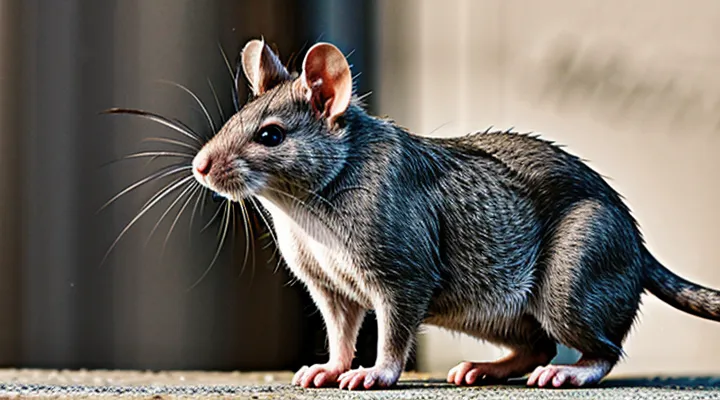
Physical Description
Size and Weight
Body Length
The gray rat typically measures between 180 and 250 mm from the tip of the nose to the base of the tail. Adult males average 220 mm, while females are slightly shorter, around 200 mm. Body length can increase by up to 15 % during periods of abundant food availability, reflecting the species’ capacity for rapid growth.
Key points regarding size:
- Standard measurement is taken with the animal restrained, using a calibrated ruler or digital caliper.
- Length ranges overlap with related rodent species; precise identification often requires additional morphological criteria.
- Seasonal fluctuations in length are most pronounced in temperate regions, where winter individuals tend toward the lower end of the size spectrum.
Understanding the typical dimensions of this rodent aids in field identification, population monitoring, and comparative studies across habitats.
Tail Length
The gray rat possesses a tail that typically measures between 18 and 25 cm, roughly equal to or slightly longer than the body length. Tail length varies with age, sex, and geographic population, with adult males generally exhibiting marginally longer tails than females. The structure comprises vertebrae encased in a thin layer of skin, lacking fur except for a sparse covering near the tip.
Key characteristics of the tail include:
- Flexibility that facilitates balance during climbing and rapid directional changes.
- A high density of sensory receptors that detect temperature changes and tactile stimuli.
- A vascular network enabling thermoregulation; blood flow can be adjusted to dissipate heat or conserve warmth.
- Limited musculature, resulting in passive movement driven primarily by body motion.
These attributes contribute to the rat’s agility and environmental adaptability without conferring any specialized function beyond locomotion and sensory input.
Weight Range
The gray rat typically weighs between 200 g and 500 g when fully mature. Adult males tend to be at the upper end of this spectrum, often reaching 450 g to 500 g, while females usually fall between 250 g and 350 g. Juvenile individuals progress through the following approximate stages:
- Newborn: 5 g–7 g
- Weaning (3 weeks): 30 g–45 g
- Sub‑adult (6 weeks): 100 g–150 g
Weight variation reflects factors such as diet quality, habitat conditions, and genetic line. Laboratory strains, maintained on standardized feed, commonly display a narrower range of 250 g–350 g, whereas wild populations exhibit broader fluctuations due to seasonal food availability. Regular monitoring of body mass provides reliable insight into health status and growth trends.
Fur and Coloration
Dorsal Fur
The dorsal coat of the gray rat consists of coarse, dark‑gray guard hairs overlaying a softer underlayer. Guard hairs range from 15 to 25 mm in length, providing a protective outer barrier, while the underfur measures 5 to 10 mm and supplies insulation.
Key physical traits include:
- Uniform coloration that blends with urban and rural substrates.
- High follicle density, averaging 200 follicles per square centimeter.
- A slightly oily surface that resists moisture accumulation.
The dorsal fur serves multiple functions. Its thickness retains body heat during cold periods, and the dark pigment reduces heat loss by absorbing ambient radiation. The texture deters ectoparasites, and the coloration offers camouflage against predators in typical habitats.
Seasonal molting occurs twice yearly. In spring, rats shed a portion of the guard hairs, replacing them with shorter, lighter‑toned fibers. Autumn growth yields longer, denser guard hairs, enhancing thermal protection for winter.
Compared with the ventral coat, the dorsal fur exhibits greater melanization and follicular concentration, reflecting its primary role in environmental interaction and thermoregulation.
Ventral Fur
The ventral fur of the gray rat covers the lower portion of the body, extending from the chest to the abdomen and the inner thighs. It is generally lighter in hue than the dorsal coat, ranging from pale gray to off‑white, and often appears softer and less dense.
Key attributes include:
- Coloration: Uniformly lighter than the back, providing a subtle contrast that aids in camouflage against bright substrates.
- Texture: Fine, silky fibers that differ from the coarser guard hairs on the back, facilitating heat dissipation.
- Density: Lower hair count per square centimeter, allowing greater airflow across the skin.
- Seasonal variation: Slight darkening in winter months, with a modest increase in fiber length to improve insulation.
- Sexual dimorphism: Females may exhibit marginally paler ventral fur, though differences are minimal.
- Developmental changes: Juvenile rats possess a softer, more uniformly white ventral coat that becomes slightly pigmented as they mature.
These characteristics contribute to thermoregulation, predator avoidance, and tactile sensitivity, reflecting the species’ adaptation to diverse environments.
Seasonal Variations
The gray rat exhibits distinct seasonal patterns that affect its physical condition, behavior, and population dynamics.
During winter, individuals increase body mass by accumulating fat reserves, which enhances thermoregulation and sustains energy expenditure when food is scarce. Fur density thickens, providing additional insulation, while activity levels shift toward nocturnal foraging to reduce exposure to low temperatures. Reproductive activity declines sharply; most females enter a state of reproductive quiescence, and male aggression diminishes.
Spring triggers a rapid reversal of winter adaptations. Fat stores are mobilized, leading to a noticeable reduction in body weight. New fur growth replaces the denser winter coat, improving mobility. Breeding resumes promptly; females become estrous, and litters are produced within weeks of favorable temperatures. Males exhibit heightened territorial behavior and increased scent-marking as competition for mates intensifies.
Summer conditions promote maximal reproductive output. Litters reach peak size, and juvenile survival rates improve due to abundant food sources. Heat stress influences activity patterns, with rats favoring cooler microhabitats such as underground burrows, sewer systems, or shaded structures. Water intake rises, and urine concentration decreases to maintain hydration.
Autumn prepares the population for the upcoming cold season. Food availability begins to wane, prompting increased foraging range and opportunistic feeding on stored crops. Body condition improves as rats accumulate reserves for winter. Social hierarchy stabilizes, and aggressive encounters decline, conserving energy for the impending period of reduced activity.
Key seasonal indicators:
- Body mass: increases in winter, decreases in spring.
- Fur characteristics: denser coat in cold months, lighter coat in warm months.
- Reproductive status: suppressed in winter, active from spring through summer.
- Behavioral shifts: nocturnal foraging in winter, broader activity range in summer, territorial aggression peaks in spring.
Distinctive Features
Ears
The gray rat’s auditory organs consist of relatively large, mobile pinnae that project forward from the head. The external ear structure includes a fleshy rim surrounding a central opening, which leads to a short external auditory canal lined with hair and glandular tissue. This configuration enhances the capture of sound waves and protects the inner ear from debris.
Key anatomical features:
- Pinnae: Broad, thin, and highly vascularized, allowing rapid temperature regulation and improved sound directionality.
- Auditory canal: Approximately 5 mm in length, lined with ceruminous glands that produce a protective waxy secretion.
- Middle ear: Contains a tympanic membrane and a chain of three ossicles (malleus, incus, stapes) that transmit vibrations to the cochlea.
- Cochlea: Coiled organ housing hair cells tuned to frequencies between 1 kHz and 30 kHz, matching the species’ vocal range.
Sensory capabilities:
- Detects ultrasonic frequencies up to 70 kHz, facilitating communication and predator avoidance.
- Spatial resolution enables discrimination of sound sources within a 10‑degree arc, supporting navigation in complex environments.
Common health concerns:
- Otitis externa: Inflammation of the ear canal, often linked to excessive wax buildup or parasitic infection.
- Myringitis: Damage to the tympanic membrane caused by trauma or bacterial invasion.
- Age‑related hearing loss: Gradual decline in high‑frequency detection after 18 months of age.
Preventive measures for captive populations include regular inspection of ear canals, removal of excess cerumen, and monitoring for signs of infection.
Eyes
The gray rat possesses medium‑sized eyes positioned laterally on the skull, granting a wide field of view essential for predator detection. Corneal diameter averages 3–4 mm, while the lens is convex, facilitating focus on objects within a few centimeters to several meters. Iris pigmentation ranges from pale amber to light brown, providing moderate light filtration without compromising nocturnal vision.
Key ocular characteristics include:
- Large, rod‑dominated retina enabling heightened sensitivity in low‑light environments;
- Tapetum lucidum absent, yet retinal blood supply supports rapid photon capture;
- Pupil shape elliptical, expanding vertically to increase aperture during darkness;
- Visual acuity measured at approximately 0.5 cycles/degree, sufficient for navigating cluttered burrow systems;
- Presence of a well‑developed optic chiasm, allowing bilateral integration of visual signals for depth perception.
These features collectively equip the species with effective visual performance across the dim conditions of subterranean habitats and the brief exposures encountered above ground.
Snout and Whiskers
The gray rat possesses a compact, elongated snout that houses a well‑developed set of nasal passages and olfactory receptors. The bone structure supports strong incisor muscles, allowing efficient gnawing and manipulation of food. The snout’s skin is thin and highly vascularized, facilitating rapid temperature regulation during foraging activities.
Whiskers, or vibrissae, extend from the rostral region in symmetrical rows. Each whisker is anchored in a follicular socket rich in mechanoreceptors, providing precise tactile feedback. The array detects minute air currents and surface textures, enabling navigation through confined spaces and the identification of obstacles in low‑light environments. Functionally, the whisker system integrates with the central nervous system to generate real‑time spatial maps that guide locomotion and prey capture.
Paws and Feet
The gray rat possesses compact, clawed feet that support agile movement across diverse surfaces. Each hind foot comprises five toes, while the forefoot displays four, all equipped with sharp, retractable claws that facilitate climbing, burrowing, and grasping objects. The pads are densely packed with keratinized skin, providing traction and cushioning during rapid sprints or prolonged foraging.
Sensory structures dominate the foot anatomy. Vibrissae emerge from the margins of each toe, detecting vibrations and texture changes, while a dense network of mechanoreceptors in the pads transmits tactile information to the central nervous system. This arrangement enables precise navigation in low‑light environments and rapid response to obstacles.
Key characteristics of the paws include:
- Muscular arrangement that allows independent digit movement, enhancing dexterity.
- Flexible metatarsal arches that absorb shock and store elastic energy for efficient locomotion.
- High concentration of sweat glands, aiding thermoregulation during intense activity.
Tail Texture
The gray rat possesses a tail that differs markedly from the fur-covered body. The surface is largely hairless, revealing a thin layer of skin that appears smooth to the touch. Under microscopic examination, the epidermis displays a fine, overlapping scale pattern that provides both flexibility and protection.
Key aspects of the tail’s texture include:
- Scale arrangement: Overlapping keratinized scales create a uniform, low‑friction surface.
- Moisture regulation: A thin, translucent cuticle limits water loss while allowing rapid heat dissipation.
- Sensory capability: Numerous mechanoreceptors are embedded beneath the skin, granting precise tactile feedback.
- Durability: The scale composition resists abrasion, enabling the rat to navigate rough surfaces without injury.
These features collectively support locomotion, thermoregulation, and environmental sensing, distinguishing the gray rat’s tail from those of other rodent species.
Sexual Dimorphism
The gray rat exhibits pronounced sexual dimorphism, with males typically larger and heavier than females. Adult males average 300–350 g, while females range from 250–300 g. Body length differences follow a similar pattern, males reaching up to 250 mm compared with female lengths of 220–230 mm.
Key morphological distinctions include:
- Head and snout: Males possess broader skulls and longer rostrums, enhancing bite force.
- Tail: Male tails are proportionally longer, often exceeding body length by 10–15 %.
- Fur coloration: Both sexes share the characteristic gray dorsal pelage, but males display slightly darker shading on the ventral side.
- Reproductive organs: Males develop prominent testes and a well‑defined scrotum after sexual maturity; females possess functional ovaries and a bifurcated uterine horn.
Behavioral dimorphism aligns with physical traits. Males are more territorial, marking boundaries with urine and scent glands, whereas females concentrate activity around nesting sites and display heightened maternal care during the lactation period. These differences influence population dynamics, resource allocation, and disease transmission patterns within the species.
Habitat and Distribution
Geographic Range
Native Areas
The gray rat (Rattus norvegicus) originates from temperate zones of Eurasia. Its ancestral distribution encompasses a broad corridor stretching from the coastal plains of Western Europe through the Mediterranean basin to the steppes of Central Asia.
- Western Europe: United Kingdom, France, Belgium, the Netherlands, and northern Germany.
- Southern Europe: Spain, Italy, Greece, and the Balkans.
- Central Asia: Kazakhstan, Uzbekistan, and parts of western Siberia.
- Near East: Turkey, Iran, and the Levantine coastal region.
Within these areas the species occupies a variety of habitats, including agricultural fields, riverbanks, forest edges, and urban peripheries. Preference for moist soil and abundant food sources drives settlement near watercourses and cultivated lands.
Biogeographically, the gray rat’s native range aligns with the Palearctic ecozone, where climatic conditions support its reproductive cycle and year‑round activity. Historical trade routes facilitated early expansion, yet the core native zones remain concentrated in the aforementioned regions.
Introduced Regions
The gray rat, an adaptable rodent species, has established populations far beyond its native range through accidental and intentional human activities. Introductions are documented across several continents:
- North America – coastal ports and inland warehouses; populations now common in urban and suburban areas of the United States and Canada.
- Europe – major trade hubs such as Rotterdam, Hamburg, and London; widespread in metropolitan districts of Germany, France, the United Kingdom, and the Baltic states.
- Asia – entry points include Shanghai, Hong Kong, and Singapore; the species thrives in densely populated cities of China, Japan, and South Korea.
- Oceania – arrival via shipping containers to Australian ports (Sydney, Melbourne) and New Zealand’s Auckland; colonies persist in both coastal and inland environments.
- South America – limited but growing presence in Argentine ports and Brazilian urban centers, linked to cargo transport.
Introductions typically occur through contaminated cargo, waste shipments, and the pet trade, allowing rapid colonization in temperate and subtropical climates. Established populations demonstrate high reproductive rates and flexible diet, facilitating persistence in diverse anthropogenic habitats.
Preferred Environments
Urban Settings
Gray Rat operates primarily against organizations located in densely populated areas. The group exploits the concentration of high‑value assets, extensive network interconnections, and limited security budgets typical of metropolitan enterprises.
Urban targets include corporate headquarters, financial institutions, healthcare facilities, and municipal service providers. Attack vectors rely on phishing emails, compromised remote‑desktop protocols, and exploitation of unpatched public‑facing applications. Once inside, the ransomware encrypts critical data, publishes stolen information, and demands payment in cryptocurrency.
Key characteristics relevant to city environments:
- Preference for large, multi‑site corporations with complex IT infrastructures.
- Use of double‑extortion tactics: data encryption combined with public data leakage threats.
- Rapid deployment of encryption modules, minimizing detection windows.
- Integration with ransomware‑as‑a‑service platforms, allowing affiliates to customize attacks.
- Targeting of supply‑chain partners to expand impact across interconnected urban networks.
Mitigation measures for urban organizations:
- Enforce multi‑factor authentication for all remote access points.
- Conduct regular vulnerability assessments of public‑facing systems.
- Implement network segmentation to isolate critical assets from user workstations.
- Maintain offline, immutable backups and test restoration procedures quarterly.
- Provide continuous phishing awareness training for all employees.
Adherence to these controls reduces the likelihood of successful infiltration and limits potential disruption to essential city services.
Rural Settings
The gray rat thrives in agricultural landscapes, where fields, barns, and grain storage structures provide abundant food and shelter. Its preference for low‑intensity farms stems from the availability of spilled grain, compost heaps, and rodent‑friendly vegetation such as tall grasses and hedgerows.
Adaptations that support rural survival include:
- Strong digging claws that enable burrowing beneath soil and under building foundations.
- Dense, coarse fur that insulates against temperature fluctuations typical of open countryside.
- Acute olfactory senses that locate hidden caches of seeds, fruit, and animal waste.
Reproductive cycles accelerate in warm, moist rural environments. Litters of up to eight offspring appear every three to four weeks during spring and summer, rapidly expanding local populations. High reproductive rates, combined with limited natural predators in isolated farm settings, often lead to noticeable increases in activity around storage facilities.
Ecological impacts are observable in crop loss and contamination. Foraging rats consume stored grains, reducing yields and prompting economic losses. Their droppings and urine introduce pathogens that can affect livestock health and compromise food safety. Control measures commonly employed by farmers include:
- Secure storage containers with metal lids and sealed doors.
- Regular removal of debris and excess feed to eliminate attractants.
- Installation of perimeter fencing and grounding of electrical deterrents.
Monitoring programs track population density through live‑trap counts and motion‑sensor cameras, allowing timely intervention before infestations reach critical levels. Effective management in rural zones relies on integrated strategies that combine habitat modification, vigilant surveillance, and targeted extermination methods.
Natural Habitats
The gray rat (Rattus norvegicus) occupies a broad spectrum of environments where food, shelter, and water are readily available. In urban settings, populations thrive in basements, subways, and building interiors, exploiting human waste and structural gaps for nesting. Sewer systems provide continuous moisture and darkness, supporting dense colonies that can spread rapidly through interconnected drainage networks.
Outside cities, the species colonizes agricultural lands, especially grain fields, orchards, and livestock facilities. It utilizes crop residues and stored produce for sustenance while constructing burrows in soil or under debris. In temperate regions, the animal frequents riverbanks and floodplains, where periodic flooding creates moist soils ideal for tunnel systems and access to aquatic insects.
Natural vegetation zones also host gray rat populations. Edge habitats of deciduous and mixed forests offer cover and diverse foraging opportunities, such as seeds, nuts, and invertebrates. Shrub thickets and hedgerows serve as corridors linking isolated food sources, facilitating movement across fragmented landscapes.
Typical natural habitats include:
- Sewer and drainage networks in metropolitan areas
- Basements, attics, and building cavities
- Agricultural fields, grain storage facilities, and livestock barns
- Riverbanks, floodplains, and wetland margins
- Forest edges, hedgerows, and shrub thickets
These environments provide the essential resources that sustain the species’ high reproductive rate and adaptability across continents.
Behavior and Social Structure
Nocturnal Habits
The gray rat (Rattus norvegicus) exhibits a strictly nocturnal activity cycle, with the majority of its daily movements confined to darkness. Physiological adaptations, such as heightened retinal sensitivity and circadian regulation, align its metabolic processes with night-time conditions.
During nocturnal periods the species displays several characteristic behaviors:
- Foraging: initiates shortly after sunset, targeting organic waste, grain stores, and small invertebrates; food intake peaks between 20:00 and 02:00.
- Territorial patrol: individuals traverse established routes, marking boundaries with scent glands and ultrasonic vocalizations to deter intruders.
- Nest maintenance: returns to burrows before dawn to reinforce structures, deposit food caches, and rear offspring.
- Predator avoidance: relies on low-light vision and acute hearing to detect aerial and terrestrial threats; employs rapid, erratic sprints when danger is perceived.
Social interactions intensify after dark, with grooming and hierarchical displays occurring primarily in communal nesting sites. The nocturnal schedule reduces competition with diurnal rodents and minimizes exposure to human activity, thereby optimizing survival and reproductive success.
Social Organization
Colony Size
The gray rat (Rattus norvegicus) typically forms colonies that range from a few individuals to several hundred members. Colony size depends on resource availability, shelter density, and seasonal conditions.
- Small colonies: 5‑20 rats, common in isolated barns or limited food sources.
- Medium colonies: 30‑100 rats, typical in urban alleys with moderate waste accumulation.
- Large colonies: 150‑300+ rats, found near extensive refuse dumps, sewer systems, or agricultural facilities.
Colony expansion follows a predictable pattern: breeding pairs produce litters of 6‑12 offspring every 21 days; high reproductive rates enable rapid population growth when conditions are favorable. Competition for food and nesting sites imposes a natural ceiling, causing larger colonies to fragment into sub‑groups that occupy adjacent territories.
Management strategies target the reduction of colony size by limiting access to food, sealing entry points, and disrupting shelter sites, thereby lowering the reproductive capacity and encouraging fragmentation.
Hierarchy
The gray‑rat malware is organized into a clear hierarchical structure that defines its development, deployment, and operational control. At the top level, the threat belongs to a broader class of ransomware‑as‑a‑service platforms, which share common infrastructure for distribution and monetization. Below this tier, distinct families are identified by shared codebases and encryption methods, allowing analysts to group variants with similar signatures.
Within each family, individual strains are distinguished by specific payloads, command‑and‑control (C2) protocols, and evasion techniques. The hierarchy continues with modular components that perform discrete functions such as file encryption, key generation, and data exfiltration. These modules are managed by a central orchestrator that issues instructions to compromised hosts, maintains persistence, and coordinates ransom negotiations.
Key levels of the hierarchy include:
- Platform category: ransomware‑as‑a‑service ecosystem
- Family grouping: shared code and encryption scheme
- Strain differentiation: unique payloads and C2 channels
- Module composition: encryption, key management, exfiltration, persistence
- Orchestrator layer: command issuance and ransom handling
Understanding this layered architecture enables precise detection, attribution, and mitigation strategies across the entire threat lifecycle.
Communication
Vocalizations
The gray rat produces a diverse array of vocal signals that convey information about social status, environmental threats, and reproductive condition. Acoustic recordings reveal three primary categories of sounds: ultrasonic squeaks, low‑frequency chirps, and broadband distress calls.
- Ultrasonic squeaks (20–80 kHz): Emitted during exploratory behavior and brief social interactions; waveform analysis shows rapid rise times and short durations (10–30 ms).
- Low‑frequency chirps (5–15 kHz): Associated with dominance displays and territorial marking; amplitude modulation patterns differentiate aggressive from affiliative contexts.
- Broadband distress calls (1–10 kHz): Triggered by predator exposure or physical injury; sustained duration (200–500 ms) and high harmonic content facilitate detection by conspecifics at a distance.
Physiological studies link call production to the laryngeal musculature and respiratory rhythm, with vocal fold tension modulated by sympathetic activation. Neurophysiological data indicate that the periaqueductal gray and amygdala orchestrate call selection, while auditory cortex processing exhibits frequency‑specific tuning that mirrors the emitted spectrum.
Field observations confirm that vocal exchanges synchronize group movement, reduce intragroup aggression, and enhance predator avoidance. Laboratory experiments demonstrate that playback of conspecific chirps accelerates mating behavior, whereas distress calls increase vigilance and escape responses in nearby individuals.
Overall, the gray rat’s vocal repertoire functions as a rapid, multimodal communication system that supports survival and reproductive success across varied ecological settings.
Scent Marking
The gray rat relies on scent marking to communicate territorial boundaries, reproductive status, and individual identity. Specialized glands, including the flank, anal, and urinary glands, produce secretions rich in pheromones and volatile compounds. These chemicals are deposited on objects such as walls, burrow entrances, and feeding sites, creating a persistent olfactory map that other rats can detect through their acute nasal receptors.
Key aspects of scent marking in this species:
- Glandular sources: Flank glands emit fatty acids; anal glands release proteinaceous pheromones; urine contains volatile amines and steroids.
- Deposition patterns: Marks are placed at high‑traffic locations, corners of nesting chambers, and near food caches to maximize exposure.
- Temporal dynamics: Fresh marks persist for several days; older marks degrade, prompting regular re‑marking to maintain signal strength.
- Social function: Dominant individuals produce more frequent and intense markings, reinforcing hierarchy; females increase marking during estrus to signal receptivity.
- Environmental influence: Moisture and temperature affect volatilization rates, altering detection range and longevity of the scent trail.
By integrating chemical cues with spatial behavior, scent marking enables the gray rat to coordinate group movements, avoid conflicts, and optimize reproductive opportunities.
Foraging and Diet
Omnivorous Nature
The gray rat exhibits a highly adaptable omnivorous diet, consuming plant matter, animal protein, and human-derived waste. Its feeding behavior reflects opportunistic foraging, allowing survival in diverse habitats ranging from agricultural fields to urban sewers.
Key aspects of its omnivorous nature include:
- Broad food spectrum: seeds, grains, fruits, insects, carrion, and discarded food items.
- Seasonal flexibility: shifts toward higher protein sources in spring and increased carbohydrate intake during winter months.
- Digestive efficiency: enzyme systems capable of breaking down cellulose, starch, and animal fats, supporting rapid nutrient extraction.
- Competitive advantage: ability to exploit resources unavailable to more specialized rodents, reducing interspecific competition.
These dietary traits contribute to the species’ resilience, enabling population maintenance despite fluctuations in food availability and environmental conditions.
Food Preferences
The gray rat exhibits a highly adaptable diet, enabling survival in diverse environments. Primary food sources include:
- Grains and cereals such as wheat, corn, and rice
- Fruits and vegetables, especially those discarded in urban waste
- Protein-rich items like meat scraps, fish, and insects
- Human‑generated refuse, including processed foods and pet kibble
Seasonal shifts influence consumption patterns; during colder months, the species relies more on stored seeds and high‑fat foods to meet increased energy demands. In laboratory settings, a balanced ration typically comprises 60 % carbohydrates, 20 % protein, and 20 % fats, reflecting the animal’s natural nutritional balance. Preference tests consistently show a marked inclination toward sweet and salty flavors, with the highest intake observed for foods containing moderate sugar concentrations and sodium chloride levels.
Hoarding Behavior
The gray rat exhibits a pronounced tendency to accumulate objects, food, and nesting material within its burrow system. This hoarding behavior serves multiple functional purposes, including resource security during periods of scarcity, thermoregulation, and predator avoidance.
Key characteristics of the hoarding pattern include:
- Selective accumulation: Preference for high‑calorie items such as grains, seeds, and meat scraps, while discarding low‑nutrient debris.
- Spatial organization: Separate chambers for fresh provisions and older stores, facilitating efficient retrieval and minimizing spoilage.
- Temporal scaling: Increased stockpiling during autumn and winter months, correlating with reduced external food availability.
- Social transmission: Juvenile rats acquire hoarding techniques through observation of adult conspecifics, reinforcing the behavior across generations.
Physiological drivers involve elevated cortisol levels that stimulate appetite and storage impulses, while neurochemical pathways linked to dopamine reinforce the reward associated with successful hoarding events. Ecologically, the practice influences local food webs by altering seed dispersal patterns and affecting competition with other granivores.
Understanding the mechanisms behind this behavior informs pest management strategies, enabling targeted interventions that disrupt storage sites and reduce population resilience.
Reproduction
Mating Season
The gray rat initiates reproductive activity when temperatures rise and food becomes abundant. In temperate zones the peak occurs during spring, with a secondary surge in early autumn; indoor populations may breed continuously throughout the year.
Males increase roaming distance, deposit urine and glandular secretions along established pathways, and emit high‑frequency vocalizations to attract females. Females enter estrus for a brief interval of 4–5 days, during which they are receptive to copulation; mating triggers ovulation.
Key reproductive parameters:
- Gestation period: 21–23 days.
- Litter size: 6–12 offspring on average.
- Inter‑litter interval: 30–40 days under optimal conditions.
- Sexual maturity: males at 8–10 weeks, females at 6–8 weeks.
Successful mating relies on synchronized timing of male territorial displays and female estrus, combined with adequate nutrition and shelter to support rapid post‑natal growth.
Gestation Period
The gray rat, a medium‑sized rodent found in temperate regions, has a gestation period that is relatively short among mammals. Pregnant females carry offspring for approximately 21 to 23 days, after which a litter of usually 5 to 8 pups is born. This duration remains consistent across most populations, with minor variations linked to environmental temperature and nutritional status.
Key aspects of the gestation process include:
- Duration: 21–23 days from conception to birth.
- Litter size: Typically 5–8 pups; larger litters may occur under optimal conditions.
- Maternal factors: Adequate protein intake and stable ambient temperatures support normal gestation length; extreme cold or heat can slightly extend or shorten the period.
- Reproductive rhythm: Females become fertile again within 48 hours after parturition, allowing for multiple litters per year.
Understanding these parameters helps predict population growth rates and informs management strategies for habitats where the gray rat is prevalent.
Litter Size
The gray rat typically produces a relatively large number of offspring per breeding event. Average litter size ranges from six to twelve pups, with occasional litters reaching fourteen or more individuals. This variability reflects the species’ high reproductive capacity.
Key determinants of litter size include:
- Maternal age: younger and prime‑aged females tend to have larger litters than very old individuals.
- Nutritional status: abundant food resources correlate with increased pup numbers.
- Seasonal conditions: longer daylight periods and warmer temperatures often result in higher reproductive output.
- Genetic factors: certain lineages exhibit consistently larger or smaller litters.
Gestation lasts approximately twenty‑one to twenty‑three days, allowing females to produce multiple litters annually. Under optimal conditions, a single female can raise three to five litters per year, potentially contributing up to fifty offspring annually. This prolific breeding pattern underpins the gray rat’s capacity for rapid population expansion.
Parental Care
The gray rat exhibits a highly developed maternal system that ensures rapid offspring survival. Females construct nests from shredded material, positioning them in concealed locations such as wall voids or under debris. Nest architecture provides thermal regulation and protection against predators. After parturition, the mother initiates nursing within minutes, delivering milk rich in protein and fat that supports exponential growth during the first two weeks.
Key aspects of parental investment include:
- Lactation duration: Approximately 21 days, with milk composition shifting to meet changing nutritional demands.
- Pup grooming: Frequent licking stimulates circulation and removes waste, reducing infection risk.
- Weaning schedule: Gradual introduction of solid food begins at day 10, culminating in complete independence by day 21.
- Maternal vigilance: Continuous monitoring of nest temperature and rapid response to disturbances.
Male gray rats rarely participate in direct care. Their primary contribution lies in defending the territory and providing access to resources that indirectly benefit the litter. The combination of intensive maternal effort and limited paternal involvement defines the reproductive strategy of this species.
Lifespan
The gray rat typically lives 2 to 3 years under laboratory or domestic conditions, with occasional individuals reaching 4 years when provided optimal nutrition, minimal stress, and regular veterinary care. In wild populations, average longevity declines to 1–1.5 years due to predation, disease, and fluctuating food supplies.
Key factors influencing lifespan include:
- Diet quality: Balanced protein, fat, and micronutrient intake extends healthspan.
- Environmental stress: Exposure to extreme temperatures, overcrowding, and high noise levels accelerates mortality.
- Health management: Routine health monitoring, parasite control, and prompt treatment of infections reduce premature death.
- Genetic background: Certain laboratory strains exhibit longer lifespans than outbred wild-type specimens.
Physiological Characteristics
Sensory Abilities
Olfaction
The gray rat possesses a highly developed olfactory apparatus that enables detection of volatile compounds at concentrations as low as 10‑12 M. Olfactory epithelium lines the nasal cavity, containing millions of receptor neurons that express a diverse repertoire of odorant receptors. Signal transduction occurs through cyclic‑nucleotide pathways, culminating in activation of mitral and tufted cells within the olfactory bulb.
Key functional attributes include:
- Sensitivity: Ability to discriminate among thousands of odorants, with rapid adaptation to persistent stimuli.
- Spatial mapping: Distinct odorants generate specific activation patterns across glomerular layers, facilitating precise odor identification.
- Integration with behavior: Olfactory inputs modulate foraging, predator avoidance, and social communication, influencing locomotor and feeding responses.
Neuroanatomical features support these capabilities. The olfactory bulb comprises approximately 200 glomeruli per hemisphere, each receiving input from receptor neurons expressing the same receptor type. Projection to the piriform cortex and amygdala provides pathways for associative learning and emotional processing.
Comparative data indicate that the gray rat’s olfactory threshold surpasses that of many other rodent species, reflecting an evolutionary emphasis on chemical sensing for environmental navigation.
Hearing
The gray rat possesses a well‑developed auditory system adapted for detecting a broad spectrum of sounds essential to its survival. The external ear includes prominent pinnae that funnel acoustic waves toward the tympanic membrane, enhancing directional hearing. Middle‑ear ossicles transmit vibrations efficiently to the inner ear, where the cochlea houses hair cells tuned to frequencies ranging from approximately 1 kHz to 50 kHz, with peak sensitivity around 8–12 kHz.
Auditory perception influences several behaviors:
- Detection of predator footsteps and aerial threats, prompting rapid escape responses.
- Recognition of conspecific vocalizations used in territorial disputes and mating rituals.
- Localization of food sources through subtle rustling noises.
Neural pathways relay auditory signals from the cochlear nucleus to the auditory cortex, enabling precise temporal processing. Studies show that gray rats can discriminate sound intensity differences as small as 2 dB, supporting fine‑grained environmental assessment. Age‑related degeneration of hair cells reduces high‑frequency detection, leading to altered social and foraging patterns in older individuals.
Vision
The gray rat possesses a visual system adapted to its nocturnal and crepuscular habits. Rod density in the retina greatly exceeds that of diurnal rodents, providing heightened sensitivity to low‑light conditions. This adaptation enables the animal to navigate tunnels, forage, and avoid predators during dusk and night.
Color discrimination is limited. The species retains a dichromatic cone arrangement, primarily detecting short‑ and medium‑wavelength light. Consequently, the gray rat perceives a muted color spectrum, relying on brightness contrasts rather than hue for object identification.
Visual acuity aligns with the ecological demands of a ground‑dwelling forager. The focal length of the eye, combined with a relatively large pupil, supports a wide field of view, estimated at approximately 300 degrees horizontally. This expansive perspective reduces blind spots and facilitates detection of motion across a broad area.
Key visual characteristics:
- High rod-to-cone ratio for low‑light sensitivity
- Dichromatic vision with limited color range
- Broad peripheral vision exceeding 300 degrees
- Moderate visual acuity suited to close‑range navigation
- Rapid pupillary response to changes in ambient illumination
These features collectively define the gray rat’s visual capabilities, reflecting evolutionary pressures imposed by its habitat and behavioral patterns.
Touch
Gray Rat is a sophisticated remote‑access trojan that incorporates a touch module to manipulate user interfaces on compromised systems. The module enables the malware to generate synthetic input events, effectively allowing an attacker to interact with the victim’s desktop as if a human were present.
Key functions of the touch capability include:
- Emulation of mouse movements and clicks, permitting navigation through graphical menus.
- Injection of keystrokes to execute commands, fill forms, or alter configuration files.
- Activation of touchscreen gestures on devices that support such input, facilitating control of mobile or tablet environments.
- Capture of screen coordinates to target specific UI elements with precision.
These functions expand the trojan’s operational envelope, allowing it to perform actions that bypass typical command‑line restrictions. Detection tools that focus solely on network traffic may miss the tactile activity, which manifests as legitimate input events in system logs. Mitigation strategies should therefore incorporate endpoint monitoring for anomalous input patterns and enforce strict privilege separation to limit the trojan’s ability to generate synthetic events.
Adaptability
Diet Flexibility
The gray rat (Rattus norvegicus) exhibits a highly adaptable feeding strategy that enables survival across diverse habitats. Its morphology includes robust incisors and molars capable of processing both plant and animal matter, while a versatile digestive system efficiently extracts nutrients from varied sources.
Diet flexibility manifests in the consumption of:
- Grains, seeds, and cereals
- Fruits, vegetables, and leafy material
- Insects, carrion, and small vertebrates
- Human-derived waste, including processed foods and refuse
These categories reflect the species’ opportunistic foraging behavior, allowing rapid adjustment to seasonal fluctuations and resource scarcity. Enzymatic profiles support the breakdown of carbohydrates, proteins, and lipids, while gut microbiota adapt to dietary shifts, maintaining digestive efficiency.
In urban settings, the rat’s broad diet contributes to persistent populations despite sanitation efforts. Control programs must consider the animal’s ability to exploit alternative food supplies, targeting both waste management and habitat modification to reduce accessible resources.
Environmental Tolerance
The Norway rat (Rattus norvegicus) exhibits a broad environmental tolerance that enables survival across diverse climates and habitats.
Temperatures from –20 °C (–4 °F) to 40 °C (104 °F) fall within the species’ physiological limits. Below –20 °C, metabolic depression reduces activity; above 40 °C, heat‑stress responses increase water loss and limit foraging.
Humidity tolerance ranges from arid conditions with 20 % relative humidity to saturated environments near 100 %. The rat conserves water through highly efficient kidneys, allowing persistence in both desert‑adjacent and flood‑prone areas.
Habitat versatility includes:
- Underground sewer systems and utility tunnels
- Agricultural fields and grain storage facilities
- Urban parks, alleys, and building basements
- Coastal marshes and riverbanks
- Forest edges and abandoned structures
These settings share common features: access to shelter, food sources, and limited predation pressure.
Reproductive cycles accelerate under favorable conditions, compensating for occasional environmental stress. Rapid breeding, short gestation, and large litter sizes maintain population stability despite temperature extremes or limited resources.
Disease Resistance
Common Pathogens
The gray rat, a medium‑sized murid, inhabits urban sewers, waste sites, and agricultural fields. It exhibits nocturnal foraging, high reproductive output, and close association with human environments, which facilitates pathogen exchange.
Common pathogens carried by this rodent include:
- Leptospira interrogans – spirochete transmitted through contaminated urine; causes leptospirosis with renal and hepatic involvement.
- Salmonella enterica serovars – facultative intracellular bacteria shed in feces; responsible for gastroenteritis and systemic infection.
- Yersinia pestis – gram‑negative bacillus transmitted by fleas; the etiologic agent of plague, capable of rapid septicemia.
- Hantavirus (e.g., Seoul virus) – aerosolized rodent excreta harbor the virus; leads to hemorrhagic fever with renal syndrome.
- Streptobacillus moniliformis – bacterium causing rat‑bite fever; infection follows bites or scratches, producing fever, rash, and arthritis.
- Bartonella tribocorum – intracellular gram‑negative organism; associated with bacteremia and endocarditis in humans.
- Toxoplasma gondii – protozoan cysts ingested from contaminated food or water; may cause toxoplasmosis, particularly in immunocompromised hosts.
- Angiostrongylus cantonensis – lung‑worm larvae present in rat feces; accidental human ingestion leads to eosinophilic meningitis.
Transmission routes encompass direct contact with bite wounds, inhalation of aerosolized secretions, ingestion of contaminated food or water, and ectoparasite vectors such as fleas and mites. Effective control relies on integrated pest management, sanitation improvements, and public‑health surveillance to detect and mitigate outbreaks linked to rodent reservoirs.
Vector Role
The vector function determines how the gray rat disseminates across environments. Vectors transport the organism from one host or location to another, influencing infection patterns and population dynamics.
Key transmission pathways include:
- Rodent movement: Natural roaming and territorial expansion enable direct spread.
- Human-mediated transport: Cargo shipments, waste disposal, and urban infrastructure provide accidental conveyance.
- Parasite carriers: Fleas, ticks, and mites acquire the organism while feeding, then introduce it to new hosts.
- Waterborne routes: Contaminated water sources facilitate passive distribution during flooding or runoff events.
Each pathway contributes specific variables such as distance, speed, and host susceptibility. Understanding these mechanisms allows precise modeling of outbreak potential and informs targeted control strategies.