
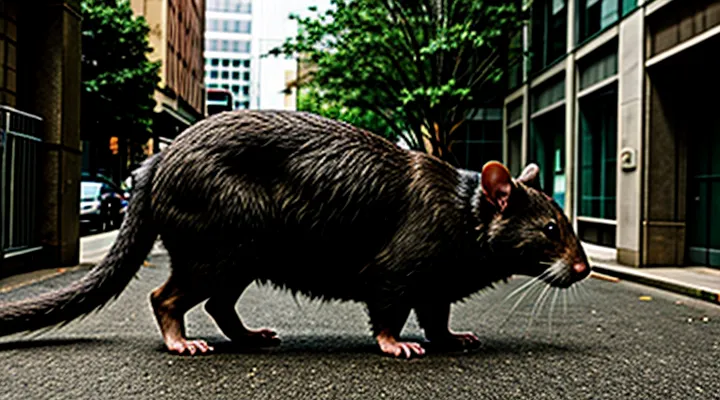
Understanding «Giant Rats»
What Defines a «Giant Rat»?
The term «Giant Rat» refers to a rodent whose dimensions exceed typical species limits. Classification relies on measurable parameters rather than anecdotal descriptions.
- Body length (head‑to‑tail) greater than 30 cm (≈12 in).
- Weight exceeding 500 g (≈1.1 lb).
- Skull and dental morphology consistent with murine or arvicoline families but scaled proportionally.
- Habitat range that includes urban, agricultural, or wild environments where size advantage influences predator‑prey dynamics.
Photographic collections featuring these specimens emphasize scale through comparative objects, lighting that accentuates fur texture, and resolution sufficient to reveal dental and skeletal details. Such visual documentation supports scientific identification and public awareness of size outliers within rodent populations.
Common Species Mistaken for «Giant Rats»
Gambian Pouched Rat
The Gambian pouched rat (Cricetomys gambianus) is a sizable rodent frequently captured in wildlife photography projects that emphasize large‑rat species. Its body length can exceed 40 cm, while the tail adds another 30 cm, creating a striking silhouette against natural backdrops. Dense, coarse fur ranges from brown to gray, and the characteristic cheek pouches expand visibly when the animal forages, providing photographers with dynamic compositional elements.
Key visual features that distinguish this species in images:
- Prominent, rounded ears positioned high on the head, enhancing profile contrast.
- Large, dark eyes that reflect light, producing striking highlights in low‑light shots.
- Muscular forelimbs and sturdy claws, often visible when the rat climbs or manipulates objects.
- Distinctive cheek pouches, occasionally filled with food, adding texture and narrative depth.
Photographers who document giant rodent fauna often select the Gambian pouched rat for its adaptability to diverse habitats, from savanna woodlands to urban outskirts. This adaptability allows for varied lighting conditions and backgrounds, from sun‑drenched grasslands to dimly lit storage facilities, expanding the visual repertoire of the collection.
When composing images, emphasis on the animal’s natural behavior—such as nocturnal foraging, scent marking, or social interaction—enhances authenticity. Use of shallow depth of field isolates the subject, while wide‑angle lenses capture the full extent of its elongated form within the environment.
Overall, the Gambian pouched rat contributes a compelling subject to photographic series centered on large rat species, offering both anatomical interest and behavioral richness that enrich visual storytelling.
Cane Rat
The Cane Rat, a sizable African rodent, frequently appears in visual archives dedicated to large‑rat imagery. Its robust body, dense fur, and distinctive facial structure distinguish it from other megafaunal rodents, providing clear visual markers for identification.
Photographic documentation of the Cane Rat emphasizes several technical aspects:
- Lighting: soft, diffused illumination reduces harsh shadows on the animal’s thick coat.
- Composition: eye‑level framing captures the creature’s natural posture, highlighting the proportion of its head to torso.
- Background: natural savanna or grassland settings maintain ecological relevance while avoiding distracting elements.
Behavioral traits observable in images include nocturnal foraging, communal nesting, and the use of sturdy burrows. These behaviors influence pose selection, as active movement yields dynamic shots, whereas stationary moments reveal anatomical detail.
Conservation photography often pairs visual records with data on habitat range, population density, and threats such as habitat loss. Including this contextual information alongside the images enhances scientific value and supports preservation initiatives.
Large Domesticated Rat Breeds
Large domesticated rat breeds have been selectively developed for size, temperament, and suitability as companion animals. Breeders prioritize genetic lines that produce individuals weighing 500 g to over 1 kg, with robust skeletal structures and calm dispositions.
Key breeds include:
- « Giant Fancy » – characterized by a rounded body, short fur, and a docile nature.
- « Dumbo » – noted for enlarged ears, expressive facial features, and a friendly temperament.
- « Rex » – distinguished by a velvety, curly coat and moderate growth rate.
- « Hooded » – features a dark mask and a strong, muscular build.
Physical traits common to these breeds are increased bone density, a longer growth period, and a tendency toward larger litter sizes. Nutritional requirements emphasize high‑protein diets, supplemented with calcium and vitamin D to support skeletal development. Enclosure dimensions should allow at least 1 m² of floor space per animal, with multiple levels to encourage natural climbing behavior.
Photographic documentation of these rats serves both scientific and educational purposes. High‑resolution images capture coat texture, ear size, and overall body proportions, facilitating breed identification and health assessments. Consistent lighting and neutral backgrounds enhance detail visibility, while multiple angles provide comprehensive visual records.
Health monitoring protocols focus on respiratory health, dental wear, and musculoskeletal integrity. Regular veterinary examinations, combined with observation of behavior and physical condition, reduce the incidence of common ailments such as respiratory infections and overgrown incisors.
Capturing the «Giant Rat»: Photography Tips
Ethical Photography of Wildlife
Ethical wildlife photography demands respect for animal welfare, adherence to legal regulations, and transparency in image manipulation. When capturing images of unusually large rodents, photographers must prioritize minimal disturbance, maintain appropriate distance, and avoid baiting or trapping. Documentation of such species contributes to scientific knowledge only when the process does not compromise natural behavior.
Key practices include:
- Obtaining permits from relevant authorities before fieldwork.
- Using equipment that reduces noise and flash intensity to prevent stress.
- Recording metadata that details location, time, and environmental conditions.
- Refraining from post‑capture alterations that misrepresent size, coloration, or habitat.
- Sharing images with conservation organizations to support awareness and protection efforts.
Professional conduct extends to publishing standards: crediting sources, providing accurate captions, and disclosing any staging or assistance used during the shoot. Compliance with these principles ensures that visual documentation serves both artistic and ecological objectives without harming the subjects.
Equipment for Wildlife Photography
Lenses for Detail
When capturing the expansive fur texture and subtle coloration of unusually large rodents, the choice of lens determines the level of detail that can be rendered. Prime lenses with focal lengths between 85 mm and 105 mm provide a balance between magnification and depth of field, allowing fine whisker strands to remain sharp while preserving enough background context to convey scale. Macro lenses, typically offering 1:1 reproduction ratios, reveal surface imperfections such as skin pores and minute fur variations that become invisible with standard optics.
Key considerations for selecting lenses in this photographic series include:
- Focal length: longer focal lengths compress perspective, emphasizing the subject’s size; shorter focal lengths maintain spatial relationships with surrounding elements.
- Aperture range: wide apertures (f/1.4–f/2.8) isolate the subject, whereas moderate apertures (f/5.6–f/8) increase depth of field for comprehensive detail.
- Image stabilization: essential for handheld macro work to counteract camera shake at high magnifications.
- Optical quality: low chromatic aberration and high resolving power ensure color fidelity across the complex fur patterns.
Consistent lighting, combined with the appropriate lens, yields images where each hair follicle and reflective eye surface contributes to a scientifically accurate representation of the subject, facilitating both visual impact and analytical study.
Lighting Considerations
Lighting for photographs of oversized rats requires precise control to reveal texture and form without overwhelming the subject. Proper illumination separates the animal from the background, accentuates fur details, and preserves natural coloration.
Key considerations include:
- « Direction » of light: side lighting creates depth, backlighting isolates the silhouette, and front lighting flattens texture. Adjust angle to avoid glare on wet eyes.
- « Quality » of light: soft, diffused sources reduce harsh shadows, while hard light emphasizes contours. Use umbrellas, softboxes, or overcast conditions for uniform illumination.
- « Color temperature »: daylight-balanced light (≈ 5600 K) maintains true fur hues; warmer tungsten light can introduce unwanted amber tones unless corrected with gels.
- « Exposure » settings: moderate shutter speed prevents motion blur, while low ISO minimizes noise that could obscure fine whisker details.
- « Fill light »: reflectors or low-intensity LEDs soften shadows without introducing additional highlights.
- « Background lighting »: rim or hair lighting separates the rodent from dark surfaces, improving subject isolation.
Consistent monitoring of exposure histograms ensures that highlights remain within recoverable range, preserving the integrity of the animal’s features. Adjusting each parameter in concert yields images that convey the creature’s scale and texture accurately.
Techniques for Close-Up Shots
Close‑up photography of unusually large rodents demands precise control of depth of field, lighting, and focus.
A macro-capable lens with a focal length of 90–105 mm provides a comfortable working distance while delivering a high magnification ratio. The lens should support focus‑by‑wire for fine adjustments; manual focus eliminates hunting behavior caused by autofocus algorithms.
Continuous LED panels or softboxes supply even illumination without causing rapid temperature changes that could distress the subject. Diffused light reduces harsh shadows on fur, while a slight rim light separates the animal from the background and emphasizes texture.
Key compositional considerations include:
- Position the camera at the animal’s eye level to capture the gaze and facial details.
- Use a wide aperture (f/2.8–f/4) to isolate the subject; employ focus stacking if the entire head must remain sharp.
- Maintain a neutral, non‑reflective backdrop to prevent color contamination.
- Keep the shutter speed above 1/250 s when the rodent moves to avoid motion blur.
Post‑processing should preserve natural coloration; adjust white balance based on the light source, apply modest sharpening to highlight whisker edges, and reduce noise selectively in shadow regions. The final image must convey the creature’s scale while retaining the intimate detail achievable only through meticulous close‑up technique.
The Role of «Giant Rats» in Ecosystems
Natural Habitats and Distribution
The giant rat occupies a range of environments where abundant food sources and shelter are available. Primary habitats include:
- Subtropical forest floors with dense leaf litter.
- Agricultural fields adjacent to watercourses.
- Urban sewers and abandoned structures in densely populated regions.
Distribution extends across several continents. Populations are documented in:
- Southeast Asia, notably in Thailand, Vietnam, and Malaysia.
- Northern Australia, particularly in the tropical northern territories.
- Central and South America, with concentrations in Brazil, Colombia, and Peru.
- Select Mediterranean islands where introduced populations have established.
Environmental tolerance allows the species to thrive in temperatures ranging from 15 °C to 35 °C and humidity levels between 60 % and 90 %. Adaptability to both natural and anthropogenic landscapes facilitates expansion into new territories, especially where waste management is inadequate. Conservation status varies regionally; in some native ranges the species is abundant, while in areas of introduced presence it is considered a pest.
Ecological Impact and Contributions
Photographic documentation of unusually large rats provides direct visual evidence that supports field surveys, enabling precise mapping of population hotspots and habitat preferences. High‑resolution images capture behavioral cues—such as foraging patterns and nesting sites—that are otherwise difficult to observe, thereby refining ecological models of urban and peri‑urban rodent dynamics.
The visual records contribute to several practical outcomes:
- Identification of disease vectors through visible signs of infection or ectoparasite load, facilitating targeted public‑health interventions.
- Validation of species distribution limits by comparing image metadata with geographic information systems, improving accuracy of biodiversity assessments.
- Enhancement of community outreach programs; compelling imagery raises awareness of rodent‑related environmental issues, encouraging participation in control measures.
Scientific publications cite these photographs as primary data sources, allowing reproducible analyses of morphological variation and phenotypic plasticity. In addition, archival image collections serve as baseline references for long‑term monitoring of climate‑induced habitat shifts, supporting adaptive management strategies.
«Giant Rats» in Human Culture and Perception
Media Portrayals
The visual representation of oversized rodents in contemporary media serves multiple communicative functions. Photographic depictions often appear in news articles addressing urban pest control, scientific studies on rodent morphology, and entertainment pieces that exploit the shock value of a massive vermin image. These images influence public perception by highlighting the contrast between typical expectations of size and the extraordinary scale presented.
Key contexts in which such imagery is employed include:
- Investigative journalism, where photographs document the presence of unusually large specimens in sewer systems or abandoned structures.
- Scientific outreach, featuring high‑resolution shots that illustrate anatomical adaptations relevant to evolutionary research.
- Marketing campaigns, utilizing the striking visual to attract attention for products ranging from novelty merchandise to safety equipment.
Social media platforms amplify the reach of these visuals through rapid sharing, algorithmic promotion, and user‑generated commentary. The prevalence of captioned posts, often employing humor or sensational language, contributes to a viral spread that can distort factual interpretation. Nevertheless, the underlying visual content remains a primary driver of audience engagement, prompting discussion about urban wildlife, public health, and environmental stewardship.
Regulatory bodies and editorial standards frequently address the ethical considerations of publishing such images. Guidelines emphasize accurate labeling, contextual information, and avoidance of manipulation that could mislead viewers. Compliance with these standards ensures that the portrayal of giant rodents maintains informational integrity while satisfying the audience’s appetite for compelling visual storytelling.
Scientific Research and Conservation Efforts
Scientific investigation of large‑rodent imagery supplies quantifiable data on distribution, behavior, and morphological variation. Photographic archives enable longitudinal comparisons that reveal population trends across fragmented habitats.
Key research techniques include:
- Deployment of motion‑activated cameras along riverbanks and forest edges.
- Integration of geotagged images into geographic information systems for spatial analysis.
- Application of image‑recognition algorithms to identify age classes and sex from visual cues.
- Cross‑referencing field photographs with genetic samples to validate species identification.
Conservation initiatives draw directly from these visual datasets. Habitat preservation plans prioritize regions where repeated photographic evidence confirms breeding activity. Public outreach campaigns employ striking images to illustrate the species’ ecological significance, fostering community support for protected‑area designation. Policy proposals reference documented habitat use patterns to justify restrictions on land conversion and pesticide application.
International collaborations fund extensive photographic surveys, standardize data‑sharing protocols, and publish findings in peer‑reviewed journals. Outcome assessments demonstrate measurable reductions in habitat loss and stabilized population estimates in surveyed locales. «The visual record is indispensable for population assessments», a leading researcher notes, underscoring the essential role of systematic photography in both scientific inquiry and effective conservation management.
Gallery of «Giant Rat» Images
Urban Environments
The photographic series featuring an oversized rodent captures the interaction between the creature and metropolitan settings. Urban streets, alleyways, and rooftops serve as backdrops that emphasize scale contrast. Architectural elements such as brick facades, neon signage, and concrete surfaces provide visual reference points that reinforce the animal’s extraordinary size.
Key visual characteristics include:
- Low-angle perspectives that accentuate height and dominance.
- High-contrast lighting that isolates the subject against ambient city glow.
- Inclusion of pedestrian traffic to convey everyday disruption.
- Use of motion blur to suggest rapid movement through crowded thoroughfares.
Technical considerations address lens selection, depth of field, and exposure compensation to maintain detail in both the rat and surrounding infrastructure. Post‑processing techniques often involve selective color grading to highlight the creature’s fur against muted urban tones.
Interpretive analysis focuses on the juxtaposition of natural biology and built environment, illustrating themes of adaptation, intrusion, and visual shock. The images invite viewers to reconsider the boundaries between wildlife and human‑dominated spaces, prompting reflection on ecological resilience within densely populated areas.
Natural Habitats
The photographic series documenting large rodent species focuses on their «natural habitats», revealing the ecological contexts in which these mammals thrive.
Typical environments include:
- Urban sewer systems, where abundant waste supplies sustenance and concealment.
- Agricultural fields, offering grain stores and burrowing soil.
- Forest undergrowth, providing dense vegetation and predator cover.
- Coastal mangrove zones, delivering tidal moisture and varied prey.
Key environmental variables shaping habitat suitability are moisture levels, availability of organic matter, and structural complexity that affords shelter and nesting sites. Photographic practice emphasizes accurate representation of these factors through appropriate lighting, depth of field, and compositional framing, ensuring that each image conveys the relationship between the animal and its surroundings without extraneous commentary.
Captive Settings
The photographic series featuring oversized rodents frequently presents subjects within controlled environments. These environments are deliberately arranged to highlight anatomical details, contrast fur textures, and emphasize behavioral cues. Lighting is typically uniform, eliminating shadows that could obscure scale perception. Backgrounds consist of neutral tones or simple patterns to prevent visual competition with the animal’s form. Enclosures are constructed from transparent materials, allowing unobstructed views while maintaining the safety of both photographer and specimen.
Key characteristics of captive settings include:
- Structured lighting rigs that deliver consistent illumination across the frame.
- Minimalist backdrops designed to isolate the subject.
- Transparent barriers that provide clear sightlines without physical contact.
- Adjustable platforms that enable varied angles and elevations for comprehensive documentation.
Technical considerations prioritize depth of field sufficient to render fine whisker details, while maintaining a shallow focus on the rat’s head to draw viewer attention. The controlled context ensures reproducibility across multiple images, supporting comparative analysis of growth stages, coloration, and posture within the collection.