
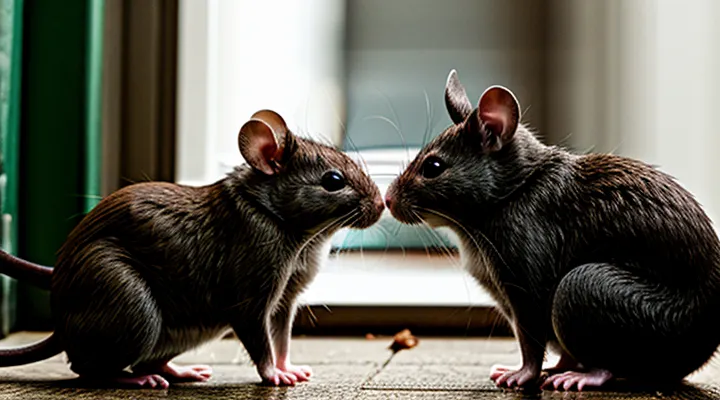
Understanding Rat Social Structures
The Importance of Social Bonds in Rodents
Defining «Friendship» in Animal Contexts
Defining “friendship” in animal research requires a clear set of observable criteria that distinguish affiliative relationships from incidental proximity. Researchers identify friendship when individuals demonstrate consistent, reciprocal interactions that exceed the baseline rates of social contact for the species. Core elements include:
- Repeated grooming or tactile exchange directed toward the same partner across multiple days.
- Mutual preference for shared nesting sites or burrows, measured by longer co‑occupancy than predicted by chance.
- Coordinated foraging or exploration, with individuals adjusting routes to remain together.
- Reduced aggression and heightened tolerance during resource competition, indicating a stable bond.
Empirical studies on rodents illustrate that these patterns emerge independently of kinship, suggesting that social bonds can form between non‑related individuals. Quantitative analyses employ proximity sensors, video tracking, and hormone assays (e.g., oxytocin levels) to validate that the interactions are both sustained and mutually beneficial. The convergence of behavioral frequency, reciprocity, and physiological markers establishes a robust operational definition of friendship applicable across mammalian taxa.
Group Dynamics and Hierarchy
Rats organize into cohesive colonies that persist across generations. Membership is defined by frequent physical contact, shared nesting sites, and coordinated foraging. These bonds create a framework for collective decision‑making and resource allocation.
Within each colony a clear dominance hierarchy emerges. The structure is characterized by:
- A single dominant individual that controls access to prime shelter and food sources.
- One or more secondary leaders that mediate interactions between the dominant rat and lower‑ranking members.
- Subordinate rats that exhibit deference through reduced vocalizations and avoidance of direct challenges.
- Periodic rank adjustments triggered by aggressive encounters, age‑related decline, or changes in group composition.
Hierarchy influences daily activities. Dominant rats initiate group movements, while subordinates follow established pathways. Aggressive displays—such as lateral lunges and tail rattling—serve to reinforce status without causing lethal injury. Conflict resolution often involves brief, ritualized chases that end with the subordinate yielding.
Group dynamics extend beyond rank. Mutual grooming reduces ectoparasite load and lowers cortisol levels, strengthening social cohesion. Cooperative food sharing during scarcity improves survival odds for lower‑ranking individuals, which in turn maintains colony stability. Vocal exchanges—high‑frequency chirps and ultrasonic calls—coordinate nesting construction and predator avoidance.
These social mechanisms shape individual behavior. Rats occupying higher positions demonstrate increased exploratory tendencies and faster learning in maze tasks. Conversely, subordinate rats display heightened vigilance and reduced risk‑taking. Understanding the interplay of hierarchy and cooperation provides insight into the adaptive advantages of rat sociality.
Behavioral Manifestations of Rat Friendship
Allogrooming and Mutual Care
The Role of Scent in Recognition
Rats rely heavily on olfactory cues to identify and maintain social bonds. Individual scent profiles are produced by the combination of urinary markings, glandular secretions, and skin lipids, each containing a unique blend of volatile compounds. When a rat encounters the odor of a conspecific, neural pathways in the olfactory bulb and accessory olfactory system decode the signature, allowing rapid discrimination between familiar and unfamiliar individuals.
Recognition through scent supports several behaviors essential to cooperative interactions:
- Mutual grooming is initiated when a rat detects a familiar odor, reducing stress and reinforcing affiliation.
- Food sharing and cooperative foraging are more likely among individuals whose scents have been previously associated with reliable partners.
- Territorial negotiations are mediated by scent marks that convey dominance status and previous social encounters, decreasing the need for aggressive confrontations.
Experimental studies demonstrate that disruption of olfactory receptors impairs the ability of rats to form stable dyadic relationships, leading to increased aggression and reduced group cohesion. Conversely, exposure to familiar scent cues accelerates reunion after separation, as measured by decreased latency to approach and increased affiliative contacts.
In natural colonies, scent exchange occurs continuously through mutual sniffing, grooming, and communal nesting. These processes create a dynamic chemical network that updates each rat’s perception of group composition, ensuring that social bonds remain adaptable to changes in membership and hierarchy.
Play Behavior and Social Learning
Development of Play Across Life Stages
Rats exhibit a distinct progression of play behavior that mirrors the maturation of their social relationships. In the neonatal period, tactile stimulation from littermates triggers reflexive bouts of chasing and wrestling, establishing the sensory foundations for later interaction. These early exchanges are brief, low‑intensity, and primarily serve to synchronize motor development.
During the weaning stage, play becomes more structured. Juvenile rats engage in patterned pursuit, pinning, and mock fighting that last several minutes and occur several times per day. This phase introduces role differentiation, with individuals alternating between initiator and responder, thereby reinforcing reciprocal tolerance and conflict resolution skills.
In early adulthood, play frequency declines but complexity increases. Adult rats incorporate vocalizations, scent marking, and subtle body postures into their interactions. Play sessions are longer, often integrated with grooming and food sharing, creating opportunities for reinforcement of long‑term affiliative bonds.
The final stage, found in mature, socially stable groups, features sporadic, high‑quality play events that serve as social audits. Adults use these rare encounters to reaffirm hierarchy, detect changes in group composition, and maintain cohesion after periods of stress or relocation.
Key characteristics of play development across these stages:
- Duration: increases from seconds (neonates) to several minutes (adults).
- Intensity: shifts from high‑energy bouts (juveniles) to low‑intensity, nuanced exchanges (adults).
- Social function: evolves from motor coordination to conflict mediation, hierarchy reinforcement, and group stability.
Understanding this trajectory clarifies how play underpins the formation and maintenance of rat friendships, influencing broader behavioral patterns within their communities.
Cooperative Foraging and Resource Sharing
Evidence of Altruism in Food Distribution
Research on rodent social dynamics has documented instances where individuals share food with non‑kin, indicating altruistic behavior within established group relationships. Laboratory experiments using paired and group housing conditions demonstrate that a rat will voluntarily relinquish a portion of a high‑value food item when a conspecific exhibits signs of hunger, even when the donor’s own intake is reduced.
Key observations include:
- Increased latency before the donor consumes the entire resource when a partner is present.
- Elevated grooming and close-contact behaviors preceding food sharing, suggesting reinforcement of affiliative bonds.
- Consistent sharing across multiple trials, implying a stable pattern rather than a one‑off response.
Neurochemical analyses reveal that dopamine and oxytocin levels rise in both participants during the sharing episode, supporting a physiological basis for cooperative feeding. Moreover, genetic studies indicate that rats with higher expression of the vasopressin receptor exhibit more frequent altruistic distribution, linking the trait to specific molecular pathways.
Field studies of wild populations corroborate laboratory findings. In environments where food scarcity fluctuates, individuals observed near communal caches often allow subordinate members to access portions first, reducing aggressive encounters and enhancing group cohesion.
Collectively, these data provide robust evidence that rats engage in deliberate food distribution to benefit others, reinforcing the notion that cooperative strategies are integral to their social repertoire.
Factors Influencing Friendship Formation
Genetic Predisposition and Kinship
Familiarity and Early Life Experiences
Rats that grow up together develop strong social bonds that persist into adulthood. Repeated interactions during the neonatal and juvenile periods increase mutual recognition, reduce aggression, and promote cooperative behaviors such as grooming and shared nesting. Early exposure to conspecifics creates a stable reference for acceptable social cues, enabling individuals to distinguish familiar partners from strangers with high accuracy.
The strength of these relationships correlates with the amount of shared experience. Litters that remain together after weaning display higher rates of affiliative actions compared to those separated at an early age. Familiarity also influences problem‑solving dynamics; pairs with a history of cohabitation coordinate more efficiently when navigating mazes or accessing food resources. Consequently, the duration and quality of early social exposure shape the pattern and stability of rat friendships.
Key observations:
- Cohabitation from birth to weaning leads to consistent partner preference.
- Separation before the critical period (≈3 weeks) reduces subsequent affiliative behavior.
- Familiarity enhances cooperative foraging and reduces latency in joint tasks.
- Early social environment modulates stress responses during later social encounters.
Environmental Impact on Social Cohesion
Rats maintain complex social structures that depend heavily on external conditions. Laboratory and field observations reveal that temperature fluctuations alter grooming frequency, directly affecting group stability. Elevated ambient heat reduces grooming bouts, leading to weaker affiliative ties and increased aggression. Conversely, moderate temperatures promote regular grooming, reinforcing bonds and smoothing hierarchical transitions.
Food availability shapes communal interactions. Scarcity triggers competition, prompting individuals to isolate or form temporary alliances that dissolve when resources improve. Abundant supplies encourage shared foraging and collective nesting, which strengthens cohesion and synchronizes activity cycles.
Habitat complexity influences spatial organization. Environments with multiple tunnels and nesting chambers enable subgroups to establish distinct territories while preserving overall group connectivity through shared corridors. Simplified habitats limit movement options, forcing close proximity that can either intensify bonding or amplify stress, depending on population density.
Air quality impacts vocal communication used for coordination. High concentrations of ammonia or particulate matter dampen ultrasonic calls, impairing signal transmission and reducing coordinated behaviors such as collective escape responses. Cleaner air preserves call clarity, supporting synchronized movement and joint decision‑making.
Key environmental variables and their effects on rat social cohesion:
- Temperature: moderate → increased grooming; extreme → reduced affiliative behavior.
- Food resources: plentiful → shared foraging; limited → heightened competition.
- Habitat structure: complex → subgroup formation with connectivity; simple → forced proximity, variable stress.
- Air quality: low pollutants → effective ultrasonic communication; high pollutants → signal attenuation.
Understanding these relationships enables researchers to predict how changes in living conditions will modify rat social dynamics, informing both laboratory welfare protocols and ecological management strategies.
Communication in Rat Friendships
Vocalizations and Ultrasonic Signals
Interpreting Different Calls
Rats communicate through a repertoire of ultrasonic and audible calls that convey specific social information. Short, high‑frequency chirps usually signal curiosity or invitation to explore, prompting nearby conspecifics to approach. Longer, modulated trills often accompany grooming sessions, reinforcing affiliative bonds between partners. Low‑amplitude squeaks emitted during food sharing indicate tolerance and willingness to cooperate, reducing competition over resources.
Interpretation of these vocalizations follows consistent patterns across laboratory and field observations:
- Contact chirps (10–20 kHz, <30 ms): initiate proximity, encourage nest entry, and synchronize activity cycles.
- Affiliative trills (20–30 kHz, 50–100 ms): accompany mutual grooming, correlate with increased oxytocin levels, and stabilize pairwise relationships.
- Cooperative squeaks (5–10 kHz, 100–200 ms): arise during simultaneous feeding, signal shared access, and predict reduced aggression.
- Distress whistles (30–40 kHz, >200 ms): emitted when isolated or threatened, elicit rescue behavior from familiar rats, strengthening group cohesion.
Accurate decoding of these calls enables researchers to assess the quality and dynamics of rat friendships, providing a measurable index of social cohesion within rodent colonies.
Body Language and Postural Cues
Rats communicate affiliation through a repertoire of visual signals that convey intent, comfort, and hierarchy. Subtle adjustments in ear position, whisker orientation, and tail posture provide immediate feedback about relational status. When two individuals share a stable bond, they display a consistent pattern of relaxed musculature and synchronized movements.
Key postural cues that denote amicable interaction include:
- Erect, forward‑facing ears: indicates alertness without aggression, typical of cooperative foraging.
- Whiskers held forward and slightly spread: enhances tactile sampling, reflecting shared exploration.
- Tail held low or gently curled around the partner: signals trust and reduced defensive readiness.
- Body orientation toward the conspecific: sustained side‑by‑side or rear‑to‑rear positioning demonstrates willingness to maintain proximity.
- Reduced grooming tension: smooth, rhythmic grooming motions without abrupt pauses suggest mutual comfort.
- Relaxed hind‑limb stance: weight evenly distributed, avoiding stiff leg extension that often precedes conflict.
During affiliative encounters, rats also employ synchronized locomotion. Parallel walking, matching stride length, and simultaneous pauses reinforce the perception of a cohesive unit. Such coordination reduces metabolic cost and strengthens the social bond.
Conversely, deviations from these patterns—ear flattening, whisker retraction, tail elevation, or rapid directional changes—signal tension or challenge. Recognizing these shifts enables rapid assessment of group dynamics and facilitates conflict avoidance.
The Benefits and Costs of Friendship
Enhanced Survival and Well-being
Stress Reduction and Health Outcomes
Social bonds between laboratory rats produce measurable reductions in physiological stress markers. Cohabiting pairs exhibit lower corticosterone concentrations than isolated individuals, indicating attenuated activation of the hypothalamic‑pituitary‑adrenal axis. Reduced cortisol correlates with improved immune function, as evidenced by increased lymphocyte proliferation and enhanced antibody responses to antigen challenges.
Behavioral observations reveal that affiliative interactions—grooming, huddling, and coordinated foraging—serve as protective mechanisms against chronic stress. Rats engaged in regular mutual grooming display fewer stereotypic behaviors and maintain stable body weight, suggesting better metabolic regulation.
Key health outcomes associated with rat companionship include:
- Decreased incidence of ulcerative lesions in the gastrointestinal tract.
- Lower mortality rates following exposure to environmental stressors.
- Accelerated wound healing, measured by reduced closure time and increased collagen deposition.
Neurochemical analyses show elevated oxytocin and dopamine levels during social contact, reinforcing reward pathways that mitigate anxiety-like responses. Consequently, social housing practices in experimental settings improve reproducibility of results by minimizing stress‑induced variability.
Implementing paired or group housing aligns with evidence‑based recommendations for rodent welfare and supports robust physiological data across biomedical research.
Potential for Conflict and Resolution
Rats maintain stable social groups, yet competition for resources and status frequently generates tension. Within a colony, individuals establish hierarchies through aggressive encounters, territorial marking, and food monopolization. These interactions can destabilize affiliative bonds if not moderated.
Key sources of conflict include:
- Competition for limited food or nesting sites.
- Challenges to established dominance during periods of rapid growth or hormonal change.
- Intrusion of unfamiliar conspecifics into a resident group.
- Disruption of scent‑based communication pathways, such as removal of odor cues.
Resolution mechanisms operate promptly to restore cohesion:
- Post‑conflict grooming, where the victor or subordinate cleans the opponent, reduces cortisol levels and reinforces affiliation.
- Submissive posturing, including lowered body posture and tail flattening, signals acceptance of the new hierarchy.
- Release of appeasement pheromones that dampen aggression and facilitate re‑establishment of social bonds.
- Re‑allocation of resources, often mediated by the dominant individual, to prevent repeated contests.
Effective mitigation of disputes enhances group stability, improves reproductive success, and lowers stress‑related pathology. Researchers and caretakers can promote resolution by providing abundant nesting material, maintaining consistent group composition, and allowing natural scent exchange through shared bedding. These practices support the persistence of cooperative relationships despite inevitable conflicts.
Ethical Considerations in Studying Rat Social Behavior
Minimizing Stress in Research Environments
Promoting Natural Social Interactions
Rats exhibit complex affiliative patterns that can be strengthened by deliberately encouraging natural social exchanges. Providing a stable group composition reduces aggression and fosters cooperative grooming, nesting, and exploration. Consistent group membership allows individuals to recognize familiar partners, reinforcing trust and reducing stress hormones.
Environmental enrichment supports interaction. Structures such as tunnels, climbing platforms, and shared nesting material create focal points where rats congregate. When resources are abundant and evenly distributed, competition declines, and opportunities for mutual grooming increase.
Key practices for promoting authentic social behavior include:
- Maintaining groups of three to five rats of compatible age and sex.
- Supplying ample nesting material to encourage collective nest building.
- Rotating enrichment objects weekly to sustain curiosity without disrupting hierarchy.
- Monitoring for signs of dominance or exclusion and adjusting group composition when necessary.
- Limiting human handling to brief, gentle sessions to prevent habituation that interferes with peer bonding.
Observational protocols should record frequencies of allogrooming, huddling, and coordinated play. Data collected over several weeks reveal baseline interaction rates, enabling identification of deviations that may indicate health or welfare concerns. By aligning housing conditions with innate social tendencies, caretakers can maximize the well‑being of rat colonies while preserving the integrity of their natural affiliative behaviors.