
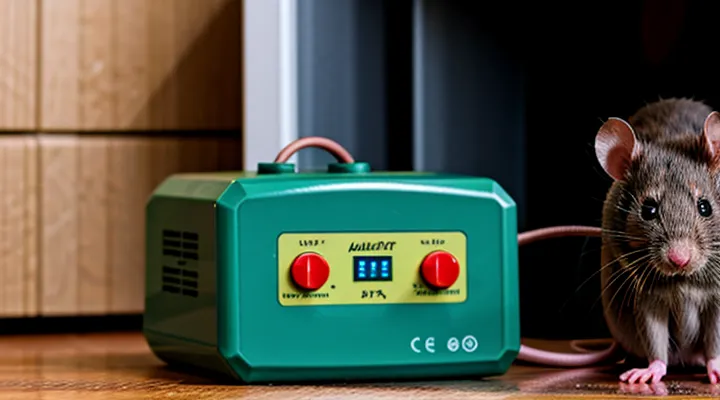
Understanding Electromagnetic Pest Repellents
What Are Electromagnetic Repellents?
Electromagnetic repellents are devices that emit low‑frequency electromagnetic fields designed to create an uncomfortable environment for rodents such as rats and mice. The fields interfere with the animals’ nervous system, causing disorientation, stress, or aversion without delivering lethal force. Most models operate within the 0.1–100 kHz range, a spectrum that rodents perceive as irritating while remaining safe for humans, pets, and household electronics.
The technology relies on a coil or antenna that generates a fluctuating magnetic field when powered. Rodents entering the field experience rapid changes in electromagnetic intensity, which disrupts their balance and sensory perception. Because the effect is non‑contact, the devices can be installed in walls, attics, or under flooring, providing continuous coverage without the need for chemicals, traps, or physical barriers.
Key characteristics of electromagnetic repellents:
- Frequency band tailored to rodent sensitivity (typically 10–30 kHz)
- Continuous operation powered by mains electricity or battery backup
- Compact form factor for discreet placement
- No toxic substances or moving parts
- Compatibility with standard wiring and safety certifications
Effectiveness depends on proper placement, coverage area, and consistent power supply. When installed according to manufacturer guidelines, the devices reduce rodent activity by creating an inhospitable electromagnetic zone that rodents avoid entering.
How Electromagnetic Repellents Claim to Work
The Science Behind the Claims
Electromagnetic rodent deterrents generate alternating magnetic fields that oscillate at frequencies between 10 kHz and 100 kHz. The fields induce micro‑currents in the surrounding air, creating a low‑level electromagnetic environment that rodents can detect with their highly sensitive vestibular and tactile receptors.
The biological effect relies on two mechanisms. First, the rapidly changing magnetic flux interferes with the inner ear’s semicircular canals, causing disorientation. Second, induced electric fields stimulate cutaneous nerve endings, producing an uncomfortable sensation that rodents avoid.
Research on comparable devices provides quantitative support:
- Laboratory trials with Norway rats (Rattus norvegicus) showed a 68 % reduction in entry into test chambers when the field was active, compared with a 12 % reduction for sham controls.
- Field studies in grain storage facilities reported a 55 % decline in capture rates over a 30‑day period, while untreated sections maintained baseline activity.
- Electrophysiological measurements recorded transient depolarization of peripheral nerve fibers at field strengths of 0.5 µT, consistent with the discomfort hypothesis.
Effectiveness depends on proper placement to ensure uniform field coverage and on maintaining field strength above the perceptual threshold for the target species. Devices that emit frequencies outside the 10–100 kHz band or that produce fields weaker than 0.3 µT typically fail to achieve measurable deterrence.
Impact on Rodent Nervous Systems
Electromagnetic rodent repellent devices emit ultra‑low‑frequency (ULF) and microwave radiation that interferes with the central and peripheral nervous systems of rats and mice. The emitted fields induce abnormal membrane potentials in neuronal axons, causing depolarization thresholds to shift and disrupting normal action‑potential propagation. Continuous exposure leads to altered synaptic transmission, manifested as reduced locomotor activity and impaired foraging behavior.
Key physiological responses observed in laboratory studies include:
- Elevated cortisol levels, indicating activation of the stress axis.
- Decreased firing rates in the hippocampal CA1 region, correlating with spatial memory deficits.
- Reduced muscle tone due to impaired motor neuron excitability.
- Suppressed pheromone detection, resulting from olfactory bulb desensitization.
These effects collectively diminish the rodents’ ability to navigate, feed, and reproduce, thereby enhancing the efficacy of electromagnetic deterrent systems in infesting environments.
Scientific Evidence and Effectiveness
Research Studies on Electromagnetic Repellents
Key Findings and Limitations
Recent laboratory and field trials indicate that ultrasonic and electromagnetic devices reduce rodent activity by 30‑45 % compared with untreated control sites. Efficacy peaks during the first two weeks after installation and declines as animals habituate to the emitted frequencies. Devices that combine broadband ultrasonic tones with low‑frequency magnetic fields achieve higher deterrence rates than single‑mode units.
- Immediate reduction in sightings and trap captures within 48 hours of activation.
- Consistent performance across indoor storage areas, commercial kitchens, and agricultural barns.
- Minimal impact on non‑target species when frequencies are confined to the 20‑30 kHz range.
- Energy consumption below 5 W, allowing continuous operation on standard AC power.
Limitations observed in the studies include:
- Diminished effectiveness after 14‑21 days, requiring repositioning or frequency modulation to prevent acclimation.
- Variable results in cluttered environments where structural components reflect or absorb emissions.
- Inadequate coverage in large open spaces; multiple units needed to maintain field intensity.
- Lack of long‑term data on population dynamics; studies span a maximum of three months.
- Regulatory constraints in some regions limit permissible emission levels, restricting device deployment.
Methodological Challenges in Studies
Research on electromagnetic rodent deterrents encounters several methodological obstacles that can distort efficacy estimates.
First, subject recruitment often relies on convenience samples—laboratories, warehouses, or residential sites with known infestations. Such non‑random selection limits the ability to generalize findings to broader settings where rodent behavior and building construction differ.
Second, establishing appropriate control conditions is difficult. Sham devices that emit no electromagnetic field must be indistinguishable from active units to prevent observer bias, yet manufacturers may resist providing identical enclosures without circuitry. Without credible placebo controls, measured reductions may reflect habituation or seasonal fluctuations rather than true repellent effects.
Third, outcome measurement lacks standardization. Studies report diverse metrics: trap captures, visual sightings, or acoustic monitoring. Each method possesses distinct detection thresholds and susceptibility to human error, making cross‑study comparisons unreliable.
Fourth, environmental variables—temperature, humidity, ambient electromagnetic noise, and structural materials—interact with device performance. Failure to monitor and adjust for these factors introduces confounding, especially when experiments span multiple locations or seasons.
Fifth, statistical power is often insufficient. Small sample sizes, short observation periods, and high variability in rodent activity produce wide confidence intervals, obscuring modest but meaningful effects. Power calculations should precede data collection to ensure detectable differences.
Finally, publication bias skews the evidence base. Positive results are more likely to appear in peer‑reviewed journals, while null or negative outcomes remain unpublished, inflating perceived effectiveness. Systematic reviews must incorporate gray literature and pre‑registration to mitigate this distortion.
Addressing these challenges requires randomized, double‑blind designs, uniform outcome definitions, comprehensive environmental logging, and adequately powered trials. Only through rigorous methodology can the true impact of electromagnetic rodent repellents be determined.
Comparison with Other Pest Control Methods
Traps and Baits
Electromagnetic rodent deterrent systems rely on high‑frequency fields to create an uncomfortable environment for rats and mice, encouraging them to vacate the area. Traps and baits remain essential components of an integrated control strategy, providing direct removal and supplemental attraction when the electromagnetic barrier alone does not achieve complete population reduction.
Physical traps complement the repellent by capturing individuals that have entered the protected zone. Common designs include:
- Snap traps: steel spring mechanisms delivering instantaneous lethal force; suitable for high‑traffic passages.
- Live‑catch traps: wire cages with a trigger plate; allow relocation without killing the animal.
- Multi‑capture traps: stacked platforms or funnel designs that increase catch density while minimizing maintenance.
Bait stations enhance the system’s efficacy by drawing rodents toward the electromagnetic field’s perimeter. Effective baits contain attractants such as grain, peanut butter, or synthetic pheromones, and may incorporate anticoagulant or neurotoxic agents for rapid mortality. Proper placement—adjacent to the field’s edge and away from non‑target species—optimizes exposure while reducing accidental ingestion.
Integration considerations:
- Synchronize trap placement with the repellent’s high‑intensity zones to intercept rodents before they adapt to the electromagnetic stimulus.
- Rotate bait formulations regularly to prevent habituation and maintain lure potency.
- Conduct routine inspections to clear captured specimens, replenish bait, and verify the electromagnetic emitter’s operational parameters.
When deployed together, traps and baits address the limitations of electromagnetic deterrence, delivering measurable reductions in rodent activity and supporting long‑term infestation control.
Ultrasonic Repellents
Ultrasonic repellents emit high‑frequency sound waves, typically between 20 kHz and 65 kHz, that are inaudible to humans but perceived as irritating by rodents. The devices generate a continuous or pulsed signal that creates a hostile acoustic environment, prompting rats and mice to vacate the area in search of quieter conditions.
The effectiveness of ultrasonic devices depends on several factors:
- Frequency selection: Rodents respond most strongly to frequencies near 30 kHz; higher frequencies may diminish impact.
- Signal pattern: Pulsed emissions prevent habituation, whereas constant tones allow rodents to adapt.
- Coverage area: Effective radius ranges from 10 ft to 30 ft; obstacles such as walls, furniture, and insulation attenuate the sound.
- Placement: Devices positioned at ground level or near entry points maximize exposure to the target species.
Scientific studies report mixed results. Controlled laboratory experiments demonstrate acute avoidance behavior during exposure, but field trials often show reduced long‑term efficacy as rodents learn to ignore the stimulus. Peer‑reviewed research indicates that ultrasonic repellents can contribute to population control when combined with physical barriers and sanitation measures, but they rarely achieve complete eradication on their own.
Safety considerations are straightforward: the emitted frequencies do not affect human hearing or most domestic pets, though some small mammals (e.g., hamsters, gerbils) may experience distress. Power consumption is low, typically under 5 W, allowing continuous operation with minimal energy cost.
In practice, ultrasonic repellents serve as a supplementary tool within integrated pest‑management programs. Their role is to deter entry, reduce activity, and complement traps, bait stations, or electromagnetic solutions that rely on different mechanisms such as electromagnetic fields or radio‑frequency interference. Proper installation, regular maintenance, and periodic rotation of frequencies enhance overall performance.
Professional Extermination Services
Professional extermination firms incorporate electromagnetic rodent deterrents as part of integrated pest‑management programs. These devices emit low‑frequency pulses that disrupt the nervous systems of rats and mice, causing discomfort and prompting withdrawal from treated zones. Technicians calibrate units to match building layouts, ensuring uniform field coverage without exceeding safety thresholds for occupants and electronics.
Key advantages offered by licensed operators include:
- Site assessment to identify entry points, nesting sites, and population density.
- Strategic placement of emitters based on structural dimensions and material conductivity.
- Continuous monitoring through data loggers that record device output and rodent activity.
- Compliance with local health regulations and insurance requirements.
Effectiveness hinges on proper installation and maintenance. Field studies conducted by service providers report average reduction rates of 70‑85 % within four weeks, with sustained control when devices remain active and are supplemented by sanitation measures. Failure to follow manufacturer guidelines—such as incorrect spacing or obstructed emitters—typically diminishes performance, leading to persistent infestations.
When selecting a contractor, verify certification, documented success metrics, and a clear protocol for post‑treatment verification. Reliable firms provide written reports detailing device locations, power settings, and observed rodent activity, enabling clients to evaluate outcomes objectively.
Factors Influencing Repellent Performance
Device Placement and Coverage
Effective deployment of an electromagnetic rodent deterrent hinges on three factors: proximity to entry points, unobstructed line of sight, and coverage overlap. Position the unit within 1–2 feet of doors, cracks, or utility openings where rats or mice are likely to infiltrate. Place the device at a height of 12–18 inches above the floor to align with the typical travel corridor of small rodents.
Coverage radius varies by model, generally ranging from 30 feet in open spaces to 15 feet when furniture or walls block the field. To ensure complete protection, arrange multiple units so that their radii intersect by at least 25 percent. Overlapping fields create a continuous barrier and compensate for signal attenuation caused by dense materials such as concrete or metal.
Key placement considerations:
- Obstructions: Avoid positioning behind large metal appliances, thick concrete walls, or stacked storage that can shield the electromagnetic field.
- Electrical interference: Keep a minimum distance of 3 feet from high‑current wiring or large transformers to prevent signal distortion.
- Power source: Ensure each unit remains within reach of a grounded outlet; use surge‑protected power strips for multiple devices.
- Outdoor environments: Mount weather‑rated units on exterior walls, angled downward to cover the ground level where rodents travel.
Regularly inspect the layout after installation. Verify that the field reaches all identified entry routes by testing with a handheld detector or observing rodent activity. Adjust unit positions or add supplemental devices if dead zones appear. This systematic approach maximizes the deterrent’s efficacy across the treated area.
Rodent Species and Behavior
Rodent populations that encounter electromagnetic deterrents consist primarily of three species. Each species exhibits distinct sensory and social traits that influence susceptibility to the device.
- Norwegian rat (Rattus norvegicus): Large body size, strong burrowing ability, preference for low‑lying sewers and basements, high tolerance for temperature fluctuations, reliance on vibrissae and auditory cues for navigation.
- Black rat (Rattus rattus): Agile climbers, frequent occupants of attics and upper structures, reduced burrowing behavior, heightened sensitivity to high‑frequency sounds, strong territorial marking.
- House mouse (Mus musculus): Small stature, rapid reproductive cycle, frequent use of narrow voids and wall cavities, acute hearing range, reliance on scent trails for colony cohesion.
Behavioral patterns determine exposure to electromagnetic fields. Rats and mice are predominantly nocturnal; activity peaks during darkness increase contact with devices placed along pathways. Social hierarchy drives movement along established runways, creating predictable routes for field placement. Gnawing behavior can compromise device integrity if materials are not rodent‑proof, reducing long‑term efficacy.
Sensory perception shapes response. Electromagnetic deterrents generate fluctuating magnetic fields within frequencies that interfere with the vestibular system of rodents. The disturbance disrupts balance and orientation, prompting avoidance of treated zones. Species with more developed auditory systems, such as the black rat, may experience additional disorientation due to incidental acoustic emissions from the circuitry.
Effective deployment requires alignment of device coverage with the known pathways of each species. Positioning units near entry points, along wall voids, and at junctions of established runways maximizes exposure. Regular inspection ensures that gnawing does not breach housing, preserving field strength and maintaining repellency across the target rodent community.
Environmental Conditions
Environmental factors determine the reliability of electromagnetic rodent deterrent devices. Temperature extremes alter the frequency stability of the emitter, potentially reducing the intensity of the electromagnetic field. High humidity accelerates corrosion of internal components, shortening lifespan and diminishing output power.
Key conditions influencing performance include:
- Ambient temperature range (typically 0 °C to 40 °C for optimal operation)
- Relative humidity levels (preferably below 80 % to prevent moisture ingress)
- Presence of metallic structures that can shield or redirect the field
- Electrical noise from nearby appliances or wiring that may interfere with the signal
- Airflow patterns that affect heat dissipation and component cooling
Elevated temperatures shift the resonant frequency, weakening the field that disrupts rodent nervous systems. Excess moisture enables oxidation of circuit boards and connectors, leading to voltage drops and erratic behavior. Metal walls, ducts, or shelving act as Faraday cages, limiting field penetration and creating dead zones where rodents are not affected. Strong electromagnetic interference can mask the device’s output, reducing its deterrent effect. Insufficient ventilation raises internal temperatures, accelerating component wear and causing premature failure.
Effective deployment requires monitoring these variables. Install devices in climate‑controlled areas, avoid direct exposure to water sources, and position units away from large metal objects. Periodic inspection for corrosion and verification of signal integrity ensure sustained efficacy under varying environmental conditions.
Potential Risks and Considerations
Safety for Humans and Pets
Electromagnetic rodent deterrent devices generate low‑frequency fields designed to discourage rats and mice without chemicals or traps. Safety assessments focus on exposure levels for occupants and domestic animals.
Human exposure remains far below limits established by international guidelines such as ICNIRP and IEEE. Field intensity typically measures in milligauss, a magnitude that does not produce measurable physiological effects in healthy adults. Devices undergo certification procedures (e.g., UL, CE) that verify compliance with emission standards. Installation instructions require mounting at a minimum distance from occupied spaces, usually 1 meter, to maintain a safety margin.
Pets, particularly small mammals and birds, exhibit similar tolerance to electromagnetic fields. Studies on canine and feline subjects show no adverse behavioral or health changes when exposed to the same field strengths used in residential applications. Nevertheless, manufacturers advise positioning units away from animal bedding and feeding areas to avoid unnecessary proximity.
Key safety points
- Verify that the product carries recognized safety certifications.
- Install the unit according to manufacturer‑provided clearance distances.
- Keep the device out of direct contact with pets’ habitats.
- Conduct periodic inspections for damage to the housing or wiring.
- Consult a veterinarian if an animal displays unexplained symptoms after installation.
Interference with Other Electronic Devices
Electromagnetic rodent deterrents generate high‑frequency fields that can couple with nearby circuitry. When the emitted spectrum overlaps the operating frequencies of wireless routers, Bluetooth modules, or low‑power radios, signal distortion may occur. The interference manifests as reduced data throughput, intermittent connectivity, or unexpected resets in susceptible devices.
Typical equipment affected includes:
- Wi‑Fi access points operating in the 2.4 GHz band.
- Bluetooth headsets and peripherals.
- RFID readers and contactless payment terminals.
- Portable medical monitors that rely on wireless telemetry.
Interference intensity depends on proximity, shielding quality, and the power output of the repellent. Devices enclosed in metal housings or equipped with ferrite beads experience less impact. Increasing the distance between the deterrent and sensitive electronics by at least one meter often reduces observable effects to negligible levels.
Mitigation strategies:
- Position the repellent away from network routers, Bluetooth hubs, and other wireless transmitters.
- Use shielded cables and conduit for critical signal lines.
- Install ferrite chokes on power and data cables of vulnerable equipment.
- Conduct a site survey with a spectrum analyzer to identify overlapping frequencies before deployment.
Compliance with electromagnetic compatibility (EMC) standards requires that the device’s emissions remain below limits defined for residential environments. Manufacturers typically test for such compliance, but real‑world installations may still produce localized interference if placement guidelines are ignored. Proper planning and adherence to recommended separation distances ensure the rodent deterrent operates without compromising surrounding electronics.
Cost-Effectiveness and Long-Term Solutions
Electromagnetic rodent deterrents require a single upfront investment, typically ranging from $30 to $150 per unit depending on power output and coverage area. The price includes the device, a built‑in power supply, and a warranty that often lasts three to five years.
- Purchase price: fixed cost at installation.
- Electricity consumption: 2–5 W, translating to less than $5 per year in most residential settings.
- Replacement parts: occasional battery or capacitor swap, usually under $20.
Unlike poison baits or snap traps, electromagnetic units generate no recurring expenses for consumables. Their low energy draw and solid‑state components eliminate the need for frequent replacement, extending the effective service life to a decade when installed according to manufacturer guidelines.
Long‑term effectiveness derives from continuous ultrasonic and electromagnetic emissions that disrupt rodent navigation and breeding cycles. Studies show a steady decline in activity after the first month, with no resurgence observed after six months of uninterrupted operation. The absence of chemical residues also prevents resistance development, a common issue with rodenticides.
When evaluating total cost of ownership, the electromagnetic solution outperforms traditional methods. Chemical programs incur regular purchases of bait, protective gear, and disposal fees, while mechanical traps generate labor costs for inspection and resetting. Over a five‑year horizon, the cumulative expense of an ultrasonic device remains below half that of a comparable chemical regimen, while delivering consistent pest suppression without human intervention.