
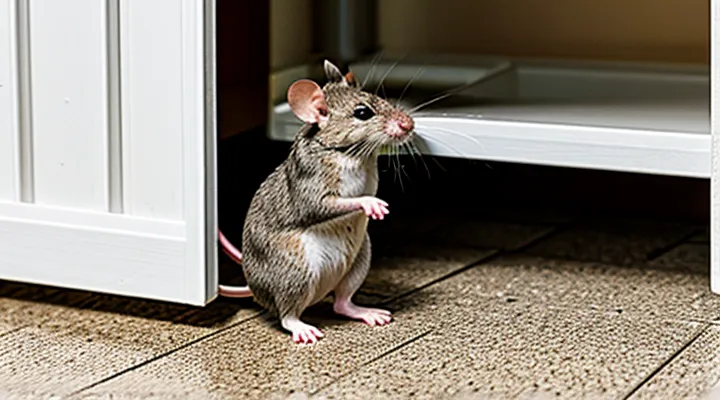
Understanding Mouse Behavior
Why Mice Enter Homes
Search for Food
Mice locate nourishment by following scent trails, detecting moisture, and exploiting gaps that expose stored provisions. Their foraging pattern prioritizes high‑energy items such as grains, sugary residues, protein scraps, and animal fats. Any accessible source sustains movement through walls and ceilings, reinforcing infestation cycles.
Effective control begins with eliminating these incentives. Secure all consumables in sealed containers, discard expired food, and clean surfaces immediately after meals. Repair cracks, gaps, and utility penetrations that permit rodent entry; use steel wool or silicone caulk for long‑term sealing. Install door sweeps and ensure that garbage bins feature tight‑fitting lids.
Supplementary deterrents target the olfactory system that guides food‑searching behavior. Options include:
- Predator‑derived scents (e.g., fox urine) applied near potential entry points.
- Bitter or capsaicin‑based sprays on surfaces where crumbs may accumulate.
- Ultrasonic emitters positioned in high‑traffic zones to disrupt auditory cues.
By removing attractive nutrition and employing sensory repellents, the house becomes inhospitable to mice, reducing the likelihood of recurring searches for food and the resulting damage.
Search for Shelter
Mice enter residential structures primarily to find protected nesting sites. They prefer areas that offer darkness, stable temperature, and limited disturbance. The presence of such locations determines the success of any rodent deterrence program.
Typical shelter spots include:
- Wall voids and insulation gaps
- Under floorboards and crawl spaces
- Behind appliances and stored items
- Attic rafters and loft insulation
- Basement corners and pipe chases
Each of these micro‑environments provides the concealment mice require for breeding and foraging. Removing or modifying them reduces the attractiveness of the building as a habitat.
Effective deterrence measures focus on eliminating the conditions that support shelter. Actions involve sealing entry points, compressing insulation gaps, installing sturdy barriers around utility penetrations, and maintaining regular inspection routines to detect emerging hideouts. By targeting the search for shelter directly, the overall efficacy of a house mouse repellent strategy improves markedly.
Search for Water
Mice survive by accessing water; eliminating accessible sources reduces the likelihood of infestation. Identify every point where moisture accumulates and remove it.
Typical locations include:
- Leaking pipes beneath sinks or behind appliances
- Condensation on windows and walls
- Pet water bowls left unattended overnight
- Damp basements or crawl spaces
- Dripping HVAC units
Inspect each area visually, then verify with a moisture meter where visual cues are absent. Repair leaks, install splash guards, and replace faulty seals. Store pet water containers in sealed containers and empty them nightly during control periods. Increase ventilation in basements and crawl spaces to lower humidity. Use absorbent pads under appliances prone to condensation.
By systematically locating and eliminating water sources, the environment becomes inhospitable to house mice, supporting an effective home pest deterrence strategy.
Signs of a Mouse Infestation
Droppings and Urine
Droppings and urine are primary indicators of mouse activity and present significant health hazards in residential environments. Their presence signals infestation, contaminates surfaces, and attracts additional pests. Effective mouse control strategies must address these by eliminating sources, reducing attractants, and preventing re‑contamination.
Key considerations include:
- Health risks: Pathogens such as Hantavirus, Salmonella, and Leptospira thrive in rodent waste, posing respiratory and gastrointestinal threats.
- Detection: Fresh droppings appear as small, dark pellets; urine stains manifest as amber‑colored rings or a faint, musky odor. UV light reveals otherwise invisible residues.
- Cleaning protocol:
- Ventilate the area for at least 15 minutes.
- Wear disposable gloves and a mask.
- Apply a disinfectant containing 10 % bleach solution; let it sit for 10 minutes.
- Wipe with disposable towels, discard them in sealed bags.
- Launder any washable fabrics at the highest temperature permissible.
- Prevention: Seal entry points, store food in airtight containers, and maintain low humidity to discourage urine marking.
By systematically identifying and removing droppings and urine, homeowners reduce disease risk, eliminate attractants, and enhance the efficacy of any mouse deterrent measures deployed in the dwelling.
Gnaw Marks
Gnaw marks are the most reliable visual evidence of mouse activity inside a residence. They appear as shallow, crescent‑shaped bites on wood, plastic, insulation and wiring, typically ranging from 2 mm to 6 mm in length. The pattern of damage reveals the animal’s movement routes, preferred foraging zones and potential entry points.
Identifying gnaw marks enables targeted deployment of deterrent measures. When a mark is found:
- Examine the surrounding area for fresh droppings or urine stains to confirm recent presence.
- Trace the line of damage to locate the nearest structural gap or opening.
- Assess the material type; soft plastics and wiring are high‑risk because damage can cause electrical faults.
- Record the dimensions and orientation of each mark for later comparison with control efforts.
Effective mouse deterrent strategies rely on eliminating the conditions that encourage gnawing. Remove accessible food sources, store pantry items in sealed containers, and keep surfaces clean of crumbs. Seal identified gaps with steel wool, silicone caulk or metal flashing; rodents cannot gnaw through these materials. Install snap traps or live‑capture devices along confirmed pathways, positioning them perpendicular to the direction of the gnaw marks to increase capture probability.
Regular inspection of known gnaw sites sustains control. After sealing an entry, revisit the area weekly for two months; the absence of new marks confirms successful exclusion. If marks reappear, re‑evaluate the seal integrity and consider supplementary repellents such as ultrasonic emitters or natural deterrents placed near the affected zones.
Scratching Noises
Scratching sounds at night or behind walls often signal mouse activity. The noise originates from rodents moving along concealed pathways, gnawing on insulation, or nesting in voids. Detecting these sounds early allows homeowners to intervene before populations expand.
Effective deterrent strategies focus on disrupting the conditions that encourage scratching. Recommended actions include:
- Sealing entry points larger than ¼ inch to prevent new rodents from entering.
- Removing food sources by storing perishables in airtight containers and cleaning crumbs promptly.
- Installing ultrasonic emitters near identified noise sources; devices emit frequencies uncomfortable for mice, reducing movement and associated sounds.
- Applying non-toxic repellents, such as peppermint oil or natural rodent deterrent sprays, to areas where scratching is audible. Reapply weekly for sustained effect.
Monitoring the frequency and intensity of scratching after implementing these measures confirms efficacy. A noticeable decline within a few days indicates successful deterrence, while persistent noise suggests the need for additional sealing or professional pest control.
Natural and DIY Repellents
Peppermint Oil
Application Methods
Effective mouse deterrent systems achieve consistent results only when applied correctly. Selection of the delivery method should match the target area, the type of formulation, and safety requirements.
- Direct spot spray – Apply liquid repellent to known travel routes, nesting sites, and entry points. Allow surface to dry before contact.
- Perimeter misting – Use a fine‑mist sprayer to create a continuous barrier along walls, baseboards, and exterior foundations. Re‑apply after heavy cleaning or rain exposure.
- Bait station placement – Position sealed stations near walls, under appliances, and in concealed corners. Monitor and replace when bait is consumed.
- Dusting – Distribute granular repellent in cracks, crevices, and attic insulation. Follow manufacturer‑specified weight per square foot to avoid over‑application.
- Ultrasonic emitters – Install devices in each major room, ensuring unobstructed line of sight to target zones. Replace batteries according to the product schedule.
- Sealant integration – After applying chemical barriers, seal openings with steel wool, caulk, or expanding foam to prevent re‑entry.
When deploying any method, wear protective gloves, ventilate the area, and keep children and pets away until the product cures. Rotate techniques periodically to reduce habituation and maintain long‑term efficacy.
Frequency of Use
Effective mouse deterrent performance depends on regular application aligned with rodent activity patterns. Indoor environments require treatment at intervals that prevent population buildup while minimizing chemical exposure. For chemical sprays, re‑application every 2–4 weeks maintains a residual barrier on walls, baseboards, and entry points. Ultrasonic devices should operate continuously; manufacturers recommend replacing units after 12 months due to diminishing output. Natural repellents such as peppermint oil lose potency after 5–7 days and must be refreshed before the scent fades.
Key factors influencing the optimal schedule include:
- Presence of active sightings or droppings – increase frequency until signs disappear.
- Seasonal temperature shifts – colder months reduce foraging, allowing longer intervals; warmer periods often demand weekly applications.
- Type of product – concentrated gels last up to 6 weeks, whereas granular baits require replacement every 3 weeks.
- House layout – larger or multi‑level homes benefit from staggered treatment zones to ensure consistent coverage.
Adhering to these timing guidelines sustains deterrent efficacy, curtails infestation risk, and supports long‑term rodent management in residential settings.
Vinegar Solutions
Types of Vinegar
Vinegar serves as a low‑cost, non‑toxic component in strategies to deter rodents from residential interiors. Different varieties offer distinct olfactory profiles and acidity levels, influencing their suitability for mouse‑deterrent applications.
- White distilled vinegar – 5 % acetic acid, neutral scent, inexpensive, mixes well with water for spray solutions.
- Apple cider vinegar – 5–6 % acetic acid, fruity aroma, may appeal to some pests; effectiveness comparable to white vinegar when diluted.
- Rice vinegar – 4–7 % acetic acid, mild sweet smell, costlier, less commonly used for rodent control.
- Balsamic vinegar – 6–7 % acetic acid, strong caramelized odor, high price, limited use due to potent scent that may attract insects.
- Red wine vinegar – 5–7 % acetic acid, robust wine notes, moderate cost, occasional use in niche formulations.
- Malt vinegar – 5 % acetic acid, pronounced malt flavor, inexpensive, viable for large‑area applications.
Effectiveness depends on concentration and application method. A typical repellent mix combines one part vinegar with three parts water, applied to entry points, baseboards, and known foraging trails. Reapplication every 48 hours maintains the volatile scent that rodents find aversive. Selecting a vinegar type balances cost, scent tolerance of occupants, and availability.
Preparation and Placement
To create a reliable mouse deterrent for a residence, begin with a clear formulation. Use a base of peppermint oil, dried cayenne pepper, or a commercial rodent‑repelling compound. Blend the active ingredient with a carrier such as water, white vinegar, or a mild detergent to improve adhesion. Maintain a concentration of 5‑10 % essential oil relative to the carrier; higher levels may cause odor complaints, lower levels lose efficacy.
After mixing, transfer the solution into spray bottles or small cloth bags. Label each container with concentration and date of preparation. Store containers in a cool, dark area and replace the mixture every two weeks to preserve potency.
Placement follows a pattern based on mouse activity:
- Apply spray along baseboards, behind appliances, and near entry points such as door thresholds and window sills.
- Hang cloth bags in concealed corners, under sinks, and within pantry aisles; ensure they remain suspended and do not touch surfaces that could absorb the liquid.
- Reapply or reposition every 3‑5 days, especially after cleaning or when humidity rises.
Consistency in both preparation and strategic placement maximizes the deterrent’s impact and reduces the likelihood of infestation.
Cayenne Pepper and Other Spices
How They Work
Mouse deterrent methods for residential settings rely on disrupting the sensory cues that rodents use to locate food, shelter, and safe pathways. Chemical agents emit odors or tastes that are unpleasant to mice, such as predator urine, peppermint oil, or capsaicin extracts. These substances interfere with the olfactory receptors, causing the animals to avoid treated areas.
Electronic devices generate ultrasonic frequencies beyond human hearing. The sound waves create a hostile acoustic environment, overstimulating the mice’s auditory system and prompting them to vacate the space. Effectiveness depends on proper placement to prevent dead zones.
Physical barriers block access points. Steel wool, copper mesh, or sealed caulking fill gaps around pipes, vents, and foundation cracks. By eliminating entry routes, the environment becomes inhospitable regardless of attractants.
Environmental management reduces attractants. Regular removal of food residues, secure storage of pantry items, and prompt disposal of waste diminish the scent trails that guide mice. Maintaining low humidity and eliminating clutter further discourages nesting.
Typical mechanisms can be summarized:
- Odor-based repellents: predator scents, essential oils, spicy extracts.
- Acoustic repellents: ultrasonic emitters covering interior zones.
- Physical exclusion: sealing gaps with metal mesh, concrete, or expanding foam.
- Habitat alteration: stringent sanitation, moisture control, decluttering.
Each approach targets a specific sensory or structural vulnerability, creating a multi‑layered defense that reduces mouse activity within the home.
Safety Precautions
When applying any rodent deterrent inside a residence, follow strict safety protocols to protect occupants and preserve property integrity.
First, verify that the product is approved for indoor use. Check the label for concentration limits, required ventilation, and any restrictions on surfaces or materials. Do not apply chemicals to food preparation areas, bedding, or open windows without adequate airflow.
Wear appropriate personal protective equipment. Disposable gloves, eye protection, and a mask reduce exposure to aerosols and skin contact. If a product contains strong odors or irritants, use a respirator rated for organic vapors.
Ensure the area is clear of children, pets, and vulnerable individuals before treatment. Secure doors and windows to prevent accidental entry into treated zones. If traps are employed, place them out of reach and label them clearly to avoid unintended harm.
Store remaining repellent in its original container, sealed tightly, and keep it in a locked, temperature‑controlled cabinet. Do not transfer to unmarked containers, as this increases the risk of misuse.
Dispose of empty containers and expired products according to local hazardous waste regulations. Rinse containers with water before recycling only if the label permits; otherwise, treat them as hazardous waste.
In case of accidental exposure, follow the emergency instructions on the label. Rinse skin with plenty of water, remove contaminated clothing, and seek medical attention if irritation persists.
Adhering to these measures minimizes health risks while maintaining an effective rodent control strategy in the home.
Ultrasonic Devices
Effectiveness and Limitations
Mouse deterrent solutions for residential environments fall into four primary categories: chemical agents (rodenticides, repellents), ultrasonic devices, natural products (essential‑oil sprays, peppermint oil), and physical barriers (sealants, steel wool, door sweeps). Each category relies on a distinct mechanism—toxicity, acoustic disturbance, odor aversion, or exclusion—to reduce mouse activity.
Effectiveness assessments reveal measurable outcomes:
- Chemical agents achieve rapid mortality rates, often exceeding 80 % within 48 hours when applied according to label directions.
- Ultrasonic emitters produce a measurable decline in mouse presence on short‑term trials, typically 20–40 % reduction over a two‑week period.
- Natural odor repellents generate modest deterrence, with field studies reporting 10–15 % fewer sightings compared with untreated control areas.
- Physical barriers provide the highest long‑term exclusion efficiency, preventing entry when installed correctly; failure rates drop below 5 % in well‑sealed structures.
Limitations constrain the overall reliability of these methods:
- Chemical agents pose risks to non‑target species, require careful handling, and may encounter resistance in established mouse populations.
- Ultrasonic devices lose potency as mice acclimate to the frequency, and effectiveness diminishes behind solid obstacles such as walls and furniture.
- Natural repellents depend on volatile compounds that evaporate quickly, necessitating frequent reapplication and offering limited protection in high‑traffic zones.
- Physical barriers demand thorough inspection and maintenance; gaps, cracks, or damaged sealants quickly restore ingress pathways.
Optimal control strategies integrate multiple approaches—combining exclusion techniques with targeted chemical treatment—to offset individual shortcomings and sustain a low‑population environment.
Proper Placement
Proper placement determines the effectiveness of any rodent deterrent system inside a residence. Devices must be positioned where mice are most likely to travel and where the deterrent can act without obstruction.
- Install ultrasonic emitters at ceiling height along walls, avoiding placement behind furniture or inside cabinets that block sound waves.
- Position bait stations or snap traps along established runways: behind appliances, beneath sinks, and within 12 inches of baseboards.
- Locate glue boards in concealed corners, such as behind refrigerators or inside pantry shelves, ensuring they are out of reach of children and pets.
- Deploy natural repellents (e.g., peppermint oil pads) near entry points—door frames, window sills, and utility openings—refreshing them weekly to maintain potency.
- Space multiple devices evenly throughout large rooms; overlapping coverage prevents gaps where mice could evade detection.
After installation, monitor activity for 48 hours. Relocate any device that shows no signs of engagement or that produces inconsistent coverage. Adjust spacing and height based on observed movement patterns to sustain optimal deterrence.
Commercial Repellents
Electronic Repellents
Types and Features
Effective mouse control in a residence relies on selecting a method that matches the building’s layout, occupancy, and safety requirements. Each approach presents a distinct set of characteristics that influence performance, maintenance, and potential impact on non‑target species.
- Ultrasonic emitters: generate high‑frequency sound beyond human hearing; cover limited range; effectiveness decreases with obstacles; require continuous power supply.
- Chemical baits and snap traps: contain anticoagulant or lethal agents; provide rapid mortality; demand careful placement to avoid accidental exposure; disposal must follow local regulations.
- Natural repellents (e.g., peppermint oil, dried herbs): emit odors mice find unpleasant; low toxicity; limited duration of action; need frequent reapplication.
- Physical barriers: steel mesh, cement, or sealant applied to entry points; prevent ingress entirely; installation may involve structural modifications; durable with proper maintenance.
- Electronic kill traps: deliver a high‑voltage shock upon contact; instant result; reusable; require battery or mains power; safe for humans when handled correctly.
When evaluating options, consider the following features: coverage area, installation complexity, ongoing cost, safety for children and pets, and compliance with municipal pest‑control statutes. Combining complementary methods—such as sealing openings while deploying ultrasonic devices in hard‑to‑reach zones—enhances overall efficacy and reduces reliance on any single technique.
Range and Coverage
Effective mouse deterrent solutions vary in the distance they can protect and the area they can treat. The usable range depends on the delivery mechanism, concentration of active agents, and environmental factors such as walls, furniture, and ventilation.
- Ultrasonic emitters: typically cover 500‑800 sq ft, with signal strength diminishing beyond 20 ft from the device. Placement near entry points maximizes effectiveness.
- Chemical sprays and foggers: can treat up to 1,000 sq ft per application when evenly dispersed. Penetration through cracks and gaps is limited; multiple applications may be required for larger structures.
- Bait stations: protect a radius of 15‑30 ft around each unit. Strategic distribution throughout a dwelling ensures overlapping zones and reduces blind spots.
- Natural repellents (e.g., peppermint oil, dried herbs): effective within a 3‑ft radius. Reapplication every 24‑48 hours maintains potency.
Assessing coverage starts with measuring the total floor area and identifying high‑risk zones such as kitchens, basements, and attic access points. Divide the space into sections that match the listed radii, then position devices to create overlapping fields. For multi‑room layouts, install at least one unit per room or per 250 sq ft, whichever yields broader overlap. Verify that walls and furnishings do not obstruct signal paths or airflow, as these obstacles can create untreated pockets.
When scaling up to an entire house, combine methods: use ultrasonic units in open living areas, supplement with bait stations in concealed locations, and apply chemical sprays in hard‑to‑reach spaces. This layered approach ensures continuous protection across the full footprint of the residence.
Scent-Based Repellents
Active Ingredients
Active ingredients in residential mouse deterrents fall into three categories: synthetic chemicals, natural botanicals, and sensory disruptors. Synthetic options such as methyl anthranilate, a strong grape‑derived odor, and naphthalene derivatives exploit rodents’ acute sense of smell to create an inhospitable environment. These compounds are typically formulated in granules or sprays for targeted application along baseboards, entry points, and concealed gaps.
Natural botanicals include peppermint oil, eucalyptus oil, and clove oil. Their volatile terpenes overwhelm mouse olfactory receptors, prompting avoidance behavior. When diluted to concentrations of 5‑10 % in water or carrier oil, these extracts maintain efficacy without posing toxicity risks to humans or pets. Essential‑oil blends are often delivered via cotton balls or impregnated strips placed in corners and cabinets.
Sensory disruptors employ ultrasonic emitters or magnetic fields to interfere with mouse navigation. Although not chemical, these devices rely on active components such as piezoelectric transducers that generate frequencies above 20 kHz, a range audible to rodents but imperceptible to most adults. Effective deployment requires placement at intervals of no more than 15 feet to ensure overlapping coverage throughout the dwelling.
Safety for Pets and Children
Effective mouse control in a residence must not compromise the health of pets or children. Products that rely on anticoagulants, neurotoxins, or strong chemicals pose ingestion risks and should be excluded from any household where non‑target species are present.
Ingredients to avoid
- Warfarin‑based anticoagulants
- Bromethalin, zinc phosphide, or similar neurotoxins
- High‑concentration essential oils (e.g., clove oil) that can irritate skin or respiratory tracts
Pet‑ and child‑safe options
- Ultrasonic emitters calibrated for indoor use, positioned away from sleeping areas
- Mechanical traps with covered release mechanisms that prevent accidental contact
- Natural repellents such as dried mint leaves, cedar shavings, or dried lavender, applied in sealed sachets
Application guidelines reduce accidental exposure. Place ultrasonic devices at least 12 inches above floor level and avoid direct line of sight to children’s play zones. Secure mechanical traps in locations inaccessible to curious hands or paws; use lockable bait stations that release only when triggered by a mouse. Store all repellents in locked cabinets, out of reach of children and animals, and label containers with clear hazard warnings.
After deployment, conduct regular inspections. Verify that ultrasonic units emit continuously; replace batteries or units that show signal degradation. Check traps for captured rodents and dispose of them in sealed bags. If accidental ingestion occurs, contact a veterinary or medical professional immediately and provide product information.
Adhering to these practices maintains effective rodent deterrence while ensuring a safe environment for all household members.
Granular and Spray Repellents
Application Guidelines
Apply the repellent according to the manufacturer’s recommended concentration, typically one part concentrate to ten parts water for spray formulations or the specified amount for granular products. Use a calibrated sprayer or measured scoop to guarantee consistency.
Identify entry points, nesting sites, and travel corridors. Direct the solution onto baseboards, behind appliances, under sinks, and inside wall voids. Cover all surfaces where rodents are likely to travel, but avoid direct contact with food preparation areas and open food containers.
Schedule application during periods of low human activity, preferably early morning or late evening, to allow the product to settle before occupants return. Reapply after cleaning, after heavy dusting, or whenever the odor diminishes, usually every 30 days for sprays and every 60 days for granules.
Observe safety protocols: wear gloves, eye protection, and a mask when handling concentrated forms. Keep children, pets, and non‑target wildlife away from treated zones until the product has dried or settled, as indicated on the label.
Maintain effectiveness by inspecting treated areas weekly. Replace or refresh treatment in spots where dust accumulation or moisture has reduced coverage. Record dates of application and any observed rodent activity to adjust frequency and placement as needed.
Reapplication Schedule
A reliable mouse deterrent loses potency over time as the active ingredients disperse, degrade, or become masked by new odors. Consistent reapplication restores the protective barrier and prevents infestations from re‑establishing.
Reapplication should follow a structured timeline:
- Initial treatment: Apply the product according to the manufacturer’s dosage guidelines, covering all entry points, nesting areas, and travel routes.
- First renewal: Re‑apply after 30 days, regardless of observed activity, to counteract natural degradation.
- Regular intervals: Continue reapplication every 60 days in stable indoor environments. Increase frequency to every 30 days in damp basements, kitchens, or areas with high food residue.
- Trigger‑based renewal: Apply immediately when any of the following occurs:
- New construction or renovation that creates fresh gaps.
- Heavy cleaning that removes residues.
- Noticeable mouse activity (droppings, gnaw marks, sightings).
Monitoring supports the schedule. Inspect treated zones weekly for signs of rodent presence and for visual fading of the repellent’s indicator (if provided). Record the date of each application, the product batch, and any observed activity to adjust future intervals.
Environmental factors influence degradation rates. High humidity accelerates loss of efficacy; in such zones, shorten the interval by half. Low‑temperature rooms retain potency longer, allowing the standard 60‑day cycle.
Adhering to this schedule maintains a continuous deterrent environment, minimizing the risk of mouse intrusion throughout the residence.
Prevention and Long-Term Solutions
Sealing Entry Points
Identifying Gaps and Cracks
Mice enter homes through openings as small as a quarter‑inch. Detecting every breach prevents infestations and enhances any rodent‑deterrent strategy.
Inspect the building envelope systematically. Begin at the foundation, then move to walls, windows, doors, and utility penetrations. Use a flashlight and a thin, flexible probe to feel for hidden gaps. Record each opening and its dimensions.
Common entry points include:
- Unsealed gaps around pipe sleeves and vent pipes (typically 1/4–1/2 in).
- Cracks in exterior brick or stone joints.
- Openings around door frames and sliding‑door tracks.
- Gaps beneath sill plates and floor joists.
- Unfinished attic eaves and roof‑to‑wall junctions.
Prioritize repairs based on size and proximity to food sources. Seal gaps larger than 1/8 in. with stainless‑steel mesh, expanding foam, or cement mortar, depending on material compatibility. For irregular cracks, apply a flexible sealant that remains effective with building movement.
Regular maintenance checks, performed quarterly, ensure newly formed openings are addressed promptly. Incorporate these inspections into the overall mouse‑control plan to maintain a sealed environment and reduce reliance on chemical repellents.
Materials for Sealing
Sealing gaps eliminates the primary pathways mice use to enter a residence. Effective closure of openings reduces reliance on traps and poisons, creating a passive barrier that deters infestations.
Common sealing materials include:
- Steel wool (≥ #4 gauge) packed tightly into cracks, then covered with caulk for durability.
- Expanding polyurethane foam, applied to larger voids; trim excess after curing to maintain a smooth surface.
- Cement-based mortar for foundation cracks, providing a hard, long‑lasting seal.
- Silicone or acrylic caulk for gaps around windows, doors, and utility penetrations; choose a product rated for indoor use and temperature fluctuations.
- Metal flashing or sheet metal patches for areas where rodents may chew through softer substances.
Installation guidelines:
- Identify all potential entry points by inspecting exterior walls, foundation, roof eaves, and interior utility openings.
- Clean each opening of debris and moisture to ensure adhesion.
- Apply the chosen material according to manufacturer specifications, ensuring complete coverage without gaps.
- Verify the seal after curing; reinforce any compromised sections promptly.
Regular inspection of sealed areas maintains the integrity of the barrier and prevents re‑entry.
Food Storage and Sanitation
Proper Food Containment
Proper food containment directly reduces the likelihood that mice will enter a residence. Food sources left unsecured provide the primary incentive for rodents to explore and establish nests. Eliminating accessible nutrients forces mice to seek alternative habitats, thereby supporting the overall goal of household rodent deterrence.
- Store dry goods in sealed, airtight containers made of metal or heavy‑wall plastic.
- Keep pet food in the same type of containers and remove leftovers after each feeding.
- Place perishable items in the refrigerator or freezer promptly; avoid leaving them on countertops.
- Clean spills and crumbs immediately; use a damp cloth followed by a disinfectant.
- Dispose of waste in bins with tight‑fitting lids; empty them regularly to prevent odor buildup.
Containers with reliable seals prevent rodents from gnawing through openings. Labels indicating “sealed” or “no rodents” assist household members in maintaining consistent practices. Regular inspection of storage areas identifies damaged lids or cracks before they become entry points.
Consistent application of these measures limits food availability, discourages mouse activity, and enhances the effectiveness of broader rodent control strategies within the home.
Regular Cleaning Practices
Regular cleaning reduces food residues and shelter, directly limiting the resources mice need to survive inside a residence. Removing crumbs, spilled liquids, and pet food eliminates attractants that encourage foraging activity.
Implement a schedule that targets high‑risk zones:
- Kitchen counters and backsplashes: wipe after each meal preparation.
- Floors and under appliances: sweep or vacuum daily; mop weekly.
- Pantry shelves: inspect for torn packaging, discard expired items, and store dry goods in sealed containers.
- Garbage areas: empty bins nightly, clean interiors with disinfectant, and replace liners regularly.
Clutter creates hiding places and nesting sites. Declutter closets, basements, and attics; store items in plastic bins with tight‑fitting lids. Vacuum upholstery and curtains to remove dust and potential nesting material.
Consistent sanitation interrupts the mouse life cycle by denying nourishment and shelter, thereby enhancing any chemical or physical deterrent measures employed throughout the home.
Landscaping and Exterior Maintenance
Trimming Vegetation
Trimming vegetation around a residence reduces the habitats that attract mice and eliminates pathways that lead to the building. Dense shrubs, overgrown trees, and tangled vines create cover for rodents, allowing them to move unseen from the yard to the foundation. By maintaining a clear perimeter, the likelihood of mice locating entry points diminishes.
Practical steps for vegetation management:
- Cut back shrubs to a height of no more than 12 inches from the ground.
- Remove dead or decaying plant material that could serve as food or shelter.
- Keep grass mowed to a short length; avoid tall, unmanaged lawns.
- Trim tree branches so they do not touch the roof or walls.
- Clear weeds and groundcover within a three‑foot radius of the foundation.
Regular pruning creates an environment hostile to mice, complements other control measures, and supports long‑term residential rodent prevention.
Removing Debris
Removing debris eliminates shelter and food sources that attract mice, thereby strengthening any chemical or physical deterrent used in a home. Cluttered corners, piles of cardboard, and accumulated crumbs create pathways for rodents to explore and nest, reducing the overall efficacy of repellents.
Practical steps for thorough debris removal:
- Clear all storage areas; discard or recycle boxes, paper, and fabric scraps that have been left on the floor for more than a week.
- Vacuum floors, baseboards, and under appliances daily; focus on corners where droppings often accumulate.
- Sweep gutters and exterior entry points; eliminate leaves, twigs, and mulch that can be pushed under doors or windows.
- Seal trash containers with tight‑fitting lids; empty them regularly to prevent odor buildup.
- Inspect crawl spaces and attics; remove insulation fragments, rodent droppings, and any material that could serve as nesting medium.
Maintaining a debris‑free environment creates a hostile setting for mice, allowing repellent products to function at peak performance without competition from readily available shelter or sustenance. Regular inspection and prompt removal of any new clutter sustain the protective effect over time.
Professional Pest Control
When to Call an Expert
Homeowners frequently start with over‑the‑counter deterrents, but specific circumstances demand professional intervention.
- Infestation persists after at least two weeks of consistent baiting and sealing.
- Evidence shows mouse activity in walls, attics, or crawl spaces where access points are hidden.
- Property damage includes gnawed wiring, insulation loss, or structural compromise.
- Health concerns arise from droppings contaminating food preparation areas or ventilation systems.
- Legal or insurance requirements mandate certified pest‑control documentation.
When any of these conditions appear, contacting a licensed pest‑management specialist prevents escalation, ensures correct product selection, and guarantees compliance with safety regulations. Immediate expert assessment reduces long‑term costs and safeguards occupants’ health.
Integrated Pest Management (IPM)
Integrated Pest Management (IPM) provides a systematic framework for reducing mouse activity within residential environments. The approach combines scientific knowledge with practical actions to achieve long‑term suppression while limiting reliance on chemicals.
Key elements of an IPM program include:
- Monitoring – regular placement of tracking stations or motion sensors to detect presence and estimate population density.
- Identification – confirmation of species and assessment of damage patterns to select appropriate tactics.
- Prevention – elimination of food sources, removal of clutter, and maintenance of sanitation standards that discourage foraging.
- Control – deployment of mechanical devices (snap traps, live‑catch traps), strategic bait placement, and, when necessary, targeted rodenticides applied according to label directions.
- Evaluation – review of trap counts and inspection reports to adjust methods and verify effectiveness.
Practical measures begin with sealing entry points. Inspect foundations, utility penetrations, and door thresholds; install steel wool or silicone caulk to block gaps smaller than ¼ inch. Maintain a clean kitchen by storing food in airtight containers and promptly cleaning crumbs. Deploy traps along walls where mice travel, positioning bait at the rear of the device to encourage entry. Use bait stations only where children or pets cannot access them, and rotate active devices to prevent habituation.
Implementation follows a cyclical schedule: conduct an initial inspection, establish a baseline activity level, apply preventive actions, install control devices, and record outcomes weekly. If activity exceeds a predefined threshold (e.g., more than three fresh droppings per room), intensify control measures and reassess entry sealing. Documentation of findings supports continuous improvement and ensures compliance with safety regulations.
Resulting benefits include a measurable decline in mouse sightings, reduced risk of disease transmission, and minimized exposure to toxic substances. By integrating multiple tactics, IPM delivers a balanced, sustainable solution for home mouse deterrence.