
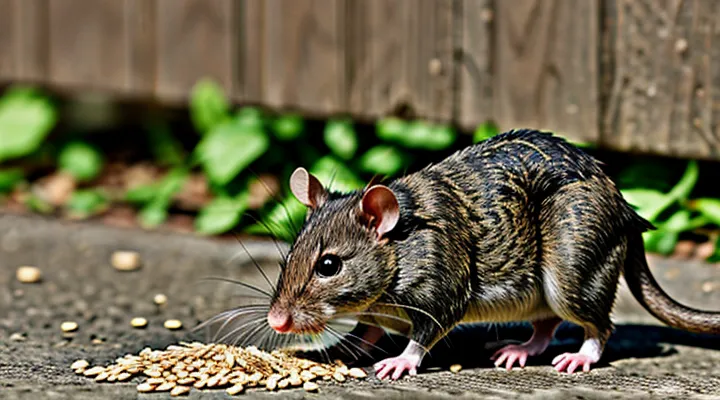
Understanding Rodent Behavior and Grain Bait Preferences
The Lure of Grains
Why Grains are Attractive to Rodents
Grains provide a high‑energy source that matches the metabolic demands of rats and mice. The carbohydrate content supplies rapid glucose, supporting the animals’ active foraging and reproduction cycles.
Nutritional factors that draw rodents to grains include:
- Starch and simple sugars for immediate energy.
- Protein levels that supplement a primarily herbivorous diet.
- Essential vitamins and minerals that contribute to overall health.
Rodents detect grains through olfactory and gustatory cues. Volatile compounds released by fresh kernels trigger strong scent responses, while the sweet and mildly bitter taste profiles stimulate palate receptors. The granular texture allows easy manipulation with incisors, facilitating quick consumption.
In natural habitats, rodents encounter seeds and cereal grains as primary food items. Their instinctual behavior favors opportunistic exploitation of abundant, stationary resources, making grains a reliable target during periods of scarcity.
Effective bait formulations capitalize on these attractions by incorporating finely milled grain particles, preserving aromatic volatiles, and balancing macronutrients to mimic natural food sources. This approach maximizes bait acceptance and ensures consistent intake by both rats and mice.
Common Rodent Species and Their Dietary Habits
Understanding the specific feeding patterns of pest rodents is essential for designing grain-based attractants that achieve reliable control.
- Norway rat (Rattus norvegicus): Omnivorous; consumes stored grains, cereals, nuts, and occasional animal protein. Preference for high‑carbohydrate seeds makes wheat and barley kernels especially attractive.
- Roof rat (Rattus rattus): Primarily frugivorous; favors fruits, berries, and soft seeds. When fruit is scarce, switches to grains such as rice and corn.
- House mouse (Mus musculus): Strong inclination toward finely milled grains, wheat flour, and cereal by‑products. Also ingests insects and plant material when available.
- Deer mouse (Peromyscus maniculatus): Opportunistic; eats seeds, grains, and insects. Shows heightened interest in high‑fat seeds like sunflower and soybean.
- Southern rice rat (Oryzomys palustris): Aquatic‑associated; feeds on rice, aquatic vegetation, and small invertebrates. Grain baits placed near water sources are most effective.
These dietary tendencies dictate the choice of grain composition, particle size, and supplemental attractants. Formulations that emphasize the preferred carbohydrate sources of each species, while incorporating minor protein or fat additives, improve bait acceptance and consumption rates. Selecting grain types aligned with the target rodent’s natural diet maximizes bait efficacy and reduces non‑target exposure.
Factors Influencing Bait Effectiveness
Palatability and Acceptability
Palatability determines whether a grain-based rodent lure will be consumed quickly enough to achieve control objectives. Taste receptors in rats and mice are highly sensitive to sweet, fatty, and protein-rich compounds; incorporating modest amounts of molasses, soy flour, or animal fat markedly increases bite size. Aroma contributes equally; volatile oils from cinnamon, peppermint, or anise stimulate olfactory pathways and prompt immediate investigation. Texture affects mastication; a fine, moist crumb encourages rapid ingestion, while overly dry particles reduce bite frequency.
Acceptability extends beyond sensory appeal to include behavioral and environmental factors. Rodents prioritize food sources that are readily accessible, present in familiar foraging zones, and free from competing scents. Seasonal shifts in natural food availability alter preference hierarchies; during grain harvest periods, wild cereals become dominant, whereas in winter, high‑energy formulations gain priority. Weather conditions influence bait stability; high humidity can cause clumping, reducing exposure, while extreme heat accelerates volatile loss, diminishing attractiveness.
Key considerations for formulating effective grain lures:
- Select grain types with inherent sweetness (e.g., wheat, barley) and blend with protein additives.
- Add attractants at concentrations that enhance odor without causing aversion (typically 0.5–2 % of total weight).
- Include a binder that maintains moisture but does not create a hard crust; gelatin or vegetable oil are common choices.
- Adjust particle size to match the target species’ chewing capabilities (3–5 mm for mice, 5–8 mm for rats).
- Package in weather‑resistant containers to preserve scent and prevent spoilage.
Evaluation of palatability and acceptability should employ controlled choice tests, measuring consumption over 24 hours against a neutral substrate. Preference indices above 0.7 indicate strong attraction, while decline in intake after the first exposure suggests habituation or bait aversion. Field trials must monitor bait depletion rates and correlate them with rodent activity indices to confirm practical effectiveness.
Optimizing sensory qualities and aligning bait presentation with rodent foraging behavior maximizes uptake, ensuring that grain lures serve as reliable components of integrated pest management programs.
Bait Formulations and Textures
Grain‑based rodent baits rely on precise formulation and texture to achieve rapid consumption and lethal dose delivery. Formulation determines nutrient balance, attractant potency, and stability, while texture influences handling, breakage, and palatability across varying environments.
Common grain substrates include wheat, barley, corn, and rice. Each provides distinct carbohydrate levels, protein content, and aroma profiles that align with rodent feeding preferences. Selecting a grain with high starch concentration enhances energy density, supporting quicker ingestion of the toxic component.
Binding agents secure active ingredients within the matrix and control moisture migration. Typical agents and their effects are:
- Wax: creates a water‑resistant coating, prolongs shelf life.
- Gelatin: yields a pliable texture, facilitates rapid dissolution in the oral cavity.
- Starch paste: offers inexpensive cohesion, suitable for crumble formulations.
- Polyvinyl acetate: provides strong adhesion for hard pellets, resistant to fragmentation.
Texture categories affect field performance:
- Hard pellets resist crumbling, suitable for outdoor placement where weather exposure is high.
- Soft blocks disintegrate quickly, ideal for indoor traps where rapid uptake is desired.
- Crumble or granule forms increase surface area, enhancing scent dispersion but require careful packaging to prevent loss.
- Liquid emulsions coat grain kernels, delivering uniform toxicant distribution while maintaining grain integrity.
Operational considerations include moisture resistance, durability under temperature fluctuations, and selective palatability that discourages non‑target species. Formulations that balance these factors deliver consistent mortality rates while minimizing bait loss and environmental impact.
Environmental Considerations
Grain‑based rodent attractants must be evaluated for their impact on surrounding ecosystems. Formulations that incorporate biodegradable carriers reduce long‑term soil residues, limiting accumulation of organic matter that could alter microbial communities. Selecting bait components with low toxicity to non‑target wildlife prevents accidental poisoning of birds, insects, and small mammals that may ingest stray particles.
Key environmental factors include:
- Persistence: Use materials that decompose within weeks under typical climatic conditions.
- Leaching potential: Avoid soluble additives that could migrate into groundwater; encapsulated grains limit dissolution.
- Resistance management: Rotate active ingredients to deter development of tolerant rodent populations, thereby reducing the need for higher dosages.
- Regulatory compliance: Adhere to local pesticide legislation, which often mandates specific limits on environmental loading.
- Disposal practices: Implement collection of unused bait and contaminated debris to prevent litter accumulation in natural habitats.
Monitoring programs should track bait residues in soil and water samples, as well as mortality reports among non‑target species. Data-driven adjustments to bait composition and deployment density help maintain efficacy while preserving ecological balance.
Rodent Resistance and Bait Shyness
Rodent resistance develops when populations repeatedly encounter the same active ingredient, leading to genetic adaptations that reduce susceptibility. In grain formulations, resistance manifests as lower mortality rates despite correct application rates. Monitoring mortality trends across successive baiting cycles identifies emerging resistance; a decline of more than 10 % compared to baseline indicates a problem.
Bait shyness arises when rodents associate a specific bait matrix with adverse effects after a sub‑lethal exposure. The behavior results in avoidance of that grain type, even if the toxicant remains effective. Shyness is reinforced by the strong olfactory memory of rodents, which can persist for several weeks.
Effective management combines chemical rotation, bait diversification, and behavioral disruption:
- Alternate active ingredients every 2–3 applications, selecting compounds with different modes of action.
- Vary grain carriers (e.g., wheat, barley, corn) and incorporate flavor enhancers to mask previous exposure cues.
- Introduce pre‑bait (non‑toxic grain) for 24–48 hours before toxic bait to re‑condition foraging patterns.
- Use bait stations that limit exposure time, reducing the chance of sub‑lethal ingestion.
- Conduct periodic susceptibility testing on trapped individuals to verify efficacy of the current formulation.
Integrating these practices limits the selection pressure that drives resistance and reduces the likelihood that rodents will develop persistent avoidance of grain baits. Continuous data collection and adaptive baiting protocols are essential for sustained control success.
Selecting and Applying Effective Grain Baits
Types of Grain-Based Rodenticides
Anticoagulant Grain Baits
Anticoagulant grain baits combine a palatable cereal matrix with a blood‑clotting agent to achieve rapid mortality in commensal rodents. The formulation delivers a lethal dose after a single ingestion, reducing the need for repeated applications.
The active compounds interfere with vitamin K recycling, preventing synthesis of clotting factors II, VII, IX, and X. As coagulation fails, internal hemorrhage occurs, resulting in death within 24–72 hours. This delayed effect allows poisoned individuals to return to nesting sites, spreading the toxin to conspecifics through secondary consumption.
Common anticoagulant agents used in grain baits include:
- Brodifacoum – second‑generation, high potency, effective against resistant populations.
- Difenacoum – second‑generation, moderate potency, suitable for indoor use.
- Bromadiolone – second‑generation, broad‑spectrum activity.
- Warfarin – first‑generation, lower potency, employed where resistance is minimal.
Application recommendations:
- Place baits in concealed stations near active runways, feed sources, and burrow entrances.
- Use a minimum of 0.025 mg active ingredient per gram of bait to ensure lethal intake for a 20‑gram mouse or a 150‑gram rat.
- Limit exposure to non‑target species by employing tamper‑proof containers and positioning at ground level.
Resistance management requires rotating active ingredients every 6–12 months and integrating non‑chemical control measures such as sanitation, exclusion, and habitat modification. Monitoring bait uptake and mortality trends helps detect early signs of reduced susceptibility.
Regulatory compliance mandates labeling with concentration, hazard warnings, and proper personal protective equipment for handlers. Record‑keeping of product batch numbers, placement dates, and observed rodent activity satisfies most jurisdictional reporting requirements.
Store baits in a cool, dry environment, sealed from moisture and light. Dispose of unused product and contaminated containers according to hazardous waste protocols to prevent environmental contamination.
Single-Feed Anticoagulants
Single‑feed anticoagulants are rodenticides formulated to deliver a lethal dose of a vitamin K antagonist in a single ingestion. The active compounds—commonly brodifacoum, difenacoum, or diphacinone—interfere with blood clotting, causing internal hemorrhage within 2–7 days after consumption.
In grain‑based rodent baits, anticoagulants are incorporated at concentrations ranging from 0.005 % to 0.025 % weight/weight, depending on the target species and bait matrix. The grain carrier provides a familiar food source, encouraging immediate uptake and ensuring the poison reaches the gastrointestinal tract without the need for prolonged exposure.
Key advantages of single‑feed anticoagulant grain baits include:
- Immediate efficacy after one bite, reducing the window for bait avoidance.
- Low secondary‑poisoning risk because the toxin is metabolized quickly and is present at minimal levels in carcasses.
- Minimal attraction to non‑target wildlife due to the specific grain type and low palatability of the formulation.
- Compatibility with indoor and outdoor deployment, allowing flexible placement in sewers, attics, or field storage areas.
Effective application requires positioning baits near established runways, nesting sites, or food caches, typically 2–4 inches above the floor to prevent scavenger access. Bait stations should be inspected weekly, with fresh bait replenished when consumption exceeds 70 % of the original load. Environmental conditions such as high humidity or extreme temperatures can degrade active ingredients; storage in sealed containers preserves potency.
Resistance management mandates rotating anticoagulant classes annually and integrating non‑chemical control measures, such as exclusion and sanitation, to limit population exposure. Monitoring bait uptake and mortality rates provides data for adjusting concentrations and selecting alternative active ingredients when tolerance emerges.
Multiple-Feed Anticoagulants
Multiple‑feed anticoagulants are formulated to remain toxic after repeated ingestion by rats and mice, addressing the tendency of these pests to sample bait without lethal effect. The compounds are incorporated into grain matrices at concentrations that sustain sub‑lethal exposure, allowing accumulation of the active ingredient in the animal’s system over successive meals. This strategy reduces bait shyness and improves overall mortality rates in populations that have developed tolerance to single‑dose products.
Key characteristics of effective multiple‑feed anticoagulants include:
- Long half‑life in the rodent’s bloodstream, ensuring that each additional bite contributes to a cumulative dose.
- Low palatability thresholds, permitting inclusion of high‑energy grain without compromising bait acceptance.
- Resistance mitigation, achieved by combining two or more vitamin K antagonists (e.g., brodifacoum and difethialone) to overcome enzymatic adaptations.
- Environmental stability, with formulations resistant to moisture and temperature fluctuations typical of storage facilities.
Implementation guidelines:
- Select grain types with high carbohydrate content to encourage repeated consumption.
- Calibrate active ingredient levels to deliver 0.005–0.015 mg/kg per bite, depending on target species and known resistance patterns.
- Monitor field efficacy by tracking mortality over a 7‑day period post‑deployment; adjust concentrations if cumulative intake falls below lethal thresholds.
- Rotate anticoagulant blends seasonally to prevent selection pressure that could favor resistant genotypes.
Regulatory compliance demands documentation of active ingredient ratios and proof of negligible non‑target toxicity. Proper labeling, secure storage, and restricted access further ensure safe handling while maximizing the bait’s impact on rodent infestations.
Non-Anticoagulant Grain Baits
Non‑anticoagulant grain baits provide an alternative to warfarin‑based products for controlling rats and mice in agricultural, storage and urban environments. These formulations rely on stomach‑toxic or metabolic agents that cause rapid lethality without interfering with blood clotting pathways.
Key characteristics of non‑anticoagulant grain baits include:
- Active ingredients such as zinc phosphide, diphacinone‑free phosphides, or cholecalciferol derivatives.
- Rapid onset of action, typically within 12–24 hours after ingestion.
- Low risk of secondary poisoning because toxins are confined to the digestive tract and do not persist in tissues.
- Compatibility with bait stations designed for high‑traffic rodent pathways.
Application guidelines emphasize precise placement, bait density, and environmental considerations. Bait should be positioned in concealed, rodent‑active zones at a rate of 1 kg per 10 m² in high‑infestation scenarios, or 0.5 kg per 10 m² where populations are lower. Moisture‑resistant packaging preserves potency for up to 12 months, provided storage temperatures remain below 30 °C.
Resistance management protocols recommend rotating non‑anticoagulant products with anticoagulant formulations on a 6‑month cycle. This rotation reduces selection pressure and prolongs efficacy across rodent populations that have developed tolerance to a single mode of action.
Regulatory compliance requires registration of the active ingredient with appropriate authorities, labeling that includes dosage, target species, and safety warnings, and adherence to local wildlife protection statutes. Proper documentation of bait deployment and monitoring results supports audit trails and ensures responsible pest‑management practices.
Acute Toxins
Acute toxins are the primary agents that deliver rapid mortality in rodent grain formulations. They act within minutes to hours after ingestion, providing immediate population reduction and limiting bait avoidance.
Common acute toxins employed in grain baits include:
- Bromadiolone (second‑generation anticoagulant): Disrupts blood clotting, causing fatal hemorrhage. Effective at low concentrations, but resistant strains may require higher doses.
- Zinc phosphide: Reacts with stomach acid to release phosphine gas, leading to cellular respiration failure. Requires careful handling due to its volatile nature.
- Diphacinone: Interferes with vitamin K metabolism, producing internal bleeding. Suitable for short‑term control where rapid knock‑down is desired.
- Chlorophacinone: Similar mechanism to diphacinone, with a slightly slower onset but high potency against both rats and mice.
Key considerations for acute toxin deployment:
- Dosage precision: Minimum effective concentration minimizes non‑target exposure while ensuring lethality.
- Bait palatability: Grain matrix must remain attractive to target species; masking bitter taste of toxins preserves consumption rates.
- Resistance monitoring: Regular susceptibility testing detects emerging tolerance, informing toxin rotation strategies.
- Safety protocols: Personal protective equipment and proper storage prevent accidental poisoning of humans and domestic animals.
Integrating acute toxins into grain bait programs yields swift rodent suppression, provided that formulation integrity, resistance management, and safety measures are rigorously maintained.
Cholecalciferol-Based Baits
Cholecalciferol, a synthetic form of vitamin D₃, functions as a potent anticoagulant when incorporated into grain‑based baits for rats and mice. The active ingredient disrupts calcium metabolism, leading to fatal hypercalcemia after a single ingestion. Formulations typically contain 0.025–0.05 % cholecalciferol, a concentration that balances rapid mortality with low risk of non‑target exposure.
Key characteristics of cholecalciferol baits include:
- High palatability: Grain matrices such as wheat, corn or barley mask the bitter taste of the active compound, encouraging consumption by both commensal and wild rodent populations.
- Delayed action: Mortality occurs 24–72 hours post‑consumption, allowing rodents to return to nesting sites and share the bait, thereby amplifying control efficacy.
- Resistance management: Cholecalciferol operates via a physiological pathway distinct from anticoagulant rodenticides, providing an effective alternative when anticoagulant resistance is documented.
- Environmental safety: Low secondary‑poisoning potential due to the rapid degradation of cholecalciferol in carcasses and limited bioaccumulation in predators.
Application guidelines emphasize precise placement of bait stations in concealed locations, regular monitoring of consumption, and rotation with other active ingredients to prevent habituation. Integration into an overall pest‑management program, combined with sanitation and exclusion measures, maximizes long‑term reduction of rodent activity.
Strategic Bait Placement
Identifying Rodent Activity Areas
Identifying rodent activity zones is essential for placing grain‑based attractants where they will be most effective.
Signs of presence include fresh droppings, gnaw marks, and urine stains. Droppings are typically 1‑2 cm long, dark, and found along walls, under appliances, and near food storage. Gnaw marks appear on wood, plastic, and wiring; fresh bites have clean, sharp edges, while older ones show splintered surfaces. Urine stains appear as darkened areas or a faint ammonia odor, often near entry points or concealed pathways.
Tracking paths relies on observing the direction of these signs. A line of droppings or parallel gnaw marks indicates a travel corridor. Multiple intersecting lines suggest a hub, such as a nest or feeding station.
Key locations to inspect:
- Interior corners and junctions of walls and ceilings
- Behind and beneath appliances, especially refrigerators and stoves
- Inside cabinets, pantry shelves, and stored‑food containers
- Utility rooms, crawl spaces, and basement corners
- Exterior building perimeters, including foundation cracks and vent openings
When activity is confirmed, map the area by marking each sign on a floor plan. Prioritize zones with the highest concentration of evidence for bait deployment. Place bait stations close to, but not directly on, the signs to encourage natural foraging behavior while minimizing exposure to non‑target species.
Regularly reassess the mapped zones. A reduction in fresh signs indicates successful control; new or persistent signs require relocation or additional bait stations. Continuous monitoring ensures that grain attractants remain positioned in the most active rodent areas.
Bait Station Design and Location
Effective grain baits work only when rodents can access them safely and consistently. A well‑constructed bait station protects the product, prevents accidental exposure, and directs target species toward the lure.
Key design elements include:
- Robust, weather‑sealed housing that resists rain, dust, and temperature fluctuations.
- Tamper‑resistant lock or latch to limit human and pet interference.
- Interior dimensions that accommodate the chosen grain formulation while allowing easy removal for inspection.
- Entrance apertures sized to admit rats and mice but exclude larger wildlife.
- Interior surfaces that discourage gnawing and facilitate cleaning.
Placement guidelines:
- Install stations along established runways, typically within 2–3 feet of walls, baseboards, or other sheltering structures.
- Position devices near signs of activity such as droppings, gnaw marks, or burrow entrances.
- Maintain a minimum distance of 10 feet from food preparation areas, water sources, and child‑accessible zones.
- Secure stations on stable platforms or embed them flush with the ground to prevent tipping.
Regular maintenance ensures continued efficacy. Inspect each unit weekly for bait depletion, damage, or non‑target captures. Replace or replenish bait promptly, record observations, and adjust station locations based on shifting activity patterns. Consistent monitoring maximizes control success while minimizing risk to non‑target organisms.
Quantity and Frequency of Baiting
Accurate dosing and timing are critical for maintaining rodent pressure when using grain‑based lures. Over‑application wastes product and may lead to bait aversion; under‑application reduces capture rates and prolongs infestation.
-
Place ¼ to ½ ounce of bait per 10 sq ft of active foraging area.
-
In high‑traffic zones, increase to ¾ ounce per 10 sq ft.
-
Use a thin, evenly spread layer to prevent rodents from bypassing the bait.
-
Replace any contaminated or weather‑exposed portions immediately.
-
Replenish bait every 24–48 hours during the first week of treatment.
-
After initial reduction, shift to a 3‑day cycle, monitoring activity daily.
-
In seasonal peaks, return to a 24‑hour schedule for sustained pressure.
-
Discontinue placement only after two consecutive inspections show no new signs of activity.
Safety Measures and Best Practices
Preventing Non-Target Exposure
Effective grain baits can be deployed while minimizing risk to wildlife, pets, and children through precise control of bait accessibility. Use tamper‑resistant, lockable bait stations that allow entry only for targeted rodents. Install stations at ground level, away from water sources and vegetation, and position them along walls or behind objects where non‑target species are unlikely to travel.
- Select formulations with low secondary toxicity; choose baits that are unattractive to birds and mammals.
- Employ bait stations equipped with size‑specific entry holes that exclude larger animals.
- Apply baits in limited quantities, sufficient to attract only the resident rat or mouse population.
- Conduct regular inspections; remove stations after confirmed rodent activity declines.
- Record placement coordinates and maintain a log of bait type, concentration, and removal dates.
- Provide clear signage indicating the presence of rodent control devices; educate occupants on proper handling.
Timing of application further reduces exposure. Deploy baits during periods of reduced non‑target activity, such as early evening for nocturnal rodents, and avoid placement during nesting seasons of local wildlife. Integrate environmental monitoring to detect any unintended consumption; adjust station density or bait composition promptly if non‑target interactions are observed.
Documentation of all preventive measures supports compliance with regulatory standards and demonstrates responsible pest management practices.
Proper Storage and Handling
Proper storage preserves the potency and safety of grain‑based rodent lures. Moisture, temperature fluctuations, and exposure to non‑target pests degrade active ingredients and encourage mold growth.
Store baits in airtight containers made of metal or heavy‑wall plastic. Keep containers in a cool, dry area where temperatures remain between 5 °C and 25 °C (41 °F–77 °F). Separate bait from feed, grain, or other organic material to prevent accidental consumption by non‑target species. Label each container with product name, concentration, and expiration date; rotate stock to use older batches first.
When handling baits, wear disposable gloves and a dust mask to avoid inhalation or skin contact. Transfer bait only with clean, dedicated tools; sanitize equipment between batches. Avoid scattering bait; use calibrated dispensers to place precise amounts in bait stations. Dispose of unused bait according to local hazardous‑waste regulations.
Key storage practices
- Seal containers immediately after each use.
- Store away from direct sunlight.
- Monitor humidity; use desiccants if necessary.
- Conduct monthly visual inspections for clumping, discoloration, or pest intrusion.
Essential handling steps
- Put on protective gloves and mask.
- Use a clean scoop or dispenser; do not reuse tools.
- Apply bait only within sealed stations.
- Clean hands and tools before leaving the area.
- Record batch number and date of application.
Post-Baiting Cleanup and Monitoring
After deploying grain‑based attractants for rodent control, the work does not end with bait consumption. Immediate removal of residual bait and contaminated materials prevents secondary exposure to non‑target species and reduces the risk of bait degradation. Collect all uneaten bait, packaging, and any debris from the placement area. Place the material in sealed, puncture‑resistant containers, label them as hazardous waste, and store them according to local regulations before disposal at an authorized facility.
Ongoing observation of bait stations is essential for assessing efficacy and detecting reinfestation. Inspect each station at least once daily during the first week, then reduce frequency to every 48‑72 hours as activity declines. Record the number of rodent signs—droppings, gnaw marks, or live captures—alongside the quantity of bait removed. Use this data to calculate consumption rates and determine whether additional baiting cycles are required.
Monitoring should include environmental checks. Verify that bait has not migrated to unintended locations, such as nearby food storage or water sources. If migration is detected, re‑secure the station or relocate it to a more controlled site. Conduct periodic visual surveys of surrounding habitats to confirm that non‑target wildlife is not accessing the attractant.
Key actions for post‑baiting management:
- Collect and seal all unused bait and packaging.
- Label waste as hazardous and follow local disposal protocols.
- Perform daily inspections initially, then every 2–3 days.
- Document rodent activity and bait consumption in a logbook.
- Calculate consumption metrics to gauge control success.
- Check for bait displacement and protect adjacent food or water supplies.
- Adjust station placement or bait density based on monitoring results.
Consistent cleanup and systematic monitoring sustain the effectiveness of grain‑based rodent control programs and ensure compliance with safety and environmental standards.