
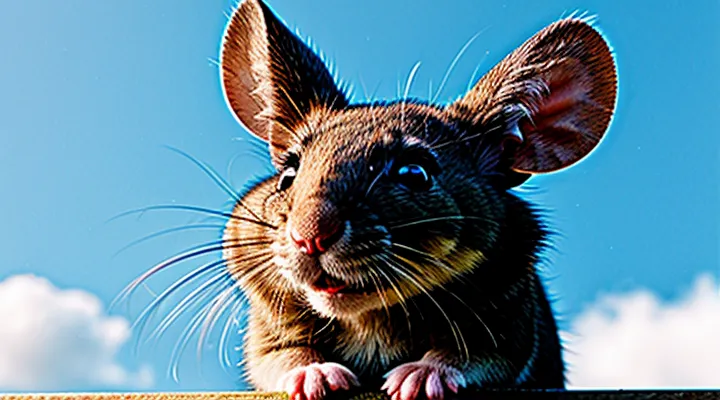
Understanding Dream Symbolism
The Nature of Dreams
Dreams arise from coordinated activity in the brain during sleep, generating sensory experiences without external input. Electroencephalographic studies show rapid eye movement (REM) periods correspond with vivid imagery, while non‑REM stages produce simpler, fragmentary scenes. Neurotransmitter fluctuations, especially acetylcholine and dopamine, modulate the intensity and emotional tone of these nocturnal narratives.
Symbolic content in dreams reflects personal associations and collective archetypes. A large mouse, for instance, may embody themes of hidden strength, overlooked influence, or persistent anxiety. The animal’s size amplifies its psychological weight, suggesting that the dreamer perceives a normally minor concern as dominant in waking life. Interpretation therefore hinges on the dreamer’s cultural background, recent experiences, and emotional state.
Key theoretical perspectives on dream formation include:
- Psychoanalytic view: unconscious wishes manifest through distorted imagery.
- Cognitive‑developmental model: dreams rehearse problem‑solving scenarios.
- Activation‑synthesis hypothesis: random neural firing is organized into coherent stories by higher‑order brain regions.
Understanding the nature of dreams provides a framework for decoding specific motifs such as the oversized rodent, allowing practitioners to connect symbolic material with underlying mental processes.
Common Dream Archetypes
Dreams featuring an oversized mouse often intersect with universal symbols that recur across cultures and personal narratives. Recognizing these recurring motifs clarifies the emotional and psychological layers behind the vision.
- Animal archetype – Represents instinctual drives, survival, and social hierarchy. An enlarged mouse amplifies the animal’s symbolic weight, suggesting heightened awareness of vulnerability or hidden power.
- Pursuit archetype – Involves being chased or chasing. When the mouse is large, the chase may invert typical power dynamics, indicating a reversal of control or an emerging confidence.
- Transformation archetype – Signals change, growth, or metamorphosis. The size increase signals a developmental shift, urging the dreamer to acknowledge emerging aspects of self that were previously unnoticed.
- Space‑related archetype – Concerns the setting, such as a house, garden, or public area. The environment frames the mouse’s significance; presence in a familiar space points to domestic concerns, while an unfamiliar setting suggests external challenges.
- Emotion archetype – Captures feelings of fear, curiosity, or amusement. The emotional tone determines whether the mouse is perceived as threatening or endearing, guiding the interpretive direction.
Applying these archetypes to the large mouse scenario yields specific insights. The animal motif emphasizes underlying anxieties about being small or overlooked, yet the exaggerated size hints at an emerging assertiveness. The pursuit element may reveal a shift from being chased by problems to confronting them directly. Transformation cues suggest that the dreamer is undergoing a noticeable personal evolution, with the mouse serving as a visual marker of that growth. Spatial context clarifies whether the change is rooted in private life or public roles, while the emotional response refines the final reading, distinguishing between a warning and an invitation to embrace newfound capability.
The Mouse as a Dream Symbol
General Interpretations of Mice
Mice occupy a recurrent position in symbolic systems, embodying traits that transcend cultural boundaries. Their presence conveys messages about scale, behavior, and circumstance.
- modesty and humility, derived from the animal’s diminutive size
- adaptability and ingenuity, reflecting the creature’s capacity to survive in confined spaces
- concealed concerns, indicating problems that operate beneath the surface of awareness
- abundance and fertility, linked to the prolific nature of rodent reproduction
- vulnerability, suggesting a need for protection or caution
When a mouse appears enlarged in a dream, the underlying symbols intensify. The modesty associated with a small mouse expands into a pronounced sense of self‑esteem or overconfidence. Adaptability transforms into a heightened demand for flexibility in a demanding environment. Concealed concerns evolve into overt threats that require immediate attention. Abundance signals an overwhelming influx of resources or responsibilities, while vulnerability points to amplified exposure to risk. The dream therefore functions as a magnifying lens, projecting conventional mouse symbolism onto the dreamer’s current psychological landscape.
Size in Dream Analysis
Small vs. Large Animals in Dreams
Dream symbols change meaning when size shifts; the same creature can convey opposite messages depending on whether it appears tiny or massive.
Small animals in nocturnal visions usually point to modest concerns, subtle habits, or peripheral relationships. Their presence often signals that the dreamer notices details that do not dominate daily life but require gentle attention.
Large animals typically embody dominant forces, amplified anxieties, or power imbalances. Their exaggerated scale forces the sleeper to confront issues that feel overwhelming or beyond ordinary control.
A dream featuring an oversized rodent merges the timid qualities of a mouse—secretive behavior, vulnerability, hidden problems—with the impact of increased size. The image suggests that a previously minor insecurity has grown into a prominent challenge, demanding decisive action. It also reflects a paradox: a creature associated with meekness now commands attention, indicating that the dreamer may feel both threatened and compelled to assert authority over a situation that once seemed insignificant.
Key interpretive cues for an enlarged mouse dream:
- Heightened emotional response (fear, curiosity, irritation) signals the intensity of the underlying issue.
- Interaction with the animal (pursuing, fleeing, observing) reveals the dreamer’s coping strategy.
- Environment (dark room, cluttered space, open field) provides context for where the problem manifests.
- Presence of other beings (people, predators) indicates external influences on the perceived threat.
Assessing these elements together clarifies whether the dream urges the sleeper to confront a growing worry, re‑evaluate a hidden habit, or recognize that a modest concern has acquired disproportionate significance.
Amplified Meaning of Large Symbols
Dreams featuring an unusually large mouse amplify the symbolic weight of the animal, turning a modest creature into a potent emblem of hidden influence. In such visions the mouse’s size signals that the dreamer’s subconscious is drawing attention to subtle forces that have expanded beyond their typical scope.
The amplified size affects interpretation in three primary ways:
- Authority of the unnoticed: The enlarged mouse represents an increase in the power of previously overlooked details, suggesting that minor issues now command significant attention.
- Intensity of anxiety: A larger rodent intensifies feelings of vulnerability, indicating that the dreamer may be experiencing heightened stress related to seemingly trivial matters.
- Potential for transformation: The exaggerated scale hints at the capacity of small elements to evolve into major catalysts for change within personal or professional contexts.
In analytical practice, the dreamer should examine current circumstances for minor components that have recently grown in relevance. Identifying these elements clarifies why the subconscious emphasizes them through an oversized mouse, providing a direct pathway for strategic adjustment.
Interpreting a Large Mouse Dream
Psychological Perspectives
Unconscious Fears and Anxieties
Dreaming of an oversized mouse often signals hidden dread that the conscious mind does not acknowledge. The animal’s size amplifies its symbolic weight, turning a familiar creature into a stark representation of suppressed anxiety. When the mouse appears unusually large, the mind exaggerates a minor concern, suggesting that the dreamer is confronting a fear that has grown beyond its original scope.
The unconscious mind uses the mouse’s characteristics to convey specific worries:
- Vulnerability – Mice are small and vulnerable; an enlarged version reflects a feeling of being overwhelmed by personal weakness.
- Intrusion – Mice infiltrate hidden spaces; a massive mouse suggests anxiety about unwanted ideas or emotions entering the psyche.
- Loss of control – The unexpected size indicates a perceived loss of mastery over a situation that was previously manageable.
Psychological frameworks interpret these symbols as manifestations of repressed stress. In Freudian analysis, the mouse may embody repressed sexual or aggressive impulses that the ego cannot openly address. Jungian theory views the creature as a shadow archetype, representing the parts of the self that are denied or ignored. Both perspectives agree that the dream functions as a warning signal, urging the dreamer to examine the source of the unease.
Practical steps for addressing the underlying fear include:
- Identifying situations that trigger a sense of helplessness.
- Recording recurring dream details to detect patterns.
- Engaging in reflective practices such as journaling or therapy to integrate the shadow aspects.
By confronting the amplified mouse imagery, the individual can reduce the intensity of the unconscious anxiety, allowing the mind to restore equilibrium.
Feelings of Insignificance or Overwhelm
Dreams in which a mouse appears unusually large often surface when the dreamer feels dwarfed by external demands. The animal’s size amplifies the ordinary sense of vulnerability, turning a familiar creature into a symbol of looming pressure. When the subconscious magnifies the mouse, it mirrors the dreamer’s perception that minor tasks have become overwhelming, or that personal achievements are insufficient against a broader backdrop.
Key psychological mechanisms behind this imagery include:
- Projection of self‑doubt onto a harmless creature, creating a vivid contrast between the dreamer’s perceived weakness and the mouse’s exaggerated presence.
- Activation of the fight‑or‑flight response, where the brain treats the oversized rodent as a threat, reinforcing feelings of powerlessness.
- Reflection of social comparison, especially when the dreamer observes others succeeding while personal efforts feel marginal.
Interpretation guidelines:
- Identify recent circumstances that have heightened stress—tight deadlines, interpersonal conflict, or major life transitions.
- Assess whether the dream’s emotional tone leans toward fear, embarrassment, or resignation; each tone points to a specific facet of perceived inadequacy.
- Consider the mouse’s behavior. Aggressive or chaotic actions suggest acute overwhelm; passive or timid movements indicate lingering insignificance.
Practical steps to mitigate these feelings:
- Break overwhelming tasks into discrete, manageable units, reducing the mental image of a colossal obstacle.
- Record dream details promptly; analysis reduces the subconscious amplification of anxiety.
- Engage in grounding exercises that reinforce personal agency, such as controlled breathing or brief physical activity before sleep.
By recognizing the oversized mouse as a metaphor for inflated pressures, the dreamer can reframe the experience, transforming a sense of helplessness into actionable insight.
Cultural and Folklore Meanings
Traditional Symbolism of Mice
Dreams featuring an unusually large mouse draw attention to the animal’s deep‑rooted symbolism, which has been shaped by centuries of folklore, religion, and cultural practice. Across traditions, the mouse embodies a blend of modesty and cunning, standing as a paradoxical emblem of both vulnerability and survival.
In ancient Greek myth, the mouse represented modesty and the hidden dangers that accompany quiet persistence. Egyptian texts linked the creature to the goddess Set, suggesting an association with chaos and the need for vigilance. Asian traditions, especially in Chinese folklore, regarded the mouse as a harbinger of prosperity and fertility, reflecting its prolific breeding habits. Native American narratives frequently portrayed the mouse as a trickster, emphasizing cleverness and the capacity to outwit stronger opponents.
Key symbolic themes that recur in traditional accounts include:
- Resourcefulness: Mice survive in scarce environments, symbolizing adaptability and the ability to make the most of limited resources.
- Hidden Threats: Their nocturnal activity and tendency to infiltrate spaces covertly convey warnings about unseen dangers or secret adversaries.
- Economic Abundance: In agrarian societies, a surge of mice often signaled abundant grain stores, translating into a broader sign of wealth.
- Moral Caution: Folklore stories use mice to illustrate the perils of greed or overindulgence, as the creatures can quickly deplete supplies.
- Spiritual Transition: Certain shamanic traditions interpret the mouse as a guide between the material world and the spirit realm, reflecting its ability to move unseen.
When the dream image enlarges the mouse, the traditional meanings intensify. The amplified size signals that the qualities associated with the animal—whether resourcefulness, hidden threats, or prosperity—have become prominent in the dreamer’s waking life. The dream may therefore suggest a heightened need to acknowledge subtle influences, to harness modest strengths, or to prepare for a surge of opportunities that appear modest but possess substantial impact.
Variations Across Cultures
Dreams featuring an unusually large mouse appear across many societies, yet their symbolic weight differs markedly from one cultural tradition to another.
- In East Asian folklore, the giant rodent often signifies hidden wealth or an unexpected financial windfall, reflecting a belief that mice bring abundance when they grow beyond ordinary size.
- Indigenous North American narratives associate the oversized mouse with cunning and survival, interpreting the dream as a call to employ strategic thinking in the face of adversity.
- European medieval superstition links a massive mouse to pestilence or social decay, warning of collective neglect that may lead to communal hardship.
- South Asian spiritual texts describe the dream as an emblem of inner transformation, suggesting that the enlarged creature mirrors the expansion of the dreamer’s consciousness.
- African oral traditions sometimes view the creature as a messenger of the ancestors, indicating that guidance from lineage is arriving in a form that demands attention.
Interpretation varies with the dreamer’s cultural background, personal experience, and the emotional tone of the vision. When the mouse appears dominant and threatening, the message often leans toward caution or a need for vigilance. Conversely, a benign or playful oversized mouse tends to signal opportunity, growth, or the emergence of latent talents. Understanding these cultural lenses enables a more precise reading of the dream’s significance.
Personal Associations
Individual Experiences with Mice
Personal encounters with mice shape the symbolic content of dreams featuring an oversized rodent. Direct contact, emotional response, and cultural background create distinct interpretive pathways.
Typical experiences include:
- Childhood fear of mice, often linked to sudden movements or hidden presence.
- Keeping mice as pets, fostering affection and routine care.
- Working with rodents in research, generating familiarity and technical awareness.
- Observing mice in urban environments, associating them with scarcity or survival.
- Consuming mouse‑related imagery in media, reinforcing mythic or comic associations.
Each experience informs the dream narrative:
- Fearful memories convert the large mouse into a manifestation of underlying anxiety, suggesting unresolved tension.
- Pet ownership reframes the creature as a symbol of nurturance, indicating a need for protective instincts.
- Scientific familiarity translates the dream into an analytical challenge, prompting problem‑solving attitudes.
- Urban sightings cast the mouse as a representation of adaptability, encouraging resourcefulness.
- Media exposure colors the dream with archetypal motifs, guiding interpretation toward cultural symbolism.
The convergence of these personal histories determines whether the dream of an oversized mouse signals threat, comfort, curiosity, or adaptation, providing a nuanced framework for analysis.
Recent Life Events
Recent personal developments often surface in nocturnal imagery, and a giant rodent can serve as a symbolic echo of those changes. When daily circumstances involve heightened stress, sudden responsibility, or unnoticed influence, the subconscious may amplify a familiar creature to convey the underlying tension.
- A promotion or new leadership role that expands one’s visibility.
- Financial fluctuations, either unexpected gains or looming expenses.
- Shifts in social circles, such as the arrival of a demanding acquaintance.
- Health concerns that require careful monitoring or adjustment.
- Projects that demand meticulous attention to detail.
Each item can manifest as an oversized mouse because the animal embodies qualities of modesty, vigilance, and resourcefulness. A promotion may be interpreted as the dream’s way of highlighting a newly acquired, yet still modest, authority that feels larger than expected. Financial instability can translate into a creature that hoards, suggesting anxiety about scarcity or the need to conserve resources. The presence of a demanding person may appear as a mouse that intrudes into personal space, reflecting feelings of being crowded or overlooked. Health issues often demand careful observation, mirrored by the mouse’s keen awareness of its surroundings. Complex tasks that require precision are echoed by the animal’s small size yet sharp instincts, magnified to stress the importance of detail.
Interpretation rests on matching the specific recent event with the mouse’s symbolic traits. Identify the dominant recent change, assess its emotional weight, and consider how the dream’s exaggerated size emphasizes the perceived impact. This method yields a direct correlation between waking life and nocturnal symbolism without resorting to abstract generalities.
Contextual Factors in Interpretation
The Dreamer's Emotions
Fear or Disgust
Dreams that present an unusually large mouse often trigger visceral reactions. When the emotional response is fear, the mind interprets the creature as a symbol of hidden threats. The oversized size amplifies perceived danger, suggesting that the dreamer feels overwhelmed by a problem that appears small in waking life but has grown out of proportion in the subconscious. Fear in this scenario points to anxiety about loss of control, invasion of personal space, or an impending challenge that the dreamer believes cannot be easily managed.
If the reaction is disgust, the mouse represents contamination or moral repulsion. The grotesque scale emphasizes revulsion toward an aspect of the self or environment that the dreamer finds repugnant. Disgust highlights a desire to distance oneself from behaviors, relationships, or thoughts that are perceived as unclean, deceptive, or degrading.
Key distinctions between the two responses:
- Fear focuses on danger, vulnerability, and the need for protection.
- Disgust emphasizes avoidance, rejection, and the urge to cleanse or purge.
Curiosity or Neutrality
When a dream presents an oversized mouse, the dreamer’s attitude—whether inquisitive or detached—determines the symbolic direction of the narrative.
An inquisitive stance signals active engagement with hidden aspects of the psyche. The large mouse becomes a catalyst for exploration, urging the sleeper to investigate suppressed memories, overlooked talents, or emerging opportunities. This curiosity often translates into a willingness to confront unfamiliar emotions, suggesting that the subconscious is prompting personal growth through deliberate inquiry.
A neutral stance indicates observation without emotional investment. The dreamer watches the massive rodent without fear or fascination, reflecting a balanced perception of the underlying issue. This detachment can denote acceptance of a situation that does not require immediate action, implying that the subconscious acknowledges the presence of a factor—such as a minor annoyance or a peripheral concern—while maintaining composure.
Key distinctions:
-
Curiosity
- Drives proactive analysis of concealed content.
- Encourages experimentation and risk‑taking.
- Highlights potential for development through engagement.
-
Neutrality
- Maintains equilibrium, avoiding overreaction.
- Suggests that the matter is acknowledged but not urgent.
- Reflects confidence in handling peripheral influences without stress.
The Mouse's Actions
Running or Hiding
Dreams featuring an oversized mouse often symbolize overwhelming concerns that feel disproportionate to their source. When the dreamer observes the creature either sprinting away or concealing itself, the scenario highlights two distinct coping strategies.
-
Running – The mouse’s rapid escape reflects a subconscious urge to flee from a problem that appears too large to confront directly. This response suggests avoidance, heightened stress, or a belief that the issue will resolve itself without active involvement. The dreamer may be channeling a fear of loss of control, prompting a mental sprint toward safety.
-
Hiding – A mouse that retreats into shadows or burrows signals a preference for secrecy and self‑preservation. This behavior indicates the dreamer’s inclination to suppress anxiety, keep vulnerable aspects concealed, or delay confronting the matter until conditions feel safer. It can also denote a strategic withdrawal, gathering information before re‑engaging.
Both actions reveal an internal assessment of threat magnitude. The choice between flight and concealment informs the dreamer’s current attitude toward challenges: overt avoidance versus discreet protection. Recognizing which pattern dominates can guide deliberate decision‑making, encouraging either proactive confrontation or measured preparation based on the underlying fear’s intensity.
Interacting with the Dreamer
When a person recounts a vision of an oversized mouse, the interaction should focus on clarity and respect for the symbolic content. Begin by confirming the details: size, behavior, environment, and emotions experienced during the dream. Precise recollection helps anchor the analysis in concrete elements rather than vague impressions.
Next, explore personal associations. Ask the dreamer which memories, fears, or ambitions the mouse evokes. Inquire about recent events involving small but persistent challenges, hidden resources, or unexpected authority figures. This line of questioning uncovers the individual’s internal narrative linked to the imagery.
Offer structured feedback that connects the dream’s motifs to potential psychological meanings:
- Scale – an enlarged creature often signals amplified significance of a normally minor issue.
- Movement – a mouse that runs, hides, or confronts reflects the dreamer’s approach to confronting subtle pressures.
- Setting – domestic versus wild surroundings indicate whether the concern is internal (home life) or external (broader environment).
Conclude by encouraging the dreamer to monitor recurring themes. Suggest keeping a brief journal entry after each dream, noting any real‑world situations that mirror the mouse’s characteristics. This practice reinforces self‑awareness and facilitates ongoing interpretation.
The Dream Setting
Home or Familiar Environment
Dreams featuring an unusually large mouse within the familiar surroundings of one’s home often signal subconscious assessments of personal boundaries. The domestic setting represents established routines, security, and the internal hierarchy of daily life; a massive rodent disrupts that order, forcing attention to areas that feel out of scale or control.
Key interpretations include:
- Perceived threat to personal space: the oversized animal embodies an issue that feels disproportionately large compared to its actual impact.
- Unresolved anxiety about household responsibilities: the creature’s presence highlights tasks or obligations that have been neglected or exaggerated in the mind.
- Challenge to self‑esteem within a safe environment: the mouse’s size may reflect feelings of inadequacy when compared to expectations set by familiar surroundings.
The dream’s emotional tone refines its meaning. Fear or disgust points to resistance against an encroaching problem; curiosity or amusement suggests a willingness to confront and integrate the uncomfortable element. Recognizing the specific reaction provides direct guidance for addressing the underlying concern in the real‑world domestic context.
Unfamiliar or Threatening Places
Dreams that place an unusually large mouse in settings that feel unknown or menacing reveal specific aspects of the dreamer’s inner landscape. The size of the mouse amplifies its symbolic weight, while the unfamiliar environment intensifies the emotional charge, directing attention to hidden anxieties and unresolved conflicts.
When the setting is strange—such as an abandoned building, a dense forest, or a crowded unfamiliar city—the mind signals exposure to circumstances that lack clear reference points. The oversized mouse becomes a marker of perceived vulnerability, suggesting that the dreamer feels overwhelmed by forces that appear insignificant in waking life but acquire disproportionate influence when context is uncertain.
A threatening backdrop—dark alleys, dilapidated structures, or hostile crowds—adds a layer of danger. This combination points to a fear of loss of control, especially in areas where the dreamer lacks mastery. The mouse’s presence indicates that small, often dismissed details may harbor the capacity to disrupt stability if ignored.
Key interpretive cues:
- Scale contrast – large rodent versus small, threatening space signals an imbalance between perceived threat and actual power.
- Environment unfamiliarity – unfamiliar locale reflects situations where the dreamer lacks experience or clear expectations.
- Emotional tone – feelings of dread, curiosity, or aggression in the dream correspond to the waking individual’s attitude toward new challenges.
- Behavior of the mouse – aggression, retreat, or passive observation modifies the reading; aggressive action suggests looming confrontation, while passive presence implies latent anxiety.
Integrating these elements provides a coherent understanding of how the mind processes fear of the unknown through the image of an oversized mouse, highlighting areas where attention to seemingly minor details can prevent escalation of stress in real‑world scenarios.
Practical Application of Dream Insights
Self-Reflection Questions
Dreams featuring an unusually large mouse often signal underlying feelings of vulnerability, power dynamics, or hidden anxieties. To uncover personal relevance, direct inquiry into one’s emotional landscape proves essential.
- What immediate emotions arise when recalling the mouse’s size and behavior?
- Which current situation feels disproportionate to your sense of control?
- How do you typically respond to minor threats that appear amplified?
- What aspects of your life feel overlooked or dismissed, yet demand attention?
- In what ways might you be minimizing your own needs to accommodate others?
- Which past experiences involve feelings of being small or invisible?
- How does the image of the mouse intersect with your perception of resourcefulness or survival?
Potential Life Areas for Consideration
Work and Career
Dreams in which an oversized mouse appears often signal issues of visibility and influence within a professional setting. The animal’s size amplifies its usual traits—resourcefulness, attention to detail, and subtle impact—suggesting that the dreamer perceives a disproportion between effort and recognition at work.
The image may reflect feelings of being overlooked despite substantial contributions. It can also indicate a perception that small tasks are gaining unexpected importance, prompting a reassessment of priorities and resource allocation.
Interpretation for career development includes several practical implications:
- Recognize hidden strengths; leverage meticulous habits to improve project outcomes.
- Address power dynamics; seek clarification on role expectations and negotiate clearer authority.
- Adapt to expanding responsibilities; treat the enlarged mouse as a cue to manage growth without compromising efficiency.
To translate the dream’s message into actionable steps, consider the following approach:
- Conduct a brief audit of recent achievements and compare them with received feedback.
- Schedule a meeting with a supervisor to discuss visibility of contributions and potential pathways for advancement.
- Implement a system for tracking minor tasks that yield significant results, thereby making their impact measurable.
By treating the large mouse as a symbolic alert, the dreamer can align personal performance with organizational goals and foster a more balanced professional trajectory.
Relationships
Dreams that present an unusually large mouse often mirror the dreamer’s interpersonal connections. The creature’s size amplifies feelings of vulnerability, dependence, or unexpected influence within a relationship, prompting the subconscious to highlight dynamics that may otherwise remain unnoticed.
The symbolism can differentiate among relational categories:
- Romantic partnership: The oversized mouse may represent a partner who feels overly protective, or whose needs dominate the emotional space.
- Family ties: A large mouse can signal a parent or sibling whose expectations exert a disproportionate pressure on the individual.
- Professional or social bonds: The dream may point to a colleague or friend whose behavior seems petty yet exerts a significant impact on group harmony.
Interpretation hinges on the dreamer’s emotional response. Fear or discomfort suggests perceived threats or loss of autonomy, while curiosity or amusement indicates acceptance of the other’s quirks. Recognizing the specific emotion guides the assessment of whether the relationship requires boundaries, reassurance, or deeper dialogue.
Practical steps derived from the analysis include:
- Identify the relationship that elicits the strongest reaction in the dream.
- Examine current interactions for signs of imbalance or over‑reliance.
- Communicate observations with the involved party, focusing on concrete behaviors rather than abstract judgments.
By treating the oversized mouse as a metaphorical mirror, the dream provides a clear cue for evaluating and adjusting real‑world relational patterns.
Personal Growth
Dreaming of an oversized mouse often signals a shift in self‑perception. The animal’s size exaggerates qualities that the dreamer may be confronting, such as hidden potential, unresolved anxiety, or a desire for increased influence. Recognizing this symbol can prompt deliberate reflection on personal limits and aspirations.
When the dream evokes curiosity rather than dread, it suggests readiness to explore new capabilities. The mind uses the enlarged creature to magnify an inner resource, encouraging the individual to test boundaries and expand confidence. Conversely, a feeling of threat points to lingering self‑doubt that hinders progress; acknowledging the fear creates a foothold for change.
Practical steps derived from the symbol include:
- Identifying specific traits the mouse represents (e.g., adaptability, resourcefulness).
- Documenting emotional responses during the dream to map current stressors.
- Setting incremental goals that align with the highlighted strengths.
- Revisiting the dream after each milestone to assess evolving self‑image.
By treating the large mouse as a mirror of personal development, the dream becomes a tool for tracking growth, reinforcing adaptive habits, and fostering a more expansive self‑concept.