
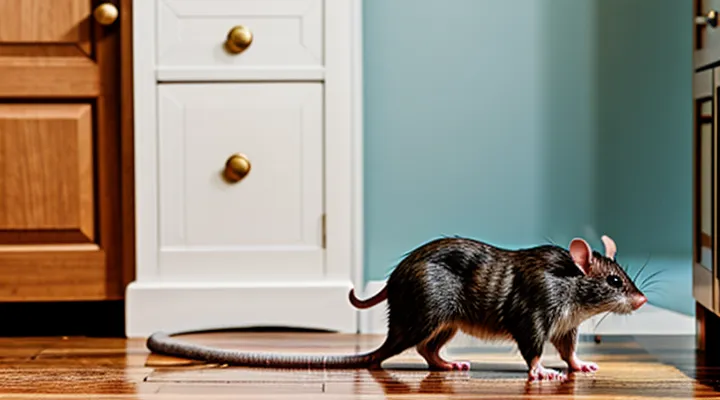
General Interpretations of Rats
Negative Connotations
Seeing a rat inside one’s home in a dream commonly signals adverse forces. The animal’s reputation for filth and disease translates into a warning about health hazards, either physical illness or emotional toxicity. The presence of the rodent suggests a breach of personal boundaries, indicating potential betrayal by someone close. Financial instability often accompanies this motif; the rat’s scavenging behavior reflects loss, scarcity, or mismanagement of resources. Moral corruption appears as another negative aspect; the creature’s nocturnal habits imply deceit, hidden agendas, or dishonest conduct. Social stigma may arise, as the image evokes shame and embarrassment that could affect reputation within a community.
Key negative connotations include:
- «contamination» of living space, symbolizing impurity or infection
- «betrayal» by trusted individuals, highlighting broken confidence
- «poverty» or financial loss, representing scarcity and insecurity
- «deceit» and hidden motives, pointing to dishonest actions
- «social disgrace», suggesting damage to personal or familial standing
Interpretation of this dream encourages vigilance, prompting assessment of health, relationships, finances, and ethical conduct. Addressing the underlying issues can mitigate the adverse implications conveyed by the rat’s appearance.
Positive and Neutral Connotations
Dreams that feature a small rodent within a personal residence often carry meanings that differ from the fear‑based interpretations commonly associated with the animal. When the creature appears without threatening behavior, the symbolism may shift toward constructive or observational themes.
Positive connotations may include:
- Indication of hidden resources becoming accessible, suggesting that overlooked opportunities are ready for use.
- Signal of adaptability and resilience, reflecting the dreamer’s capacity to thrive in confined or challenging environments.
- Reminder of community and cooperation, as rats are social mammals whose presence can represent supportive networks within the household.
Neutral connotations may involve:
- Observation of routine maintenance issues, prompting attention to cleanliness, organization, or pest control without implying danger.
- Representation of subconscious awareness of small, persistent thoughts that neither harm nor benefit, merely existing as background mental activity.
- Reflection of ordinary daily encounters, emphasizing that the dream mirrors realistic, everyday observations rather than extraordinary omens.
Rats in the Home: Specific Dream Contexts
Rats in the Living Room
Seeing a rat inside the living room during sleep often signals unresolved issues within the personal sphere. The living room represents the public aspect of daily life, while the rat embodies elements that are hidden, unwelcome, or invasive.
Interpretations commonly include:
- Presence of concealed problems that threaten stability;
- Feelings of vulnerability related to personal boundaries;
- Indications of resourcefulness or survival instinct under pressure.
Cultural traditions assign varied meanings. In some Asian folklore, a rat in the domestic area denotes abundance and cunning, whereas Western superstition frequently links the creature to decay or betrayal. Recognizing the cultural lens clarifies the emotional tone of the vision.
From a psychological perspective, the rat functions as a symbol of repressed anxiety. Its appearance in a communal space suggests that the stressor is not isolated but affects relationships and outward behavior. The dream may prompt examination of habits or interactions that feel intrusive or uncontrolled.
Practical steps for interpretation:
- Identify recent situations where hidden concerns have surfaced;
- Assess whether personal boundaries have been compromised;
- Consider actions that restore order and eliminate sources of discomfort.
Addressing the underlying issues reduces the recurrence of such imagery and supports a healthier mental environment.
Rats in the Bedroom
Dreams that feature a rat in the bedroom often signal unresolved issues within the personal sanctuary. The bedroom, as a space of rest and intimacy, carries symbolic weight; a rodent intrusion suggests hidden anxieties or disturbances that affect emotional equilibrium.
- Intrusion of unwanted habits or thoughts that disrupt nightly peace.
- Fear of vulnerability, reflecting concerns about personal boundaries being breached.
- Indicator of suppressed stress related to relationships, finances, or health that surface during sleep.
- Representation of resourcefulness or survival instincts, reminding the dreamer of adaptability in adverse conditions.
From a psychological perspective, the rat embodies the “shadow” aspect of the psyche, embodying traits that the conscious mind tends to reject. Appearance in the bedroom amplifies the need to confront these traits within the most private environment, where unconscious material often surfaces.
Practical steps for interpretation:
- Record the dream’s details immediately after waking to preserve context.
- Identify current life areas that feel compromised or cluttered, especially those connected to personal space.
- Evaluate recent stressors that may have been ignored; consider journaling to uncover patterns.
- Implement changes in the bedroom environment—declutter, improve hygiene, introduce calming elements—to address the symbolic disturbance.
Addressing the underlying messages associated with a rat in the bedroom promotes emotional balance and restores the restorative function of the sleeping area.
Rats in the Kitchen
Rats appearing in the kitchen of a dream signal concerns related to domestic stability, nourishment, and hidden contamination. The kitchen represents the core of daily sustenance; a rodent’s presence suggests that something essential to personal well‑being may be compromised or overlooked.
Interpretive points:
- Presence of a rat indicates anxiety about resources, such as food security or financial supply.
- Movement of the rat through cabinets or countertops reflects subconscious awareness of disorder or neglect within the household environment.
- Interaction with the rat—chasing, ignoring, or feeding—reveals the dreamer’s attitude toward problems that are perceived as minor yet persistent.
- The condition of the kitchen (clean, cluttered, dilapidated) modifies the meaning, with a tidy setting suggesting manageable issues and a filthy setting implying deeper neglect.
Cultural associations reinforce the symbolism. In many traditions, rodents embody adaptability and survival, while also serving as omens of disease or loss. Psychological frameworks interpret the rat as a manifestation of repressed impulses or unaddressed stressors that infiltrate the personal sphere.
Practical guidance derived from the imagery includes:
- Conduct a thorough assessment of living spaces, focusing on hygiene and organization.
- Review financial and nutritional habits for signs of inefficiency or waste.
- Address lingering worries through structured problem‑solving rather than avoidance.
Overall, the kitchen rat functions as a metaphorical alert, urging attention to the foundational aspects of daily life that sustain health and security.
Rats in Other Areas of the House
In dream analysis, the place where a rat appears within a residence alters the symbolic message. Each area reflects a distinct aspect of personal life, health, or emotional state.
- Kitchen: Presence of a rat in the kitchen suggests hidden concerns about nourishment, daily routines, or family dynamics. The dream may warn of contamination, either literal or metaphorical, affecting sustenance and well‑being.
- Attic: A rat spotted in the attic points to unresolved memories, suppressed ideas, or neglected ambitions. The upper level represents the mind’s storage; the rodent’s activity indicates that forgotten material seeks attention.
- Basement: Encountering a rat in the basement highlights subconscious fears, financial insecurity, or foundational instability. The lower level symbolizes the base of existence; the creature’s movement signals underlying anxiety that could undermine stability.
- Bedroom: A rat observed in the bedroom signals intimate relationships, personal boundaries, or private vulnerabilities. The sleeping chamber embodies personal space; the presence of the animal suggests intrusion into emotional security.
Interpretation hinges on correlating the specific location with current life circumstances. Recognizing the area where the rat manifests guides attention toward the corresponding domain, prompting corrective action or deeper self‑examination.
Psychological Perspectives on Rat Dreams
Subconscious Fears and Anxieties
Dreams featuring a rat within the household often surface as a symbolic mirror of deep‑seated fears. The animal’s presence in a familiar setting suggests that anxiety originates from environments presumed safe, exposing hidden concerns about personal boundaries and daily routines.
Typical subconscious apprehensions revealed by this motif include:
- Fear of contamination or disease, linked to the rat’s reputation as a carrier of illness.
- Sense of insecurity regarding personal space, reflecting a perceived invasion of privacy.
- Anxiety about loss of control, where the creature’s sudden appearance signals unpredictable forces.
- Concern about social judgment, stemming from the rat’s association with filth and neglect.
Psychological mechanisms at work involve projection of internal tension onto an external figure, displacement of unresolved stress, and activation of archetypal imagery associated with survival threats. The mind selects the rat because its cultural connotations efficiently encode complex emotional states.
Interpretive guidance recommends a systematic review of recent life events. Identify circumstances that challenge cleanliness, order, or autonomy. Examine relationships that may feel intrusive or judgmental. Correlate the timing of the dream with periods of heightened stress, and note any recurring patterns of rodent symbolism across multiple dreams. This approach transforms a startling nocturnal image into a diagnostic tool for addressing underlying anxieties.
Feelings of Invasion or Contamination
Dreams that feature a rodent within the household often trigger a subconscious sense of intrusion. The presence of the animal in a familiar environment evokes the perception that personal space has been breached, suggesting underlying anxieties about boundaries being violated.
Feelings associated with this motif can be categorized as follows:
- Sensation of unwanted entry, reflecting concerns about external forces penetrating private life.
- Perception of impurity, indicating fears of contamination affecting moral or physical cleanliness.
- Unease about loss of control, highlighting apprehension toward unpredictable elements disrupting routine.
These emotional responses reveal how the mind translates external symbols into internal warnings, prompting reflection on areas where personal security may feel compromised.
Hidden Aspects of Self
A dream in which a rat appears inside the domestic environment signals the emergence of concealed personal dimensions. The setting of the home represents the psyche’s familiar territory; an intruding rodent disrupts that familiarity, prompting attention to aspects that remain unnoticed or suppressed.
The presence of the animal reflects instinctual drives that have been denied or ignored. It also indicates an underlying sense of contamination—emotional, moral, or relational—that the conscious mind has avoided confronting. Additionally, the rat’s nocturnal nature suggests hidden thoughts that operate beneath ordinary awareness, influencing behavior without explicit recognition.
- Repressed survival instincts that guide decision‑making
- Unacknowledged anxieties about cleanliness or purity
- Subconscious fears of betrayal or invasion of personal space
- Latent adaptability and resourcefulness concealed by routine
Recognition of these hidden facets enables integration of the suppressed material into conscious identity, fostering psychological balance and reducing internal conflict.
Cultural and Mythological Interpretations
Rats in Western Folklore
Rats occupy a prominent position in Western folklore, frequently embodying traits such as cunning, decay, and sudden wealth. Medieval bestiaries describe the rat as a creature that gnaws through hidden stores, while Aesop’s fable “The Rat and the Elephant” illustrates the animal’s capacity for clever retaliation. Grimm collections include “The Mouse, the Bird, and the Sausage,” in which the rat’s presence signals domestic disruption. French folklore often links rats to the underworld, portraying them as messengers of death or carriers of disease.
Historical references reinforce these associations:
- Bestiaries (12th‑15th c.) – emphasize the rat’s role as a pest that corrupts grain.
- Aesop’s fables – highlight strategic cunning and retributive justice.
- Grimm fairy tales – present rats as agents of mischief within the household.
- French “contes” – portray rats as omens of illness or markers of hidden treasure.
Dreams that feature a rat inside a dwelling draw upon these folkloric meanings. The animal’s domestic setting suggests intrusion into personal space, often interpreted as a warning about concealed threats, financial loss, or the need for vigilance. The emotional tone of the dream—fear, disgust, or curiosity—modulates the reading: fear points to anxiety over unseen hazards; disgust may reflect revulsion toward corrupt influences; curiosity can indicate an unconscious desire to uncover hidden resources.
Cultural variations affect interpretation. English folklore tends to emphasize the rat’s connection to plague and moral decay, whereas German legends focus on the creature’s trickster aspect. French tradition frequently associates the rat with the presence of spirits or a forthcoming change in fortune. These nuances shape the symbolic weight of a rat sighting in a dream about the home.
Practical guidance for analysis:
- Identify personal circumstances that involve secrecy, financial uncertainty, or health concerns.
- Note the rat’s behavior—aggressive, passive, or fleeing—to gauge the immediacy of the implied threat.
- Consider recent encounters with actual rodents, as real‑world experiences often inform dream symbolism.
- Reflect on the surrounding environment in the dream; a clean, well‑maintained house may suggest manageable challenges, while a dilapidated setting signals deeper disorder.
Understanding the folkloric background of rats provides a framework for decoding their appearance in domestic dreams, linking ancient symbolism with contemporary personal contexts.
Rats in Eastern Traditions
Rats occupy a prominent position in the mythic and symbolic systems of several Eastern cultures. Their presence in narratives, religious rites, and astrological schemes reflects a complex blend of reverence and caution.
In Chinese tradition, the rat is the first sign of the zodiac, associated with intelligence, adaptability, and resourcefulness. Folklore depicts the animal as a messenger of prosperity, yet also as a potential source of disruption when it invades domestic spaces.
Japanese folklore presents the rat as a trickster figure in tales such as «The Rat’s Revenge», emphasizing cunning and the capacity to outwit stronger opponents. Shinto shrines occasionally honor rodent deities that safeguard harvests, underscoring a dual aspect of protection and mischief.
Indian cultural texts describe the rat as the vehicle of the deity Ganesha, symbolizing the ability to overcome obstacles and the importance of humility. Vedic literature cites the rat’s swift movement as an emblem of fleeting opportunities and hidden dangers.
When a dream features a rat within the home, interpretation draws upon these cultural motifs. The animal’s domestic appearance suggests concerns about household stability, hidden threats, or unexpected gains. The following symbolic cues commonly arise:
- Presence of a solitary rat: personal ingenuity confronting a challenge.
- Multiple rats scurrying: overwhelming issues, potential loss of control.
- Rat gnawing objects: erosion of resources, need for vigilance.
- Rat fleeing the scene: resolution of a problem, disappearance of anxiety.
The synthesis of Eastern symbolic frameworks provides a nuanced lens for decoding the domestic rat vision, aligning the dreamer’s experience with longstanding cultural associations of the creature.
Indigenous Beliefs
Indigenous cultures often interpret a dream in which a rat appears inside the household as a sign that the domestic sphere is undergoing a subtle shift. The presence of the rodent is linked to themes of survival, hidden resources, and potential threats that emerge from within familiar surroundings.
Across diverse traditions, the rat embodies a messenger that conveys information about the dreamer’s relationship with community and environment. Its appearance suggests attention to overlooked details that may affect family well‑being, health, or prosperity.
- Among several Native American nations, the rat is associated with cleverness and the need to adapt to changing circumstances; a household sighting warns of possible scarcity that can be averted through strategic planning.
- Australian Aboriginal stories describe the rat as a guardian of hidden food stores; dreaming of it at home signals that provisions are secure but require careful stewardship.
- Certain West African societies view the rat as a symbol of social gossip; its domestic presence in a dream advises vigilance against rumors that could disrupt communal harmony.
- In Andean indigenous belief, the rat represents the boundary between the material world and the spirit realm; its appearance inside the dwelling indicates that spiritual messages are attempting to enter the everyday life of the family.
Interpretations converge on three core ideas: a reminder to protect resources, an indication that hidden dangers may surface, and an encouragement to harness the rat’s adaptability for personal or collective benefit. The dream thus functions as a cultural diagnostic tool, urging the dreamer to examine internal dynamics and respond with foresight.
Analyzing Dream Details
The Rat«s Size and Color
In dream analysis, the dimensions of a rat observed inside a dwelling convey distinct symbolic messages. The physical magnitude of the animal reflects perceived influence, while its hue signals emotional tone.
- «Small» rat: suggests minor irritation, fleeting concerns, or a subtle warning that can be addressed without major upheaval.
- «Medium» rat: indicates moderate anxiety, ongoing stressors, or a situation that demands attention but remains manageable.
- «Large» rat: denotes overwhelming fear, significant disruption, or a powerful threat that dominates the dreamer's subconscious.
- «Huge» rat: signals extreme dread, a sense of being overrun, or an imminent crisis demanding decisive action.
Color further refines interpretation:
- «Black» rat: associates with hidden dangers, secrecy, or repressed negative feelings.
- «Brown» rat: links to everyday worries, practical problems, or material concerns.
- «White» rat: represents purity of intention, a warning against contamination, or a call to cleanse one’s environment.
- «Gray» rat: reflects ambiguity, indecision, or a blend of positive and negative influences.
- Unusual hues (e.g., «red», «blue»): point to heightened emotional states, such as anger or melancholy, and may indicate a need for emotional regulation.
When size and hue intersect, the combined symbolism intensifies. A «large black» rat amplifies the sense of looming, concealed threat; a «small white» rat softens the warning, suggesting a manageable issue that requires clarification. Recognizing both attributes enables precise decoding of the dream’s underlying message.
The Rat«s Behavior
Rats appearing in a domestic setting often exhibit distinct actions that influence dream analysis. Observing the creature’s movement, interaction with objects, and emotional tone provides clues about subconscious concerns.
Typical behaviors and their common interpretations:
- Scurrying across the floor — suggests unresolved anxieties that surface quickly.
- Chewing furniture or wiring — indicates a perceived threat to stability or personal resources.
- Hiding in corners or walls — reflects suppressed feelings or hidden aspects of the self.
- Aggressive biting or scratching — signals confrontations or feelings of vulnerability.
- Calmly nesting or grooming — denotes a desire for order, security, or self‑care.
The rat’s demeanor, whether frantic, indifferent, or hostile, shapes the symbolic message. Rapid, erratic motion aligns with heightened stress, while composed activity points to a controlled approach to inner challenges. Analyzing these patterns helps decode the underlying emotional landscape revealed by the dream.
Your Emotional Response in the Dream
The appearance of a rat within a domestic setting often triggers a distinct emotional pattern that shapes the dream’s symbolic meaning. Recognizing the specific feeling experienced by the dreamer provides a direct pathway to interpreting the underlying message.
Typical emotional responses include:
- Fear or dread
- Disgust or revulsion
- Anxiety about contamination
- Curiosity mixed with unease
- Anger toward hidden threats
Each response carries a particular implication. Fear signals perceived danger in the personal environment, suggesting the need for vigilance. Disgust reflects a rejection of aspects deemed unclean or morally compromised, pointing to boundaries that require reinforcement. Anxiety about contamination highlights concerns over loss of control or invasion of private space. Curiosity combined with unease indicates an unconscious drive to explore hidden problems while remaining cautious. Anger toward concealed threats reveals frustration with unresolved issues that may be undermining stability.
The intensity of the emotion amplifies the urgency of the message; stronger feelings denote a more pressing situation that the subconscious urges the individual to address. By aligning the felt response with the symbolic representation of the rodent, the dream analysis yields a precise insight into personal concerns and potential corrective actions.
Practical Steps for Dream Interpretation
Journaling Your Dreams
Documenting nocturnal imagery involving a domestic rodent provides concrete material for symbolic analysis. A systematic record captures fleeting details that otherwise dissolve upon waking, enabling pattern recognition and deeper insight into subconscious concerns.
- Date and time of awakening
- Physical environment of the dream (rooms, furnishings, lighting)
- Description of the rat (size, color, behavior, health)
- Emotional response (fear, curiosity, disgust, compassion)
- Interactions with other characters or objects
- Notable sounds, smells, or tactile sensations
Each entry should be written immediately after awakening, using clear language and precise terminology. Regular review of the compiled data reveals recurring motifs, such as repeated appearances of the animal in specific rooms or consistent emotional tones. Cross‑referencing these patterns with established symbolic frameworks—such as associations of rodents with hidden threats, survival instincts, or resourcefulness—facilitates a nuanced interpretation of the dream’s message.
For illustrative purposes, a sample journal line might read: « Dream on 12 April, 03:15 – a black rat scurries across the kitchen floor, triggering a surge of anxiety; attempts to catch it fail, and the rat disappears into a wall crack ». This format preserves essential information while allowing analytical comparison across multiple entries.
Reflecting on Waking Life Events
Dream imagery featuring a rodent inside the household often mirrors recent experiences that the dreamer has encountered while awake. The presence of a rat in a domestic setting signals an unconscious processing of events that involve contamination, loss of control, or hidden threats within the personal environment.
Recent waking incidents shape the symbolic charge of the rat. Encounters with unsanitary conditions, unexpected financial setbacks, interpersonal betrayals, or feelings of vulnerability in familiar spaces amplify the rodent’s meaning. The mind translates these stressors into a vivid animal representation during sleep, facilitating emotional integration.
Typical waking‑life triggers associated with this motif include:
- Discovery of pests or mold in the home.
- Sudden expenses or budgetary pressure.
- Disclosure of deceit by a close associate.
- Situations where personal boundaries feel invaded.
Effective reflection involves recording the dream immediately after waking, identifying any parallel events from the preceding days, and evaluating the emotional tone attached to each. By aligning the rodent symbol with concrete waking experiences, the individual gains insight into underlying anxieties and can address the root causes that the subconscious mind has highlighted.
Seeking Professional Guidance
Professional assistance offers a structured approach to deciphering the symbolism of a rat appearing within a familiar environment. The presence of a rodent in a domestic dream often triggers anxiety, prompting individuals to explore underlying emotional currents that may affect daily functioning. Engaging a qualified specialist, such as a licensed therapist or certified dream analyst, provides access to interpretive frameworks grounded in psychological theory and cultural research.
Key benefits of consulting an expert include:
- Accurate identification of personal associations linked to the animal motif.
- Integration of the dream’s imagery with current life stressors or unresolved conflicts.
- Development of coping strategies tailored to the emotional impact of the vision.
- Guidance on whether the dream signals a need for behavioral change or deeper self‑reflection.
When selecting a professional, consider the following criteria:
- Credentials confirming training in analytical psychology or related disciplines.
- Proven experience handling symbolic content in client narratives.
- Transparent methodology outlining how dream material will be examined.
- Availability of follow‑up sessions to monitor progress and adjust interpretations.
Initial contact typically involves describing the dream’s details, including setting, emotions felt, and any recurring themes. The practitioner then employs established interpretive models to illuminate possible meanings, linking them to the dreamer’s waking concerns. This collaborative process transforms a fleeting nocturnal image into actionable insight, reducing uncertainty and fostering mental clarity.
«Professional guidance transforms ambiguous symbols into concrete understanding, supporting personal growth and emotional resilience».