
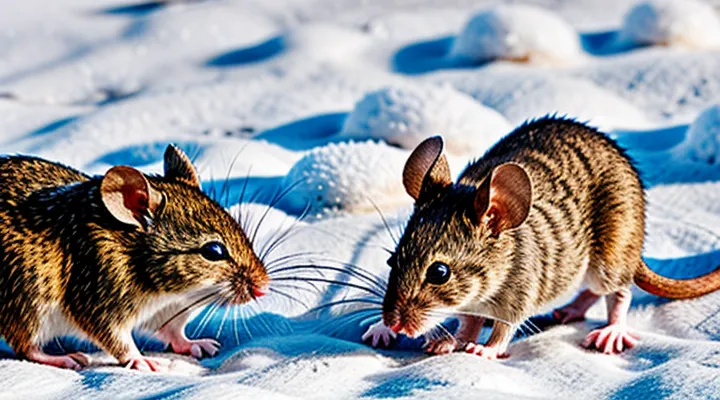
Do Mice Hibernate?
The Nuances of «Hibernation»
Mice do not undergo true hibernation; instead, they enter short periods of torpor that reduce body temperature and metabolic rate. Torpor differs from hibernation in duration, depth of physiological depression, and environmental triggers.
During winter, laboratory and field studies show that house mice (Mus musculus) and related species experience:
- Brief torpor bouts lasting a few hours, often linked to low ambient temperatures or food scarcity.
- Rapid arousal when conditions improve, allowing immediate foraging and reproduction.
- Maintenance of core body temperature above the critical threshold for cellular function, unlike the near‑freezing temperatures observed in obligate hibernators.
True hibernators such as ground squirrels display:
- Continuous multi‑day or multi‑week depressions in metabolism.
- Profound hypothermia, with body temperature approaching ambient levels.
- Seasonal endocrine changes that regulate fat utilization and immune function.
The distinction matters because torpid mice remain capable of short‑term activity, which influences predator‑prey dynamics and ecosystem energy flow. Their flexible response to temperature fluctuations also affects laboratory experimental design, requiring careful control of ambient conditions to prevent unintended torpor episodes.
Understanding these nuances clarifies why mice are active throughout winter despite occasional torpor, and it separates their seasonal behavior from the deep, prolonged dormancy characteristic of genuine hibernation.
Why True Hibernation is Rare for Mice
Metabolic Demands
Mice maintain core temperature through intense thermogenesis, which raises their basal metabolic rate during cold periods. The increased energy expenditure requires continuous intake of high‑calorie foods, often stored in caches or accessed by foraging during brief warm intervals. Consequently, mice reduce nonessential activities, such as prolonged rest, to allocate more time to feeding and nest maintenance.
Key metabolic adjustments include:
- Elevated production of brown adipose tissue heat, driven by uncoupling protein activation.
- Increased heart rate and respiratory frequency to support higher oxygen demand.
- Shift toward carbohydrate‑rich diet to supply rapid glucose for thermogenic processes.
These physiological changes limit the feasibility of extended hibernation. Instead, mice exhibit short bouts of torpor, lasting only a few hours, when ambient temperature drops sharply and food scarcity intensifies. Torpor lowers metabolic rate temporarily but does not replace the need for regular feeding cycles.
Overall, the winter metabolic profile of mice is characterized by sustained high energy turnover, selective use of brief torpor, and continuous activity aimed at meeting thermal and nutritional demands.
Body Size and Heat Loss
Mice are small mammals whose ability to retain heat directly influences their activity during cold periods. Because a mouse’s body mass is low, its surface‑to‑volume ratio is high, which accelerates heat dissipation. Heat loss increases proportionally with exposed surface area, while metabolic heat production rises only with tissue mass. Consequently, a mouse must generate relatively more energy per gram of tissue to maintain core temperature than a larger animal.
Two physiological mechanisms mitigate this challenge:
- Insulation: Dense fur reduces convective and radiative heat transfer, lowering the effective surface area exposed to cold air.
- Metabolic adjustment: Mice elevate basal metabolic rate and, when ambient temperature drops below a critical threshold, enter short bouts of torpor, reducing body temperature and metabolic demand.
The combination of high surface‑to‑volume ratio, limited endogenous heat production, and the capacity for torpor explains why mice do not remain fully active throughout winter. Their small size forces reliance on rapid heat loss management, leading to intermittent periods of reduced activity rather than continuous foraging in cold conditions.
Mouse Activity in Winter
Nesting Behavior and Survival Strategies
Finding Shelter
Mice remain active throughout winter, but they shift from open foraging to protected microhabitats. Shelter selection reduces exposure to low temperatures, predators, and food scarcity.
Typical winter refuges include:
- Burrows beneath leaf litter, mulch, or snowpack, where insulation maintains temperatures above freezing.
- Structural gaps in buildings, such as wall voids, attic spaces, and crawl‑spaces, offering stable warmth and limited disturbance.
- Compost piles, manure heaps, and stored grain containers, which provide both shelter and residual food sources.
Mice evaluate potential sites using tactile and olfactory cues. Preference is given to locations with:
- Minimal airflow, preserving heat.
- Access to concealed entry points, limiting predator detection.
- Proximity to residual food or stored resources.
Once a shelter is secured, mice construct nest chambers using shredded plant material, insulation fibers, or soft debris. These nests further buffer ambient cold and conserve metabolic heat.
In summary, winter survival hinges on locating insulated, concealed habitats that support limited foraging while maintaining body temperature, rather than entering prolonged torpor.
Nest Construction
Mice construct nests to maintain body temperature during the cold months, reducing the need for prolonged inactivity. The nests serve as microhabitats that trap heat generated by the animal’s metabolism and provide a barrier against wind and moisture.
- Materials: shredded plant fibers, shredded paper, dead insects, and fur are woven together. Soft, insulating components such as downy feathers are preferred for their low thermal conductivity.
- Structure: a central chamber is surrounded by a dense outer layer. The inner space is compacted to eliminate air gaps, while the outer layer remains loosely arranged to shed moisture.
- Location: nests are hidden in burrows, under building foundations, or within insulated crevices. Placement near a heat source, such as a compost heap or warm soil, enhances thermal efficiency.
Construction begins in late summer, intensifying as daylight shortens. Mice increase the thickness of the outer layer by adding material each night, creating a cumulative insulation effect that can raise the nest’s internal temperature by several degrees above ambient. This behavior allows mice to remain active at low ambient temperatures, limiting the duration of true torpor.
The quality of a nest directly influences a mouse’s ability to forage and reproduce during winter. Well‑built nests support sustained activity, whereas inadequate nests force individuals to conserve energy through reduced movement and limited foraging. Consequently, nest construction is a critical factor in seasonal survival strategies.
Food Hoarding
Mice remain active throughout winter rather than entering prolonged torpor. Survival during cold months depends on the ability to locate and reserve sufficient energy resources. Food hoarding provides a reliable supply when external foraging becomes risky or inefficient.
Typical hoarding behavior includes:
- Collecting seeds, grains, and insects during autumn.
- Transporting items to concealed chambers in burrows or nest structures.
- Arranging caches in multiple locations to reduce loss from predation or spoilage.
- Periodically retrieving and consuming stored provisions throughout the winter season.
Research shows that mice increase gathering intensity as temperatures drop, expanding the quantity and diversity of cached items. This strategy mitigates the reduced availability of fresh food and supports metabolic demands without the need for extended inactivity.
Torpor: A Common Winter Adaptation
What is Torpor?
Torpor is a short‑term reduction in metabolic rate and body temperature that enables small mammals to conserve energy when environmental conditions become unfavorable. The physiological shift involves suppression of heart rate, respiration, and caloric expenditure, often accompanied by a drop in core temperature to just above ambient levels.
Key characteristics of torpor include:
- Decrease in metabolic output to 10–30 % of normal resting rate.
- Core body temperature falling by 5–15 °C relative to the animal’s normal set point.
- Duration ranging from a few hours to a full night, depending on temperature and food availability.
- Rapid arousal possible within minutes when conditions improve.
In mice, torpor is triggered by low ambient temperatures combined with limited food resources. The hypothalamus detects the thermal stress, prompting the release of neuropeptides that inhibit thermogenic pathways. As a result, mice enter a torpid state rather than maintaining constant activity throughout winter.
Torpor differs from true hibernation, which is a prolonged, multi‑day or multi‑week state with deeper temperature depression and extensive physiological remodeling. Mice typically employ torpor episodically, allowing them to resume normal activity each day if conditions become favorable.
Understanding torpor clarifies why mice do not remain continuously asleep during the cold season. Instead, they alternate between active periods and brief torpid bouts, balancing energy conservation with the need to forage and avoid predators.
Triggers for Torpor
Mice enter torpor when physiological and environmental cues signal that energy conservation is advantageous. A decline in ambient temperature below the species‑specific thermoneutral zone triggers a rapid reduction in metabolic rate and body temperature. Short daylight periods, detected through retinal photoreceptors, increase melatonin secretion, which interacts with hypothalamic pathways to promote a torpid state. Limited food availability reduces circulating glucose and leptin, activating neuroendocrine mechanisms that lower thermogenesis. Seasonal shifts in hormone levels, particularly a rise in corticosterone, further predispose mice to enter torpor.
Key triggers can be summarized as follows:
- Temperature: ambient heat loss below ~20 °C.
- Photoperiod: day lengths shorter than 12 hours.
- Nutrient scarcity: reduced caloric intake or sudden food shortage.
- Hormonal changes: elevated melatonin, decreased leptin, increased corticosterone.
These factors act synergistically, allowing mice to lower metabolic demand temporarily and survive periods when resources are scarce.
Benefits of Torpor
Torpor is a short‑term reduction in metabolic rate and body temperature that mice employ when ambient conditions become adverse. During cold periods, the physiological shift allows individuals to maintain vital functions while minimizing energy expenditure.
- Energy savings: metabolic demand drops markedly, reducing the need for food intake when resources are scarce.
- Predation avoidance: lowered activity and reduced movement make mice less detectable to predators.
- Physiological protection: cooler body temperature slows the progression of cellular stress and conserves water.
- Reproductive timing: by postponing high‑energy activities, torpor synchronizes breeding cycles with favorable environmental windows.
These advantages enable mice to persist through winter without entering prolonged hibernation. The ability to enter torpor contributes to stable population levels, supports rapid post‑winter foraging, and enhances overall fitness in temperate ecosystems.
Year-Round Activity Patterns
Indoor vs. Outdoor Mice
Mice exhibit distinct winter strategies depending on whether they reside inside human structures or remain outdoors. Indoor mice maintain continuous activity throughout the cold season because the indoor environment provides stable temperature, consistent food sources, and protection from predators. Their metabolic rate stays elevated, and they continue foraging, nesting, and reproducing without interruption.
Outdoor mice confront decreasing temperatures, reduced food availability, and heightened predation risk. To survive, they:
- Reduce metabolic demand by entering a state of torpor, characterized by lowered body temperature and slowed heart rate.
- Seek insulated shelters such as leaf litter, burrows, or building foundations that offer thermal buffering.
- Limit foraging to periods of milder weather, often during daylight hours when temperatures rise slightly.
- Delay breeding until spring, conserving energy for survival rather than reproduction.
The contrast in winter behavior reflects environmental constraints: indoor mice experience a climate that negates the need for seasonal dormancy, while outdoor mice rely on physiological and behavioral adaptations to endure the harsh season.
Impact of Food Availability
Mice remain active throughout winter but lower their metabolic rate and spend longer periods in sheltered nests. Their reduced activity is closely linked to the amount of edible material accessible in cold months.
- When natural seeds, insects, and plant matter decline, mice switch to stored grains and cached items.
- Limited food forces a deeper torpor, characterized by a drop in body temperature and slower heart rate.
- Abundant provisions allow frequent foraging bouts, maintaining higher body temperature and preventing prolonged torpor.
Experimental observations show a negative correlation between ambient temperature and food intake: colder conditions combined with scarce resources produce the longest bouts of inactivity. Conversely, supplemental feeding in laboratory settings shortens torpor episodes and improves weight maintenance.
Understanding this relationship guides pest‑management strategies. Providing or removing food sources directly alters winter survival rates, influencing population dynamics in both urban and rural environments.
Role of Environmental Temperature
Mice remain active throughout winter, but their behavior changes markedly as ambient temperature drops. Low temperatures trigger physiological adjustments that reduce energy expenditure. When the surrounding air falls below the thermoneutral zone (approximately 28 °C for laboratory mice), metabolic heat production rises, prompting mice to seek insulated microhabitats such as burrows, leaf litter, or building cracks.
These sheltered sites provide a stable microclimate, often a few degrees warmer than the external environment. The modest increase in temperature allows mice to maintain a normal body temperature without excessive metabolic cost. Consequently, they spend more time in nests, reduce foraging distance, and limit exposure to predators.
Temperature also influences the occurrence of torpor, a short-term state of lowered body temperature and metabolic rate. In colder periods, some mouse species enter daily torpor episodes lasting several hours, conserving energy while remaining capable of rapid arousal when conditions improve. Torpor incidence correlates with ambient temperature thresholds; colder nights increase the likelihood and depth of the response.
Key effects of environmental temperature on winter mouse activity include:
- Selection of thermally buffered shelters.
- Decreased locomotor activity and foraging range.
- Initiation of brief torpor periods to lower energy demand.
- Adjusted reproductive timing, with delayed breeding until temperatures rise.
Overall, ambient temperature governs the balance between energy conservation and the need to acquire food, shaping the seasonal activity pattern of mice during the cold months.