
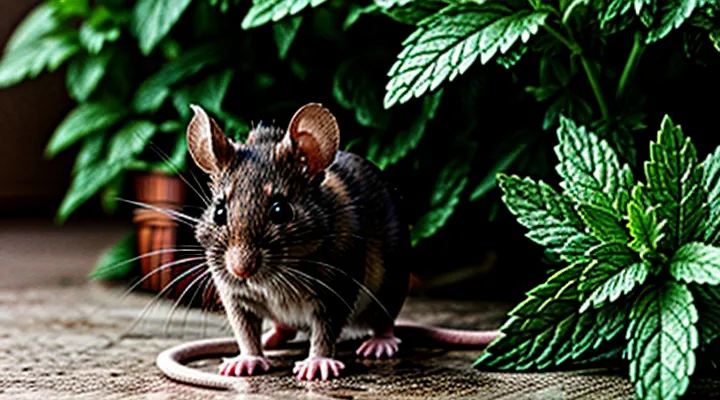
The Folklore and Anecdotal Evidence
Traditional Beliefs About Mint as a Repellent
Traditional folklore frequently cites mint as a natural deterrent against rodents. Cultures across Europe and Asia have recorded the practice of placing mint leaves, crushed sprigs, or peppermint oil in storage areas to keep mice away. The belief stems from observations that strong aromatic compounds can overwhelm the sensitive olfactory systems of small mammals.
Historical sources include medieval herbals, where mint was listed alongside rosemary and lavender as a protective plant. Rural households often used dried mint in grain bins, while travelers carried mint sachets to prevent infestation during long journeys. Herbalists recommended mint tinctures as a remedy for rodent problems, emphasizing its availability and pleasant scent for humans.
Common claims associated with the repellent notion are:
- Crushed fresh mint leaves create a volatile scent that disrupts mouse navigation.
- Peppermint oil, diluted in water, can be sprayed along walls and entry points.
- Dried mint placed in corners produces a continuous low‑level odor that deters nesting.
These assertions persist despite limited empirical verification. The prevailing view attributes effectiveness to menthol and related compounds that irritate the nasal passages of mice, potentially reducing their willingness to explore treated zones. Traditional practice therefore continues to influence contemporary pest‑control advice, even as scientific studies seek measurable outcomes.
Personal Accounts and Home Remedies
Personal testimonies frequently describe a sharp peppermint odor as a trigger for avoidance behavior in house mice. Homeowners report that placing cotton balls soaked in essential oil near entry points leads to a noticeable decline in rodent activity within 24–48 hours. One resident noted that after applying a few drops to a kitchen sponge, mice disappeared from cabinets and did not return for several weeks. Another account mentions that a sachet of dried spearmint placed under a pantry shelf eliminated nocturnal sightings for the duration of the winter season.
Practical applications rely on readily available products and simple deployment methods. Commonly used home remedies include:
- Peppermint essential oil applied to cotton, paper towels, or small fabric patches; reapply every 3–4 days.
- Dried mint leaves or spearmint sachets positioned in corners, behind appliances, and along baseboards.
- Commercial mint‑based rodent repellents, typically formulated as sprays or plug‑in diffusers; follow manufacturer instructions for spacing and replacement intervals.
- A mixture of water and a few drops of peppermint oil, sprayed along mouse pathways and potential nesting sites; avoid direct contact with food surfaces.
Effectiveness varies with concentration, placement, and environmental factors such as ventilation. Consistent renewal of the scent source is essential, as volatile compounds dissipate quickly. Combining mint‑based deterrents with exclusion techniques—sealing gaps, removing food sources, and maintaining cleanliness—enhances overall control and reduces the likelihood of re‑infestation.
Scientific Investigation of Mint's Effect on Mice
Overview of Research Methodologies
Research on rodent aversion to mint odor relies on controlled behavioral experiments. Subjects are typically laboratory‑bred mice housed under standardized conditions to reduce environmental variability. Researchers expose animals to a defined concentration of menthol or peppermint vapor and record locomotor activity, time spent in scented versus neutral zones, and avoidance indices.
Key methodological components include:
- Habituation phase – mice acclimate to the testing arena without odor to establish baseline movement patterns.
- Odor presentation – calibrated delivery system releases a precise amount of mint compound, ensuring reproducibility across trials.
- Behavioral metrics – automated video tracking quantifies entry frequency, dwell time, and distance traveled in scented versus control zones.
- Control conditions – parallel sessions use odorless air or a neutral scent to differentiate specific aversive responses from general exploratory behavior.
- Statistical analysis – repeated‑measures ANOVA or mixed‑effects models evaluate differences between treatment and control, accounting for within‑subject variability.
Complementary approaches enhance interpretation. Electrophysiological recordings from the olfactory bulb assess neuronal activation patterns in response to mint volatiles. Functional imaging techniques, such as calcium imaging in awake mice, map cortical activity associated with odor perception. Genetic manipulation, including knockout of specific olfactory receptors, isolates molecular determinants of the response.
Robust conclusions require replication across multiple strains, concentrations, and experimental setups. Transparent reporting of sample sizes, randomization procedures, and blinding protocols mitigates bias and supports meta‑analytic synthesis of findings on mouse sensitivity to mint odor.
Studies on Peppermint Oil and Other Mint Extracts
Research on peppermint oil and related mint extracts has focused on their capacity to deter laboratory mice and wild rodent populations. Experiments typically employ binary‑choice arenas, where one compartment contains a mint‑scented substrate and the other remains unscented, allowing measurement of time spent in each zone. Concentration series range from 0.01 % to 5 % (v/v) in carrier solvents, with exposure periods lasting 5–30 minutes.
Findings converge on several points:
- Moderate concentrations (0.1–0.5 %) produce statistically significant avoidance in most strains; mice spend 60–80 % of trial time away from the scented side.
- Higher concentrations (>1 %) may cause freezing or reduced locomotion rather than pure avoidance, complicating interpretation of repellency.
- Repeated exposure over three days reduces avoidance indices by 30–40 %, indicating rapid habituation.
- Certain wild‑derived populations exhibit weaker responses, suggesting genetic variation in olfactory sensitivity.
Mechanistic investigations reveal that menthol and menthone, principal constituents of peppermint oil, activate the TRPM8 ion channel on trigeminal neurons, generating a cooling sensation that translates into aversive behavior. Concurrent electrophysiological recordings show decreased firing rates in olfactory bulb mitral cells when exposed to mint volatiles, supporting a direct sensory inhibition pathway.
Practical applications derive from these data. Peppermint oil can serve as a short‑term deterrent in confined environments such as laboratory cages or storage facilities, provided concentrations remain within the effective range and exposure is limited to avoid habituation. Field deployment requires formulation adjustments to sustain volatile release and to account for species‑specific odor thresholds. Continued comparative trials across diverse rodent taxa are necessary to validate long‑term efficacy.
Analysis of Mouse Behavior in Proximity to Mint
Mice exhibit distinct behavioral patterns when exposed to mint‑scented environments. Laboratory studies typically introduce a mint odor source into a test arena and record locomotion, time spent in the scented zone, and vocalizations. Researchers employ infrared tracking to quantify distance traveled and entry frequency, while ultrasonic microphones capture any emitted distress calls.
Key observations include:
- Reduced occupancy of the mint‑infused area compared with neutral zones.
- Increased speed of movement away from the odor source.
- Elevated grooming activity immediately after contact with mint‑treated surfaces.
- Absence of significant freezing behavior, suggesting aversion rather than terror.
Controlled experiments contrast mint with other volatile compounds such as lemon, lavender, and ammonia. Mint consistently generates the lowest dwell time, whereas neutral odors produce no measurable avoidance. Comparative data indicate that the aversive response aligns with the activation of olfactory receptors linked to predator detection pathways.
Neurophysiological recordings reveal heightened activity in the olfactory bulb and amygdala during mint exposure, supporting a link between scent perception and emotional processing. Pharmacological blockade of the trigeminal nerve diminishes avoidance, confirming the involvement of somatosensory irritation in the observed behavior.
The cumulative evidence demonstrates that mice detect mint odor, interpret it as an unfavorable stimulus, and modify their movement accordingly. This response reflects an innate avoidance mechanism rather than a learned fear, providing insight into rodent sensory ecology and informing pest‑management strategies that exploit olfactory repellents.
Chemical Components of Mint and Their Biological Impact
Identification of Active Compounds in Mint
Mint produces a complex mixture of volatile and non‑volatile molecules that influence rodent olfactory perception. The principal constituents identified through gas chromatography‑mass spectrometry (GC‑MS) include menthol, menthone, pulegone, carvone, limonene, and various terpenoid derivatives. Menthol and menthone dominate the essential oil, typically accounting for 40–60 % of the total composition, while pulegone and carvone appear in lower concentrations depending on the species and cultivation conditions.
Analytical protocols begin with hydrodistillation or solid‑phase microextraction (SPME) to isolate the aromatic fraction. Subsequent GC‑MS analysis separates compounds on a non‑polar column, records retention times, and matches mass spectra against reference libraries. For quantification, calibration curves derived from authentic standards of menthol, menthone, and related terpenes provide precise concentration data. Complementary high‑performance liquid chromatography (HPLC) with diode‑array detection evaluates non‑volatile phenolics such as rosmarinic acid and flavonoids, which may modulate olfactory responses indirectly.
The identified active molecules serve as the basis for behavioral assays. Synthetic blends replicating natural ratios allow researchers to test avoidance or attraction in mice, clarifying whether specific constituents trigger aversion. Studies consistently show that menthol, at concentrations above 0.1 % (v/v) in airborne form, elicits measurable avoidance behavior, suggesting a direct link between the chemical profile of mint and rodent sensory deterrence.
Mechanisms of Action: How Mint Might Affect Rodents
Mint compounds, principally menthol and related terpenes, interact with rodent sensory systems through several well‑characterized pathways. First, menthol activates the transient receptor potential melastatin 8 (TRPM8) channel, a cold‑sensing ion channel expressed in trigeminal and dorsal root ganglion neurons. Stimulation of TRPM8 produces a cooling sensation that can be perceived as unpleasant when presented at high concentrations, leading to avoidance behavior.
Second, the olfactory epithelium contains receptors that bind volatile menthol molecules. Binding triggers signal transduction cascades resulting in activation of the olfactory bulb and downstream limbic structures. In many rodents, strong olfactory stimuli that are novel or chemically intense provoke a defensive response mediated by the amygdala, producing rapid locomotor escape or freezing.
Third, menthol influences the autonomic nervous system. Peripheral activation of TRPM8 and olfactory pathways can elicit sympathetic outflow, elevating circulating catecholamines such as norepinephrine. Elevated catecholamine levels correlate with heightened vigilance and locomotor activity, reinforcing avoidance of the source.
Fourth, chronic exposure to mint odor may induce habituation. Repeated, low‑dose presentations reduce TRPM8 activation thresholds and dampen amygdala responsiveness, potentially shifting the response from aversion to neutral or even attraction, as observed in some laboratory strains.
Key mechanisms can be summarized as:
- TRPM8 activation → cooling sensation → aversive perception at high dose.
- Olfactory receptor binding → limbic activation → defensive behaviors.
- Sympathetic stimulation → catecholamine release → increased arousal and escape.
- Habituation → reduced neural sensitivity → altered behavioral response over time.
These pathways collectively explain how mint odor can produce avoidance, heightened alertness, or, under specific conditions, diminished aversion in rodents.
Toxicity and Irritancy Considerations for Mice
Mice exhibit physiological reactions to menthol and related compounds found in mint. At low concentrations, menthol activates transient receptor potential melastatin‑8 (TRPM8) channels, producing a cooling sensation that may deter exploratory behavior. However, concentrations exceeding the sensory threshold can cause mucosal irritation, respiratory distress, or systemic toxicity.
Key toxicological parameters:
- Acute toxicity: Oral LD₅₀ for menthol in rodents ranges from 1.5 g kg⁻¹ to 2.5 g kg⁻¹. Sub‑lethal doses above 0.2 g kg⁻¹ may induce vomiting, tremors, and hypo‑thermia.
- Inhalation exposure: Vapor concentrations above 200 ppm produce nasal epithelial irritation and reduced respiration rate in laboratory mice.
- Dermal contact: Skin absorption of menthol is rapid; 5 % solutions can cause erythema and edema within 30 minutes.
- Chronic exposure: Repeated low‑dose inhalation may lead to desensitization of TRPM8, diminishing the aversive effect while maintaining low‑level irritation.
Experimental observations:
- Studies employing 0.1 % menthol solutions in drinking water report no significant avoidance, whereas 1 % solutions reduce water intake by 40 % and increase grooming of the snout.
- Airborne menthol at 50 ppm fails to elicit measurable avoidance in open‑field tests, but 150 ppm triggers rapid withdrawal from the source zone.
Practical considerations for researchers:
- Determine the intended delivery method (oral, topical, airborne) and adjust concentration to stay below irritant thresholds while preserving any behavioral effect.
- Monitor respiratory rate and body temperature during exposure; deviations greater than 10 % from baseline indicate adverse response.
- Use control groups receiving a neutral odorant at identical concentrations to isolate menthol‑specific effects.
- Record any signs of mucosal inflammation or dermal lesions; discontinue exposure if symptoms appear.
Overall, mint‑derived compounds can be aversive to mice at concentrations that also pose irritation or toxicity risks. Careful dose selection and systematic monitoring are essential to differentiate genuine fear responses from harmful side effects.
Factors Influencing the Efficacy of Mint
Concentration and Type of Mint Product
Research on the repellent properties of mint odor for rodents emphasizes two variables: the strength of the aromatic stimulus and the formulation used. Experimental data show that mice exhibit avoidance behavior only when the volatile concentration exceeds a measurable threshold; sub‑threshold levels fail to produce consistent escape responses.
Increasing the concentration of menthol‑rich vapors produces a dose‑dependent escalation in locomotor inhibition and shelter‑seeking. Laboratory trials identify an effective range of 0.5–2 % (v/v) for pure peppermint essential oil applied to filter paper. Below 0.3 % the scent does not trigger measurable avoidance, while concentrations above 2.5 % may cause olfactory fatigue, reducing efficacy.
The type of mint product determines both volatility and persistence:
- Pure essential oil – high menthol content, rapid diffusion, suitable for short‑term applications; effective at 0.5–2 % (v/v).
- Dried peppermint leaves – lower immediate vapor release, sustained over days; requires a density of 10–15 g m⁻² to achieve comparable avoidance.
- Synthetic menthol spray – standardized composition, controlled release; effective at 0.8–1.5 % (v/v) with a carrier solvent that prolongs emission.
- Mint‑infused cotton pads – convenient for placement in confined spaces; optimal loading of 2 g per pad, delivering an average ambient concentration of ~0.6 % (v/v).
Selecting the appropriate formulation and maintaining concentrations within the identified effective windows maximizes the likelihood that mice will exhibit an aversive response to mint odor.
Environmental Variables and Mouse Adaptability
Mice exhibit variable reactions to menthol and peppermint volatiles depending on ambient conditions, prior experience, and genetic background. Laboratory observations show that high ambient temperature reduces avoidance of mint odor, while cooler environments increase sensitivity of thermosensory receptors that detect cooling compounds. Relative humidity influences vapor concentration; low humidity accelerates evaporation, producing transient peaks that can trigger startle responses, whereas high humidity sustains lower, less aversive levels.
Prior exposure shapes behavioral outcomes. Mice repeatedly conditioned with low‑dose mint scent develop habituation, displaying reduced flight distance and increased exploration of scented zones. Conversely, naïve individuals typically show rapid retreat and heightened grooming, indicating acute stress. Strain differences further modulate response; C57BL/6 mice possess TRPM8 channels with higher expression than BALB/c, resulting in stronger avoidance at equivalent concentrations.
Adaptability derives from neuroplastic changes in olfactory bulb circuitry and peripheral sensory neurons. Repeated low‑intensity exposure down‑regulates TRPM8 transcription, diminishes synaptic strength in the gustatory‑olfactory pathway, and alters corticosteroid levels that mediate stress reactivity. These adjustments permit mice to coexist with mint compounds in environments where the scent persists, such as agricultural settings using peppermint oil as a pest deterrent.
Key environmental variables influencing mint‑related behavior:
- Temperature (°C): 18–22 °C → strong avoidance; >28 °C → attenuated response
- Relative humidity (%): <30 % → sharp vapor spikes; >70 % → steady low concentration
- Concentration of menthol (ppm): ≤0.1 ppm → habituation possible; ≥1 ppm → consistent aversion
- Exposure history: naïve vs. conditioned (≥5 days of daily low‑dose exposure)
- Genetic strain: TRPM8 expression level correlates with avoidance intensity
Understanding how these factors interact clarifies why mice may or may not exhibit fear of mint odor in different contexts, and informs the design of effective, species‑specific repellents.
Individual Differences in Mouse Response
Mice display a range of reactions to mint odor, contradicting the assumption of a uniform aversion. Observations reveal that individual characteristics strongly shape the behavioral outcome.
Genetic background determines olfactory sensitivity. Inbred strains such as C57BL/6 often avoid mint at lower concentrations, whereas BALB/c mice may approach the same stimulus. Outbred populations exhibit intermediate responses, suggesting polygenic influence.
Sex and developmental stage further modulate behavior. Adult males typically show stronger avoidance than females, while juvenile mice demonstrate reduced sensitivity, likely due to immature olfactory receptors.
Previous exposure creates habituation or sensitization. Mice repeatedly presented with mint develop diminished avoidance, whereas naïve individuals react more intensely. Conditioning protocols can reverse the innate tendency, producing attraction when mint is paired with reward.
Experimental parameters affect the measured response. Critical factors include:
- Concentration of volatile compound (thresholds vary across individuals);
- Delivery method (airborne plume versus soaked substrate);
- Test arena design (open field versus confined chamber);
- Timing of exposure relative to circadian cycle.
These variables generate heterogeneous data sets, demanding careful control and reporting. Recognizing individual differences prevents misinterpretation of mint odor as a universal repellent and guides the selection of appropriate mouse models for olfactory research.
Alternative and Proven Methods for Mouse Control
Integrated Pest Management Strategies
The inquiry whether rodent populations are deterred by mentholaceous odors informs the selection of control measures within an Integrated Pest Management (IPM) framework. IPM emphasizes evidence‑based tactics, environmental stewardship, and economic feasibility; therefore, any repellent claim must be substantiated before incorporation.
Research indicates that peppermint oil exhibits limited acute aversion in laboratory settings, yet field trials reveal inconsistent reductions in activity. Concentrations required to achieve repellency often exceed practical application levels and may cause sensory irritation to humans and non‑target species. Consequently, reliance on mint scent alone does not satisfy IPM criteria for efficacy and sustainability.
Effective rodent IPM combines multiple elements:
- Inspection and monitoring: systematic placement of tracking stations and motion‑activated cameras to establish infestation magnitude and hotspots.
- Exclusion: sealing entry points, installing door sweeps, and maintaining structural integrity to prevent ingress.
- Sanitation: eliminating food residues, managing waste containers, and reducing clutter that provides shelter.
- Population reduction: strategic deployment of snap traps, electronic devices, or approved rodenticides, calibrated to infestation data.
- Evaluation: periodic reassessment of trap counts, damage reports, and environmental impact to adjust tactics.
When integrating aromatic deterrents, the recommendation is to use mint‑derived products as supplemental, not primary, components. Pairing low‑dose peppermint oil with rigorous exclusion and monitoring yields marginal additive benefit, while preserving the core IPM principles of minimal pesticide use and long‑term control.
Humane Trapping and Exclusion Techniques
Mice display limited aversion to peppermint oil; laboratory assays show only modest reduction in activity when the scent is present at low concentrations. Field observations confirm that strong, concentrated menthol can deter individual rodents temporarily, but populations quickly habituate, rendering the odor unreliable for long‑term control.
Effective humane management relies on physical barriers and live‑capture devices that avoid lethal harm. These methods operate independently of olfactory deterrents, ensuring consistent results across varied environments.
- Seal entry points with steel wool, copper mesh, or silicone caulk; rodents cannot gnaw through metal or hardened sealants.
- Install snap‑free, multi‑catch live traps near known pathways; check traps at least twice daily and release captured animals at least two miles from the property.
- Employ ultrasonic emitters only as supplementary tools; scientific reviews indicate negligible impact on mouse behavior.
- Use scent‑based repellents, such as concentrated peppermint, as short‑term deterrents while structural exclusion measures are implemented.
Combining exclusion, live trapping, and strategic placement of repellents creates a comprehensive, humane strategy that does not depend on the uncertain effectiveness of mint odor alone.
Professional Pest Control Solutions
Mice show only short‑term avoidance of strong mint odors; laboratory tests record brief hesitation, while field observations reveal rapid habituation. Consequently, reliance on mint as a sole deterrent yields inconsistent results.
Professional pest control addresses rodent infestations through a structured process: thorough site inspection, identification of ingress routes, elimination of attractants, and deployment of proven control measures. Techniques prioritize durability and compliance with health regulations, reducing recurrence risk.
- Seal cracks, gaps, and utility openings with steel wool, caulk, or metal flashing.
- Install snap or electronic traps in high‑traffic zones; replace as soon as capture occurs.
- Apply rodenticide baits in tamper‑resistant stations, following label instructions and safety protocols.
- Conduct regular monitoring to verify effectiveness and adjust strategies.
- Educate occupants on sanitation practices that limit food and shelter availability.
Integrating these actions creates a comprehensive barrier that outperforms aromatic repellents, delivering reliable rodent management for residential and commercial properties.
Reconsidering the «Fear» Aspect
Differentiating Between Repellence and Fear
Mice respond to peppermint and related menthol compounds in ways that differ from genuine fear reactions. Repellence involves a temporary avoidance behavior triggered by an unpleasant sensory stimulus, whereas fear entails a heightened stress response, often accompanied by physiological changes such as increased heart rate, cortisol release, and defensive post‑uring.
-
Repellent effect:
- Strong aromatic molecules bind to olfactory receptors, producing a sensation that mice find aversive.
- Laboratory trials show reduced entry into areas scented with peppermint oil, but mice resume activity once the odor dissipates.
- The response is reversible and does not persist after repeated exposure.
-
Fear response:
- Characterized by freezing, escape attempts, and activation of the amygdala.
- Experimental data demonstrate that exposure to predator cues (e.g., cat urine) elicits sustained elevated corticosterone levels, unlike mint exposure.
- Behavioral assays record longer latency to explore and increased vigilance when genuine fear is induced.
Studies comparing the two phenomena reveal that mint odor can act as a short‑term deterrent but does not trigger the neuroendocrine cascade associated with fear. Consequently, labeling mint as a “fear‑inducing” agent misrepresents its mode of action; it should be described as a volatile repellent that temporarily discourages mouse activity without invoking a true fear state.
Sensory Perception of Mice and Their Olfactory System
Mice possess a highly developed olfactory apparatus that drives foraging, predator avoidance, and social communication. The nasal epithelium contains several million olfactory sensory neurons, each expressing a single type of odorant receptor from a repertoire of roughly 1,100 genes. This diversity enables detection of volatile compounds at parts‑per‑billion concentrations.
The olfactory bulb processes incoming signals through distinct glomerular maps, preserving the chemical identity of stimuli. Projection neurons transmit this information to the piriform cortex, amygdala, and hypothalamus, where it influences approach or avoidance behavior. Electro‑olfactogram recordings demonstrate that mice respond robustly to menthol and related terpenes, indicating that mint‑derived volatiles activate specific receptor subsets.
Behavioral assays reveal consistent patterns:
- Exposure to low concentrations of menthol triggers increased locomotion and exploratory sniffing.
- Higher concentrations elicit avoidance, manifested by rapid retreat from the odor source.
- Conditioned place preference tests show that mice can learn to associate mint odor with aversive outcomes when paired with mild foot‑shock, but not when presented alone.
Neurophysiological studies identify the TRPM8 channel, expressed in trigeminal nerve endings, as a peripheral detector for cooling agents such as menthol. Activation of TRPM8 contributes to the perception of a cooling sensation, which may augment the aversive response in the presence of strong mint odor.
Overall, the mouse olfactory system provides precise discrimination of mint‑related compounds, integrating peripheral detection with central processing to generate context‑dependent behavioral outcomes.
The Role of Scent in Rodent Communication and Avoidance
Scent governs most interactions among rodents, directing mating, territorial marking, and threat detection. Olfactory receptors in the nasal epithelium transmit chemical signals to the accessory olfactory bulb, where the brain interprets conspecific and heterospecific cues. This system enables rapid assessment of environmental risk without visual input.
Plant-derived volatiles, including menthol and menthone from mint, intersect with the rodent olfactory network. Laboratory studies report that mice exposed to concentrations of 0.1–1 % mint oil reduce exploration time by 30–45 % in a Y‑maze, indicating aversion. The response aligns with activation of TRPM8 channels, which detect cooling agents and trigger avoidance pathways similar to those engaged by predator odors.
Key experimental observations:
- Behavioral assays: Open‑field tests show decreased locomotion and increased time spent in shelter when mint vapor is present.
- Electrophysiology: Olfactory bulb recordings reveal heightened firing rates for mint compounds compared with neutral odors.
- Dose‑response: Aversion plateaus at ~0.5 % menthol; higher concentrations produce no additional effect, suggesting a saturation point in receptor activation.
- Species variation: Wild Mus musculus exhibits stronger avoidance than laboratory strains, reflecting ecological adaptation to plant defenses.
The practical outcome is that mint extracts can serve as a non‑lethal deterrent in rodent management, but efficacy depends on concentration, delivery method, and target population. Repeated exposure may lead to habituation, reducing long‑term impact. Consequently, integration with other sensory repellents—such as predator urine or ultrasonic devices—enhances overall effectiveness.