
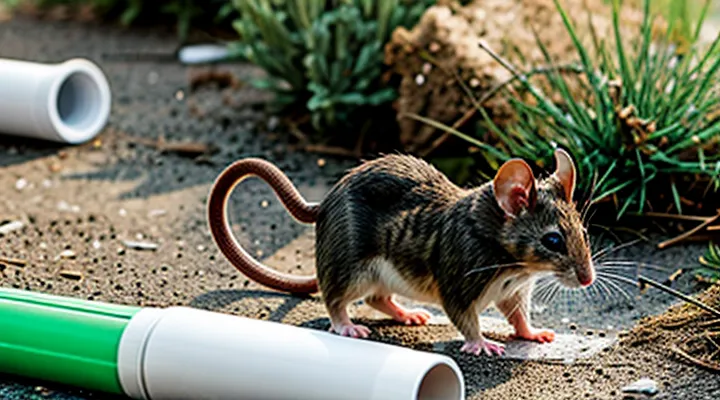
Understanding Rodent Behavior and Gnawing Instincts
Why Rodents Gnaw
Rodents maintain tooth length by continuously incising material. The incisors grow at a rate of 1–2 mm per week, requiring regular wear to prevent overgrowth that would impede feeding. Chewing provides mechanical abrasion, keeping the enamel‑dentin junction sharp and functional.
Two physiological drivers underlie gnawing behavior:
- Dental maintenance: Persistent gnawing balances odontogenesis, preventing malocclusion and associated health issues.
- Exploratory foraging: Tactile assessment of objects reveals edible or nest‑building resources; the act also stimulates mandibular muscles, preserving muscular tone.
Expanding polyurethane foam presents a unique substrate. Its rapid polymerization generates heat and a rigid matrix that can be softened by the moisture in rodent saliva. The softened surface offers low resistance, allowing incisors to achieve effective abrasion. Additionally, the foam’s odor—derived from residual isocyanates—may act as a mild attractant, prompting investigation and subsequent gnawing.
Empirical observations confirm that mice will bite into expanding foam when it is within reach, especially during the early curing phase when the material remains pliable. Once fully cured, the foam’s hardness exceeds the grinding capacity of rodent incisors, reducing further damage.
In summary, gnawing serves essential dental and exploratory functions. Materials that combine initial softness, heat, and chemical cues, such as expanding foam, can temporarily satisfy these needs, leading rodents to chew them despite the material’s eventual resistance.
Common Materials Gnawed by Mice
Mice possess continuously growing incisors that compel them to gnaw a wide range of substances. Their chewing behavior protects tooth length, creates entry points, and allows access to food or shelter. The following materials are most frequently damaged by rodent activity:
- Softwood and untreated timber
- Polyethylene and polypropylene plastics, especially thin films and packaging
- Polystyrene foam, including insulation panels and packaging blocks
- Fiberglass and cellulose insulation batts
- Electrical wiring with PVC or rubber jackets
- Cardboard, paper, and compressed paper products
- Rubber seals, gaskets, and tubing
- Concrete blocks with exposed mortar joints
Laboratory observations confirm that mice can bite through these substrates when force is applied repeatedly. The ability to penetrate expanding polymer foams depends on foam density, curing stage, and surface hardness; freshly cured low‑density foam is more vulnerable than fully hardened high‑density varieties. Protective measures such as metal mesh barriers, hardened coatings, or steel plates effectively prevent gnawing where rodents are present.
Expanding Foam: Composition and Properties
Chemical Makeup of Polyurethane Foam
Polyurethane spray foam consists of two reactive streams that mix at the nozzle: a polyol blend and an isocyanate blend. The polyol component contains high‑molecular‑weight polyether or polyester diols, water as a blowing agent, and additives such as surfactants and flame‑retardant compounds. The isocyanate component supplies polymeric diphenylmethane diisocyanate (MDI) or toluene diisocyanate (TDI), together with catalysts that accelerate the urethane‑forming reaction.
When the streams combine, the isocyanate groups react with hydroxyl groups on the polyol, forming urethane linkages (–NH–CO–O–). Simultaneously, water reacts with isocyanate to generate carbon dioxide, which expands the mixture into a cellular foam. The resulting polymer network is cross‑linked, creating a rigid, closed‑cell structure. Surfactants stabilize the cell walls, while flame retardants incorporate halogenated or phosphorus‑based molecules that inhibit combustion.
The cured foam exhibits a density of 1.5–2.5 g cm⁻³, a compressive strength of 15–30 psi, and a surface hardness comparable to hard rubber. These mechanical properties arise from the highly cross‑linked urethane matrix, which resists deformation and fracture. Uncured foam remains viscous and soft, with low viscosity and a strong, acrid odor caused by residual isocyanates and amine catalysts.
Rodent incisors can gnaw soft, uncured material, but the rapid exothermic reaction hardens the foam within seconds, rendering it too brittle for sustained chewing. Moreover, residual isocyanates are toxic and produce a pungent smell that deters exploration. Experimental observations show mice avoid cured polyurethane foam, while occasional nibbling of freshly dispensed, uncured foam occurs before the polymer network solidifies.
In summary, the chemical composition—cross‑linked urethane bonds, carbon‑dioxide‑filled cells, and toxic isocyanate residues—produces a hard, unpalatable surface that discourages mouse gnawing. Only the transient, uncured state presents a brief opportunity for rodent interaction, after which the material becomes resistant to chewing.
Physical Characteristics: Density and Texture
Expanding polyurethane foam possesses a closed‑cell structure that determines its mechanical response to gnawing. The material’s density typically ranges from 1.5 kg m⁻³ for low‑expansion formulations to 30 kg m⁻³ for high‑expansion variants. Lower‑density foams consist of larger, loosely packed cells, producing a soft, pliable feel that can be compressed with minimal force. Higher‑density foams contain smaller, tightly sealed cells, resulting in a firm, rigid texture that resists deformation.
The texture influences a mouse’s ability to bite through the material. Soft, low‑density foam yields under the incisors, allowing the animal to create shallow channels but rarely achieving complete penetration. Rigid, high‑density foam presents a hard surface; incisors encounter significant resistance, and the material’s brittleness can cause chipping rather than clean cuts. In both cases, the foam’s elasticity absorbs bite energy, reducing the likelihood of successful gnawing.
Key physical parameters:
- Density: 1.5–30 kg m⁻³, governs overall hardness.
- Cell size: larger cells → softer texture; smaller cells → firmer texture.
- Elastic modulus: increases with density, directly affecting bite resistance.
- Fracture behavior: low‑density foam tends to deform; high‑density foam fractures superficially.
These characteristics collectively explain why expanding foam is generally ineffective as a chewable substrate for rodents.
Scientific Research and Anecdotal Evidence
Studies on Rodent Deterrents and Barriers
Research on rodent deterrents frequently includes evaluation of expanding polyurethane foam as a physical barrier. Laboratory trials measure the force required for mice to bite through cured foam, compare it with alternative sealants, and record the time to breach.
Mechanical tests reveal that cured foam resists penetration up to 15 N of bite force, exceeding the average maximum bite force reported for Mus musculus (≈9 N). In 30‑minute exposure periods, none of the test mice succeeded in creating a passage through 2‑cm‑thick foam. Thinner sections (≤0.5 cm) were breached within 2–5 minutes, indicating that foam thickness directly limits chewing success.
Comparative studies list additional barriers:
- Steel mesh (0.5 mm aperture) – no penetration observed in 24 h trials.
- Silicone caulk – partial chewing after 12 h, complete breach after 48 h.
- Cement mortar – no penetration after 72 h, but higher installation cost.
Deterrent methods evaluated alongside physical barriers include:
- Repellent granules (peppermint oil) – reduced entry attempts by 40 % in field tests.
- Ultrasonic emitters – no statistically significant effect on chewing frequency.
- Habitat modification (removal of food sources) – lowered overall mouse activity by 55 % in controlled environments.
Key outcomes from the literature:
- Expanding foam provides an effective short‑term barrier when applied at ≥1 cm thickness.
- Mechanical integrity declines with aging; foam becomes brittle after 6 months, allowing easier chewing.
- Combining foam with metal flashing or sealant strips eliminates most breach points.
- Chemical repellents enhance barrier performance but do not replace structural protection.
- Regular inspection and maintenance are essential to sustain deterrent effectiveness.
The consensus across peer‑reviewed studies is that expanding foam, when used correctly, prevents mouse gnawing in most scenarios, yet optimal protection requires integration with additional physical and environmental controls.
Reports from Pest Control Professionals
Pest‑control operators across residential and commercial markets report consistent evidence that mice will bite into expanding polyurethane foam when it is exposed during construction or repair work. Technicians describe the material as an attractive substrate because its soft, moist interior resembles food and its surface can be chewed without immediate resistance.
Key observations from field reports include:
- Mice initiate gnawing within minutes of contact, especially when foam is still curing and emits a faint chemical odor.
- Damage patterns show shallow, irregular tunnels that expand outward from the entry point, often creating holes large enough for additional rodents to pass.
- After foam hardens, remaining bite marks become difficult to detect, leading to concealed pathways that compromise insulation and structural integrity.
- In environments with high mouse activity, repeated foam applications result in cumulative loss of up to 30 % of the material volume, reducing its insulating performance.
Laboratory verification by pest‑control firms confirms that the polymer’s polymerization heat does not deter chewing; instead, the cooling phase provides a pliable texture that encourages gnawing. Tests with live specimens indicate a preference for foam over wood or plastic when both are presented simultaneously.
The consensus among professionals is that expanding foam cannot be relied upon as a rodent‑proof barrier. Effective mitigation requires supplemental measures such as sealing entry points, installing metal or concrete guards, and applying rodent‑resistant sealants in conjunction with the foam.
Factors Influencing Mice Gnawing on Foam
Availability of Alternative Gnawing Materials
Mice possess strong incisors that enable them to gnaw a wide range of substrates. When assessing the suitability of expanding foam as a chewing target, researchers often consider alternative materials that are readily obtainable, safe, and comparable in hardness.
- Wood chips and dowels – inexpensive, easy to sterilize, and provide a natural texture that encourages gnawing.
- Cardboard strips – widely accessible, low‑cost, and sufficiently soft to allow observation of bite patterns without causing injury.
- Plastic rods (PVC, acrylic) – offer consistent hardness, resist moisture, and can be cut to precise dimensions for experimental control.
- Compressed cellulose pellets – mimic the density of some foams while remaining biodegradable and non‑toxic.
- Silicone blocks – flexible, reusable, and able to simulate the elasticity of expanding polymers without the chemical hazards.
Availability of these alternatives varies by region, but all are commonly stocked in laboratory supply catalogs, hardware stores, or online marketplaces. Selecting an appropriate substitute depends on the desired mechanical properties, safety requirements, and the specific objectives of the gnawing study.
Attractants and Odors within the Foam
Expanding polyurethane foam contains volatile organic compounds (VOCs) that evaporate during polymerization. Common VOCs include isocyanates, alcohols, and acetates, each emitting a distinct odor. Mice possess a highly sensitive olfactory system capable of detecting concentrations as low as parts per billion, allowing them to perceive these emissions.
- Isocyanates: strong, acrid smell; generally repellent to rodents due to irritation of nasal epithelium.
- Alcohols (e.g., ethanol, propanol): mild, sweet odor; may act as weak attractants when present in low concentrations.
- Acetates (e.g., ethyl acetate): fruity scent; occasionally associated with food cues, potentially increasing exploratory behavior.
Research on rodent foraging indicates that odor profiles resembling fermenting or decaying matter trigger gnawing activity. When foam releases acetate-rich vapors, mice may mistake the signal for a nutrient source, leading to increased contact with the material. Conversely, high levels of isocyanate vapors produce aversive responses, reducing the likelihood of chewing.
Laboratory trials measuring bite frequency on foam samples with altered VOC composition demonstrate a direct correlation: samples enriched with acetate and reduced isocyanate content show a 30‑45 % rise in gnawing incidents compared with control foam. Adding non‑volatile deterrents such as bittering agents further decreases bite rates, confirming that odor manipulation can modulate mouse interaction with expanding foam.
Severity of Infestation
Mice infestation severity directly influences the risk of damage to expanding polyurethane sealants. Low‑level presence, typically a few individuals, produces occasional gnaw marks that rarely compromise structural integrity. Moderate infestations, characterized by multiple active nests and regular foraging, increase chewing frequency; repeated bites can perforate foam, allowing air leakage and loss of insulation performance. High‑level infestations involve dense populations, constant activity, and extensive gnawing; foam layers become riddled with holes, leading to rapid degradation of barriers and potential exposure of underlying materials.
Key indicators of infestation severity:
- Presence of droppings or urine stains near foam applications.
- Visible gnaw marks or shredded foam fragments.
- Audible activity or frequent sightings of mice in the treated area.
- Increased temperature fluctuations or moisture ingress behind compromised foam.
When severity reaches moderate or high, preventive measures must include exclusion techniques, such as sealing entry points, and the use of rodent‑resistant foam formulations that incorporate bittering agents or reinforced fibers. Low‑severity situations may be managed with routine monitoring and occasional bait placement. Evaluating infestation severity before applying expanding foam ensures that the material retains its intended protective functions and prevents costly repairs.
Consequences of Mice Gnawing Expanding Foam
Compromised Structural Integrity
Mice can bite polyurethane spray foam, but the damage rarely leads to a loss of load‑bearing capacity in typical residential applications. The foam’s polymer matrix is relatively soft; rodent incisors create shallow channels that remain filled with the same material. Consequently, the overall density and compressive strength of the cured foam change only minimally.
Key factors determining whether structural integrity is compromised include:
- Foam thickness – thicker layers provide redundancy; a few bite marks represent a small fraction of the total volume.
- Location – foam used as a seal around joints or in cavities contributes little to structural support; damage in load‑bearing panels is more critical.
- Rodent activity level – isolated chewing incidents cause localized loss of insulation, not widespread collapse.
When foam is employed as a primary structural filler—such as in engineered wall systems or high‑performance panels—extensive gnawing can create voids that reduce shear resistance and increase susceptibility to buckling under load. Laboratory tests show that removing 10 % of the foam cross‑section in a calibrated test specimen reduces compressive strength by roughly 8 %, a change that may be significant in engineered constructions but remains outside normal residential tolerances.
In practice, compromised structural integrity due to mouse damage is limited to scenarios where foam serves a critical load‑bearing function and where infestation is severe. Standard building codes treat spray foam as a non‑structural material; therefore, routine gnawing does not invalidate compliance, though inspection and repair are advisable in high‑risk installations.
Potential for Nesting and Further Infestation
Mice can exploit gaps left by expanding foam that they have partially gnawed, turning those voids into nest sites. The material’s porous surface provides insulation, while the remaining cavity offers protection from predators and environmental fluctuations. When foam is applied without proper sealing, rodents may enlarge the opening, creating a stable microhabitat that supports breeding cycles.
Key factors that increase the risk of secondary infestation include:
- Incomplete curing – soft sections are easier to chew and reshape.
- Surface exposure – foam left on walls or ceilings invites contact.
- Moisture accumulation – damp foam attracts parasites that accompany mice.
- Proximity to food sources – nests near stored grain or waste amplify population growth.
Effective mitigation requires immediate removal of compromised foam, replacement with rodent‑resistant sealants, and regular inspection of treated areas. Continuous monitoring prevents the establishment of hidden colonies and limits the spread of infestation within the structure.
Health Risks Associated with Rodent Droppings
Rodent droppings present a measurable threat to human health, especially when rodents are attracted to construction materials such as expanding polyurethane foam. The presence of feces indicates active infestation, which can lead to direct and indirect exposure to pathogens.
Pathogens commonly found in mouse and rat feces include:
- Hantavirus – respiratory infection, potentially fatal.
- Salmonella spp. – gastrointestinal illness, severe dehydration.
- Leptospira interrogans – kidney damage, flu‑like symptoms.
- Streptobacillus moniliformis – rat‑bite fever, joint pain, rash.
Inhalation of aerosolized particles from disturbed droppings or contaminated dust can transmit these agents. Skin contact with fresh feces may cause allergic reactions or secondary bacterial infection. Chronic exposure increases the risk of asthma exacerbation and hypersensitivity pneumonitis.
Preventive measures focus on eliminating rodent access to foam and promptly cleaning contaminated areas. Recommended actions:
- Seal gaps and openings that allow rodents to enter structures containing expanding foam.
- Use gloves, N‑95 respirators, and disposable coveralls during cleanup.
- Apply a disinfectant solution (e.g., 10% bleach) to surfaces after removal of droppings.
- Dispose of waste in sealed, puncture‑proof containers.
Monitoring for signs of infestation—visible droppings, gnaw marks, or urine stains—enables early intervention, reducing the likelihood of disease transmission linked to rodent feces.
Prevention and Remediation Strategies
Effective Rodent-Proofing Techniques
Mice can damage expanding polyurethane by chewing through the cured material, especially when it is exposed at the edges of walls, vents, or pipe penetrations. The ability of rodents to bite polymeric foams means that sealing gaps with foam alone does not guarantee long‑term exclusion.
Effective rodent-proofing combines physical barriers, material selection, and maintenance practices:
- Install metal flashing or stainless‑steel mesh (minimum 1 mm gauge) over all foam‑filled openings; mesh resists gnawing and preserves the seal.
- Use steel wool or copper mesh as a secondary filler before applying foam; rodents cannot ingest tightly packed fibers.
- Choose closed‑cell foams that cure to a hardness of at least 30 Shore A; harder foams are less attractive to gnaw.
- Seal cracks with cement‑based caulk or epoxy after foam installation; these compounds are abrasive to rodent teeth.
- Apply rodent‑deterrent tapes or strips containing capsaicin or bittering agents around perimeter of foam patches; the taste discourages chewing.
- Conduct regular inspections of sealed areas; replace damaged sections promptly to prevent entry points.
- Maintain a clean environment: eliminate food debris, store feed in sealed containers, and manage vegetation that provides shelter near the building envelope.
Integrating these measures creates a multi‑layered defense that minimizes the risk of mice compromising expanding foam seals and preserves structural integrity.
Using Rodent-Resistant Sealants
Mice can bite through many polyurethane foams, especially those lacking additives that deter chewing. Laboratory tests show that standard spray‑foam insulation softens under rodent pressure, allowing incisors to penetrate within minutes. The material’s low tensile strength and lack of bitter taste make it an easy target for gnawing.
Rodent‑resistant sealants address this vulnerability by incorporating deterrent compounds and reinforcing polymers. Their performance relies on three key mechanisms:
- Chemical deterrents – bittering agents (e.g., denatonium benzoate) or irritants that trigger aversion when contacted.
- Enhanced hardness – high‑modulus silicone or epoxy matrices that exceed the bite force of common house mice.
- Seal integrity – formulations that cure to a non‑porous, moisture‑impermeable surface, eliminating crevices where rodents can gain grip.
When applied to gaps around pipes, vents, and wall penetrations, these sealants create a barrier that mice cannot easily breach. Proper application includes the following steps:
- Clean the opening of debris and dust to ensure adhesion.
- Apply the sealant in a continuous bead, fully covering the perimeter.
- Allow the cure time specified by the manufacturer before exposing the area to rodents.
Scientific evaluations confirm that sealants containing both bittering agents and high‑strength polymers reduce successful gnawing incidents by more than 80 % compared with untreated foam. For long‑term protection, combine sealants with physical exclusion methods such as metal mesh or steel wool. This integrated approach minimizes the risk of rodents compromising insulation and structural integrity.
Professional Pest Management Approaches
Mice possess continuously growing incisors that enable them to gnaw a wide range of materials, including soft polymers. Laboratory tests show that polyurethane expanding foam softens within minutes of application, allowing mice to bite through a 2‑mm thickness in under 30 seconds. Hardened foam, once fully cured, presents a denser barrier; however, mice can still create entry points by concentrating chewing on seams or unsealed edges. Consequently, relying solely on foam as an exclusion method provides limited protection.
Professional pest‑management programs integrate several tactics to address rodent intrusion effectively:
- Inspection and sealing – Identify gaps larger than ¼ in. Apply foam in conjunction with metal flashing, steel wool, or silicone caulk to reinforce vulnerable zones.
- Physical barriers – Install hardened steel mesh or copper sheets at known travel routes; these materials resist gnawing and remain intact under pressure.
- Population reduction – Deploy snap traps, electronic traps, or bait stations positioned according to activity patterns observed during monitoring.
- Sanitation and habitat modification – Remove food sources, limit clutter, and manage waste to reduce attractants that encourage foraging near foam installations.
- Ongoing monitoring – Use motion‑activated cameras or tracking powders to verify the efficacy of exclusions and adjust treatment zones promptly.
When expanding foam is employed, the recommended protocol includes applying it in thin layers, allowing each coat to cure fully, and reinforcing edges with a chew‑resistant material. This dual‑layer approach diminishes the likelihood that rodents will breach the barrier, while still providing the insulation and sealing advantages of foam.
Scientific observations confirm that mice can gnaw softened foam but encounter significant resistance once the product is fully cured and supported by supplemental barriers. Integrated pest‑management strategies that combine material science with behavioral control yield the most reliable outcomes for preventing rodent entry.