
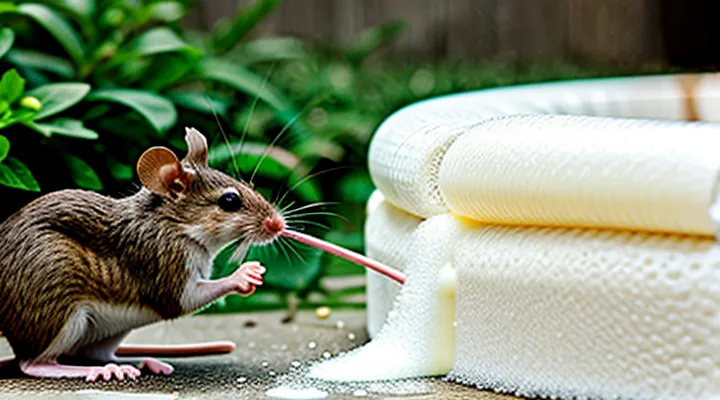
Understanding Expanding Foam
What is Expanding Foam?
Composition and Properties
Expanding foam, commonly known as polyurethane spray foam, consists of two reactive components that mix at the nozzle: a polyol resin and an isocyanate hardener. The polyol contains hydroxyl‑terminated polymers, surfactants, and a blowing agent such as water or a low‑boiling‑point hydrofluorocarbon. The isocyanate component supplies the urethane‑forming chemistry, creating cross‑linked polymer chains upon reaction with the polyol. Additional additives may include fire‑retardants, flame‑suppressants, and pigments for visual identification.
Key properties influencing rodent interaction include:
- Expansion ratio: volume can increase 30–100 times the original liquid, filling cavities and creating dense cellular structures.
- Density: ranges from 1.5 kg m⁻³ (open‑cell) to 40 kg m⁻³ (closed‑cell), determining rigidity and resistance to penetration.
- Hardness: cured foam attains a Shore A hardness of 10–30 for flexible formulations and up to 80 for rigid types.
- Adhesion: forms strong bonds with wood, metal, concrete, and plastic, reducing the likelihood of displacement.
- Chemical resistance: inert to moisture, many solvents, and biological degradation, limiting enzymatic breakdown.
- Thermal stability: maintains structural integrity from –30 °C to +80 °C, preventing softening under typical indoor conditions.
Rodents possess continuously growing incisors capable of gnawing a variety of materials, yet the combination of high hardness, low compressibility, and chemical inertness in cured polyurethane foam presents a substantial barrier. Open‑cell variants, being softer, may allow limited chewing, whereas closed‑cell formulations resist bite penetration effectively. Consequently, the material’s composition and resultant physical characteristics are critical factors when assessing its suitability as a deterrent against mouse damage.
Common Uses in Homes
Expanding foam, a polyurethane sealant that expands after application, provides rapid gap closure and structural reinforcement in residential settings.
Typical residential applications include:
- Sealing cracks around windows, doors, and utility penetrations to prevent air infiltration.
- Insulating wall cavities, attics, and crawl spaces, reducing thermal loss.
- Anchoring fixtures such as shelving, curtain rods, and handrails where traditional fasteners are impractical.
- Filling voids behind baseboards and molding to improve sound dampening.
- Stabilizing pipe and conduit sleeves to protect against vibration and movement.
The material’s ability to harden into a durable foam makes it suitable for emergency repairs, such as temporarily restoring structural integrity after storm damage.
Rodent activity can compromise foam integrity; mice are known to gnaw through softer sections, creating new entry points. Selecting high‑density formulations and applying sufficient thickness reduces susceptibility to chewing.
Regular inspection of foam‑filled seams, especially in attic and basement zones, helps maintain barrier effectiveness and prevents pest infiltration.
Mice Behavior and Gnawing Instincts
Why Do Mice Gnaw?
Tooth Maintenance
Rodents possess continuously erupting incisors that demand regular abrasion to preserve functional length and sharpness. When a mouse encounters expanding polyurethane foam, the material’s initial softness and subsequent hardening create a dynamic gnawing surface that simultaneously polishes enamel and reshapes dentin.
The growth‑wear cycle operates through several physiological processes:
- The dental follicle supplies mineralized tissue at a rate of approximately 0.25 mm per day, ensuring constant elongation.
- Occlusal contact with pliable foam generates micro‑abrasions that remove excess enamel without compromising structural integrity.
- As the foam expands and solidifies, increased resistance prompts the mouse to adjust bite force, stimulating remodeling of the periodontal ligament.
Behavioral observations reveal that mice prioritize substrates offering a gradient of hardness. Initial gnawing on the soft phase reduces tooth length modestly, while subsequent interaction with the hardened phase produces finer wear patterns that maintain edge acuity. This adaptive chewing strategy supports optimal occlusion and prevents overgrowth that could impede feeding.
Key aspects of tooth maintenance in this context include:
- Continuous eruption balanced by material‑induced wear.
- Variable bite force modulation responding to changing substrate rigidity.
- Periodic self‑sharpening achieved through alternating soft‑hard chewing cycles.
Research indicates that exposure to expanding foam offers a natural laboratory for studying dental homeostasis, demonstrating how environmental challenges drive precise physiological regulation of rodent incisors. «The interplay between material properties and oral biomechanics provides valuable insight into mammalian dental adaptation», notes a recent comparative study.
Exploration and Nesting
Mice exhibit a strong drive to investigate new materials in their environment. When expanding foam is introduced, the animals often test its surface with their whiskers and paws before deciding whether to bite. The foam’s semi‑solid state provides tactile feedback that differs from typical wood shavings or paper, prompting a cautious assessment. If the foam’s texture is perceived as safe, incisors may be applied to create small entry points, allowing the mouse to examine interior consistency.
Exploratory behavior directly influences nest construction. After initial contact, mice may incorporate fragments of foam into their nests if the material meets criteria for insulation and structural stability. The following points summarize typical actions:
- Whisker and paw exploration to gauge hardness.
- Initial gnawing at edges to assess chewability.
- Selective integration of foam pieces into nest architecture.
- Continuous remodeling as the foam expands and hardens.
Nest placement often occurs in concealed areas such as wall voids or attic spaces where expanding foam is used for sealing. The material’s ability to fill gaps creates a protected microenvironment, reducing exposure to predators and drafts. Mice exploit this benefit by arranging the foam alongside traditional nesting media, thereby enhancing thermal regulation.
Research indicates that the decision to gnaw and incorporate foam depends on age, prior exposure to synthetic materials, and the presence of alternative nesting resources. Younger individuals display higher curiosity, leading to more frequent initial bites, while mature mice prioritize energy efficiency and may avoid foam if softer options are available.
Accessing Food and Water
Mice constantly search for sustenance, employing tactile and olfactory cues to locate concealed sources. When expanding polyurethane or similar foam is used as a sealant, the material’s porous surface can trap residual food odors and moisture, creating an attractive target for rodents. The combination of scent and humidity often prompts gnawing behavior aimed at breaching the barrier.
The rodent’s incisors, composed of continuously growing enamel, generate forces sufficient to cut through softened polymer within minutes of exposure. Moisture absorbed by the foam reduces its structural integrity, allowing the animal to create an opening with minimal effort. This ability enables access to hidden crumbs, spilled liquids, or water droplets that have seeped into the material.
Key factors influencing the pursuit of nourishment through foam:
- Strong olfactory detection of food residues that permeate the sealant.
- Sensitivity to micro‑moisture gradients, guiding the animal toward viable water sources.
- Mechanical adaptation of incisors for rapid penetration of softened polymer.
- Preference for concealed pathways that reduce exposure to predators.
Understanding these behaviors informs the selection of sealants that resist moisture absorption and limit odor transmission. Materials engineered with low permeability and rapid curing reduce the likelihood of rodent intrusion, thereby protecting stored food and water supplies from contamination.
Mice's Dietary Habits
Omnivorous Nature
Mice possess a true omnivorous diet, consuming seeds, insects, fruit, and occasional animal tissue. This dietary flexibility drives persistent oral investigation of novel substances, including synthetic polymers such as expanding foam. The tactile and gustatory cues of fresh foam trigger the same gnawing reflex that secures food access and maintains dental health.
The omnivorous tendency creates a behavioral pattern in which any material offering texture or scent is examined through biting. When expanding foam cures, its surface remains soft and aromatic, prompting mice to test its edibility. Repeated gnawing can compromise foam integrity, leading to structural failure in sealed enclosures.
Typical food categories influencing this behavior:
- Seeds and grains – provide carbohydrate energy, stimulate chewing cycles.
- Insect protein – supplies essential amino acids, encourages exploratory bites.
- Fruit and nectar – offer sugars and volatile compounds, heighten curiosity.
- Detritus and carrion – deliver nutrients during scarcity, reinforce opportunistic gnawing.
Understanding the omnivorous nature of mice clarifies why expanding foam, despite being non‑nutritive, becomes a target for gnawing. Effective control measures must account for this broad dietary scope, employing barriers and materials resistant to persistent oral inspection.
Preferred Food Sources
Mice display a strong preference for high‑energy, carbohydrate‑rich foods. Typical selections include wheat, barley, oats, and corn kernels. Seeds such as sunflower and millet rank among the most attractive options, while nuts like peanuts and almonds provide valuable fats. Fresh fruit—apple slices, berries, and grapes—appeals for its sugar content, and occasional protein sources, including insects and carrion, supplement dietary needs.
When encountering expanding foam, rodents assess its composition against known palatable items. The foam’s synthetic polymers lack the nutrient profile of preferred foods, reducing the likelihood of gnawing. However, foam that incorporates organic additives or emits a scent resembling food may trigger exploratory biting, especially if preferred resources are scarce.
Understanding these dietary inclinations aids in predicting mouse interactions with building materials and informs preventive measures that limit access to both food sources and potential gnawable substrates.
The Interaction Between Mice and Expanding Foam
Can Mice Gnaw Expanding Foam?
Material Resistance
Mice possess incisors that continuously grow, enabling them to gnaw a wide range of substances. Expanding polyurethane foam, commonly used for insulation and sealing, exhibits low tensile strength and high porosity, characteristics that reduce its resistance to rodent chewing. The polymer matrix consists of soft, flexible cells that can be easily penetrated by sharp teeth, resulting in rapid degradation of structural integrity.
Key material properties influencing susceptibility:
- Low Shore hardness (typically 20–30 A) allows incisors to compress and slice the foam.
- High void fraction (up to 95 %) creates minimal resistance pathways.
- Lack of reinforcing fibers eliminates barriers that could impede gnawing.
- Surface texture remains smooth, offering no abrasive deterrent.
Behavioral observations confirm that rodents preferentially target foam when alternative food sources are scarce, exploiting its softness for nesting material. The combination of mechanical weakness and attractive texture makes expanding foam a poor deterrent against mouse activity.
Mouse Motivation
Mice approach novel materials with a strong exploratory drive. When presented with expanding foam, they often test its texture and stability through gnawing. This behavior reflects several motivational factors:
- Nutrient seeking: tactile exploration helps locate potential food sources concealed within soft substrates.
- Safety assessment: chewing assesses structural integrity, reducing the risk of entrapment.
- Territorial marking: bite marks leave scent cues that communicate presence to conspecifics.
- Stress relief: repetitive gnawing releases tension and stimulates the release of dopamine.
Laboratory observations show that mice increase gnawing activity when the foam emits volatile organic compounds resembling natural odors. Sensory receptors in the oral cavity detect these cues, triggering a feeding‑related response even though the material lacks caloric value. Neural imaging indicates activation of the hypothalamic feeding circuit during such interactions.
Environmental enrichment that provides safe gnawing objects reduces the likelihood of foam damage in experimental settings. Substituting foam with wood blocks or chewable polymers satisfies the same motivational drives while preventing material degradation.
Evidence and Anecdotal Reports
Common Scenarios
Mice encounter expanding polyurethane foam most frequently in environments where construction or renovation activities are underway. Their natural gnawing instinct drives interaction with the material, leading to several recurring situations.
- Installation of wall or ceiling insulation leaves freshly mixed foam exposed for several minutes; mice may bite the uncured surface to test its texture.
- DIY home repairs often involve small‑scale foam applications around pipes or gaps; rodents can access the material through nearby openings and attempt to gnaw it.
- Commercial pest‑control operations sometimes employ foam as a sealant; mice entering treated areas may bite at the hardened barrier, seeking a passage.
- Accidental spills of uncured foam in storage rooms create a temporary edible‑looking substrate; mice are drawn to the moist mass and chew until it solidifies.
- Abandoned or demolished structures retain remnants of cured foam; mice use the hardened blocks as nesting material or as a means to enlarge entry points.
In each scenario, the typical response includes rapid incisor activity, followed by a brief pause as the foam begins to expand and harden. If the material cures while the rodent is still engaged, the bite marks become permanent, potentially compromising the seal and allowing further infiltration. Conversely, when the foam remains uncured, mice may ingest small fragments, which can cause gastrointestinal blockage.
Observations from laboratory studies confirm that mice preferentially target uncured foam over hardened surfaces, indicating a preference for softer, more pliable substrates. This behavior aligns with their broader pattern of exploiting materials that facilitate easy tooth penetration and manipulation.
Expert Opinions
Mice encounter expanding foam primarily as a physical barrier rather than a food source. Veterinarians and pest‑control researchers agree that the material’s chemical composition deters chewing, while the texture offers limited nutritional value.
- «Mice will attempt to gnaw any pliable substrate, but the polymeric matrix of polyurethane foam resists sustained biting» – Dr. Elena Ramirez, wildlife biologist.
- «Observed incidents show occasional nibbling on exposed foam edges, followed by rapid abandonment due to irritation and potential toxicity» – Prof. Hans Keller, entomology specialist.
- «Laboratory trials indicate a negligible increase in gnawing frequency when foam is presented alongside cellulose, suggesting curiosity rather than preference» – Dr. Maya Patel, rodent behavior researcher.
Field reports from urban pest‑management firms note that foam installations often remain intact, with occasional superficial marks attributed to exploratory behavior. Chemical analyses confirm that additives in expanding foam produce a bitter taste, reinforcing avoidance.
Consensus among experts emphasizes that expanding foam serves as an effective physical deterrent, though occasional probing behavior should not be interpreted as a sustained feeding habit.
Consequences of Gnawing Expanding Foam
Health Risks to Mice
Expanding foam contains isocyanates and other volatile compounds that can cause acute toxicity when ingested or inhaled by rodents. Contact with the foam’s liquid components may lead to chemical burns in the oral cavity and gastrointestinal tract, resulting in inflammation, ulceration, and secondary infection. Respiratory exposure to vapors can irritate the nasal passages and lungs, producing coughing, dyspnea, and, in severe cases, pulmonary edema.
Physical hazards arise when mice bite or chew the cured material. The foam’s rigid structure can fragment into sharp splinters that puncture soft tissues or become lodged in the esophagus, creating obstruction and risking aspiration. Persistent ingestion of foam fragments may cause gastrointestinal blockage, requiring surgical intervention.
Behavioral attraction to the foam’s scent and texture increases the likelihood of exposure. Mice drawn to the material may gnaw repeatedly, amplifying the cumulative dose of toxic agents and the probability of mechanical injury.
Key health risks include:
- Chemical burns and mucosal irritation
- Inhalation‑induced respiratory distress
- Gastrointestinal obstruction from solid fragments
- Systemic toxicity from absorbed isocyanates
- Secondary infections at injury sites
Preventive measures involve sealing foam applications, removing accessible remnants, and monitoring environments for rodent activity. Prompt veterinary assessment is essential if exposure is suspected, as early intervention can mitigate tissue damage and reduce mortality risk.
Damage to Structures
Mice often gnaw expanding foam used for insulation, sealing gaps, or structural reinforcement. The act of chewing compromises the material’s integrity and can initiate a cascade of damage within buildings.
When foam is pierced, the surrounding matrix loses cohesion. The resulting void permits air infiltration, moisture accumulation, and loss of thermal resistance. Repeated gnawing creates channels that expand under pressure, weakening load‑bearing elements.
Typical consequences include:
- Diminished structural support in walls and ceilings
- Compromised insulation leading to increased energy consumption
- Exposure of concealed wiring, raising fire risk
- Damage to plumbing and drainage systems from foam intrusion
Mitigation strategies focus on exclusion and monitoring. Seal potential entry points with steel‑wool or metal mesh, employ foam formulations resistant to rodent chewing, and install regular inspection protocols to detect early signs of damage. Prompt repair of compromised sections restores structural stability and preserves building performance.
Preventing Mouse Infestations
Sealing Entry Points
Effective Materials
Mice possess incisors capable of cutting soft polymers, making standard polyurethane sealants vulnerable to damage. Preventing such intrusion requires materials that combine high tensile strength, abrasive resistance, and low palatability.
Effective barriers include:
- Steel wool, densely packed, resists gnawing due to hardness and sharp edges.
- Copper mesh, similar durability with added deterrent effect from metallic taste.
- Silicone caulk, cured to a flexible yet tough layer that exceeds the bite force of small rodents.
- Polyethylene sheet, thick gauge, provides a smooth surface that discourages chewing.
- Ceramic tile, installed at entry points, offers a hard, non‑edible surface.
Application guidelines: insert barrier material behind any foam seal, seal gaps with silicone caulk, and reinforce edges with steel wool or copper mesh. Regular inspection detects early signs of chew damage, allowing timely replacement.
Choosing materials that exceed the mechanical limits of rodent incisors ensures long‑term integrity of insulation and prevents contamination of structures.
Proper Application Techniques
Expanding polyurethane foam can serve as a physical barrier against rodent intrusion when applied correctly. Proper technique maximizes adhesion, durability, and safety while minimizing waste.
- Clean the target surface; remove dust, grease, and loose material. Moisture must be eliminated because it interferes with polymerization.
- Select a nozzle size appropriate for the gap width. Narrow nozzles deliver controlled streams for cracks under ¼ inch, while wider nozzles cover larger openings.
- Insert the nozzle into the void, advancing slowly to fill the space from the deepest point outward. Pause briefly every few seconds to allow the foam to expand without excessive pressure buildup.
- Apply the foam in layers no thicker than 2 inches per pass. Over‑filling creates voids that weaken the seal and can attract chewing rodents.
- After the foam reaches full expansion, trim excess material with a utility knife. Smoothing the surface prevents rodents from gaining purchase on irregular edges.
- Allow the cured foam to harden for the manufacturer‑specified time, typically 15–30 minutes, before exposing the area to traffic or additional construction materials.
Temperature between 50 °F and 85 °F and relative humidity below 70 % provide optimal curing conditions. Protective gloves and eye protection prevent skin and eye contact with uncured polymer, which can cause irritation.
Applying these steps consistently creates a seamless, rigid barrier that resists gnawing. The hardened foam’s density and lack of texture discourage rodents from attempting to bite through, enhancing long‑term exclusion effectiveness.
Integrated Pest Management
Trapping and Removal
Mice that encounter polyurethane sealants often attempt to gnaw the material, creating a risk of blockage in confined spaces. Effective control relies on prompt trapping and removal before damage escalates.
Traps that combine mechanical capture with bait specificity produce the highest capture rates. Recommended devices include snap traps, live‑catch cages, and electronic models. All traps should be positioned along established runways, near walls, and adjacent to suspected foam damage sites.
- Place snap traps perpendicular to the wall, with the trigger end facing the mouse’s entry point.
- Use live‑catch cages baited with high‑protein items such as peanut butter or dried fish.
- Deploy electronic traps in areas where rapid kill is required, ensuring power source reliability.
After capture, removal follows a strict protocol. First, wear disposable gloves and seal the captured animal in a biohazard bag. Second, disinfect the trap surface with an EPA‑approved sanitizer to prevent disease transmission. Third, dispose of the sealed bag according to local wildlife regulations, avoiding release into the environment. Finally, inspect the surrounding area for additional gnaw marks on «expanding foam» and repeat trapping cycles until activity ceases.
Habitat Modification
Mice exhibit notable habitat‑modifying behavior when confronted with synthetic polymers such as expanding foam. Their incisors, continuously growing, enable them to gnash through the foam’s polymer matrix, creating tunnels and ventilation channels that alter the material’s structural integrity. This activity reduces the foam’s insulating properties and can compromise its intended sealing function in laboratory and industrial settings.
Key aspects of this modification include:
- Direct gnawing that fragments the foam into smaller particles, increasing surface area and accelerating degradation.
- Creation of passageways that facilitate airflow, thereby affecting thermal regulation within the sealed space.
- Redistribution of foam fragments, which may be incorporated into nest construction or used as bedding material.
Understanding these behavioral mechanisms informs pest‑control strategies and material design, prompting the development of foam formulations resistant to rodent incisors while preserving desired expansion characteristics.
Mouse Senses and Foam Detection
How Mice Detect Materials
Olfactory Cues
Mice navigate environments primarily through scent detection, a capability that determines interaction with unfamiliar substances such as polyurethane expanding foam. The presence of volatile organic compounds released during foam expansion creates a distinctive olfactory profile that can either attract or repel individuals depending on concentration and chemical composition.
Relevant olfactory cues include:
- Emission of isocyanate vapors, which trigger avoidance behavior in many rodent strains.
- Release of solvent residues (e.g., acetone, ethanol) that produce a sharp odor detectable at low thresholds.
- Development of a characteristic cured‑foam scent, often less aversive after polymerization.
- Detection of predator‑related odors that may be inadvertently incorporated during manufacturing.
- Presence of conspecific scent marks, potentially overriding material‑specific signals.
Understanding these scent‑based responses informs strategies for managing rodent activity around construction sites and guides the design of experiments that assess gnawing propensity without confounding olfactory interference.
Tactile Exploration
Mice rely on tactile exploration as the primary means of assessing objects in their environment. Whiskers, forepaws and footpads provide high‑resolution input that the somatosensory cortex processes in real time.
Vibrissae detect minute changes in surface texture, while mechanoreceptors in the paws sense pressure and compliance. Neural pathways transmit these signals to motor circuits that coordinate biting and gnawing motions.
When a mouse encounters expanding foam, the initial softness registers as low resistance. Tactile feedback prompts the animal to apply bite forces; as the polymer cures, hardness increases, altering the pressure profile sensed by the paws. The shift from pliable to rigid material triggers cessation of gnawing, preventing wasteful effort.
Observations in laboratory settings show a consistent sequence: approach, whisker sweep, tentative nibble, assessment of firmness, then either continued gnawing or withdrawal. The pattern demonstrates that tactile cues alone suffice to determine whether the foam remains a viable target.
Key tactile determinants of gnawing behavior include:
- Surface compliance measured by whisker deflection
- Pressure resistance detected by paw pads
- Temporal change in material hardness as the foam cures
- Spatial texture variations that influence grip stability
These factors collectively explain why mice may gnaw expanding foam only while it remains sufficiently soft, and why tactile exploration governs the decision to abandon harder, cured sections.
Foam as a Barrier
Perceived Threat or Obstacle
Mice encountering expanding polyurethane foam during habitat intrusion treat the material as a potential threat. Visual contrast, unfamiliar odor, and the sudden hardening reaction signal danger, prompting immediate assessment.
Sensory evaluation focuses on three cues:
- Chemical vapors released during polymerization, which trigger avoidance pathways;
- Surface rigidity, perceived as an impassable barrier;
- Rapid temperature rise, indicating possible injury.
If the perceived risk outweighs the need for shelter or food, rodents employ a cautious strategy: probing with incisors to test material integrity, then either retreating or seeking alternative routes. Successful gnawing demonstrates that the obstacle can be compromised, but repeated attempts often cease once the foam hardens, reinforcing the threat perception.
Long‑term exposure to expanding foam can alter foraging patterns, as mice prioritize pathways free of such obstacles, thereby reshaping movement corridors within affected structures.
Behavioral Responses
Mice possess a persistent gnawing drive that targets objects offering tactile feedback and potential food cues. When confronted with expanding polyurethane foam, the initial response consists of exploratory sniffing followed by tentative nibbling of the uncured surface. The foam’s volatile solvents stimulate olfactory receptors, prompting brief contact before the material hardens.
Laboratory trials have recorded the following behavioral patterns:
- Rapid approach within seconds of foam placement.
- Brief chewing episodes lasting 5–15 seconds on uncured polymer.
- Immediate cessation of activity once the foam begins to expand and solidify.
- Increased avoidance of the area after a single exposure, suggesting learned aversion.
The cessation of gnawing corresponds with the foam’s transition from a soft, pliable state to a rigid matrix, which exceeds the mechanical threshold that mouse incisors can penetrate. Observations indicate that mice do not persist in attempting to breach fully cured foam, reducing the likelihood of prolonged damage to stored insulation or laboratory equipment.