
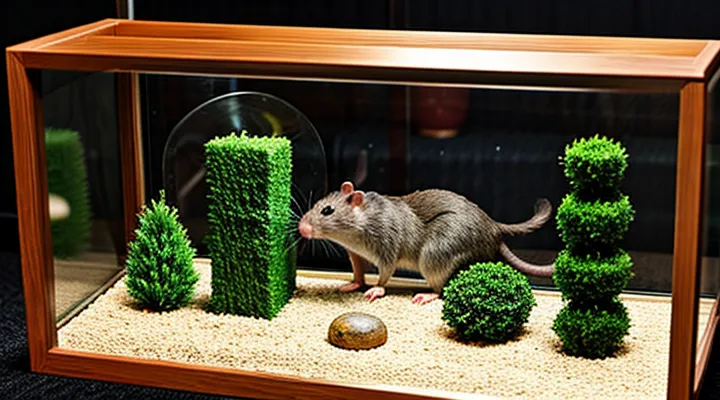
Understanding Rat Needs and Behavior
Importance of Enrichment and Space
A well‑designed showcase for rats must provide ample floor area and vertical space. Sufficient room allows natural locomotion, reduces stress, and supports healthy musculoskeletal development.
Enrichment elements increase behavioral diversity and mental stimulation. Effective options include:
- Multi‑level platforms and ramps for climbing
- Hideaways such as PVC tubes, wood blocks, and ceramic shelters
- Foraging puzzles that encourage problem‑solving
- Varied textures (sand, paper, shredded paper) for tactile exploration
When enrichment and space are integrated into the enclosure’s design, rats exhibit more active exploration, lower incidence of stereotypic behaviors, and improved overall welfare. This combination also enhances the visual appeal of the display, offering observers clear evidence of the animals’ vitality.
Social Structure and Housing Requirements
Rats live in hierarchical groups where dominant individuals establish territories while subordinate members remain within the same space. Cohesive colonies require visual and olfactory contact, constant access to shared resources, and opportunities for social interaction without overcrowding.
Housing must reflect these dynamics. Minimum floor area per adult rat should be 0.15 m², with additional 0.05 m² for each subordinate. Vertical space is essential; climbing structures and platforms increase usable area and reduce aggression. Separate nesting zones allow dominant rats to claim preferred spots while providing hidden retreats for lower‑ranking members. Continuous access to fresh water, food stations, and chewable materials prevents competition over limited resources.
Design of a display enclosure should incorporate the following elements:
- Transparent side panels for observation without disrupting visual contact among occupants.
- Secure, ventilated top openings to maintain airflow and reduce humidity.
- Removable flooring sections for routine cleaning and waste removal.
- Modular enrichment modules (tunnels, ladders, hammocks) that can be rearranged to accommodate shifting social hierarchies.
- Non‑porous, chew‑resistant materials for walls and corners to withstand persistent gnawing.
By aligning enclosure dimensions, enrichment, and maintenance features with the innate social organization of rats, a display case can provide a stable, health‑promoting environment while remaining visually accessible to observers.
Essential Design Considerations
Material Selection for Safety and Durability
Non-Toxic Materials
When constructing a display case for rats, the choice of non‑toxic materials directly affects animal health and longevity. Only substances verified as safe for small rodents should contact the interior surfaces, feeding areas, or any part of the enclosure that the animals can reach.
Suitable materials include:
- Food‑grade acrylic or polycarbonate – clear, shatter‑resistant, free of BPA and phthalates; easy to clean with mild soap.
- Untreated hardwoods such as maple, birch, or beech – dense, low‑allergen, and free of toxic finishes; avoid pine or cedar due to natural oils.
- Stainless steel – corrosion‑resistant, non‑porous, and hygienic; ideal for hardware, doors, and ventilation grates.
- Ceramic or high‑temperature glass tiles – inert, heat‑stable, and easy to seal; suitable for flooring or decorative panels.
- Silicone sealants labeled as food‑grade – flexible, waterproof, and free of volatile organic compounds; use sparingly for joints.
Avoid any material treated with paints, varnishes, or adhesives that contain lead, cadmium, or volatile solvents. Verify that all components comply with pet‑industry safety standards, such as ISO 10993 or the European REACH regulation, before assembly. Regularly inspect the case for wear, cracking, or discoloration, and replace compromised sections promptly to maintain a non‑toxic environment.
Chewing Resistance
Chewing resistance determines the longevity and safety of a rat exhibition enclosure. Rats gnaw continuously; any surface that yields to their incisors compromises structural integrity and can create escape routes. Selecting materials with high hardness and low fiber content prevents rapid wear. Acrylic sheets of at least 5 mm thickness, polycarbonate panels, and tempered glass offer superior resistance while maintaining transparency for observation.
Key design considerations for chew‑proof construction include:
- Reinforced corners using metal brackets or silicone‑filled inserts to distribute stress.
- Overlap joints sealed with epoxy‑based adhesives that resist rodent saliva and bite pressure.
- Interior fixtures (perches, ladders) fabricated from stainless steel or coated hardwood, avoiding untreated soft wood.
Testing protocols reinforce material choices. Apply a calibrated bite force of 0.5 N per tooth, repeat for 10,000 cycles, and measure depth of indentation. Materials that show less than 0.2 mm wear meet the durability threshold for continuous public display.
Maintenance routines extend chew resistance. Inspect all panels weekly for micro‑cracks, replace any compromised sections promptly, and clean surfaces with a mild, non‑acidic solution to avoid weakening the polymer matrix. Implementing these measures ensures a robust, safe enclosure that withstands persistent gnawing while providing clear visibility for educational purposes.
Ventilation and Airflow
Air Circulation Systems
Effective air circulation is essential for maintaining a healthy environment inside a rodent display enclosure. Proper ventilation prevents the buildup of ammonia, controls humidity, and reduces the risk of respiratory problems for the animals.
Two primary approaches dominate ventilation design:
- Passive vents: strategically placed openings allow natural airflow driven by temperature differentials. Use fine mesh screens to keep rodents secure while permitting exchange of fresh air.
- Active fans: low‑speed, brushless fans create a steady airflow across the interior. Pair with variable speed controllers to adjust flow rates according to temperature and occupancy levels.
Supplementary filtration enhances air quality. Activated carbon filters remove odors, while HEPA‑rated panels capture dust and allergens. Position filters near intake points to maximize efficiency and schedule monthly cleaning to preserve performance.
Integration with climate control systems ensures consistent conditions. Connect ventilation controllers to temperature and humidity sensors; automation adjusts fan speed or vent opening to maintain target ranges. Quiet operation, achieved through insulated fan housings, prevents stress to the rodents while preserving the visual appeal of the case.
Odor Control
Effective odor management is essential for any rat showcase enclosure. Closed environments trap volatile compounds produced by waste, urine, and bedding, leading to unpleasant smells that can affect both the animals and observers. Implementing a systematic approach reduces odor buildup while maintaining a clean, attractive display.
Key components of an odor‑control strategy include:
- Ventilation: Integrate adjustable vents or passive airflow channels that draw fresh air through the enclosure and expel stale air. Position openings near the top of the case to exploit natural convection.
- Activated carbon filters: Install replaceable carbon panels in the ventilation path. Carbon adsorbs ammonia and other organic molecules, extending the interval between deep cleanings.
- Absorbent bedding: Choose low‑dust, high‑absorption substrates such as paper‑based or hemp bedding. Replace bedding regularly to prevent saturation.
- Sealed compartments: Separate waste collection trays from the main viewing area using airtight dividers. This isolates odor sources and simplifies removal.
- Humidity regulation: Use a hygrometer and a dehumidifier or moisture‑absorbing packets to keep relative humidity below 60 %. Lower humidity reduces ammonia volatilization.
- Routine cleaning schedule: Perform daily spot cleaning of waste sites and weekly full substrate changes. Use enzymatic cleaners that break down organic residues without leaving strong fragrances.
Material selection also influences odor control. Transparent acrylic provides visual clarity but is less permeable to gases than glass, making ventilation more critical. Stainless‑steel frames resist corrosion from cleaning agents and do not absorb odors. When constructing the enclosure, avoid porous seals; silicone gaskets or silicone‑coated edges maintain airtight connections while allowing easy disassembly for maintenance.
By combining airflow engineering, absorbent media, and disciplined upkeep, a rat display enclosure can remain odor‑free, preserving both animal welfare and the quality of the exhibition.
Security and Escape Prevention
Latch Mechanisms
Latch mechanisms determine how a rat display enclosure can be opened, secured, and cleaned without compromising safety or visibility. Selecting a latch involves balancing durability, ease of operation, and compatibility with transparent panels.
Common latch types include:
- Spring‑loaded catches – simple, quick release, suitable for lightweight acrylic frames.
- Cam locks – provide strong closure, require a key or screwdriver, ideal for heavy‑duty frames.
- Magnetic latches – silent operation, minimal protrusion, useful when space is limited.
- Toggle clamps – adjustable pressure, allow fine‑tuning of seal tightness, effective for multi‑panel assemblies.
Material choice influences longevity and hygiene. Stainless steel resists corrosion and can be sterilized; polymer latches reduce weight but may wear under repeated use. For environments with frequent cleaning, opt for corrosion‑free metals and smooth surfaces that prevent debris accumulation.
Safety considerations dictate that the latch must prevent accidental opening while allowing quick access during maintenance. A dual‑action mechanism—requiring two distinct motions such as a pull and a twist—reduces the risk of unintended release. Incorporating visual indicators, such as a colored tab that aligns only when fully locked, provides immediate confirmation of secure closure.
Installation guidelines:
- Align latch components with the enclosure’s structural ribs to distribute load evenly.
- Use washers or silicone pads to cushion contact points and maintain a tight seal against moisture ingress.
- Verify that the latch does not obstruct the viewing area; position it at the perimeter or behind a decorative frame.
By matching latch type, material, and mounting method to the specific requirements of a rat showcase enclosure, designers achieve reliable access control, maintain hygienic conditions, and preserve the visual appeal of the display.
Gap Sizing
Gap sizing determines whether rats can navigate, breathe, and remain secure within a display enclosure. Incorrect spacing creates escape risks, injury hazards, or obstructed visibility, compromising both animal welfare and exhibit integrity.
For adult Norway rats (average body width 2.5 cm), gaps should not exceed 0.6 cm. Juvenile rats, with smaller bodies, require gaps no larger than 0.4 cm to prevent accidental entrapment. When designing multi‑level platforms, maintain the same maximum gap across all levels to ensure consistent safety.
Ventilation openings must balance airflow with structural strength. A rectangular vent of 1 cm × 5 cm provides adequate exchange without allowing a rat to slip through. Place vents at the top of each panel to promote upward draft and keep debris out of the lower viewing area.
Recommended gap dimensions:
- Bar spacing: 0.5 cm (standard); 0.3 cm for juvenile sections.
- Mesh openings: 0.4 cm × 0.4 cm for side walls; 0.6 cm × 0.6 cm for rear panels.
- Vent slots: 1 cm × 5 cm, positioned 2 cm above the floor.
Adhering to these measurements eliminates escape routes, reduces stress, and preserves clear sightlines for observers.
Innovative Display Case Concepts
Multi-Level Habitats
Ramps and Tunnels
Ramps and tunnels are essential components for a functional rat exhibit enclosure, providing vertical movement and concealed pathways that mimic natural habitats. Incorporate sturdy, non‑slip surfaces on ramps to prevent accidents; a 45‑degree incline with a textured finish offers optimal accessibility for adult rats while remaining safe for juveniles. Tunnels should be positioned to create a network of hidden routes, encouraging exploration and reducing stress.
Material selection influences durability and hygiene. Use acrylic or polycarbonate for transparent sections, allowing observation without disturbing the animals. For structural support, stainless‑steel brackets and brackets coated with powder‑finish prevent corrosion. All joints must be sealed with silicone that resists gnawing, ensuring a leak‑free environment.
Practical guidelines:
- Measure each ramp to span at least 4 inches in width; length depends on enclosure height, maintaining the 45‑degree angle.
- Install tunnels with diameters of 2–3 inches, large enough for comfortable passage but small enough to retain a sense of enclosure.
- Anchor ramps and tunnels to the case frame using lock‑nuts to avoid loosening from repeated use.
- Provide removable sections for cleaning; quick‑release pins allow maintenance without disassembly of the entire case.
- Arrange tunnels to intersect at multiple points, forming loops that promote natural foraging behavior.
Climbing Structures
Incorporating climbing structures into a rat showcase enclosure enhances vertical space utilization and encourages natural exploratory behavior. Materials should be sturdy, non‑toxic, and easy to clean; acrylic, stainless steel, and untreated hardwood meet these criteria.
- Modular ladder segments that connect to the case’s side panels, allowing adjustable height and configuration.
- Rope or sisal bundles anchored to the upper frame, providing flexible routes for grasping and swinging.
- Branch‑like platforms fabricated from natural driftwood, positioned at varying elevations to create tiered pathways.
- Mesh‑covered ramps with a gentle incline, linking the floor to upper perches while preventing escape.
- Suspended hammocks made of breathable fabric, secured to ceiling rails for resting spots above ground level.
When installing these elements, ensure each component is securely fastened to the enclosure’s frame to prevent movement under the rats’ weight. Verify that gaps between structures are narrower than the animals’ body width to avoid entrapment. Regular inspection for wear and sanitation maintains a safe, hygienic environment for the displayed rodents.
Themed Environments
Naturalistic Landscapes
Naturalistic landscapes transform a rat exhibit into an environment that mimics the complexity of wild habitats while remaining fully visible to observers. Incorporating varied terrain, vegetation, and substrate within a display case supports natural foraging, climbing, and nesting behaviors, thereby enhancing animal welfare and educational impact.
- Use layered substrate: a base of soil or coconut fiber, topped with leaf litter and small stones creates depth and encourages digging.
- Install vertical elements: cork bark, driftwood, and woven branches provide climbing opportunities and visual interest.
- Position live or artificial plants: grasses, ferns, and low‑lying shrubs replicate meadow or forest floor conditions and offer cover.
- Include water features: shallow dishes of pebbled water or a miniature stream simulate natural hydration sources and aid scent marking.
- Design micro‑habitats: tunnels, burrows, and raised platforms generate distinct zones for resting, exploration, and social interaction.
- Apply natural lighting: full‑spectrum LED panels mimic daylight cycles, supporting circadian rhythms and highlighting landscape details.
Material selection must prioritize durability, ease of cleaning, and safety. Non‑toxic finishes, removable panels, and modular components facilitate maintenance without disrupting the visual coherence of the scene. Proper ventilation prevents humidity buildup while preserving the integrity of plant material. Integration of naturalistic landscape elements within a rat enclosure yields a functional, aesthetically compelling display that meets both animal care standards and viewer expectations.
Interactive Elements
Interactive features enhance a rat exhibit by encouraging natural behavior while allowing observers to gather real‑time data. Motion‑activated lighting highlights activity zones without disturbing the animals, and adjustable LED spectra can simulate dawn, daylight, and dusk cycles. Embedded pressure pads detect movement patterns, feeding times, and rest periods, transmitting information to a central interface that logs metrics for analysis.
Enrichment mechanisms can be integrated directly into the enclosure walls. Rotating mazes, sliding tunnels, and modular platforms engage the rodents, providing mental stimulation and promoting exercise. Remote control modules enable caretakers to modify configurations without entering the case, preserving a stable environment and reducing stress.
A user‑friendly touchscreen panel mounted on the display’s exterior offers visitors selectable viewpoints, including close‑up camera feeds, temperature graphs, and humidity charts. Interactive buttons can trigger short video clips that explain specific behaviors, reinforcing educational value while maintaining a seamless visual experience.
Key components for successful implementation include:
- Durable, non‑toxic materials for all moving parts.
- Secure wiring and wireless connections to prevent tampering.
- Battery‑backed power supplies ensuring uninterrupted operation.
- Software with customizable alerts for abnormal activity or environmental fluctuations.
Modular and Expandable Designs
Future Growth Options
Future growth for rat display enclosures can be mapped through product diversification, technology integration, and market expansion.
- Modular construction permits owners to add compartments, shelves, or ventilation units without replacing the entire case.
- Embedded sensors connect to mobile apps, delivering real‑time temperature, humidity, and activity data.
- Recycled acrylic or bio‑based polymers reduce environmental impact while maintaining clarity and durability.
- Custom branding options allow retailers and breeders to imprint logos, colors, or QR codes for quick identification.
- Online configurators enable customers to design and order bespoke units, streamlining the purchasing process.
- Licensing agreements with pet‑care influencers create co‑branded collections that attract niche audiences.
- Partnerships with educational institutions supply demonstration models for biology curricula, expanding institutional sales.
- Distribution channels in Europe and Asia increase exposure to markets with high pet‑ownership rates.
Strategic investment in these areas positions rat display solutions for sustained revenue growth and broader adoption across hobbyist and professional segments.
Easy Customization
Easy customization enhances the practicality of a rat showcase by allowing owners to adapt the enclosure to changing needs without extensive reconstruction. Modular panels enable rapid reconfiguration of size, shape, and visual theme. Interchangeable background sheets, printed in a variety of colors and patterns, provide immediate aesthetic updates while protecting the interior surface from wear.
Key elements that support straightforward personalization include:
- Snap‑fit brackets for shelving units, permitting quick removal, addition, or repositioning of platforms.
- Magnetic or Velcro‑secured décor panels that can be swapped to reflect seasonal themes or experimental layouts.
- Adjustable LED strips with plug‑and‑play connectors, allowing users to modify lighting intensity and color temperature without rewiring.
- Slide‑in storage trays for bedding, food, and accessories, designed for effortless extraction and cleaning.
By selecting components that rely on standardized attachment methods and readily available replacement parts, builders create a display case that remains functional and visually appealing throughout the lifespan of the pet rodents.
Practical Features and Accessories
Feeding and Watering Stations
Integrated Bowls
Integrated bowls provide a streamlined feeding solution within a rat display enclosure. By embedding the containers directly into the case walls or floor, the design eliminates external accessories, reduces clutter, and maintains a clean visual profile.
Key design factors for successful integration include:
- Placement at animal‑level to ensure easy access and prevent spillage onto the enclosure base.
- Secure mounting using brackets or recessed cavities that resist chewing and displacement.
- Compatibility with standard feeder sizes to allow straightforward replacement and cleaning.
- Inclusion of a shallow drainage channel that directs excess liquid toward a removable tray.
Material selection should prioritize durability and hygiene. Acrylic or polycarbonate panels resist gnawing and are easy to sterilize, while stainless‑steel bowls offer corrosion resistance and smooth surfaces that deter bacterial growth. Removable bowl inserts simplify routine maintenance without requiring disassembly of the entire case.
Bottle Holders
Bottle holders are essential components of a rat exhibit enclosure, providing secure storage for water, nutrient solutions, or medication while keeping the interior tidy.
The holders must accommodate standard laboratory bottles (15 ml to 50 ml) and fit within the limited depth of a glass or acrylic case. Clearance of at least 2 cm between the bottle rim and the case wall prevents contact with the animal and reduces breakage risk. Mounting points should align with the case’s structural ribs to avoid stress on the glass.
Preferred materials include stainless steel, anodized aluminum, or high‑density polyethylene. Stainless steel offers corrosion resistance and can be sanitized with autoclave cycles. Anodized aluminum reduces weight and can be secured with rivets or silicone brackets. Polyethylene components may be molded directly onto the case frame, eliminating separate fasteners.
Design options:
- Wall‑mounted brackets – fixed to the interior side wall, positioned 3–4 cm above the floor to keep bottles out of reach.
- Floor‑level trays – shallow, perforated trays that sit on the case base, allowing easy removal for refilling.
- Adjustable rails – sliding tracks that permit vertical repositioning to match different bottle heights.
- Integrated clamps – spring‑loaded clips that grip the bottle neck, suitable for quick exchange without tools.
Regular inspection of the holder’s attachment points and cleaning of contact surfaces prevent bacterial buildup. Replace any corroded or cracked components immediately to maintain a safe environment for the rodents.
Cleaning and Maintenance Access
Removable Trays
Removable trays provide essential access for cleaning, feeding, and observation within a rat display enclosure. They allow swift removal of waste and bedding without disturbing the animal’s habitat, reducing stress and maintaining hygiene standards.
Key design attributes for removable trays include:
- Material selection: Food‑grade acrylic, polycarbonate, or stainless steel resist corrosion and are easy to sanitize. Transparent options enable visual monitoring of substrate condition.
- Dimensional compatibility: Tray dimensions must match the interior footprint of the case, leaving a 2‑mm clearance on all sides to prevent binding while ensuring a snug fit.
- Locking mechanism: Slide‑in rails, magnetic catches, or quarter‑turn latches secure the tray during operation but release with minimal force for rapid extraction.
- Weight distribution: Uniform thickness (typically 4–6 mm) prevents sagging and maintains a level surface, supporting even load across the enclosure floor.
- Drainage provisions: Integrated perforations or a secondary slotted layer channel excess liquids to a collection reservoir, preventing pooling.
- Modularity: Identical trays stack vertically, allowing layered habitats for breeding or segregation without redesigning the case.
Implementing these features results in a functional, low‑maintenance solution that supports regular cleaning cycles and enhances overall animal welfare.
Large Access Doors
Large access doors are a critical component of any rat exhibition enclosure, allowing maintenance, cleaning, and interaction without compromising structural integrity. The doors must support the weight of the enclosure’s frame, resist corrosion, and provide a seal that limits escape risk.
- Material selection – stainless steel or powder‑coated aluminum offers durability and ease of sterilization; transparent acrylic inserts enable visual inspection while maintaining safety.
- Dimensions – door height should exceed the tallest rat by at least 10 cm; width must accommodate cleaning tools and hand‑over access, typically 30–45 cm for standard cases.
- Hinge design – heavy‑duty hinges with self‑closing springs ensure reliable operation and prevent accidental opening; pivot points should be positioned to distribute load evenly.
- Locking mechanism – dual‑lock systems, such as latch bolts paired with magnetic catches, provide redundant security; quick‑release features facilitate emergency access.
- Sealing – silicone gaskets around the perimeter create a tight closure, preventing gaps that could allow escape or dust infiltration.
- Ergonomics – handles positioned at comfortable height reduce strain for caretakers; smooth surface finishes avoid injuries to both staff and animals.
Installation must include reinforced mounting brackets anchored to the case’s frame, verified with torque specifications to avoid loosening under repeated use. Regular inspection of hinges, locks, and seals extends service life and maintains a safe environment for the rodents.
Lighting and Temperature Control
Safe Lighting Options
Safe illumination is critical for a rodent exhibit because excessive heat or ultraviolet radiation can stress the animals and damage the enclosure materials. Selecting light sources that produce minimal heat, emit no harmful UV wavelengths, and provide adequate visibility ensures both animal welfare and visual clarity for observers.
- Low‑heat LEDs – High‑efficiency diodes generate light with surface temperatures below 30 °C; choose models rated for continuous operation and dimmable output to adjust brightness without raising temperature.
- UV‑free white LEDs – Emit a spectrum confined to 400–700 nm, eliminating the risk of skin or eye irritation; opt for color temperatures between 3500 K and 4100 K to mimic natural daylight without glare.
- Fiber‑optic lighting – Transmits light from an external source through flexible strands, keeping heat and electricity away from the interior; suitable for highlighting specific features such as tunnels or nesting areas.
- Indirect illumination – Reflective panels or diffusers redirect light away from the animals, reducing direct exposure while maintaining even illumination across the case.
- Timed lighting circuits – Programmable timers create consistent light‑dark cycles that align with the rodents’ circadian rhythm, preventing overstimulation and supporting natural behavior patterns.
- Natural daylight access – Small, UV‑filtered glass sections allow sunlight without exposing the enclosure to harmful rays; install shading devices to control intensity during peak hours.
When integrating these options, verify that fixtures are securely mounted to prevent tampering, use sealed connectors to avoid moisture ingress, and conduct regular temperature checks to confirm that lighting does not raise ambient conditions beyond the species‑specific comfort range.
Heating/Cooling Considerations
Temperature stability directly influences rat health and the visual quality of a display enclosure. Maintaining a narrow temperature range prevents stress‑induced behaviors and preserves the appearance of the habitat.
Heating methods include:
- Low‑voltage heating pads positioned beneath the substrate, wired to a digital thermostat.
- Infrared ceramic emitters mounted on the upper frame, providing consistent radiant warmth without obstructing view.
- Small, sealed heat exchangers integrated into the case walls, delivering uniform heat through convection.
Cooling strategies consist of:
- Passive ventilation slots cut into the upper and lower panels, allowing airflow while protecting against escape.
- Quiet brushless fans installed behind the glass, regulated by a temperature sensor to activate only when ambient levels exceed the set point.
- Evaporative pads placed in a concealed compartment, delivering moist air to lower interior temperature during high humidity periods.
Effective integration requires:
- Insulating the case walls with rigid foam or reflective foil to reduce external temperature fluctuations.
- Installing redundant temperature probes, one near the substrate and another at head height, linked to an alarm system that alerts caregivers to deviations.
- Using a programmable controller that balances heating and cooling cycles, preventing simultaneous operation that could waste energy.
Regular calibration of sensors and inspection of heating elements ensure reliable performance and extend the lifespan of the display unit.