
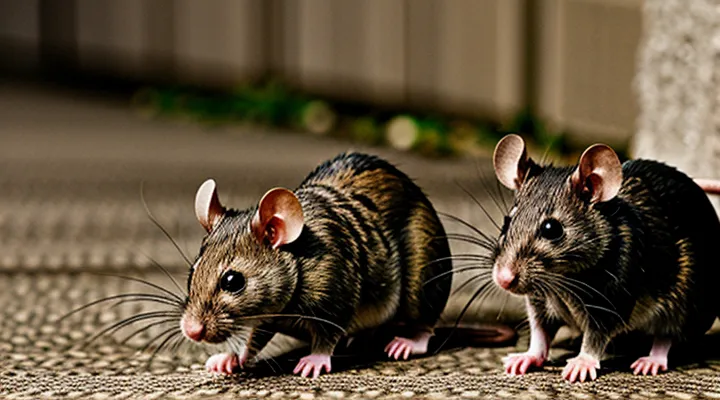
Understanding the Rodent Family
A Brief Overview of Rats and Mice
General Characteristics
Rats and mice share the order Rodentia but differ markedly in size, morphology, and reproductive traits. Adult rats typically weigh 200–500 g and measure 20–25 cm in body length, whereas mice average 15–30 g and 7–10 cm. Skeletal structure reflects this disparity: rats possess a more robust skull with larger incisors, while mice have a delicate cranium and proportionally shorter snout. Lifespan also varies; rats commonly live 2–3 years under laboratory conditions, whereas mice average 1–2 years.
Key biological characteristics can be summarized as follows:
- Reproduction – Rats produce 5–12 litters per year, each containing 6–12 offspring; mice generate 7–10 litters annually, with 5–8 pups per litter. Gestation periods differ slightly: rats 21–23 days, mice 19–21 days.
- Habitat preference – Rats favor sewers, basements, and outdoor burrows, showing tolerance for larger, wetter environments. Mice occupy cracks, attics, and fields, preferring drier, more concealed spaces.
- Dietary range – Both are omnivorous, yet rats consume larger food items and display stronger chewing ability, while mice specialize in seeds and finer material.
- Social structure – Rats establish hierarchical colonies with defined dominant individuals; mice form loose groups, often with less pronounced hierarchy.
These distinctions underpin visual identification and inform comparative photographic documentation, enabling precise differentiation between the two species.
Habitat and Distribution
Rats and mice occupy distinct ecological niches, although their ranges often overlap in human‑dominated environments.
Rats are typically larger, favoring burrows, sewers, and underground tunnels. Species such as the brown rat (Rattus norvegicus) thrive in temperate climates across North America, Europe, and Asia, extending into coastal regions where water sources are abundant. The black rat (Rattus rattus) prefers warm, humid areas, commonly found in tropical and subtropical zones, including islands and urban settlements where stored grain provides sustenance.
Mice, exemplified by the common house mouse (Mus musculus), prefer shallow nests in fields, grasslands, and agricultural lands. Their distribution spans all continents except Antarctica, with dense populations in temperate zones where vegetation offers shelter and food. The deer mouse (Peromyscus maniculatus) inhabits open woodlands and rocky outcrops throughout North America, adapting to elevations from sea level to alpine environments.
Key differences in habitat and distribution:
- Rats: underground or semi‑aquatic habitats; concentration in urban sewers, ports, and coastal areas; prevalence in temperate to tropical climates depending on species.
- Mice: surface nests in fields, forests, and human dwellings; broader continental spread; tolerance of a wide altitude range.
Understanding these patterns clarifies why each rodent species appears in specific photographic documentation and descriptive contexts.
Key Morphological Differences
Size and Weight
Body Length
Rats typically have a longer body than mice. Adult brown rats (Rattus norvegicus) reach a head‑to‑body length of 20–25 cm, excluding the tail, while the body of a common house mouse (Mus musculus) measures 7–10 cm. The difference reflects distinct ecological niches: larger rats can exploit broader food sources and occupy more extensive burrow systems, whereas mice remain adapted to confined spaces.
Key measurements:
These dimensions are consistent across laboratory strains and wild populations, with minor variations due to diet, sex, and geographic factors. The disparity in body length contributes to observable differences in overall silhouette, locomotion speed, and predator avoidance strategies.
Tail Length and Appearance
Tail length and appearance provide reliable criteria for distinguishing rats from mice. Rats typically possess tails proportionally shorter than their body length, ranging from 60 % to 80 % of the torso measurement. The dorsal surface of a rat’s tail is often thick, scaly, and sparsely haired, giving it a relatively blunt silhouette. In contrast, mice display tails that approach or exceed the length of the body, frequently reaching 100 % or more of torso length. Mouse tails are slender, uniformly covered with fine hair, and exhibit a more tapered, flexible profile.
- Length ratio: rat ≈ 0.6–0.8 × body; mouse ≈ 1.0 × body or greater.
- Surface texture: rat – thick, scaly, minimal hair; mouse – thin, densely haired.
- Diameter: rat – noticeably thicker; mouse – consistently narrow.
- Shape: rat – slightly blunt tip; mouse – sharply tapered tip.
Photographic documentation emphasizes these traits. Images captured from lateral perspectives reveal the contrast between the rat’s robust, partially hair‑free tail and the mouse’s delicate, fully furred appendage. Close‑up macro shots highlight the scale pattern on rat tails versus the uniform hair coverage on mouse tails, facilitating rapid visual identification in field studies and laboratory settings.
Head and Facial Features
Snout Shape
The snout provides a reliable visual cue for separating rats from mice.
Rats possess a relatively elongated snout that tapers gradually toward the tip. The nasal bridge is broad, and the mouth opening aligns with a flatter facial profile. This configuration supports stronger bite forces and a diet that includes tougher materials.
Mice exhibit a compact, sharply pointed snout. The nasal region is narrow, and the tip forms a distinct point. The facial profile appears more acute, facilitating precise manipulation of small food items.
Key distinctions:
- Length: rat snout markedly longer than mouse snout.
- Width: rat nasal bridge broader; mouse bridge slender.
- Tip shape: rat tip blunt; mouse tip sharply pointed.
These morphological traits enable quick visual identification in photographs and aid in species‑specific behavioral studies.
Ear Size and Shape
Rats possess larger, more rounded ears than mice. The average ear length of a common rat ranges from 12 to 15 mm, while a typical mouse ear measures 6 to 9 mm. Ear pinnae in rats are thick and densely furred, giving a blunt appearance; mouse pinnae are thin, translucent, and often display a pointed tip.
Key morphological distinctions:
- Size: rat ears exceed mouse ears by roughly double in length and width.
- Shape: rat pinnae are broadly oval; mouse pinnae are narrowly triangular.
- Fur coverage: rat ears retain a dense hair coat across the entire surface; mouse ears have sparse hair, exposing the underlying skin.
- Visibility of blood vessels: mouse ears frequently reveal a network of superficial vessels, whereas rat ears conceal vasculature beneath thicker fur.
Photographic documentation emphasizes these differences. Close‑up images of rat ears show a smooth, rounded contour with uniform shading, while mouse ear photographs reveal sharp angles and a translucent quality that highlights underlying structures. Accurate identification in field or laboratory settings relies on recognizing the described ear characteristics.
Eye Size
Eye size provides a clear visual cue when distinguishing between the two rodent species commonly featured in comparative photography and description.
Rats possess noticeably larger ocular structures. The adult Norway rat typically exhibits an eye diameter of 8–10 mm, with a prominent corneal surface that appears as a glossy, almost spherical disc in close‑up images. The surrounding orbital bones create a shallow socket, allowing the eye to dominate the facial profile. In photographs, the rat’s eye often reflects a strong, centered light spot, indicating a relatively wide pupil that remains dilated under low‑light conditions.
Mice display considerably smaller eyes. The common house mouse shows an eye diameter of 3–5 mm, positioned more laterally on the skull. The ocular region appears as a compact, dark circle with a reduced corneal curvature, producing a narrower pupil in photographs. Lateral placement results in a broader visual field but a smaller individual eye surface compared with rats.
Key comparative data:
- Rat eye diameter: 8–10 mm
- Mouse eye diameter: 3–5 mm
- Rat pupil: larger, centrally placed, dilates markedly in dim light
- Mouse pupil: smaller, laterally placed, maintains a narrower aperture
The disparity in eye size reflects divergent ecological adaptations. Larger rat eyes support enhanced low‑light vision for nocturnal foraging, while the mouse’s smaller, laterally positioned eyes favor a wider panoramic view, aiding predator detection. Photographic documentation consistently highlights these morphological differences, enabling rapid visual identification without reliance on textual descriptors.
Fur and Coat
Coloration
Rats and mice exhibit distinct coloration patterns that aid in species identification and reflect genetic diversity.
Rats typically display coat colors ranging from brown, black, and gray to albino white. The dorsal fur often appears darker than the ventral side, creating a pronounced contrast. Some laboratory strains possess a uniform coat, while wild specimens show mottled or speckled markings that blend with their environments.
Mice present a broader palette of hues, including agouti, brown, gray, and various shades of pink in albino forms. The agouti pattern consists of alternating dark and light bands on individual hairs, producing a ticked appearance. Domestic mouse strains may exhibit solid colors, such as black or white, or patterned variants like “piebald” with distinct patches of contrasting pigmentation.
Key coloration differences:
- Dorsal‑ventral contrast: pronounced in rats, subtler in mice.
- Agouti expression: common in wild mice, rare in rats.
- Pigment mutations: albino and piebald forms are more frequently bred in mice.
These attributes are observable in photographic documentation and support accurate visual differentiation between the two rodent groups.
Texture
Rats and mice exhibit distinct surface characteristics that aid identification in photographic documentation.
The fur of a rat typically presents a coarser, denser coat, often described as «bristly». Mouse fur tends to be finer and softer, giving a smoother appearance under close inspection.
Skin texture differs as well. Rat skin appears thicker and more resilient, especially on the dorsal region, while mouse skin is thinner and more delicate, especially around the ventral area.
Paw pads provide additional contrast. Rat paw pads are larger, with a rougher surface texture that leaves visible imprint patterns. Mouse paw pads are smaller and smoother, producing finer prints.
Whisker (vibrissae) texture also varies. Rat whiskers are thicker, with a slightly roughened surface that reflects light differently than the finer, smoother whiskers of a mouse.
Key textural distinctions can be summarized:
- Fur: coarse (rat) vs. fine (mouse)
- Skin: thick (rat) vs. thin (mouse)
- Paw pads: rough, large (rat) vs. smooth, small (mouse)
- Whiskers: thick, slightly rough (rat) vs. thin, smooth (mouse)
Accurate assessment of these textural traits enhances visual comparison and supports reliable species classification in photographic records.
Behavioral Distinctions
Social Structure
Colony Size
Rats form considerably larger colonies than mice, both in wild habitats and laboratory environments. A single rat colony can comprise dozens to several hundred individuals, whereas mouse colonies typically contain a few dozen at most.
In natural settings, rat colonies occupy extensive burrow systems with multiple nesting chambers, supporting hierarchical social structures. Mouse colonies maintain smaller, simpler burrow networks, reflecting their limited group size.
Typical colony dimensions observed in research facilities:
- Rats: 50 – 300 individuals per cage group; breeding colonies often exceed 100 animals.
- Mice: 5 – 30 individuals per cage group; breeding colonies rarely surpass 50 animals.
Larger rat colonies facilitate complex social interactions and dominance hierarchies, while smaller mouse colonies result in more fluid group dynamics.
Hierarchy
The concept of «hierarchy» describes the structured social organization observed in rodent colonies. In laboratory and field settings, rats and mice exhibit distinct dominance patterns that influence behavior, breeding, and spatial use.
Rats form linear hierarchies dominated by a single alpha individual. Subordinate members recognize the leader through scent marking, aggressive posturing, and preferential access to food. This arrangement results in clear territorial zones within the nest, with the dominant rat occupying central, resource‑rich areas.
Mice develop more fluid, often egalitarian networks. Dominance may shift rapidly, with multiple individuals sharing leadership roles. Aggressive encounters are brief, and social rank is frequently expressed through ultrasonic vocalizations rather than overt physical displays. Consequently, nest space is less partitioned, and resource distribution remains relatively uniform.
Key distinctions relevant to visual documentation and descriptive analysis:
- Dominance stability: rats → stable; mice → dynamic.
- Spatial segregation: rats → centralized; mice → distributed.
- Communication mode: rats → visual/olfactory; mice → ultrasonic.
- Photographic focus: rats → capture hierarchical interactions; mice → capture group cohesion.
Understanding these hierarchical frameworks aids accurate identification of species‑specific behaviors in photographs and supports precise descriptive reporting.
Diet and Feeding Habits
Food Preferences
Rats and mice exhibit distinct dietary patterns that reflect differences in size, metabolism, and foraging behavior. Rats favor high‑calorie foods and show a marked preference for grains, nuts, and protein‑rich items such as cheese and meat scraps. Their larger incisors enable efficient processing of tougher substances, and they readily consume seeds and dried legumes.
Mice, by contrast, gravitate toward carbohydrate‑rich sources. Common choices include fresh fruits, soft cereals, and sugary snacks. Their smaller mouths limit intake of hard foods, leading to a reliance on easily chewable items. Mice also display a strong attraction to aromatic compounds found in herbs and spices, which can influence feeding decisions.
Key distinctions in food preferences:
- Energy density: rats select more calorically dense foods; mice opt for lighter, carbohydrate‑focused options.
- Texture tolerance: rats handle hard, fibrous material; mice prefer soft, moist textures.
- Sensory cues: mice respond to sweet and aromatic stimuli; rats are less selective, focusing on availability and nutritional value.
Understanding these preferences assists in accurate identification and documentation of each species in visual records and descriptive studies.
Foraging Behavior
Rats and mice exhibit distinct foraging strategies that reflect their ecological niches and physiological adaptations.
Rats typically explore larger areas, relying on strong olfactory cues to locate food sources. Their nocturnal activity peaks later in the night, allowing exploitation of human waste and refuse that accumulate after daylight hours. Muscular forelimbs enable rats to manipulate objects, open containers, and transport sizable food items back to burrows or nests.
Mice, in contrast, operate within more confined territories, often within a few meters of a nest. Visual and tactile cues supplement scent detection, guiding rapid, short‑range searches for seeds, grains, and insects. Their high reproductive rate drives frequent, low‑energy foraging trips that minimize exposure to predators.
Key differences in foraging behavior include:
- Spatial scale: rats – extensive; mice – limited.
- Sensory emphasis: rats – olfactory dominance; mice – multimodal integration.
- Manipulation ability: rats – robust handling; mice – delicate extraction.
- Temporal pattern: rats – later nocturnal peak; mice – early night activity.
These distinctions influence the visual documentation of each species, with photographs capturing rats amidst urban debris and mice amid stored grain or laboratory settings. Accurate description of foraging habits enhances identification and supports comparative studies of rodent ecology.
Reproduction and Lifespan
Gestation Period
Rats and mice differ noticeably in the length of their gestation. The gestation period for a typical laboratory rat (Rattus norvegicus) ranges from 21 to 23 days, with most pregnancies completing in 22 days. In contrast, the common house mouse (Mus musculus) carries embryos for a shorter span, usually 19 to 21 days, and often concludes at 20 days.
Key comparative points:
- Rat gestation: 21‑23 days (average 22 days)
- Mouse gestation: 19‑21 days (average 20 days)
- Difference: rats gestate approximately 2 days longer than mice
The extra days in rats correspond to a slightly larger litter size and more developed neonates at birth, while mice produce smaller, less mature offspring within a shorter timeframe. These distinctions influence breeding schedules, experimental timelines, and population dynamics in both laboratory and wild settings.
Litter Size
Litter size provides a clear metric for separating the reproductive output of rats and mice.
Rats typically produce larger litters than mice. A single breeding event yields between six and twelve offspring, with occasional reports of up to fourteen pups. Gestation lasts approximately twenty‑three days, and females can become pregnant again within a few days after giving birth, enabling rapid population growth.
Mice generate smaller, more variable litters. Average numbers range from three to eight pups per litter, although extremes of two to fourteen are documented. Gestation lasts about nineteen to twenty days, and post‑natal estrus occurs shortly after delivery, allowing frequent breeding cycles.
Key comparative points:
- Average litter size: rats ≈ 9 pups, mice ≈ 5 pups
- Maximum reported litter: rats ≈ 14 pups, mice ≈ 14 pups
- Gestation period: rats ≈ 23 days, mice ≈ 20 days
- Breeding frequency: both species can breed every three to four weeks under optimal conditions
These figures illustrate that rats generally achieve higher reproductive yields per pregnancy, while mice display greater variability in litter size.
Average Lifespan
Rats commonly achieve an average lifespan of two to three years in standard laboratory settings, with optimal care extending survival to approximately four years. Mice typically reach one to two years, while certain inbred strains may approach three years under ideal conditions.
- Rat: 2–3 years (standard); up to 4 years (optimal)
- Mouse: 1–2 years (standard); up to 3 years (optimal)
Lifespan variation results from species genetics, strain selection, nutrition quality, housing conditions, and disease prevalence. Controlled environments that provide balanced diets, low stress, and regular health monitoring consistently produce the upper range of these estimates.
Environmental Impact and Pest Control
Damage Caused
Property Damage
Property damage represents a primary indicator when assessing the distinctions between two common rodent species. Rats and mice produce separate patterns of destruction that can be identified without visual comparison.
Rats typically gnaw through thicker materials such as wood, plastic piping, and insulation. Their larger size enables them to create sizable holes and to displace wiring, leading to increased risk of electrical faults. Mice, being smaller, concentrate on softer substrates, including fabric, paper, and thin drywall. Their bite marks are finer, often appearing as parallel lines along edges.
Photographic documentation supports accurate identification of damage. Images highlighting the size of entry holes, the depth of gnawing, and the type of material affected allow investigators to attribute destruction to the correct species. Visual cues therefore reduce misdiagnosis and streamline control measures.
Typical manifestations of rodent‑induced property damage include:
- Structural compromise of building components (e.g., joists, beams)
- Damage to electrical systems (e.g., chewed wires, exposed conductors)
- Contamination of stored goods (e.g., grain, textiles)
- Degradation of insulation and HVAC ducts
- Creation of unsanitary conditions through droppings and urine
Understanding these differences enhances the effectiveness of mitigation strategies and minimizes financial loss. Accurate attribution based on damage characteristics and supporting photographs ensures targeted interventions.
Disease Transmission
Rats and mice serve as reservoirs for distinct groups of pathogens, influencing public‑health risk profiles. Their differing habitats, social structures, and behaviors shape the spectrum of diseases each species can acquire and transmit.
-
Rat‑associated diseases
• Leptospirosis – bacterial infection spread through urine‑contaminated water.
• Hantavirus pulmonary syndrome – transmitted by inhalation of aerosolized rodent excreta.
• Plague – caused by Yersinia pestis, vectored by flea bites after feeding on infected rats.
• Salmonellosis – bacterial gastroenteritis linked to consumption of contaminated food. -
Mouse‑associated diseases
• Lymphocytic choriomeningitis – viral illness transmitted through direct contact with mouse urine, saliva, or nesting material.
• Hantavirus hemorrhagic fever – distinct strains carried by mice, spread similarly to rat‑borne variants.
• Rat‑bite fever – although named for rats, certain mouse species can harbor Streptobacillus moniliformis, leading to infection after bites.
• Pasteurellosis – bacterial infection arising from scratches or bites.
Understanding these pathogen profiles assists in interpreting photographic evidence and descriptive observations that differentiate the two rodent groups. Accurate identification of species in visual records supports targeted control measures and reduces the incidence of zoonotic transmission.
Identification for Effective Control
Visual Cues
Visual cues provide the most reliable basis for distinguishing rats from mice in photographic and descriptive material. Size, coloration, and anatomical details create a clear visual profile for each species.
Key visual differences include:
- Body length – rats typically exceed 20 cm, while mice range between 6 and 10 cm.
- Tail proportion – rat tails approach the length of the body, often appearing thick; mouse tails are longer than the body and slender.
- Ear size – mouse ears are proportionally larger relative to head width; rat ears are smaller and less prominent.
- Snout shape – rats possess a blunt, robust snout; mice exhibit a pointed, delicate snout.
- Fur texture and color – rats commonly display coarse fur in shades of brown or gray; mice often have softer fur with a wider palette, including white, gray, and brown.
Photographic documentation should capture these traits from multiple angles. Close‑up shots of the head and tail, combined with side profiles, enhance identification accuracy. Descriptive narratives that reference specific visual markers—such as «tail thickness» or «ear length»—reinforce the distinction without relying on textual speculation.
Droppings and Other Signs
Droppings provide the most reliable visual cue for distinguishing the two rodents. Rat feces are typically ¼ to ½ inch long, cylindrical, and possess blunt ends. Mouse droppings are considerably smaller, ranging from ¼ to ⅓ inch, with pointed tips and a more tapered appearance. Both types are dark brown to black, but mouse droppings often appear slightly shinier due to their finer composition.
Other signs complement droppings in confirming presence:
- Gnaw marks: Rats produce larger, rounder bite holes, often ¼ inch in diameter, while mice create tiny, neat holes no larger than a pencil lead.
- Nesting material: Rats construct bulky nests from shredded paper, cardboard, or insulation; mouse nests are compact, composed of soft fibers such as cotton or shredded tissue.
- Urine stains: Rat urine may leave noticeable yellowish rings on hard surfaces; mouse urine is less conspicuous, frequently absorbed into fabrics or wood.
- Footprints: Rat tracks show broader, more spaced prints with four distinct toe impressions; mouse prints are narrower, with closer toe spacing.
- Audible activity: Rats generate louder scratching and scurrying sounds, especially in walls and attics; mouse noises are softer and higher‑pitched.
Identifying these characteristics enables accurate assessment of infestation type, informing targeted control measures.
Interesting Facts and Common Misconceptions
Intelligence and Adaptability
Rats demonstrate higher problem‑solving ability than mice. Laboratory tests reveal faster acquisition of maze navigation and superior performance in tasks requiring flexible strategy shifts. Memory retention in rats exceeds that of mice, allowing recall of spatial patterns after longer intervals. Social learning is more pronounced in rats; observation of conspecifics leads to rapid adoption of novel foraging techniques.
Mice excel in rapid adaptation to fluctuating food sources. Their omnivorous diet accommodates seeds, insects, and human‑derived waste, enabling survival in diverse environments. Reproductive cycles are shorter, producing multiple litters annually, which supports quick population recovery after disturbances. Urban habitats show higher mouse density, reflecting tolerance of confined spaces and elevated noise levels.
Key comparative points:
- Cognitive flexibility: rats > mice
- Learning speed: rats > mice
- Dietary breadth: mice > rats
- Reproductive turnover: mice > rats
- Urban resilience: mice > rats
Overall, rats possess greater intelligence as measured by learning complexity and memory, while mice display superior adaptability through dietary versatility, reproductive rapidity, and urban tolerance.
Cultural Significance
Rats and mice have appeared in myths, folklore, and artistic representation across diverse societies. In ancient Egyptian iconography, the rodent associated with grain stores symbolized abundance and protection against pestilence. Traditional Chinese literature frequently portrays the mouse as a clever trickster, embodying resourcefulness in stories that teach moral lessons. European medieval bestiaries often depict the rat as an omen of disease, reflecting communal anxieties during plague outbreaks.
Cultural attitudes toward these rodents influence contemporary media and public perception:
- In popular cinema, rats are cast as urban survivors, highlighting adaptability in harsh environments.
- Children’s books frequently feature mice as gentle protagonists, reinforcing themes of innocence and bravery.
- Culinary traditions in certain regions celebrate rat meat as a delicacy, whereas mouse consumption remains rare, illustrating divergent gastronomic customs.
Artistic depictions, literary motifs, and societal narratives collectively shape the symbolic roles of rats and mice, underscoring their enduring presence in human culture.