
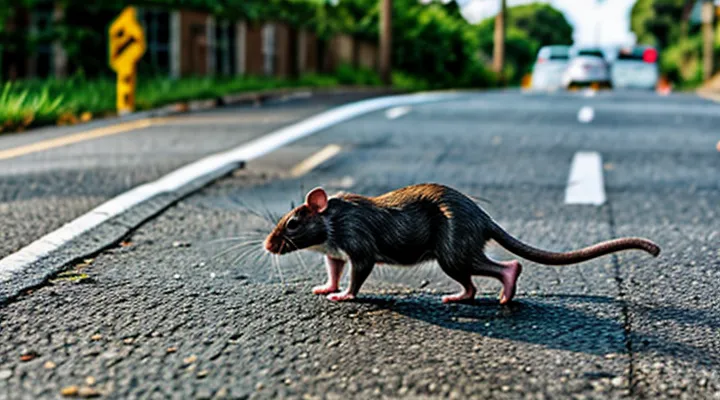
The Enigma of Rodent Road-Crossing
Historical Observations and Anecdotes
Early naturalists documented the presence of urban rats moving across thoroughfares in Victorian London. Field notes from 1863 describe swarms of brown rats emerging from sewers to cross bustling streets in pursuit of grain spilled by market wagons. The same observers linked the behavior to seasonal fluctuations in food availability, noting a spike in road‑crossing activity during autumn harvest periods.
Railway engineers in the 1920s recorded frequent rat incursions onto tracks, attributing delays to animals seeking shelter beneath ballast. Official railway logs from 1927 list dozens of incidents where trains halted to avoid collisions with large groups of rodents crossing at night. Engineers concluded that the mammals were exploiting the linear corridors formed by tracks to reach new foraging zones.
A 1947 newspaper article from New York recounted a single rat that halted traffic on Fifth Avenue for several minutes. The animal, described as unusually bold, darted across the lane, prompting drivers to brake and causing a temporary backup. The piece highlighted public fascination with the sight, noting that eyewitnesses compared the episode to “a miniature parade of daring commuters.”
Historical pest‑control manuals summarize recurring observations:
- Rats follow scent trails left by conspecifics, often leading them onto paved surfaces.
- Food waste deposited along sidewalks creates attractant corridors that guide movement across streets.
- Juvenile dispersal drives younger individuals to venture beyond established burrow systems, increasing road‑crossing frequency.
- Seasonal breeding peaks generate larger populations, amplifying the number of individuals encountered on thoroughfares.
These records collectively illustrate that rat road‑crossing has long been recognized as a predictable response to urban resource distribution, social signaling, and population dynamics.
Scientific Inquiry into Animal Behavior
Rats encounter road surfaces as part of their foraging and dispersal activities. Researchers examine this behavior by integrating field observations, tracking technology, and controlled experiments to identify the stimuli that trigger crossing events.
Field studies deploy motion‑activated cameras and radio‑frequency tags to record movement patterns, crossing frequency, and temporal distribution. Data reveal correlations between traffic density, illumination levels, and the presence of food sources on opposite sides of the pavement.
Laboratory assays isolate variables such as auditory cues, vibration, and visual contrast. Rats are presented with simulated road environments where researchers manipulate speed of moving objects, surface texture, and scent gradients. Results quantify thresholds for risk assessment and decision‑making processes.
The synthesis of empirical findings informs models of urban wildlife navigation, predicts population flux across transportation corridors, and guides mitigation measures such as exclusion barriers or habitat corridors.
Understanding Rat Motivation
Searching for Food and Water
Resource Scarcity and Competition
Rats face uneven distribution of edible waste, shelter, and nesting material in densely populated areas. When local supplies decline, individuals cross streets to reach alternative patches where resources are more abundant.
Population pressure amplifies this movement. High densities increase direct competition for limited food, forcing some rats to abandon familiar routes and explore new territories across traffic lanes.
Key mechanisms that link scarcity and competition to road crossing:
- Depletion of nearby refuse drives foraging trips beyond established boundaries.
- Overcrowding raises aggression and territorial disputes, prompting displaced individuals to seek vacant sites.
- Seasonal fluctuations in food availability create predictable gaps that rats fill by traversing open spaces.
- Human waste management practices concentrate resources in isolated locations, encouraging rats to navigate hazardous pathways to access them.
These dynamics explain why rats routinely venture onto roads despite the associated risks, as the drive for sustenance and space outweighs the threat of vehicular traffic.
Olfactory Cues and Pathways
Rats navigate streets primarily by detecting volatile chemicals that signal food, shelter, or danger. Odor plumes from discarded waste, grain spills, and organic decay create gradients that rats follow, allowing them to locate resources across the pavement. Simultaneously, repellent scents such as diesel exhaust, gasoline vapors, and predator urine generate avoidance zones, shaping crossing decisions.
The olfactory system processes these signals through a defined neural circuit. Receptor cells in the nasal epithelium bind odor molecules, transmitting activation patterns to the olfactory bulb. From there, projections reach the piriform cortex for odor identification, the amygdala for emotional valence, and the hypothalamus for motivational drive. Integration of these pathways yields rapid behavioral responses, including the initiation of road crossing when attractive cues outweigh deterrents.
Key olfactory factors influencing street traversal include:
- Food‑related volatiles (e.g., fatty acids, sugars)
- Fermentation by‑products (e.g., ethanol, acetic acid)
- Human‑derived chemicals (e.g., nicotine, caffeine residues)
- Predator‑associated markers (e.g., feline pheromones)
- Environmental pollutants (e.g., benzene, polycyclic aromatic hydrocarbons)
Experimental observations show that manipulating scent distribution alters crossing frequency. Introducing attractive odors on one side of a roadway increases traffic, while applying repellents on the opposite side reduces it. These findings confirm that olfactory cues and their neural pathways constitute the primary mechanism by which rats decide to move across vehicular thoroughfares.
Seeking Shelter and Mates
Habitat Fragmentation and Urbanization
Rats encounter roadways primarily because urban expansion isolates suitable habitats, forcing individuals to move between fragmented patches. Construction of residential blocks, commercial centers, and transportation corridors removes continuous cover, creating gaps that rats must traverse to locate food, shelter, or mates.
Urbanization increases waste availability along streets, turning sidewalks and gutters into artificial foraging zones. The proximity of these resources to vehicle traffic raises the frequency of road crossings. Simultaneously, dense pavement reduces ground-level connectivity, compelling rats to climb or dash across surfaces that would otherwise be avoided in natural settings.
Key consequences of habitat fragmentation and urban development include:
- Reduced safe corridors, leading to higher mortality from vehicle collisions.
- Altered population structure, as only individuals capable of crossing open spaces reproduce successfully.
- Expanded disease transmission potential, because road crossings bring rats into contact with human waste and domestic animals.
Mitigation strategies focus on restoring green corridors, installing underground passages, and managing waste to diminish attractants near traffic. These measures directly address the underlying drivers of rat movement across roads, decreasing conflict between wildlife and urban infrastructure.
Reproductive Instincts and Dispersal
Rats are frequently observed navigating paved surfaces that separate habitats, a behavior directly linked to their reproductive biology and dispersal strategies.
During breeding periods, male and female rats expand their activity ranges to locate mates and secure nesting sites. The drive to reproduce compels individuals to cross open terrain, even when the area is exposed to traffic. This movement reduces competition for mates within a limited locale and increases genetic exchange across subpopulations.
Juvenile rats, upon reaching independence, leave the natal burrow to establish new territories. Dispersal minimizes inbreeding risk and allows access to untapped food supplies. Roads often form the most direct route between dense residential patches and peripheral fields, making them unavoidable corridors for young dispersers.
Key factors that elevate road‑crossing frequency include:
- High local population density, which intensifies competition for mates and resources.
- Skewed sex ratios, prompting individuals to travel farther to find suitable partners.
- Seasonal peaks in breeding activity, aligning with increased movement.
- Habitat fragmentation that forces rats to traverse artificial barriers to reach viable nesting sites.
Collectively, reproductive imperatives and the necessity of dispersal generate predictable patterns of road crossing, despite the associated mortality risk.
Risks and Challenges of Road Crossing
Predation and Vehicular Hazards
Natural Predators in Urban Environments
Urban ecosystems host several native predators that directly affect rat movement across streets. Feral cats patrol alleys and sidewalks, hunting rats that emerge from sewers or garbage sites. Birds of prey, especially red‑tailed hawks and great horned owls, exploit open spaces near traffic corridors to ambush rodents in flight or on the ground. Snakes such as rat snakes navigate drainage pipes and vacant lots, preying on rats that seek shelter. Domestic dogs, when off‑leash, can chase rats across pavements, forcing rapid crossings. Raccoons and opossums, opportunistic carnivores, hunt rats near dumpsters and may drive them toward roadways in search of escape routes.
These predators shape rat behavior in three observable ways:
- Increased nocturnal activity: rats adjust foraging times to avoid peak hunting periods of hawks and cats.
- Preference for covered pathways: tunnels, culverts, and vegetation provide concealment from aerial and terrestrial hunters.
- Rapid crossing of open surfaces: when predators are detected, rats sprint across streets to reach perceived safety, often ignoring traffic hazards.
The presence of natural predators therefore creates a risk–reward balance that compels rats to cross roads more frequently than they would in predator‑free environments. Managing predator populations and urban habitat features can influence rat road‑crossing patterns and reduce associated conflicts.
Traffic Volume and Speed as Deterrents
Rats encounter roadways as part of their foraging range, and the characteristics of vehicular flow determine whether they attempt to cross. High traffic volume generates continuous noise, vibration, and visual disturbance, which suppresses crossing activity. When vehicle density falls below a threshold, these deterrent cues weaken, allowing rats to approach and traverse the pavement more frequently.
Speed exerts a parallel influence. Rapidly moving vehicles reduce the time window for safe passage, increasing perceived danger and prompting avoidance. Conversely, slower traffic extends the opportunity for rats to locate gaps, diminishing the deterrent effect of speed alone.
Key deterrent mechanisms:
- Noise intensity: escalates with vehicle count, creates auditory masking of predator cues.
- Ground vibration: amplified by heavy flow, interferes with tactile navigation.
- Visual flux: frequent motion patterns disrupt visual assessment of safe gaps.
- Temporal exposure: higher speed narrows the safe crossing interval, raising risk perception.
Understanding these dynamics informs infrastructure design. Measures such as traffic calming, speed reduction zones, and periodic high‑volume periods can be employed to discourage rodent movement across critical thoroughfares, thereby reducing conflict with human transportation systems.
Human Intervention and Mitigation Efforts
Wildlife Crossings and Underpasses
Rats frequently encounter roadways while foraging, dispersing, or seeking shelter, leading to high mortality rates and increased vehicle damage. Wildlife crossings and underpasses provide dedicated pathways that separate rodents from traffic, reducing collisions and preserving ecological connectivity.
Effective crossing structures share several design criteria:
- Size: Openings must accommodate the body length and tail of the target species; a minimum clearance of 30 cm is sufficient for most urban rats.
- Location: Placement aligns with established runways identified through motion‑sensor surveys or track counts.
- Substrate: Rough, natural‑material flooring encourages use and mimics the ground surface found off‑road.
- Lighting: Low‑intensity, diffuse illumination discourages predators while maintaining visibility for the animals.
- Maintenance: Regular debris removal and vegetation management prevent blockage and preserve structural integrity.
Empirical evidence supports the efficacy of these installations. Studies in European cities report a 45 % decline in rat‑related vehicle strikes after installing a network of 2‑meter‑wide underpasses. In North America, a pilot program linking three green corridors with concrete culverts recorded a 60 % reduction in rodent mortality over two years, accompanied by a measurable increase in gene flow among separated populations.
Cost considerations favor underpasses over surface bridges for small mammals. Construction expenses average $2,500 per meter, while surface structures exceed $10,000 per meter due to extensive support requirements. Maintenance budgets remain low; annual inspections and minor repairs typically cost less than 1 % of the initial investment.
Incorporating wildlife crossings into urban planning directly addresses the factors that drive rats onto roads—habitat fragmentation and limited safe passage. By providing purpose‑built routes, municipalities can lower accident rates, protect public health, and sustain rodent biodiversity without resorting to lethal control measures.
Urban Planning and Green Corridors
Rats regularly traverse city streets, a pattern shaped by the layout of built environments and the distribution of resources. Dense housing blocks, uncovered garbage containers, and storm‑drain networks create attractants on both sides of roads, encouraging rodents to move between food sources and shelter.
Urban planning determines the connectivity of habitats. When development isolates green spaces, rats must cross open pavement to reach new territories. Poorly designed drainage systems provide underground pathways that intersect roadways, increasing the frequency of surface crossings. Waste collection points placed near thoroughfares supply a continuous food supply, further motivating movement across traffic zones.
Green corridors—linear vegetated strips that link parks, vacant lots, and riparian zones—modify rat routes. Continuous cover offers alternative passages that bypass road surfaces, reducing exposure to vehicles. Properly spaced vegetation also creates visual barriers, discouraging rodents from entering high‑traffic areas while preserving ecological connectivity for other wildlife.
Practical measures for planners:
- Align vegetated strips away from main traffic lanes, using dense shrubbery or low fences as deterrents.
- Install sealed underground conduits that connect green spaces without intersecting road surfaces.
- Position waste receptacles in enclosed, animal‑proof containers at a distance from pedestrian and vehicle pathways.
- Provide dedicated wildlife underpasses or culverts at known crossing hotspots, designed to accommodate small mammals.
- Integrate regular maintenance schedules to prevent overgrowth that could become new rodent habitats.
These interventions reduce the need for rats to cross streets, lower vehicle‑related mortality, and improve overall urban ecosystem health.
Beyond the Urban Myth
Comparative Analysis with Other Species
Rats frequently traverse paved surfaces while searching for food, shelter, or mates. Their movements intersect human traffic, creating a measurable impact on urban ecosystems.
- Mice exhibit similar foraging trips but prefer narrower gaps and lower‑traffic corridors, reducing direct vehicle encounters.
- Squirrels cross roads mainly to access scattered tree canopies; they employ rapid, zig‑zag patterns that lower exposure time.
- Beavers avoid roadways altogether, opting for waterborne routes; when forced onto land, they follow established trails that bypass high‑speed zones.
Mammalian species larger than rodents show comparable motivations yet differ in risk tolerance. Deer cross highways to reach seasonal feeding grounds, often using wildlife overpasses that provide safe passage. Foxes cross roads during territorial patrols, displaying nocturnal peaks that coincide with reduced traffic flow.
Avian and insect taxa also negotiate vehicular pathways. Pigeons and starlings fly over roads, minimizing ground contact, while ants form organized columns that exploit pavement cracks, rarely encountering vehicles due to their low profile and collective speed adjustments.
The comparative data reveal three consistent drivers across taxa: resource acquisition, predator avoidance, and territorial expansion. Variation arises from body size, locomotion mode, and sensory capabilities, influencing each species’ propensity to interact with road infrastructure. Recognizing these patterns informs mitigation strategies such as targeted crossing structures, habitat corridors, and traffic timing adjustments.
Future Research Directions
Future investigations must address gaps in knowledge about rat road‑crossing behavior, focusing on mechanisms that drive individuals to enter vehicular pathways and the consequences for urban ecosystems.
- Deploy miniature GPS loggers and accelerometers on free‑roaming rats to collect fine‑scale movement data across diverse traffic environments.
- Conduct neurophysiological experiments that map decision‑making circuits activated when rodents encounter road surfaces, linking sensory cues to locomotor choices.
- Examine how artificial lighting spectra and intensity influence nocturnal crossing frequency, distinguishing effects of streetlights from ambient illumination.
- Build agent‑based models that integrate traffic density, road width, and predator presence to predict crossing risk under varying urban layouts.
- Perform genome‑wide association studies to identify alleles correlated with boldness or risk‑taking tendencies in populations exposed to high traffic.
- Test effectiveness of mitigation structures—such as vegetated overpasses, underpasses, and exclusion fences—through controlled field trials measuring reduction in mortality rates.
- Develop interdisciplinary data platforms that combine ecological, engineering, and public‑health datasets, enabling real‑time monitoring and adaptive management strategies.
Advancing these research avenues will clarify the drivers of rat road‑crossing and support evidence‑based interventions to reduce wildlife‑vehicle conflicts.