
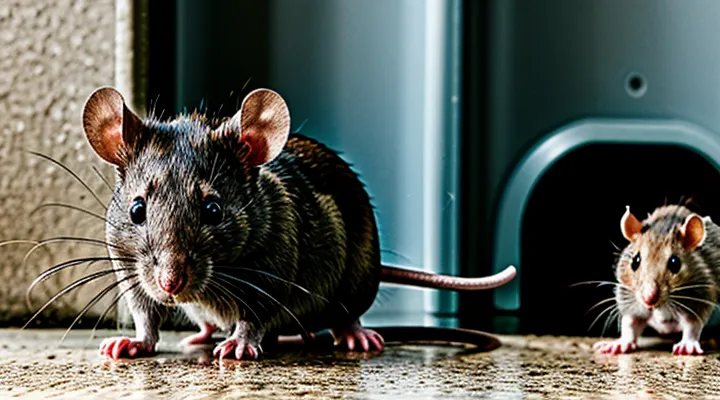
External Characteristics: Physical Distinctions
Size and Build
Body Length and Weight
Body length and weight serve as primary metrics for distinguishing the two rodent species.
Rats typically exhibit a head‑body length of 18–25 cm, tail length of 15–25 cm, and total mass ranging from 250 g to 500 g for common laboratory strains.
Mice display a head‑body length of 7–10 cm, tail length of 5–10 cm, and total mass between 15 g and 30 g for standard laboratory strains.
Key distinctions:
- Rats exceed mice by roughly threefold in body length.
- Tail proportion in rats is comparable to body length; in mice, the tail is often slightly shorter than the body.
- Mass difference spans an order of magnitude, with rats weighing up to 20 times more than mice.
These dimensional disparities influence handling requirements, housing space, and experimental dosing calculations.
Tail Proportions and Appearance
Rats possess tails that are typically longer than their bodies, measuring 18–25 cm in adult specimens, which corresponds to 70–80 % of head‑body length. The tail surface is largely hairless, covered by a thin layer of keratinized skin that reveals visible blood vessels, giving a pinkish or reddish hue. Scales are present only near the tip, and the tail is relatively thick, providing stability during climbing and swimming.
Mice exhibit shorter tails, averaging 7–10 cm, about 50–60 % of head‑body length. The tail is slender, densely covered with fine, short hairs along its entire length, creating a uniform gray‑brown appearance. The skin is less translucent, and blood vessels are not readily visible. Scale distribution is uniform, extending from the base to the tip.
Key morphological contrasts:
- Length proportion: rat tail ≈ 0.75 × body length; mouse tail ≈ 0.55 × body length.
- Surface texture: rat tail largely naked; mouse tail uniformly haired.
- Diameter: rat tail noticeably thicker, supporting weight during arboreal activity; mouse tail thin, suited for balance.
- Coloration: rat tail often pink/red due to visible vasculature; mouse tail muted, matching overall coat color.
These differences reflect adaptations to distinct ecological niches and locomotor demands.
Ear Size and Shape
Rats possess relatively large, proportionally elongated ears that extend noticeably beyond the head’s outline. The pinnae are thick, with a pronounced ridge along the outer edge, and the inner surface displays a dense network of fine fur. Mice exhibit smaller, rounded ears that sit close to the skull, with a smooth, thin rim and minimal fur coverage.
- Rat ears: length up to 2 cm, width 1 cm; robust cartilage; visible blood vessels.
- Mouse ears: length 1 cm or less, width 0.5 cm; delicate cartilage; less vascular visibility.
The shape influences auditory sensitivity. Rats’ broader surface area enhances low‑frequency detection, supporting navigation in burrows and social communication. Mice’s compact ears favor high‑frequency perception, aiding predator avoidance and fine‑scale environmental cues. Both species retain the ability to swivel the pinnae, but the range of motion is greater in rats, allowing a wider sound field.
Snout Structure and Features
Rats possess a robust, triangular snout with a relatively broad nasal bridge. The bone structure supports strong masticatory muscles, allowing greater bite force. Nasal openings are larger, facilitating enhanced olfactory detection of distant scents. Whisker (vibrissae) arrangements extend laterally and ventrally, providing comprehensive tactile coverage for navigating complex burrows.
Mice exhibit a finer, more tapered snout with a slender nasal profile. The reduced cranial mass limits bite strength but improves maneuverability within tight spaces. Nasal apertures are smaller, reflecting a reliance on close‑range scent cues. Whiskers are densely packed around the rostral region, optimizing fine‑scale texture discrimination during foraging.
Key comparative points:
- Bone density: Rat snout bone is thicker; mouse snout bone is lighter.
- Muscle attachment: Rats have larger masseter attachments; mice have proportionally smaller attachments.
- Sensory surface area: Rats’ larger nostrils increase airflow; mice’s smaller nostrils reduce volume but concentrate airflow.
- Vibrissae length: Rat whiskers are longer overall; mouse whiskers are shorter but more numerous near the tip.
These anatomical distinctions influence each species’ feeding strategies, habitat use, and predator avoidance tactics.
Fur and Coat
Coloration Variations
Rats and mice display distinct coloration patterns that aid species identification and reflect ecological adaptations. Wild Norway rats (Rattus norvegicus) commonly exhibit brown to black dorsal fur with a lighter ventral surface, while Asian house rats (Rattus rattus) often show a sleek, dark coat with a pronounced contrast between a dark back and pale belly. In contrast, wild house mice (Mus musculus) typically present a more uniform grayish‑brown dorsal pelage, occasionally interspersed with speckles, and a whitish underbelly. Laboratory strains broaden this spectrum:
- Albino rats and mice lack melanin, resulting in pink skin and white fur.
- Brown‑eyed (agouti) mice display a dorsal banded pattern of dark and light hairs, producing a mottled appearance.
- Hooded rats possess a dark dorsal stripe extending from the head to the tail, flanked by a lighter flank and ventral area.
Pigmentation differences arise from variations in melanin production, distribution of pigment cells, and genetic loci such as Mc1r, Tyrosinase, and Agouti. These genetic factors influence not only coat hue but also susceptibility to UV exposure and thermoregulation. In field studies, coat color correlates with habitat type: darker rats dominate urban sewers, whereas lighter mice are more prevalent in arid, open environments. Consequently, coloration serves as a reliable external marker distinguishing the two rodent groups and informs ecological and laboratory research.
Texture and Density
Rats and mice differ markedly in the tactile qualities of their coats and the compactness of their bodies.
Rats possess a relatively coarse, dense pelage that feels firm to the touch. The hair shafts are thick, providing a protective barrier against abrasion and environmental fluctuations. In contrast, mice exhibit a finer, softer fur composed of slender hairs that create a plush surface. This delicate coat offers greater insulation but less resistance to mechanical stress.
The skin covering each species mirrors the fur characteristics. Rat skin is thicker and less elastic, contributing to a higher overall tissue density. Mouse skin is thinner, more pliable, and accommodates a higher density of sensory receptors, particularly around the facial whiskers.
Body composition further distinguishes the two rodents.
- Mass per unit volume: Rats have a greater body mass relative to their volume, resulting in a denser musculature and skeletal framework.
- Skeletal robustness: Rat bones are thicker and heavier, supporting larger muscle attachments and higher load-bearing capacity.
- Muscle fiber arrangement: Rat muscle fibers are more tightly packed, enhancing strength and endurance.
- Overall density: Mice display a lower overall density, reflecting lighter skeletal elements and more loosely arranged muscle tissue.
These textural and density attributes influence handling, habitat preference, and susceptibility to environmental pressures, providing clear criteria for species identification and comparative study.
Droppings and Tracks
Fecal Pellet Morphology
Fecal pellet morphology offers a practical means of distinguishing rats from mice when external traits are examined. The physical attributes of each species’ droppings reflect anatomical size, digestive physiology, and typical activity patterns, providing clear, observable differences without invasive procedures.
Rat pellets are markedly larger, typically measuring 10–15 mm in length and 3–4 mm in width. They appear cylindrical, often with a smooth surface and a dark brown to almost black coloration. The consistency is firm yet pliable, allowing the pellet to retain shape when handled. In contrast, mouse pellets are considerably smaller, averaging 4–6 mm long and 1–2 mm wide. Their form is more spherical to slightly elongated, surface texture is rougher, and coloration ranges from light brown to medium gray. The material is softer, breaking apart with minimal pressure.
Dietary composition and locomotor activity influence pellet characteristics. Rats, consuming larger quantities of bulkier food, produce denser feces, while mice, with higher metabolic rates and more frequent feeding bouts, generate lighter, more fragmented droppings. Housing density also affects pellet aggregation; rat colonies tend to deposit pellets in compact piles, whereas mouse colonies scatter them across the cage floor.
Key distinguishing features:
- Length: rats ≈ 10–15 mm; mice ≈ 4–6 mm
- Width: rats ≈ 3–4 mm; mice ≈ 1–2 mm
- Shape: cylindrical (rats) vs. spherical/elongated (mice)
- Surface: smooth (rats) vs. rough (mice)
- Color: dark brown–black (rats) vs. light brown–gray (mice)
- Consistency: firm (rats) vs. soft, easily broken (mice)
These morphological markers, observable with minimal equipment, support rapid species identification and contribute to accurate behavioral and physiological assessments.
Footprint Patterns
Footprint patterns provide a reliable means of separating rats from mice in field investigations and laboratory settings. The dimensions, toe arrangement, and stride characteristics differ consistently between the two genera, allowing rapid visual identification without genetic analysis.
Rats produce prints that are noticeably larger, typically measuring 10–12 mm in length and 7–9 mm in width. Mouse prints range from 5–7 mm long and 4–5 mm wide. The overall outline of rat prints appears broader and more oval, whereas mouse prints have a sharper, elongated silhouette.
Toe configuration further distinguishes the species. Both rodents display five toes on each hind foot, but rat tracks show prominent, evenly spaced claw marks extending outward from the central pad. Mouse tracks present smaller claw impressions that often converge toward the pad, creating a tighter cluster. The front feet of rats lack visible claw marks, while mouse front prints may reveal faint claw traces.
Stride and trackway spacing reflect differences in locomotion. Rats exhibit a stride length of 30–35 mm, resulting in a wider trackway spacing of 20–25 mm between left and right footfalls. Mice display a shorter stride of 15–20 mm and a narrower trackway spacing of 10–12 mm. These measurements correspond to the larger body mass and more robust gait of rats compared to the agile, rapid movements of mice.
Key distinguishing features of footprint patterns:
- Size: rat prints ≈ 10–12 mm × 7–9 mm; mouse prints ≈ 5–7 mm × 4–5 mm.
- Toe/claw marks: pronounced, outward‑spreading claws in rat hind prints; compact, inward‑converging claws in mouse hind prints.
- Stride length: rat 30–35 mm; mouse 15–20 mm.
- Trackway spacing: rat 20–25 mm; mouse 10–12 mm.
These morphological and kinematic differences in footprints reflect the distinct external traits and behavioral adaptations of rats and mice, enabling accurate species identification in ecological surveys and pest‑control operations.
Behavioral Differences: Habits and Tendencies
Social Structure and Communication
Colony Size and Dynamics
Rats typically form larger colonies than mice, often comprising dozens of individuals in a single burrow system. Their social structure favors hierarchical organization, with dominant adults controlling access to food and nesting sites. Mice colonies are smaller, usually limited to a few dozen or fewer members, and exhibit a more fluid social arrangement where dominance is less pronounced.
Key distinctions in colony dynamics:
- Population turnover: Rat colonies experience slower turnover; adult lifespan averages 2–3 years, allowing stable group composition. Mouse colonies turnover rapidly, with lifespans of 1–1.5 years and frequent breeding cycles.
- Reproductive output: A single rat female can produce 6–12 litters per year, each containing 6–12 pups, supporting gradual expansion. A mouse female may generate 5–10 litters annually, each with 4–8 pups, leading to swift population spikes.
- Space utilization: Rats occupy extensive tunnel networks that interconnect multiple nesting chambers, facilitating movement of subgroups without disrupting the whole colony. Mice use compact nests, often sharing limited space, which intensifies competition when numbers rise.
- Territorial defense: Rat colonies defend larger territories, employing scent marking and aggressive encounters to deter intruders. Mouse colonies defend smaller perimeters, relying more on rapid breeding to offset losses.
Understanding these parameters clarifies why rat colonies tend to be more stable and expansive, whereas mouse colonies are characterized by rapid fluctuation and higher density within confined areas.
Vocalizations and Scent Marking
Rats and mice employ distinct vocal repertoires that reflect their social structures. Rats emit a broad range of ultrasonic calls, typically 20–50 kHz, with syllable patterns that vary between aggressive encounters, mating, and pup‑care. Adult females produce long, frequency‑modulated chirps during maternal interactions, while males generate brief, high‑pitch trills in territorial disputes. Mice also communicate ultrasonically, but their calls cluster around 70–120 kHz and consist of shorter, more repetitive bursts. Male mice release complex “song” sequences during courtship, whereas females produce softer, less structured notes when locating offspring.
Scent marking further differentiates the two species. Rats possess well‑developed flank and anal glands that secrete lipid‑rich compounds; they supplement glandular secretions with urine deposits on bedding and walls, creating persistent territorial boundaries. Mice rely primarily on urine and a single dorsal gland that releases volatile pheromones. Their markings are finer, concentrated around nesting sites and feeding areas, and decay more rapidly than rat deposits.
Key contrasts:
- Frequency range: rats ≈ 20–50 kHz; mice ≈ 70–120 kHz.
- Call structure: rats = varied syllables; mice = short, repetitive bursts.
- Primary scent source: rats = flank/anal glands + urine; mice = urine + dorsal gland.
- Marking persistence: rat deposits last days; mouse deposits fade within hours.
Understanding these acoustic and olfactory signatures clarifies how each rodent negotiates social hierarchies, reproduces, and defends territory.
Diet and Feeding Habits
Omnivorous Preferences
Rats and mice share an omnivorous diet, yet each species displays distinct food preferences that influence foraging behavior and habitat use.
Rats exhibit broad acceptance of food types. Their diet commonly includes:
- High‑fat animal protein (e.g., meat scraps, insects)
- Grain and cereal products
- Fruit and vegetable waste
- Human‑derived refuse rich in sugars and oils
These preferences reflect rats’ capacity to exploit dense, resource‑rich environments such as urban sewers and agricultural storage facilities.
Mice show narrower selection criteria. Typical intake emphasizes:
- Seeds and whole grains
- Small insects and larvae
- Fresh fruit with lower sugar concentration
- Limited animal protein, usually from opportunistic scavenging
The smaller body size and higher metabolic rate drive mice toward energy‑dense plant material while avoiding heavily processed or fatty foods that rats readily consume.
Behavioral outcomes differ accordingly. Rats tend to travel longer distances, dominate mixed‑food sites, and display reduced neophobia toward novel substances. Mice concentrate activity around seed caches, exhibit heightened caution when encountering unfamiliar items, and often occupy peripheral niches where competition with rats is minimized.
Food Storage Behaviors
Rats and mice exhibit distinct strategies for storing food, reflecting differences in body size, social organization, and habitat use.
- Rats prefer to hoard larger quantities in concealed locations such as burrow chambers, crawl spaces, or behind walls. Their stronger jaws and robust bodies allow them to move bulkier items, including whole seeds, nuts, and pieces of meat.
- Mice collect smaller portions, often scattering them in multiple micro‑sites like cracks, under furniture, or within nest material. Their lighter build limits the weight they can transport, so they focus on lightweight seeds, grains, and insects.
The two species also diverge in temporal patterns. Rats tend to accumulate stores over extended periods, revisiting caches to replenish or retrieve food as seasonal availability shifts. Mice, by contrast, exhibit rapid turnover, gathering fresh items daily and discarding leftovers quickly to reduce predation risk.
Social dynamics influence cache distribution. Rats, which often live in hierarchical groups, may maintain communal stores that benefit the entire colony. Mice usually operate solitarily or in small family units, resulting in individualized caches that are guarded more aggressively.
Environmental adaptability shapes each approach. In urban settings, rats exploit human waste streams, creating hidden piles near drainage systems. Mice exploit indoor niches, storing food within wall voids and ceiling spaces where humidity and temperature remain stable.
Overall, rat food hoarding emphasizes volume, durability, and collective benefit, while mouse storage focuses on portability, frequent renewal, and individual protection.
Habitat and Nesting
Preferred Environments
Rats favor habitats that provide abundant shelter, water sources, and access to diverse food supplies. Their size and social structure enable occupation of complex burrow systems, abandoned structures, and densely populated human environments. Key characteristics of rat-preferred locations include:
- Large underground tunnels or sewers offering protection from predators.
- Buildings with cluttered interiors, such as warehouses, restaurants, and basements.
- Areas near standing water, drains, or leaky pipes that sustain hydration.
- Sites with plentiful refuse, grain stores, or other high‑calorie resources.
Mice select environments that emphasize concealment, warmth, and proximity to easily obtainable seeds or grains. Their smaller stature and rapid reproductive cycle drive occupancy of more confined spaces. Typical mouse habitats involve:
- Narrow crevices in walls, insulation, or floorboards.
- Small nests constructed from shredded paper, fabric, or plant material.
- Grain bins, pantry shelves, and storage containers with minimal disturbance.
- Warm, dry locations that maintain stable temperatures, such as attics or HVAC ducts.
Nest Construction Materials and Locations
Rats and mice construct nests from distinct resources and select different sites, reflecting their divergent ecological strategies.
Rats typically use coarse, readily available items such as shredded paper, cardboard, fabric scraps, and plant debris. They favor concealed locations that offer protection from predators and environmental extremes, including underground burrows, wall voids, attic insulation, and dense vegetation near human structures. Their nests often incorporate multiple layers to retain heat and provide structural stability.
Mice prefer finer materials, including cotton fibers, dried grass, fine paper, and soft plastic fibers. Their nests are commonly situated in shallow depressions, corners of cabinets, under furniture, within wall cavities, and in open field vegetation. The chosen sites are usually close to food sources and exhibit limited exposure to direct sunlight.
Key contrasts:
- Material size: rats use bulky, coarse components; mice select delicate, soft fibers.
- Site depth: rats occupy deep, concealed spaces; mice occupy shallow, accessible areas.
- Proximity to human activity: rats exploit structural cavities; mice often remain in peripheral, less disturbed zones.
Activity Patterns
Nocturnal vs. Crepuscular Activity
Rats exhibit a predominantly nocturnal schedule, initiating foraging, social interaction, and exploration shortly after darkness onset and maintaining high activity throughout the night. Light exposure suppresses their locomotor drive, causing a marked reduction in movement during daylight hours. Their circadian rhythm aligns with a peak of activity between the first and third hours of darkness, followed by a gradual decline toward dawn.
Mice display crepuscular behavior, concentrating activity at twilight periods. Peaks occur during the early evening and again at dawn, with a noticeable lull in the middle of the night. Ambient light levels at dusk and sunrise stimulate their exploratory and feeding actions, while sustained darkness leads to a relative decrease in locomotion compared to rats.
Key distinctions in temporal patterns:
- Rats: continuous nocturnal activity; maximal during early night; minimal daylight movement.
- Mice: activity spikes at dusk and dawn; reduced mid‑night activity; responsive to low‑light transitions.
These temporal differences affect experimental design, trap placement, and welfare considerations, requiring species‑specific timing to capture natural behavior accurately.
Exploratory Behaviors and Neophobia
Rats display a higher propensity for open‑field exploration than mice, often entering novel arenas within seconds of release. Their larger body size and stronger musculature enable rapid movement across unfamiliar substrates, reducing the latency to investigate. In contrast, mice exhibit cautious approach patterns, frequently pausing at the periphery before advancing. This restrained behavior reflects a lower baseline exploratory drive.
Neophobia, the avoidance of new objects or environments, differs markedly between the species. Rats typically overcome neophobic responses after brief exposure, demonstrating rapid habituation to novel items such as unfamiliar food or bedding. Mice retain heightened avoidance for longer periods, requiring repeated presentations before acceptance. The disparity is evident in standardized tests:
- Open‑field test: rats travel >50 % more distance; mice remain near walls.
- Novel‑object test: rats interact within 30 s; mice often delay >2 min.
- Food neophobia: rats sample new food after one trial; mice may reject it for several trials.
These patterns stem from species‑specific risk assessment strategies. Rats prioritize resource acquisition, tolerating greater uncertainty, whereas mice emphasize predator avoidance, maintaining elevated vigilance in unknown contexts.
Reproductive Habits
Gestation Period and Litter Size
Rats have a gestation period of 21 to 23 days, slightly longer than that of mice. The female rat reaches parturition after this interval, producing litters that typically contain six to twelve pups; extreme cases may yield up to twenty.
Mice complete gestation in 19 to 21 days, a few days shorter than rats. Their litters generally consist of five to ten offspring, with occasional variation toward four or twelve.
These reproductive parameters influence population dynamics: the shorter gestation and smaller litter of mice enable more rapid generational turnover, while the larger rat litters compensate for the longer developmental interval.
Key comparative points:
- Gestation: rats ≈ 21–23 days; mice ≈ 19–21 days.
- Average litter size: rats ≈ 6–12; mice ≈ 5–10.
Understanding these differences clarifies how each species adapts to environmental pressures and resource availability.
Breeding Frequency and Maturity
Rats reach sexual maturity earlier than many other rodents, typically at 5–6 weeks for females and 6–8 weeks for males. Their gestation lasts 21–23 days, and a single female can produce 5–12 litters per year under optimal conditions. Litter size averages 6–12 pups, with each litter spaced by a postpartum estrus that occurs within 24 hours after delivery.
Mice mature faster, attaining reproductive capability at 4–5 weeks for both sexes. Gestation is shorter, 19–21 days, allowing up to 10 litters annually in well‑controlled environments. Average litter size ranges from 4 to 8 pups, and females also experience a postpartum estrus, enabling continuous breeding cycles.
Key contrasts in breeding frequency and maturity:
- Age of first estrus: rats ≈ 5–6 weeks; mice ≈ 4–5 weeks.
- Gestation length: rats ≈ 21–23 days; mice ≈ 19–21 days.
- Maximum litters per year: rats ≈ 5–12; mice ≈ 8–10.
- Average litter size: rats ≈ 6–12; mice ≈ 4–8.
These parameters shape population dynamics, influencing experimental design, pest management, and captive breeding programs.