
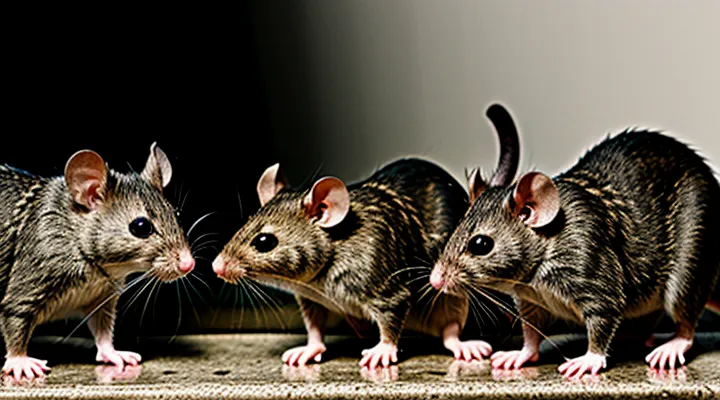
Understanding New World Rodents
The Muridae Family and Beyond
Taxonomic Distinctions
New World murine rodents belong to distinct taxonomic groups that separate them at several hierarchical levels. Both mice and rats are members of the order Rodentia, but they diverge at the family, subfamily, and genus stages.
- Family: New World mice are classified within Cricetidae, whereas New World rats fall under the family Muridae. This primary division reflects evolutionary lineage differences that date back to the early diversification of rodents in the Americas.
- Subfamily: Within Cricetidae, mice are placed in the subfamily Neotominae, while rats are assigned to the subfamily Murinae. The subfamily distinction corresponds to variations in dental morphology, skull structure, and reproductive traits.
- Genus: Representative genera illustrate the split clearly. The genus Peromyscus encompasses most New World mouse species, characterized by a relatively small body size and a high degree of ecological flexibility. In contrast, the genus Rattus includes New World rat species, which typically exhibit larger body dimensions and a more generalized diet.
Additional taxonomic markers differentiate the two groups:
- Chromosomal count: Mice generally possess a diploid number ranging from 38 to 48, whereas rats commonly exhibit a diploid number of 42.
- Mitochondrial DNA sequences: Phylogenetic analyses consistently place mouse lineages separate from rat lineages, confirming distinct maternal ancestry.
- Fossil record: Early Cricetidae fossils appear in North America during the Miocene, while Muridae fossils emerge later, indicating separate colonization events.
These taxonomic distinctions provide a framework for understanding the biological and ecological divergence between New World mice and rats.
Geographic Distribution
New World mice, primarily species of the genus Peromyscus, occupy a range that stretches from southern Canada through the United States and into Central and South America. Populations thrive in diverse habitats, including forests, grasslands, deserts, and high‑altitude regions. Their distribution reflects adaptation to native ecosystems, with most species confined to the Americas and absent from other continents.
New World rats, represented mainly by Rattus species that have established populations in the Americas, differ markedly in range. While some rat species originated in Asia, they have been introduced across the Western Hemisphere and now occur from coastal cities to inland agricultural zones. Their presence is largely a result of human‑mediated dispersal, giving them a near‑global footprint that far exceeds the natural limits of native mice.
- Mice: native, limited to the Americas, habitat‑specific.
- Rats: introduced, widespread across the Americas and beyond, habitat‑generalist.
Physical Characteristics
Size and Body Proportions
Tail Morphology
New World murine rodents exhibit distinct tail characteristics that separate mice from rats. The tails of New World mice are generally shorter relative to body length, often measuring 60–80 % of the head‑body distance. Their dorsal surface is covered with fine, sparse hair, while the ventral side bears a thin, almost naked skin that facilitates tactile sensing. Vertebral counts range from 20 to 25, providing moderate flexibility but limiting extreme coiling.
In contrast, New World rats possess longer tails, frequently exceeding 100 % of the head‑body length. The dorsal fur is denser and coarser, offering protection against abrasion. The ventral skin remains largely uncovered, enhancing grip on vertical surfaces. Tail vertebrae number between 30 and 35, granting greater dexterity and the ability to wrap tightly around objects, a feature useful for climbing and nest construction.
Key morphological distinctions:
- Length proportion: mice 0.6–0.8 × body length; rats ≥ 1.0 × body length.
- Fur density: mice sparse dorsal hair; rats dense dorsal hair.
- Vertebral count: mice 20–25; rats 30–35.
- Flexibility: mice moderate; rats high, supporting prehensile use.
These variations reflect adaptations to differing ecological niches, with rat tails serving as functional extensions for arboreal activity and mouse tails optimized for balance and limited tactile exploration.
Ear and Eye Features
New World mice possess external pinnae that are proportionally larger relative to head size than those of New World rats. The mouse pinna exhibits a thin, pliable cartilage framework, facilitating a wider range of motion for auditory localization. In contrast, rat pinnae are thicker, with a denser cartilage core that limits mobility but provides greater protection against debris. Auditory canal length differs markedly: mice have a shorter canal (~2 mm) ending in a relatively wide tympanic membrane, whereas rats display a longer canal (~4 mm) terminating in a narrower membrane. These anatomical variations correspond to distinct frequency sensitivity ranges; mice detect higher frequencies (up to 80 kHz) while rats typically respond up to 50 kHz.
Eye morphology also diverges between the two groups. Mice exhibit relatively large, laterally positioned eyes with a pronounced scleral ring, granting an extensive field of view exceeding 300°. Their retinal composition includes a higher proportion of rod photoreceptors, optimizing vision under low-light conditions. Rats feature smaller, more anteriorly placed eyes, resulting in a reduced visual field (≈200°) but enhanced binocular overlap for depth perception. The rat retina contains a greater density of cone cells, supporting better visual acuity in daylight. Additional ocular distinctions include:
- Lens thickness: mouse lens ≈1.8 mm; rat lens ≈2.2 mm.
- Corneal curvature: mouse cornea steeper, providing a shorter focal length.
- Tear film composition: rat tear fluid contains higher lipid content, contributing to increased tear film stability.
Fur Coloration and Texture
New World murine rodents display distinct fur coloration and texture that aid species identification and reflect ecological adaptations. Mice typically possess a softer, finer coat with a higher density of guard hairs, while rats exhibit a coarser, more rugged pelage.
- Mice fur colors range from light gray or beige to darker brown or black; the dorsal surface often shows a uniform hue, and the ventral side is paler.
- Rat fur colors include brown, black, or reddish tones; dorsal fur may show a mottled pattern, and the ventral area is usually lighter but less contrasting than in mice.
- Mouse hair shafts are thinner (approximately 30–45 µm) and display a silky sheen, contributing to a plush texture.
- Rat hair shafts are thicker (approximately 50–70 µm) with a matte finish, giving a tougher feel.
- Seasonal molting in mice is more frequent, resulting in noticeable changes in coat thickness and shade.
- Rats undergo a single annual molt, maintaining relatively stable fur characteristics year-round.
These attributes provide reliable criteria for distinguishing between the two groups in field surveys and laboratory settings.
Behavioral Patterns
Habitat and Niche
Diet and Foraging Strategies
New World mice and rats occupy overlapping habitats but exploit distinct nutritional resources. Mice rely heavily on seeds, small fruits, and insect larvae, supplementing their intake with occasional fungal spores. Their digestive system processes high‑carbohydrate, low‑protein foods efficiently, reflected in a rapid gut transit time that maximizes energy extraction from fleeting foraging opportunities.
New World rats exhibit a broader diet that includes larger seeds, nuts, carrion, and human‑derived waste. Their larger molars and stronger jaw muscles enable crushing of hard shells, while a more extensive cecum supports fermentation of fibrous plant matter. Protein intake from arthropods and vertebrate tissue contributes to higher muscle mass and reproductive output.
Foraging behavior diverges markedly. Mice:
- Operate primarily during twilight and night, reducing exposure to predators.
- Conduct short, repetitive trips from a central nest to nearby seed caches.
- Employ olfactory cues to locate transient food patches, adjusting routes within minutes.
Rats:
- Demonstrate greater spatial memory, allowing travel over several hundred meters between feeding sites.
- Use tactile whisker sensing and tactile exploration to assess complex food sources such as discarded refuse.
- Exhibit opportunistic scavenging, often exploiting anthropogenic waste streams and water sources.
These dietary and foraging distinctions reflect evolutionary adaptations to different ecological niches, influencing population dynamics, disease transmission potential, and interactions with human environments.
Social Structures
New World mice (genus Peromyscus) typically form small, fluid groups that shift with resource availability. Individuals maintain overlapping home ranges and rely on scent marking and ultrasonic vocalizations to coordinate movements. Dominance hierarchies are weak; interactions are often egalitarian, and breeding pairs may change seasonally.
Rats native to the Americas (Rattus spp.) establish larger, more stable colonies. Colonies consist of a dominant breeding pair and subordinate individuals that assist in nest maintenance and offspring care. Hierarchical structures are pronounced, with clear alpha and beta roles reinforced by aggression, grooming, and pheromonal cues. Territorial boundaries are defended aggressively, especially around food caches.
Key contrasts in social organization:
- Group size: mice – 2‑5 individuals; rats – up to dozens.
- Stability: mice – transient associations; rats – long‑term colonies.
- Hierarchy: mice – minimal, fluid; rats – rigid, alpha‑driven.
- Communication: mice – primarily ultrasonic calls; rats – multimodal (acoustic, olfactory, tactile).
- Parental investment: mice – mother alone; rats – cooperative care involving multiple adults.
These patterns reflect evolutionary pressures: mice prioritize flexibility in unpredictable habitats, while rats benefit from coordinated defense and resource monopolization in more settled environments.
Reproductive Habits
New World mice reach sexual maturity at 5‑7 weeks, exhibit a 4‑5‑day estrous cycle, and can produce up to five litters annually. Gestation lasts 20‑23 days, with typical litter sizes of three to seven pups. Breeding occurs year‑round in temperate zones, accelerating during periods of abundant food.
New World rats attain sexual maturity at 8‑10 weeks, display a 4‑day estrous cycle, and generally produce three to four litters per year. Gestation period matches that of mice, 21‑23 days, but litters are larger, frequently ranging from five to ten offspring. Reproductive output peaks during the rainy season when resources are plentiful.
Key reproductive distinctions:
- Maturity age: mice 5‑7 weeks; rats 8‑10 weeks.
- Estrous cycle length: mice 4‑5 days; rats 4 days.
- Annual litters: mice up to five; rats three to four.
- Litter size: mice 3‑7; rats 5‑10.
- Seasonal bias: mice largely continuous; rats concentrated in wet season.
These parameters shape population dynamics, influencing habitat colonization and predator‑prey interactions in New World ecosystems.
Ecological Roles and Impact
Predation and Prey Dynamics
New World murine rodents experience distinct predation pressures that shape the ecological roles of mice and rats. Small-bodied mice, typically weighing less than 30 g, fall prey to a wider range of insectivorous and avian predators, whereas larger rats, often exceeding 150 g, are targeted mainly by mammalian carnivores and larger raptors.
Predator selection drives divergent foraging strategies. Mice rely on rapid, erratic movements and frequent retreats into dense ground cover; rats employ greater stamina and exploit open pathways to escape pursuit. Consequently, mice exhibit higher nocturnal activity peaks, while rats display crepuscular and occasional diurnal foraging when predator activity declines.
Anti‑predator adaptations reflect these pressures:
- Mice: heightened tactile sensitivity, elevated whisker density, and pronounced startle responses.
- Rats: stronger bite force, robust cranial musculature, and ability to intimidate smaller competitors.
These traits influence prey dynamics within shared habitats. Mice dominate microhabitats with limited shelter options, sustaining higher turnover rates due to elevated mortality. Rats occupy larger territories, maintain stable populations, and often act as apex small‑mammal predators, suppressing mouse abundance through direct competition and occasional predation.
Overall, predation pressure creates a functional split: mice function as high‑risk, fast‑reproducing prey, whereas rats serve as resilient, lower‑risk consumers that shape community structure through both competition and selective predation.
Disease Transmission
New World murine species and rat species differ markedly in their capacity to acquire, maintain, and disseminate pathogens that affect humans and livestock.
The rodent families exhibit distinct host‑pathogen relationships. New World mice (genus Peromyscus) frequently harbor hantaviruses, such as Sin Nombre virus, which transmit through aerosolized excreta. They also serve as reservoirs for Bartonella spp., Yersinia pestis in limited foci, and several tick‑borne rickettsiae. In contrast, New World rats (primarily Rattus spp.) are primary vectors for Leptospira spp., Salmonella enterica, Streptobacillus moniliformis (rat‑bite fever), and a broader array of hantavirus strains, including the Andes virus. Rat populations sustain higher prevalence of Clostridium spp. and Campylobacter spp., reflecting their omnivorous diet and close association with human waste.
Transmission pathways also diverge. Mice typically spread disease through contaminated bedding, inhalation of dried urine or feces, and ectoparasite bites (mites, ticks). Rats augment these routes with direct bite transmission, ingestion of contaminated food, and waterborne spread via massive urine output. Rat colonies often occupy sewers and grain stores, increasing contact with stored food and drinking water, whereas mouse populations concentrate in peridomestic structures, elevating indoor aerosol exposure.
Epidemiological impact correlates with population dynamics. Rat infestations produce higher pathogen loads per individual due to larger body mass and greater fecal output, leading to amplified environmental contamination. Mouse outbreaks, though smaller in absolute numbers, generate concentrated aerosol hazards in enclosed spaces, heightening risk of respiratory infections.
Key disease agents associated with each group:
- New World mice
- Sin Nombre hantavirus – aerosol transmission
- Bartonella spp. – ectoparasite vectors
- Yersinia pestis – limited flea‑mediated cycles
- New World rats
Understanding these distinctions guides targeted control measures, surveillance priorities, and public‑health interventions.
Evolutionary Adaptations
Dental Anatomy
New World rodents exhibit distinct dental configurations that aid species identification and functional interpretation. Both mice and rats possess continuously growing incisors, yet the morphology, enamel distribution, and occlusal patterns differ markedly.
Incisor characteristics
- Mice display a narrower labial enamel band, producing a sharper cutting edge; the dentine core expands laterally, creating a pronounced curvature.
- Rats develop a broader enamel strip that extends further onto the tooth surface, resulting in a more robust, less tapered edge.
- The enamel‑dentine junction in mice is positioned closer to the apex, whereas rats maintain a deeper junction, influencing wear rates.
Molar architecture
- Mice have three molar rows per quadrant, each with a simple, rounded cusp pattern suited for grinding soft seeds.
- Rats possess four molar rows per quadrant, featuring additional accessory cusps and more complex occlusal surfaces that accommodate a broader diet, including tougher plant material.
- The enamel thickness on rat molars exceeds that of mice, providing greater resistance to abrasion.
Root and jaw attachment
- Mouse incisors terminate in short, conical roots that allow rapid turnover; the periodontal ligament exhibits a higher turnover index.
- Rat incisors end in elongated, curved roots, anchoring the tooth more securely and supporting greater bite forces.
These anatomical distinctions reflect evolutionary adaptations to divergent ecological niches and dietary demands among New World murine species.
Skeletal Structure
New World mice and rats exhibit distinct skeletal morphologies that reflect adaptations to different ecological niches. Both belong to the family Cricetidae, yet their bone structures diverge markedly.
Mice possess a more compact skeleton with shorter long bones relative to overall body length. Rats display elongated femora and tibiae, providing greater stride length and supporting larger body mass.
The cranial architecture differs substantially. Mice have a flattened skull with a reduced rostrum, a narrow interorbital width, and a relatively short nasal cavity. Rats present a deeper skull, expanded nasal passages, and a broader zygomatic arch, accommodating stronger masticatory muscles.
Vertebral columns reveal contrasting patterns. Mice feature a higher lumbar vertebra count (typically six) and a more flexible thoracic region, facilitating agile movements. Rats usually have five lumbar vertebrae, a sturdier thoracic cage, and increased vertebral body size, enhancing stability during rapid locomotion.
Limb morphology underscores functional divergence. Mice exhibit a slender humerus and radius, with elongated digits suited for fine manipulation and climbing. Rats possess robust humeri, broader distal limb bones, and reinforced metacarpals, supporting powerful digging and sustained running.
Key skeletal distinctions:
- Skull depth: shallow (mice) vs. deep (rats)
- Lumbar vertebrae: six (mice) vs. five (rats)
- Femur length: short (mice) vs. long (rats)
- Digit proportions: elongated (mice) vs. stout (rats)
- Zygomatic arch width: narrow (mice) vs. wide (rats)
These anatomical variations underpin the differing locomotor capabilities, foraging strategies, and habitat utilization of the two groups.
Coexistence with Humans
Synanthropic Tendencies
Synanthropy describes the tendency of wildlife to live in close association with human environments. In rodent ecology, this trait influences distribution, diet, and disease transmission potential.
New World mice exhibit limited synanthropic behavior. Species such as Peromyscus and Reithrodontomys are primarily forest or grassland dwellers, entering human structures only opportunistically. Their populations remain low in urban settings, and they rely on natural seed and insect resources rather than anthropogenic waste.
New World rats display a stronger affinity for human habitats. Species like the cotton rat (Sigmodon) and introduced Norway rat (Rattus norvegicus) establish dense colonies in sewers, warehouses, and agricultural storage facilities. They exploit refuse, grain stores, and shelter provided by buildings, achieving higher reproductive rates in these environments.
Key distinctions in synanthropic tendencies:
- Habitat preference: mice favor natural ecosystems; rats prioritize built environments.
- Population density: mouse colonies remain sparse in cities; rat colonies reach high densities.
- Resource utilization: mice depend on wild seeds and insects; rats capitalize on human-generated waste and stored food.
- Reproductive response: rats increase litter size and breeding frequency in urban settings, whereas mice show modest changes.
These contrasts shape the overall ecological divergence between New World murine and rat species, affecting their roles as pests and vectors in human-dominated landscapes.
Pest Management Considerations
New World mice and rats exhibit distinct ecological traits that influence pest‑management strategies. Mice generally occupy smaller burrows, reproduce faster, and prefer indoor environments, whereas rats create larger burrow systems, tolerate broader temperature ranges, and often establish outdoor colonies. These variations affect trap placement, bait selection, and monitoring frequency.
Effective control programs should consider the following factors:
- Habitat preference – Deploy snap traps and glue boards along wall voids and ceiling joists for mice; position larger cage traps and multi‑catch devices near sewer openings, ground‑level runways, and compost piles for rats.
- Food sources – Mice exploit minute food residues; maintain rigorous sanitation, seal containers, and eliminate crumb accumulation. Rats require bulk food supplies; secure waste bins, use tamper‑proof lids, and remove spilled grain or feed.
- Reproductive rate – Mice can produce several litters per year; implement continuous monitoring and rapid re‑treatment cycles. Rats, with longer gestation periods, allow slightly longer intervals between interventions but demand periodic assessment of colony size.
- Bait resistance – Both species may develop aversion to common anticoagulant baits; rotate active ingredients, employ non‑chemical baits, and integrate habitat modification to reduce reliance on poison.
- Regulatory compliance – Verify that selected control agents meet local wildlife protection statutes; document application dates, quantities, and observed outcomes for audit purposes.
Integrating these considerations into an integrated pest‑management (IPM) framework enhances the likelihood of sustained population suppression while minimizing non‑target impacts. Regular data collection on activity patterns, capture rates, and environmental conditions informs adaptive adjustments, ensuring the program remains effective across seasonal fluctuations.