
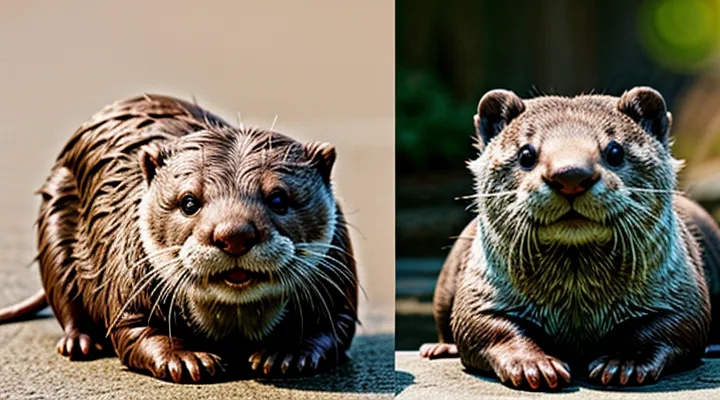
Introduction to Mustelids and Rodents
Mustelids belong to the family Mustelidae, a diverse group of carnivorous mammals that includes otters, weasels, badgers, and ferrets. Members share elongated bodies, short limbs, and a high metabolic rate. Their dentition is adapted for a diet of fish, crustaceans, and small vertebrates, with sharp canines and carnassial teeth. Most species possess dense, water‑repellent fur and a well‑developed scent gland used for communication.
Rodents are classified in the order Rodentia, the largest mammalian order, encompassing rats, mice, squirrels, beavers, and many others. Characteristic features include a single pair of continuously growing incisors in each jaw, reinforced by a thick enamel layer. Rodents exhibit a wide range of body sizes, from the tiny African pygmy mouse to the sizable capybara. Their diets vary widely, covering seeds, vegetation, insects, and, in some species, aquatic organisms.
Key distinctions between the two groups:
- Taxonomy: Mustelidae (Carnivora) vs. Rodentia (Rodentia).
- Dental structure: Carnassial teeth and omnivorous/ carnivorous dentition versus ever‑growing incisors with a gap (diastema) behind them.
- Habitat adaptation: Many mustelids are semi‑aquatic or burrowers; rodents occupy terrestrial, arboreal, and aquatic niches.
- Reproductive strategy: Mustelids typically have fewer, larger offspring; rodents produce larger litters with rapid maturation.
These foundational differences provide the biological context for comparing an otter, a representative mustelid, with a rat, a representative rodent.
Physical Characteristics
Size and Weight
Otters are medium‑sized mammals. The North American river otter (Lontra canadensis) typically measures 70–115 cm in body length, with a tail adding 30–50 cm, and weighs 5–14 kg. Sea otters (Enhydra lutris) are larger, reaching 100–150 cm in body length, a 30–45 cm tail, and a mass of 14–45 kg. Their dense fur and muscular build contribute to a higher body mass relative to length.
Rats are considerably smaller. The brown rat (Rattus norvegicus) averages 20–25 cm in body length, a 13–15 cm tail, and weighs 200–500 g. The black rat (Rattus rattus) is slightly shorter, 16–20 cm body length, a 15–20 cm tail, and a mass of 100–250 g. Their slender skeletons and lighter musculature result in a low weight‑to‑size ratio.
- Otters: 70–150 cm body, 30–50 cm tail, 5–45 kg.
- Rats: 16–25 cm body, 13–20 cm tail, 0.1–0.5 kg.
- Otter mass exceeds rat mass by roughly two orders of magnitude.
- Otter length surpasses rat length by a factor of three to nine.
Body Shape and Fur
Otters and rats exhibit markedly different body configurations and pelage, reflecting divergent ecological roles.
Otters possess streamlined torsos, elongated necks, and powerful, webbed hind limbs that facilitate efficient swimming. Their forelimbs are short but dexterous, supporting prey manipulation. The overall silhouette is elongated, with a tapered tail that functions as a rudder. Muscular development emphasizes propulsion and maneuverability in aquatic environments.
Rats display a compact, cylindrical body with a relatively short, hairless tail. Their forelimbs and hind limbs are of similar length, optimized for rapid terrestrial locomotion and climbing. The skull is proportionally larger, and the overall mass distribution favors agility on the ground and within burrows.
Fur characteristics further distinguish the two species:
- Otters: dense, double-layered coat; outer guard hairs repel water, inner down provides insulation; coloration ranges from dark brown to mottled shades, aiding camouflage in water.
- Rats: coarse, single-layered fur; lacks waterproofing, primarily for thermal regulation; coloration typically ranges from brown to gray, matching terrestrial habitats.
These anatomical and pelage differences align with each animal’s primary habitat—otters as semi-aquatic predators, rats as terrestrial omnivores.
Tails and Limbs
Otters and rats exhibit pronounced contrasts in tail morphology and limb structure, reflecting their divergent ecological roles.
The otter tail is broad, flattened, and densely muscled. Its shape creates a powerful paddle that generates thrust during swimming. The surface is covered with thick, water‑repellent fur, reducing drag and retaining heat. In contrast, the rat tail is slender, hairless, and relatively inflexible. Its primary function is balance while navigating narrow surfaces or climbing; it does not contribute to locomotion in water.
Limbs also differ markedly. Otters possess:
- Webbed hind feet that increase surface area for propulsion.
- Strong, curved claws suited for grasping slippery prey.
- Robust forelimbs with flexible joints, enabling precise manipulation of objects and efficient digging.
Rats display:
- Four short, non‑webbed legs optimized for rapid terrestrial movement.
- Fine, straight claws designed for gripping and gnawing.
- Highly articulated hind limbs that support climbing and jumping.
These anatomical distinctions underscore the otter’s adaptation to an aquatic, predatory lifestyle and the rat’s specialization for terrestrial agility and opportunistic foraging.
Dental Structure
Otters possess a dentition adapted for a piscivorous diet, whereas rats exhibit a dentition specialized for gnawing and herbivory. The structural contrast is evident in tooth morphology, growth patterns, and enamel distribution.
- Incisor configuration: Otters have small, non‑growing incisors that are conical and suited for grasping prey. Rats feature a single pair of large, continuously erupting incisors with enamel confined to the labial surface, creating a self‑sharpening chisel edge.
- Canine and premolar development: Otters retain well‑developed canines and premolars that function as piercing and slicing tools. Rats lack true canines; the space between incisors and molars is occupied by a diastema, reflecting the absence of a predatory bite.
- Carnassial apparatus: In otters, the fourth premolar and first molar form a carnassial pair that shears flesh. Rats do not possess carnassials; their molars are flattened and multi‑cusped for grinding plant material.
- Tooth replacement: Otters undergo a single diphyodont replacement, shedding deciduous teeth before adulthood. Rats are monophyodont, retaining their original teeth throughout life, with the exception of the continuously growing incisors.
- Enamel thickness: Otter teeth exhibit relatively uniform enamel thickness across all surfaces, providing durability for handling slippery prey. Rat incisors display markedly thicker enamel on the front surface and thinner or absent enamel on the rear, facilitating differential wear.
These anatomical distinctions reflect the divergent ecological niches of the two mammals, with otters optimized for capturing and processing aquatic prey, and rats optimized for persistent gnawing and processing of fibrous vegetation.
Habitat and Lifestyle
Aquatic vs. Terrestrial Adaptations
Otters exhibit a suite of traits optimized for life in water, while rats display features that support survival on land. The divergence reflects distinct evolutionary pressures on locomotion, respiration, thermoregulation, and sensory perception.
Aquatic adaptations in otters include streamlined bodies, dense fur with a water‑repellent undercoat, webbed feet, and a muscular tail that functions as a propeller. Their lungs possess a high oxygen‑storage capacity, allowing prolonged submersion. Vascular structures in the extremities regulate heat loss, preserving core temperature during cold dives. Vibrissae and acute hearing detect prey movements beneath the surface.
Terrestrial adaptations in rats involve a compact skeleton, agile limbs, and sharp claws for digging and climbing. Fur is thin and coarse, providing insulation without hindering mobility. Lungs are designed for rapid respiration to support high metabolic rates during foraging. Thermoregulatory mechanisms rely on peripheral vasodilation and shivering. Whiskers and a keen sense of smell navigate complex ground habitats.
Key contrasts:
- Locomotion: Otters use webbed paws and a laterally flattened tail; rats depend on splayed hind limbs and a long tail for balance.
- Skin and fur: Otters possess waterproof fur and a thick insulating layer; rats have a lighter coat suited for airflow.
- Respiratory capacity: Otters store more oxygen for diving; rats prioritize fast breathing for sustained activity.
- Sensory focus: Otters emphasize underwater vibration detection; rats prioritize olfactory and tactile cues on land.
These differences illustrate how each species’ anatomy and physiology align with its primary environment, shaping behavior, diet, and ecological niche.
Diet and Foraging
Otters obtain most of their energy from aquatic prey. Their foraging occurs primarily in rivers, lakes, and coastal waters, where they dive to capture fish, crustaceans, and mollusks. The prey is often caught by sight and seized with sharp teeth and powerful jaws. Otters also exploit seasonal abundances, such as salmon runs, by timing their hunting trips to coincide with peak availability.
Rats rely on a omnivorous diet that combines plant material, insects, and human-derived waste. Foraging takes place on land and in built environments, where individuals scavenge seeds, fruits, grains, and occasional small vertebrates. Their opportunistic feeding strategy enables exploitation of both natural resources and anthropogenic food sources.
Key contrasts in dietary composition:
- Protein source: Otters depend on high‑protein fish and crustaceans; rats obtain protein from insects and occasional carrion.
- Water dependence: Otters must access water to capture prey; rats can thrive without direct water contact, extracting moisture from food.
- Seasonal variation: Otters adjust hunting to aquatic prey cycles; rats exhibit relatively stable intake, shifting between stored grains and fresh waste.
Foraging techniques also differ. Otters employ underwater pursuit, using whisker sensitivity to detect movement, and often store surplus catches in dens. Rats use tactile exploration and keen sense of smell to locate concealed food, often hoarding excess in burrows or hidden caches. These divergent strategies reflect adaptation to distinct ecological niches.
Social Structures
Otters and rats exhibit markedly different social organization, reflecting their distinct ecological niches and evolutionary histories.
Otters typically form small, stable groups. River otters (Lutra spp.) maintain family units composed of a breeding pair and their offspring, with occasional participation of unrelated juveniles during the breeding season. Social bonds are reinforced through grooming, vocalizations, and coordinated hunting. Sea otters (Enhydra lutris) display a more solitary lifestyle, but mothers and pups remain together for several months, and adult females may share foraging areas.
Rats construct larger, fluid colonies. The common brown rat (Rattus norvegicus) establishes a hierarchical structure within a burrow system, where dominant individuals control access to food and nesting sites. Subordinate members contribute to nest maintenance and collective vigilance. Social interactions rely on scent marking, auditory signals, and tactile contact, facilitating rapid reorganization when group composition changes.
Key contrasts:
- Group size: otters – 2‑6 individuals; rats – dozens to hundreds.
- Stability: otters – long‑term family bonds; rats – frequent turnover.
- Hierarchy: otters – minimal dominance hierarchy; rats – pronounced rank order.
- Communication: otters – extensive vocal repertoire and grooming; rats – scent cues and ultrasonic calls.
Reproduction and Lifespan
Otters and rats exhibit distinct reproductive strategies and longevity patterns.
Otters
- Breeding season typically occurs once a year, often in late winter or early spring.
- Gestation lasts 60‑86 days, depending on species.
- Litters contain 1‑4 pups; most species give birth to a single offspring.
- Neonates are born blind and fully dependent on the mother’s milk for 8‑10 weeks.
- Sexual maturity is reached at 2‑3 years of age.
- Average lifespan in the wild ranges from 8 to 12 years; captive individuals may live up to 20 years.
Rats
- Reproductive cycles are continuous throughout the year, with no defined season.
- Gestation period is short, averaging 21‑23 days.
- Litters consist of 5‑12 young, frequently exceeding eight pups.
- Newborns are hairless, with eyes opening around 10‑14 days; they wean after 3‑4 weeks.
- Sexual maturity occurs at 5‑6 weeks for females and 8‑10 weeks for males.
- Wild lifespan averages 1‑2 years, while laboratory or pet rats can survive 2‑3 years, occasionally reaching 4 years under optimal care.
Behavioral Contrasts
Predatory Instincts
Otters exhibit strong predatory drives driven by aquatic hunting techniques. Their streamlined bodies, webbed feet, and sensitive whiskers enable rapid detection of fish and crustaceans. Muscular jaws deliver a crushing bite, while dexterous forepaws manipulate prey, allowing otters to capture, subdue, and store food in caches. This behavior reflects a specialized carnivorous strategy, with hunting cycles often occurring at dawn and dusk when prey activity peaks.
Rats possess opportunistic predatory instincts focused on small vertebrates, insects, and eggs. Sharp incisors and agile climbing abilities facilitate the capture of ground-dwelling insects and nestlings. Predation occurs sporadically, typically when plant resources are scarce. Unlike otters, rats do not rely on coordinated hunting; instead, they employ solitary ambushes or quick snatches, followed by immediate consumption.
Key contrasts in predatory instinct:
- Environment: Otters operate primarily in water; rats function on land and in burrows.
- Prey selection: Otters target fish and aquatic invertebrates; rats target insects, small mammals, and eggs.
- Hunting method: Otters use coordinated, often repeated, capture techniques; rats use opportunistic, solitary attacks.
- Physical adaptation: Otters have webbed limbs and dense fur for insulation; rats have strong incisors and flexible bodies for maneuvering through tight spaces.
These distinctions underline how each species’ predatory behavior aligns with its ecological niche, influencing diet composition, foraging patterns, and survival strategies.
Communication
Otters rely on a combination of vocalizations, body postures, and tactile signals to coordinate group activities and maintain social bonds. High‑pitched chirps and whistles convey alarm, while low‑frequency growls indicate aggression. Scent marking with anal glands supplements auditory cues, allowing individuals to identify each other over water distances.
Rats employ ultrasonic vocalizations, whisker movements, and pheromone trails for interaction. Frequencies above 20 kHz transmit distress or mating calls that humans cannot hear. Rapid whisker flicks serve as visual alerts in confined spaces, and urine‑based scent marks delineate territory and convey reproductive status.
Key distinctions in communication modalities:
- Medium: otters use both audible and olfactory signals across open water; rats depend heavily on ultrasonic sound and close‑range tactile cues.
- Range: otter calls travel several meters; rat ultrasonic calls are effective within a few centimeters, requiring proximity.
- Social context: otters often communicate in larger, fluid groups; rats typically operate in dense colonies where scent marking dominates hierarchy enforcement.
These divergent strategies reflect adaptations to aquatic versus terrestrial habitats, influencing how each species exchanges information and organizes social structure.
Intelligence and Adaptability
Otters and rats exhibit distinct cognitive profiles that reflect their ecological niches. Otters solve complex foraging puzzles, manipulate tools such as rocks to crack shells, and display cooperative hunting strategies that require memory of individual roles. Rats excel at maze navigation, rapid habit formation, and adaptive response to variable food sources, relying on olfactory cues and tactile feedback.
- Problem‑solving: otters manipulate objects; rats rely on trial‑and‑error learning.
- Social learning: otters coordinate group foraging; rats learn from conspecifics through scent trails.
- Environmental flexibility: otters adjust to aquatic and terrestrial habitats; rats thrive in urban, subterranean, and agricultural settings.
- Memory retention: otters recall specific prey locations over months; rats retain spatial maps for weeks.
These cognitive and adaptive traits shape each species’ survival strategies, highlighting divergent evolutionary pressures without overlapping functional domains.
Ecological Roles
Impact on Ecosystems
Otters (family Mustelidae) and rats (genus Rattus) occupy distinct trophic positions, resulting in divergent ecological effects. Otters inhabit freshwater and coastal marine environments, where they function as apex predators of fish and macroinvertebrates. Rats thrive in terrestrial and urban habitats, exploiting a broad diet that includes seeds, insects, and carrion.
Otter influences on ecosystems
- Predation reduces dominant fish populations, allowing subordinate species to increase, thereby enhancing biodiversity.
- Consumption of crustaceans and mollusks regulates benthic community structure, preventing overgrazing of algae.
- Excretion of nitrogen‑rich waste contributes to nutrient enrichment of water bodies, stimulating primary productivity.
- Construction of dens and latrine sites creates microhabitats for invertebrates and amphibians.
Rat influences on ecosystems
- Seed predation diminishes recruitment of native plant species, altering vegetation composition.
- Foraging on insects and carrion can suppress local arthropod populations, affecting decomposition rates.
- High reproductive output leads to population spikes that intensify competition with indigenous small mammals.
- Transmission of pathogens to wildlife and domestic animals introduces disease pressure that can reduce host population viability.
The contrast stems from otters’ role as regulated predators that shape aquatic food webs, whereas rats act as opportunistic consumers that often destabilize terrestrial communities through resource depletion and disease transmission. Understanding these divergent impacts informs management strategies aimed at preserving aquatic biodiversity and mitigating rodent‑driven ecosystem disruptions.
Conservation Status
Otters and rats occupy markedly different positions on global conservation scales. Most otter species are evaluated by the IUCN Red List, with several classified as Vulnerable, Endangered, or Critically Endangered, while a few remain Least Concern. In contrast, the majority of rat species, especially those belonging to the genus Rattus, are listed as Least Concern; only a limited number of island-endemic rats carry threatened designations.
-
Otters
- North American river otter (Lontra canadensis): Least Concern, stable populations in most of its range.
- European otter (Lutra lutra): Near Threatened, declining in parts of Europe due to water pollution and habitat loss.
- Asian small-clawed otter (Aonyx cinereus): Vulnerable, pressures from wetland conversion and illegal trade.
- Sea otter (Enhydra lutris): Endangered, recovery ongoing after historic hunting but still limited by oil spills and fishery interactions.
- Giant otter (Pteronura brasiliensis): Endangered, restricted to Amazonian waterways, threatened by deforestation and hunting.
-
Rats
- Brown rat (Rattus norvegicus): Least Concern, widespread urban and agricultural presence.
- Black rat (Rattus rattus): Least Concern, global distribution facilitated by human activity.
- Polynesian rat (Rattus exulans): Least Concern, native to many Pacific islands but invasive impacts local fauna.
- Flores giant rat (Papagomys armandvillei): Near Threatened, confined to limited highland habitats in Indonesia.
- Amami rabbit (Pentalagus furnessi): Vulnerable, technically a lagomorph but often grouped with rodent-like island species, illustrates that some insular rodents face severe threats.
The contrast is clear: otters generally require intact aquatic ecosystems and face direct exploitation, resulting in multiple threatened categories; rats thrive in human-modified environments, resulting in predominantly stable assessments, with exceptions limited to isolated island populations.