
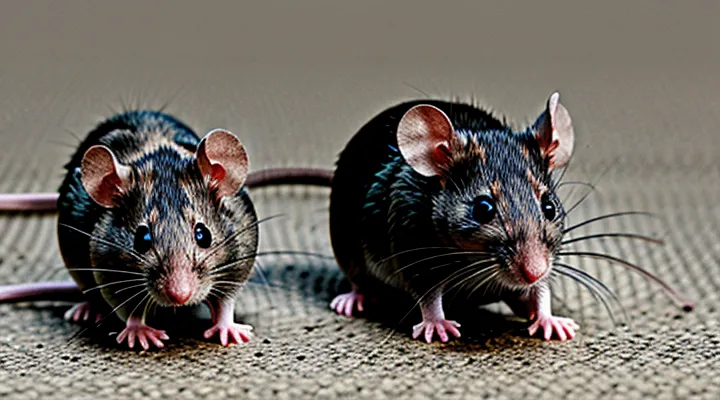
Physical Characteristics
Size and Weight
Body Length
Mice and rats differ markedly in overall size, a factor that influences habitat use, predator avoidance, and resource requirements. An adult house mouse (Mus musculus) typically measures 7–10 cm from nose to the base of the tail, with a tail length of 5–10 cm, giving a total length of roughly 12–20 cm. In contrast, an adult Norway rat (Rattus norvegicus) ranges from 20–25 cm in body length, with a tail of comparable length, resulting in a total length of 40–50 cm.
Key size metrics:
- Mouse body length: 7–10 cm (≈ 2.8–4 in)
- Rat body length: 20–25 cm (≈ 8–10 in)
- Tail proportion: mouse tail ≈ 70–100 % of body; rat tail ≈ 80–100 % of body
- Weight range: mouse 15–30 g; rat 250–500 g
These dimensions establish a clear physical separation, allowing quick visual identification and informing decisions in pest control, laboratory research, and wildlife management.
Tail Length
Tail length provides a reliable metric for separating mice from rats.
The typical house mouse (Mus musculus) possesses a tail that measures 7–10 cm, roughly equal to or slightly longer than its body length of 6–9 cm. In contrast, the brown rat (Rattus norvegicus) exhibits a tail ranging from 15 to 20 cm, often shorter than its 20–25 cm body.
Key proportional differences:
- Mouse: tail‑to‑body ratio ≈ 1.0 – 1.2 : 1
- Rat: tail‑to‑body ratio ≈ 0.7 – 0.8 : 1
Beyond size, tail morphology varies. Mouse tails are slender, covered with fine hair, and display a relatively uniform diameter. Rat tails are thicker, less hairy, and may show a slight taper toward the tip.
These dimensional and structural traits enable quick identification in field observations, laboratory settings, and pest‑management scenarios.
Weight Range
Mice and rats differ markedly in body mass, a primary metric for identification and ecological assessment.
Typical adult house mouse (Mus musculus) weight falls between 15 g and 30 g, with occasional individuals reaching 35 g in resource‑rich environments. Laboratory strains often average 20 g, reflecting controlled diet and genetics.
Common brown rat (Rattus norvegicus) exhibits a weight spectrum from 250 g to 500 g for adults, with large males exceeding 600 g. Wild specimens in temperate zones regularly occupy the mid‑range, while laboratory rats are maintained near 300 g to standardize experimental conditions.
Weight comparison:
- Mouse: 15–35 g (average ≈ 20 g)
- Rat: 250–600 g (average ≈ 350 g)
The disparity represents a ten‑to‑twenty‑fold increase from mouse to rat, influencing habitat use, predator avoidance, and nutritional requirements.
Fur and Coloration
Common Colors
Common colors serve as a practical marker for separating the two small rodents. House mice usually exhibit a limited palette: light brown or gray fur on the back, a paler belly, and occasional white patches on the face or feet. Laboratory strains may appear uniformly white due to selective breeding. In contrast, rats display a broader spectrum. Common rat coloration includes dark brown or black dorsal fur, a lighter gray or tan ventral side, and distinct markings such as a white whisker pad or a pale snout. Some urban rats possess a reddish hue on the back, while others are completely black. The following summary highlights the typical hues for each species:
-
Mouse coloration
• Light brown or gray dorsum
• Pale underside
• White facial or foot markings (optional) -
Rat coloration
• Dark brown, black, or reddish dorsal fur
• Grey‑tan ventral fur
• White whisker pad or snout area (frequent)
These color patterns, observed across wild and domestic populations, provide a quick visual cue for accurate identification.
Texture
Texture provides a reliable means of separating mice from rats. Both rodents possess fur, yet the quality, density, and distribution of that fur differ markedly.
- Mice display fine, silky pelage that lies close to the body; the coat feels soft to the touch and often shows a uniform coloration across the dorsal surface.
- Rats carry coarser, thicker hair with a more rugged feel; the fur may appear patchy, especially on the back where larger guard hairs dominate.
- The skin on a mouse’s ventral side is thin and delicate, yielding a supple texture under gentle pressure.
- A rat’s ventral skin is sturdier, with a tougher, leathery consistency that resists slight abrasion.
- Whisker (vibrissae) length correlates with texture perception: mouse whiskers are slender and flexible, offering a silky tactile surface; rat whiskers are sturdier and more robust, providing a firmer tactile edge.
- Footpads illustrate another contrast: mouse pads are soft, with a smooth, velvety surface suited for climbing; rat pads are rougher, with a gritty texture that enhances traction on varied substrates.
- Tail surfaces differ as well; a mouse tail is almost hairless, exhibiting a smooth, almost glassy feel, while a rat tail retains sparse hair and a slightly rough, scaly texture.
These tactile attributes enable precise identification when visual cues are insufficient.
Head Shape and Features
Snout Shape
Mice possess a sharply tapered snout that narrows toward the tip, giving the nose a triangular appearance. The rostral bones are slender, and the whisker array extends close to the tip, enhancing tactile precision. Rats, in contrast, display a broader, more rectangular snout. The front of the skull widens, producing a blunt profile, and the whiskers originate slightly farther back, reducing the forward reach.
Key points of distinction:
- Shape: mouse snout – pointed, rat snout – blunt.
- Width: mouse – narrow, rat – wide.
- Bone structure: mouse – slender rostral bones, rat – robust, expanded rostral region.
- Whisker placement: mouse – near tip, rat – set back from tip.
Ear Size
Mice have proportionally smaller ears than rats. The average ear length of a common house mouse (Mus musculus) ranges from 6 mm to 9 mm, while a typical brown rat (Rattus norvegicus) exhibits ear lengths between 15 mm and 20 mm. This size disparity is visible even in juvenile specimens, where rat pups already possess ears noticeably larger than those of similarly aged mice.
- Surface area: Larger rat ears provide a greater surface for thermoregulation, allowing more efficient heat dissipation in warm environments.
- Auditory range: The increased pinna size of rats enhances low‑frequency sound capture, extending their hearing sensitivity below 1 kHz compared with mice, whose smaller ears are optimized for higher frequencies.
- Behavioral cues: Ear dimensions serve as reliable field identifiers; researchers can distinguish species quickly by measuring ear length relative to head width.
In summary, ear size constitutes a clear morphological marker that separates mice from rats, influences thermal regulation, and modifies auditory capabilities.
Eye Size
Mice possess proportionally larger eyes relative to their skull length than rats. The increased ocular dimension enhances visual acuity for nocturnal foraging, while rats rely more on olfactory cues.
- Average mouse eye diameter: 3–4 mm; skull length ≈ 30 mm → eye‑to‑skull ratio ≈ 0.10–0.13.
- Average rat eye diameter: 5–6 mm; skull length ≈ 50 mm → eye‑to‑skull ratio ≈ 0.10–0.12.
- Relative pupil size: mice exhibit a wider pupil opening at rest, facilitating greater light intake.
- Retinal cell density: mice have a higher concentration of photoreceptors per unit area, supporting finer resolution in low‑light environments.
These metrics illustrate that, although absolute eye size is greater in rats, mice maintain a higher proportion of eye size to head length, contributing to distinct visual capabilities between the two rodent groups.
Foot Structure
Fore Paws
Mice and rats exhibit distinct forepaw structures that affect locomotion, foraging and manipulation. Mouse forepaws are smaller, with a more compact skeletal arrangement that supports agile, rapid movements. Rat forepaws are larger, featuring elongated metacarpal bones and broader digits, which provide greater strength for handling heavier objects.
Key morphological differences include:
- Digit length: Mice have relatively short digits; rats possess longer, more robust digits.
- Claw curvature: Mouse claws are sharply curved to aid in climbing; rat claws are flatter, suited for digging and gripping.
- Pad size: The plantar pads of mice are narrow, enhancing sensitivity; rat pads are wider, distributing pressure during weight‑bearing activities.
- Muscle mass: Rat forepaws contain more developed flexor and extensor muscles, enabling stronger grip; mouse forepaws rely on finer muscle control for precise tasks.
These variations reflect each species’ ecological niches: mice require speed and precision for navigating tight spaces, while rats depend on power and durability for manipulating larger food items and constructing burrows.
Hind Paws
Hind paws provide reliable visual cues for separating mice from rats. Mice possess smaller hind feet, typically 6–8 mm in length, while rats have feet ranging from 12–15 mm. The size difference aligns with overall body proportions and influences stride length.
Toe count offers another distinction. Both species display five digits, but mouse toes are slender and spread more widely, creating a broader footprint relative to foot size. Rat toes are thicker, with a more compact arrangement that yields a denser imprint.
Pad texture varies noticeably. Mice have soft, thin plantar pads that compress under light pressure, resulting in shallow depressions on dusty surfaces. Rats exhibit thicker, rubber‑like pads that retain shape, producing deeper, more defined marks.
Claw curvature also diverges. Mouse claws curve sharply upward, aiding in climbing and maneuvering through narrow openings. Rat claws are straighter and sturdier, supporting greater digging force and weight bearing.
These anatomical traits—foot length, toe spread, pad thickness, and claw shape—enable accurate identification of hind paws when evaluating tracks, nests, or captured specimens.
Behavior and Habits
Diet and Feeding Patterns
Omnivorous Nature
Mice and rats share an omnivorous diet, yet their food selections diverge because of differences in body size, metabolic rate, and typical environments. Mice, weighing only a few grams, prioritize high‑energy, easily digestible resources, while rats, several times larger, can process a broader range of nutrients and larger particles.
- Mice: seeds, grains, fruits, insects, occasional soft plant material.
- Rats: grains, nuts, fruits, meat scraps, carrion, insects, vegetable waste, occasional small vertebrates.
These preferences reflect adaptive strategies: mice exploit fleeting, low‑calorie items that sustain rapid reproduction, whereas rats exploit abundant, higher‑calorie sources that support greater body mass and longer lifespan.
Food Preferences
Mice and rats exhibit distinct dietary patterns that reflect their differing metabolic needs and foraging behaviors. Mice favor high‑carbohydrate items such as grains, seeds, and processed foods, often selecting small, easily handled pieces. Their preference for rapid‑energy sources aligns with a higher metabolic rate and a tendency to forage in confined spaces.
Rats display a broader palate, consuming proteins, fats, and fibrous materials alongside carbohydrates. Typical rat foods include meat scraps, nuts, fruits, and vegetable matter, with a marked inclination toward larger, nutrient‑dense portions. Their stronger jaw muscles and larger stomach capacity enable the digestion of tougher textures and higher‑fat content.
Key differences in food preferences:
- Mice: grains, seeds, cereals, sugary snacks; avoid large or hard items.
- Rats: meat, nuts, fruit, leafy greens, oily residues; readily ingest coarse or fatty substances.
Habitat and Environment
Preferred Dwellings
Mice typically occupy small, concealed spaces such as wall voids, attic insulation, and floor cavities. Their nests are built from shredded paper, fabric, or soft natural fibers, placed close to food sources and hidden from predators.
Rats favor larger, more accessible environments, including basements, sewer systems, and outdoor burrows. Their dwellings often consist of deep tunnels or nests constructed from sturdier materials like wood shavings, cardboard, and plant debris, providing structural support for heavier bodies.
Key distinctions in preferred dwellings:
- Size of shelter: mice use narrow gaps; rats require spacious chambers.
- Location: mice remain indoors or in limited outdoor niches; rats exploit both indoor utilities and extensive outdoor burrow networks.
- Nest composition: mice favor lightweight, soft fibers; rats incorporate robust, coarse materials.
- Proximity to water: rats commonly situate nests near water sources; mice can thrive with minimal moisture.
Social Structures
Mice typically form small, loosely organized groups. Individuals share nesting material and maintain limited contact, with brief social interactions centered on breeding and foraging. Hierarchical structures are minimal; dominance is expressed through occasional aggression rather than stable rank.
Rats develop larger colonies that exhibit pronounced social organization. Colonies consist of dominant males, subordinate males, and a network of females and offspring. Dominance hierarchies are stable, influencing access to resources, nesting sites, and mating opportunities. Cooperative behaviors include mutual grooming, coordinated nest construction, and collective defense against predators.
Key contrasts in social architecture:
- Group size: mice – 2‑6 individuals; rats – dozens to hundreds.
- Hierarchy: mice – fluid, low‑intensity; rats – fixed, high‑intensity.
- Cooperation: mice – limited, primarily maternal; rats – extensive, involving multiple members.
- Communication: mice – ultrasonic vocalizations for immediate alerts; rats – a broader repertoire of vocal, olfactory, and tactile signals supporting long‑term group cohesion.
These distinctions affect laboratory management, pest control strategies, and ecological impact assessments. Understanding species‑specific social dynamics ensures accurate interpretation of behavior and effective intervention planning.
Reproduction and Lifespan
Breeding Frequency
Mice reproduce more rapidly than rats. A typical house mouse reaches sexual maturity at 5–6 weeks, while a Norway rat matures at 8–10 weeks. Consequently, a mouse can produce a new litter within a month of its first breeding event, whereas a rat requires roughly two months.
The reproductive output per litter also differs. A mouse usually delivers 5–8 pups; a rat averages 6–12. Gestation periods reflect the same pattern: mice carry embryos for about 19–21 days, rats for 21–23 days. Both species can become pregnant again shortly after giving birth, but the shorter estrous cycle of mice (4–5 days) allows more frequent conception than the rat’s 4‑day cycle.
Key breeding frequency metrics:
- Sexual maturity: mouse ≈ 5 weeks; rat ≈ 9 weeks.
- Gestation length: mouse ≈ 20 days; rat ≈ 22 days.
- Litter size: mouse ≈ 6 pups; rat ≈ 9 pups.
- Post‑partum estrus: mouse ≈ 1 day; rat ≈ 1 day, but overall breeding interval is shorter for mice due to earlier maturity.
These figures explain why mouse populations can expand more quickly under comparable conditions, while rat colonies grow at a slower, yet still robust, rate.
Litter Size
Mice typically produce smaller litters than rats. A common laboratory mouse strain yields between five and ten offspring per gestation, with most litters clustering around six to eight pups. Wild mouse populations exhibit similar numbers, though environmental stress can reduce the total.
Rats generate larger broods. The average domestic rat delivers six to twelve pups, and large breeds may reach fourteen or more. Wild Norway rats often average eight to ten young per litter, but prolific individuals can exceed twelve.
The disparity in litter size reflects reproductive strategies:
- Mice: short gestation (≈19–21 days), rapid sexual maturity, multiple small litters per year.
- Rats: longer gestation (≈21–23 days), slightly later maturity, fewer but larger litters annually.
Consequently, rat populations can expand more quickly under favorable conditions due to the higher number of offspring per reproductive event.
Lifespan Expectancy
Mice and rats differ markedly in how long they live. A typical house mouse reaches adulthood within six weeks and, under optimal laboratory conditions, survives for about 1.5 to 2.5 years. In contrast, the common brown rat matures in eight to ten weeks and can live 2 to 3 years in a controlled environment, with some individuals reaching four years.
- Laboratory mouse: 18–30 months average lifespan
- Laboratory rat: 24–36 months average lifespan, occasional outliers up to 48 months
In the wild, both species experience reduced longevity due to predation, disease, and resource scarcity. Wild mice usually survive 6–12 months, while wild rats commonly live 12–18 months. These figures illustrate that, although both rodents share similar biological constraints, rats consistently outlive mice across most settings.
Intelligence and Trainability
Problem-Solving Abilities
Mice and rats display noticeably different capacities for solving novel tasks. Rats typically learn faster, retain information longer, and adapt strategies when conditions change. Mice acquire basic solutions but often require more repetitions and show less flexibility.
Key comparative points:
- Rats navigate complex mazes with fewer errors, indicating stronger spatial memory.
- Mice succeed in simple lever‑press or object‑retrieval tasks but struggle with multi‑step problems.
- Rat brain regions associated with planning and decision‑making are proportionally larger, supporting advanced problem‑solving.
- Mice rely more on instinctual responses, limiting their ability to modify behavior after initial failure.
These distinctions reflect underlying neurological differences and influence how each species is used in research that involves cognitive testing.
Adaptability
Adaptability distinguishes mice from rats in several measurable ways.
Mice thrive in confined spaces such as walls, ceilings, and small burrows. Their diet consists mainly of seeds, grains, and occasional insects, allowing them to persist where food supplies are limited. Rapid breeding cycles—up to ten litters per year—enable quick population rebounds after disturbances. Their solitary or loosely social behavior reduces competition for scarce resources.
Rats occupy a broader range of environments, including sewers, basements, and open fields. They consume a highly varied diet, ranging from plant material to carrion and human waste, which supports survival in fluctuating conditions. Longer gestation periods and larger litters produce offspring capable of complex social learning, enhancing problem‑solving abilities. Stronger gnawing muscles allow rats to breach obstacles that confine mice.
Key comparative points:
- Habitat scope: mice – restricted; rats – extensive.
- Dietary flexibility: mice – narrow; rats – wide.
- Reproductive strategy: mice – frequent, small litters; rats – fewer, larger litters.
- Social learning: mice – limited; rats – advanced.
These factors collectively shape each species’ capacity to adjust to environmental changes, with rats generally exhibiting greater ecological versatility.
Impact on Humans
Health Risks and Diseases
Vector Potential
Vector potential, denoted A, is a field whose curl yields the magnetic field (B = ∇ × A). Its definition is not unique; adding the gradient of any scalar function leaves B unchanged, reflecting gauge freedom. In classical electromagnetism, A simplifies the description of inductive phenomena and provides a convenient variable for the Lagrangian formulation of charged particle dynamics. Quantum mechanics assigns physical significance to A through the Aharonov‑Bohm effect, where particles experience phase shifts despite zero magnetic field, demonstrating that A influences observable quantities directly.
When comparing two small rodents, the mouse and the rat, the distinction mirrors the hidden versus manifest aspects of A. Observable traits—size, tail length, dentition—correspond to the measurable magnetic field B, while underlying genetic and developmental pathways resemble the vector potential, shaping the observable outcomes without being directly apparent. Both species exhibit similar physiological systems, yet subtle variations in gene expression produce divergent adult forms, just as different gauge choices produce the same magnetic field.
Key comparative points:
- Body length: mouse 6–10 cm, rat 15–25 cm.
- Tail proportion: mouse tail ≈ body length, rat tail longer than body.
- Incisor alignment: mouse incisors parallel to skull, rat incisors slightly angled outward.
- Reproductive cycle: mouse estrous cycle 4–5 days, rat cycle 4–5 days with longer gestation.
- Habitat preference: mouse favors indoor niches, rat occupies broader outdoor environments.
In each point, the visible measurement aligns with the curl of an underlying structure, analogous to B arising from A. Recognizing the vector potential concept clarifies why two organisms can share many superficial similarities yet diverge in critical characteristics, emphasizing the role of hidden fields in both physics and biology.
Contamination
Contamination patterns differ markedly between mice and rats, influencing health risks and control strategies. Mice tend to infiltrate sealed containers and pantry shelves, leaving droppings, urine, and hair that can contaminate dry goods and trigger allergic reactions. Rats, with larger size and stronger jaws, gnaw through bulk packaging, wiring, and structural components, introducing pathogens such as Salmonella, Leptospira, and hantavirus directly into food stores and water sources.
Key contamination distinctions:
- Dropping size and volume – mouse feces are 1–2 mm, often unnoticed; rat feces range 6–12 mm, more likely to be detected but carry higher bacterial loads.
- Urine concentration – mouse urine is dilute, primarily affecting surfaces; rat urine is highly concentrated, facilitating rapid bacterial growth and strong odor.
- Gnawing behavior – mice chew minimally, focusing on soft materials; rats aggressively chew hard substrates, breaching sealed containers and compromising structural integrity.
- Habitat overlap – mice occupy interior spaces, contaminating food preparation areas; rats frequent external and subterranean zones, spreading contaminants from sewer systems to indoor environments.
- Disease vector potential – rats host a broader spectrum of zoonotic agents, increasing the probability of severe outbreaks when contamination reaches human populations.
Effective mitigation requires species‑specific approaches: sealing entry points at ≤¼ inch to block mice, reinforcing structures with steel mesh to deter rats, and implementing regular sanitation inspections that differentiate droppings and gnaw marks. Failure to recognize these distinctions can result in prolonged exposure to harmful pathogens and costly property damage.
Property Damage
Gnawing Habits
Gnawing behavior provides a reliable indicator when distinguishing between mice and rats.
Mice exhibit rapid, light bites that create shallow grooves in soft wood, thin plastic, or paper. Their incisors close quickly, allowing frequent, brief chewing sessions. Typical targets include seed hulls, cardboard boxes, and delicate wiring insulation. Damage often appears as fine, parallel lines with minimal material removal.
Rats produce deeper, more forceful gnaw marks. Their larger jaw muscles generate sustained pressure, resulting in noticeable ridges and substantial material loss. Common substrates include hardwood, thick PVC, and metal conduit coatings. Chewing sessions last longer, and rats frequently enlarge existing openings to accommodate their bodies.
Key contrasts in gnawing habits:
- Bite depth: mice ≈ 0.5 mm; rats ≈ 2–3 mm.
- Session length: mice ≈ seconds; rats ≈ minutes.
- Preferred material hardness: mice favor soft, rats favor hard.
- Damage pattern: mice leave fine, parallel scratches; rats leave coarse, irregular ridges.
Recognizing these patterns enables accurate identification of the responsible rodent species.
Nesting Materials
Mice and rats construct nests with distinct material choices that aid identification. Mice favor lightweight, pliable substances such as shredded paper, cotton fibers, and fine plant matter. Their nests are typically small, spherical, and situated in concealed corners or under appliances. Rats prefer bulkier, sturdier items like shredded cardboard, insulation foam, and coarse vegetation, producing larger, more open structures near burrow entrances or in concealed attic spaces.
Key material preferences:
- Shredded paper or tissue – mouse‑dominant
- Fine cotton or wool – mouse‑dominant
- Cardboard strips – rat‑dominant
- Insulation foam or plastic sheeting – rat‑dominant
- Coarse grasses or leaves – rat‑dominant
Observing the composition of a nest provides reliable evidence for distinguishing between the two rodent species.
Control and Prevention
Trapping Methods
Effective pest control requires distinct approaches for mice and rats because of differences in size, foraging habits, and habitat preferences. Selecting a trap that matches the target species maximizes capture rates while minimizing non‑target impacts.
Key factors influencing trap choice include:
- Size of entryway – Mice fit through openings as small as ½ inch; rats require at least 1 inch. Traps with adjustable openings prevent cross‑capture.
- Bait attraction – Mice prefer high‑carbohydrate foods such as grains, peanut butter, or dried fruit. Rats are drawn to protein‑rich items like meat scraps, fish, or nuts.
- Activity pattern – Mice are predominantly nocturnal but may forage during daylight in heavily infested areas. Rats often exhibit crepuscular activity, requiring placement near water sources or sewage lines.
Common trapping methods:
- Snap traps – Mechanical devices delivering a rapid kill. Ideal for mice when equipped with small trigger plates; larger plates accommodate rats. Placement along walls increases success.
- Live‑catch traps – Wire cages that confine the animal without injury. Suitable for both species when baited appropriately. Requires prompt release or humane euthanasia to prevent stress.
- Electronic traps – Battery‑powered units delivering a high‑voltage shock. Effective for rats due to larger contact surface; smaller models exist for mice. Ensure proper grounding to avoid malfunction.
- Glue boards – Adhesive surfaces that immobilize rodents. More reliable for mice because rats can escape from insufficient adhesive strength. Use with caution to avoid harming pets.
- Poison bait stations – Enclosed containers with anticoagulant or neurotoxic pellets. Preferable for rat infestations where trap saturation occurs. Strictly follow label instructions and secure against accidental exposure.
Safety and compliance considerations:
- Verify local regulations regarding lethal versus live capture methods.
- Wear protective gloves when handling traps to prevent disease transmission.
- Dispose of captured rodents according to public health guidelines; seal in plastic bags before discarding.
- Inspect traps regularly to maintain functionality and prevent secondary injuries.
By aligning trap design with the biological traits of mice and rats, pest managers achieve efficient reduction of rodent populations while adhering to humane and legal standards.
Exclusion Techniques
Effective rodent exclusion begins with recognizing the biological and behavioral differences between mice and rats. Mice exploit narrow gaps, often under ¼ inch, while rats require openings of at least ½ inch. Tailoring barriers to these dimensions prevents one species from bypassing measures designed for the other.
Practical exclusion measures include:
- Inspect exterior walls, foundations, and utility penetrations; install steel or copper mesh with openings no larger than ¼ inch for mice and ½ inch for rats.
- Fit door sweeps and weatherstripping on all exterior doors; ensure seals contact the floor to block the smallest rodents.
- Apply concrete or metal flashing around vents, chimneys, and crawl spaces; reinforce weak points with expandable foam that hardens to a solid barrier.
- Maintain vegetation at least two feet from the building envelope; trim overgrown shrubs that provide climbing routes for rats.
- Install self‑closing latches on interior doors leading to storage areas; limit access to food sources that attract rodents.
Regular monitoring reinforces exclusion. Conduct quarterly visual inspections, replace damaged mesh, and verify that seals remain intact after seasonal temperature shifts. Document findings and corrective actions to sustain a rodent‑free environment.