
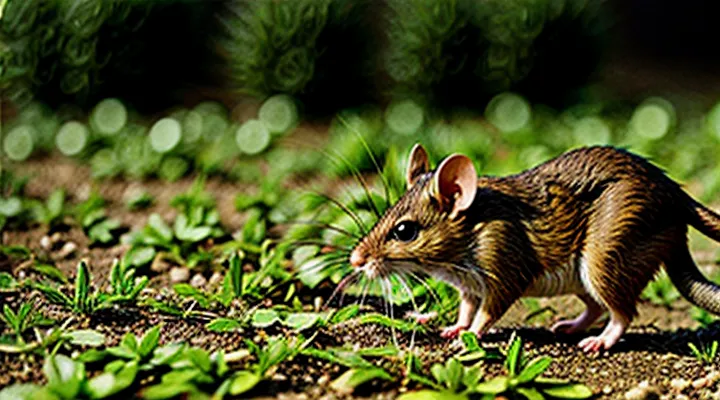
Understanding Field Mice in Garden Plots
Identification and Characteristics of Field Mice
Common Species in Garden Environments
Field mice that forage in cultivated garden beds depend on a predictable suite of plant and invertebrate resources. Their survival and reproductive output are closely linked to the availability of these organisms throughout the growing season.
- Annual grasses (e.g., Avena sativa, Lolium perenne) provide tender shoots and seed heads.
- Leguminous forbs such as white clover (Trifolium repens) and red clover (T. pratense) supply protein‑rich leaves and seed pods.
- Broadleaf weeds, notably dandelion (Taraxacum officinale) and chickweed (Stellaria media), offer soft foliage and early‑season buds.
- Brassicaceae crops (e.g., lettuce, kale, mustard greens) contribute young leaves that are readily consumed.
- Root vegetables (carrot, radish, beet) present underground tissue once seedlings emerge.
- Seed‑bearing herbs (parsley, dill, fennel) release abundant small seeds during maturation.
Seasonal shifts modify resource composition. Early spring favors herbaceous seedlings and emerging insects; midsummer introduces plentiful seed heads; autumn supplies mature grains and fallen fruit. Invertebrates such as aphids, beetle larvae, and spider eggs supplement the diet, especially when plant material is scarce.
Garden management that encourages a diverse plant matrix—mixing grasses, legumes, and low‑growth herbs—enhances the food base for field mice. Maintaining marginal vegetation, allowing selective weed growth, and timing harvests to leave seed remnants all contribute to sustaining the foraging habitat without compromising crop yields.
Dietary Habits and Preferences of Field Mice
Field mice occupying garden plots rely chiefly on plant material, but their diet includes a measurable proportion of animal protein. Seasonal shifts dictate the relative importance of each component, with vegetative parts dominating in spring and early summer, while seeds and arthropods become more prevalent in late summer and autumn.
Primary plant sources consist of:
- Young shoots of grasses and legumes
- Tender leaves of herbaceous weeds such as chickweed and lamb’s quarters
- Seeds of cereals and wildflowers, especially millet, oat, and dandelion
- Fruit husks and fallen berries when available
Animal matter is obtained through opportunistic predation on insects, spiders, and their eggs. Consumption peaks during periods of rapid growth or reproduction, supplying essential amino acids and micronutrients absent from a purely herbivorous diet.
Nutrient balance influences foraging behavior. Mice prioritize high‑energy carbohydrates when they must replenish fat reserves, yet they select protein‑rich items to support gestation and lactation. Water intake is secured from dew, moist soil, and succulent plant tissues, reducing reliance on standing water sources.
Human‑altered environments affect availability. Supplemental feeding stations, compost heaps, and cultivated crops introduce novel food items, potentially altering natural preferences and competitive dynamics among rodent populations.
Impact of Field Mice on Garden Ecosystems
Damage to Plants and Crops
Root and Tuber Consumption
Field mice occupying cultivated garden plots frequently incorporate underground plant parts into their foraging repertoire. Roots and tubers provide a concentrated source of carbohydrates, water, and essential minerals that supplement the insects and seeds typically consumed. Seasonal availability of these structures influences intake rates; during early spring, when above‑ground resources are scarce, mice increase digging activity to access newly sprouted root systems.
Key root and tuber types exploited in garden environments include:
- Carrot (Daucus carota) taproots – high in soluble sugars and beta‑carotene.
- Beet (Beta vulgaris) bulbs – rich in sucrose and potassium.
- Turnip (Brassica rapa) roots – supply glucosinolates and calcium.
- Potato (Solanum tuberosum) tubers – deliver starch and vitamin C.
- Parsnip (Pastinaca sativa) roots – contain dietary fiber and folate.
Nutritional analysis shows that these underground organs contribute approximately 30–45 % of the total caloric intake for mice during periods of limited foliage. Digestive efficiency improves as gut microflora adapt to the high‑fiber content, enabling rapid conversion of complex carbohydrates into usable energy. Consequently, root and tuber consumption represents a critical adaptive strategy for sustaining population density within managed garden habitats.
Seed and Seedling Predation
Field mice inhabiting garden plots rely heavily on seeds and emerging seedlings as a primary protein‑rich component of their diet. Seeds provide high caloric density and essential fatty acids, while seedlings contribute moisture and additional nutrients that support rapid growth and reproductive cycles. Consumption patterns shift with seasonal seed availability; during early spring, mice target germinating grains, whereas late summer sees increased predation on mature seed heads of legumes and cereal crops.
Typical seed and seedling items exploited by these rodents include:
- Wheat and barley kernels that have fallen to the soil surface
- Sunflower and pumpkin seeds exposed after pod dehiscence
- Pea and bean seedlings emerging from shallow sowing rows
- Wildflower and clover seedlings that colonize garden margins
Predation pressure influences plant establishment rates. Studies measuring seed removal demonstrate that up to 40 % of sown seed banks are consumed within the first fortnight of emergence. Seedling loss peaks when vegetation cover is sparse, suggesting that dense ground cover can mitigate damage. Management strategies such as timed sowing, use of protective mesh, and habitat diversification aim to balance mouse nutritional needs with crop productivity.
Indirect Effects on Garden Health
Soil Aeration and Disturbance
Soil aeration directly influences the availability of seeds, insects, and fungal spores that constitute the primary food sources for field mice inhabiting garden beds. Increased pore space facilitates seed germination, resulting in a higher density of grass and herbaceous seedlings. These seedlings provide both grain and foliage that voles readily consume. Simultaneously, well‑aerated soils support larger populations of soil‑dwelling arthropods, such as springtails and beetle larvae, which supplement the rodents’ diet with protein‑rich prey.
Disturbance events—tillage, digging, or organic amendment incorporation—alter the vertical distribution of organic matter and modify the microhabitat structure. Immediate effects include the exposure of buried seeds and the release of dormant invertebrates, creating short‑term foraging opportunities. Over longer periods, repeated disturbance can reduce the depth of the litter layer, limiting shelter and decreasing the abundance of detritivores that serve as secondary food items.
Key outcomes of soil management practices on rodent nutrition can be summarized as follows:
- Enhanced aeration → greater seed production → increased carbohydrate intake.
- Disturbance‑induced seed exposure → rapid access to high‑energy resources.
- Aerated soils → elevated arthropod populations → higher protein consumption.
- Excessive disturbance → loss of litter → reduced availability of detritivore prey.
Effective garden management balances aeration and disturbance to sustain a diverse food base, ensuring that field mice maintain adequate nutritional intake throughout the growing season.
Disease Transmission Risks
Field mice foraging in cultivated garden beds regularly encounter bacteria, viruses, and parasites present in soil, seedlings, and waste material. Their feeding activity introduces pathogens into the plant environment and creates opportunities for cross‑species transmission.
- Direct contact with infected conspecifics while sharing food sources.
- Deposition of feces and urine on vegetation, leading to surface contamination.
- Attachment of ectoparasites (ticks, fleas) that move between rodents and other animals.
- Persistence of microbial spores or cysts in moist soil, remaining viable for weeks.
Pathogen presence in the garden matrix can affect crop health, reduce yields, and increase the risk of zoonotic infection for garden workers and nearby residents. Surveillance of rodent populations and microbial load provides early warning of emerging threats.
Effective mitigation includes: regular removal of plant debris, sealing of compost containers, installation of physical barriers to limit rodent entry, promotion of natural predators, and periodic testing of soil and foliage for indicator organisms.
Strategies for Managing Field Mouse Populations
Non-Lethal Control Methods
Habitat Modification and Exclusion Techniques
Field mice that forage in cultivated garden areas consume a wide range of seeds, seedlings, and tender foliage. Their dietary choices are strongly influenced by the physical characteristics of the plot and the presence of barriers that limit access to preferred food sources.
Effective habitat modification includes:
- Reducing dense ground cover that shelters mice and encourages foraging.
- Removing weed species that produce high‑energy seeds attractive to rodents.
- Installing raised beds or mulches that create a dry, less hospitable surface.
- Enhancing habitats for natural predators by adding perches, rock piles, or nesting boxes.
- Adjusting irrigation schedules to keep soil moisture levels unfavorable for mouse activity.
Exclusion techniques that directly limit consumption are:
- Installing fine‑mesh fencing or hardware cloth around plot perimeters, buried at least 12 cm to prevent burrowing.
- Using plant‑based repellents (e.g., peppermint oil, crushed garlic) applied to seed beds and vegetable rows.
- Deploying motion‑activated sprinklers that deliver brief water bursts when rodents approach.
- Positioning snap or live‑capture traps along established runways, checked daily to maintain efficacy.
- Applying a layer of coarse sand or gravel around vulnerable seedlings, creating a physical obstacle to gnawing.
Combining structural changes with targeted exclusion measures reduces the availability of preferred food items, thereby altering the foraging behavior and overall diet composition of field mice within garden plots.
Natural Repellents and Deterrents
Field mice frequently exploit garden beds, consuming seeds, seedlings, and tender foliage. Managing this pressure without synthetic chemicals requires substances that deter foraging while preserving plant health.
Common natural deterrents include:
- Essential‑oil sprays (e.g., peppermint, clove, citronella). Volatile compounds irritate the rodents’ olfactory receptors, prompting avoidance of treated areas.
- Predator‑derived cues (e.g., powdered fox urine, ferret scent). Presence of mammalian predator markers triggers innate fear responses, reducing entry into plots.
- Physical barriers (e.g., fine mesh, copper tape). Direct contact with uncomfortable surfaces discourages movement across the garden perimeter.
- Plant‑based repellents (e.g., marigold, garlic, nasturtium). Secondary metabolites released by these species act as feeding deterrents when interplanted with vulnerable crops.
Effectiveness varies with concentration, application frequency, and environmental conditions. Studies indicate that peppermint oil at 5 % v/v applied weekly reduces mouse activity by up to 70 % in temperate garden settings. Predator scent products maintain efficacy for 48 hours before volatilization diminishes potency. Physical barriers provide continuous protection but require regular inspection for breaches.
Implementation guidelines:
- Apply essential‑oil solutions to foliage and soil surface in early morning to maximize absorption.
- Disperse predator scent granules along plot edges, replenishing after rain or irrigation.
- Install mesh or copper strips at the base of raised beds, ensuring overlap of at least 5 cm.
- Plant deterrent species in alternating rows, maintaining a minimum spacing of 30 cm to prevent competition with primary crops.
Integrating multiple deterrent strategies creates a synergistic effect, limiting mouse access and preserving the intended plant consumption pattern within garden beds. Continuous monitoring and adjustment of application schedules sustain long‑term protection.
Integrated Pest Management Approaches
Monitoring and Early Detection
Effective surveillance of the feeding patterns of voles inhabiting cultivated garden beds requires systematic observation and rapid identification of dietary shifts. Continuous data collection can be achieved through a combination of direct and indirect methods, each providing quantitative insight into resource utilization.
- Motion‑activated cameras positioned near seed trays record foraging frequency and duration.
- Seed‑mass balances, measured before and after exposure periods, quantify consumption rates.
- Fecal DNA analysis identifies plant species ingested, revealing preferences that may not be visible in field observations.
- Environmental sensors monitor moisture and temperature, variables that influence plant availability and, consequently, mouse diet.
Early detection of abnormal consumption trends—such as sudden increases in herbaceous seed intake or the emergence of novel plant species in the diet—triggers timely management interventions. Prompt response options include adjusting planting schedules, deploying physical barriers, or introducing alternative food sources to deter crop damage. Consistent application of these monitoring tools ensures that dietary changes are recognized before they translate into significant agricultural loss.
Biological Control Agents
Field mice in cultivated garden areas consume a range of plant materials, seeds, and invertebrates. Biological control agents—predatory insects, parasitic nematodes, and microbial pathogens—interact directly with these foragers, influencing both the composition and quantity of their intake.
Predatory insects such as ground beetles (Carabidae) and rove beetles (Staphylinidae) hunt mice opportunistically, reducing the time mice spend foraging and limiting their access to seeds. Parasitic nematodes, including Steinernema spp., infect mice after ingestion of contaminated soil, causing physiological stress that curtails consumption of high‑energy plant matter. Microbial agents, notably Bacillus thuringiensis formulations, target arthropod prey within mouse diets, indirectly decreasing the nutritional value of the food base.
Key effects of these agents include:
- Immediate reduction in foraging activity due to predator presence.
- Lowered seed predation rates as mice avoid exposed ground.
- Altered gut microbiota from nematode infection, affecting digestion efficiency.
- Diminished availability of insect prey, leading to a shift toward higher‑fiber plant material.
Implementing biological control strategies in garden plots thus modifies mouse feeding behavior, reduces crop damage, and supports sustainable pest management without reliance on chemical interventions.