
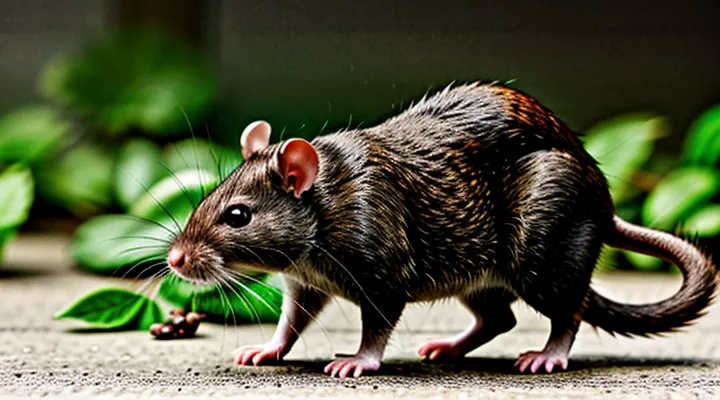
Understanding Rat Droppings
Why Identify Rat Droppings?
Health Risks Associated with Rodents
Rats leave fecal deposits that contain pathogens capable of causing serious illness in humans and domestic animals. Direct contact with droppings, inhalation of dried particles, or ingestion of contaminated food and water are the primary exposure routes. The high moisture content of fresh droppings supports bacterial growth, while the desiccated residue can become airborne, increasing the risk of respiratory infection.
Key health hazards linked to rodent excreta include:
- Leptospirosis – bacterial infection transmitted through skin abrasions or mucous membranes when handling wet droppings.
- Hantavirus Pulmonary Syndrome – virus released from dried feces and urine, inhaled as aerosolized dust.
- Salmonellosis – gastrointestinal illness caused by Salmonella bacteria present in contaminated droppings.
- Rat‑bite fever (Spirillum minus infection) – bacterial disease following bites or exposure to infected secretions.
- Lymphocytic choriomeningitis – viral infection acquired by inhaling aerosolized particles from droppings.
Preventive measures focus on eliminating rodent infestations, sealing food storage, and employing proper protective equipment when cleaning areas with visible rat feces. Disinfection with EPA‑registered agents effectively reduces microbial load on surfaces. Regular monitoring for signs of infestation and prompt removal of droppings limit the probability of disease transmission.
Property Damage Caused by Rats
Rat droppings provide a reliable indicator of active infestation and the associated risk to structures, wiring, and stored goods. Their size, shape, and distribution reveal the extent of rodent movement, allowing rapid assessment of damage zones.
Common forms of property damage caused by rats include:
- Gnawed wood, insulation, and plastic components that weaken walls, floors, and roofs.
- Chewed electrical cables, leading to short circuits, fire hazards, and equipment failure.
- Contamination of food supplies, surfaces, and HVAC filters with feces and urine, resulting in spoilage and health‑code violations.
- Accumulation of droppings in hidden cavities, fostering mold growth and corrosion of metal fixtures.
Inspection of droppings—identifying glossy, dark pellets ¼ to ½ inch long, often found near gnaw marks—pinpoints entry points and travel routes. Correlating droppings with visible damage streamlines repair planning and reduces unnecessary demolition.
Prompt removal of infested materials, sealing of entry holes, and installation of bait stations mitigate further deterioration. Professional decontamination eliminates fecal residues, preventing secondary damage such as corrosion and microbial growth.
Key Characteristics of Rat Droppings
Size and Shape
Comparison with Mouse Droppings
Rat droppings are typically ½ to ¾ inch long, ¼ inch wide, and have blunt, rounded ends. The exterior is smooth, dark brown to black, and the interior may appear lighter when fresh. Photographs often show a uniform, cylindrical shape with a slight sheen due to moisture content.
Mouse droppings differ in size and form. They are generally ¼ to ⅓ inch long, ⅛ inch wide, and possess pointed, tapered ends. The color ranges from dark brown to gray, and the surface is less glossy than rat feces.
Key comparative points:
- Length: Rat – 12–19 mm; Mouse – 6–9 mm.
- Width: Rat – 6–7 mm; Mouse – 3–4 mm.
- Shape: Rat – blunt, cylindrical; Mouse – tapered, slightly curved.
- Color: Rat – dark brown to black; Mouse – dark brown to gray.
- Surface texture: Rat – smooth, moist sheen; Mouse – matte, drier appearance.
These distinctions aid identification in pest assessments and sanitation inspections. Accurate visual documentation, combined with measured dimensions, enhances reliability when differentiating between the two rodent species.
Variation by Rat Species
Rat droppings differ markedly among species, allowing reliable identification in forensic, pest‑control, and public‑health investigations. Size, shape, coloration, and content of the feces reflect the animal’s diet, metabolism, and habitat preferences.
- Norway rat (Rattus norvegicus) – Length 10‑20 mm, diameter 4‑6 mm; dark brown to black, firm, cylindrical with blunt ends; often contains visible grain fragments or hair.
- Roof rat (Rattus rattus) – Length 7‑12 mm, diameter 3‑4 mm; lighter brown, softer, tapered ends; may include fruit skins, insects, or plant material.
- Polynesian rat (Rattus exulans) – Length 5‑9 mm, diameter 2‑3 mm; pale brown, delicate, pointed ends; typically lacks large debris, reflecting a diet of seeds and insects.
- Black rat (Rattus rattus, urban variant) – Similar dimensions to roof rat but darker coloration, occasional black specks from charcoal or soot exposure.
These morphological traits correlate with ecological niches: larger, darker feces indicate a grain‑rich urban diet, while smaller, lighter pellets suggest foraging in natural or island environments. Accurate visual assessment, supplemented by photographic reference, enables species‑level differentiation without laboratory analysis.
Color and Texture
Factors Affecting Dropping Appearance
Rat droppings vary widely in size, shape, color, and texture. Observers rely on these visual cues to infer the presence of rodents and assess potential health risks. Understanding the variables that modify droplet appearance improves identification accuracy and guides appropriate control measures.
Key factors influencing the observable characteristics of rat feces include:
- Diet composition – High‑protein or grain‑rich diets produce darker, firmer pellets; fatty or sugary foods yield lighter, softer casts.
- Hydration level – Adequate water intake results in moist, pliable droppings, while dehydration leads to dry, crumbly specimens.
- Health condition – Gastrointestinal infections, parasites, or metabolic disorders can cause abnormal coloration (e.g., blood‑tinged or pale) and irregular shape.
- Age of the animal – Juvenile rats excrete smaller, more uniform pellets; adults produce larger, sometimes irregularly tapered forms.
- Stress and hormonal changes – Elevated stress hormones may alter gut motility, affecting consistency and size.
- Environmental substrate – Contact with soil, wood shavings, or concrete can stain droppings, masking their original hue.
- Time since deposition – Exposure to air, sunlight, and moisture leads to desiccation, darkening, or mold growth, modifying visual traits.
- Storage conditions – Refrigeration preserves color and texture; prolonged ambient storage accelerates degradation.
Each factor interacts with others, creating a spectrum of possible appearances. Accurate interpretation demands consideration of the full context in which droppings are found.
Fresh vs. Old Droppings
Rat feces provide immediate clues about a colony’s activity level and health status. Fresh deposits differ markedly from those that have aged, and recognizing these distinctions is essential for accurate assessment.
Fresh droppings appear glossy, retain a soft, moist texture, and display a uniform dark brown to black coloration. The edges are smooth, and the surface may exhibit a faint sheen when illuminated. Odor is sharp, often described as a pungent, ammonia‑like scent, which dissipates quickly as the material desiccates.
Old droppings lose moisture, becoming dry, brittle, and crumbly. Color shifts toward a lighter, tan or gray hue, and the surface develops a matte finish. Edges may show slight fraying or cracking. The odor weakens considerably, sometimes becoming barely perceptible after several days.
Key comparison points:
- Moisture content: high in fresh, minimal in aged
- Texture: soft and pliable versus dry and crumbly
- Color: dark, uniform versus lighter, uneven tones
- Surface appearance: glossy, smooth versus matte, possibly cracked
- Odor intensity: strong, pungent versus faint or absent
Photographic documentation should capture these attributes under consistent lighting to aid identification. When evaluating a site, note the proportion of fresh to old droppings; a predominance of fresh material suggests recent activity, whereas a surplus of aged feces indicates a declining or dormant population.
Location and Distribution Patterns
Common Hiding Spots
Rat droppings typically accumulate where rodents seek shelter, food, or unobstructed travel routes. Identifying these locations aids inspection and control efforts.
Common hiding spots include:
- Attic insulation and rafters
- Wall cavities and floor joist spaces
- Crawl spaces beneath foundations
- Behind or beneath kitchen appliances such as refrigerators and stoves
- Under sinks and around plumbing fixtures
- Basement corners and storage shelves
- Ceiling tiles and dropped ceilings
- Inside cardboard boxes, paper piles, and other stored materials
- Garages and tool sheds, especially near cluttered corners
In these areas, droppings appear as small, dark, cylindrical pellets, often ¼ to ½ inch in length. Accumulation patterns reveal activity levels: dense clusters indicate regular passage, while scattered deposits suggest occasional foraging. Recognizing both the physical characteristics of the feces and their typical concealment sites enables accurate detection and timely remediation.
Evidence of Rat Activity
Rat droppings serve as direct proof of rodent presence. Their size, shape, and composition reveal species, diet, and health status. Typical rat feces measure ¼ to ½ inch in length, are cylindrical, and possess a pointed tip. Dark brown to black coloration indicates fresh deposits, while lighter hues suggest aging or exposure to moisture.
Key diagnostic features include:
- Length: 6–12 mm for common Norway rats, up to 20 mm for larger species.
- Cross‑section: Uniformly round, lacking the flattened edges seen in mouse droppings.
- Surface texture: Smooth, glossy when moist; becomes brittle and crumbly as it dries.
- Content: Visible seed fragments, insect exoskeletons, or food residue can identify feeding habits.
Photographic documentation captures these attributes. Close‑up images reveal the tapered ends and consistent diameter, while macro shots display the internal grain pattern. Comparative photo series, taken at intervals of 24‑48 hours, illustrate degradation rates and moisture effects, assisting investigators in estimating the time frame of activity.
When droppings appear in clusters, they indicate nesting or feeding zones. Concentrations along walls, behind appliances, or in concealed spaces correlate with established travel routes. The presence of urine stains, gnaw marks, or shredded material alongside feces strengthens the inference of active infestation.
By assessing size metrics, coloration, arrangement, and accompanying signs, professionals can confirm rat activity, prioritize remediation, and monitor the effectiveness of control measures.
Visual Guide to Rat Droppings
Photos of Common Rat Species Droppings
Norway Rat Droppings
Norway rat (Rattus norvegicus) droppings are typically 0.5–0.75 inches (12–19 mm) long, 0.2–0.3 inches (5–8 mm) wide, and have a pointed tip. The excrement is dark brown to black, glossy when fresh, and becomes matte as it dries. Individual pellets are smooth, cylindrical, and may be found in clusters of 5–20, often with a slight white crust of urine surrounding the mass.
Key visual identifiers:
- Length: 12–19 mm, rarely exceeding 20 mm.
- Width: 5–8 mm, proportionally slender.
- Shape: tapered ends, cylindrical body.
- Color: deep brown to jet black when moist; fades to grayish‑brown after exposure.
- Surface: glossy when newly deposited, dull after desiccation.
- Arrangement: loose piles, often near food sources, burrow entrances, or along walls.
Photographic documentation should capture the droppings against a neutral background to reveal texture and color contrast. Close‑up images at 10–15 cm distance provide sufficient detail for species verification. Include a scale reference (e.g., a ruler) in each frame to convey size accurately.
Norway rat feces may contain fragments of food, hair, and occasional blood spots, indicating recent feeding. Presence of such droppings in residential or commercial settings signals active infestation, warrants sanitation measures, and may pose a health risk due to hantavirus, leptospirosis, and bacterial contamination. Proper protective gloves and masks are recommended when handling specimens.
Roof Rat Droppings
Roof rats (Rattus rattus) produce droppings that differ noticeably from those of Norway rats and house mice. Recognizing these differences aids in accurate pest assessment and targeted control measures.
Typical dimensions range from 0.25 to 0.35 inches (6–9 mm) in length and 0.10 to 0.15 inches (2.5–4 mm) in width. The shape is elongated, cylindrical, and tapered at both ends, resembling tiny rice grains. Fresh droppings appear dark brown to black; as they age, they dry to a lighter tan or gray hue. The surface is smooth, lacking the coarse granules found in larger rodent feces.
Key identification features:
- Length: 6–9 mm, narrower than Norway rat pellets.
- Color progression: dark → light tan as moisture evaporates.
- Shape: slender, tapered, rice‑grain appearance.
- Texture: smooth, non‑crystalline.
- Location: commonly found in elevated areas such as attic insulation, ceiling joists, roof rafters, and upper wall cavities.
Presence of roof rat droppings indicates active infestation in upper structural spaces. Droppings may contain pathogens (e.g., hantavirus, leptospira) and can trigger allergic reactions or asthma exacerbations. Proper protective equipment—gloves, N‑95 mask, disposable coveralls—should be worn when handling or sampling specimens.
For documentation, capture high‑resolution photographs that include a scale reference (ruler or coin). Ensure lighting highlights the droppings’ color and texture, and photograph from multiple angles to show the tapered form.
In summary, roof rat feces are small, smooth, tapered pellets that transition from dark brown to light tan, typically located in attic and roof structures. Accurate visual identification supports effective pest management and health risk mitigation.
Distinguishing Droppings from Other Pests
Insect Frass
Insect frass, the excrement of arthropods, often appears alongside mammalian droppings in indoor and outdoor investigations. Unlike rodent feces, which are cylindrical, dark brown, and typically 6–12 mm in length, frass consists of fine, granular particles that vary in color from light tan to dark brown depending on the species and diet. The texture of frass is dry and powdery, allowing it to disperse easily through air currents and settle on surfaces such as walls, ceilings, and stored goods.
Key identification points for insect frass include:
- Shape: irregular, fragmented pieces rather than uniform rods.
- Size: individual particles range from 0.2 mm to 2 mm, often forming clusters.
- Color: reflects the insect’s food source; wood‑boring insects produce reddish‑brown frass, while stored‑product pests generate pale, flour‑like material.
- Distribution: commonly found near entry points, cracks, or within infested materials, whereas rat droppings cluster near gnawing sites and pathways.
Chemical composition distinguishes the two waste types. Frass contains high concentrations of chitin, protein, and enzyme residues, which can be detected by microscopic analysis. Rat feces are rich in undigested plant fibers, uric acid crystals, and occasional parasite eggs. These compositional differences affect odor: frass produces a subtle, sometimes sweet smell from residual plant oils, while rat droppings emit a sharp, ammonia‑like odor due to nitrogenous waste.
Photographic documentation aids in differentiation. Close‑up images of frass reveal angular edges and a matte surface, while images of rat feces show smooth, glossy exteriors with a consistent cylindrical profile. Accurate visual comparison, combined with the outlined physical and chemical traits, enables reliable discrimination between insect excrement and rodent fecal material in pest‑assessment reports.
Bat Guano
Bat guano represents a distinct form of mammalian excrement that often appears in surveys of small‑animal waste. Its presence can be confused with rodent droppings, yet several visual and chemical traits separate it clearly.
The pellets are typically cylindrical to slightly conical, ranging from 5 to 12 mm in length and 2 to 4 mm in diameter. Fresh guano exhibits a dark brown to black hue, soft and moist texture; as it ages, the material dries, turning grayish‑black and brittle. Surface texture may show fine fibers or specks of insect remnants, reflecting the bat’s diet.
Chemical analysis reveals high concentrations of nitrogen (up to 10 % by weight), phosphorus (1–2 %), and potassium (0.5–1 %). Additional components include calcium carbonate, organic acids, and traces of ammonia. These values exceed those typical for rat feces, making guano a valuable fertilizer and a diagnostic indicator of bat colonies.
Photographic identification relies on contrast and scale. Effective images capture:
- Clear background that differentiates dark pellets from surrounding debris.
- Macro focus that resolves individual pellet length and surface granularity.
- Lighting that avoids glare on the glossy exterior of fresh guano.
Typical accumulation sites include cave ceilings, attics, and under roosting ledges. Large deposits may emit a strong, musky odor and pose health risks such as histoplasmosis, underscoring the need for protective equipment during collection.
Key identification points:
- Size: 5–12 mm long, 2–4 mm wide.
- Shape: cylindrical, sometimes tapered.
- Color: fresh – dark brown/black; aged – gray‑black, brittle.
- Texture: moist and soft when fresh, dry and crumbly when old.
- Composition: elevated nitrogen, phosphorus, potassium, calcium carbonate.
- Habitat: caves, attics, roosting structures.
Understanding these characteristics enables accurate differentiation of bat guano from other small‑mammal droppings in visual surveys and laboratory analyses.
Practical Implications of Dropping Identification
Assessing the Severity of Infestation
Estimating Rat Population Size
Estimating the size of a rat population can be achieved through systematic analysis of fecal evidence. Droppings serve as a quantifiable proxy because their frequency, distribution, and morphology correlate with animal activity levels.
Key parameters derived from fecal samples include:
- Count of droppings per square meter of surveyed surface.
- Average length and width measured from calibrated photographs.
- Moisture content indicating recent deposition.
The estimation process follows a defined sequence:
- Define the study area and divide it into uniform sampling units.
- Collect all visible droppings within each unit, avoiding disturbance of surrounding material.
- Capture high‑resolution images of each sample alongside a scale reference.
- Measure dimensions using image‑analysis software; record counts and physical metrics.
- Apply established conversion ratios that translate droppings density to individual rat numbers, adjusting for species‑specific excretion rates and environmental decay factors.
Conversion ratios are obtained from controlled laboratory studies that relate average daily fecal output to body weight and activity patterns. Corrections for weather‑induced degradation, scavenger removal, and substrate absorption are essential to avoid systematic underestimation.
Reliability improves when surveys are repeated across different times of day and seasons, ensuring that temporal fluctuations in activity are captured. Combining fecal analysis with complementary methods—such as live trapping data or infrared motion detection—provides a more robust population estimate.
Identifying Active Infestation Zones
Rat droppings provide the most immediate visual cue of an active infestation. Fresh, glossy pellets measuring ½ to ¾ inch in length, with a slightly curved shape, indicate recent activity. Darker coloration and a moist surface distinguish them from older, dried specimens that appear pale and brittle. Photographic comparison of droppings against known reference images helps confirm their age and species.
Location patterns reveal the core of infestation zones. Concentrations of fresh droppings along walls, behind appliances, in attic insulation, or near food storage areas mark high‑traffic pathways. A cluster of pellets within a 1‑foot radius suggests a nesting site nearby, while linear trails extending from a central point indicate foraging routes.
Key indicators for pinpointing active zones include:
- Moisture level: Droppings that retain moisture after removal are recent.
- Odor intensity: A strong, ammonia‑like smell accompanies fresh deposits.
- Quantity: More than five pellets in a confined area signal continuous use.
- Associated signs: Chewed wiring, gnaw marks, and urine stains reinforce the presence of active rodents.
By systematically documenting droppings with photographs, noting their physical attributes, and mapping their distribution, inspectors can delineate the precise boundaries of an active rat problem and prioritize control measures accordingly.
Guiding Pest Control Strategies
Targeted Baiting Locations
Effective control of rodent populations depends on locating bait where rats are most active. Observation of droppings provides reliable indicators of movement patterns, feeding sites, and nesting areas. By correlating droppings size, moisture, and distribution with environmental features, pest managers can prioritize placement of toxic or non‑toxic bait.
Key locations for targeted bait deployment include:
- Food storage zones: Pantries, grain bins, and feed troughs where fresh droppings appear daily. Moist, dark pellets suggest recent activity and high feeding frequency.
- Waste accumulation points: Dumpster areas, compost piles, and sewer openings. Large, clustered droppings indicate congregation for scavenging.
- Concealed pathways: Wall voids, crawl spaces, and utility conduits. Scattered droppings on surfaces near entry points reveal transit routes.
- Nesting sites: Hidden corners, insulation layers, and under debris. Presence of dry, compact droppings with a characteristic cylindrical shape signals established colonies.
- Water sources: Sinks, leaky pipes, and drainage basins. Moist droppings near condensation points reveal hydration stations.
Placement strategy should align bait type with the identified function of each site. In food storage zones, fast‑acting anticoagulant baits placed on the floor or near feeders maximize ingestion. In waste areas, bait stations with protective covers reduce non‑target exposure while maintaining accessibility for foraging rats. For concealed pathways, small, tamper‑resistant baits positioned at the midpoint of the route ensure passage through the baited segment.
Monitoring after deployment involves re‑examining droppings for changes in quantity and condition. A decline in fresh droppings, coupled with increased signs of bait consumption, confirms effective targeting. Continuous adjustment of bait locations based on droppings feedback sustains control efforts and prevents re‑infestation.
Effective Trapping Placements
Understanding where rats deposit feces provides reliable clues for trap placement. Fresh, dark, cylindrical droppings indicate active pathways; clusters near walls suggest travel routes; accumulation behind appliances marks concealed routes. Position traps where these signs converge to maximize encounter rates.
- Along baseboards directly behind observed droppings clusters.
- Adjacent to entry points such as vent openings, pipe penetrations, and door gaps.
- Within 12–18 inches of walls at the height of droppings deposits.
- Near food storage areas where droppings are found on countertops or shelving.
- Inside concealed spaces identified by droppings behind appliances, under cabinets, or in crawl spaces.
Selecting these locations aligns trap deployment with rat movement patterns revealed by fecal evidence, increasing capture efficiency while minimizing unnecessary placements.