
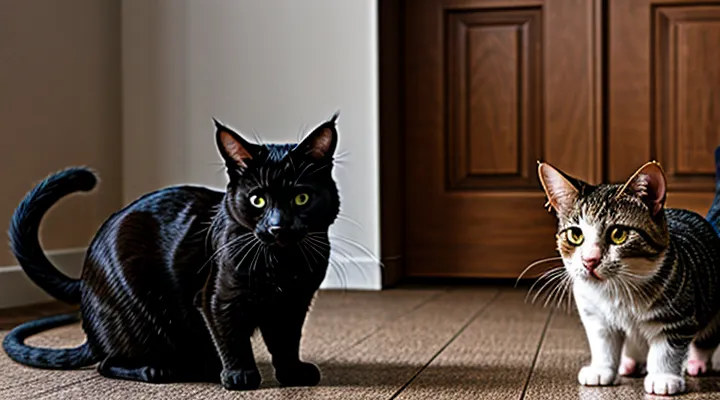
Understanding the Opponents
The Feline Predator: Cat's Strengths
Cats possess a skeletal structure optimized for rapid acceleration and sudden changes in direction. The lumbar vertebrae form a highly flexible spine, enabling the characteristic “spring‑like” motion that propels the animal forward with minimal effort.
Key physical attributes include:
- Muscular hind limbs delivering powerful leaps up to six times body length.
- Retractable claws providing precise grip and the ability to inflict puncture wounds.
- Retina rich in rod cells, granting superior vision in low‑light environments.
- Auditory range extending beyond human perception, detecting ultrasonic squeaks produced by prey.
- Whisker array functioning as tactile sensors, mapping spatial constraints in tight spaces.
Neurological factors reinforce these traits. A well‑developed brainstem coordinates reflexive hunting responses, while the amygdala triggers heightened focus when potential prey is detected. Together, these strengths make the feline predator exceptionally equipped to subdue smaller rodents.
The Rodent Survivor: Rat's Strengths
Rats possess a suite of adaptations that enable survival against predatory felines. Their compact skeletal structure supports rapid, agile movement through tight spaces inaccessible to larger hunters. Muscular coordination allows swift bursts of speed, while a flexible spine facilitates sudden changes in direction, reducing the likelihood of capture.
Key strengths include:
- Acute whisker receptors that detect airflow changes, providing early warning of approaching threats.
- Highly developed sense of smell, capable of identifying predator scent trails from considerable distances.
- Strong dentition and gnawing ability, allowing escape through chewing weakened materials such as wood or plastic.
- Social intelligence manifested in cooperative foraging and alarm signaling, which enhances collective evasion tactics.
Physiological resilience further contributes to endurance. Efficient metabolism supports sustained activity, and a rapid heart rate aids quick recovery after stress. Additionally, a robust immune system mitigates infections that might otherwise impair performance during prolonged confrontations.
Collectively, these traits furnish the rodent with a competitive edge in environments shared with carnivorous mammals, ensuring persistence despite constant predation pressure.
Physical Prowess and Adaptations
Size and Agility
The comparison of a domestic feline and a common rodent hinges on two measurable factors: body dimensions and movement proficiency.
Cats typically weigh between 3 and 5 kilograms, with a shoulder height of roughly 23 centimetres and a body length of 45 centimetres excluding the tail. Their skeletal structure supports powerful musculature, enabling rapid acceleration and high‑jump capability. Rats average 0.2 to 0.5 kilograms, measure about 20 centimetres in body length, and stand 10 centimetres tall at the shoulder. Their lightweight frame reduces inertia, allowing swift changes in direction.
Key aspects of agility differ markedly:
- Cats possess retractable claws and a flexible spine, delivering bursts of speed up to 48 km/h and vertical leaps exceeding 150 centimetres.
- Rats exhibit exceptional grip strength relative to size, navigating narrow passages and maintaining balance on precarious surfaces. Their top speed reaches 13 km/h, but acceleration and maneuverability surpass larger predators in confined environments.
These physical attributes define the functional outcome of the encounter. Larger mass grants the feline greater force potential, while the rodent’s compact size and rapid reflexes provide an advantage in tight spaces. The interplay of size and agility determines which animal can dominate a given scenario. «Size provides leverage», yet «agility enhances reach».
Bite Force and Claws
Cats possess a bite force measured at approximately 30–50 psi, sufficient to fracture small bones and puncture tough hide. Rats generate a bite force around 15–20 psi, adequate for gnawing wood and seeds but insufficient to break larger vertebrate tissue.
Claw structure differs markedly.
- Cats: retractable, keratinized claws with a curvature of 45–60°, sharpened by regular shedding; each claw exerts pressure up to 200 psi when driven into prey.
- Rats: continuously growing, unguided claws with a flatter profile, delivering pressure near 30 psi; primarily used for digging and limited grasping.
The combination of higher bite pressure and razor‑sharp, high‑pressure claws gives felines a decisive mechanical advantage in direct confrontations. Rats rely on agility and incisors rather than raw force.
Sensory Capabilities: Sight, Smell, Hearing
Cats and rats rely on distinct sensory systems when confronting each other. The balance of visual acuity, olfactory detection, and auditory range influences which animal gains an advantage in a direct encounter.
Sight differs markedly. Cats possess a high density of rod cells, enabling excellent low‑light vision and motion detection at distances up to 30 meters. Their vertical slit pupils adjust rapidly to changing illumination, preserving depth perception during nocturnal hunts. Rats, by contrast, have a broader field of view but limited acuity; they detect motion primarily within 1–2 meters and rely on whisker‑mediated spatial awareness rather than detailed image resolution.
Smell provides another axis of competition. Felines exhibit a well‑developed vomeronasal organ and a scent‑processing region comprising roughly 200 million olfactory receptors, allowing detection of prey odorants at concentrations as low as 10⁻⁹ M. Rats possess an even larger olfactory epithelium, with up to 1 billion receptors, granting sensitivity to a wider spectrum of chemical cues, including pheromones that signal danger.
Hearing presents the final comparative factor. Cats detect frequencies from 48 Hz to 85 kHz, with peak sensitivity around 4 kHz, facilitating localization of high‑pitched rodent squeaks. Rats hear from 250 Hz to 80 kHz, with optimal sensitivity near 2 kHz, and can perceive ultrasonic calls above 70 kHz used for social communication. Both species can triangulate sound sources, yet cats benefit from a broader low‑frequency range that captures rustling prey movements.
Key distinctions can be summarized:
- Visual range: cats ≈ 30 m, rats ≈ 2 m
- Olfactory receptors: cats ≈ 200 million, rats ≈ 1 billion
- Auditory bandwidth: cats 48 Hz–85 kHz, rats 250 Hz–80 kHz
These sensory profiles shape the outcome of confrontations, with cats leveraging superior night vision and low‑frequency hearing, while rats exploit heightened smell and ultrasonic communication.
Behavioral Aspects and Strategy
Hunting Techniques of Cats
Cats rely on acute auditory and visual perception to locate prey. Whiskers detect minute air movements, allowing detection of hidden rodents. Night vision enhances hunting during low‑light periods.
Key hunting phases include:
- Stalk: Slow, low‑profile movement minimizes noise; tail remains steady for balance.
- Ambush: Muscular hind limbs store elastic energy; body crouches ready for rapid extension.
- Pounce: Hind‑leg extension generates acceleration up to 6 m s⁻²; fore‑paws reach forward to seize target.
- Kill bite: Bite applied to the neck or spinal region induces rapid incapacitation; dentition designed for crushing.
Claw deployment follows a precise sequence. Retractable claws remain sheathed during approach, reducing drag. Upon contact, claws extend to grip and prevent escape. After capture, the cat may employ a suffocating hold, compressing the thorax against the ground.
Sensory integration guides timing. Auditory cues trigger head orientation; retinal ganglion cells process motion, prompting motor activation. This coordination results in a strike that can cover a distance of 1.5 m within 0.2 s.
Defensive Tactics of Rats
Rats rely on a suite of defensive behaviors that enable them to survive encounters with predators, including felines. Their tactics combine physiological adaptations, environmental manipulation, and social coordination.
- Rapid escape bursts generated by powerful hind‑leg muscles allow swift movement through narrow passages and cluttered terrain.
- Burrowing creates complex tunnel networks; entrances are concealed, and multiple exits reduce the chance of being trapped.
- Scent marking with urine and glandular secretions establishes territorial boundaries and signals danger to conspecifics.
- Vocal alarm calls, emitted as high‑frequency squeaks, alert nearby individuals and trigger collective flight responses.
- Cooperative vigilance involves individuals taking turns scanning for threats while others forage, decreasing overall exposure.
- Thickened skin on the tail and hind limbs provides partial protection against bites and scratches.
- Ability to gnaw through soft substrates enables rapid creation of escape routes under pressure.
These mechanisms collectively enhance rat survivability in predator‑prey dynamics, contributing to their reputation as resilient opponents in the feline‑rodent rivalry.
Intelligence and Problem-Solving Abilities
Cats possess acute sensory perception that supports rapid predatory responses. Vision, hearing, and whisker feedback combine to locate prey within fractions of a second. This sensory suite enables reflexive attacks but does not require extensive deliberation. Problem‑solving instances appear limited to simple obstacle negotiation, such as leaping onto a shelf to reach a moving target.
Rats exhibit advanced cognitive functions demonstrated in maze navigation, social learning, and tool use. Experiments reveal the ability to remember complex routes after multiple days, to adjust strategies when barriers shift, and to cooperate with conspecifics to obtain food. Their neocortical development supports flexible reasoning and adaptation to novel challenges.
Key comparative points:
- Sensory-driven action: cats rely on immediate detection; rats depend on learned spatial maps.
- Learning speed: rats acquire maze solutions after a few trials; cats show slower improvement in puzzle tasks.
- Innovation: rats manipulate objects to access hidden resources; cats rarely modify tools or environments.
- Social cognition: rats communicate problem‑solving techniques within groups; cats operate primarily as solitary hunters.
Overall, the rodent demonstrates higher problem‑solving capacity, whereas the feline excels in instinctual predation. This distinction influences the outcome of direct confrontations, with intelligence favoring adaptability and strategic planning.
«Rats demonstrate remarkable spatial memory», a finding repeatedly confirmed across laboratory studies. The evidence underscores the rodent’s advantage in tasks that require sustained cognitive effort.
Environmental Factors and Outcomes
Indoor Encounters
Indoor confrontations between domestic felines and house‑bound rodents present a distinct set of dynamics. Cats rely on agility, sharp claws, and powerful forelimb muscles to seize prey. Rats counter with robust musculature, strong incisors, and a flexible spine that permits rapid directional changes.
Key factors influencing the outcome:
- Speed of strike: feline forepaws can accelerate to 30 mph⁻¹, delivering a decisive blow before the rodent reacts.
- Bite force: rats generate up to 30 N of pressure, sufficient to inflict serious tissue damage on a cat’s paw if the encounter escalates.
- Endurance: rodents sustain prolonged activity without fatigue, whereas a cat’s burst of energy diminishes after a short interval.
- Environmental leverage: confined spaces limit a cat’s maneuverability, giving the rat opportunities to hide or retreat into narrow gaps.
Observations from controlled indoor studies indicate that cats typically secure the advantage in open rooms where sight lines are unobstructed. In cluttered environments, rats exploit debris and furniture to evade capture, occasionally turning the encounter into a prolonged chase that favors the rodent’s stamina.
Overall, the feline’s superior striking speed and lethal precision dominate most indoor scenarios, yet the rat’s resilience and adaptability can shift the balance when spatial constraints impede the cat’s attack. The interaction underscores a nuanced contest of strength, speed, and environmental exploitation.
Outdoor Challenges
The outdoor arena tests the physical capabilities of both felines and rodents, revealing distinct adaptations that influence performance under natural conditions.
Key challenges encountered in open environments include:
- Navigation of uneven terrain such as rocks, vegetation, and burrows;
- Exposure to temperature extremes, precipitation, and wind;
- Interaction with predators and competitors while seeking food;
- Access to limited water sources and shelter.
Felines rely on muscular power, retractable claws, and acute vision to traverse rugged ground and hunt efficiently. Their dense fur provides insulation against cold and a degree of protection from rain, while a flexible spine enables rapid acceleration and high jumps. However, solitary hunting habits limit collaborative defense against larger threats.
Rodents exhibit superior endurance in confined spaces, exploiting narrow passages and burrows to avoid exposure. Their lightweight bodies and sharp incisors facilitate quick foraging and escape through tight openings. Moisture retention mechanisms and rapid reproduction offset losses caused by harsh weather. Conversely, limited strength restricts ability to confront larger predators directly.
Comparative assessment indicates that felines excel in short‑burst power and visual detection, granting advantage in open pursuit scenarios. Rodents dominate in sustained mobility within complex microhabitats and demonstrate resilience to environmental stressors. The outcome of outdoor contests depends on terrain complexity, climatic conditions, and resource distribution.
Human Intervention
Human activity reshapes the power balance between domestic predators and their prey. Selective breeding produces cats with increased muscle mass and hunting instincts, while urban sanitation reduces rat shelter and food sources, diminishing rodent populations. Habitat modification, such as installing barriers or providing nesting boxes, directly influences encounter frequency and outcomes.
Key mechanisms of human influence include:
- Genetic enhancement of felines through targeted breeding programs.
- Deployment of rodent control devices that lower rat numbers and alter survival pressures.
- Urban planning that limits accessible alleys and sewers, restricting rat movement.
- Public education campaigns encouraging responsible pet ownership and humane pest management.
These interventions alter natural interactions, often amplifying feline dominance while suppressing rodent resilience. The resulting shift in competitive dynamics reflects deliberate manipulation rather than inherent biological superiority.
Historical Context and Folklore
Cats as Pest Control
Cats possess innate predatory instincts that target rodents, making them a natural component of pest‑control strategies. Studies indicate domestic cats capture an average of 2–4 rats per week when exposure is consistent, with some individuals exceeding ten captures in a single month.
Advantages of feline pest control include:
- Rapid response to rodent movement due to acute hearing and night vision.
- Elimination of chemical agents, reducing environmental contamination.
- Low operational cost compared with professional extermination services.
Limitations to consider:
- Hunting motivation varies by breed, age, and individual temperament.
- Indoor‑only cats lack opportunity to encounter rats, rendering them ineffective.
- Large or disease‑carrying rats may injure cats, posing health risks.
Effective implementation requires selecting cats with proven hunting records, providing regular veterinary care, and complementing feline activity with sanitation measures that limit rodent shelter and food sources. This integrated approach maximizes the predatory impact of cats while mitigating potential drawbacks.
Rats as Pests and Survivors
Rats occupy a dual position as agricultural nuisances and remarkably resilient organisms. Their status as pests stems from several biological and ecological characteristics.
- High reproductive rate: a single female can produce up to 12 litters per year, each containing 6‑12 offspring, leading to exponential population growth under favorable conditions.
- Omnivorous diet: ability to consume grains, fruits, meat, and waste enables survival in diverse habitats, from rural storehouses to urban sewers.
- Gnawing capability: continuously growing incisors allow rats to breach containers, electrical wiring, and structural components, causing material loss and fire hazards.
- Disease transmission: serve as reservoirs for pathogens such as Leptospira, hantavirus, and Salmonella, posing public‑health risks.
Survival advantages complement these pest traits.
- Social organization: hierarchical colonies coordinate foraging, nest building, and predator avoidance, enhancing collective efficiency.
- Cognitive flexibility: rapid learning of maze patterns, trap avoidance, and novel food sources reflects advanced problem‑solving abilities.
- Physiological adaptability: tolerance to low‑oxygen environments, high‑salt diets, and limited water intake supports persistence in extreme settings.
- Dispersal mechanisms: opportunistic hitchhiking on cargo, vehicles, and shipping containers facilitates rapid colonization of new territories.
These factors explain why rats remain pervasive despite extensive control efforts, and why their robustness challenges conventional pest‑management strategies.
Beyond the Physical: Other Considerations
Disease Transmission
Cats and rats differ markedly in their capacity to act as disease vectors. Comparative assessment focuses on transmission pathways, pathogen diversity, and public‑health impact.
Cats transmit pathogens primarily through direct contact, bites, scratches, and ectoparasites. Common agents include Bartonella henselae (cat‑scratch disease), Toxoplasma gondii (toxoplasmosis), and Pasteurella multocida (soft‑tissue infections). Feral and stray populations amplify exposure risk due to higher parasite loads and limited veterinary care.
Rats disseminate pathogens via fecal‑oral contamination, aerosolized urine, and ectoparasites such as fleas and mites. Notable agents comprise Leptospira interrogans (leptospirosis), Yersinia pestis (plague), Hantavirus (hantavirus pulmonary syndrome), and Salmonella spp. Urban environments increase contact frequency with humans and domestic animals.
Epidemiological data reveal that rat‑borne diseases affect larger populations through environmental contamination, whereas cat‑associated infections concentrate among individuals with close animal contact. Mortality rates for rat‑transmitted infections often exceed those of cat‑transmitted diseases, reflecting higher virulence of agents such as Y. pestis and hantaviruses.
Key pathogens by species:
-
Cats:
- «Bartonella henselae»
- «Toxoplasma gondii»
- «Pasteurella multocida»
-
Rats:
- «Leptospira interrogans»
- «Yersinia pestis»
- «Hantavirus»
- «Salmonella» spp.
Overall, rats exhibit broader pathogen spectra and greater environmental persistence, positioning them as a more potent source of zoonotic disease transmission compared with cats.
Psychological Impact
The psychological dimension of the feline‑rodent strength contest influences behavior, motivation, and performance in both species.
Cats experience heightened arousal when confronting a potential prey, triggering a cascade of neurochemical responses that sharpen focus and increase motor readiness. Elevated cortisol levels accompany prolonged anticipation, potentially leading to frustration if the encounter fails to result in capture. The situation also reinforces predatory confidence, reinforcing future pursuit patterns.
Rats display acute vigilance during exposure to a predator, characterized by increased heart rate and release of adrenaline. Persistent threat perception cultivates heightened anxiety, prompting the development of escape strategies and avoidance learning. Repeated exposure can produce habituation, diminishing fear responses and altering risk assessment thresholds.
Key psychological effects:
- «Predatory arousal» in cats enhances reaction speed but may generate stress‑induced fatigue.
- «Fear conditioning» in rats improves evasive tactics while raising baseline anxiety.
- Mutual awareness shapes territorial boundaries, influencing spatial usage within shared environments.
- Long‑term exposure modifies learning curves, affecting future interactions and survival strategies.
The Verdict: A Complex Relationship
The verdict reveals a relationship defined by asymmetry rather than simple dominance. Physical power favors the feline, yet the rodent compensates with adaptive behaviors that mitigate direct confrontation.
Key dimensions of the interaction:
- Muscular force: domestic and wild felids possess greater bite pressure and limb strength, enabling swift incapacitation of small prey.
- Agility and reflexes: cats exhibit superior acceleration and aerial maneuverability, allowing effective pursuit.
- Cognitive flexibility: rats demonstrate problem‑solving abilities, nest construction, and social cooperation, which reduce exposure to predation.
- Environmental variables: dense burrow systems and cluttered habitats provide rats with escape routes inaccessible to larger predators.
Consequently, the outcome cannot be reduced to a binary assessment of strength. The feline’s anatomical advantages are offset by the rodent’s strategic use of space and collective tactics, producing a dynamic equilibrium that shapes their coexistence. «The Verdict: A Complex Relationship» thus encapsulates the multifaceted nature of this interspecies contest.