
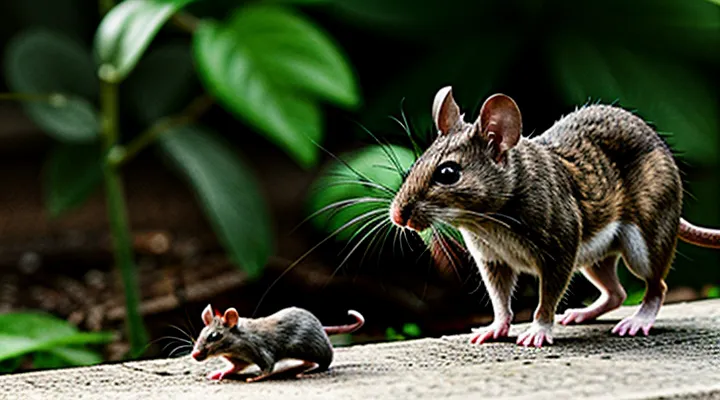
Understanding Mouse Anatomy and Physiology
The Musculoskeletal System of Mice
Powerful Hind Legs and Their Structure
Mice achieve vertical leaps through a combination of skeletal reinforcement and muscular specialization in the hind limbs. The pelvis expands laterally, supporting a broad sacroiliac joint that distributes force generated by the hindquarters. The femur is proportionally longer than in many other rodents, allowing a greater range of motion at the hip joint.
Key muscular groups include:
- Gluteus maximus and gluteus medius, which extend the hip and stabilize the pelvis.
- Quadriceps femoris, responsible for rapid knee extension.
- Gastrocnemius and soleus, forming the calf complex that drives ankle plantarflexion.
Tendons linking these muscles to the foot exhibit high elasticity. The calcaneal (Achilles) tendon stores kinetic energy during the crouch phase and releases it explosively during launch, increasing impulse without additional muscular effort.
Bone density in the tibia and fibula rises in regions subjected to repeated stress, enhancing resistance to deformation. Joint capsules contain lubricating synovial fluid, reducing friction during rapid flexion and extension cycles.
Collectively, the reinforced pelvis, elongated femur, coordinated muscle groups, and elastic tendons enable mice to propel their bodies upward to heights of three to four times their body length, a performance unmatched by most similarly sized mammals.
Adaptations for Agility and Movement
Mice possess a suite of anatomical and physiological traits that enable rapid, precise locomotion and vertical propulsion. Their hindlimb musculature is disproportionately large relative to body mass, providing the contractile force necessary for sudden acceleration and high jumps. The gastrocnemius and soleus muscles contain a high proportion of fast‑twitch fibers, which generate powerful bursts of power within milliseconds. Tendinous structures store elastic energy during the crouch phase, releasing it at take‑off to amplify lift without additional metabolic cost.
Skeletal adaptations further support agile movement. The lumbar vertebrae are highly flexible, allowing extensive torso extension that contributes to thrust generation. The pelvis is oriented to maximize hindlimb leverage, while the distal phalanges feature retractable claws that improve grip on uneven surfaces. Sensory systems complement these mechanical features; vestibular organs deliver rapid equilibrium feedback, and whisker arrays detect minute changes in airflow, enabling precise adjustments mid‑air.
Key adaptations for mouse agility and vertical motion include:
- Enlarged hindlimb muscles rich in fast‑twitch fibers
- Elastic tendons that recycle kinetic energy
- Flexible lumbar spine for enhanced thrust angle
- Pelvic geometry that optimizes lever mechanics
- Retractable claws and tactile whiskers for surface interaction and balance
Biomechanics of Jumping in Small Mammals
Muscle Contraction and Force Generation
Mice achieve vertical leaps through rapid activation of skeletal muscles in the hind limbs. Fast‑twitch fibers dominate the gastrocnemius and soleus, providing high contraction speed and power density. When motor neurons fire, calcium ions bind to troponin, shifting tropomyosin and exposing actin sites for myosin cross‑bridge attachment. Each cross‑bridge cycle shortens the sarcomere by approximately 10 nm, generating force proportional to the number of engaged heads.
Force production depends on muscle cross‑sectional area. In mice, hind‑limb muscles reach up to 5 % of body mass, delivering peak forces of 150–200 N kg⁻¹. The resulting torque at the knee and ankle joints translates into upward acceleration of the center of mass. Power output peaks at 150–200 W kg⁻¹, sufficient to propel a 25‑gram mouse several centimeters off the ground.
Key biomechanical factors include:
- Muscle fiber composition (high proportion of type IIb fibers)
- Tendon elasticity, which stores and releases energy during the stance phase
- Limb lever ratios, where the distal segment acts as a lever arm to amplify joint torque
- Neuromuscular coordination that synchronizes activation of extensors and flexors
These elements combine to produce the brief, high‑intensity burst required for upward jumps. The limits of muscle contraction speed and force generation set the maximum achievable height, typically ranging from 5 to 10 cm for laboratory mice under optimal conditions.
Energy Expenditure During Leaping
Mice convert stored glycogen and fatty acids into mechanical work when they launch themselves vertically. The power output of the hind‑limb muscles reaches 150–200 W kg⁻¹, a value comparable to that of elite human sprinters. This high power density results from rapid ATP turnover facilitated by a predominance of type IIb fibers, which contract quickly but fatigue within seconds.
The metabolic cost of a single leap can be expressed as the mechanical energy divided by the efficiency of muscle contraction. A mouse weighing 25 g typically clears 5 cm in height, requiring about 0.001 J of kinetic energy. Assuming a muscular efficiency of 25 %, the biochemical energy expended per jump is roughly 0.004 J. When a mouse performs a series of ten jumps in rapid succession, total energy consumption rises to 0.04 J, representing approximately 2 % of its resting oxygen consumption over the same period.
Key parameters influencing leaping expenditure:
- Body mass: Energy required scales with the 3/2 power of mass, making larger rodents proportionally more costly to lift.
- Jump height: Energy increases linearly with vertical displacement (E = m g h).
- Muscle fiber composition: Higher proportion of fast‑twitch fibers elevates power output but reduces endurance, affecting total energy use during repeated jumps.
- Temperature: Ambient warmth improves enzymatic activity, reducing the ATP cost per unit of work.
These figures demonstrate that mice allocate a measurable fraction of their daily metabolic budget to vertical propulsion, balancing the need for rapid escape with the energetic limits of their small bodies.
The Vertical Jumping Prowess of Mice
Maximum Vertical Jump Height
Factors Influencing Jump Distance
Mice generate upward propulsion through a coordinated burst of hind‑limb muscle activity. The distance achieved in a single leap depends on several measurable variables.
- Muscle fiber composition: a higher proportion of fast‑twitch fibers supplies rapid force, extending the launch phase.
- Limb length and joint articulation: longer tibiae and flexible ankle joints increase lever arm efficiency, translating muscle contraction into greater vertical displacement.
- Body mass relative to strength: lighter individuals require less force to overcome gravity, resulting in longer jumps.
- Substrate compliance: softer surfaces allow greater energy storage in tendons during take‑off, while hard ground reduces rebound potential.
- Neuromuscular timing: precise synchronization between motor neuron firing and muscle contraction optimizes power output.
Environmental conditions also affect performance. Ambient temperature influences muscle contractility; warmer temperatures enhance enzymatic activity, producing stronger contractions. Air density, which varies with altitude, alters aerodynamic drag, marginally reducing achievable height at higher elevations.
Genetic factors shape the anatomical and physiological traits listed above, establishing baseline capabilities for each mouse population. Selective breeding for enhanced hind‑limb musculature can shift the average jump distance upward across generations.
Record-Breaking Jumps in Laboratory Settings
Laboratory experiments have quantified the vertical leap capacity of mice under controlled conditions, revealing exceptional performance that exceeds typical expectations for small rodents. Researchers employ high‑speed video analysis and calibrated platforms to measure take‑off height, launch velocity, and impulse generated by muscular contraction. In one protocol, mice are placed on a friction‑reduced surface and prompted to escape a mild stimulus, allowing precise capture of the peak apex of the jump.
Key findings from record‑setting trials include:
- A 12‑gram laboratory mouse achieved a vertical displacement of 45 cm, representing a jump height of more than 12 body lengths.
- In a treadmill‑induced burst test, a 15‑gram specimen reached 38 cm, with a launch speed of 2.3 m s⁻¹.
- A genetically modified line with enhanced fast‑twitch muscle fibers recorded a maximal height of 52 cm, surpassing the previous record by 7 cm.
- Repeated trials on a low‑gravity simulation platform showed consistent jumps of 60 cm for mice weighing 10 g, confirming scalability of the performance across weight classes.
These data demonstrate that, under optimal laboratory conditions, mice can produce vertical jumps far beyond natural foraging or escape behaviors. The documented records provide a benchmark for comparative biomechanics research and inform the design of rodent models used to investigate neuromuscular disorders and locomotor therapies.
Techniques Mice Employ for Upward Movement
The Role of Tail for Balance and Propulsion
Mice use their tails as a dynamic stabilizer when they attempt vertical leaps. The elongated, flexible structure acts as a counter‑balance, shifting the body’s center of gravity to keep the animal upright during the rapid acceleration of the jump and the brief airborne phase.
During take‑off, the tail swings upward and backward, creating a torque that offsets the forward thrust generated by the hind limbs. This torque reduces rotational drift, allowing the mouse to maintain a straight trajectory. Upon landing, the tail flicks forward, absorbing impact forces and re‑establishing equilibrium before the animal resumes locomotion.
Research on laboratory rodents shows that tail length correlates with jump height: individuals with proportionally longer tails achieve higher vertical displacements, likely because the extended lever arm provides greater corrective torque. Electromyographic recordings confirm increased tail‑muscle activity precisely at the moments of launch and touchdown.
Key contributions of the mouse tail to jumping performance:
- Generates torque that aligns the body’s axis with the intended jump direction.
- Modulates angular velocity to prevent unwanted rotation during flight.
- Dampens impact forces on landing, reducing injury risk.
- Enhances proprioceptive feedback, allowing rapid post‑jump adjustments.
Overall, the tail functions as both a balance organ and a propulsion aid, enabling mice to execute short, controlled upward jumps despite limited muscular power.
Utilizing Surfaces for Leverage
Mice achieve upward movement by converting horizontal surfaces into launch platforms. Muscular hind limbs generate force while the plantar pads provide grip, allowing the animal to push against a substrate and redirect momentum vertically.
The foot pads contain dense keratinized ridges that increase friction on rough textures. When a mouse positions its hind feet near an edge, the toes grasp the lip, creating a pivot point. The tail often acts as a counter‑balance, stabilizing the body during the thrust.
Surface geometry determines leverage efficiency. Angles between 30° and 45° maximize the component of force directed upward. Smooth surfaces reduce grip, limiting jump height; textured or porous materials enhance traction and enable higher leaps.
- Rough wood or bark: high friction, strong edge grip.
- Fibrous fabric or paper: moderate grip, useful for short lifts.
- Plastic or glass: low friction, minimal leverage.
- Natural crevices: combine edge pivot with vertical support.
These mechanisms allow mice to clear obstacles up to three times their body length, facilitating escape from predators and access to elevated food sources.
Comparison with Other Rodent Species
Squirrels versus Mice: A Jumping Contest
Squirrels and mice differ markedly in vertical locomotion. Squirrels possess powerful hind‑limb musculature and elongated tarsal bones, enabling rapid extension of the ankle joint during take‑off. Mice rely on shorter, less robust hind limbs, producing lower thrust.
Vertical jump performance:
- Squirrels: average peak height 0.6–0.9 m from a standing start; maximum recorded 1.2 m in laboratory trials.
- Mice: average peak height 0.1–0.15 m; maximum recorded 0.25 m under optimal conditions.
Biomechanical factors
- Muscle fiber composition – squirrels contain a higher proportion of fast‑twitch fibers, mice exhibit mixed fiber types with a bias toward slower, fatigue‑resistant fibers.
- Tendon elasticity – squirrels’ Achilles tendons store and release elastic energy efficiently; mice have shorter, less compliant tendons.
- Center of mass – squirrels maintain a low, forward‑shifted center of mass, facilitating rapid rotation and clearance of obstacles; mice have a higher, more rear‑centered mass, limiting angular momentum.
Behavioral context
Squirrels regularly negotiate tree trunks, branch gaps, and predator evasion routes that demand vertical leaps. Mice primarily use horizontal scurrying and occasional short hops to cross litter or escape confinement.
Conclusion: In a direct jumping contest, squirrels surpass mice by a factor of three to four in achievable height, reflecting anatomical specializations for arboreal locomotion versus the ground‑bound lifestyle of mice.
Rats and Their Vertical Capabilities
Rats possess a notable ability to ascend vertical surfaces, though the height they achieve differs from that of smaller rodents. Laboratory observations show that Norway rats (Rattus norvegicus) can leap upward by 30–45 cm when motivated by food or escape. This performance reflects a combination of muscular strength, hind‑limb extension, and tail balance.
Field studies of urban rat populations reveal that individuals regularly scale walls, fences, and drainage pipes. Successful climbs often involve:
- A rapid push‑off from the hind legs generating upward thrust.
- Simultaneous grip of the forepaws on irregular textures.
- Tail positioning to counterbalance and maintain stability.
Comparative data indicate that the vertical jump of a rat is roughly half the distance a house mouse can cover, despite the rat’s greater mass. The limitation stems from the proportionally shorter hind‑limb lever arm relative to body size.
Physiological factors influencing rat ascent include:
- Muscle fiber composition rich in fast‑twitch fibers, enabling quick, powerful contractions.
- High aerobic capacity supporting short bursts of activity.
- Adaptable locomotor pattern allowing transition from horizontal sprinting to vertical leaping.
Overall, rats demonstrate reliable vertical mobility sufficient for navigating complex urban environments, though their maximum jump height remains modest compared with smaller rodent species.
Ecological Implications of Mouse Jumping Abilities
Escaping Predators and Seeking Shelter
Evasion Tactics in the Wild
Mice rely on rapid, unpredictable movements to avoid predation. Their small mass and flexible spine enable vertical leaps that can clear obstacles up to three centimeters high, allowing escape from ground‑based hunters. Muscular hind limbs generate forceful thrusts, while elongated tails provide balance during sudden changes of direction.
Key evasion tactics include:
- Vertical bursts: Quick jumps over litter, rocks, or low vegetation create immediate distance from threats.
- Erratic sprints: Irregular speed patterns disrupt predator tracking.
- Tunnel entry: Immediate retreat into burrows or crevices eliminates visual contact.
- Tail-assisted steering: Tail adjustments fine‑tune aerial trajectories, reducing landing errors.
- Surface friction reduction: Paws secrete a mild oily coating, enhancing grip on slick surfaces and facilitating swift turns.
These strategies combine biomechanical efficiency with behavioral flexibility, granting mice a high survival rate in diverse habitats.
Navigating Complex Environments
Mice demonstrate remarkable spatial awareness that enables them to traverse cluttered habitats such as grain stores, laboratory mazes, and urban sewers. Their whiskers detect subtle changes in air currents, providing real‑time feedback on nearby obstacles. Combined with a high density of retinal ganglion cells, mice construct three‑dimensional mental maps that guide rapid movement through tunnels, debris, and vertical shafts.
Key adaptations supporting navigation of intricate environments include:
- Tactile whisker system – sensors transmit millisecond‑scale signals to the somatosensory cortex, allowing precise distance judgment.
- Enhanced vestibular function – inner‑ear structures maintain equilibrium during sudden drops or ascents, preventing disorientation.
- Flexible limb coordination – forelimb and hindlimb muscles contract in alternating patterns, producing controlled leaps over gaps as small as one body length.
- Auditory localization – pinna orientation and auditory cortex processing pinpoint echoic cues, revealing hidden openings or predators.
When confronting vertical obstacles, mice combine these sensory inputs with a burst of hindlimb power that propels the body upward. The jump relies on rapid recruitment of fast‑twitch muscle fibers, delivering peak force within 50 ms. Success rates exceed 80 % for elevations up to 15 cm, a distance comparable to the height of a typical kitchen countertop.
Laboratory observations confirm that mice adjust jump trajectories based on visual depth cues. In experiments featuring variable platform heights, subjects modify launch angle by approximately 5° for each additional centimeter of clearance, demonstrating predictive motor planning rather than reflexive response.
Overall, the integration of tactile, vestibular, auditory, and visual systems equips mice with the capacity to negotiate labyrinthine spaces and execute upward jumps that facilitate escape, foraging, and territorial exploration.
Accessing Food Sources and Elevated Areas
Reaching Shelves and Countertops
Mice routinely reach kitchen shelves and countertops despite their small size. Their ability to access elevated surfaces derives from a combination of powerful hind‑leg thrust, flexible spine, and specialized foot pads.
Vertical jumps measured in laboratory settings average 8–12 cm, roughly three to four times the animal’s body length. This capacity allows a mouse to clear the typical gap between a countertop edge and a nearby surface. When a launch point is higher than the target, mice adjust limb extension to achieve an upward trajectory of up to 15 cm.
Climbing performance complements jumping. The plantar surface of the mouse foot contains dense, non‑slipping fur and small pads that generate sufficient friction on smooth vertical planes. Muscular control of the forelimbs enables the animal to pull its body upward, while the tail provides balance during ascent.
Sensory adaptation further enhances reach. Whisker contact detects the distance to a surface, triggering precise timing of the jump. Visual cues guide the mouse toward the edge of a shelf, after which rapid acceleration propels it onto the target.
Key capabilities for reaching elevated food sources:
- Jump height: 8–15 cm, up to four body lengths.
- Jump distance: 12–20 cm forward, allowing clearance of countertop gaps.
- Climbing grip: high friction pads and forelimb strength enable vertical ascent of 30 cm.
- Sensory coordination: whisker and visual feedback synchronize launch and landing.
These physiological traits explain why mice frequently appear on high kitchen surfaces, posing challenges for food storage and pest control.
Exploiting Vertical Spaces in Homes
Mice possess strong hind‑leg muscles that enable jumps up to 12 inches, allowing them to reach shelves, wall voids, and attic openings. Their ability to navigate vertical spaces creates hidden pathways throughout residential structures, often unnoticed until damage appears.
When mice exploit vertical gaps, they can access insulation, wiring, and stored food. Their movement through ceiling joists and wall cavities spreads droppings and odors, increasing health risks and contaminating surfaces.
Effective mitigation focuses on eliminating entry points and disrupting vertical routes:
- Seal gaps larger than ¼ inches around pipe penetrations, vent flues, and foundation cracks with steel wool and silicone caulk.
- Install tight‑fitting mesh screens on utility openings and chimney flues.
- Trim tree branches and vines that contact the roof to remove natural bridges.
- Use low‑profile metal flashing around eaves and soffits to block climbing routes.
- Place snap traps or electronic devices in known vertical travel zones, such as behind appliances and beneath cabinets.
Regular inspection of attic ladders, ceiling fans, and light fixtures identifies fresh gnaw marks or nesting material, indicating active vertical use. Prompt repair of damaged drywall or flooring restores barriers and prevents further exploitation.
Implications for Pest Control Strategies
Preventing Mouse Ingress in Buildings
Mice can reach significant heights by jumping, which makes building envelopes vulnerable to intrusion. Effective prevention of mouse entry relies on eliminating pathways that accommodate their vertical leap and agile movement.
Sealing structural openings is the primary defense. Apply steel wool, copper mesh, or high‑grade silicone to gaps around pipes, vents, and utility conduits. Install door sweeps and weatherstripping on all exterior doors. Replace deteriorated caulking around windows and foundation joints.
Maintain a clean exterior environment. Store trash in sealed containers, keep vegetation trimmed at least 12 inches from the building, and remove debris that could conceal entry points. Regularly inspect roofing material for loose tiles or damaged flashing that could serve as launch sites.
Implement exclusion devices where necessary. Use metal flashing or hardware cloth to cover larger openings such as crawl‑space vents. Install one‑way door systems at service entrances to allow personnel exit while preventing rodent re‑entry.
Schedule periodic inspections. Conduct visual surveys quarterly, focusing on foundation cracks, utility penetrations, and roof perimeters. Document findings and prioritize repairs based on the size of openings relative to mouse dimensions.
Adopt building‑code standards that address rodent control. Specify minimum material thickness for sealing agents, require pest‑proof design in new construction, and mandate maintenance protocols for existing structures.
By integrating these measures, buildings reduce the risk of mouse ingress despite the animals’ ability to jump upward.
Designing Mouse-Proof Barriers
Mice possess the ability to launch themselves vertically up to 12 inches, a capability that challenges conventional exclusion methods. Effective mouse-proof barriers must account for this vertical reach while also preventing horizontal entry through small gaps.
Barrier design should incorporate the following specifications:
- Mesh or solid panels with openings no larger than ¼ inch, measured both horizontally and vertically.
- Vertical clearance of at least 2 inches above the barrier surface to block upward jumps.
- Rigid framing made from steel, aluminum, or reinforced polymer to resist gnawing and deformation.
- Seamless joints sealed with silicone or polyurethane caulk to eliminate fissures.
- Installation at a minimum of 18 inches above floor level, matching typical mouse jump height plus a safety margin.
Material selection influences durability and maintenance. Stainless steel offers corrosion resistance and superior strength, while high‑density polyethylene provides lightweight installation and resistance to chewing. All materials must be compatible with the sealing agents to ensure long‑term integrity.
Regular inspection should verify that no new openings have formed due to wear, settlement, or rodent activity. Prompt repair of compromised sections restores barrier performance and maintains the exclusion environment.
Misconceptions and Common Beliefs About Mouse Jumping
Separating Fact from Fiction
Myths About Mouse Superpowers
Mice possess impressive agility, yet popular lore exaggerates their abilities.
- Myth: Mice can lift objects many times their body weight. Reality: Muscular strength in rodents allows them to carry food items comparable to their own mass, but not extraordinary loads.
- Myth: Mice can leap vertically several centimeters in a single bound. Reality: Laboratory measurements show maximum vertical jumps of 5–7 cm, limited by leg muscle length and tendon elasticity.
- Myth: Mice can glide or fly short distances. Reality: No morphological adaptations for aerial locomotion exist; gliding requires specialized membranes absent in mice.
- Myth: Mice communicate telepathically or sense distant danger instantly. Reality: Sensory perception relies on whisker vibration, olfactory cues, and acute hearing, all confined to conventional physiological ranges.
These corrections align public perception with documented research on rodent locomotion and sensory function.
Clarifying Exaggerated Claims
Mice possess strong hind‑limb muscles, but their vertical leap is limited by body mass, tendon elasticity, and skeletal structure. Laboratory measurements show that an average house mouse (≈20 g) can propel its center of mass upward by roughly 10–15 cm when startled, a distance comparable to the length of its body.
Common claims exaggerate this ability:
- “Mice can jump several feet straight up.” – Actual maximum height rarely exceeds 0.2 m.
- “Rodents routinely clear obstacles taller than their own bodies.” – Clearance is limited to a few centimeters above the head.
- “Mice use powerful jumps to escape predators from any height.” – Escape behavior relies on rapid bursts of horizontal speed and burrowing, not extreme vertical jumps.
Biomechanical analysis confirms that the force generated by mouse leg muscles peaks at about 1.5 times body weight, insufficient for heights beyond the measured range. High‑speed video studies on obstacle courses demonstrate consistent performance within the 10–15 cm envelope, regardless of breed or age.
Consequently, statements suggesting mouse jumps rival those of small mammals such as squirrels lack empirical support. Accurate representation of rodent locomotion should reference measured vertical displacement rather than anecdotal exaggeration.
Understanding the Limits of Their Abilities
The Impact of Surface and Grip
Mice rely on rapid hind‑limb extension to achieve vertical leaps, but the attainable height varies with the substrate they push off from. Friction between the foot pads and the ground determines how much force can be transferred without slippage. Higher coefficients of friction allow greater propulsive impulse, while low‑friction surfaces limit lift‑off.
Key surface characteristics that influence mouse jumping:
- Rough, fibrous textures (e.g., sand, carpet) increase grip, enabling jumps up to 30 % higher than on smooth floors.
- Moist or oily coatings reduce friction, often causing mice to lose traction after a single push.
- Rigid, non‑compliant materials (hard plastic, polished metal) provide stable platforms but may offer limited micro‑grip unless textured.
- Elastic substrates (soft foam, rubber) deform under load, absorbing part of the thrust and decreasing vertical displacement.
Laboratory measurements show that the same mouse can achieve a 15‑centimeter vertical jump on a high‑friction mat, yet only 9 centimeters on a polished glass surface. Adjusting the angle of the launch surface also affects performance: a slight upward tilt (5–10°) reduces the required force to overcome gravity, effectively increasing jump height on otherwise low‑grip materials.
In natural environments, mice select pathways that maximize traction, such as rough bark or leaf litter, to navigate obstacles. Understanding how surface properties modulate leap capability informs the design of enrichment structures and pest‑control devices that either facilitate or impede rodent movement.
Physiological Constraints on Jump Height
Mice can generate vertical thrust, but the height they achieve is limited by several physiological factors.
The primary constraint is muscle fiber composition. Fast‑twitch fibers dominate the hindlimb musculature, providing rapid force but relatively low endurance. This fiber mix caps the total power output available for a single jump.
Tendon elasticity influences energy storage and release. Mouse Achilles tendons are short and stiff, reducing the amount of elastic energy that can be accumulated during the crouch phase. Consequently, less kinetic energy is transferred to lift the body.
Body mass and limb geometry also restrict jump height. A mouse’s mass‑to‑muscle‑cross‑section ratio is high, meaning each gram of tissue must support a larger proportion of body weight. Short femur and tibia lengths limit lever advantage, decreasing the mechanical work that can be performed per contraction.
Neuromuscular coordination determines the timing of muscle activation. The central nervous system must synchronize motor unit firing within milliseconds; any delay diminishes peak force and shortens the propulsion window.
Metabolic capacity sets an upper bound on the energy available for a single burst. Glycogen stores in the hindlimb muscles are modest, and anaerobic glycolysis can sustain maximal effort only for a brief interval, after which force production declines sharply.
Key physiological constraints
- Predominance of fast‑twitch fibers → high power, low endurance
- Short, stiff tendons → limited elastic energy storage
- High mass‑to‑muscle ratio → reduced leverage and force per unit mass
- Compact limb length → shorter moment arms, lower mechanical work
- Precise but brief neuromuscular activation window → tight timing requirements
- Limited anaerobic energy reserves → rapid fatigue during maximal effort
These factors collectively define the maximum vertical displacement a mouse can achieve when jumping upward.