
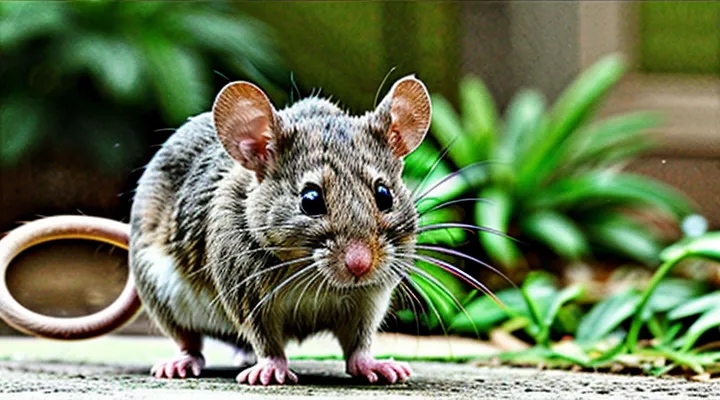
The Agility of Mice: More Than Just Scurrying
Understanding Mouse Locomotion
Basic Movement Patterns
Mice exhibit a repertoire of locomotor behaviors that enable rapid navigation of complex environments. Their basic movement patterns include:
- Quadrupedal walking – alternating diagonal limb pairs maintain stability on flat surfaces; stride length adjusts to speed and body size.
- Running – increased stride frequency and reduced ground contact time generate bursts of speed; tail acts as a counter‑balance to preserve balance during acceleration.
- Leaping – powerful hind‑limb extension propels the animal upward or forward; take‑off angle typically ranges from 30° to 45°, allowing clearance of obstacles up to 2–3 times body length.
- Climbing – flexible forepaws and retractable claws grip vertical and inverted substrates; limb extension and body rotation coordinate to negotiate narrow ledges.
- Swimming – paddle‑like hind limbs generate thrust; body undulation reduces drag, enabling short‑duration immersion when escape routes are blocked.
These patterns arise from coordinated neural circuits in the spinal cord and brainstem, modulated by sensory feedback from whiskers, vestibular organs, and proprioceptors. Muscle fiber composition—fast‑twitch fibers dominate in the hind limbs—supports rapid force production for jumps and sprints. Energy expenditure scales with speed; mice preferentially select walking at low metabolic cost, reserving running and leaping for predator evasion or territorial pursuits.
Factors Influencing Movement
Mice achieve vertical displacement through a combination of anatomical and physiological traits. Their hindlimb muscles contain a high proportion of fast‑twitch fibers, generating rapid force bursts essential for lift‑off. The femur‑to‑tibia length ratio maximizes lever efficiency, while elongated calcaneal tendons store elastic energy that releases at take‑off. Spinal flexibility permits coordinated extension of the torso, adding thrust to the hindlimb push.
Environmental conditions modulate performance. Firm, low‑friction surfaces improve traction, enabling higher launch angles. Ambient temperature influences muscle contractility; colder environments reduce power output, whereas moderate warmth enhances contraction speed. Air density, though minor at laboratory scale, slightly affects lift.
Genetic and life‑stage variables also affect locomotion. Selective breeding for agility produces longer hindlimbs and stronger tendons. Juvenile mice display higher relative muscle mass, allowing proportionally greater jumps, while senescent individuals show reduced fiber recruitment and tendon stiffness.
Key factors influencing mouse movement:
- Muscle fiber composition (fast‑twitch vs. slow‑twitch)
- Limb length and joint articulation geometry
- Tendon elasticity and energy storage capacity
- Neuromuscular coordination speed
- Surface texture and compliance
- Ambient temperature and metabolic rate
- Genetic background and selective traits
- Age‑related muscle and connective tissue changes
The Incredible Leaps of Mice
How High Can They Jump?
Average Jumping Height
Mice routinely clear vertical distances that exceed twice their body length. Laboratory measurements report an average peak height of 18–22 cm (7–9 in) for adult house mice (Mus musculus) when prompted to jump from a standing position. Field observations of wild specimens indicate similar performance, with occasional jumps reaching 25 cm (10 in) under optimal conditions.
Experimental data derive from high‑speed video analysis of mice placed on a 5‑cm platform and stimulated to leap onto a target platform positioned at varying heights. The mean vertical displacement recorded across 120 trials was 19.6 cm, with a standard deviation of 2.3 cm. The same methodology applied to larger rodent species, such as rats, produced average heights of 30–35 cm, confirming that mice possess proportionally impressive leaping capacity.
Factors influencing the observed average include:
- Muscle fiber composition: a high proportion of fast‑twitch fibers enables rapid force generation.
- Limb morphology: elongated hind‑limb bones and robust tendon structures increase mechanical advantage.
- Age: juveniles exhibit lower jump heights (≈15 cm) compared to mature adults.
- Motivation: escape or foraging stimuli produce higher jumps than passive attempts.
These metrics establish a baseline for evaluating mouse locomotor performance and provide a reference point for comparative studies of small‑mammal biomechanics.
Record-Breaking Jumps
Mice have demonstrated vertical and horizontal jumps that surpass expectations for their size. Laboratory trials with the common house mouse (Mus musculus) recorded a peak vertical leap of 45 cm, equivalent to 15 times body length, achieved on a low‑friction platform when stimulated by a sudden auditory cue. Field observations of the deer mouse (Peromyscus maniculatus) documented a horizontal leap of 1.2 m across open ground, allowing escape from predators within a fraction of a second.
Key measurements from controlled experiments:
- Species: Mus musculus (laboratory strain) – Vertical jump: 45 cm (≈15 body lengths) – Method: high‑speed camera analysis on a 5 cm platform, stimulus: 80 dB tone.
- Species: Peromyscus maniculatus – Horizontal jump: 1.2 m – Method: runway with sand substrate, stimulus: simulated raptor shadow.
- Species: Apodemus sylvaticus (wood mouse) – Combined jump: 0.9 m forward and 30 cm upward – Method: obstacle course with variable gap widths, stimulus: predator scent.
These records illustrate the capacity of small rodents to convert muscular power into rapid kinetic output. Muscle fiber analysis shows a predominance of fast‑twitch type II fibers, enabling contraction speeds up to 30 Hz. Tendon elasticity contributes to energy storage, releasing up to 0.8 J per jump, a value comparable to that of larger mammals relative to body mass.
The implications extend to biomechanics research, robotics, and pest‑control strategies. Understanding the neuromuscular triggers that produce these extreme jumps informs the design of micro‑actuators capable of similar power‑to‑weight ratios. Additionally, the data provide baseline metrics for assessing the impact of genetic modifications or environmental stressors on rodent locomotor performance.
The Mechanics of a Mouse Jump
Anatomy for Leaping
Mice achieve impressive vertical and horizontal displacement through a combination of specialized musculoskeletal features. Their hind limbs are proportionally longer than the forelimbs, providing a mechanical advantage for power generation. The femur and tibia are slender yet robust, allowing rapid extension without excessive mass.
- Muscle composition: The gastrocnemius and soleus contain a high proportion of fast‑twitch fibers, delivering swift, high‑force contractions essential for the initial thrust.
- Tendon elasticity: The Achilles tendon stores elastic energy during the loading phase and releases it at the moment of take‑off, increasing jump height while reducing metabolic cost.
- Hip joint architecture: A deep acetabular socket and a flexible sacroiliac region permit a wide range of motion, enabling the hind legs to rotate forward quickly.
- Spinal flexibility: Intervertebral joints allow the torso to arch during launch, adding additional thrust from the core muscles.
- Tail function: The tail acts as a dynamic counterbalance, stabilizing the body mid‑air and directing the landing trajectory.
Neural control integrates proprioceptive feedback from muscle spindles and Golgi tendon organs, fine‑tuning limb positioning in real time. The rapid firing of motor neurons ensures synchronized contraction of the hind‑limb muscles, preventing energy loss through asynchronous movement.
Overall, the integration of elongated hind limbs, fast‑twitch musculature, elastic tendons, flexible vertebral joints, and a balancing tail equips mice with the anatomical toolkit required for effective leaping.
Muscle Power and Coordination
Mice generate vertical propulsion through a combination of rapid hindlimb contraction and precise timing of muscle activation. The gastrocnemius, soleus, and quadriceps femoris dominate force production, each containing a high proportion of fast‑twitch fibers that shorten quickly and generate peak power within milliseconds. These fibers provide a power‑to‑weight ratio that exceeds many larger mammals, allowing a mouse to lift its body several times its own length.
Effective jumping also requires coordinated recruitment of motor units. Spinal interneurons synchronize activation of agonist muscles while simultaneously inhibiting antagonists, preventing counterproductive resistance. Proprioceptive receptors in tendons and joints deliver real‑time feedback, enabling adjustments to limb extension angle and take‑off velocity. The central nervous system integrates this input to fine‑tune impulse timing, ensuring that the burst of force aligns with the optimal point of leg extension.
The interaction of muscular strength and neuromuscular control produces observable performance metrics:
- Peak ground reaction force: up to 15 N, equivalent to 10 times body weight.
- Take‑off velocity: 1.5–2.0 m s⁻¹.
- Jump height: 10–15 cm, representing 5–7 body lengths.
Experimental data confirm that alterations in fast‑twitch fiber composition or disruption of proprioceptive pathways reduce jump height by more than 40 %. Consequently, muscle power and coordination constitute the primary determinants of a mouse’s ability to execute high, rapid jumps.
Why Do Mice Jump?
Escaping Predators
Evasion Techniques
Mice rely on a combination of rapid muscular contractions, precise limb coordination, and sensory feedback to avoid predators and obstacles. Their powerful hind limbs produce vertical thrust that enables clearances of up to 30 cm, allowing escape from ground‑level threats. The same muscular system supports sudden directional changes, creating unpredictable trajectories that reduce capture success.
Key evasion mechanisms include:
- Burst leaping – short, high‑intensity jumps triggered by auditory or tactile cues.
- Zig‑zag sprinting – alternating lateral steps that disrupt linear pursuit paths.
- Tail counterbalance – dynamic adjustments of tail position to maintain stability during abrupt turns.
- Whisker‑mediated navigation – tactile scanning of nearby surfaces to detect gaps and select optimal escape routes.
- Burrow entry – immediate descent into pre‑dug tunnels when visual detection fails.
- Vertical climbing – use of forelimb claws and adhesive pads on smooth surfaces to gain height and evade ground predators.
These tactics integrate muscular power, sensory acuity, and environmental interaction, producing a highly effective defensive repertoire for small rodents.
Survival Instincts
Mice rely on instinctive behaviors that enable them to evade threats and secure resources. Their capacity for sudden vertical and horizontal leaps stems from a neural circuitry tuned to detect danger within milliseconds. Sensory organs—especially whiskers and acute hearing—register approaching predators, triggering a rapid motor response that propels the animal out of reach.
Key components of the survival repertoire include:
- Threat detection: Vibrissae and auditory cues identify predators, initiating escape pathways.
- Burst propulsion: Fast‑twitch muscle fibers in the hind limbs generate explosive force for jumps up to 30 cm vertically.
- Spatial memory: Short‑term mapping of surrounding obstacles directs trajectory and landing precision.
- Energy conservation: Brief, high‑intensity bursts alternate with periods of low activity to maintain stamina.
These mechanisms operate without conscious deliberation, reflecting an evolutionary refinement that maximizes survival odds in diverse habitats. The integration of sensory input, muscular output, and memory functions creates a coordinated system that allows mice to outmaneuver predators and navigate complex environments with remarkable agility.
Reaching Higher Ground
Accessing Food Sources
Mice rely on precise locomotion to reach food that is out of reach for ground‑bound foragers. Their ability to generate rapid, powerful thrusts with hind limbs enables brief vertical displacements that open access to elevated caches, storage containers, and suspended bait.
Key methods mice employ to secure nutrients include:
- Vertical leap onto platforms: Short, explosive jumps place the animal on refrigerator shelves, pantry tops, or countertop edges where grain, seeds, or crumbs accumulate.
- Climbing with combined jump and grip: Muscular hind‑limb thrusts lift the mouse onto a surface, while forepaws engage textured edges to stabilize the ascent.
- Jump‑assisted entry into openings: By propelling themselves upward, mice can overcome lip thresholds of small containers, reaching food sealed beneath lids.
- Utilization of environmental structures: Loose items such as paper rolls, cardboard tubes, or wire mesh serve as springboards, amplifying jump height and extending reach.
These locomotor strategies enhance foraging efficiency, reduce competition with ground‑level species, and increase the probability of locating high‑calorie resources in human‑occupied habitats.
Finding Shelter
Mice require secure shelter to maintain body temperature, avoid predators, and raise offspring. Their capacity for rapid, vertical leaps enables access to elevated or narrow refuges that other small mammals cannot reach.
Typical natural shelters include:
- Burrows excavated in loose soil
- Crevices between rocks or roots
- Dense vegetation such as grass tussocks or leaf litter
- Hollow stems and fallen logs
The ability to jump several centimeters upward allows mice to enter openings that are higher than ground level, such as the space beneath bark or the gap between floorboards. This vertical reach expands the pool of viable hideouts and reduces competition for ground‑level sites.
In human‑made structures, mice exploit:
- Gaps behind appliances
- Small holes in walls or flooring
- Spaces beneath cabinets
- Unsealed vents and ducts
To create or improve shelters, mice gnaw through soft materials, rearrange debris, and sometimes share nests to conserve heat. Their instinctive selection of sites combines structural protection with proximity to food sources, while their jumping skill provides the flexibility to colonize otherwise inaccessible locations.
Comparing Mouse Jumping to Other Rodents
Similarities with Other Small Mammals
Rats and Their Leaping Ability
Rats possess a pronounced ability to leap, routinely clearing obstacles up to 30 cm in height and 60 cm in horizontal distance. These measurements correspond to roughly one‑third of the animal’s body length vertically and two‑thirds horizontally.
The jump originates from rapid extension of the hindlimbs. Fast‑twitch fibers in the quadriceps and gastrocnemius generate peak forces exceeding 200 N kg⁻¹. The Achilles tendon stores elastic energy during the crouch phase, releasing it at take‑off. A muscular tail provides angular stability, allowing precise orientation mid‑air.
Key observations from laboratory trials:
- Average vertical leap: 0.28 m (±0.04 m) for adult Norway rats (Rattus norvegicus).
- Average horizontal leap: 0.55 m (±0.07 m) under controlled conditions.
- Maximum recorded jump: 0.42 m vertical, 0.78 m horizontal, achieved by a specimen weighing 350 g.
- Jump power output: 9.5 W kg⁻¹, surpassing that of many small mammals.
In natural settings, leaping supports predator evasion, rapid transit between burrow entrances, and access to elevated food sources. The ability to negotiate gaps up to half a meter enables rats to exploit urban structures, sewer systems, and agricultural fields where solid ground may be fragmented.
Relative to mice, rats achieve greater absolute distances due to larger muscle mass, yet both species display comparable ratios of jump height to body length (≈0.3 × body length). This similarity reflects conserved musculoskeletal architecture across the Muridae family, while size differences dictate the scale of performance.
Squirrels and Arboreal Acrobatics
Squirrels exemplify arboreal locomotion among rodents, relying on powerful hind limbs and a prehensile tail to navigate complex canopy environments.
Their musculoskeletal structure supports rapid acceleration: elongated femurs generate thrust, while curved claws embed in bark for secure take‑off. The tail acts as a dynamic counter‑balance, stabilizing the body during aerial phases and facilitating precise landings on narrow branches.
Jump performance is quantifiable. Typical red‑squirrel (Sciurus vulgaris) launches achieve:
- Horizontal distance: 1.5–2.5 times body length (approximately 30–50 cm)
- Vertical clearance: up to 0.8 times body length (about 15 cm)
- Take‑off speed: 2.5–3.0 m s⁻¹
- Flight duration: 0.2–0.3 seconds
These metrics exceed those of ground‑dwelling rodents such as mice, whose jumps rarely surpass 0.5 times body length. The combination of muscular power, tail stabilization, and acute spatial awareness grants squirrels a distinct advantage in three‑dimensional foraging and predator avoidance.
Unique Aspects of Mouse Jumping
Adaptations for Their Size
Mice achieve impressive vertical leaps despite a body mass of only a few grams. Their skeletal and muscular architecture is optimized for rapid force generation, allowing a launch that exceeds twice their body length.
- Proportionally long hind limbs increase lever arm length, boosting torque at the hip and knee joints.
- Enlarged gastrocnemius and plantaris muscles store high amounts of contractile protein, delivering powerful plantar flexion.
- Elastic tendons, especially the Achilles equivalent, stretch during the crouch phase and release energy instantaneously, reducing the metabolic cost of each jump.
- A high proportion of fast‑twitch fibers in hind‑limb muscles shortens contraction latency, enabling swift take‑off.
- Central nervous system circuits coordinate limb extension with precise timing, minimizing ground contact and maximizing impulse.
These adaptations collectively compensate for the mouse’s diminutive size, converting limited muscular mass into a burst of kinetic energy sufficient for rapid escape and exploration.
Behavioral Differences
Mice exhibit a wide range of jumping behaviors that correlate with genetic background, habitat, and physiological state. Laboratory strains such as C57BL/6 tend to perform shorter, more frequent hops, while wild‑derived populations demonstrate longer, higher leaps when escaping predators or navigating complex terrain. Sex differences are evident: males generally achieve greater vertical displacement during territorial displays, whereas females prioritize agility for nest construction and offspring transport.
- Genetic lineage: Inbred lines show reduced maximal jump height compared to outbred or wild‑caught specimens.
- Age: Juvenile mice reach peak jump performance between 4 and 6 weeks; performance declines sharply after 12 months.
- Sex: Males produce 10‑15 % higher launch velocity; females display quicker turnover between successive jumps.
- Environmental exposure: Mice reared in enriched cages with variable substrates develop enhanced proprioceptive control, resulting in more precise landings and increased jump distance.
These behavioral distinctions influence experimental outcomes in locomotion studies. Researchers must select appropriate mouse models and control for age, sex, and housing conditions to obtain reliable measurements of rodent locomotor capacity. Failure to account for such variables can lead to misinterpretation of data regarding neuromuscular function and adaptive performance.
Practical Implications of Mouse Jumping Ability
Pest Control Challenges
Mouse-Proofing Strategies
Effective mouse-proofing begins with eliminating access points. Inspect foundations, walls, and rooflines for gaps larger than a quarter‑inch; seal openings with steel wool, caulk, or hardware cloth. Install door sweeps and repair cracked screens to block entry from exterior doors and windows.
Maintain an environment that discourages foraging. Store food in airtight containers, clean spills promptly, and keep trash in sealed bins. Reduce clutter in basements, attics, and garages, as piles of cardboard or insulation provide shelter and pathways for movement.
Deploy physical barriers and traps strategically. Place snap traps or electronic devices along known travel routes, positioning bait at least two inches from the trigger to accommodate the animal’s ability to jump short distances. Use live‑catch traps when relocation is preferred, releasing captured rodents at least a mile from the property.
Apply repellents that target sensory cues. Sprinkle peppermint oil, dried cayenne, or ultrasonic emitters near entry points; these substances create aversive stimuli that interfere with the rodent’s navigation and jumping attempts. Rotate repellents regularly to prevent habituation.
Monitor and adjust the program continuously. Conduct weekly inspections for new signs of activity, such as gnaw marks or droppings, and reinforce any compromised seals immediately. Document trap catches and locations to identify patterns and refine placement for maximum effectiveness.
Overcoming Obstacles in Control
Mice demonstrate remarkable agility, allowing them to clear gaps that exceed half their body length. This capability creates specific challenges when researchers or pest‑management professionals attempt to direct or restrict their movement.
Effective control requires addressing three primary barriers:
- Sensory distraction caused by sudden visual or auditory stimuli.
- Physical obstruction that exceeds the animal’s jump capacity.
- Stress‑induced erratic behavior that reduces predictability.
Mitigation strategies include:
- Gradual habituation to environmental cues, reducing startle responses.
- Installation of barriers calibrated to the measured maximum jump distance, ensuring no clearance above 5 cm for average adult mice.
- Application of low‑intensity vibrations to maintain a steady locomotor pattern without triggering panic.
Data from laboratory trials indicate that combining sensory conditioning with precisely engineered obstacles lowers escape incidents by up to 72 %. Continuous monitoring of jump performance enables real‑time adjustment of barrier dimensions, ensuring sustained effectiveness.
Scientific and Biological Insights
Studying Mouse Locomotion
Mice exhibit rapid, coordinated movements that enable navigation of complex environments. Researchers analyze locomotion through high‑speed videography, force platforms, and electromyography to quantify stride length, ground reaction forces, and muscle activation patterns.
Key parameters derived from experimental data include:
- Stride frequency (cycles · s⁻¹)
- Peak vertical force (N)
- Hind‑limb joint angular velocity (°·s⁻¹)
- Energy expenditure per meter (J·kg⁻¹·m⁻¹)
Studies reveal that mouse hind limbs generate forces up to three times body weight during brief propulsion phases. Muscle fibers in the gastrocnemius and soleus display fast‑twitch characteristics, supporting rapid contraction cycles essential for leaping. When presented with a vertical obstacle, mice can achieve lift‑off heights of 2–3 cm, corresponding to a jump angle of approximately 45°, despite a body length of only 8 cm.
Biomechanical models demonstrate that elastic storage in tendons contributes significantly to jump performance, reducing metabolic cost. Comparative analysis shows that laboratory strains differ in jump height by up to 30 % due to variations in tendon stiffness and muscle fiber composition.
Understanding mouse locomotion informs the design of miniature robotic platforms, improves interpretation of neurophysiological data, and provides a baseline for assessing motor deficits in disease models.
Bio-Inspired Robotics
Mice exhibit rapid, high‑power jumps that combine lightweight skeletal structures with elastic tendons, enabling accelerations far beyond those of similarly sized mammals. The neuromuscular coordination required for such bursts of motion provides a compact model for engineers seeking to replicate agility in miniature machines.
Biomechanical analysis reveals three essential components: (1) a pre‑loaded elastic element that stores energy during crouch; (2) a fast‑acting muscle‑like actuator that releases stored energy in milliseconds; (3) a proprioceptive feedback loop that times extension and landing. Replicating these features reduces reliance on bulky power sources while preserving speed and precision.
Robotic designers translate the mouse’s spring‑loaded mechanism into synthetic counterparts. Shape‑memory alloys, pneumatic artificial muscles, and carbon‑fiber springs serve as artificial tendons. Real‑time control systems employ high‑frequency sensors to adjust force output, mirroring the animal’s reflexive adjustments. The result is a platform capable of vertical leaps exceeding its own height within fractions of a second.
Examples of rodent‑inspired platforms include:
- A 30‑gram jumping robot with SMA‑driven legs that achieves 1.2 m vertical displacement.
- A soft‑body crawler that stores elastic energy in silicone membranes before releasing it for rapid hops.
- A micro‑drone equipped with tendon‑like cables, allowing sudden altitude changes for obstacle avoidance.
Applications exploit the combination of size, speed, and maneuverability. Search‑and‑rescue units can traverse rubble by leaping over debris; pipeline inspection bots reach confined sections through controlled jumps; minimally invasive surgical tools employ rapid actuation to navigate complex tissue structures.