
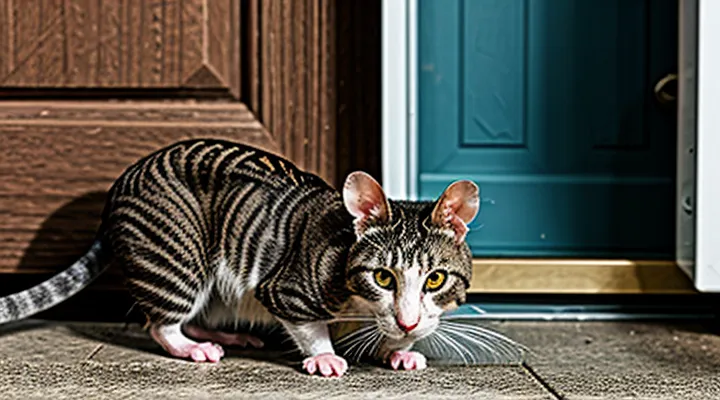
The Dynamics of Predator and Prey
Understanding Feline Hunting Instincts
Natural Predatory Behavior
Rats display opportunistic predation despite being primarily omnivores. Their incisors can inflict deep wounds, and they possess strong bite forces relative to body size. In territorial disputes or when defending nests, rats may attack animals larger than themselves, especially if the opponent is weakened or juvenile.
Cats are natural hunters, equipped with sharp claws and reflexes that typically neutralize rodent threats. However, a cat’s defensive capacity declines with age, illness, or injury. Under such conditions, a rat’s bite can introduce infection, hemorrhage, or toxin exposure, potentially leading to fatal outcomes.
Scenarios in which a rodent could cause a cat’s death include:
- Severe bite wound compromising a major blood vessel.
- Transmission of bacterial infection (e.g., Streptobacillus moniliformis) resulting in septicemia.
- Aggressive encounter involving multiple rats overwhelming a small or debilitated cat.
- Exposure to rodent‑borne parasites that trigger lethal systemic reactions.
In healthy, adult cats, natural predatory behavior favors the feline, making lethal rat attacks exceedingly rare. Fatal encounters require specific vulnerabilities in the cat and aggressive, coordinated actions by the rat.
Factors Influencing Hunting Success
When assessing whether a rodent could overcome a feline predator, the outcome depends on several measurable variables rather than on anecdotal speculation.
The primary determinants of hunting success include:
- Relative body mass and strength – Larger mammals possess greater muscle power and bite force, giving them a mechanical advantage in direct confrontations.
- Health status of each animal – Illness, injury, or age-related decline reduces mobility and reflexes, potentially narrowing the disparity in combat capability.
- Environmental context – Confined spaces, dense vegetation, or cluttered surfaces can limit a cat’s speed and agility while providing a rodent with cover and escape routes.
- Group behavior – Multiple rodents acting cooperatively can overwhelm a solitary cat, whereas a lone rat faces a steep disadvantage.
- Sensory acuity – Cats rely on acute hearing and night vision; any impairment (e.g., loud background noise or low light) diminishes their detection ability, increasing the rodent’s chance of surprise.
- Motivation and hunger level – A predator driven by extreme hunger may engage more aggressively, while a satiated cat may ignore smaller prey.
Secondary influences involve seasonal temperature, which affects metabolic rates, and the presence of alternative food sources that can divert attention away from a potential encounter. Each factor can be quantified through observation or experimental data, allowing a systematic evaluation of the likelihood that a rat could defeat a cat under specific conditions.
Rodent Defense Mechanisms
Rat Agility and Speed
Rats possess a body plan optimized for rapid, multidirectional movement. Muscular hindlimbs generate bursts of acceleration that allow a typical brown rat (Rattus norvegicus) to reach speeds of 8 m s⁻¹ (≈18 mph) over short distances. Flexible spines and a low‑center‑of‑gravity enable swift twists and turns, facilitating escape from predators and navigation through tight burrows.
Key performance metrics:
- Maximum sprint speed: 8 m s⁻¹ (≈18 mph) for a 250‑g adult.
- Acceleration: 0–5 m s⁻¹ achieved in less than 0.2 seconds.
- Turning radius: ≤5 cm, allowing rapid direction changes in confined spaces.
- Climbing ability: Grip strength sufficient to scale vertical surfaces up to 1.5 times body length.
These capabilities support a rat’s capacity to evade or confront larger animals. Fast, agile motion reduces the likelihood of being captured by a cat, while the same speed can be used to launch surprise attacks on vulnerable prey. However, the rat’s agility does not guarantee lethal outcomes against a cat; success depends on additional factors such as size disparity, weaponry (teeth, claws), and the cat’s own reflexes.
Rat Bites and Disease Transmission
Rat bites represent a direct pathway for pathogen transfer from rodents to other mammals. When a rat penetrates the skin, bacteria, viruses, and parasites from its oral cavity or saliva can be introduced into the victim’s bloodstream.
Common agents transmitted through rat bites include:
- Streptobacillus moniliformis – cause of rat‑bite fever, producing fever, polyarthritis, and septicemia.
- Leptospira interrogans – leads to leptospirosis, characterized by renal failure, jaundice, and hemorrhage.
- Hantavirus species – may trigger hemorrhagic fever with renal syndrome or pulmonary syndrome.
- Salmonella spp. – result in gastroenteritis and systemic infection.
- Yersinia pestis – rare, but capable of causing plague with high fatality if untreated.
Cats that receive a rat bite are exposed to these agents. Clinical signs may appear within days to weeks and can include fever, lethargy, loss of appetite, joint swelling, respiratory distress, and sudden death. Mortality rates rise sharply when septicemia or organ failure develop, especially in young, immunocompromised, or outdoor cats with limited veterinary care.
Immediate veterinary intervention is critical. Recommended actions comprise thorough wound cleaning, administration of broad‑spectrum antibiotics targeting gram‑negative and gram‑positive organisms, and supportive therapy for organ dysfunction. Vaccination against rabies does not protect against rat‑borne diseases; therefore, preventive strategies focus on limiting cat exposure to wild rodents, securing food sources, and maintaining indoor confinement where feasible.
Real-World Scenarios and Outcomes
Documented Cases of Rat-Cat Encounters
Accounts of Cat Injuries
Documented incidents reveal that rats can inflict serious wounds on felines, though lethal outcomes remain rare. Injuries typically arise when a cat engages a rat in a confined space or attempts to capture a larger, aggressive specimen.
- Deep puncture wounds on the forelimbs caused by rat incisors during defensive bites.
- Lacerations on the abdomen resulting from a rat’s powerful jaw clamping on exposed tissue.
- Contusions and bruising on the neck and head when a rat claws at a cat’s throat in a struggle.
- Infections secondary to bite wounds, leading to septicemia if untreated.
Case reports illustrate that cats often sustain multiple bite marks on the paws, reflecting the animal’s instinct to seize the rat’s tail or hindquarters. In urban environments, feral cats encounter rats that have adapted to defend themselves, increasing the likelihood of defensive aggression. Veterinary records show that prompt cleaning, antibiotics, and tetanus prophylaxis reduce mortality, while delayed treatment can culminate in systemic infection and death.
Overall, the evidence confirms that rat‑induced injuries can be severe, and under certain conditions they may prove fatal. Proper wound management is essential to prevent escalation.
Rare Fatalities and Their Circumstances
Instances in which a rodent has caused the death of a feline are extremely uncommon, yet documented. The primary factors enabling such outcomes include severe infection, overwhelming stress, and direct physical injury.
- Septic complications – Bites from wild rats can introduce Streptobacillus moniliformis or Leptospira species. In cases where a cat’s immune response is compromised, systemic infection may progress to fatal sepsis within 48 hours of the wound.
- Traumatic envenomation – Certain rat species, such as the African giant pouched rat, possess enlarged incisors capable of inflicting deep cranial wounds. A single, precisely placed bite to the skull can cause intracranial hemorrhage leading to rapid collapse.
- Extreme predatory stress – When a cat confronts a large, aggressive rat colony, sustained pursuit can trigger adrenal crisis. Elevated catecholamine levels may precipitate cardiac arrhythmia, especially in older animals with underlying heart disease.
Documented cases illustrate these mechanisms. A 2017 veterinary report from a rural clinic described a 12‑year‑old domestic short‑hair that died of septicemia after a rat bite on the forelimb became infected with Streptobacillus. A 2020 forensic analysis of a feral cat recovered from an urban alley revealed a puncture wound to the temporal bone, attributed to a giant pouched rat; autopsy confirmed massive intracranial bleeding as the immediate cause of death. In 2022, a veterinary hospital recorded a cat that collapsed during a prolonged chase of a swarm of Norway rats; post‑mortem examination identified ventricular fibrillation linked to stress‑induced catecholamine surge.
These examples demonstrate that while a rat is not a typical predator of cats, specific pathological or mechanical conditions can convert a seemingly minor encounter into a lethal event.
Factors Contributing to Rat Victory
Size Disparity and Age of the Cat
Rats and domestic cats differ markedly in body mass. An adult house cat typically weighs 3.5–5 kg, while a common brown rat averages 0.2–0.5 kg. The cat’s musculature and skeletal structure provide a mechanical advantage that a rodent cannot match. Even the largest rat species, the capybara‑sized Rattus hybrids, remain far below feline weight thresholds.
- Average cat weight: 3.5–5 kg (7.7–11 lb)
- Average rat weight: 0.2–0.5 kg (0.4–1.1 lb)
- Bite force ratio: cat ≈ 30 psi; rat ≈ 3 psi
Age influences vulnerability. Kittens under four weeks lack fully developed coordination, reflexes, and dentition. Their bite strength is insufficient to subdue a rat, and they are prone to injury from a rat’s sharp incisors. Juvenile cats (4–8 weeks) exhibit improving motor skills but still possess reduced muscle mass compared to mature individuals. Fully grown cats (12 months and older) display peak strength and agility, rendering a rat’s defensive capabilities negligible.
In summary, the pronounced size gap and the developmental stage of the feline determine the likelihood of a rat inflicting lethal harm. Only very young or severely debilitated cats approach a scenario where a rat could cause fatal injury.
Health and Experience of the Animals Involved
Rats possess strong incisors, high metabolic rates, and can carry pathogens that affect felines. Adult brown rats weigh 300–500 g, have bite forces capable of puncturing soft tissue, and can deliver venomous saliva containing bacteria such as Streptobacillus moniliformis. Their agility allows rapid evasion of attacks, reducing the likelihood of sustained injury.
Cats typically weigh 3–5 kg, exhibit sharp retractable claws, and have a digestive system adapted to process small prey. Their immune systems are generally resilient, but exposure to rat-borne diseases can cause severe illness, including leptospirosis and plague. A healthy cat can inflict lethal wounds on a rat within seconds.
Experience influences outcomes:
- Wild rats: accustomed to territorial defense, may fight aggressively when cornered; higher risk of delivering multiple bites.
- Domesticated rats: less likely to engage in combat, often avoid confrontation.
- Outdoor cats: accustomed to hunting, display heightened reflexes and predatory drive.
- Indoor cats: limited exposure to aggressive rodents, may lack practiced killing techniques.
Overall, a rat’s ability to kill a cat depends on the rat’s health, disease load, and combat experience, while a cat’s size, immune competence, and hunting proficiency determine its vulnerability. In most scenarios, a healthy cat is capable of subduing a rat, but exceptional cases—such as a severely ill cat or a highly aggressive, disease‑laden rat—can reverse the expected result.
The Role of Environment
Confined Spaces and Escape Routes
Rats thrive in narrow enclosures where their slender bodies allow passage through openings as small as a quarter‑inch. Such passages serve as escape routes, enabling rapid retreat when a predator appears. Cats, despite agility, cannot squeeze through comparable gaps; their larger frame restricts movement and often forces them to confront the rodent directly.
In confined spaces, a rat’s speed and ability to navigate vertical and horizontal conduits reduce exposure time. When a cat enters a limited area, the feline may become trapped against walls or corners, limiting its ability to strike effectively. The rat’s habit of retreating to hidden burrows or crawl spaces further diminishes the chance of lethal contact.
Key factors influencing the outcome:
- Size of entry points: openings ≤0.5 in. favor rat escape, larger openings increase cat access.
- Layout complexity: multiple tunnels and chambers provide alternative routes for the rodent.
- Cat maneuverability: restricted turning radius and limited climbing ability hinder pursuit.
- Rat alertness: heightened sensory perception prompts immediate flight to the nearest exit.
When a rat can continuously evade through tight passages, the probability of a fatal encounter for the cat declines sharply. Conversely, environments lacking such escape routes increase the risk to the rodent.
Presence of Human Intervention
Human activity directly alters the likelihood that a rat could kill a cat. Domestic cats are often fed, sheltered, and receive veterinary care, which reduces their exposure to aggressive rodents and improves their health, making fatal encounters unlikely. Conversely, free‑roaming cats that hunt near human waste sites encounter larger, disease‑carrying rats, increasing risk.
Control measures implemented by people shape outcomes:
- Rodenticide application lowers rat populations, decreasing the chance of lethal fights.
- Trapping programs remove aggressive rats that might attack cats.
- Habitat modification, such as sealing entry points in buildings, limits rats’ access to areas where cats hunt.
- Veterinary interventions, including wound treatment and vaccination, mitigate fatal injuries from rat bites.
Human‑induced changes in ecosystem balance also matter. Introducing predators or competitors can suppress rat numbers, while feeding cats with high‑protein diets enhances their strength and reflexes, further reducing vulnerability. In environments where humans provide abundant food waste, rat densities rise, potentially creating situations where a rat could overcome a weakened cat.
Overall, human intervention—through nutrition, healthcare, pest management, and habitat control—significantly reduces the probability of a rat killing a cat, while neglect or mismanagement can elevate that risk.
Preventing Negative Outcomes
Protecting Pets from Wild Rodents
Vaccinations and Veterinary Care
A cat that roams outdoors may encounter rats, which can inflict bites, scratches, or transmit infections. The severity of such encounters depends largely on the animal’s health status and the preventive measures taken by its owner.
Vaccinations protect felines from diseases commonly associated with rodent vectors. Core immunizations include:
- Feline viral rhinotracheitis, calicivirus, and panleukopenia (FVRCP) – prevents respiratory and gastrointestinal illnesses.
- Rabies – safeguards against a virus that rodents may carry.
- Feline leukemia virus (FeLV) – reduces susceptibility to a virus spread through aggressive encounters.
These vaccines are administered according to a schedule that begins at six to eight weeks of age, followed by boosters at regular intervals recommended by a veterinarian.
Regular veterinary care complements immunization. Routine examinations allow early detection of trauma, assessment of wound healing, and identification of secondary infections. Preventive treatments for parasites, blood testing, and dental checks maintain overall resilience, decreasing the likelihood that a rat‑related injury becomes fatal.
When a cat receives up‑to‑date vaccines and undergoes consistent veterinary monitoring, the risk that a rodent encounter results in death is markedly lowered. Proper preventive health management therefore serves as the primary defense against the lethal potential of such interactions.
Pest Control Strategies
Rats can pose a lethal risk to cats when they are unusually large, aggressive, or when the cat is young, ill, or injured. Managing this risk requires targeted pest‑control measures that reduce rat populations and limit cat exposure.
- Sanitation and habitat modification – Remove food sources, store waste in sealed containers, and eliminate clutter that provides shelter for rodents. Regularly trim vegetation and seal building gaps to prevent entry.
- Exclusion techniques – Install steel mesh or concrete blocks around openings, reinforce foundations, and use door sweeps to block rodent pathways.
- Mechanical traps – Deploy snap traps or electronic devices in identified activity zones. Position traps along walls and near burrows; check and reset them daily.
- Rodenticides – Apply anticoagulant baits in tamper‑proof stations placed out of reach of cats. Follow label instructions and monitor for secondary poisoning risks.
- Biological control – Encourage natural predators such as owls and hawks by installing nesting boxes; consider professional release of predatory insects where appropriate.
- Integrated pest management (IPM) – Combine the above tactics, conduct regular inspections, and adjust actions based on surveillance data. Document infestations, trap counts, and treatment outcomes to refine the program.
Effective implementation of these strategies lowers the probability of a fatal encounter between a rat and a cat, protecting feline health while controlling rodent populations.
Training and Socialization of Cats
Encouraging Safe Hunting Practices
Rats pose a genuine threat to small domestic cats, especially in environments where food sources are abundant and shelter is limited. The size disparity does not prevent a determined rodent from inflicting serious injury, making proactive measures essential for pet owners and property managers.
Effective prevention begins with habitat modification. Remove food scraps, secure garbage containers, and eliminate clutter that offers hiding places. Regular inspection of building foundations and utility lines helps identify entry points that rodents exploit.
Recommended practices for safe hunting and control:
- Install sealed metal or concrete barriers around gaps larger than ¼ inch.
- Use snap traps or electronic devices placed along established rodent pathways, avoiding bait that could attract cats.
- Deploy motion‑activated deterrents that emit ultrasonic waves or flashing lights; these devices deter rats without harming other animals.
- Conduct periodic monitoring to verify trap effectiveness and adjust placement as needed.
Training staff and household members on proper trap handling reduces accidental injuries. Wearing thick gloves, using tongs, and disposing of captured rodents in sealed containers prevent direct contact. Documentation of incidents and control actions supports ongoing risk assessment and compliance with local wildlife regulations.
Discouraging Harmful Engagements
A rat poses a negligible threat to a cat under normal circumstances. Cats possess superior speed, reflexes, and dentition; a rat’s bite can cause infection but rarely results in fatal injury. When a rat does manage to harm a cat, it is usually because the cat is ill, injured, or otherwise compromised.
Discouraging harmful encounters between rodents and felines relies on three practical measures:
- Secure food sources: store pet food, garbage, and birdseed in sealed containers to eliminate attractants that draw rats into domestic spaces.
- Maintain structural integrity: seal gaps around doors, windows, and utility lines; install wire mesh on vents and chimneys to prevent rodent ingress.
- Provide health monitoring: conduct regular veterinary examinations to detect weakness or disease in cats that could increase vulnerability to aggressive rodents.
Environmental management further reduces risk. Implementing integrated pest management (IPM) programs limits rodent populations without resorting to poisons that could endanger pets. Strategies include habitat modification, trapping, and biological control agents such as predatory birds.
Educating owners about safe handling of injured cats prevents escalation. If a cat exhibits signs of rodent‑related wounds, immediate veterinary care and isolation from other animals limit secondary infections and discourage aggressive behavior.
By eliminating attractants, reinforcing barriers, and monitoring animal health, owners can effectively prevent dangerous interactions between rats and cats. This approach safeguards both species and upholds responsible pet stewardship.