
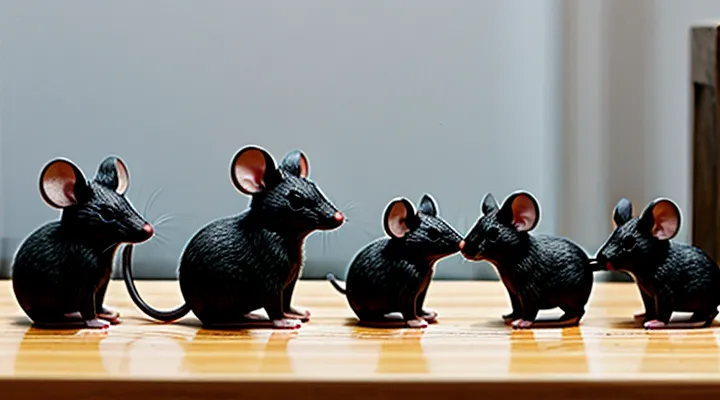
Morphological Characteristics
External Features
Size and Weight
The black mouse typically measures 6 – 10 cm from nose to the base of the tail, with the tail adding an additional 5 – 9 cm. Body mass ranges from 12 g to 25 g, depending on age, sex, and nutritional status. Adult males generally weigh 2–3 g more than females, reflecting modest sexual dimorphism.
- Head‑body length: 6–10 cm
- Tail length: 5–9 cm
- Weight (average adult): 12–25 g
- Male average weight: 14–25 g
- Female average weight: 12–22 g
These dimensions place the black mouse among the smaller murine rodents, influencing its predator–prey interactions and resource utilization within its habitat. Its compact size enables rapid maneuverability through dense ground cover, while the low body mass reduces caloric requirements, affecting population density and distribution patterns.
Fur Color and Texture
The black mouse displays a uniformly dark coat resulting from high concentrations of eumelanin throughout each hair shaft. Pigmentation is consistent across the dorsal and ventral surfaces, with occasional faint iridescence observable under direct light due to the microscopic structure of the cuticle.
Hair fibers are short, typically 3‑5 mm in length, and densely packed, forming a compact pelage that reduces heat loss and provides resistance to minor abrasions. The individual strands exhibit a smooth, glossy surface, while the overall fur texture is soft to the touch but retains sufficient rigidity to repel debris and moisture.
Key characteristics of the coat:
- Color uniformity: deep black across the body, minimal variation.
- Pigment type: eumelanin dominance, conferring UV protection.
- Fiber length: 3‑5 mm, short and compact.
- Density: high follicle count per square centimeter, enhancing insulation.
- Surface quality: smooth cuticle, glossy sheen, moderate stiffness.
Tail and Limbs
The black mouse possesses a tail that averages 85–110 % of its body length, covered with dense, melanized hair and a lightly scaled ventral surface. The vertebral column is reinforced by elongated caudal vertebrae, providing flexibility for rapid directional changes. Muscular attachment points enable the tail to function as a counterbalance during vertical climbing and swift terrestrial sprints. Additionally, the tail’s surface vasculature assists in heat dissipation, allowing the animal to regulate body temperature in varied microhabitats.
Forelimbs feature five dexterous digits, each equipped with sharp, curved ungual keratin. The musculature emphasizes pronation and supination, supporting precise manipulation of seeds, insects, and nesting material. Hindlimbs are proportionally longer, with robust femoral and tibial muscles that generate powerful leaping forces. Joint articulation permits a wide range of motion, facilitating escape from predators and navigation through complex ground cover. Collectively, the limb architecture enhances foraging efficiency, predator avoidance, and habitat exploitation, contributing to the rodent’s ecological interactions within its environment.
Sensory Organs («Eyes», «Ears», «Whiskers»)
The black mouse possesses highly specialized sensory structures that enable precise navigation, predator avoidance, and foraging within its habitat. Its visual system, auditory apparatus, and vibrissal network operate synergistically to process environmental cues essential for survival and ecological interaction.
- Eyes: Large, rod-dominated retinas provide acute low‑light vision, allowing activity during crepuscular and nocturnal periods. A reflective tapetum lucidum enhances photon capture, while a wide field of view reduces blind spots.
- Ears: Mobile pinnae and an expanded cochlear length detect a broad frequency range, including ultrasonic emissions of insects and the subtle rustle of leaf litter. Directional hearing is achieved through interaural time and intensity differences, facilitating rapid localization of threats and prey.
- Whiskers (vibrissae): Dense, mechanoreceptive follicles on the mystacial pad transmit tactile information about object proximity, texture, and airflow. The whisker array generates a spatial map of the immediate surroundings, supporting obstacle avoidance and precise manipulation of food items.
Collectively, these sensory organs furnish the black mouse with the capacity to exploit microhabitats, influence seed dispersal, and regulate invertebrate populations, thereby contributing to the functional dynamics of its ecosystem.
Internal Anatomy
Skeletal Structure
The black mouse possesses a compact skeletal framework adapted for rapid movement and burrowing. The skull houses strong jaw muscles, enabling efficient processing of seeds and insects. The vertebral column features flexible lumbar segments that facilitate swift changes in direction while navigating tight underground tunnels. Limb bones are short yet robust, providing leverage for powerful sprints and climbing on vertical surfaces.
Key skeletal characteristics include:
- Cranium: reinforced frontal bone, enlarged auditory bullae for acute hearing.
- Spine: 7 cervical, 13 thoracic, 6 lumbar, 4 sacral, and 30–34 caudal vertebrae, allowing both rigidity and flexibility.
- Forelimbs: Scapula and humerus with pronounced deltoid crest, supporting strong foreclaw retraction.
- Hindlimbs: Femur and tibia elongated relative to body size, enhancing jump distance.
- Pelvis: Broad iliac plates for attachment of gluteal muscles, contributing to propulsion.
These bone structures confer mechanical advantages that influence the mouse’s ecological interactions. Rigid cranial protection reduces injury risk from predators, while the agile spine and limbs enable efficient foraging and escape responses, directly affecting population dynamics and energy flow within the habitat.
Digestive System
The black mouse’s digestive system is adapted to process a varied diet that includes seeds, insects, and plant material. Saliva contains enzymes that begin carbohydrate breakdown, while the esophagus transports food to the stomach, where acidic secretions denature proteins and activate pepsin. The small intestine, lined with villi, maximizes nutrient absorption; pancreatic enzymes and bile emulsify fats, facilitating their uptake. The large intestine reclaims water and electrolytes, compacts indigestible matter, and hosts a microbial community that ferments fiber, producing short‑chain fatty acids that contribute to the mouse’s energy budget.
Key functional aspects:
- Enzymatic efficiency: High levels of amylase and protease enable rapid digestion of nutrient‑rich seeds.
- Microbial symbiosis: Ceca harbor bacteria that degrade cellulose, expanding the range of exploitable food sources.
- Water conservation: The colon’s ability to reclaim moisture supports survival in arid microhabitats.
Through these mechanisms, the digestive tract directly influences the black mouse’s foraging success, reproductive output, and population density within its ecological niche.
Reproductive System
The black mouse possesses a compact reproductive apparatus adapted to rapid breeding cycles. In males, the testes are intra-abdominal during early development and descend into the scrotum before sexual maturity. The epididymis, vas deferens, and accessory glands are proportionally sized to support high sperm production, with an average daily output of 1–2 × 10⁶ sperm cells. Females exhibit a bicornuate uterus, paired ovaries, and a well‑vascularized ovarian surface epithelium that facilitates follicular development.
Reproductive timing is synchronized with seasonal temperature fluctuations. Estrous cycles last approximately four days, with estrus occurring every 7–10 days during the breeding season. Ovulation is induced by copulation, and gestation spans 19–21 days, yielding litters of 5–9 pups. Neonates reach weaning at 21 days and achieve sexual maturity by 45–60 days, enabling multiple generations within a single year.
Key reproductive traits influencing population dynamics:
- High fecundity per litter
- Short gestation and rapid weaning
- Early onset of sexual maturity
- Induced ovulation enhancing mating efficiency
These characteristics drive swift population expansion, affecting community structure by providing a consistent prey source for insectivorous birds, snakes, and small mammals. The species’ reproductive capacity also contributes to competitive interactions with sympatric rodent species, influencing resource allocation and habitat utilization.
Habitat and Distribution
Geographic Range
Native Regions
The black mouse is indigenous to a broad swath of temperate and subtropical zones across the Northern Hemisphere. Its core distribution includes the eastern and central United States, extending from the Atlantic seaboard through the Midwest to the Great Plains. Populations also persist in southern Canada, primarily in Ontario and Quebec, where forested corridors provide suitable cover.
Key native areas are:
- New England (Maine, New Hampshire, Vermont, Massachusetts)
- Mid‑Atlantic states (New York, Pennsylvania, Maryland)
- The Ohio River Valley (Ohio, Indiana, Kentucky)
- The Upper Midwest (Wisconsin, Michigan, Minnesota)
- The southern Great Plains (Kansas, Oklahoma, Texas)
In Europe, the species occupies the western and central regions of the United Kingdom, the Low Countries, and northern France, favoring hedgerows and agricultural margins. Its presence in East Asia is limited to parts of the Korean Peninsula and northeastern China, where mixed deciduous‑coniferous forests offer the necessary shelter and food resources.
Introduced Populations
The black mouse, a small rodent with dark fur and a high reproductive rate, has established non‑native populations across several continents. These populations originated from human‑mediated transport, primarily through cargo shipments, agricultural products, and pet trade. Once released into new environments, the species exploits a wide range of habitats, from urban settings to agricultural fields, due to its adaptability and omnivorous diet.
Pathways of introduction include:
- Accidental inclusion in grain consignments and storage facilities.
- Escape from laboratory colonies and research facilities.
- Release from the pet market, either intentional or accidental.
Ecological consequences of these introduced groups are measurable. In agricultural landscapes, black mice increase seed predation, reducing crop yields and prompting higher pesticide use. In natural ecosystems, they compete with native small mammals for food and shelter, leading to declines in indigenous species richness. Their presence also facilitates the spread of parasites and pathogens that affect both wildlife and human health.
Management strategies focus on prevention, monitoring, and control. Preventive measures involve stringent inspection of imported goods and secure containment of laboratory colonies. Monitoring programs employ live trapping and genetic analysis to track population expansion. Control actions consist of habitat modification, targeted trapping, and, where appropriate, the use of rodenticides following regulatory guidelines to minimize non‑target impacts.
Preferred Habitats
Natural Environments («Forests», «Grasslands», «Swamps»)
The black mouse is a small rodent, typically 6–9 cm in body length, with dense, uniformly dark fur. Its diet includes seeds, insects, and occasional plant matter, allowing it to exploit a wide range of food sources. Nocturnal activity and high reproductive rates enable rapid population turnover, influencing community dynamics across habitats.
In forested areas, the species:
- consumes fallen seeds, reducing seed bank density;
- transports viable seeds short distances, facilitating micro‑dispersal;
- burrows in leaf litter, enhancing soil aeration and organic matter decomposition;
- serves as prey for avian and mammalian predators, linking lower and higher trophic levels.
Within grassland ecosystems, the mouse:
- grazes on herbaceous seedlings, moderating plant competition;
- preys on arthropods, contributing to insect population regulation;
- creates shallow runways that improve soil permeability and support microbial activity;
- provides a food source for raptors and carnivorous mammals.
In swamp environments, the animal exhibits:
- tolerance for high humidity and occasional standing water;
- foraging behavior that includes aquatic invertebrates and emergent plant seeds;
- burrowing in saturated soils, which promotes oxygen exchange and accelerates decomposition of organic detritus;
- a role as prey for wading birds and semi‑aquatic predators, integrating terrestrial and aquatic food webs.
Overall, the black mouse adapts to forest, grassland, and swamp settings through flexible diet, reproductive strategy, and habitat‑modifying behaviors that affect nutrient cycling, vegetation structure, and predator–prey interactions.
Anthropogenic Environments («Urban Areas», «Agricultural Fields»)
The black mouse (Mus musculus domesticus) is a small rodent with dark fur, a high reproductive rate, and a diet that includes seeds, insects, and human food waste. Its physiological tolerance for temperature fluctuations and capacity for rapid acclimation enable survival in altered habitats.
In anthropogenic settings the species exhibits distinct patterns:
- Urban areas – populations concentrate near refuse containers, subway tunnels, and building foundations; they exploit electrical wiring for nesting material and benefit from constant food supplies; mortality is elevated by vehicle traffic and pest‑control measures.
- Agricultural fields – individuals inhabit crop residues and irrigation channels; they feed on germinating seeds and pest insects; they contribute to seed dispersal and act as prey for raptors and domestic cats; pesticide exposure can reduce reproductive output.
These environments provide abundant resources that offset natural predation, leading to higher population densities compared with undisturbed ecosystems. Consequently, the black mouse influences grain loss, disease transmission, and the trophic dynamics of urban and rural food webs.
Environmental Factors
Climate Preferences
The black mouse exhibits distinct climate preferences that shape its distribution and survival.
Preferred temperature ranges fall between 15 °C and 28 °C, with optimal activity observed near 22 °C. Temperatures below 10 °C reduce foraging efficiency, while prolonged exposure to temperatures above 30 °C triggers thermoregulatory stress.
Relative humidity influences moisture balance; the species thrives in environments maintaining 45 %–70 % humidity. Humidity below 30 % accelerates dehydration, whereas humidity exceeding 80 % encourages fungal growth in nesting material, compromising health.
Seasonal patterns dictate reproductive timing. Warmer months with stable temperature and moderate humidity correspond to peak breeding, while colder periods prompt reduced activity and increased shelter use.
Key climatic parameters:
- Temperature: 15 °C–28 °C (optimal ~22 °C)
- Humidity: 45 %–70 % (avoid extremes)
- Seasonality: Breeding peaks in spring–early summer; dormancy or reduced activity in winter
- Precipitation: Moderate rainfall supports vegetation that supplies cover and food; excessive rain leads to nest flooding
These climate factors guide habitat selection, limiting the species to temperate zones with consistent moderate conditions and excluding regions with extreme temperature fluctuations or humidity extremes.
Shelter Requirements
The black mouse requires a shelter that meets specific physical and ecological criteria to support its survival and reproductive success.
A suitable refuge must provide:
- Structural protection: dense vegetation, fallen logs, or underground burrows that conceal the animal from aerial and terrestrial predators.
- Microclimate stability: ambient temperature ranging from 10 °C to 25 °C and relative humidity between 45 % and 70 % to prevent dehydration and maintain optimal metabolic rates.
- Material availability: soft, fibrous substances such as shredded plant matter, moss, or animal hair for nest construction and insulation.
- Proximity to resources: immediate access to seed, insect, and fruit sources, as well as water bodies or moist soil patches for drinking and foraging.
- Low disturbance: locations with minimal human activity and limited exposure to noise or light pollution, reducing stress and predation risk.
These requirements reflect the species’ adaptation to temperate and subtropical habitats, where shelter functions as a central element of its ecological niche. Properly meeting these conditions enhances survival rates, reproductive output, and the mouse’s contribution to seed dispersal and soil aeration within its ecosystem.
Diet and Feeding Behavior
Food Sources
Plant-Based Diet («Seeds», «Fruits», «Leaves»)
The black mouse subsists primarily on plant material, obtaining energy and nutrients from a selective range of seeds, fruits, and leaves. Seeds provide high‑density protein and essential fatty acids, supporting rapid growth and reproductive output. Fruits contribute simple carbohydrates and vitamins that sustain activity during periods of limited foraging. Leaves supply fiber and secondary compounds that aid digestive efficiency and disease resistance.
Feeding habits influence the surrounding environment in several measurable ways:
- Consumption of seeds results in selective predation, affecting plant population dynamics and competitive balance.
- Ingestion of fruits leads to seed dispersal through fecal deposition, promoting germination in nutrient‑rich microhabitats.
- Leaf foraging reduces canopy density, creating light gaps that facilitate understory regeneration and increase biodiversity.
Overall, the plant‑based diet of the black mouse integrates nutritional acquisition with ecological processes, shaping vegetation structure and contributing to the stability of its habitat.
Insect-Based Diet («Insects», «Larvae»)
The black mouse is a small, nocturnal rodent characterized by dense, uniformly dark pelage and a compact body length of 8–12 cm. Its sensory whiskers and sharp incisors facilitate navigation and food manipulation in dim environments.
Its diet consists primarily of arthropods. The main components include:
- Adult insects such as beetles, moths, and flies
- Larval stages of beetles, moths, and wasps
- Occasional consumption of soft-bodied insects like aphids and caterpillars
Insects and larvae provide high‑quality protein, essential amino acids, and micronutrients such as iron and zinc. The moisture content of live prey reduces the need for separate water sources.
By predating on herbivorous insects, the black mouse helps suppress populations that could otherwise cause crop and vegetation damage. Its foraging activity also contributes to the redistribution of organic material, influencing soil aeration and nutrient cycling. As a prey item for owls, snakes, and larger mammals, the mouse integrates into food webs that sustain higher trophic levels.
Omnivorous Habits
The black mouse (Mus musculus domesticus) exhibits a flexible diet that includes plant material, insects, and anthropogenic waste. Its digestive system processes seeds, grains, fruits, and leafy vegetation alongside arthropods such as beetles, moth larvae, and soft-bodied insects. This dietary breadth allows the animal to exploit resources across seasonal fluctuations and varied habitats.
Key components of the omnivorous intake are:
- Seeds and cereals (wheat, barley, corn)
- Fresh vegetation (grass blades, herb leaves)
- Fruits and berries (wild and cultivated)
- Invertebrates (crickets, beetles, larvae)
- Human-derived refuse (food scraps, grain spillage)
By consuming both primary producers and secondary consumers, the black mouse contributes to seed dispersal, population control of insects, and nutrient recycling within its ecological niche. Its feeding behavior influences plant community composition and supports predator species that rely on small mammals for sustenance.
Foraging Strategies
Nocturnal Activity
The black mouse exhibits a strictly nocturnal schedule, emerging shortly after dusk and remaining active until pre‑dawn. Its peak foraging period aligns with the first two hours of darkness, when insect prey and seed dispersal are most abundant.
During night hours, the mouse relies on heightened auditory and olfactory senses to locate food, navigate complex burrow networks, and avoid predators. Its large, reflective eye lenses capture low‑light cues, while vibrissae detect subtle airflow changes, enabling precise movement across varied substrates.
Nocturnal activity supports several ecological functions:
- Seed predation and dispersal, influencing plant regeneration cycles.
- Regulation of invertebrate populations, contributing to soil health.
- Aeration of soil through extensive tunneling, enhancing nutrient turnover.
The species adjusts its activity rhythm in response to lunar illumination; brighter nights reduce foraging duration to mitigate predation risk from nocturnal raptors. Seasonal temperature fluctuations also modulate metabolic rates, prompting longer activity bouts during cooler periods to maintain energy balance.
Overall, the black mouse’s night‑time behavior integrates sensory adaptations, foraging strategies, and environmental feedback mechanisms, reinforcing its position within the ecosystem’s trophic dynamics.
Food Storage
The dark‑furred mouse commonly inhabits temperate woodlands, agricultural fields, and urban perimeters. Its foraging strategy includes systematic gathering of seeds, grains, and soft fruits, which are subsequently cached for periods of scarcity.
Food storage practices:
- Scatter hoarding: individual items are buried in shallow pits spaced across a home range, enabling quick retrieval and reducing loss from pilferage.
- Larder formation: clusters of food are accumulated in concealed cavities such as crevices, abandoned burrows, or insulated nests, providing a concentrated reserve.
- Seasonal caching: during autumn, the mouse increases intake rates, storing surplus to sustain winter activity when external resources decline.
These behaviors influence seed dispersal patterns. By relocating viable kernels away from parent plants, the mouse contributes to plant regeneration across heterogeneous microhabitats. Retrieval errors generate unintended sowing, enhancing vegetation diversity. Conversely, excessive caching can suppress germination of certain crops, affecting agricultural yields.
Physiological adaptations support storage efficiency. A high metabolic rate permits rapid digestion and conversion of ingested matter into fat reserves, while a keen spatial memory enables accurate relocation of numerous hidden caches. Olfactory acuity assists in detecting buried provisions despite seasonal changes in substrate composition.
Overall, the species’ food‑storage mechanisms integrate survival tactics with ecological processes, shaping both its population dynamics and the broader environment.
Reproduction and Life Cycle
Mating and Gestation
Breeding Season
The breeding season of the dark‑furred mouse typically begins in early spring, when ambient temperatures rise above 10 °C and daylight length exceeds twelve hours. Hormonal changes triggered by photoperiod stimulate estrus in females, leading to a peak of reproductive activity from March to May. Males increase territorial marking and vocalizations to attract mates and establish dominance hierarchies.
Females produce litters of three to six offspring after a gestation period of approximately 21 days. Nest construction intensifies during this phase; individuals gather dry grasses, shredded plant material, and soft fibers to create insulated chambers within burrows or concealed surface nests. Parental care is limited to the early post‑natal weeks, after which juveniles become independent and disperse to establish new territories.
Key characteristics of the breeding cycle:
- Onset: early spring, temperature‑dependent
- Estrus frequency: cycles every 4–5 days during peak season
- Litter size: 3–6 pups
- Gestation: ~21 days
- Nest composition: dry vegetation, soft fibers
- Juvenile independence: 3–4 weeks post‑birth
These patterns ensure rapid population turnover, supporting the species’ role as a prey item for raptors and small carnivores, and contributing to seed dispersal and soil aeration through burrowing activity.
Litter Size
The black mouse, a melanistic variant of the common house mouse, reproduces rapidly; litter size directly determines population increase.
Typical litter size ranges from three to eight offspring, with a mean of five per birth. Variation occurs among individuals and across geographic regions.
Factors influencing litter size include:
- Genetic predisposition
- Availability of high‑quality food
- Seasonal changes, especially longer daylight periods
- Population density and stress levels
Higher litter sizes accelerate population growth, increase pressure on vegetation, and provide a steady food source for insectivorous predators. Conversely, large litters can amplify disease transmission within mouse colonies, affecting overall ecosystem health.
Development of Young
Parental Care
The dark‑fur mouse constructs a shallow burrow lined with shredded plant material, providing insulation and concealment for its offspring. The female initiates nest building shortly after conception, arranging the bedding to maintain a stable microclimate that supports embryonic development and later pup growth.
Maternal investment includes continuous nursing, thermoregulation, and grooming. Lactation supplies essential nutrients; the mother adjusts milk composition in response to pup age, ensuring optimal protein and fat levels. Grooming removes parasites and stimulates circulation, reducing mortality from infection and hypothermia.
Parental care influences population dynamics and community interactions:
- High pup survival rates increase the species’ contribution to seed dispersal and soil aeration.
- Effective protection limits predation pressure on juveniles, maintaining stable prey availability for raptors and carnivorous insects.
- Early weaning synchronizes juvenile emergence with seasonal resource peaks, enhancing foraging efficiency and reducing competition with sympatric rodent species.
These behaviors collectively shape the mouse’s role as a bioengineer of its habitat, affecting nutrient cycling and predator‑prey relationships.
Weaning and Independence
The dark‑furred mouse reaches weaning at approximately three weeks of age. During this stage, the mother reduces nursing frequency, prompting the pups to increase solid‑food intake. Their digestive systems mature rapidly, enabling efficient processing of seeds, insects, and detritus.
Following weaning, juveniles attain independence within one to two weeks. They begin to:
- Establish individual foraging routes
- Construct or occupy separate burrow chambers
- Defend personal territories from conspecifics
Independent mice exhibit heightened mobility, allowing them to disperse up to several hundred meters from the natal site. This movement facilitates gene flow across fragmented habitats and reduces local competition for resources.
Early autonomy also impacts ecosystem dynamics. Juvenile foraging expands seed predation and dispersal, while increased insect consumption moderates arthropod populations. Consequently, the transition from nursing to self‑sufficiency contributes directly to the species’ role in nutrient cycling and habitat structuring.
Lifespan
The black mouse, a small nocturnal rodent, typically lives 1–2 years in natural habitats. Predation, disease, and seasonal food scarcity drive most individuals to the lower end of this range. In protected environments such as laboratory colonies, the lifespan can extend to 3 years, with some records approaching 4 years under optimal care.
Key factors influencing longevity include:
- Genetic background: Inbred strains exhibit reduced lifespan compared to outbred populations.
- Nutrition: Diets rich in protein and low in contaminants correlate with increased survival.
- Temperature: Moderate ambient temperatures (20–24 °C) minimize metabolic stress and extend life expectancy.
- Parasite load: Heavy infestations shorten life by up to 30 % relative to uninfected peers.
Reproductive timing affects population turnover. Females reach sexual maturity at 6–8 weeks, producing up to five litters per year, each containing 4–8 offspring. High fecundity compensates for the short individual lifespan, ensuring stable population numbers despite frequent mortality.
Ecological Role
Prey Item
Predators of the Black Mouse
The black mouse, a small nocturnal rodent, occupies a niche that supports a diverse assemblage of carnivorous and opportunistic species. Its abundance in grasslands, forest edges, and agricultural fields makes it a frequent target for predators that rely on abundant, easily captured prey to sustain their populations.
Primary predators include:
- Barn owls (Tyto alba) – capture mice during night flights using silent hunting techniques.
- Red foxes (Vulpes vulpes) – hunt mice opportunistically while foraging on the ground.
- European badgers (Meles meles) – dig into burrows to extract rodents.
- Common kestrels (Falco tinnunculus) – seize mice from perches or low vegetation during daylight.
- Stoats (Mustela erminea) – pursue mice through dense underbrush, employing rapid pursuit.
- Domestic cats (Felis catus) – hunt mice in and around human dwellings, contributing to mortality rates in peri‑urban zones.
Secondary predation occurs from larger mammals such as wolves (Canis lupus) and birds of prey like the eastern buzzard (Buteo buteo), which may capture mice incidentally while targeting larger prey. Invertebrate predators, including large beetles and spider species, also contribute to juvenile mouse mortality. The combined pressure from these predators regulates mouse populations, influencing vegetation dynamics and nutrient cycling across habitats.
Impact on Predator Populations
The black mouse serves as a primary prey item for a range of mesopredators, including owls, foxes, and snakes. Its high reproductive rate sustains a steady supply of individuals, allowing predator populations to maintain stable birth rates even during periods of reduced alternative prey. When mouse abundance rises, predator breeding success typically increases, reflected in larger litter sizes and higher juvenile survival.
Key effects on predator dynamics include:
- Population buffering: Fluctuations in mouse numbers mitigate extreme declines in predator counts during lean seasons.
- Territorial expansion: Abundant mouse resources enable predators to enlarge their hunting ranges, reducing intraspecific competition.
- Dietary flexibility: Predators shift reliance toward the mouse when other prey become scarce, preserving overall ecosystem predation pressure.
Conversely, sharp declines in mouse populations trigger measurable reductions in predator reproductive output and may prompt temporary migrations to areas with richer food sources. The direct correlation between mouse availability and predator demography underscores the mouse’s role as a stabilizing factor within the trophic structure.
Seed Dispersal
Role in Plant Propagation
The dark‑furred rodent commonly found in temperate grasslands and forest edges influences plant regeneration through several mechanisms. By collecting seeds in underground caches, the mouse creates spatially dispersed seed banks that increase germination opportunities beyond the immediate parent canopy. Cached seeds that are not retrieved survive in protected microhabitats, where reduced predation and stable moisture promote successful sprouting.
In addition to seed burial, the animal’s foraging activity alters soil structure. Burrowing churns compacted layers, enhancing aeration and water infiltration. This physical modification improves root penetration and nutrient uptake for emerging seedlings. The mouse’s droppings also contribute organic matter, delivering nitrogen and phosphorus directly to the rhizosphere.
Key contributions to plant propagation include:
- Seed dispersal via scatter‑hoarding, extending distribution ranges.
- Creation of nutrient‑rich microsites through fecal deposition.
- Soil turnover that reduces mechanical resistance for root growth.
Impact on Forest Regeneration
The black mouse inhabits temperate and boreal forests, occupying the forest floor where it forages on seeds, insects, and plant material. Its nocturnal activity and high population density generate measurable effects on forest regeneration processes.
Seed dynamics are altered through two primary mechanisms. First, individuals consume a significant portion of newly fallen seeds, reducing the immediate seed bank. Second, they transport viable seeds to peripheral caches, where some are forgotten and later germinate, creating spatially dispersed seedling recruitment. This dual action modifies seed survival rates and distribution patterns.
Soil disturbance results from extensive burrowing and foraging. Burrows increase aeration, promote water infiltration, and expose mineral layers, thereby enhancing conditions for root penetration. The movement of organic matter into the soil profile accelerates nutrient turnover, supporting early seedling growth.
Predation pressure on the mouse influences regeneration indirectly. Predators that target the species concentrate hunting activity near seedling-rich microsites, potentially reducing seedling herbivory by other small mammals. This top‑down effect can raise seedling establishment success in areas with high predator density.
Key influences of the black mouse on forest regeneration:
- Reduction of seed predation mortality through selective consumption
- Creation of seed caches that serve as future germination sites
- Enhancement of soil structure and nutrient availability via burrowing
- Indirect protection of seedlings through predator‑mediated community shifts
Collectively, these processes shape the composition, density, and spatial arrangement of regenerating forest stands.
Insect Control
Consumption of Pest Insects
The black mouse is a small, nocturnal rodent with dark fur, a pointed snout, and a prehensile tail. It inhabits temperate forests, agricultural fields, and urban green spaces, where it builds nests in concealed burrows or under debris.
Its diet centers on arthropods that cause economic damage, especially insects that feed on crops, stored products, or timber. By capturing and ingesting these organisms, the mouse reduces the frequency of infestations and limits the spread of plant pathogens associated with insect vectors.
Typical pest insects consumed include:
- Grain beetles (Sitophilus spp.) that damage stored cereals.
- Cutworms (Agrotis spp.) that sever seedlings at ground level.
- Grain moth larvae (Sitotroga cerealella) that infest stored grain.
- Wood-boring beetle larvae (Anobium punctatum) that weaken structural timber.
- Fruit flies (Drosophila spp.) that spoil ripening produce.
Through this predation, the black mouse contributes to the regulation of pest populations, supports plant health, and enhances the stability of ecosystems where human agriculture and natural vegetation intersect.
Impact on Ecosystems
Competition with Native Species
The black mouse, a small nocturnal rodent with dark fur and a robust build, has expanded beyond its native range into diverse habitats. Its presence introduces direct competition with indigenous small mammals that occupy similar ecological niches.
Competition manifests through several pathways:
- Overlap in diet: the species consumes seeds, insects, and plant material also relied upon by native rodents, reducing food availability for the latter.
- Nest site displacement: burrowing behavior and aggressive territoriality limit access to shelters used by endemic species.
- Predation pressure alteration: predators that previously focused on native prey may shift to the black mouse, decreasing predation on local fauna and potentially increasing predator populations.
- Disease vectoring: the mouse can carry pathogens unfamiliar to native species, leading to heightened morbidity and mortality among competitors.
These interactions often result in reduced population densities of native rodents, lowered species richness, and altered community structure. Management strategies—such as targeted trapping, habitat modification, and monitoring of disease prevalence—aim to mitigate competitive impacts while preserving overall biodiversity.
Role in Food Webs
The black mouse occupies a central position in terrestrial food webs, linking primary producers to higher trophic levels. As a small omnivorous rodent, it consumes seeds, insects, and fallen fruit, converting plant and animal matter into biomass that supports predators.
Predators that rely on the black mouse include:
- Raptors such as owls and hawks
- Small carnivorous mammals (e.g., weasels, foxes)
- Reptiles like snakes
- Larger arthropods (e.g., centipedes) in some habitats
By providing a consistent food source, the black mouse stabilizes predator populations and influences predator reproductive success. Its foraging activity also affects seed dispersal and insect population dynamics, indirectly shaping vegetation composition and invertebrate community structure.
In turn, the black mouse is subject to density‑dependent regulation through predation pressure, disease transmission, and competition with other small mammals. These feedback mechanisms maintain ecosystem equilibrium and promote biodiversity across multiple trophic layers.
Interactions with Humans
Agricultural Pests
Crop Damage
The black mouse, a small nocturnal rodent, frequently invades cultivated fields in search of seeds, grains, and tender plant tissues. Its foraging activity directly reduces crop yields and compromises product quality.
- Consumption of seed heads and developing kernels leads to immediate loss of harvestable material.
- Gnawing on stems and leaves weakens plant structure, increasing susceptibility to lodging and secondary infections.
- Excretion deposits fecal matter that contaminates harvested produce, requiring additional cleaning and processing steps.
- Burrowing behavior disturbs soil integrity, creating channels that facilitate weed emergence and water infiltration problems.
Economic assessments show that infestations can lower marketable output by 5‑15 % in affected plots, depending on crop type and infestation intensity. Losses are amplified when populations peak during critical growth stages, such as grain filling or fruit maturation.
Management strategies focus on habitat modification, exclusion, and population control. Removing shelter sources, sealing field perimeters, and deploying targeted bait stations reduce mouse presence without excessive chemical use. Integrated approaches that combine monitoring, sanitation, and biological deterrents achieve sustainable reduction of crop damage while preserving ecological balance.
Control Measures
Effective management of the black mouse requires a coordinated set of actions that address population density, habitat suitability, and disease transmission risk.
- Environmental sanitation – Regular removal of food residues, spilled grain, and waste eliminates attractants.
- Physical exclusion – Installation of sealing strips, door sweeps, and metal mesh around building perimeters prevents ingress.
- Habitat modification – Trimming vegetation, clearing debris, and maintaining dry floors reduce shelter availability.
- Mechanical trapping – Placement of snap traps or live-catch devices along identified runways provides immediate reduction of active individuals.
- Rodenticides – Application of approved anticoagulant baits in secured stations targets hidden populations while minimizing non‑target exposure.
- Biological control – Introduction of predatory species such as owls or feral cats, where legally permissible, contributes to long‑term suppression.
- Regulatory compliance – Adherence to local wildlife protection statutes and pest‑control licensing ensures lawful execution of measures.
Implementation should begin with a thorough inspection to map infestation hotspots, followed by immediate sanitation and exclusion steps. Trapping and baiting are introduced once entry points are sealed, allowing for measurable decline in capture rates. Continuous monitoring, including periodic inspection reports and population indices, validates effectiveness and informs adjustments. Integrated application of these tactics maintains the species at levels that prevent economic loss and health hazards while respecting ecological balance.
Disease Vectors
Transmission of Pathogens
The black mouse (Mus musculus melanogaster) serves as a reservoir for a range of zoonotic agents. Its close association with human habitations, agricultural settings, and natural habitats creates frequent opportunities for pathogen exchange.
Pathogen transmission by this rodent occurs through several well‑documented pathways:
- Direct contact: Bite wounds, scratches, and handling of live or dead individuals introduce bacteria, viruses, and parasites to humans and other mammals.
- Fecal–oral route: Contamination of food, water, and surfaces with droppings spreads agents such as Salmonella spp., hantaviruses, and Leptospira interrogans.
- Aerosolization: Disturbance of nests or droppings releases viral particles and bacterial spores that can be inhaled.
- Ectoparasite vectors: Fleas, mites, and ticks feeding on the mouse acquire and transmit pathogens like Yersinia pestis and Borrelia burgdorferi to secondary hosts.
Epidemiological data indicate that outbreaks of hantavirus pulmonary syndrome and leptospirosis frequently trace back to dense black mouse populations in peri‑urban environments. Control measures that reduce rodent density, limit access to food stores, and implement sanitation protocols directly diminish transmission risk.
Research highlights the species’ capacity for asymptomatic carriage, which sustains pathogen reservoirs without obvious disease signs. Molecular studies reveal high prevalence of viral RNA in lung tissue and bacterial DNA in gastrointestinal tracts, confirming systemic colonization. These findings underscore the necessity of integrated pest management and surveillance programs that target both rodent control and pathogen monitoring.
Public Health Implications
The dark‑furred mouse frequently inhabits urban sewers, grain storage facilities, and peridomestic environments, creating regular points of contact with human populations. Its high reproductive rate and adaptability enable dense colonies that increase the likelihood of pathogen exchange.
Zoonotic agents commonly associated with this rodent include:
- Salmonella enterica – contaminates food surfaces and can cause gastroenteritis.
- Hantavirus – transmitted through aerosolized rodent excreta, leading to hemorrhagic fever with renal syndrome.
- Leptospira spp. – shed in urine, contaminates water sources and may result in leptospirosis.
- Bartonella spp. – implicated in febrile illnesses following rodent bites or scratches.
Contamination pathways extend beyond direct contact. Rodent droppings and urine can infiltrate grain silos, kitchen pantries, and municipal water supplies, creating indirect exposure routes. In healthcare settings, infestations increase the risk of nosocomial infections, particularly in immunocompromised patients.
Public‑health responses focus on three pillars:
- Surveillance – routine trapping and pathogen testing to map infestation hotspots and track disease prevalence.
- Environmental management – sealing entry points, maintaining sanitation standards, and implementing integrated pest‑control programs that combine baiting, trapping, and habitat modification.
- Education – informing communities and food‑handling personnel about identification signs, safe removal practices, and personal protective equipment requirements.
Effective implementation of these measures reduces disease incidence, limits economic losses from food spoilage, and protects vulnerable groups from rodent‑borne infections.
Research Subject
Use in Scientific Studies
The black mouse (Mus musculus melanistic strain) serves as a versatile model organism in biomedical research. Its genetic uniformity, rapid breeding cycle, and well‑characterized genome enable reproducible experiments across diverse scientific fields.
Key applications include:
- Genetic investigations – the melanin‑rich phenotype facilitates visual tracking of gene expression and inheritance patterns.
- Neuroscience – dark fur provides contrast for optical imaging techniques, supporting studies of brain circuitry and behavior.
- Immunology – the strain’s immune response is comparable to standard laboratory mice, allowing assessment of pathogen resistance and vaccine efficacy.
- Pharmacology – high contrast in tissue sections improves drug distribution analysis and toxicology testing.
- Environmental toxicology – sensitivity to pollutants makes the black mouse a reliable indicator for ecological risk assessments.
Data derived from this model contribute to the development of therapeutic strategies, enhance understanding of disease mechanisms, and support regulatory decision‑making in public health.