
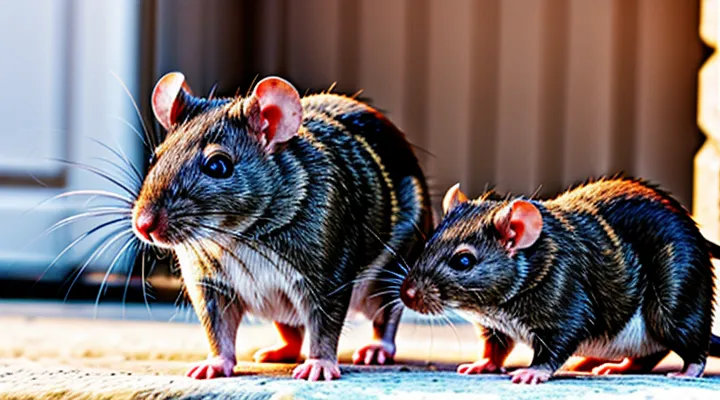
The Physiology of Heat Loss and Gain
Metabolic Rate and Heat Production
Rats generate body heat primarily through basal metabolic processes, which depend on body mass, activity level, and dietary intake. At thermoneutral conditions—approximately 30 °C for laboratory rats—metabolic heat production matches heat loss, and the animal maintains core temperature without additional physiological effort. When ambient temperature drops below this range, the metabolic rate rises to compensate for increased heat loss.
Key mechanisms that elevate heat production in cold environments include:
- Shivering thermogenesis: rapid skeletal muscle contractions that convert chemical energy into heat.
- Non‑shivering thermogenesis: activation of brown adipose tissue (BAT) mitochondria, which uncouple oxidative phosphorylation to release heat.
- Increased sympathetic drive: catecholamine release stimulates both shivering and BAT activity, raising overall metabolic output.
Empirical measurements indicate that rats experience cold stress when ambient temperature falls beneath 20 °C. In this zone, resting metabolic rate can increase by 30–50 % relative to thermoneutral levels, and core body temperature may drop by 1–2 °C if thermogenic responses are insufficient. Prolonged exposure below 15 °C often leads to hypothermia, reduced locomotor activity, and impaired physiological functions.
Therefore, the temperature at which rats begin to feel cold correlates directly with the point where metabolic heat production can no longer offset environmental heat loss, typically around 20 °C for adult laboratory rats.
Surface Area to Volume Ratio
Rats lose heat primarily through their skin and fur, and the rate of loss is proportional to the surface area that contacts the environment. As body size decreases, the surface‑to‑volume ratio increases, meaning a larger proportion of body mass is exposed per unit of volume. This geometric relationship accelerates heat dissipation, making smaller rodents more vulnerable to ambient cold.
Thermoregulatory studies show that when ambient temperature drops below approximately 15 °C, rats begin to exhibit physiological responses such as peripheral vasoconstriction and elevated metabolic heat production. The threshold aligns with the point at which the heat loss dictated by their surface‑to‑volume ratio surpasses basal metabolic heat generation.
Key implications of the ratio:
- High surface‑to‑volume values → faster heat loss → earlier activation of cold‑defense mechanisms.
- Low surface‑to‑volume values (larger individuals) → slower heat loss → tolerance of lower temperatures before physiological stress appears.
Consequently, the temperature at which rats perceive cold is directly linked to their geometric proportion of surface area to volume, with smaller individuals reaching the cold‑stress point at higher ambient temperatures than larger conspecifics.
Fur Insulation
Rats rely on their pelage to retain body heat when ambient conditions drop below the point at which they begin to register cold. The coat consists of a dense under‑layer of fine hairs that trap air, and a coarser outer layer that repels moisture. This structure limits conductive and convective heat loss, allowing the animal to maintain core temperature in environments that would otherwise be perceived as chilly.
Heat‑loss reduction depends on fur thickness, fiber diameter, and the degree of loft. Greater loft increases the volume of trapped air, which possesses low thermal conductivity. Shorter, densely packed hairs diminish surface exposure, while longer guard hairs protect the insulating layer from wind and wetness. The combined effect creates a thermal gradient that delays the onset of sensory cold detection.
Experimental observations place the sensory threshold for rats at approximately 20 °C (68 °F) for ambient air; below this, behavioral indicators of discomfort increase. At temperatures near 15 °C (59 °F), the insulating capacity of the coat is insufficient to prevent a measurable drop in skin temperature, prompting thermoregulatory responses such as huddling and increased metabolic heat production.
Key factors influencing fur insulation effectiveness:
- Fiber density – higher hair count per square millimeter improves air retention.
- Hair length – longer guard hairs reduce wind penetration.
- Seasonal molt – winter coats exhibit greater thickness and softer fibers.
- Grooming condition – matting or loss of fur compromises the insulating layer.
Understanding these parameters informs the design of laboratory environments and the interpretation of temperature‑related behavioral data, ensuring that ambient conditions remain above the range where rats experience cold discomfort.
Ideal Temperature Ranges for Rats
Thermoneutral Zone Defined
The thermoneutral zone (TNZ) is the range of ambient temperatures in which a rat maintains a stable core temperature without activating metabolic heat production or heat‑loss mechanisms. Within this interval, basal metabolic rate remains at its minimum, and physiological responses such as shivering, non‑shivering thermogenesis, and evaporative cooling are suppressed.
Key characteristics of the TNZ for laboratory rats:
- Lower critical temperature (LCT) around 28 °C; temperatures below this point trigger increased oxygen consumption and brown‑adipose‑tissue activity.
- Upper critical temperature (UCT) near 30 °C; temperatures above this limit induce vasodilation and panting to dissipate excess heat.
- Metabolic rate plateaus between LCT and UCT, reflecting energy expenditure equal to that required for basic cellular functions.
- Core body temperature remains constant (≈38 °C) without behavioral adjustments such as nesting or huddling.
Determination of the TNZ relies on indirect calorimetry measurements that record changes in oxygen consumption and carbon dioxide production across a series of controlled ambient temperatures. The inflection points where metabolic rate deviates from the baseline define the LCT and UCT.
Understanding the TNZ is essential for interpreting the temperature at which rats begin to experience cold stress. When ambient temperature falls below the LCT, the animal initiates thermogenic responses, indicating the onset of a cold sensation. Consequently, experimental protocols that aim to avoid cold‑induced physiological alterations should maintain environmental conditions within the 28–30 °C window.
Impact of Humidity
Rats detect cold when ambient temperature falls below the point at which their core body temperature can be maintained without increased metabolic effort. Humidity modifies this threshold by altering heat exchange between the animal and its environment.
- High relative humidity reduces evaporative cooling, allowing rats to retain more heat; the cold‑sensing threshold shifts downward by approximately 2–4 °C compared with dry conditions.
- Low humidity accelerates water loss from the respiratory tract and skin, increasing conductive and convective heat loss; the threshold rises, making rats perceive cold at higher ambient temperatures.
- Intermediate humidity levels produce a gradual transition between these extremes, with the threshold moving in proportion to the moisture content of the air.
Experimental data from thermoregulation studies confirm that, at a constant ambient temperature of 15 °C, rats in 80 % relative humidity exhibit physiological markers of warmth (stable core temperature, low shivering frequency), whereas those in 20 % relative humidity show elevated metabolic rate and shivering, indicating cold perception.
Consequently, assessments of the temperature at which rats feel cold must incorporate ambient humidity as a critical variable. Ignoring moisture levels can misrepresent thermal comfort thresholds and lead to inaccurate interpretations of behavioral and physiological responses.
Acclimation and Adaptation
Rats detect ambient cold through cutaneous thermoreceptors that trigger avoidance when skin temperature falls below a physiological set point. Laboratory measurements show that adult laboratory rats begin to exhibit cold‑avoidance behavior at ambient temperatures around 18 °C, with a marked increase in locomotor activity and grooming when the environment drops to 15 °C or lower.
Acclimation refers to rapid, reversible adjustments that occur after repeated exposure to cooler conditions. Short‑term responses include:
- Peripheral vasoconstriction reducing heat loss
- Elevated shivering frequency to generate muscular heat
- Activation of brown adipose tissue, increasing non‑shivering thermogenesis
- Up‑regulation of uncoupling proteins in mitochondria, enhancing metabolic heat production
These mechanisms lower the temperature at which rats perceive discomfort, allowing individuals housed at 10 °C for several days to tolerate ambient temperatures 2–3 °C colder before displaying avoidance.
Adaptation denotes long‑term, heritable changes that improve survival in cold climates. Evidence from wild populations indicates:
- Denser fur and thicker undercoat, decreasing conductive heat loss
- Larger body mass relative to surface area, improving thermal inertia
- Altered expression of cold‑responsive ion channels (e.g., TRPM8) and metabolic enzymes
- Selection for alleles that favor efficient brown fat activity
Such traits shift the thermal set point downward across generations, so rats originating from northern latitudes remain behaviorally active at ambient temperatures near 12 °C, a range that would provoke strong avoidance in non‑adapted strains.
Experimental data demonstrate that acclimated rats maintain normal core temperature (≈38 °C) at ambient temperatures as low as 10 °C, whereas non‑acclimated counterparts experience hypothermia below 14 °C. The combination of immediate physiological adjustments and inherited morphological changes defines the temperature threshold at which rats experience cold stress.
Signs of Cold Stress in Rats
Behavioral Indicators
Rats display a consistent set of behaviors when ambient temperature drops below the range in which they maintain thermal comfort. Observable signs include:
- Shivering: rapid, rhythmic muscle contractions appear when skin temperature falls beneath approximately 20 °C.
- Reduced locomotor activity: movement speed and distance traveled decrease markedly at temperatures around 18 °C, reflecting energy conservation.
- Increased nesting: rats gather bedding material and construct compact nests, a response that intensifies as temperatures approach 15 °C.
- Huddling: individuals cluster together, often forming tight groups that elevate collective body temperature.
- Altered grooming: grooming frequency diminishes, and grooming bouts become shorter, indicating a shift of priority toward heat retention.
- Thermal preference shift: in a gradient apparatus, rats relocate toward warmer zones, typically selecting areas above 22 °C when colder zones are presented.
These behaviors emerge reliably in laboratory studies and serve as practical markers for identifying the temperature threshold at which rats perceive cold stress. Monitoring them enables precise assessment of thermal comfort limits without invasive measurements.
Physiological Responses
Rats begin to exhibit physiological signs of cold stress when ambient temperature falls below the range they maintain as thermoneutral (approximately 28–30 °C). Below this range, homeostatic mechanisms activate to preserve core temperature.
- Shivering thermogenesis appears at room temperatures near 15 °C, producing rapid muscle contractions that generate heat.
- Brown adipose tissue (BAT) recruitment intensifies at temperatures ≤10 °C, increasing uncoupling protein‑1 expression and elevating oxygen consumption.
- Peripheral vasoconstriction reduces cutaneous blood flow, measurable as a decrease in skin temperature and an increase in arterial resistance.
- Metabolic rate rises proportionally with the temperature drop; indirect calorimetry shows a 30–40 % increase in resting metabolic heat production between 20 °C and 5 °C.
- Hormonal responses include elevated norepinephrine and thyroid hormone levels, supporting both BAT activation and increased basal metabolism.
Telemetry recordings of core temperature reveal a gradual decline once ambient temperature drops below 20 °C, with a typical 1 °C core reduction for every 5 °C ambient decrease. The combination of shivering onset, BAT activation, and vasoconstriction defines the functional cold perception threshold in rats. These physiological markers provide reliable endpoints for experimental designs that require precise control of thermal stress.
Health Implications of Prolonged Cold Exposure
Rats begin to register cold sensations when ambient temperature drops below their thermoneutral zone, typically around 20 °C (68 °F). Prolonged exposure to temperatures beneath this threshold triggers physiological responses that extend beyond simple discomfort.
Extended cold stress activates the sympathetic nervous system, raising circulating catecholamines and cortisol. These hormonal shifts increase heart rate, elevate blood pressure, and promote vasoconstriction, which together raise the risk of cardiovascular strain. Persistent vasoconstriction also reduces peripheral blood flow, predisposing tissues to ischemia and impairing wound healing.
Metabolic consequences include heightened basal metabolic rate as the organism expends energy to generate heat. Sustained elevation of metabolic demand can deplete glycogen stores, induce weight loss, and exacerbate insulin resistance. In laboratory settings, chronic cold exposure has been linked to altered lipid profiles, with increased triglycerides and lowered high‑density lipoprotein levels.
Immunological effects arise from prolonged chill exposure:
- Suppressed leukocyte proliferation
- Decreased cytokine production
- Impaired antibody response
These changes diminish the animal’s ability to combat infections and may affect the validity of experimental models that rely on intact immune function.
Factors Influencing Cold Tolerance
Age and Health Status
Rats detect ambient cold through thermoreceptors that trigger physiological responses once the surrounding temperature drops below a species‑specific threshold. This threshold is not fixed; it varies according to the animal’s developmental stage and physiological condition.
- Neonatal rats (post‑natal days 0‑7) exhibit cold‑avoidance behavior at ambient temperatures as high as 30 °C, reflecting immature thermoregulatory mechanisms and higher surface‑to‑volume ratios.
- Juvenile rats (approximately 3‑6 weeks old) maintain comfort down to 20 °C, after which shivering and peripheral vasoconstriction become evident.
- Adult rats (8 weeks and older) tolerate temperatures near 15 °C before initiating cold‑induced metabolic adjustments.
Health status further modulates these limits. Rats with compromised cardiovascular or respiratory function show earlier onset of cold stress, often responding at temperatures 2‑5 °C higher than healthy counterparts. Chronic illnesses that impair brown adipose tissue activity reduce non‑shivering thermogenesis, shifting the cold perception threshold upward. Conversely, well‑conditioned, disease‑free individuals sustain lower ambient temperatures without observable stress markers.
Age‑related declines in thermogenic capacity and disease‑associated metabolic disruptions together define the practical temperature range for maintaining rat welfare in laboratory or breeding environments. Adjustments to housing temperature should account for the youngest and most vulnerable subjects, as well as any diagnosed health impairments.
Nutritional Intake
Rats maintain a thermoneutral zone near 30 °C; ambient temperatures below this range trigger physiological responses that the animal perceives as cold. When the environment drops to approximately 20 °C, the metabolic rate rises sharply to generate additional heat, and the animal’s behavior—such as huddling and increased locomotion—reflects the discomfort of the lower temperature.
Nutritional intake directly modulates the capacity to offset cold‑induced metabolic demand. High‑energy diets supply the substrates required for intensified thermogenesis, while specific macronutrient ratios influence the efficiency of heat production. Key nutritional factors include:
- Caloric density: greater kilocalorie content provides immediate fuel for elevated metabolic rates.
- Protein proportion: supports the synthesis of mitochondrial enzymes involved in oxidative heat generation.
- Fat quality: medium‑chain triglycerides are oxidized rapidly, delivering swift thermal energy.
- Feeding schedule: frequent small meals maintain a steady supply of substrates, reducing the lag between intake and heat production.
Implementing diets that emphasize these elements reduces the physiological strain experienced at sub‑thermoneutral temperatures. In laboratory settings, adjusting feed composition alongside ambient temperature control improves animal welfare and stabilizes experimental outcomes by minimizing cold‑related variability.
Group Huddling Behavior
Rats maintain body temperature most efficiently within a thermoneutral zone near 28–30 °C. When ambient temperature falls below this range, sensory receptors trigger physiological and behavioral responses that indicate discomfort from the cold.
One of the primary behavioral responses is collective huddling. Rats align body surfaces, reduce exposed skin area, and share metabolic heat. The behavior emerges rapidly as the environment becomes cooler, and it intensifies with decreasing temperature.
Key observations from controlled studies:
- At 25 °C, individuals begin to form loose clusters; metabolic rate rises modestly.
- At 22 °C, clusters become tighter, and the proportion of time spent huddling exceeds 50 % of activity.
- At 18 °C, rats maintain dense huddles, with a marked reduction in locomotion and a 30 % increase in core temperature relative to solitary individuals.
- Below 15 °C, huddling persists, but shivering thermogenesis adds to heat production.
Group size directly influences effectiveness. A cohort of six rats retains core temperature up to 2 °C higher than a pair under identical conditions. Larger groups also display lower individual energy expenditure, as measured by reduced oxygen consumption per rat.
These findings inform laboratory animal care standards. Maintaining cage temperatures above the lower limit of the thermoneutral zone minimizes the need for huddling, thereby reducing stress and conserving energy reserves. When lower temperatures are unavoidable, providing sufficient space for natural clustering supports thermoregulation without compromising welfare.
Mitigating Cold Stress for Rats
Providing Adequate Shelter
Rats become physiologically stressed when ambient temperatures fall below the range in which they can maintain core body heat without increased metabolic effort. This threshold typically lies between 10 °C and 15 °C for adult laboratory rats, although individual variation and acclimation can shift the limit slightly. When temperatures approach this lower bound, rats seek environments that reduce heat loss and conserve energy.
Providing adequate shelter addresses the thermal challenge directly. Effective shelter design includes:
- Insulated walls and ceilings constructed from materials with low thermal conductivity, such as expanded polystyrene or high‑density foam, to limit conductive heat transfer.
- A minimum bedding depth of 5 cm using absorbent, low‑temperature‑conductivity substrates (e.g., shredded paper or specialized rodent bedding) to create a micro‑climate that remains above the critical temperature.
- Controlled ventilation that prevents drafts while allowing sufficient air exchange to avoid humidity buildup and respiratory complications.
- Enclosed compartments or nest boxes positioned away from external walls, reducing exposure to colder surfaces and facilitating the formation of a stable, warmer microenvironment.
Monitoring environmental conditions ensures that shelter performance meets the required standards. Continuous temperature logging, coupled with periodic visual inspection of bedding integrity and structural insulation, enables timely adjustments before rats experience cold‑induced stress.
Supplemental Heating Options
Rats begin to exhibit physiological signs of cold stress when ambient temperature falls below approximately 20 °C (68 °F). Below this threshold, metabolic rate rises, shivering intensifies, and core temperature can decline, compromising welfare and experimental reliability.
When environmental conditions cannot be maintained within the optimal thermal range, supplemental heating becomes essential to prevent hypothermia and to preserve normal behavior.
- Heat lamps: Infrared or ceramic bulbs deliver focused radiant heat; placement should avoid direct exposure to prevent burns.
- Heating pads: Low‑voltage, thermostatically controlled pads provide gentle conductive warmth for cage floors or nesting areas.
- Warm water bottles: Filled with heated water and wrapped in insulating material; useful for short‑term supplementation during handling or transport.
- Environmental chambers: Enclosed units equipped with precise temperature regulation; suitable for long‑term studies requiring stable conditions.
- Nest material enrichment: High‑calorie bedding such as shredded paper or corn husk increases micro‑climate temperature within the nest.
Implement heating devices with continuous temperature monitoring, using calibrated probes placed near the animal’s resting zone. Adjust power settings to maintain cage temperature just above the cold‑stress threshold, typically 22–24 °C (71.6–75.2 °F). Regular inspection ensures equipment functions correctly and does not introduce hazards such as overheating or electrical failure.
Dietary Adjustments
Rats maintain body temperature through metabolic heat production; dietary composition directly influences this process. High‑fat diets increase caloric density, providing additional substrate for beta‑oxidation, which raises basal metabolic rate and generates extra heat. Consequently, rats consuming such diets tolerate lower ambient temperatures before exhibiting signs of cold stress.
Protein‑rich feeds supply amino acids that support gluconeogenesis and thermogenic pathways. Elevated protein intake enhances mitochondrial uncoupling, promoting heat generation without substantially increasing body fat. This adjustment can shift the temperature at which rats display cold‑induced behaviors, such as reduced activity or huddling.
Carbohydrate levels affect glycogen storage, a rapid source of energy for shivering thermogenesis. Diets with moderate carbohydrate content ensure sufficient glycogen reserves, enabling quick heat production during sudden temperature drops.
Practical dietary modifications for laboratory rats include:
- Adding 5–10 % supplemental fat (e.g., soybean oil) to standard chow.
- Increasing protein to 20–25 % of total calories.
- Maintaining carbohydrate proportion at 40–50 % of energy intake.
- Providing occasional high‑energy treats (e.g., nuts) during cold‑season housing.
These adjustments improve thermoregulatory capacity, allowing rats to remain comfortable at temperatures that would otherwise be perceived as cold. Monitoring body weight and coat condition verifies that dietary changes achieve the intended thermal benefit without inducing obesity or nutritional deficiencies.