
Understanding Rodents: A Broad Overview
The Order Rodentia
Key Characteristics of Rodents
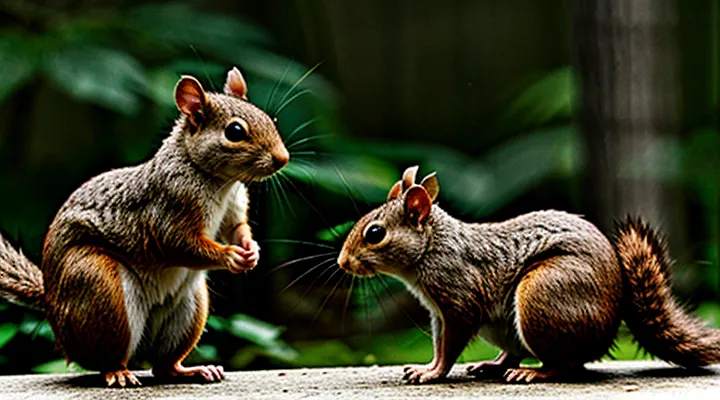
Rodents belong to the mammalian order «Rodentia», a clade that includes squirrels, rats, mice, beavers and many other species. All members share a distinctive set of anatomical and physiological traits that define the group.
- Continuously growing incisors in each jaw, positioned opposite each other and reinforced by enamel on the front surface and dentine on the back, requiring constant gnawing to prevent overgrowth.
- Single pair of incisors per quadrant, with no premolars or canines, creating a characteristic dental formula.
- Highly developed masticatory muscles that generate strong bite forces for processing tough plant material, seeds and wood.
- Compact skulls with large auditory bullae, enhancing hearing sensitivity to low‑frequency sounds.
- Presence of a well‑developed cecum, facilitating fermentation of fibrous vegetation and extraction of nutrients.
- Typically prolific reproductive strategies, characterized by short gestation periods and large litter sizes, supporting rapid population turnover.
These characteristics underpin the evolutionary affinity between squirrels and rats. Both exhibit the same incisor morphology and digestive adaptations, confirming their placement within the same order despite divergent ecological niches. The shared dental and cranial features provide the primary evidence for a common ancestry, while variations in tail length, arboreal versus terrestrial habits, and social organization illustrate the adaptive diversification that occurred after the lineages split.
Diversity within the Order
The order Rodentia comprises more than 40% of all mammalian species, displaying extensive morphological and ecological variation. Members range from arboreal acrobats to subterranean diggers, occupying habitats on every continent except Antarctica. Body size spans from the tiny African pygmy mouse (≈5 g) to the capybara (≈65 kg), while dental adaptations include high‑crowned incisors for gnawing hard plant material and specialized molar patterns for insectivory.
Key families illustrate this diversity:
- Sciuridae – squirrels, marmots, and flying squirrels; primarily diurnal, many species adept at gliding or burrowing.
- Muridae – true mice, rats, and gerbils; highly fecund, often commensal with humans, displaying broad dietary flexibility.
- Castoridae – beavers; semi‑aquatic engineers constructing dams and lodges.
- Caviidae – guinea pigs and capybaras; herbivorous, social, with complex vocal communication.
- Dipodidae – jerboas and birch mice; characterized by elongated hind limbs for saltatorial locomotion.
Squirrels and rats belong to distinct families within Rodentia, yet share the fundamental rodentian traits of continuously growing incisors and a single pair of upper incisors. Genetic analyses place both families within the same superfamily, indicating a common ancestor dating back roughly 40 million years. This evolutionary relationship explains the similarity of dental morphology while accounting for divergent ecological niches and behavioral strategies.
Overall, the order’s breadth encompasses a spectrum of life histories, anatomical specializations, and adaptive radiations, demonstrating that superficial resemblances, such as those between squirrels and rats, arise from deep shared ancestry combined with extensive diversification.
The Evolutionary Relationship Between Squirrels and Rats
Shared Ancestry: Evidence from Taxonomy
Family Sciuridae: The Squirrels
Family Sciuridae comprises the squirrels, a diverse group of rodents distinguished by a robust skull, strong incisors, and a characteristic bushy tail. The family falls within the order Rodentia and is separate from the family Muridae, which contains the common rats. Membership in Sciuridae includes tree squirrels, ground squirrels, chipmunks, marmots, and flying squirrels, encompassing over 280 species worldwide.
Key morphological and ecological traits of Sciuridae:
- Large, ever‑growing incisors with a pronounced enamel ridge.
- Highly developed cheek pouches for food transport.
- Tail morphology ranging from elongated and bushy (tree squirrels) to short and naked (ground squirrels).
- Predominantly diurnal activity patterns, though some species are crepuscular or nocturnal.
- Adaptations for arboreal locomotion, such as sharp claws and flexible ankle joints, in many genera.
Both squirrels and rats share the rodent order, indicating a common ancestry that dates back to the early Paleogene, roughly 60–70 million years ago. Genetic studies place the divergence of Sciuridae from the lineage leading to Muridae early in rodent evolution, resulting in distinct suborders: Sciuriformes for squirrels and Myomorpha for rats. This separation accounts for significant differences in skull structure, dentition, and sensory adaptations.
Ecologically, squirrels occupy a range of habitats from forests to alpine meadows, often acting as seed dispersers through caching behavior. Rats, by contrast, display greater commensal tendencies, thriving in human‑altered environments and exhibiting omnivorous diets. Reproductive strategies also differ, with squirrels typically producing fewer, larger litters, whereas rats generate numerous small litters per year.
In summary, squirrels belong to the family Sciuridae, a well‑defined rodent lineage separate from the murid rats. Their relationship is limited to the shared order Rodentia, reflecting a distant evolutionary connection rather than close taxonomic affinity.
Family Muridae: The Old World Rats and Mice
The family Muridae comprises the Old World rats and mice, representing the largest rodent family with more than 700 species. Members share a common ancestry within the order Rodentia and are classified under the suborder Myomorpha.
Muridae and Sciuridae (the squirrel family) both belong to Rodentia, indicating a distant phylogenetic connection. Molecular studies place the divergence of the two families at approximately 50–60 million years ago, confirming that they are separate evolutionary lineages.
Key morphological traits of Muridae include:
- Elongated rostrum and narrow skull
- Incisors with a single enamel layer on the outer surface
- Flexible spine allowing rapid, sinuous movement
- Tail length roughly equal to body length, often hairless
Ecologically, Muridae species occupy diverse habitats across Europe, Asia, and Africa. They thrive in grasslands, forests, and human‑altered environments, displaying omnivorous diets and high reproductive rates.
Regarding the relationship between squirrels and rats, both families are rodents and share a basal common ancestor, yet they diverged early in rodent evolution. Consequently, squirrels and Muridae rodents are relatives at the order level but are not closely related at the family level.
Distinguishing Features and Adaptations
Physical Differences
Squirrels and rats belong to the order Rodentia but are assigned to separate families: Sciuridae for squirrels and Muridae for rats. This taxonomic distinction is reflected in several observable physical traits.
- Body size: squirrels typically range from 20 cm to 30 cm in head‑body length, whereas rats average 15 cm to 20 cm.
- Tail morphology: squirrels possess long, bushy tails composed of dense fur; rats have shorter, hairless tails with a scaly surface.
- Fur coverage: squirrels are covered almost entirely by soft, often multicolored fur; rats exhibit sparse fur, especially on the ventral side, exposing more skin.
- Dental pattern: both have continuously growing incisors, yet squirrel incisors are generally larger and more robust to accommodate a diet of hard nuts, while rat incisors are slimmer, suited for gnawing softer plant material and waste.
- Limb structure: squirrels have longer hind limbs relative to forelimbs, facilitating leaping and arboreal locomotion; rats display more uniform limb proportions, optimized for rapid ground movement and climbing in confined spaces.
- Ear size: rats feature large, thin ears that enhance auditory sensitivity; squirrels have smaller, rounded ears covered by fur.
These physical characteristics underscore divergent evolutionary adaptations despite shared rodent ancestry.
Behavioral Differences
Squirrels and rats share the order Rodentia but belong to distinct families—Sciuridae and Muridae—resulting in markedly different behavioral repertoires.
Key behavioral contrasts include:
- Foraging strategy: squirrels harvest nuts and seeds, cache surplus for later retrieval; rats exploit a broader diet, often scavenging human waste and displaying opportunistic feeding.
- Social organization: many squirrel species are solitary or form loose colonies with defined hierarchies; rats typically live in dense colonies with complex social bonds and cooperative breeding.
- Territoriality: squirrels defend individual home ranges and cache sites aggressively; rats maintain overlapping territories, relying on scent marking and communal nesting to reduce conflict.
- Activity pattern: squirrels are predominantly diurnal, aligning foraging with daylight; rats exhibit nocturnal or crepuscular activity, reducing predation risk.
- Nesting behavior: squirrels construct nests in trees (dreys) or burrows, emphasizing insulation and concealment; rats occupy burrows, sewers, or building interiors, favoring proximity to food sources.
These divergences reflect evolutionary adaptations to disparate ecological niches despite a common rodent ancestry.
Common Misconceptions and Clarifications
Dispelling Myths about «Pest» Classification
Squirrels and rats belong to distinct families within the order Rodentia; squirrels are members of Sciuridae, while rats are classified under Muridae. This taxonomic separation undermines the common perception that both groups share a pest status solely because of their rodent affiliation.
Key misconceptions about the «pest» label:
- The term «pest» implies uniform ecological impact, ignoring species‑specific behavior and habitat use.
- Classification based on nuisance alone overlooks the ecological services provided by many squirrels, such as seed dispersal and forest regeneration.
- Rat‑related health concerns are often extended to squirrels without evidence of comparable disease vectors.
- Legal regulations frequently group squirrels with rats, leading to indiscriminate control measures that harm non‑target wildlife.
Accurate classification requires evaluation of:
- Phylogenetic relationships: genetic analyses confirm separate evolutionary lineages.
- Ecological roles: squirrels contribute to plant community dynamics; rats often thrive in anthropogenic environments.
- Human‑wildlife conflict: degree of crop damage, property intrusion, and disease transmission differ markedly between the two families.
Recognizing these distinctions prevents the blanket application of «pest» policies, promotes targeted management, and preserves the ecological functions of each group.
The Role of Habitat and Diet in Differentiation
Squirrels and rats belong to distinct families within the order Rodentia; squirrels are members of Sciuridae, while rats are classified under Muridae. Genetic analyses place these families on separate branches of the rodent phylogenetic tree, indicating a distant common ancestor rather than a close kinship.
The divergence of the two groups is largely driven by differences in «habitat» and «diet».
- «Habitat»: squirrels primarily occupy arboreal environments such as forests and urban trees, where they exploit vertical space for nesting and escape from predators. Rats favor terrestrial niches, including burrows, sewers, and human‑made structures, which provide shelter and proximity to food waste.
- «Diet»: squirrels consume a diet rich in nuts, seeds, fruits, and occasional fungi, requiring the ability to process high‑fat and high‑fiber resources. Rats exhibit omnivorous feeding habits, readily ingest grains, discarded food, insects, and carrion, reflecting adaptation to opportunistic, low‑quality food sources.
These ecological specializations reinforce morphological and behavioral traits that separate the two lineages, confirming that habitat preference and dietary strategy are central factors in their taxonomic differentiation.
Genetic Insights into Rodent Kinship
Comparative Genomics Studies
Comparative genomics provides a precise framework for evaluating the evolutionary proximity of squirrels and rats. High‑throughput sequencing of representative species from the families «Sciuridae» and «Muridae» yields complete nuclear genomes that can be aligned to identify shared and divergent genetic elements.
Analyses of orthologous gene sets reveal that approximately 78 % of protein‑coding sequences are conserved between the two groups, reflecting a common mammalian ancestry. However, synteny mapping shows extensive chromosomal rearrangements, indicating separate evolutionary trajectories that began after the split of the Rodentia crown group.
Key genomic parameters derived from current studies:
- Genome size: squirrel ≈2.5 Gb; rat ≈2.8 Gb.
- Average nucleotide identity across orthologs: 78 %.
- Number of lineage‑specific gene families: squirrel ≈1,200; rat ≈1,450.
- Divergence time estimated by molecular clock: 65–75 million years ago.
The combination of high sequence similarity and distinct chromosomal architecture supports classification of squirrels and rats as distant relatives within the order Rodentia, rather than close kin. Comparative genomics thus clarifies taxonomic relationships and informs evolutionary models of rodent diversification.
Implications for Classification
Squirrels belong to the family Sciuridae, while rats are members of the family Muridae; both families are placed within the order Rodentia. This taxonomic arrangement reflects a shared higher‑order classification but distinct evolutionary lineages at the family level.
Molecular phylogenetics demonstrates that Sciuridae and Muridae diverged early in rodent evolution, confirming separate clades. Consequently, the classification system retains two independent families rather than merging them into a broader group.
Implications for scientific and practical work include:
- Precise phylogenetic placement supports comparative studies of morphology and behavior.
- Distinct family designations guide surveillance of rodent‑borne diseases, as pathogen profiles differ between Sciuridae and Muridae.
- Conservation assessments apply family‑specific criteria, influencing management strategies for threatened species.
Accurate family‑level classification therefore underpins research validity, public‑health policy, and biodiversity protection.