
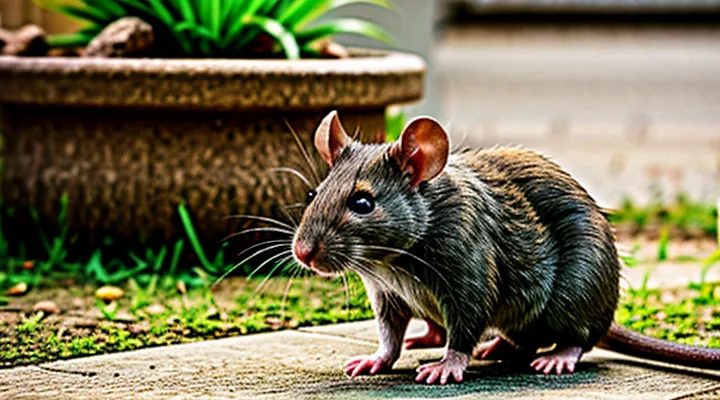
Understanding Rodents
What Defines a Rodent?
Key Characteristics of Rodentia
Rats belong to the order Rodentia, a mammalian group distinguished by a specific dental arrangement and skeletal adaptations that facilitate gnawing. The order encompasses over 2,000 species, ranging from small field mice to large capybaras, and is unified by a set of morphological and physiological traits.
- Continuously growing incisors in both the upper and lower jaws, characterized by a hard enamel front and a softer dentine rear, creating a self‑sharpening edge.
- Absence of canines, resulting in a diastema (gap) between the incisors and the cheek teeth.
- Single pair of incisors per quadrant, yielding a total of four incisors.
- Cheek teeth (premolars and molars) adapted for grinding, with occlusal surfaces that form complex ridges.
- Robust, reinforced mandible and skull structures that support strong bite forces.
- Highly developed masseter muscles, anchored to a specialized zygomatic arch, enhancing chewing efficiency.
- Short, flexible bodies and agile limbs suited for rapid movement and climbing.
- Reproductive strategy featuring relatively short gestation periods and large litters, promoting rapid population growth.
Rats exhibit all of these defining features: they possess the characteristic incisors, lack canines, display the typical diastema, and share the skull and musculature adaptations common to rodents. Consequently, the presence of these traits confirms that rats are classified within Rodentia.
Common Misconceptions About Rodents
Rats belong to the order Rodentia, a taxonomic group defined by a single pair of continuously growing incisors in each jaw. Misunderstandings about rodents often stem from conflating common names, visual traits, or ecological roles with scientific classification.
Common misconceptions include:
- All small mammals are rodents. Species such as shrews, moles, and opossums lack the distinctive dental formula of rodents and are classified in separate orders.
- Rodents are uniformly pests. While some species cause agricultural damage, many rodents serve as seed dispersers, soil engineers, and prey for predators, contributing to ecosystem stability.
- Rats and mice represent the same species. They are distinct genera—Rattus and Mus—with differences in size, behavior, and genetic makeup.
- Rodent teeth never stop growing. Only the incisors exhibit indeterminate growth; molars have a finite lifespan and wear pattern.
- All rodents are nocturnal. Activity patterns vary widely; some, like prairie dogs, are primarily diurnal, whereas others are crepuscular or strictly nocturnal.
Clarifying these points aligns public perception with taxonomic reality and highlights the diversity within Rodentia.
Rats as Members of Rodentia
Scientific Classification of Rats
Order Rodentia
The order Rodentia is a mammalian taxon characterized by a single pair of continuously growing incisors in each jaw, a diastema separating incisors from molars, and a primarily gnawing diet. These dental adaptations drive the evolutionary success of the group.
Rodentia comprises roughly 30 families and more than 2,500 extant species, occupying habitats on every continent except Antarctica. Major families include Muridae (true mice and rats), Cricetidae (hamsters, voles, New World rats), Sciuridae (squirrels), and Castoridae (beavers).
Rats belong to the family Muridae, subfamily Murinae, and are classified in the genus Rattus. This placement confirms their status as members of the order Rodentia. The taxonomic hierarchy for the common brown rat (Rattus norvegicus) is:
- Kingdom: Animalia
- Phylum: Chordata
- Class: Mammalia
- Order: Rodentia
- Family: Muridae
- Genus: Rattus
- Species: R. norvegicus
All species identified as rats share the defining rodent traits, confirming their inclusion in the rodent order.
Family Muridae
The family Muridae occupies the largest portion of the order Rodentia. It comprises the true mice, rats, and their close relatives, representing more than one‑third of all mammalian species.
Typical murid characteristics include:
- continuously growing incisors with a hard enamel front and softer dentine behind;
- a robust skull with a well‑developed zygomatic arch;
- a short, hairless tail that often exceeds body length;
- omnivorous dentition adapted for grinding and gnawing.
Prominent genera within Muridae are:
- Rattus – the true rats, such as Rattus norvegicus and Rattus rattus;
- Mus – the true mice, including Mus musculus;
- Apodemus, Peromyscus, and several others that share the same family traits.
Because rats belong to the genus Rattus, which is a constituent of Muridae, and Muridae is nested within Rodentia, rats are unequivocally classified as rodents. This taxonomic placement resolves any doubt about their rodent status.
Anatomical Features Supporting Classification
Dentition and Gnawing
Rats possess a distinctive dental arrangement that typifies members of the order Rodentia. Each jaw bears a single pair of continuously growing incisors, positioned at the front of both the upper and lower arches. The enamel covers only the outer surface of these teeth, leaving a softer dentine interior; this differential hardness creates a self‑sharpening edge as the animal gnaws.
The incisors emerge from the alveolar bone at a rate of approximately 2–3 mm per week. Wear generated by gnawing on hard materials, such as wood, seeds, or metal, balances this growth, preventing over‑elongation that could impede feeding. The lower incisors are set at a slight angle, allowing a scissor‑like motion that efficiently slices vegetation and structural objects.
Rats also retain a reduced set of cheek teeth. The molars are brachydont, lacking the high crowns seen in herbivorous mammals, and are adapted for grinding rather than cutting. These molars do not grow continuously; they rely on the wear produced by the incisors’ initial reduction of food size.
Key functional aspects of rat gnawing include:
- Generation of openings in stored food containers, facilitating access to nutrients.
- Modification of habitats, such as breaching insulation, wiring, or structural supports.
- Preparation of food particles for digestion by reducing size and breaking cell walls.
The combination of ever‑growing incisors, enamel‑dentine architecture, and coordinated molar action defines the gnawing capability that separates rodents from other mammalian groups. This dental specialization underlies the classification of rats within the rodent lineage.
Skeletal Structure
Rats belong to the order Rodentia, a classification confirmed by their skeletal characteristics. The defining elements of a rodent skeleton include a single pair of continuously growing incisors, a robust mandible, and a specific arrangement of vertebrae and limb bones.
Key skeletal features of rats:
- Skull: Large auditory bullae, reduced facial bones, and a pronounced zygomatic arch supporting strong jaw muscles.
- Dentition: One pair of upper and lower incisors with enamel only on the front surface, creating a self‑sharpening edge.
- Vertebral column: Seven cervical vertebrae, thirteen thoracic vertebrae, six lumbar vertebrae, a sacrum formed by fused vertebrae, and a long, flexible tail composed of caudal vertebrae.
- Limbs: Forelimbs with a scapula, humerus, radius, ulna, carpals, metacarpals, and five digits; hind limbs with a pelvis, femur, tibia, fibula, tarsals, metatarsals, and five digits.
- Pelvis: Broad, fused ilium, ischium, and pubis providing attachment for powerful hind‑limb muscles.
These anatomical traits align rats with other members of Rodentia, distinguishing them from mammals of different orders. The combination of a single incisor pair, specialized skull morphology, and characteristic vertebral and limb structures provides definitive evidence of their rodent status.
Evolutionary History of Rodents and Rats
Origins of the Rodent Order
Early Mammalian Diversification
Early mammalian diversification began in the Late Triassic, producing lineages that would later give rise to the major clades of modern mammals. The first split separated monotremes from therian ancestors, followed by a division of therians into marsupials and placentals. Within placentals, a rapid radiation in the Cretaceous generated the superorder Euarchontoglires, which includes rodents, lagomorphs, primates, and related orders. This diversification established the anatomical and genetic framework that defines contemporary rodent families.
Rats belong to the family Muridae, a lineage that emerged after the initial rodent radiation. Their placement is supported by dental formulae, skull morphology, and molecular phylogenies that trace back to the early Paleogene diversification of muroids. The evolutionary trajectory that produced murids involved:
- Expansion of gnawing incisors adapted for herbivory and opportunistic feeding.
- Development of a high reproductive rate, facilitating rapid population growth.
- Acquisition of flexible cranial sutures, allowing diverse dietary specializations.
These traits reflect the broader pattern of early mammalian diversification, where adaptive innovations in dentition, reproductive strategy, and cranial architecture enabled the emergence of the rodent order and, subsequently, the rat lineage within it.
Global Spread of Rodent Species
Rats belong to the order Rodentia, the most diverse mammalian group. Their classification confirms that all rat species are rodents, sharing characteristic incisors and gnawing adaptations.
Human commerce, urban expansion, and ecological flexibility drive the worldwide distribution of rodent taxa. Species that originated in specific regions now appear on multiple continents due to cargo shipments, ship ballast, and deliberate introductions.
- Rattus norvegicus – native to East Asia; now common in Europe, North America, Africa, and Oceania.
- Rattus rattus – originated in Southeast Asia; established in tropical and subtropical zones worldwide.
- Mus musculus (house mouse) – Eurasian origin; present on all inhabited continents.
- Capybara – South American; introduced to parts of Europe and Asia through zoological collections.
- Sciuridae (squirrels) – diverse genera; spread from North America to Europe and Asia via trade.
Adaptability to human habitats, high reproductive rates, and omnivorous diets enable rodents to colonize urban, agricultural, and natural environments. Their presence influences seed dispersal, soil turnover, and predator–prey dynamics, while also facilitating transmission of zoonotic pathogens and causing crop losses.
The pattern of rodent expansion illustrates how taxonomic identity, ecological versatility, and anthropogenic vectors combine to produce a truly global rodent community.
Rat Lineage within Rodentia
Ancient Ancestors
Rats belong to the order Rodentia, family Muridae, subfamily Murinae. Their classification rests on dental morphology, skull structure, and genetic analyses that align them with other rodents.
The lineage of rats stretches back to the early Paleogene. Fossil genera such as Paramys, Eumysops, and Pseudomys represent the earliest murid relatives. These ancestors exhibit the characteristic rodent incisors and jaw mechanics that persist in modern species.
Key evolutionary features inherited from ancient murids include:
- Continuously growing incisors that self‑sharpen through gnawing.
- A single pair of enlarged cheek teeth positioned behind the incisors.
- A robust mandible adapted for powerful biting.
The transition from early Paleocene forms to contemporary rats involved incremental changes in body size, habitat preference, and reproductive strategies, while retaining the core rodent dental pattern. This continuity confirms that rats are direct descendants of the earliest rodent ancestors.
Modern Rat Evolution
Modern rat lineages have undergone rapid diversification during the past few hundred thousand years, driven by urban expansion, agricultural development, and climate fluctuations. Genomic analyses reveal distinct clades that correspond to ecological niches: commensal populations in cities, agricultural variants thriving in grain stores, and wild relatives inhabiting forested habitats. These clades display measurable differences in gene regions linked to metabolism, immune response, and olfactory receptors, reflecting adaptation to human‑altered environments.
Morphologically, contemporary rats exhibit variations in skull shape, dentition, and body size. Urban rats tend toward larger cranial capacity and robust incisors, supporting high‑calorie diets and increased gnawing activity. Rural counterparts retain narrower rostra and lighter builds, traits advantageous for foraging in less predictable food sources. Fossil records, combined with radiocarbon dating, place the emergence of these morphological trends within the Holocene epoch, aligning with the rise of permanent human settlements.
Key points summarizing recent evolutionary developments:
- Genetic divergence into at least three major phylogenetic groups (commensal, agricultural, wild).
- Selection pressure on detoxification enzymes enabling tolerance to rodenticides and pollutants.
- Enhanced social cognition linked to complex urban colonies, evidenced by increased brain region volume.
- Shift in reproductive timing, with multiple litters per year in temperate zones versus seasonal breeding in forest habitats.
Collectively, these findings confirm that rats remain members of the Rodentia order while illustrating how contemporary pressures have reshaped their evolutionary trajectory.
The Ecological Role of Rats
Rats in Ecosystems
Food Chain Dynamics
Rats belong to the order Rodentia, a taxonomic group defined by a single pair of continuously growing incisors in each jaw. Their classification as rodents places them among the most diverse mammalian clades, with species adapted to a wide range of habitats.
In terrestrial ecosystems, rats occupy mid‑trophic positions. They consume plant material, seeds, insects, and carrion, converting primary production and detritus into biomass accessible to higher predators. Their foraging behavior influences seed dispersal and population control of invertebrates, thereby affecting primary consumer dynamics.
Predators that rely on rats include:
- Small carnivorous mammals (e.g., foxes, weasels)
- Birds of prey (e.g., hawks, owls)
- Reptiles (e.g., snakes)
- Larger mammals (e.g., feral cats, dogs)
These predators obtain energy and nutrients from rat tissue, linking primary producers to apex consumers. When rat populations surge, predator numbers often increase in response, demonstrating a classic bottom‑up effect. Conversely, intense predation can suppress rat abundance, illustrating top‑down regulation.
Rats also serve as vectors for disease agents, transmitting pathogens to other wildlife and humans. This vector role adds a parasitic dimension to their position in the food web, influencing host health and community composition.
Overall, the classification of rats as rodents situates them at a pivotal junction in food chain dynamics, where they act simultaneously as consumers of primary resources, prey for a variety of predators, and carriers of disease organisms.
Seed Dispersal and Predation
Rats belong to the order Rodentia, a taxonomic group characterized by continuously growing incisors and a gnawing habit. Their interaction with seeds illustrates both consumption and inadvertent plant propagation.
In natural ecosystems, rats locate seeds through olfactory cues and tactile exploration. Upon discovery, they may:
- Remove the seed coat and eat the embryo, reducing seed viability.
- Transport seeds to a hidden cache, often burying them in soil or leaf litter.
- Retrieve cached seeds later; unrecovered items can germinate.
The balance between these outcomes determines the net effect on plant recruitment. Species that produce large, nutritious seeds tend to experience higher predation rates, while those with protective husks may be more likely to be cached and later germinate.
Research in temperate forests shows that rat caching distance averages 5–15 m from the source plant, creating spatial patterns of seedling emergence distinct from wind or bird dispersal. In arid regions, rat activity contributes to the establishment of pioneer vegetation by moving seeds into microhabitats with favorable moisture.
Overall, rat behavior exemplifies a dual role: direct seed loss through consumption and indirect seed dispersal via caching. The species’ classification as a rodent informs predictions about dental morphology, foraging strategies, and ecological impact on seed dynamics.
Human-Rat Interactions
Urban Environments
Rats belong to the order Rodentia, a taxonomic group characterized by continuously growing incisors and a gnawing adaptation. In cities, this classification explains the species’ capacity to exploit human-made structures and resources.
Urban habitats provide abundant food waste, shelter in sewers and building cavities, and limited natural predators. These conditions accelerate population growth and facilitate the spread of diseases that rodents can carry.
Key aspects of rat presence in metropolitan areas include:
- High reproductive rate: females can produce several litters per year, each containing up to a dozen offspring.
- Behavioral flexibility: rats navigate complex pipe networks, climb vertical surfaces, and adjust foraging patterns to avoid human activity.
- Ecological impact: they compete with native wildlife for limited resources and alter waste decomposition processes.
Management strategies rely on accurate identification of rodent species, monitoring of infestation levels, and integrated control measures such as baiting, habitat modification, and public education. Effective implementation reduces health risks and limits economic damage caused by structural gnawing and contamination.
Agricultural Impacts
Rats, classified within the order Rodentia, interact with agricultural systems through direct and indirect mechanisms. Their gnawing behavior damages crops, storage facilities, and irrigation equipment, leading to measurable yield reductions.
Key agricultural effects include:
- Consumption of seeds and seedlings, lowering germination rates.
- Contamination of harvested produce with urine, feces, and hair, prompting food‑safety interventions.
- Transmission of pathogens such as Leptospira spp. and Salmonella spp., increasing livestock morbidity and necessitating veterinary treatments.
- Disruption of soil structure via burrowing, which can alter moisture retention and nutrient distribution.
Mitigation strategies rely on integrated pest management, combining habitat modification, exclusion techniques, and targeted rodenticide application to protect crop productivity while minimizing ecological side effects.
Distinguishing Rats from Other Mammals
Comparing Rats to Non-Rodent Species
Lagomorphs (Rabbits and Hares)
Rats belong to the order Rodentia, whereas rabbits and hares are members of the separate order Lagomorpha. The two orders share superficial similarities such as gnawing incisors, but their evolutionary histories diverge at the family level.
Lagomorphs are defined by several anatomical and physiological traits:
- Two pairs of upper incisors: a primary front tooth and a smaller second pair positioned directly behind it.
- Continuous growth of all incisors, requiring regular wear through chewing.
- A diet dominated by herbaceous plant material, with a specialized cecum for fermenting cellulose.
- Reproductive strategies that include precocial young in many hare species and altricial kits in most rabbits.
Rats, in contrast, possess a single pair of upper incisors, lack the second incisors characteristic of lagomorphs, and exhibit a more omnivorous feeding pattern. Their digestive tract lacks the extensive cecal fermentation system seen in rabbits and hares. These distinctions confirm that lagomorphs constitute a distinct mammalian order separate from the rodents that include rats.
Shrews and Moles
Rats belong to the order Rodentia, a group defined by a single pair of continuously growing incisors in each jaw. Shrews and moles, despite superficial resemblance to small mammals, are classified in the order Eulipotyphla, which includes insectivorous species with distinct dental and skeletal characteristics.
Key differences between rodents and the insectivores:
- Dental formula: rodents have a single pair of large incisors and a gap (diastema) before the cheek teeth; shrews and moles possess sharp, uniform teeth without a diastema.
- Skull morphology: rodent skulls feature a robust zygomatic arch and enlarged masseter muscles; insectivores have a more delicate skull and reduced masseter development.
- Auditory bullae: rodents typically have simple, thin-walled bullae; shrews and moles exhibit inflated, complex bullae that enhance low‑frequency hearing.
Ecologically, shrews are active predators of invertebrates, relying on high metabolic rates and rapid movements. Moles specialize in subterranean foraging, using enlarged forelimbs for digging and a reduced visual system. Neither group shares the gnawing adaptations that define rodents.
Consequently, when evaluating the classification of rats, the presence of shrews and moles in the broader discussion underscores that morphological and genetic criteria, not size or habitat, determine membership in Rodentia. Rats are rodents; shrews and moles are not.
Visual and Behavioral Differences
Physical Appearance
Rats belong to the order Rodentia, a group defined by distinct morphological traits. Their bodies are compact, ranging from 15 cm to 30 cm in length, not including the tail. Fur covers the dorsal surface with colors from brown to black, while the ventral side is usually lighter. The tail is naked, scaly, and proportionally long, often matching the body length.
Key rodent features evident in rats include:
- Continuously growing incisors with a sharp, chisel‑like edge, limited to the front of the mouth.
- Prominent whiskers (vibrissae) on the snout, providing tactile feedback.
- Strong, clawed forepaws adapted for gnawing and climbing.
- A skull with a high, narrow braincase and a well‑developed masseter muscle attachment.
These characteristics confirm that rats exhibit the physical profile typical of rodents, reinforcing their taxonomic placement within the order.
Habitat and Diet Diversities
Rats belong to the order Rodentia, a group characterized by continuously growing incisors and a highly adaptable physiology. Their classification as rodents is supported by skeletal morphology, dental formula, and genetic markers common to the order.
Rats inhabit a broad spectrum of environments, ranging from subterranean burrows in arid regions to densely populated urban infrastructure. In natural settings they occupy:
- Grasslands, where loose soil permits extensive tunneling.
- Forest edges, exploiting fallen logs and leaf litter for shelter.
- Coastal dunes, tolerating saline spray and shifting sands.
- Human-made structures, including sewers, basements, and abandoned buildings.
Dietary breadth mirrors habitat diversity. Rats are omnivorous opportunists, capable of metabolizing plant, animal, and anthropogenic resources. Primary food categories include:
- Seeds and grains, providing carbohydrates and essential fatty acids.
- Insects and small vertebrates, supplying protein and micronutrients.
- Fruits and vegetables, delivering vitamins and fiber.
- Human refuse, encompassing processed foods, waste oils, and discarded meat.
This ecological flexibility enables rats to thrive across continents and climatic zones, reinforcing their status as a quintessential rodent species.