
Understanding the «Not-a-Rat» Phenomenon
Why Do People Confuse Other Animals with Rats?
Similarities in Appearance
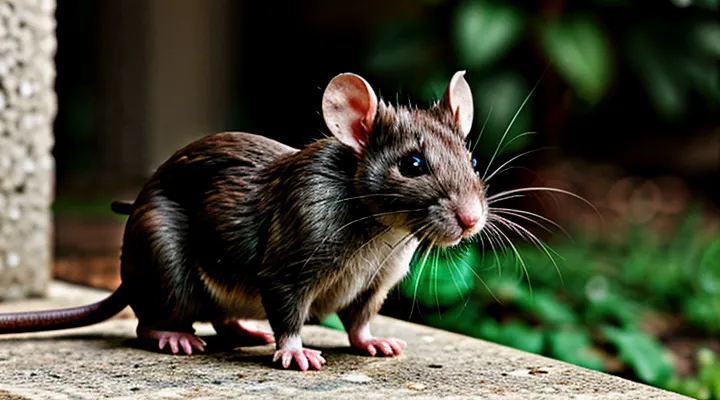
The discussion concentrates on visual traits that cause certain non‑rodent mammals to be mistaken for true rats.
- Elongated, cylindrical body profile matches the general silhouette of a rat.
- Dense, coarse fur covering the entire body, typically ranging from brown to gray tones.
- Long, hairless tail that is proportionally similar to body length, often with a tapering tip.
- Prominent, rounded ears positioned near the head’s apex, comparable in size to those of a typical rat.
- Well‑developed vibrissae extending from the snout, providing a tactile appearance identical to that of a rat.
- Dark, beady eyes set laterally, giving a comparable facial expression.
- Overall size falling within the 150‑300 mm body length range, aligning with the dimensions of many rat species.
These morphological elements collectively generate a rat‑like impression despite taxonomic differences.
Similarities in Behavior or Habitat
Many mammals that resemble rats yet belong to different families exhibit comparable behavioral patterns and occupy similar ecological niches.
- Primarily nocturnal; activity peaks at dusk and during the night.
- Omnivorous diets; consumption of seeds, insects, carrion, and human refuse.
- Burrowing or nesting in underground chambers; tunnels provide shelter and predator protection.
- Social organization; colonies or small family groups maintain hierarchies and cooperative care of young.
- High reproductive rates; multiple litters per year with short gestation periods.
- Tolerance of disturbed habitats; presence in urban alleys, agricultural fields, and waste sites.
Species such as the Norway rat’s relatives—field mice, gerbils, hamsters, and voles—demonstrate these traits. Their adaptability to variable environments mirrors that of true rats, enabling coexistence with humans and resilience to ecological change.
Common «Rat-Like» Animals and Their Distinguishing Features
Rodents Often Mistaken for Rats
Voles
Voles are small, stout rodents belonging to the family Cricetidae, subfamily Arvicolinae. Their bodies measure 10–15 cm in length, with short tails typically under 5 cm. Dense, soft fur ranges from brown to gray, and incisors are continuously growing, requiring constant gnawing.
Habitat preferences include grasslands, meadows, agricultural fields, and forest edges. Voles construct extensive tunnel networks that may reach depths of 30 cm and include shallow surface runways. Their burrows contain nesting chambers lined with grasses and leaf litter, providing shelter from predators and extreme weather.
Diet consists primarily of grasses, herbs, seeds, and root crowns. Seasonal shifts lead to increased consumption of underground plant parts during winter, supporting survival when above‑ground vegetation is scarce. Reproduction is rapid: females can produce three to six litters per year, each with four to eight offspring, reaching sexual maturity at 3–4 weeks.
Key distinctions from common rats (Rattus spp.):
- Body shape: Voles have a compact, rounded form; rats are more elongated.
- Tail length: Voles’ tails are short and hairless; rats possess long, scaled tails.
- Dental pattern: Voles exhibit a blunt, chisel‑like incisor edge; rats have sharper incisors.
- Social structure: Voles often live in family groups within burrows; rats are typically more solitary or form larger colonies above ground.
Ecologically, voles influence plant community dynamics through selective feeding and soil aeration via burrowing. Their populations fluctuate cyclically, affecting predator numbers such as owls, hawks, and mustelids. In agricultural settings, high vole densities can cause notable crop damage, prompting the need for integrated pest‑management strategies.
Moles
Moles belong to the family Talpidae, order Eulipotyphla, and are small mammals adapted to a life spent mostly underground. Their bodies are compact, covered with dense velvety fur that can lie in any direction, allowing movement through soil without resistance. Forelimbs are enlarged, equipped with powerful claws that function as digging tools; the skeletal structure of the hands shows a high degree of specialization for excavation. Eyes are reduced, and external ears are absent, reflecting the limited reliance on vision and hearing in a dark environment.
The diet of moles consists primarily of earthworms, insect larvae, and other soft-bodied invertebrates encountered while tunneling. Saliva contains toxins that immobilize prey, permitting consumption without prolonged struggle. Metabolic rates are high; moles consume food equivalent to several times their body weight each day to sustain energy demands of constant burrowing.
Key distinctions from rodents that superficially resemble them include:
- Taxonomic classification: moles are eulipotyphlans, whereas rats are murid rodents.
- Dental formula: moles possess sharp, insectivorous teeth; rats have continuously growing incisors for gnawing.
- Limb morphology: moles have broad, spade-like forefeet; rats have generalized paws suited for climbing and running.
- Sensory adaptations: moles rely on a highly developed tactile organ (Eimer’s organ) on the snout; rats depend on acute vision and hearing.
- Habitat use: moles construct extensive subterranean tunnel systems; rats occupy above‑ground niches such as burrows, nests, and human structures.
Reproductive cycles are seasonal; females give birth to litters of two to seven offspring after a gestation period of about four weeks. Young are born hairless and blind, gaining fur and functional forelimbs within weeks. Lifespan in the wild averages three to five years, extending up to eight years under protected conditions.
Ecologically, moles influence soil aeration and nutrient distribution through their tunneling activity. Their predation on soil invertebrates helps regulate populations of organisms that could become pests in agricultural settings. Conservation status varies by species; most are listed as least concern, though habitat loss and pesticide exposure threaten localized populations.
Shrews
Shrews are small, insectivorous mammals that often resemble rats in size and body shape, yet they belong to the order Eulipotyphla rather than Rodentia. Their elongated snouts, dense fur, and rapid movements give a superficial rat-like appearance, but anatomical and genetic differences are pronounced.
Key distinguishing features include:
- Dentition: Shrews possess sharp, pointed teeth without the gnawing incisors typical of rodents.
- Metabolism: Extremely high basal metabolic rates require frequent feeding; some species consume up to their body weight daily.
- Sensory adaptations: Many shrews rely on echolocation and a heightened sense of touch to locate prey underground.
- Reproductive strategy: Short gestation periods (≈20 days) and multiple litters per year contrast with the longer cycles of most rats.
Habitat ranges from temperate forests to grasslands, with species adapting to leaf litter, soil burrows, and even alpine tundra. Diet consists primarily of insects, arachnids, and small vertebrates; some larger shrews supplement with seeds or fruit.
Ecologically, shrews serve as predators of invertebrates, regulating pest populations, and as prey for birds of prey, snakes, and larger mammals. Their presence indicates healthy, biodiverse ecosystems.
Gerbils and Hamsters
Gerbils and hamsters are small rodents that often resemble rats in size and general body plan, yet they belong to distinct taxonomic families and exhibit unique behavioral and physiological traits.
Gerbils (family Muridae, genus Meriones) possess long hind limbs, a hairless tail stripe, and a preference for arid environments. They are diurnal, construct extensive burrow systems, and display social structures that involve group living and cooperative grooming. Their diet consists mainly of seeds, grains, and occasional insects, requiring a high-fiber, low-fat feed. Reproductive cycles are rapid; females can produce multiple litters per year, each containing three to eight offspring.
Hamsters (family Cricetidae, genus Mesocricetus and related genera) feature a stout body, a short tail, and cheek pouches for food transport. They are primarily nocturnal, solitary, and territorial, defending burrows against conspecifics. A typical diet includes commercial hamster mix, fresh vegetables, and occasional protein sources. Breeding occurs less frequently than in gerbils, with females usually delivering one to two litters annually, each comprising four to twelve pups.
Key distinctions:
- Activity pattern: gerbils – day; hamsters – night.
- Social behavior: gerbils – group; hamsters – solitary.
- Tail morphology: gerbils – long, partially hairless; hamsters – short, fully furred.
- Habitat preference: gerbils – dry, open spaces; hamsters – enclosed burrows in temperate zones.
Understanding these characteristics clarifies why gerbils and hamsters may be mistaken for rats while maintaining separate ecological niches and care requirements.
Non-Rodent Animals That Can Be Confused with Rats
Opossums (Young)
Young opossums often resemble small rodents in size, coloration, and the presence of a long, hair‑covered tail, leading to frequent misidentification as rats. Despite superficial similarities, they belong to the marsupial order and exhibit distinct anatomical and developmental traits.
Key differences include:
- Reproductive system: Females possess a forward‑facing pouch where newborns complete development; rats give birth to fully formed pups.
- Dentition: Opossums have a dental formula of 5/4 incisors, 1/1 canine, 3/3 premolars, and 4/4 molars, while rats display a different arrangement with continuously growing incisors.
- Claws: Opposable thumbs on the hind feet enable precise grasping, a feature absent in true rodents.
- Tail structure: The opossum tail is prehensile and muscular, capable of supporting the animal’s weight; rat tails are primarily for balance and lack muscular control.
- Skin and fur: Juvenile opossums display a fine, grayish‑brown coat with a distinct white facial mask, contrasting with the uniform coloration of most rat species.
Behaviorally, young opossums are solitary after leaving the pouch, relying on innate climbing ability to navigate arboreal habitats, whereas rat juveniles remain in communal nests. These characteristics collectively prevent confusion with true rats despite initial visual similarity.
Weasels and Stoats
Weasels and stoats are members of the Mustelidae family, sharing a slender body, elongated tail, and a size range that overlaps with common rodents. Their superficial resemblance to rats stems from a narrow skull, short limbs, and a coat that varies from brown to black, but taxonomic classification places them firmly among carnivorous mammals rather than rodents.
Physical characteristics include:
- Body length of 15–25 cm, tail adding 5–10 cm.
- Dense fur with seasonal color change in stoats (brown summer, white winter).
- Sharp, retractable claws and a pointed snout designed for hunting.
- Dental formula adapted for slicing flesh rather than grinding plant material.
Habitat preferences cover temperate forests, grasslands, and agricultural fields across Europe, Asia, and North America. Both species exhibit high mobility, occupying territories that can shift seasonally in response to prey availability.
Diet consists primarily of small vertebrates such as mice, voles, and shrews. Stoats display a specialized hunting technique known as “weasel war dance,” a rapid, erratic movement that disorients prey. Weasels employ a similar approach, relying on stealth and swift strikes.
Reproductive cycles produce litters of 4–10 offspring after a gestation period of 21–30 days. Juveniles are born altricial, gaining independence within weeks. Seasonal breeding aligns with peaks in prey populations, ensuring adequate food supply for growing kits.
Key distinctions from rats involve skeletal structure, dentition, and metabolic rates. Mustelids possess a more flexible spine, facilitating rapid directional changes, while rodents have a rigid vertebral column. Dental morphology reflects a carnivorous diet, contrasting with the omnivorous incisors of rats. These anatomical and physiological differences prevent misidentification when examined beyond superficial appearance.
Lizards (Certain Species)
Lizards that exhibit a rodent‑like appearance share several morphological traits: elongated bodies, reduced limbs, and a sleek, tapered head. These characteristics produce a silhouette reminiscent of small mammals without belonging to the mammalian clade.
Among the most notable examples are skinks of the genus Plestiodon. Species such as the five‑lined skink (Plestiodon fasciatus) display a slender form, smooth scales, and a tail length that can exceed the body by a factor of two. Their coloration—often a muted brown or gray—enhances the visual similarity to common rats.
Legless lizards provide another case of convergent body plans. The glass lizard (Ophisaurus ventralis) lacks functional limbs, possesses a long, cylindrical torso, and moves with a sinuous gait comparable to that of a small rodent navigating confined spaces. Despite the superficial resemblance, internal anatomy and reproductive strategies confirm their reptilian classification.
Key species that illustrate this phenotypic convergence include:
- Five‑lined skink (Plestiodon fasciatus)
- Western fence skink (Scincella lateralis)
- Mole skink (Plestiodon egregius)
- Glass lizard (Ophisaurus ventralis)
- Eastern glass lizard (Ophisaurus ventralis)
These taxa demonstrate that the rat‑like visual profile can arise in reptilian lineages through adaptations for burrowing, swift locomotion, and predator avoidance, independent of mammalian ancestry.
Ecological Roles and Habitats of «Rat-Like» Animals
Habitat Preferences and Niche Differentiation
Underground Dwellers
Underground mammals that resemble rats yet belong to distinct taxonomic groups illustrate convergent morphology driven by fossorial lifestyles. Their elongated bodies, reduced eyes, and dense fur enable efficient navigation through soil, while dental structures differ from true rats, reflecting varied diets.
Key examples include:
- Naked mole‑rat (Heterocephalus glaber) – a eusocial rodent from East Africa; lacks fur, possesses continuously growing incisors used for digging and gnawing.
- African giant pouched rat (Cricetomys gambianus) – larger than typical rats; burrows in savanna soils, exhibits powerful cheek pouches for food storage.
- Northern short‑tailed shrew (Blarina brevicauda) – a soricid with a rat‑like silhouette; occupies shallow tunnels, relies on venomous saliva to subdue prey.
- Pocket gopher (Geomys spp.) – a caviomorph that constructs extensive burrow systems; displays incisors that protrude forward, facilitating soil displacement.
- Mole‑like marsupial (Notoryctes typhlops) – an Australian marsupial with a rat‑like outline; features a streamlined skull and strong forelimbs for subterranean excavation.
These taxa share adaptive traits such as heightened tactile sensation, reinforced skeletal structures, and metabolic adjustments for low‑oxygen environments. Their convergent appearance underscores the influence of underground habitats on mammalian evolution, separating them clearly from true rats despite superficial similarity.
Arboreal Species
The focus is on tree‑dwelling mammals that visually resemble rats yet belong to distinct taxonomic groups. Their body plan typically includes a slender torso, elongated whiskers, and a pointed snout, creating a superficial similarity to true rodents while their evolutionary lineage diverges.
Key arboreal taxa with rat‑like appearance:
- Treeshrews (order Scandentia) – small, agile mammals with dense fur, long tails, and sharp incisors; occupy forest canopies across Southeast Asia.
- Sugar gliders (Petaurus breviceps, order Diprotodontia) – marsupials with a patagium for gliding, compact bodies, and whiskered faces that recall rat morphology.
- Southern flying squirrels (Glaucomys volans, family Sciuridae) – nocturnal squirrels possessing a membrane for controlled descent, featuring a pointed nose and long tail reminiscent of rodent silhouettes.
- Coatis (Nasua spp., family Procyonidae) – elongated bodies, flexible snouts, and a propensity for climbing trees; their coat pattern and size can be mistaken for large rats.
- Red-bellied squirrels (Callosciurus erythraeus, family Sciuridae) – arboreal rodents with a sleek build and rat‑like coloration, distinguished by a bushy tail and distinct facial markings.
Morphological convergence arises from similar ecological pressures: navigating narrow branches, foraging for insects or fruits, and avoiding aerial predators. Adaptations include reinforced forelimb musculature for gripping, tactile whiskers for spatial awareness, and dentition suited to omnivorous diets. Despite outward resemblances, genetic analyses place these species in separate orders, underscoring the distinction between true rats (order Rodentia) and their arboreal look‑alikes.
Aquatic or Semi-Aquatic Animals
Animals that resemble rodents yet inhabit water or semi‑aquatic environments demonstrate convergent evolution of body shape, whisker development, and tail morphology. Streamlined bodies, dense fur, and webbed or paddle‑like feet enable efficient swimming while preserving a rodent‑like silhouette.
Key adaptations include:
- Elongated, whiskered snouts for tactile navigation in murky water.
- Muscular, laterally compressed tails that function as rudders.
- Specialized glands producing water‑repellent fur that maintains insulation.
Representative species:
- Water vole (Arvicola amphibius) – semi‑aquatic, tail flattened for propulsion, fur resistant to saturation.
- Marsh rice rat (Oryzomys palustris) – inhabits wetlands, exhibits partially webbed hind feet.
- Nutria (Myocastor coypus) – large, muskrat‑like, fully webbed hind limbs, thrives in canals and rivers.
- Southern water shrew (Neomys fodiens) – dense fur, elongated snout, tail flattened for steering.
Conservation Status and Human Interaction
Impact of Misidentification on Conservation Efforts
Pest Control Mismanagement
The species often mistaken for a rat—such as the field mouse, bandicoot rat, or certain marsupial rodents—requires distinct treatment protocols. Misidentifying these animals triggers inappropriate control measures, leading to ineffective eradication, unnecessary chemical exposure, and ecological disruption.
Common errors in pest management include:
- Applying rodenticide formulations designed for true rats to non‑target species, which may be resistant or experience heightened toxicity.
- Deploying trap sizes and bait stations calibrated for larger rodents, resulting in low capture rates and prolonged infestation.
- Ignoring habitat preferences; for example, ground‑dwelling marsupials favor mulch and compost, whereas true rats exploit sewer systems.
Consequences of such mismanagement are measurable:
- Increased pest populations due to survival of mis‑treated individuals.
- Secondary poisoning of predators and scavengers that consume partially poisoned carcasses.
- Legal liabilities arising from non‑compliance with wildlife protection regulations.
Effective strategies demand precise identification and tailored interventions:
- Conduct visual surveys and, when necessary, genetic sampling to confirm species.
- Select control agents approved for the specific animal, considering resistance patterns and environmental impact.
- Adapt placement of traps and baits to match the target’s activity zones and nocturnal habits.
- Monitor outcomes with quantitative data—capture counts, bait consumption rates, and population indices—to adjust tactics promptly.
Implementing these practices reduces wasteful chemical use, safeguards non‑target fauna, and achieves sustainable population control.
Protection of Endangered Species
Rodent‑like mammals that differ from true rats face heightened extinction risk due to habitat loss, invasive predators, and limited distribution. Conservation programs target these species to maintain biodiversity and ecosystem function.
Effective protection strategies include:
- Habitat preservation through legally designated reserves and restoration of degraded areas.
- Control of introduced predators using trapping, fencing, or targeted eradication.
- Captive breeding and reintroduction initiatives coordinated with genetic management to avoid inbreeding.
- Community engagement that provides economic incentives for local stewardship and reduces hunting pressure.
Monitoring protocols rely on standardized surveys, camera traps, and genetic sampling to assess population trends and detect emerging threats. Data are reported to international databases, informing adaptive management and policy decisions.
Funding mechanisms combine government allocations, grant programs, and private philanthropy. Transparent allocation ensures resources support priority actions such as land acquisition, predator control, and capacity building for field staff.
Coexistence Strategies and Public Education
The species often mistaken for a rat occupies urban and suburban environments, competes for food, and may transmit parasites. Misidentification fuels fear and leads to indiscriminate control measures that threaten ecological balance.
Effective coexistence relies on targeted actions:
- Secure waste containers with tight-fitting lids to eliminate food sources.
- Install physical barriers such as mesh or steel flashing around building openings.
- Preserve natural vegetation corridors that provide shelter away from human habitation.
- Deploy live‑capture traps positioned near entry points, followed by relocation to suitable habitats.
- Conduct regular population surveys to adjust management tactics based on density trends.
Public education supports these measures by informing communities about the animal’s biology and the rationale behind non‑lethal control:
- Develop school modules that describe the species’ role in seed dispersal and predator–prey dynamics.
- Distribute fact sheets through local health departments, emphasizing disease risks associated with improper handling.
- Place clear signage near high‑risk areas outlining recommended waste‑management practices.
- Launch multimedia campaigns featuring expert interviews and visual identification guides.
- Offer workshops for property owners on installing exclusion devices and maintaining habitat buffers.
Coordinated implementation of practical strategies and informed outreach reduces conflict, safeguards public health, and preserves biodiversity.