
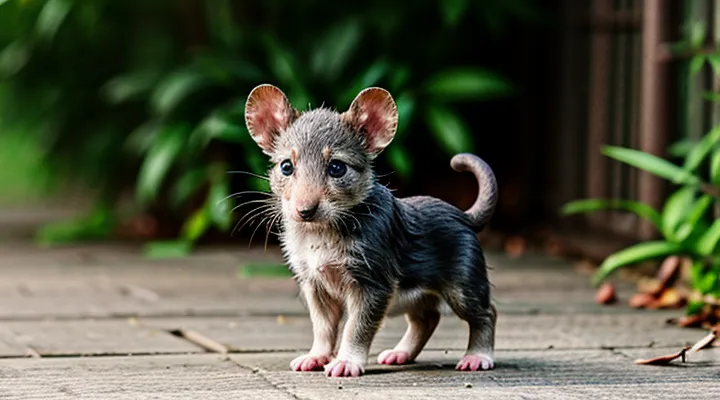
The Vulnerable Beginnings
Birth and Neonatal Stage (Days 1-7)
Physical Characteristics at Birth
Newborn wild rat pups emerge with a compact, hair‑covered body measuring approximately 2.5–3.0 cm in head‑body length. Body mass ranges from 1.5 to 3.0 g, reflecting minimal energy reserves at this stage.
Key physical traits include:
- Fur: Sparse, silky pelage that appears pinkish‑gray; coat density increases within the first week.
- Eyes and ears: Closed eyes and sealed ear canals; sensory organs develop rapidly but remain non‑functional at birth.
- Limbs: Forelimbs and hindlimbs are short, with undeveloped digits; claws are present but not yet capable of effective grasping.
- Tail: Short, naked, and flexible; length is roughly half the head‑body measurement and lacks the scaling seen in adults.
- Skin: Thin, translucent epidermis exposing underlying vasculature; pigmentation is minimal.
These characteristics enable the pup to remain concealed within the nest while relying entirely on maternal care for thermoregulation and nutrition.
Sensory Development: Touch and Smell
During the initial fortnight of a rat pup’s existence, tactile and olfactory systems undergo rapid maturation. Skin receptors begin to respond to pressure, vibration, and temperature, allowing the newborn to locate the nest, identify the mother’s nipples, and maintain body temperature through huddling. The development of mechanoreceptors follows a predictable timeline:
- Day 1–3: Merkel cells and Meissner’s corpuscles exhibit baseline activity, supporting light touch detection.
- Day 4–7: Ruffini endings and Pacinian corpuscles increase sensitivity to deeper pressure and rapid vibrations.
- Day 8–14: Integration of tactile input with motor pathways enables coordinated movements such as crawling and clinging.
Simultaneously, the olfactory epithelium expands, enhancing the pup’s ability to discriminate scent cues critical for survival. Early exposure to maternal pheromones and nest odor shapes neural circuits that later govern feeding behavior and social recognition. Key milestones include:
- Birth–Day 2: Primary olfactory neurons fire in response to amniotic fluid, establishing baseline odor detection.
- Day 3–5: Increased expression of odorant-binding proteins improves signal transduction for maternal scent.
- Day 6–14: Synaptic strengthening in the olfactory bulb links specific smells to feeding reflexes and thermoregulation.
The convergence of touch and smell during these weeks creates a multimodal map of the environment, guiding the pup toward nourishment and protection. Disruption of either modality—through injury or deprivation—impairs nest localization, reduces feeding efficiency, and delays developmental milestones. Consequently, intact tactile and olfactory pathways are essential for the successful transition from neonatal dependence to autonomous exploration.
Early Instincts and Maternal Care
The first days after birth expose wild rat pups to a suite of hard‑wired responses that ensure survival before they can navigate the environment independently. Newborns exhibit an immediate rooting reflex, directing their snouts toward the mother’s nipples when contacted. Suckling is triggered by tactile stimulation of the facial whiskers, allowing rapid milk intake. Thermoregulatory behavior appears as an instinctive curl‑up posture that conserves heat, while a pronounced huddling tendency drives pups to cluster in the nest for shared warmth.
Maternal care provides the essential complement to these innate actions. The dam continuously:
- Maintains nest temperature through body contact and periodic repositioning of pups.
- Delivers milk rich in antibodies and nutrients, adjusting volume as pups grow.
- Performs meticulous grooming, removing debris and stimulating circulation.
- Emits ultrasonic vocalizations that synchronize pup activity and reinforce bonding.
- Defends the nest from predators and conspecific intruders, employing aggressive posturing when threatened.
The interaction between pup instincts and maternal behavior creates a closed feedback loop. Pup vocalizations provoke maternal retrieval, while the mother’s presence reinforces the pups’ suckling reflex and huddling stability. As the first two weeks progress, pups gradually shift from a reliance on thermoregulation and milk to increased locomotor activity, yet the foundational instincts established at birth remain integral to their developmental trajectory.
Rapid Development and Exploration (Weeks 2-3)
Eye Opening and Initial Vision
The neonate rat remains blind for the first several days after birth. By the end of the third post‑natal day the eyelids begin to separate, and complete opening typically occurs between days four and five. This transition coincides with the maturation of the retinal photoreceptor layer, which shifts from a predominately rod‑driven system to one capable of detecting low‑intensity light.
During the initial period of visual exposure, the pup’s visual acuity is limited. Contrast sensitivity develops rapidly, allowing the animal to discern large, high‑contrast objects within the nest. Depth perception remains underdeveloped, and motion detection is the primary visual function. The following points summarize key aspects of early vision:
- Day 3–5: eyelids open; light perception begins.
- Day 5–7: retinal circuitry stabilizes; pup responds to sudden illumination.
- Day 7–10: improved contrast discrimination; start of orientation toward visual cues.
Neural pathways linking the retina to the superior colliculus and visual cortex undergo rapid synaptic strengthening during this window. Exposure to ambient light stimulates these connections, promoting the integration of visual information with motor patterns required for litter navigation. Consequently, the period immediately following eye opening represents a critical phase for establishing the sensory foundations that support later exploratory behavior.
Emergence of Hearing
The auditory system of a wild rat pup begins functional development within the first two post‑natal weeks. The external ear canal, initially sealed by a thin membrane, opens around day 10, allowing sound waves to reach the tympanic membrane. Concurrently, the middle‑ear ossicles complete ossification, establishing efficient transmission of acoustic energy to the inner ear.
Cochlear maturation proceeds rapidly after canal opening. By day 12, hair cells in the basal turn of the cochlea exhibit robust mechanoelectrical transduction, generating neural impulses in response to high‑frequency stimuli. The apical region, responsible for lower frequencies, reaches comparable sensitivity by day 15. Myelination of the auditory nerve fibers continues throughout this period, reducing latency of signal propagation.
Behavioral evidence of hearing emergence appears as reflexive responses to sudden sounds. Typical observations include:
- Startle jumps triggered by broadband clicks after day 11.
- Orientation movements toward speaker sources by day 13.
- Vocalization modulation in response to conspecific calls beginning around day 14.
These milestones align with the rapid growth of auditory cortical circuits. Synaptic density in primary auditory cortex increases markedly between days 12 and 18, supporting the integration of auditory information into the pup’s sensorimotor repertoire. The onset of hearing therefore provides a critical sensory input that shapes subsequent development of communication and predator‑avoidance behaviors.
First Attempts at Locomotion
During the initial postnatal days, the wild rat pup begins to explore movement beyond the nest. Muscular coordination emerges rapidly, driven by reflexive patterns and sensory feedback.
- Day 1–2: Twitching of forelimbs and hind limbs occurs in response to tactile stimulation. These involuntary motions provide the first proprioceptive input.
- Day 3–4: Pup exhibits spontaneous limb extensions while lying on its stomach, attempting to push forward. The motions remain irregular and lack forward thrust.
- Day 5–7: Coordinated fore‑to‑hind limb movements appear. The pup initiates short, low‑trajectory hops, alternating legs in a rudimentary gait.
- Day 8–10: Balance improves as the tail is employed for stabilization. The animal begins to crawl along the nest surface, using its whiskers to gauge substrate texture.
These stages reflect progressive integration of neural circuits governing motor control. Early locomotor attempts are characterized by high variability, rapid fatigue, and dependence on external support. By the end of the first ten days, the pup attains sufficient strength and coordination to leave the nest and navigate its environment independently.
Social Interactions within the Litter
During the first post‑natal weeks, a rat litter functions as a tightly knit unit. Each pup is born hairless and blind, relying on the mother and siblings for thermoregulation and nutrition. The cohort consists of 6‑12 individuals, depending on the dam’s litter size, and all members share the nest space from birth.
Physical contact dominates early interactions. Newborns huddle to conserve heat, forming clusters that shift as individuals seek optimal warmth. Sibling grooming begins within the second day, with pups using their forepaws to clean each other’s faces and bodies. This behavior reduces ectoparasite load and reinforces tactile bonds.
Vocal communication supports coordination. Ultrasonic calls, emitted at frequencies above 20 kHz, signal hunger, distress, or readiness to nurse. Siblings synchronize their calls, prompting the dam to adjust milk delivery. Call intensity peaks during the third and fourth days, then gradually declines as auditory acuity improves.
Resource competition shapes early hierarchy. Access to nipples is limited; dominant pups position themselves near the dam’s teats, while subordinates wait. Repeated contests establish a provisional pecking order that influences later social standing. The hierarchy is fluid, with shifts occurring after each feeding session.
Play and exploration emerge around the second week. Pups engage in brief bouts of chasing, gentle biting, and somersaulting. These activities develop motor skills, spatial awareness, and conflict resolution abilities. The progression from passive huddling to active play reflects maturation of neural circuits governing social behavior.
Key interaction types:
- Huddling for thermoregulation
- Sibling grooming for hygiene and bonding
- Ultrasonic vocalizations for coordination
- Competition for nursing sites, establishing dominance
- Early play involving chasing and gentle aggression
Collectively, these behaviors create a structured social environment that prepares the young rats for independent life and integration into adult colonies.
Weaning and Independence (Week 4)
Transition to Solid Foods
During the first two weeks after birth, a rat pup relies exclusively on maternal milk. By day 10 to 12, the gastrointestinal tract begins producing amylase and lipase, enabling digestion of carbohydrates and fats from solid sources. The pup’s incisors emerge, allowing it to gnaw and manipulate food particles.
The introduction of solid food follows a staged protocol:
- Day 10‑12: Offer a soft mash made from laboratory rodent chow mixed with warm water (ratio 1:1). Place the mash in a shallow dish near the nest to encourage exploration.
- Day 13‑14: Increase solid content by reducing water to a 2:1 chow‑to‑water ratio, creating a semi‑solid consistency. Introduce small pieces of dried pellets to develop chewing.
- Day 15‑16: Provide fully dry pellets alongside the mash. Reduce the frequency of maternal milk access by limiting nursing sessions to brief intervals.
Observation of feeding behavior guides adjustments. Indicators of successful transition include steady weight gain, regular consumption of solid food, and normal fecal consistency. Persistent refusal of solids, weight loss, or watery stools signal the need for veterinary assessment and possible modification of diet composition.
Developing Foraging Skills
During the initial weeks after birth, a free‑living rat infant transitions from complete dependence on maternal milk to autonomous acquisition of food. This shift requires rapid development of sensory and motor abilities that enable the young animal to locate, evaluate, and ingest edible items found in its environment.
The progression follows a predictable sequence:
- Day 3–5: Pup’s whiskers gain tactile sensitivity; reflexive grasping of small objects appears.
- Day 6–9: Olfactory receptors mature, allowing discrimination of food odors from waste.
- Day 10–14: Muscular coordination improves, supporting precise bite placement and chewing of solid matter.
- Day 15 onward: Pup integrates visual cues with scent and touch, expanding the range of accessible food sources.
Successful foraging depends on the coordination of these systems. Early tactile exploration guides the pup toward potential items, while emerging olfactory detection filters out inedible material. Muscular refinement ensures efficient handling and processing of food, and the eventual combination of visual information broadens the search area. By the end of the second week, the young rat demonstrates consistent self‑feeding behavior, establishing the foundation for continued survival in a competitive habitat.
Increasing Independence from Mother
During the first days after birth, the newborn rat relies entirely on maternal milk and constant contact for nutrition, warmth, and protection. By the end of the second post‑natal week, the pup begins to separate from the nest for brief periods, driven by the development of its own thermoregulatory capacity and the emergence of sensory cues that stimulate exploratory behavior.
The transition to independence follows a predictable sequence:
- Thermoregulation: Pups acquire sufficient brown adipose tissue to maintain body temperature without continuous maternal huddling.
- Motor control: Limb coordination improves, allowing the animal to crawl away from the nest and climb the dam’s ventral surface.
- Feeding behavior: The onset of solid food intake appears around day 10, as the pup’s incisors erupt and chewing motions become functional.
- Grooming: Self‑grooming replaces maternal licking, reducing the need for external cleaning and enhancing skin health.
- Social interaction: Brief contacts with littermates increase, establishing the foundation for later hierarchical structures.
By the third week, the pup can sustain itself on a mixed diet of milk and solid protein, spends most of its active period away from the mother, and exhibits reduced vocalizations that previously signaled distress. The mother’s role shifts from primary caregiver to occasional provider of warmth and occasional nursing, while the young rat assumes responsibility for its own survival tasks.
Play Behavior and Social Hierarchy
During the first two weeks after birth, juvenile rats engage in frequent locomotor and tactile play that serves as the primary mechanism for motor skill acquisition and sensory integration. Play sessions involve rapid bursts of chasing, pinning, and nudging, typically occurring in short bouts lasting 30–90 seconds and repeating several times per hour. These interactions are initiated spontaneously, without external prompting, and are accompanied by vocalizations that indicate arousal levels.
Play behavior directly influences the emergence of a dominance hierarchy within the litter. Pups that consistently win chase and pinning contests acquire higher social rank, while those frequently displaced assume subordinate positions. Hierarchical status becomes observable by the end of the second week, as dominant individuals gain priority access to nesting material, preferred feeding spots, and maternal grooming. The hierarchy stabilizes through repeated dyadic encounters, reducing the frequency of aggressive escalations.
Key observations:
- Play frequency peaks between days 7 and 12, then declines as hierarchical interactions dominate.
- Successful challengers exhibit increased locomotor speed and more frequent use of forepaws during pinning.
- Subordinate pups display longer latency before initiating play and higher rates of retreat after defeat.
- Dominance correlates with earlier weaning and accelerated weight gain relative to lower‑rank littermates.
Environmental Challenges and Survival
Nest Environment and Protection
Importance of the Nest
The nest supplies the primary environment for newborn wild rats during their first weeks, delivering shelter, thermal stability, and a clean surface for development. Its structure retains heat generated by the mother, maintaining temperatures within the narrow range required for metabolic efficiency. By limiting exposure to external fluctuations, the nest reduces energy expenditure needed for thermoregulation, allowing pups to allocate resources to growth.
A well‑constructed nest also serves as a barrier against predators and parasites. The dense arrangement of materials conceals scent cues, decreasing detection by foraging mammals and avian hunters. Regular grooming of the nest by the dam removes waste and dampens microbial proliferation, preserving a hygienic zone that minimizes infection risk.
Key functions provided by the nest:
- Temperature control: insulated layers buffer against ambient cold and heat spikes.
- Protection: physical concealment and odor masking deter predators.
- Sanitation: removal of fecal matter and debris curtails pathogen growth.
- Maternal interaction: stable platform enables efficient nursing and tactile stimulation.
These elements collectively create conditions that support rapid physiological development and survival during the critical early period of life.
Threats within the Nest
During the initial weeks after birth, a wild rat neonate faces numerous hazards that can compromise survival. The confined environment of the nest, while providing warmth and protection, also concentrates risk factors that demand immediate attention.
- Predatory intrusion by birds, snakes, or larger mammals that breach the nest entrance.
- Parasitic infestation from fleas, mites, or protozoa that feed on blood or tissues, leading to anemia and infection.
- Bacterial and viral agents proliferating in the moist litter, causing septicemia or respiratory disease.
- Contamination by mold spores or fungal growth, which produce mycotoxins harmful to developing organs.
- Exposure to extreme temperatures when parental thermoregulation fails, resulting in hypothermia or hyperthermia.
- Toxic substances introduced through contaminated food stores, including pesticides or heavy metals.
- Intraspecific competition among littermates for limited milk, causing malnutrition and weakened immunity.
- Human disturbance such as nest relocation, trampling, or exposure to artificial lighting, which disrupts normal circadian rhythms.
Each threat operates through distinct mechanisms. Predators exploit gaps in the nest structure; parasites attach to the pup’s skin and multiply rapidly; pathogens thrive in warm, humid conditions; and toxins interfere with metabolic pathways essential for growth. Effective parental behaviors—such as vigilant guarding, regular nest cleaning, and selective feeding—mitigate many of these dangers, yet the inherent vulnerability of the neonate persists throughout the first developmental stage.
Predators and Dangers
Identification of Common Predators
The earliest weeks of a wild rat’s development expose the newborn to a range of natural threats. Small size, limited mobility, and reliance on the nest for warmth and protection make pups especially vulnerable. Identifying the principal predators enables targeted conservation measures and informs habitat management strategies.
- Barn owls (Tyto alba) – nocturnal raptors that locate nests using acute hearing; capable of extracting pups from concealed burrows.
- Red-tailed hawks (Buteo jamaicensis) – diurnal hunters that spot exposed nests from height and seize pups during daylight raids.
- Raccoons (Procyon lotor) – opportunistic mammals that pry open nest entrances and consume multiple pups per visit.
- Striped skunks (Mephitis mephitis) – nocturnal foragers that dig into ground nests, targeting vulnerable young.
- Domestic cats (Felis catus) – feral or free‑roaming individuals that hunt near human settlements, often attacking pups that venture from the nest.
- Weasels (Mustela spp.) – agile carnivores that infiltrate burrows, using slender bodies to reach pups hidden underground.
Evasion and Defensive Behaviors (Instinctual)
In the first two weeks after birth, a wild rat pup relies on innate evasion and defensive mechanisms to survive in a predator‑rich environment. Sensory systems develop rapidly: whisker movement begins at day 3, enabling tactile detection of nearby threats, while auditory acuity emerges by day 7, allowing the pup to hear low‑frequency rustles that signal predator approach.
The pup’s behavioral repertoire includes several instinctual responses:
- Startle reflex: abrupt vibrations or loud sounds trigger an immediate freeze, reducing motion that could attract visual predators.
- Rapid escape: upon detecting a threat, the pup initiates a high‑frequency sprint toward the nest entrance, guided by whisker feedback and vestibular cues.
- Vocal alarm: ultrasonic squeaks are emitted when the pup perceives danger, prompting the dam to investigate and provide protection.
- Maternal reliance: the dam’s presence offers a defensive barrier; pups that remain in close proximity experience lower predation risk.
These behaviors are hard‑wired, requiring no prior learning. Their effectiveness depends on the timely maturation of sensory input and motor coordination, which together form the primary line of defense for rat pups during the critical early developmental window.
Nutritional Needs and Food Sources
Maternal Milk Composition
During the initial post‑natal period, rat offspring depend exclusively on the mother’s milk for energy, nutrients, and immune protection. The composition of this secretion changes rapidly to meet the evolving physiological demands of the developing pup.
- Proteins: caseins, whey proteins, and specific enzymes; concentrations decline from ~10 % of milk weight on day 1 to ~6 % by week 3.
- Lipids: triglycerides rich in medium‑chain fatty acids; proportion rises from ~30 % to ~45 % of total calories, providing a dense energy source.
- Carbohydrates: lactose dominates, accounting for ~7 % of milk solids; steady levels support gut microbiota colonization.
- Micronutrients: calcium, phosphorus, zinc, and vitamins A, D, and E; concentrations are highest in the first week and taper as pups begin solid food intake.
- Bioactive compounds: immunoglobulin G, lactoferrin, growth factors (IGF‑1, epidermal growth factor); peak concentrations occur within the first 48 hours, then decline as the pup’s own immune system matures.
Dynamic shifts in milk composition correspond with measurable growth milestones. Early high‑protein and immunoglobulin content promotes rapid tissue synthesis and passive immunity, while later increases in lipid energy facilitate adipose deposition and thermoregulation. By the third week, the reduction in immune factors coincides with the pup’s capacity to generate endogenous antibodies, marking the transition toward nutritional independence.
Early Foraging for Solid Food
During the first ten days after birth, rat pups transition from exclusive reliance on maternal milk to intermittent consumption of solid particles. Their oral musculature strengthens, enabling the tongue to grasp and manipulate small food fragments. By day four, pups begin to explore the nest floor, sampling crumbs of nesting material that contain residual chow. This exploratory ingestion supplies trace nutrients and stimulates digestive enzyme production.
Key aspects of early foraging:
- Timing: Initial solid intake appears between days 4‑6, intensifies after day 8, and becomes regular by day 12.
- Food type: Soft, finely ground grains or powdered laboratory chow are most accessible; larger pieces are avoided until jaw strength increases.
- Parental influence: Mother rats deposit small food particles near the nest entrance and briefly guide pups with nudges, facilitating the learning process.
- Physiological response: Early ingestion triggers pancreatic secretions, accelerates gut microbiota colonization, and prepares the gastrointestinal tract for sustained solid nutrition.
Failure to encounter suitable solid material during this window can delay digestive maturation, increase competition among littermates, and elevate mortality risk. Providing a clean, low‑moisture substrate with finely milled feed ensures that pups acquire the necessary exposure to solid food without compromising nest hygiene.
Health and Vulnerabilities
Common Ailments in Pups
The early period of a wild rat pup’s life presents several health challenges that can compromise survival if left untreated. Recognizing and addressing these conditions promptly is essential for maintaining the pup’s development trajectory.
- Diarrhea – often caused by bacterial or parasitic infections; leads to rapid dehydration and weight loss. Immediate rehydration and, when appropriate, antimicrobial therapy are required.
- Respiratory infections – include viral agents such as Sendai virus and bacterial pathogens like Pasteurella spp.; symptoms are nasal discharge, labored breathing, and lethargy. Supportive care, temperature regulation, and targeted antibiotics improve outcomes.
- Fungal skin lesions – typically result from Trichophyton spp.; present as scaly, erythematous patches that may ulcerate. Topical antifungal agents combined with hygiene measures prevent spread.
- Ectoparasite infestations – mites and fleas cause itching, anemia, and secondary skin infections. Regular grooming and appropriate ectoparasiticides reduce infestation levels.
- Nutritional deficiencies – early weaning deficits lead to stunted growth and weakened immunity. Balanced supplemental formulas and gradual transition to solid food address the shortfall.
Monitoring weight gain, hydration status, and respiratory effort provides early indicators of illness. Intervention protocols should be applied swiftly, using dosage guidelines calibrated for the pup’s size and age. Consistent health assessments during the first weeks enhance survival rates and promote robust development.
Factors Affecting Survival Rates
The survival of newborn rat offspring during their initial weeks depends on a limited set of environmental and physiological variables. Each factor exerts measurable influence on mortality rates, growth trajectories, and long‑term health outcomes.
- Maternal care: Frequency of nursing, grooming, and nest maintenance directly correlate with pup temperature regulation and immune protection. Reduced maternal presence raises the risk of hypothermia and pathogen exposure.
- Ambient temperature: Temperatures below the thermoneutral zone increase energy expenditure for heat production, depleting glycogen reserves and accelerating weight loss. Consistent warmth within 30–32 °C optimizes metabolic efficiency.
- Humidity levels: Excessive dryness accelerates skin desiccation, while high humidity promotes fungal growth. Maintaining relative humidity between 55 % and 65 % balances these risks.
- Nutrition quality: Milk composition, including protein, fat, and immunoglobulin concentrations, determines growth velocity and resistance to infection. Deficiencies in any component manifest as stunted development and heightened susceptibility to disease.
- Litter size: Larger litters intensify competition for milk and space, often resulting in lower average body mass and increased mortality. Optimal litter sizes range from 6 to 10 individuals for laboratory strains.
- Pathogen load: Presence of bacteria, viruses, or parasites in the nest environment elevates infection rates. Strict sanitation and pathogen screening reduce exposure.
- Genetic background: Strain-specific traits affect baseline survival probabilities, with some lines possessing innate resistance to common ailments.
Additional considerations include cage ventilation, noise levels, and handling frequency. Each variable interacts with the others; comprehensive management of these elements yields the highest survival percentages for rat pups in the early developmental stage.
Future Outlook
Preparing for Adulthood
Social Learning and Skill Acquisition
During the first two weeks after birth, a rat pup experiences rapid changes in neural circuitry that support the acquisition of species‑typical behaviors. Sensory systems mature enough to permit interaction with littermates and the mother, creating a framework for social learning.
Observational exposure to the dam’s actions provides a primary source of information. Pup responses to maternal grooming, food handling, and nest construction are recorded in the hippocampus and amygdala, reinforcing neural pathways associated with those tasks. Repeated observation of the mother’s foraging technique, for example, leads to the emergence of similar handling patterns in the pup’s own attempts.
Skill development proceeds through a sequence of practiced actions:
- Locomotor coordination: gradual improvement in climbing and sprinting within the nest.
- Oral manipulation: transition from suckling to grasping solid food particles.
- Grooming proficiency: adoption of self‑cleaning motions after watching the dam’s grooming bouts.
- Predator‑avoidance cues: rapid response to alarm vocalizations emitted by older siblings.
Each behavior is refined through trial‑and‑error cycles that incorporate feedback from conspecifics. Successful attempts are reinforced by maternal approval signals such as increased licking, while failures trigger corrective demonstrations.
Experimental observations indicate that disrupting maternal presence during this period delays the onset of competent food handling and reduces the accuracy of social cue interpretation. Consequently, the early social environment constitutes a decisive factor in shaping the pup’s ability to navigate its ecological niche.
Territorial Understanding
During the initial days after birth, a wild rat pup relies almost exclusively on maternal care. The mother’s nest defines the first spatial reference; the pup learns the limits of this area through tactile contact and the scent of the mother’s fur. Early exposure to the nest’s boundaries establishes a primitive map of safe versus unsafe zones.
By the end of the second week, the pup’s olfactory system matures enough to detect pheromonal cues left by the mother and by older littermates. These chemical markers delineate territories within the nest and signal the pup’s position relative to conspecifics. Recognition of scent boundaries reduces aggressive encounters and guides the pup toward resources such as milk droplets and nesting material.
Around day ten, the pup begins limited exploration beyond the immediate nest. Exploration follows a pattern:
- Approaches the nest entrance, pauses to sniff surrounding surfaces.
- Tests the perimeter by brief forays, returning quickly if unfamiliar scents are detected.
- Observes adult rats’ movements, noting which pathways are frequented and which are avoided.
These behaviors reinforce an internal representation of the local terrain, allowing the pup to differentiate between its natal area and adjacent territories claimed by other rats.
By the third week, the pup’s vocalizations and body language start to convey territorial signals. Subtle squeaks and tail postures indicate discomfort when an unfamiliar scent breaches the learned perimeter. The pup also begins to deposit its own scent marks, primarily on the nest walls, contributing to the collective territorial map shared by the litter.
Territorial understanding in the early life stage combines sensory development, maternal guidance, and interaction with peers. The process ensures that the young rat can navigate the complex spatial dynamics of a wild environment while minimizing conflict and maximizing access to essential resources.
Survival Beyond the Nest
Dispersal Behaviors
During the initial fortnight after birth, wild rat offspring begin to exhibit movements that precede permanent separation from the natal nest. These early dispersal actions are driven by physiological maturation, social hierarchy, and environmental cues.
Key elements of the dispersal repertoire include:
- Nest exit: Around day 10–12, pups break the physical barrier of the nest chamber, prompted by increased body weight and limb strength.
- Exploratory forays: Short trips along the burrow network occur, allowing juveniles to assess tunnel dimensions, humidity, and predator scent marks.
- Social distancing: Dominant littermates initiate gentle pushes that encourage lower‑ranking pups to move toward peripheral tunnels, establishing a spatial hierarchy.
- Cue‑driven relocation: Chemical signals from adult conspecifics, such as pheromonal gradients, trigger directional movement toward established foraging routes.
Factors modulating these behaviors are:
- Developmental stage – Muscle coordination and thermoregulation reach thresholds that permit sustained locomotion.
- Maternal investment – Reduced nursing frequency after day 12 correlates with increased pup autonomy.
- Resource availability – Scarcity of food within the nest chamber accelerates tunnel exploration.
- Predation pressure – Elevated predator activity near the surface intensifies internal tunnel use before surface emergence.
Outcomes of early dispersal include enhanced spatial awareness, establishment of individual home ranges, and preparation for eventual permanent departure from the natal colony. Empirical observations confirm that pups initiating exploratory trips earlier demonstrate higher survival rates after full independence.
Adapting to the Wider Environment
During the initial post‑natal period, a rat pup must rapidly adjust to conditions beyond the nest. Sensory organs mature quickly, allowing detection of temperature gradients, vibrations, and odor cues that indicate safe pathways and potential threats.
Key physiological and behavioral changes include:
- Thermoregulation: Brown adipose tissue activation and shivering generate heat, while peripheral vasoconstriction reduces loss when ambient temperature drops.
- Motor development: Reflexes such as the righting and grasping responses evolve into coordinated locomotion, enabling the pup to navigate complex substrates.
- Social integration: Ultrasonic vocalizations attract the dam and littermates, establishing feeding hierarchies and reducing stress through tactile contact.
- Foraging competence: Olfactory sensitivity sharpens, permitting discrimination of maternal milk versus solid food sources; early chewing motions prepare the digestive tract for solid intake.
- Predator avoidance: Startle responses to sudden sounds or shadows become more pronounced, encouraging rapid retreat to concealed areas.
These adaptations collectively expand the pup’s functional range, ensuring survival as it transitions from a protected nest environment to the broader habitat of the colony.