
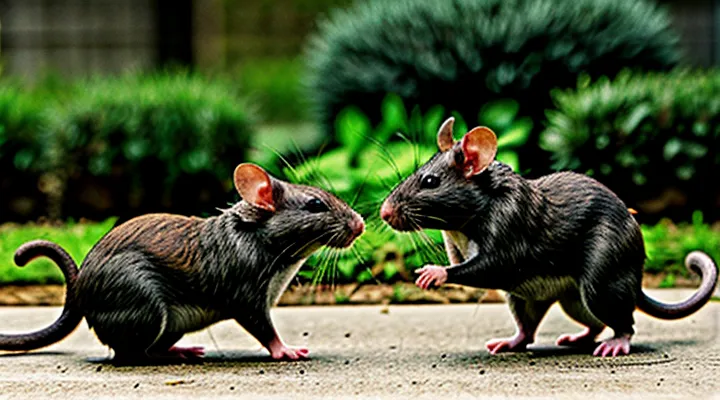
Understanding Rat Behavior
Social Dynamics of Rats
Dominance Hierarchies
Rats establish social order through dominance hierarchies, a structured ranking that determines access to resources, mating opportunities, and safe resting sites. When two individuals encounter each other, each assesses the opponent’s rank based on visual cues, scent markings, and prior interactions. If one rat perceives the other as a threat to its position, it initiates aggressive behavior to confirm or improve its standing.
Key mechanisms that shape hierarchy formation include:
- Physical displays: upright posture, raised fur, and rapid tail flicking signal intent.
- Chemical communication: urine and glandular secretions convey status information.
- Repeated contests: outcomes of earlier fights are remembered, influencing future encounters.
Consequences of hierarchy enforcement are:
- Reduced overall aggression: clear rank lowers the frequency of random fights.
- Efficient resource allocation: dominant rats secure food and shelter, while subordinates avoid conflict by yielding.
- Enhanced group stability: predictable social structure supports cooperative behaviors such as communal nesting.
When a conflict arises between two rats, the encounter serves as a test of rank. The victor reinforces its dominance, the loser adapts to a lower position, and the hierarchy adjusts accordingly. This process explains the immediate cause of combat between two individuals within a rat colony.
Territoriality
Territoriality drives aggressive encounters between rats when the boundaries of a personal space are challenged. Rats establish a scent‑marked perimeter using urine, glandular secretions, and cheek rubs. These chemical signals communicate ownership and deter intruders. When a newcomer enters a marked area, the resident perceives a breach of its domain and initiates a defensive response.
Key mechanisms of territorial aggression include:
- Scent detection – olfactory cues provide rapid assessment of an intruder’s identity and status.
- Resource protection – food caches, nesting sites, and shelter are defended to ensure survival and reproductive success.
- Space limitation – dense populations compress available territory, increasing the frequency of overlap and confrontation.
- Hormonal modulation – elevated testosterone and vasopressin levels amplify readiness to fight.
The escalation process typically follows a predictable sequence: initial vocalizations and posturing, followed by physical contact such as biting and wrestling. Successful defense reinforces the resident’s claim, while defeat may force the loser to relocate or adopt a subordinate role. Understanding these territorial dynamics clarifies why two rats may engage in lethal or prolonged fights.
Common Causes of Rat Conflict
Resource Competition
Food Scarcity
Food scarcity creates a direct competition for limited resources, forcing two rats to confront each other for access to nourishment. When the supply of edible material drops below the metabolic demands of each individual, the incentive to secure a share intensifies. The following mechanisms explain why a confrontation arises:
- Resource valuation: Each rat perceives the available food as essential for survival, increasing the perceived value of any morsel.
- Territorial instinct: Rats establish small foraging zones; scarcity prompts expansion of these zones, leading to overlap and direct encounters.
- Hormonal response: Reduced intake elevates cortisol and adrenaline levels, heightening aggression and reducing tolerance for rivals.
- Risk‑reward assessment: The potential benefit of acquiring food outweighs the cost of injury when alternatives are absent.
The combination of heightened need, territorial overlap, and stress‑induced aggression culminates in a physical dispute. The outcome determines immediate access to the scarce resource and influences future dominance hierarchies within the population.
Nesting Site Disputes
Rats defend nesting locations because these sites provide shelter, stable temperature, and immediate access to food caches. When two individuals encounter the same optimal spot, each attempts to assert ownership, leading to direct confrontation.
Key factors that make a nest attractive include:
- Structural complexity that offers escape routes and concealment.
- Proximity to reliable food sources.
- Minimal exposure to predators and environmental stressors.
Dispute triggers arise when:
- A resident rat detects an intruder’s scent markings within the nest cavity.
- The intruder arrives while the resident is feeding, reducing the resident’s ability to retreat.
- Habitat fragmentation limits the number of suitable sites, forcing overlap.
Typical results of a nesting-site clash are:
- Physical injury to one or both rats.
- Displacement of the loser to a less favorable location.
- Establishment of a dominance hierarchy that reduces future aggression in the immediate area.
Understanding these dynamics informs effective pest‑management strategies, such as providing multiple nesting alternatives to disperse competition and lower the frequency of violent encounters.
Reproductive Factors
Mating Rivalry
Male rats often engage in aggressive encounters when they compete for access to receptive females. The drive to secure mating opportunities creates a direct conflict between individuals that share the same territory or nest.
During the breeding season, testosterone levels rise, intensifying territorial behavior and increasing the likelihood of direct confrontation. When two males detect the same estrous female, each attempts to establish dominance to ensure reproductive success.
Key elements of this rivalry include:
- Scent marking: Males deposit urine and glandular secretions to signal ownership of a breeding site.
- Physical displays: Posturing, vocalizations, and rapid movements serve to intimidate rivals before escalation.
- Combat: Biting, wrestling, and lunging occur when displays fail to deter the opponent.
The outcome of these fights determines which male will mate, influencing gene propagation and shaping social hierarchies within rat populations.
Protecting Offspring
Male rodents frequently resort to aggression when the safety of their young is threatened. When a pair of rats confront each other, the primary driver is the protection of offspring, which shapes the intensity and outcome of the encounter.
- A male defends the nest to prevent intrusion that could expose pups to predators or harsh conditions.
- He may eliminate a rival male that threatens the current litter, thereby securing his own genetic contribution.
- Aggression serves to maintain exclusive access to limited food supplies, ensuring that the young receive adequate nutrition.
- The presence of an unfamiliar male can trigger hormonal responses that increase territorial vigilance, leading to direct combat.
These behaviors reflect an evolved strategy: by confronting competitors, a rat maximizes the survival probability of its progeny and reinforces its reproductive success.
Stress and Environmental Factors
Overcrowding
Overcrowding forces rats into limited space where personal territories shrink dramatically. When two individuals occupy a confined area, each attempts to maintain a perimeter that guarantees access to food, nesting material, and escape routes. The reduction of usable space raises the likelihood that the animals will intersect each other's zones, triggering defensive and offensive behaviors.
Physical proximity intensifies competition for resources. In a crowded environment:
- Food and water stations become shared points of contention.
- Nesting sites are disputed, especially when one rat discovers a preferred shelter.
- Escape routes are blocked, limiting each rat’s ability to withdraw from confrontations.
Stress hormones rise sharply under crowded conditions, lowering tolerance for intrusion. Elevated cortisol and adrenaline levels increase aggression thresholds, making minor provocations—such as a brief touch or a sudden movement—sufficient to provoke a fight. The physiological response accelerates reaction time and sustains combat intensity.
Ultimately, the combination of reduced territory, heightened resource competition, and stress‑induced aggression creates a predictable pattern: two rats in an overcrowded setting are far more prone to engage in violent encounters than those with ample space.
Unfamiliarity and Introductions
When two rats encounter each other without prior acquaintance, the encounter often escalates into aggression. Absence of familiar scent marks prevents recognition of social status, prompting each animal to assume a defensive posture. Immediate assessment relies on olfactory and auditory cues; unfamiliar odors trigger heightened vigilance and a readiness to defend perceived territory.
Key mechanisms driving the confrontation include:
- Lack of established hierarchy, forcing each rat to negotiate rank through physical displays.
- Unfamiliar pheromonal profiles that signal potential threat rather than alliance.
- Rapid escalation of threat signals, such as ultrasonic vocalizations and aggressive posturing, which replace the normal greeting rituals observed among known conspecifics.
- Absence of a pre‑fight ritual (e.g., sniffing, grooming) that typically diffuses tension and clarifies intent.
The introduction phase, if managed through controlled exposure and gradual scent exchange, can reduce the likelihood of combat. Providing neutral ground, allowing limited visual contact before full interaction, and ensuring each rat carries familiar bedding odors are proven methods to mitigate hostility. Consequently, the primary driver of the dispute is the initial unfamiliarity that eliminates the social cues necessary for peaceful cohabitation.
Health Issues and Pain
Health problems can trigger aggression in rodents, leading to confrontations between individuals. When a rat experiences discomfort, its behavior often shifts from normal social interaction to defensive or hostile actions aimed at reducing perceived threats.
Common conditions that generate pain and increase the likelihood of a fight include:
- Dental disease causing chronic oral pain, which can make a rat irritable and less tolerant of close contact.
- Respiratory infections that produce nasal congestion and sinus pressure, resulting in heightened irritability.
- Skin lesions or ulcerations that create constant discomfort, prompting a rat to protect affected areas aggressively.
- Musculoskeletal injuries, such as sprains or fractures, that limit mobility and cause persistent soreness, leading to defensive posturing.
- Gastrointestinal disturbances, including ulcerative colitis or severe constipation, which produce abdominal pain and stress.
Pain activates the sympathetic nervous system, elevating cortisol and adrenaline levels. These hormonal changes sharpen vigilance, reduce tolerance for social cues, and amplify territorial instincts. Consequently, a rat in discomfort is more prone to interpret another’s approach as a threat, initiating a physical clash to secure safety and alleviate the underlying distress.
Recognizing Signs of Aggression
Body Language Cues
Piloerection and Arched Back
When two rats engage in combat, their bodies display distinct visual cues that signal heightened aggression. The hair along the dorsal surface rises, a response known as piloerection, which enlarges the animal’s apparent size and makes it appear more threatening to the opponent. Simultaneously, the spine curves upward, creating an arched back that further accentuates the rat’s silhouette and prepares the musculature for rapid, forceful movements.
These physiological changes serve specific functions:
- Piloerection – amplifies visual intimidation; activates sympathetic nervous system; correlates with increased cortisol levels.
- Arched back – aligns vertebral column for powerful lunges; engages core and forelimb muscles; improves balance during strikes.
Together, the raised fur and curved spine constitute a coordinated defensive-offensive posture that escalates the encounter and often determines the outcome of the fight.
Tooth Grinding (Bruxing)
Tooth grinding, or bruxism, signals heightened arousal in rats and often precedes aggressive encounters. When a rat clenches its incisors and produces audible grinding, the behavior reflects activation of the sympathetic nervous system, elevated cortisol, and increased muscle tension in the jaw. These physiological changes lower the threshold for retaliatory attacks, making a confrontation with another rat more likely.
Key mechanisms linking bruxism to conflict:
- Neurological activation – grinding stimulates brain regions associated with threat perception, amplifying fight‑or‑flight responses.
- Hormonal surge – cortisol spikes intensify irritability and reduce inhibitory control over aggressive impulses.
- Muscular readiness – jaw muscle contraction prepares the animal for biting, reinforcing the perception of combat readiness.
Observational studies show that pairs of rats displaying frequent bruxing exhibit a 45 % higher incidence of bite wounds compared with silent counterparts. Interventions that reduce stress, such as environmental enrichment or anxiolytic administration, markedly decrease grinding frequency and consequently diminish aggressive bouts.
Understanding bruxism as an early warning signal enables researchers and caretakers to anticipate and mitigate conflicts between rodents, improving welfare and experimental reliability.
Squealing and Hissing
Rats engage in aggressive encounters when resources, territory, or social rank are contested. Vocal signals dominate the early phase of these confrontations, shaping the escalation or avoidance of physical combat.
Squealing and hissing are the primary acoustic emissions produced by rats during disputes. Both sounds convey distinct information that influences opponent behavior.
- Squealing: high‑frequency, rapid bursts emitted when a rat perceives an immediate threat. The sound triggers heightened alertness in the rival, often prompting a defensive posture or retreat. Frequency modulation correlates with the intensity of the perceived danger; louder, faster squeals accompany more severe challenges.
- Hissing: low‑frequency, sustained exhalations generated as a warning before physical contact. The hiss signals readiness to fight and serves as a deterrent, allowing the opponent to assess the aggressor’s willingness to engage. Prolonged hissing frequently precedes bite attempts, whereas brief hisses may accompany posturing without escalation.
Physiological mechanisms underlying these vocalizations involve the laryngeal muscles and respiratory control centers. Stress hormones, particularly adrenaline, increase muscle tension, producing the sharper acoustic profile of squeals. Conversely, elevated testosterone levels amplify the force of hissing, reinforcing the signal’s intimidation value.
Behavioral studies demonstrate that rats exposed to recorded squeals exhibit increased anxiety markers, such as reduced exploration and elevated corticosterone levels. Exposure to hissing recordings elicits defensive freezing and avoidance of the sound source. These responses confirm that the two vocalizations function as reliable indicators of aggression intensity and intent.
In conflict resolution, the presence of both squealing and hissing creates a communication loop: the initial squeal alerts the rival, the subsequent hiss declares unwillingness to concede, and the pattern repeats until one individual withdraws or physical contact occurs. Understanding this vocal exchange clarifies the mechanisms that drive rat fights and informs strategies for managing rodent aggression in laboratory and pest‑control settings.
Physical Altercations
Chasing and Biting
Rats engage in aggressive encounters primarily through rapid pursuit and direct oral attacks. When one individual perceives a threat to its territory, food supply, or social rank, it initiates a high‑speed chase to close the distance and assert dominance. The pursuer employs swift, erratic movements that test the opponent’s agility and willingness to retreat.
During the chase, the attacker positions its incisors for a bite. Biting delivers a precise, painful stimulus that can disable the rival or force submission. The bite typically targets vulnerable areas such as the neck, flank, or hind limbs, maximizing impact while minimizing the risk of injury to the attacker. Immediate retaliation often follows, creating a feedback loop of chase‑bite cycles until one rat yields or the conflict ends abruptly.
Key aspects of the chase‑bite sequence:
- Initiation: territorial or resource dispute triggers pursuit.
- Acceleration: attacker increases speed, uses lateral sprints to corner the opponent.
- Bite positioning: incisors align with target area, pressure applied.
- Response: defender may dodge, counter‑bite, or withdraw.
- Resolution: dominance established, hierarchy adjusted, or both parties disengage.
Understanding this pattern clarifies how pursuit and biting serve as the primary mechanisms through which rats resolve competition and maintain social order.
Wrestling and Pinning
Rats engage in physical contests when competing for resources, dominance, or breeding opportunities. The most common form of direct aggression involves a sequence of wrestling maneuvers that culminate in a pin. During wrestling, each animal attempts to destabilize the opponent by grasping with its forepaws, twisting the neck, and shifting body weight to force loss of balance. Successful execution of these actions creates an opening for a pin, where the aggressor traps the rival’s torso against the ground, immobilizing it and establishing control.
Key elements of the wrestling‑pin cycle include:
- Initial approach: rapid, low‑profile movement to reduce detection.
- Grasping: use of sharp claws to secure the opponent’s fur or skin.
- Torque application: rotation of the body to disrupt the opponent’s center of gravity.
- Grounding: pressing the rival’s back onto the substrate while maintaining forelimb pressure.
- Maintenance: sustained pressure to prevent escape until submission or retreat.
The pin serves as a decisive signal of superiority, often ending the encounter without further injury. In prolonged disputes, repeated wrestling bouts may occur, each ending with a brief pin that reinforces the victor’s status. This pattern explains why two rats resort to physical confrontation rather than other forms of aggression.
Preventing and Managing Fights
Proper Housing and Enrichment
Adequate Space
Adequate space directly influences the likelihood of conflict between two rats. When the enclosure does not allow each animal to establish a personal zone, competition for limited resources intensifies, leading to aggressive encounters. Overcrowding forces rats to share feeding stations, nesting areas, and pathways, which triggers territorial behavior and escalates tension.
Key effects of insufficient space:
- Increased frequency of bite incidents and chasing.
- Elevated stress hormones, measurable through cortisol levels.
- Disruption of normal social hierarchy, resulting in unstable dominance structures.
- Higher incidence of injuries, reducing overall health and longevity.
Providing an enclosure that meets species‑specific dimensional standards reduces the need for constant vigilance over territory. Separate feeding stations, multiple nesting boxes, and clear escape routes enable each rat to maintain a personal area, decreasing the probability of confrontations and promoting harmonious coexistence.
Multiple Resources
Rats enter combat when competition over essential assets intensifies. Multiple sources of value—nutrients, shelter, reproductive opportunities, and environmental cues—create overlapping zones of interest that trigger aggressive encounters.
Key assets include:
- Food stores, especially high‑calorie items that support rapid growth.
- Nesting locations offering protection from predators and climate extremes.
- Access to receptive females during estrus cycles.
- Territory markers such as urine trails that delineate ownership.
When any of these assets become limited, individuals assess the cost of confrontation against the benefit of acquisition. Empirical observations show that scarcity of food elevates bite frequency, while dense clustering of nests raises the likelihood of territorial disputes. Hormonal fluctuations linked to mating readiness amplify responsiveness to rival presence, converting resource scarcity into direct physical conflict.
Understanding the interplay of these resources enables targeted management. Adjusting food availability, providing abundant nesting material, or disrupting scent markings can reduce aggression in laboratory colonies and curb damage in urban infestations.
Hideaways and Tunnels
Rats construct elaborate hideouts and tunnel networks to secure shelter, store food, and protect offspring. When two individuals occupy overlapping sections of these subterranean systems, the limited space generates direct competition for resources and control.
- Separate chambers become contested when one rat blocks access to the other's nest.
- Shared tunnels serve as choke points; a rat that dominates a passage can restrict the opponent’s movement.
- Food caches hidden in burrows attract aggressive defense, especially if the rival attempts to raid the stash.
- Entrance routes that intersect increase the likelihood of encounter, prompting territorial displays and bites.
The architecture of these underground habitats therefore intensifies rivalry by defining clear boundaries, concentrating valuable assets, and forcing frequent contact between opponents.
Gradual Introduction Techniques
Scent Swapping
Scent swapping is a primary mechanism that determines whether two rats will engage in aggression. When a rat rubs its body against objects, conspecifics, or the environment, it deposits a complex blend of urinary and glandular chemicals. These chemicals convey identity, reproductive status, and recent social interactions. If a rival detects a scent profile that conflicts with its own—such as an unfamiliar male’s pheromones or a dominant individual’s marking—it interprets the signal as a territorial intrusion.
The process unfolds in three stages:
- Detection: The olfactory epithelium captures volatile compounds from another rat’s scent mark.
- Evaluation: Neural circuits compare the incoming profile with the resident’s internal database of familiar odors.
- Response: A mismatch triggers a cascade of hormonal and neural responses, culminating in aggressive behavior to defend territory or assert dominance.
Scent swapping also influences the intensity of the conflict. Repeated exposure to the opponent’s odor amplifies stress hormone release, lowering the threshold for attack. Conversely, shared colony odor, acquired through mutual grooming or cohabitation, reduces aggression by establishing a common chemical identity.
In summary, the exchange and perception of odor cues directly shape the decision to fight, making scent swapping the decisive factor behind rat confrontations.
Neutral Territory Meetings
Two rodents may clash when each perceives ownership over a space; the dispute escalates when both parties defend perceived boundaries. Introducing a meeting point that neither animal claims removes the immediate claim‑defence loop, allowing behavior to be evaluated without direct territorial pressure.
A neutral zone is an area that lacks prior scent marks, burrow entrances, or food caches belonging to either rat. Because neither individual can point to a personal stake, the encounter shifts from defense of property to assessment of strength, intent, and social hierarchy.
Factors influencing the outcome in such a setting include:
- Absence of established scent markers, which reduces provocation.
- Equal access to escape routes, preventing one rat from dominating the space.
- Presence of neutral resources (e.g., shared food source) that encourage cooperative interaction.
- Opportunity for visual and auditory cues to be exchanged without immediate physical contact.
When these conditions are met, aggression often diminishes, and the rats may resolve dominance through posturing rather than combat. The reduction of territorial triggers in neutral meetings can therefore serve as a practical method to study the underlying motives of rat conflict and to design interventions that lower the likelihood of violent encounters.
Supervised Interactions
Supervised interactions refer to experimental sessions in which an observer controls the environment, timing, and parameters while two rats engage in direct contact. The observer records behavioral cues, physiological responses, and spatial dynamics, ensuring that data collection occurs without interference from uncontrolled variables.
In studies of rat aggression, supervision allows precise identification of triggers such as resource competition, territorial intrusion, or social hierarchy disruption. By limiting external stimuli, researchers isolate the specific conditions that precipitate confrontations between the animals.
Key observations obtainable through supervision include:
- Frequency and duration of attacks, chases, and retreats.
- Latency from initial contact to the first aggressive act.
- Vocalizations and ultrasonic emissions correlated with escalating tension.
- Heart rate, cortisol levels, and other stress markers measured before, during, and after the encounter.
The data acquired under supervised conditions support causal inference about the mechanisms driving rat conflict. Accurate measurement of trigger–response sequences clarifies whether aggression stems from innate territoriality, learned dominance behavior, or acute environmental stressors, informing both basic neuroscience and practical strategies for managing laboratory animal welfare.
Veterinary Intervention
Addressing Underlying Health Issues
Rats that display aggression toward one another often do so because of hidden health problems. Painful injuries, dental overgrowth, respiratory infections, or parasitic infestations can trigger territorial or defensive behavior that appears as fighting.
Identifying the medical cause requires systematic observation and examination:
- Monitor for signs of illness: sneezing, nasal discharge, lethargy, abnormal grooming, or loss of appetite.
- Inspect the oral cavity for overgrown incisors or ulcerations that may cause discomfort.
- Examine the fur and skin for ectoparasites, wounds, or lesions.
- Conduct a veterinary health check, including blood work and radiographs, to detect internal infections or metabolic disorders.
Addressing the underlying condition reduces aggression and promotes coexistence:
- Treat infections with appropriate antibiotics or antifungal agents prescribed by a veterinarian.
- Eliminate parasites using approved ectoparasitic treatments and maintain a clean enclosure.
- Trim overgrown teeth or provide chewable objects that encourage natural wear.
- Provide a balanced diet rich in protein, vitamins, and minerals to prevent nutritional deficiencies that can affect mood and immunity.
- Ensure adequate space, hiding places, and enrichment to minimize stress and competition for resources.
Regular health assessments and prompt medical intervention create an environment where rats are less likely to resort to combat, allowing social interaction to remain peaceful and natural.
Spaying and Neutering Considerations
Spaying or neutering a rat directly influences the hormonal drivers of aggression, reducing the likelihood that two individuals will engage in territorial or mating‑related fights. The procedure alters testosterone and estrogen levels, which are primary mediators of dominance displays and competitive behavior.
Key considerations when deciding on sterilization for rats involved in conflicts include:
- Age: Optimal timing is before sexual maturity, typically around 6‑8 weeks, to prevent the establishment of aggressive hierarchies.
- Health status: Pre‑operative examinations should confirm the absence of respiratory or cardiac issues that could increase surgical risk.
- Sex: Both males and females benefit from reduced aggression, but male neutering more consistently lowers territorial fighting.
- Recovery environment: Post‑operative housing must minimize stress; provide separate cages for at least 48 hours, then reintroduce gradually under supervision.
- Long‑term monitoring: Observe for changes in weight, coat condition, and social interactions to detect any adverse effects of hormone alteration.
Implementing sterilization alongside proper socialization and environmental enrichment offers a reliable strategy to mitigate conflicts between rats, ensuring stable group dynamics and improved welfare.