
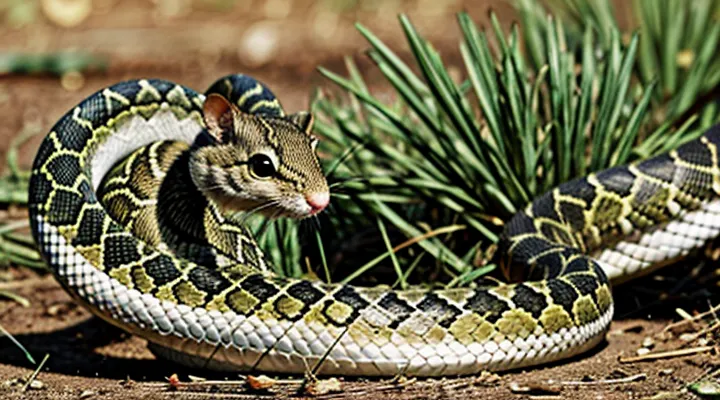
The Fundamental Role of Prey in Snake Survival
The Energetic Imperative of Carnivory
High Metabolic Needs of Snakes
Snakes possess a metabolic framework that demands substantial energy input despite their ectothermic nature. Basal metabolic rates (BMR) scale with body mass, but the cost of digesting a meal—known as specific dynamic action (SDA)—can temporarily double the energy expenditure. Consequently, a single prey item must deliver enough calories, protein, and lipids to offset the elevated metabolic load and replenish depleted reserves.
Mice satisfy these requirements efficiently. Their body composition offers high caloric density, rapid nutrient absorption, and sufficient water content, enabling snakes to recover from the intensive digestive phase. The prey size also aligns with the gape limitation of most snake species, allowing complete ingestion without excessive handling time.
Key metabolic considerations:
- BMR proportion: Small-to-medium snakes exhibit a BMR that, while lower than endotherms, still requires regular replenishment.
- SDA magnitude: Post‑meal metabolic rates rise 1.5–2.5 × the resting level for several hours.
- Energy storage: Fat deposits accumulated from mouse meals support periods of fasting and thermoregulation.
- Meal frequency: Infrequent, large meals reduce the cumulative cost of hunting and digestion compared with numerous small prey.
The physiological pressure to meet these energy demands drives the predatory focus on mice, ensuring that snakes maintain growth, reproduction, and survival despite a generally low‑rate metabolism.
Nutritional Value of Vertebrate Prey
Snakes capture small vertebrates primarily because these prey items supply the macronutrients required for rapid growth, reproduction, and sustained activity. A typical mouse delivers approximately 20 % protein by wet weight, with a complete set of essential amino acids that match the physiological demands of serpents. The protein possesses a high biological value, enabling efficient assimilation and tissue repair.
Lipids in mouse tissue account for 5–10 % of body mass, providing dense caloric energy that supports prolonged periods of inactivity and thermoregulation. The fatty acid composition includes both saturated and unsaturated forms, contributing to membrane fluidity and hormone synthesis.
Mineral content in mouse muscle and bone supplies calcium, phosphorus, potassium, and trace elements such as zinc and iron. Calcium and phosphorus ratios facilitate skeletal development and egg production in oviparous species, while potassium maintains electrolyte balance essential for nerve transmission.
Key nutritional components of typical rodent prey:
- Protein: ~20 % (high in lysine, methionine, threonine)
- Lipids: 5–10 % (rich in oleic and linoleic acids)
- Energy: 5–6 kcal g⁻¹ (combined macronutrient yield)
- Calcium: 1–2 % of dry mass
- Phosphorus: 0.8–1.2 % of dry mass
- Potassium: 0.5 % of dry mass
- Trace minerals: zinc, iron, copper at biologically relevant concentrations
The alignment of these nutrient profiles with serpentine metabolic requirements explains the consistent predation on small mammals. Adequate intake of high‑quality protein, energy‑dense lipids, and essential minerals ensures that snakes meet the energetic and reproductive challenges of their ecological niche.
Mice as an Optimal Food Source
Abundance and Accessibility
Widespread Distribution of Rodents
Rodents occupy almost every terrestrial biome, from arid deserts to dense forests, and thrive in human‑altered environments such as farms, urban parks, and grain stores. Their adaptability stems from a high reproductive rate, broad diet, and ability to exploit shelter in soil, vegetation, and man‑made structures. This extensive presence creates a reliable food source for many snake species.
- Small mammals constitute the primary prey for most colubrids, vipers, and pit‑vipers.
- Rodent populations peak seasonally in temperate zones, providing abundant targets during spring and summer.
- In agricultural regions, crop residues and stored grain attract commensal rodents, concentrating them near snake habitats.
The spatial overlap between snakes and rodents reduces the energy expenditure required for hunting. Snakes detect prey through thermal cues, chemical trails, and movement vibrations; the high density of rodents amplifies encounter rates. Consequently, the widespread distribution of rodents directly influences snake foraging strategies, supporting the prevalence of rodent predation across diverse ecosystems.
Relative Ease of Capture
Mice present a consistently accessible target for serpents. Their small body mass requires minimal force to subdue, allowing snakes to capture prey with limited muscular effort. The prey’s rapid, erratic movements trigger the snake’s mechanoreceptors, which are highly tuned to detect vibrations and pressure changes. This sensory alignment reduces the time needed to locate and strike.
The typical habitats of mice—burrows, leaf litter, and low vegetation—overlap densely with the hunting zones of many terrestrial snakes. Such spatial convergence increases encounter frequency, meaning snakes expend less energy on searching. When a mouse emerges, its limited defensive capabilities—lack of armor, modest speed, and minimal retaliatory mechanisms—further lower the risk of injury to the predator.
Key factors that make mice comparatively easy to capture:
- Size compatibility – prey fits comfortably within the snake’s gape, avoiding the need for repeated swallowing cycles.
- Low resistance – minimal muscular strength and protective structures reduce the chance of escape during the strike.
- Predictable behavior – nocturnal foraging patterns align with the active periods of many snake species, creating reliable hunting windows.
- Abundant availability – high reproductive rates sustain dense populations, ensuring a steady supply of potential meals.
Because the energetic cost of subduing a mouse is low, snakes can allocate more of their metabolic budget to growth, reproduction, or pursuing larger, less frequent prey. The relative ease of capture thus directly supports the efficiency of serpentine predation strategies.
Nutritional Profile of Mice
High Protein and Fat Content
Snakes rely on prey that supplies the nutrients required for rapid growth, venom production, and successful reproduction. Small rodents such as mice fulfill these requirements because their bodies contain a dense concentration of protein and lipids.
A typical adult mouse possesses:
- Approximately 20 %–22 % protein by wet weight, primarily in skeletal muscle and organ tissue.
- Around 8 %–12 % fat, concentrated in subcutaneous layers and visceral deposits.
- Additional micronutrients (vitamins, minerals) that support metabolic processes.
The protein delivers essential amino acids for tissue synthesis, enabling snakes to increase body mass after each meal. The fat provides a high‑energy reserve; each gram of lipid yields roughly 9 kcal, far exceeding the 4 kcal per gram offered by carbohydrates or protein. This caloric density shortens the interval between feedings, a critical advantage for ectothermic predators whose digestion is temperature‑dependent.
Consequently, the nutrient profile of mice aligns with the physiological demands of serpents, making rodents an optimal target for predation.
Essential Nutrients for Snake Growth and Reproduction
Snakes depend on a precise array of nutrients to increase body mass, develop functional organs, and produce viable offspring. Their focus on small rodents satisfies these physiological demands.
- Proteins – supply amino acids required for muscle formation, enzyme synthesis, and embryonic development.
- Lipids – deliver energy dense reserves and essential fatty acids that support cell membrane integrity and hormone production.
- Vitamins
- Minerals
- Calcium and phosphorus – maintain skeletal structure and egg shell formation.
- Magnesium – co‑factor for numerous enzymatic reactions.
- Potassium and sodium – sustain nerve impulse transmission and fluid balance.
- Trace elements – zinc, iron, copper, and selenium act as catalytic centers in metabolic pathways and immune function.
Mice contain high‑quality protein, balanced lipid composition, and a spectrum of vitamins and minerals in ratios that align with reptilian requirements. Their tissue stores calcium and phosphorus in forms readily absorbable by snakes, while their liver and muscle provide vitamin A and D concentrations sufficient for ocular and skeletal health. The presence of essential fatty acids in mouse adipose tissue fulfills the demand for omega‑3 and omega‑6 compounds that snakes cannot synthesize.
By consuming mice, snakes acquire all necessary macronutrients and micronutrients without the need for supplemental hunting strategies. This dietary efficiency directly supports rapid growth phases and maximizes reproductive output.
Evolutionary Adaptations for Rodent Predation
Sensory Specializations
Olfactory Acuity
Snakes possess a highly developed olfactory system centered on the vomeronasal organ, known as Jacobson’s organ. The organ receives chemical particles transferred by the forked tongue, allowing rapid analysis of airborne and substrate-bound odorants. This arrangement yields a detection threshold far below that of most reptiles, enabling snakes to discriminate minute concentrations of volatile compounds.
When a mouse moves through vegetation or across the forest floor, it deposits pheromones, urine, feces, and skin cells. Snake olfaction captures these cues, forming a spatial map of the prey’s recent activity. The tongue samples the environment at intervals of 30–70 ms, delivering successive odor samples to the organ, which processes the information to pinpoint direction and distance.
Olfactory data integrate with visual and infrared inputs, but in dim or cluttered habitats it becomes the primary source for locating prey. The following mechanisms illustrate this dependence:
- Rapid tongue flicks generate a continuous stream of chemical samples.
- Jacobson’s organ extracts molecular signatures specific to rodent metabolism.
- Neural pathways translate scent gradients into directed locomotion toward the source.
The result is a hunting strategy that relies on scent to initiate pursuit, maintain tracking, and confirm capture. High olfactory acuity shortens the time between prey detection and strike, increasing the overall success rate of mouse predation by snakes.
Thermal Sensation (Pit Organs)
Pit organs, located between the eye and nostril on each side of the head, function as highly specialized infrared detectors. They contain membrane receptors densely packed with thermosensitive ion channels that respond to minute temperature changes in the surrounding air. When a mouse scurries nearby, its body heat raises the temperature of the surrounding air by as little as 0.01 °C, a difference the pit membranes register with millisecond precision.
The heat signal captured by the pits is converted into electrical impulses that travel via the trigeminal nerve to the brain’s visual‑processing centers. This integration creates a thermal image superimposed on the visual field, allowing the snake to track moving warm bodies even in total darkness. Consequently, snakes can locate concealed or nocturnal rodents without reliance on visual cues.
Key capabilities of pit organs include:
- Detection of infrared radiation emitted by endothermic prey.
- Determination of the direction and distance of a heat source through bilateral comparison.
- Rapid transmission of thermal information to motor circuits that guide strike execution.
These functions enable snakes to initiate predatory strikes with high accuracy, minimizing the chance of missed attacks and conserving energy. The ability to sense and respond to the subtle heat signatures of mice directly supports the snakes’ efficiency as rodent hunters.
Hunting Strategies and Mechanics
Ambush Predation
Ambush predation describes a hunting strategy in which a predator remains motionless, concealed, and strikes only when prey approaches within striking distance. This method minimizes energy expenditure because the predator does not chase or actively search for food.
Snakes possess anatomical features that enhance ambush efficiency. Their elongated bodies allow them to coil in tight spaces, while specialized scales provide camouflage against leaf litter, soil, and rocks. Infrared-sensitive pits and rapid jaw projection enable detection of warm‑blooded rodents and execution of a swift bite.
Mice constitute ideal targets for this tactic. Their small size, frequent activity near ground cover, and high metabolic rate make them abundant and nutritionally valuable. The following points illustrate the compatibility between snakes and mice in an ambush context:
- Mice often travel along predictable pathways such as burrow entrances and foraging trails, increasing encounter probability.
- Their rapid movements trigger the snake’s sensory systems, prompting a rapid strike.
- A single mouse provides sufficient caloric intake to sustain the snake for several days, aligning with the low‑frequency feeding pattern typical of ambush predators.
Constriction Techniques
Snakes capture mice primarily through constriction, a method that combines rapid encirclement with progressive pressure. The process begins with a swift strike that secures the prey’s head, preventing escape. Muscular contraction then forms a tight coil around the torso, initiating a lethal sequence.
Key elements of the technique include:
- Coil formation: Overlapping body loops create a uniform grip that distributes force evenly.
- Pressure increase: Muscles contract in a rhythmic pattern, raising internal pressure until circulatory collapse occurs.
- Respiratory obstruction: The coil compresses the thoracic cavity, halting breathing within seconds.
- Neural inhibition: Sustained pressure disrupts nervous system signaling, leading to rapid loss of consciousness.
The efficiency of constriction allows snakes to subdue relatively large rodents with minimal effort. By immobilizing the mouse quickly, the predator reduces the risk of injury and conserves energy for digestion. Consequently, constriction serves as a specialized adaptation that directly supports the snake’s predatory success on small mammals.
Ecological Impact of Snake-Rodent Interactions
Pest Control by Snakes
Regulation of Rodent Populations
Snakes exert direct predation pressure on rodent communities, reducing the number of individuals that reach reproductive age. Each successful capture removes a potential breeder, limiting the annual increase of the population. This effect is most pronounced in ecosystems where snakes are abundant and prey availability is high.
Predation also influences rodent behavior and distribution. The presence of snakes induces avoidance of open foraging areas, prompting rodents to occupy habitats with lower resource density. Consequently, the overall carrying capacity of the environment declines because fewer individuals access optimal food sources.
Additional regulatory mechanisms include:
- Density‑dependent mortality: Higher rodent densities attract more snakes, increasing kill rates and restoring balance.
- Nutrient recycling: Snake digestion returns nutrients to the soil, indirectly supporting plant growth that sustains other herbivores, thereby maintaining ecosystem productivity.
- Disease suppression: Reduced crowding lowers transmission of rodent‑borne pathogens, contributing to healthier wildlife populations.
Through these pathways, snakes function as a biological control agent, shaping rodent population dynamics and preserving ecological equilibrium.
Benefits for Human Agriculture
Snakes that prey on mice reduce the population of a primary agricultural pest. By removing rodents that feed on seeds, seedlings, and stored grain, snakes directly lower the incidence of crop damage.
Key advantages for farming operations include:
- Decreased loss of yield caused by rodent consumption.
- Reduced reliance on chemical rodenticides, which lowers input costs and limits environmental contamination.
- Diminished risk of disease transmission from rodents to livestock and farm workers.
Fewer pesticides translate into lower production expenses and compliance with organic certification standards. Moreover, the presence of natural predators supports a balanced ecosystem, enhancing soil structure through the activity of other beneficial organisms that thrive when rodent pressure declines.
Overall, snake‑driven control of mouse populations contributes to stable harvests, financial savings, and sustainable agricultural practices.
Food Web Dynamics
Snakes as Key Predators
Snakes regularly target mice because the rodents provide high‑energy protein within a size range that matches the snake’s feeding mechanics. The prey’s abundance in many ecosystems ensures a reliable food source for a variety of snake species.
- Heat‑sensitive pits detect the warm body of a mouse even in low‑light conditions.
- Expandable jaws allow ingestion of prey larger than the snake’s head.
- Venom or constriction rapidly immobilizes the mouse, reducing struggle time and injury risk.
- Muscular locomotion and camouflage enable stealthy approaches and sudden strikes.
Hunting tactics differ among species. Some snakes remain motionless, waiting for a mouse to pass within striking distance, while others actively pursue moving rodents across leaf litter or burrow entrances. Seasonal shifts in mouse activity drive corresponding changes in snake foraging intensity, with peak predation occurring during rodent breeding periods.
By consuming mice, snakes help regulate rodent populations, preventing overgrazing of vegetation and limiting disease transmission. The transferred biomass supports higher trophic levels, as predators such as birds of prey and larger mammals rely on snakes as a food source. This predator‑prey relationship maintains biodiversity and stabilizes ecosystem function.
Interdependence within Ecosystems
Snakes preying on mice exemplify the reciprocal connections that sustain ecological balance. When a snake captures a mouse, it regulates rodent populations, preventing overgrazing of vegetation and reducing disease transmission. In return, the availability of mice supports snake growth, reproduction, and survival, linking predator and prey to the broader community.
- Rodent control curtails plant consumption, preserving primary productivity.
- Reduced rodent density limits competition for seeds, benefiting other herbivores.
- Nutrient recycling intensifies as snake digestion releases nitrogen and phosphorus back into the soil.
- Predator presence influences prey behavior, encouraging habitat diversification and shelter creation.
These dynamics illustrate that the fate of a single predator–prey interaction extends to multiple trophic levels, reinforcing the interdependent structure of ecosystems.