
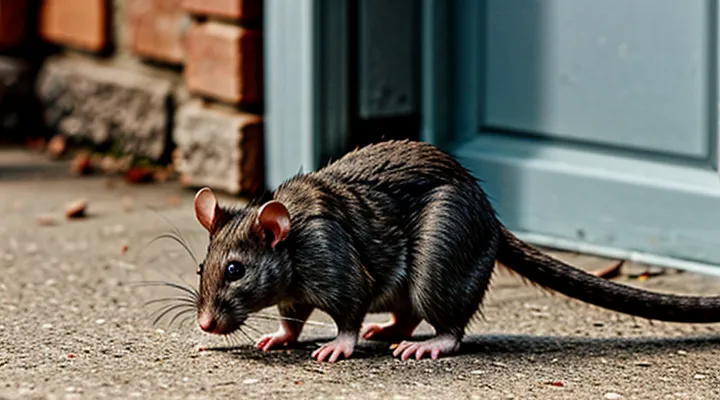
The Enigma of Rat Tails: An Introduction
The General Characteristics of Rat Tails
Tail Length Variability Among Rat Species
Rats exhibit a broad spectrum of tail lengths, reflecting adaptations to distinct habitats, locomotor demands, and phylogenetic histories. Species inhabiting arboreal or semi‑arboreal environments, such as the black‑tailed rat (Rattus rattus), possess tails that approach or exceed body length, providing balance and grip on branches. In contrast, ground‑dwelling species like the Norway rat (Rattus norvegicus) display shorter, sturdier tails that aid in thermoregulation and navigation through burrows.
Genetic factors drive morphological divergence. Comparative genomic analyses reveal variations in the expression of Hox genes and growth‑factor pathways that regulate vertebral elongation. Selective pressures amplify these genetic differences: populations in colder climates often evolve shorter tails to reduce heat loss, while those in warmer, open environments retain longer tails for effective heat dissipation.
Ecological constraints further shape tail morphology. Predation risk encourages rapid maneuverability; longer tails enhance aerial stability during escape jumps. Conversely, dense vegetation or subterranean niches favor compact tails that minimize entanglement and facilitate swift movement within confined spaces.
The same evolutionary forces influencing tail length may also affect pelage density. Species with reduced fur on the tail surface improve convective cooling, a trait observed in several desert‑adapted rats. This correlation underscores the interconnected nature of morphological traits responding to environmental challenges.
The Anatomy of a Rat Tail
The rat tail is a highly specialized extension of the vertebral column, composed of thirty‑four to forty‑one caudal vertebrae. Each vertebra is cylindrical, articulating with adjacent segments through intervertebral joints that allow flexible, whip‑like motion. The vertebral column is encased in a thin, flexible sheath of connective tissue that protects the spinal cord while permitting rapid bending.
Muscular elements consist of longitudinal and oblique fiber bundles that contract to adjust tail posture and generate thrust during locomotion. The tail’s skin is thin, highly vascularized, and largely devoid of dense fur in many laboratory strains, which enhances heat dissipation and improves tactile sensitivity. A dense network of sensory nerves, including mechanoreceptors and thermoreceptors, supplies the epidermis, enabling precise environmental feedback.
Blood supply is provided by the caudal artery, a branch of the dorsal aorta, and drained by the caudal vein. These vessels run alongside the vertebrae, delivering oxygen and nutrients to the surrounding tissues. Lymphatic channels accompany the vascular system, facilitating fluid balance and immune surveillance.
Key anatomical features:
- Vertebrae: 34‑41 segments, flexible articulation.
- Musculature: Longitudinal and oblique fibers for movement and stabilization.
- Dermis: Thin, highly vascularized, often sparsely furred.
- Innervation: Dense sensory nerve endings for tactile and thermal detection.
- Vascular system: Caudal artery and vein with accompanying lymphatics.
These structural elements collectively explain the functional advantages of an elongated, often hairless tail in rodents, supporting balance, thermoregulation, and environmental sensing.
The Functional Significance of Long Rat Tails
Thermoregulation: A Crucial Role
Blood Flow Regulation and Heat Exchange
Rats possess elongated caudal extensions and frequently exhibit reduced pelage, adaptations closely linked to the regulation of peripheral circulation and thermal balance. The tail functions as a conduit for blood vessels that can be rapidly constricted or dilated, allowing precise control of heat loss. When ambient temperature rises, sympathetic nerves trigger vasodilation, increasing blood flow to the tail surface. Heat dissipates through the thin skin and sparse fur, lowering core temperature without engaging evaporative mechanisms. Conversely, in cooler environments, norepinephrine‑mediated vasoconstriction reduces perfusion, conserving warmth.
Key physiological mechanisms include:
- Neurovascular reflexes: Sensory receptors detect skin temperature, adjusting sympathetic output to arterial smooth muscle.
- Counter‑current exchange: Arterial blood traveling outward exchanges heat with returning venous blood, enhancing efficiency of thermal regulation.
- Hair density modulation: Sparse fur on the tail reduces insulation, facilitating rapid heat transfer; the rest of the body retains denser hair to protect against heat loss.
These processes enable rats to maintain stable internal temperatures while exploiting the tail’s surface area for effective heat exchange, supporting the evolutionary advantage of a long, minimally furred appendage.
Surface Area to Volume Ratio
The surface‑area‑to‑volume (SA:V) ratio describes how much external area a body possesses relative to its internal mass. As an object shrinks, its SA:V ratio rises because surface area scales with the square of linear dimensions while volume scales with the cube.
A high SA:V ratio accelerates heat exchange with the environment. For a small mammal, excess body heat dissipates quickly through any exposed surface. Extending a body part such as a tail increases total surface area without a proportional increase in volume, thereby raising the overall SA:V ratio and improving thermal regulation.
Hairless skin reduces insulating air layers, allowing the underlying surface to release heat more efficiently. When a tail lacks fur, its exposed epidermis directly contacts the air, further increasing effective surface area for cooling. The same principle applies to regions of the body that are sparsely furred; the reduced pelage elevates the SA:V ratio of those zones.
Key implications for the rodent:
- Long, slender tail adds lengthwise surface area, boosting heat loss during high ambient temperatures.
- Absence of fur on the tail removes a thermal barrier, maximizing the tail’s cooling capacity.
- Elevated SA:V ratio in tail and hair‑deficient skin supports rapid temperature adjustments, advantageous for nocturnal activity and burrow emergence.
Together, the anatomical features align with the physics of SA:V ratios, explaining why the species exhibits elongated, often hairless tails as an adaptation for efficient thermoregulation.
Balance and Locomotion
Counterbalance for Agility
Rats rely on their elongated tails to maintain equilibrium while navigating complex environments. The tail’s mass, positioned behind the body’s center of gravity, generates a stabilizing torque that counteracts rapid directional changes. When a rat accelerates, decelerates, or executes a sharp turn, the tail pivots in the opposite direction, reducing angular momentum and preventing loss of balance.
Key aspects of tail‑based counterbalance:
- Moment of inertia: The extended length increases rotational inertia, smoothing out abrupt movements.
- Dynamic adjustment: Muscular control allows the tail to tilt, dampen oscillations, and fine‑tune posture during climbing or leaping.
- Weight distribution: Concentrated mass at the tip offsets forward thrust, enabling precise foot placement on narrow ledges.
Hairlessness in certain rat populations does not diminish tail function. Reduced fur lowers drag and improves heat dissipation, allowing the tail to remain flexible and responsive during high‑speed activity. The combination of a long, lean tail and minimal fur enhances overall agility, supporting survival in cluttered habitats and facilitating efficient foraging.
Aid in Climbing and Movement in Constrained Spaces
Rats rely on their elongated tails to maintain balance while navigating narrow passages. The tail’s flexible vertebral column acts as a counter‑weight, allowing rapid shifts in the center of gravity without losing stability. In vertical climbs, the tail contacts surfaces, delivering tactile feedback that compensates for limited visual cues in confined environments.
Hairless skin on the tail reduces friction and prevents debris accumulation, which could impede swift movement. The lack of fur also improves heat dissipation, preserving muscular performance during prolonged exertion in cramped burrows.
Key functional benefits:
- Balance modulation – continuous adjustments of tail position counteract body oscillations.
- Tactile sensing – mechanoreceptors in the tail surface detect subtle surface variations.
- Friction management – smooth, hairless skin minimizes drag against walls and ceilings.
- Thermal regulation – exposed vasculature dissipates excess heat, sustaining endurance.
Together, these adaptations enable rats to climb steep inclines, squeeze through tight gaps, and maintain agility in environments where other mammals would be restricted.
Communication and Social Interaction
Tail Postures and Their Meanings
Rats use tail position as a primary visual signal, conveying physiological state and intent without vocalization. A relaxed tail lying loosely along the body indicates low stress and a comfortable environment. An elevated tail, held straight upward, often precedes exploratory behavior or signals heightened alertness to potential threats. A rapidly flicking tail, moving side‑to‑side, reflects agitation or defensive readiness; the frequency of flicks correlates with the intensity of the perceived danger. When a rat curls its tail around its body, the posture serves thermoregulatory purposes, conserving heat during cooler conditions and protecting the tail’s vascular network.
The tail also functions as a balance aid. A rat that extends its tail outward while navigating narrow passages or climbing uses the limb as a counterweight, stabilizing its center of gravity. In social encounters, a tail that arches upward and then drops abruptly can signal submission, reducing the likelihood of aggression from conspecifics. Conversely, a stiff, unbent tail held high during a confrontation conveys dominance and deters rivals.
Key postures and typical interpretations:
- Relaxed, low – calm, safe surroundings
- Raised, straight – alert, exploratory
- Flicking, rapid – agitation, defensive
- Curled tightly – heat retention, protection
- Extended sideways – balance during locomotion
- Arched then lowered – submissive signaling
- Rigid, upright – dominant posture
Understanding these cues assists researchers in assessing welfare, identifying stressors, and interpreting social hierarchy within rodent colonies. Accurate reading of tail posture complements physiological measurements, offering a non‑invasive method to monitor the health and behavior of rats whose elongated tails and occasional hairlessness reflect adaptations to their ecological niche.
Tactile Communication
Rats rely on their whiskers, paws, and tail skin to transmit physical cues that coordinate social behavior, predator avoidance, and environmental exploration. The elongated tail provides a broad surface for direct contact, allowing individuals to detect vibrations and pressure changes when they brush against one another or navigate narrow passages. Hairless sections of the tail increase sensitivity by exposing mechanoreceptors, which respond to minute deflections and temperature shifts; this heightened perception supports rapid adjustments in group movement.
Key aspects of tactile signaling in this context include:
- Vibrational detection: Tail contact transmits low‑frequency waves through the body, informing conspecifics about locomotor speed and direction.
- Pressure mapping: Direct skin contact registers force gradients, enabling rats to gauge the strength of a partner’s grip during climbing or mating.
- Temperature feedback: Hairless tail patches convey heat exchange, assisting in thermoregulation and indicating the health status of nearby individuals.
These mechanisms illustrate how the physical traits of the rodent’s tail enhance non‑visual communication, reinforcing cohesion within colonies and improving survival in complex habitats.
The Phenomenon of Hairless Rat Tails
Genetic Factors and Mutations
Selective Breeding in Laboratory Rats
Selective breeding has produced laboratory rat strains that display distinct tail and pelage characteristics, enabling researchers to isolate genetic factors underlying these traits. By pairing individuals with extreme tail length or reduced fur density across successive generations, breeders amplify alleles responsible for these phenotypes, creating stable lines for experimental use.
Key genetic mechanisms identified through such programs include:
- Mutations in the T gene cluster influencing vertebral development, resulting in elongated caudal vertebrae.
- Loss‑of‑function alleles in the KRT (keratin) family that disrupt hair follicle formation, producing hairless or sparsely furred coats.
- Modifier loci that interact with primary genes, fine‑tuning tail curvature and skin texture.
Phenotypic stability is maintained by rigorous record‑keeping, controlled mating schedules, and regular genotyping. Inbred lines derived from these practices exhibit uniform tail length and hair coverage, reducing variability in physiological studies that examine thermoregulation, locomotion, and skin pathology.
The availability of these specialized rat models accelerates investigations into developmental biology, evolutionary adaptation, and disease mechanisms related to skeletal growth and integumentary system disorders.
Natural Genetic Variations
Natural genetic variation provides the primary explanation for the pronounced tail length observed in many rodent species and the occasional absence of fur in certain individuals. Allelic differences in developmental pathways alter the growth rate of the vertebral column and surrounding musculature, resulting in elongated caudal structures. Simultaneously, mutations affecting keratin production or melanocyte distribution can suppress hair formation on the body surface.
Key genetic factors influencing tail extension include:
- Hox gene clusters – modifications in HoxA and HoxD expression shift the anterior‑posterior patterning of the axial skeleton, extending the number of caudal vertebrae.
- FGF (fibroblast growth factor) signaling – up‑regulated FGF8 or FGF10 enhances proliferative activity in the tail bud, lengthening the appendage.
- BMP (bone morphogenetic protein) antagonists – increased expression of Noggin or Gremlin reduces apoptosis in tail mesenchyme, preserving tissue for further growth.
Hairlessness arises from distinct genetic mechanisms:
- Krt71 and Krt75 mutations – loss‑of‑function alleles disrupt the formation of hair shaft keratins, producing smooth skin.
- Eda (ectodysplasin A) pathway variants – reduced signaling impairs the development of hair follicles, leading to sparse or absent fur.
- MITF (microphthalmia‑associated transcription factor) alterations – diminished activity lowers melanocyte survival, contributing to depigmented, hair‑deficient patches.
The interaction of these loci with environmental pressures can amplify or suppress the traits. For example, populations inhabiting narrow burrows may favor longer tails for balance, while those in low‑predation habitats may tolerate reduced fur without compromising survival. Natural selection thus acts on existing genetic diversity, shaping the observable morphology of rats.
Environmental Influences
Impact of Temperature and Humidity
Rats retain elongated tails because the appendage serves as a thermoregulatory organ. In warm, humid environments, increased evaporative cooling from the tail surface lowers core temperature, allowing the animal to remain active without overheating. Conversely, in cooler, drier climates, vasoconstriction reduces blood flow to the tail, diminishing heat loss and conserving energy.
Humidity influences tail morphology through skin moisture retention. High ambient moisture slows transepidermal water loss, maintaining supple skin and supporting the growth of a longer, flexible tail. Low humidity accelerates desiccation, prompting physiological adjustments such as reduced tail length to minimize surface area exposed to drying conditions.
Hair density on rat bodies responds similarly to climatic variables. Elevated temperatures and moisture levels trigger a decrease in fur thickness, enhancing heat dissipation. When ambient conditions are cool and arid, dense pelage provides insulation and reduces evaporative water loss.
Key effects of temperature and humidity on these traits:
- Warm, moist air → increased tail length, reduced fur density
- Cool, dry air → shortened tail, thicker fur
- Rapid shifts in climate → temporary alterations in tail blood flow and skin elasticity
- Persistent extreme conditions → evolutionary pressure favoring either longer tails or hairlessness, depending on the dominant environmental factor
Disease and Parasitic Infestations
Rats with unusually long tails or sparse fur often exhibit underlying health problems that influence these physical traits. Pathological conditions can alter tail growth patterns, while dermatological disorders frequently result in hair loss. Understanding the connection between morphology and pathology is essential for accurate diagnosis and effective management.
Common diseases affecting tail and coat include:
- Megaloblastic anemia – impairs keratin synthesis, leading to brittle fur and altered tail development.
- Nutritional deficiencies – lack of essential fatty acids and vitamins disrupts hair follicle function and may cause tail elongation due to hormonal imbalance.
- Dermatophytosis (ringworm) – fungal infection destroys hair shafts, producing bald patches that can extend to the tail region.
- Leptospirosis – systemic infection compromises vascular integrity, sometimes resulting in tail edema and subsequent morphological changes.
Parasitic infestations that contribute to hair loss and tail abnormalities are:
- Sarcoptes scabiei (mite) – burrows into epidermis, causing intense pruritus and alopecia that often begins on the tail.
- Trematodes (e.g., Schistosoma spp.) – reside in blood vessels, inducing chronic inflammation that may affect tail skin integrity.
- Fleas (Xenopsylla cheopis) – transmit pathogens and cause localized dermatitis, frequently observed on the tail and hindquarters.
- Nematodes (e.g., Strongyloides ratti) – migrate through cutaneous layers, producing lesions and hair loss along the tail.
These health challenges have practical implications for laboratory colonies and urban pest control. Regular health screening, appropriate nutrition, and targeted antiparasitic treatment reduce the incidence of tail and coat anomalies, thereby preserving the physiological integrity of rat populations.
Evolutionary Considerations
Adaptations to Specific Habitats
Rats exhibit morphological traits that directly reflect the demands of their environments. An elongated tail provides balance when navigating narrow ledges, branches, or underground tunnels, allowing rapid directional changes without loss of stability. In open or arboreal habitats, the tail functions as a rudder, enhancing agility and reducing the risk of falls. In contrast, subterranean species often display reduced tail length, indicating a shift in locomotor requirements.
Hair loss, observed in some rat populations, correlates with thermoregulatory and parasite pressures. In hot, arid regions, a sparse coat facilitates heat dissipation, preventing overheating during active foraging periods. In environments with high ectoparasite loads, reduced fur limits attachment sites, decreasing infestation risk and associated disease transmission.
Key adaptive links include:
- Tail length proportional to habitat complexity (e.g., dense vegetation, urban structures).
- Fur density inversely related to ambient temperature and parasite prevalence.
- Muscular and vascular modifications in the tail that support thermoregulation and grip.
These traits demonstrate how specific physical characteristics evolve in response to the challenges presented by distinct ecological niches.
Advantages and Disadvantages of Hairlessness
Rats that exhibit reduced fur present distinct physiological and ecological traits linked to their elongated caudal appendage. The absence of dense pelage modifies heat exchange, sensory exposure, and disease susceptibility.
Advantages of hairlessness
- Enhanced heat dissipation in warm environments, reducing the metabolic cost of thermoregulation.
- Improved tactile perception of the skin surface, allowing finer detection of environmental stimuli.
- Lower parasite load, as ectoparasites have fewer attachment sites on smooth skin.
- Decreased weight of body covering, contributing marginally to agility and speed.
Disadvantages of hairlessness
- Increased heat loss in cold conditions, demanding higher energy expenditure to maintain core temperature.
- Greater vulnerability to UV radiation and skin abrasions, raising the risk of infections.
- Reduced camouflage capability, making individuals more conspicuous to predators.
- Higher water loss through the epidermis, potentially leading to dehydration without adequate hydration sources.