
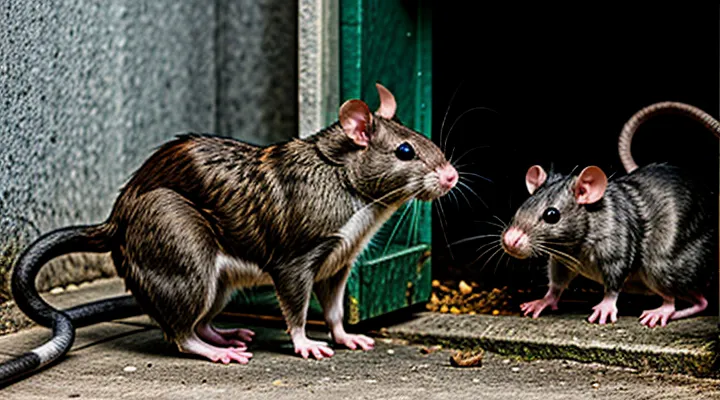
Understanding Rat Vocalizations
The Spectrum of Rat Sounds
Ultrasonic Vocalizations (USVs)
Rats produce ultrasonic vocalizations (USVs) with frequencies between 20 kHz and 100 kHz, well above the range of human hearing. Specialized microphones and spectrographic analysis capture these signals, allowing precise measurement of duration, frequency modulation, and amplitude.
USVs accompany the audible “coo” that rats emit during social encounters. They appear in several behavioral contexts:
- Courtship and mating: males emit complex, frequency‑modulated calls when approaching estrous females.
- Aggressive or territorial disputes: high‑pitch, flat‑tone calls signal dominance and deter rivals.
- Maternal‑infant interaction: pups emit distress calls when separated; dams respond with retrieval behavior.
- Exploration of novel environments: brief, broadband calls accompany heightened arousal.
The production of USVs involves coordinated activity of the laryngeal musculature and respiratory system, regulated by neural circuits in the periaqueductal gray, amygdala, and hypothalamus. Activation of these regions triggers rapid airflow through the vocal folds, generating the ultrasonic component that overlays the audible coo.
Experimental studies demonstrate the communicative function of USVs. Playback of recorded calls alters recipient behavior: females increase approach speed toward male courtship calls, while conspecifics freeze or retreat in response to aggressive calls. Lesioning of the periaqueductal gray abolishes USV emission, confirming its central role in signal generation.
Overall, ultrasonic vocalizations complement the audible coo by conveying detailed information about emotional state, intent, and identity. This dual‑modal communication system enhances group cohesion, facilitates reproductive success, and improves survival in predator‑rich environments.
Audible Vocalizations
Audible vocalizations in rats consist of a spectrum of sounds ranging from high‑frequency squeaks to low‑frequency coos. The coo, a soft, broadband call, emerges during specific social interactions and reflects distinct behavioral states.
Research identifies three primary contexts for rat coo production:
- Maternal care – pups emit coos when contacting the dam, prompting nursing and grooming behaviors. The dam’s auditory perception triggers hormonal pathways that reinforce maternal attachment.
- Affiliative encounters – adult rats produce coos during gentle sniffing or grooming of conspecifics, signaling non‑aggressive intent and facilitating group cohesion.
- Exploratory reassurance – solitary rats emit brief coos while navigating novel environments, reducing anxiety levels through self‑soothing mechanisms.
Acoustic analysis shows that coos occupy frequencies between 2 and 8 kHz, with durations of 50–150 ms. The amplitude modulation pattern differs from alarm calls, which are shorter, higher‑pitched, and accompanied by rapid respiration bursts.
Neurophysiological data link coo emission to activation of the medial preoptic area and the ventral tegmental area, regions associated with reward and social bonding. Pharmacological inhibition of dopamine receptors diminishes coo frequency, confirming the neurochemical basis of this vocal behavior.
Overall, audible coos function as a communicative signal that modulates social dynamics, maternal investment, and stress regulation in rats.
The Phenomenon of Rat «Coos»
Characteristics of «Cooing» Sounds
Frequency and Duration
Rats produce coo vocalizations primarily during social interactions, and the temporal parameters of these sounds provide insight into their communicative function. Researchers record coos using high‑frequency microphones, then analyze the waveform to determine the number of calls per minute (call rate) and the length of each call (duration). Data show that adult laboratory rats emit coos at an average rate of 5–12 calls per minute when engaged in affiliative behavior, such as grooming or nest building. In contrast, isolated or stressed individuals reduce call rate to fewer than three calls per minute, indicating a direct link between social context and vocal output frequency.
The duration of individual coos varies with the animal’s emotional state and the type of interaction. Typical call lengths range from 30 ms to 150 ms; brief calls accompany rapid, low‑intensity exchanges, while longer calls accompany sustained contact or heightened arousal. Measurements reveal a positive correlation between call duration and the proximity of the receiver: calls directed toward a nearby conspecific average 120 ms, whereas calls aimed at a more distant partner average 45 ms. This pattern suggests that rats modulate temporal features to optimize signal detection under varying spatial conditions.
Key quantitative findings:
- Call rate during affiliative behavior: 5–12 calls /minute.
- Call rate during isolation or stress: <3 calls /minute.
- Short‑duration calls: 30–60 ms, associated with brief exchanges.
- Medium‑duration calls: 61–100 ms, linked to moderate interaction intensity.
- Long‑duration calls: 101–150 ms, observed in prolonged contact or high arousal.
Acoustic Properties
Rats produce cooing vocalisations that occupy a narrow spectral band between 2 kHz and 8 kHz, with a peak intensity typically around 4 kHz. The sound pressure level measured at a distance of 10 cm ranges from 55 dB to 70 dB SPL, sufficient for short‑range communication within dense burrow networks. Harmonic content is limited; most calls consist of a fundamental frequency and one or two weak overtones, resulting in a relatively pure tone that minimizes attenuation by soil and vegetation.
Temporal characteristics include brief syllable durations of 30–80 ms, separated by inter‑call intervals of 100–300 ms. The waveform exhibits a smooth, sinusoidal envelope with a rapid rise time (<5 ms) and a gradual decay, which enhances detectability against background noise. Modulation of pitch and amplitude during a call provides additional cues for individual identification and emotional state.
Key acoustic parameters:
- Frequency peak: 3.5–5 kHz
- Bandwidth (−3 dB): 2–8 kHz
- Peak SPL (10 cm): 55–70 dB
- Syllable duration: 30–80 ms
- Inter‑call interval: 100–300 ms
- Harmonic count: 1–3, low amplitude
These properties enable efficient transmission of coos through the subterranean environment, supporting social cohesion, territorial signaling, and predator avoidance.
Distinguishing «Coos» from Other Rat Vocalizations
Rats produce a narrow range of vocal sounds that serve specific social functions. Among these, the “coo” stands out as a low‑frequency, short‑duration call emitted primarily during affiliative interactions such as grooming, nest building, and close contact with conspecifics. Its acoustic signature differs markedly from the high‑frequency ultrasonic chirps used for alarm or exploratory communication and from the broadband squeaks associated with distress or aggression.
Key acoustic and behavioral parameters separate coos from other rat vocalizations:
- Frequency: 300–600 Hz, well below the ultrasonic range (>20 kHz) of alarm chirps.
- Duration: 30–80 ms, shorter than the sustained tonal calls of mating songs.
- Amplitude: moderate, audible to humans but not as loud as distress squeaks.
- Context: observed during social bonding, nest entry, and maternal care; absent during predator exposure or competitive encounters.
- Receiver response: prompts approach or reciprocal grooming, whereas alarm chirps trigger avoidance and squeaks provoke escape or aggression.
Physiological recordings confirm that coos originate from the laryngeal muscles engaged in gentle airflow, while ultrasonic chirps involve rapid vocal fold vibration driven by sympathetic activation. Neural imaging shows activation of the ventral striatum and prefrontal regions during coo emission, contrasting with amygdala‑centred activity during distress calls. These distinctions clarify the functional niche of coos within the broader repertoire of rat communication.
Behavioral Contexts of «Cooing»
Social Interactions and Affiliation
Pair Bonding and Mating
Rats produce soft, repetitive vocalizations—commonly called coos—during close social interactions. These sounds emerge most frequently when a male and female establish a pair bond, signaling mutual interest and readiness for copulation. The acoustic signal conveys the caller’s physiological state, allowing a potential partner to gauge reproductive fitness without visual cues.
Coos function as a multimodal component of courtship. They accompany tactile behaviors such as grooming and nest‑building, creating a synchronized display that reinforces attachment. By pairing vocal output with physical proximity, rats strengthen the emotional link that precedes mating, reducing the likelihood of premature separation.
Key behavioral outcomes associated with cooing include:
- Attraction of a receptive mate through consistent, low‑frequency calls.
- Confirmation of pair compatibility via reciprocal vocal exchanges.
- Facilitation of synchronized estrus cycles, enhancing fertilization probability.
- Stabilization of the bond after copulation, promoting parental cooperation.
Research indicates that disruption of coo emission—through auditory masking or genetic alteration of vocal circuitry—reduces pair formation rates and lowers reproductive success. Consequently, cooing constitutes an integral mechanism by which rats coordinate mating and maintain long‑term partnerships.
Maternal Care and Offspring Interaction
Rats emit short, low‑frequency vocalizations—often described as coos—during interactions between mothers and their pups. These sounds appear most frequently when a dam retrieves displaced offspring, initiates nursing, or responds to pup distress calls. The acoustic signal serves as an immediate cue that the mother is attending to the litter, reinforcing the pup’s expectation of care and reducing the time required for the dam to locate and transport each pup.
The functional significance of cooing can be summarized as follows:
- Cue for proximity: The sound signals the mother’s location, allowing pups to orient toward her and maintain contact.
- Reinforcement of nursing: Coos accompany the initiation of milk let‑down, linking the vocalization with the physiological process of feeding.
- Stress mitigation: When pups emit high‑frequency distress cries, the dam’s cooing often follows, decreasing pup vocal activity and stabilizing heart rate.
- Learning aid: Repetitive exposure to maternal coos during early development shapes the offspring’s auditory discrimination, preparing it for later social communication.
Experimental observations show that pups raised without exposure to maternal coos display delayed nursing initiation and increased vocal distress, indicating that the vocal exchange is integral to the establishment of a stable mother‑infant bond. Consequently, cooing functions as a bidirectional communication channel that synchronizes maternal behavior with offspring needs, ensuring efficient allocation of care resources within the litter.
Emotional States and Well-being
Pleasure and Contentment
Rats produce low‑frequency vocalizations, often described as coos, when they experience a state of pleasure or contentment. These sounds accompany activities such as grooming, feeding, and social bonding, indicating activation of the brain’s reward circuitry. Dopamine release in the nucleus accumbens correlates with the onset of cooing, confirming that the vocalization signals a positive affective state rather than a distress response.
Key observations supporting this interpretation include:
- Increased coo frequency during consumption of palatable food, coinciding with elevated extracellular dopamine.
- Emergence of coos during affiliative interactions, such as huddling or mutual grooming, which are known to enhance oxytocin levels.
- Suppression of cooing after administration of dopamine antagonists, demonstrating dependence on reward pathways.
Neurophysiological recordings reveal that the periaqueductal gray, a region controlling vocal output, receives excitatory input from limbic structures when the animal is in a relaxed, satiated condition. This connection enables the rapid production of coos as an audible indicator of internal welfare.
Behaviorally, coos serve a communicative function: they inform conspecifics of the emitter’s non‑threatening status, facilitating group cohesion and reducing competition for resources. Consequently, the presence of coos can be used by researchers as a reliable metric for assessing the affective quality of experimental environments and for evaluating the efficacy of interventions aimed at improving rodent welfare.
Stress Reduction and Comfort
Rats produce low‑frequency coos during social encounters, grooming, and when settled in a familiar nest. Acoustic emissions coincide with measurable declines in corticosterone levels and heart rate variability, indicating activation of the parasympathetic nervous system. The sound acts as a self‑regulatory signal that lowers arousal and facilitates transition from alert to relaxed states.
- Coos synchronize breathing patterns among group members, creating a shared calmness that reduces individual stress responses.
- The vocalization triggers release of oxytocin‑like peptides, enhancing affiliative bonding and perceived safety.
- Repeated exposure to cooing environments conditions rats to associate the sound with secure shelter, reinforcing habituation and diminishing avoidance behaviors.
These mechanisms collectively support a feedback loop: vocal emission reduces physiological tension, which in turn encourages further cooing, maintaining a stable, low‑stress condition within the colony.
Neurobiological Underpinnings of «Cooing»
Brain Regions Involved
Amygdala and Emotional Processing
The amygdala integrates sensory input with affective value, generating rapid emotional responses that shape vocal output in rodents. Neuronal activity within the basolateral complex correlates with the onset of cooing, indicating that this structure evaluates the significance of social cues and triggers the associated acoustic signal. Lesion studies demonstrate that disruption of amygdalar circuits reduces the frequency and intensity of coos, confirming its direct influence on the behavior.
Key mechanisms linking the amygdala to rat vocalizations include:
- Threat assessment – heightened amygdalar firing during predator exposure suppresses coo production, favoring alarm calls.
- Affiliation signaling – activation during positive social interaction enhances coo emission, reinforcing bonding.
- Hormonal modulation – amygdala-driven release of oxytocin and vasopressin amplifies the emotional salience of coos, facilitating group cohesion.
Neurochemical pathways further refine this process. Glutamatergic projections from the amygdala to the periaqueductal gray modulate the motor pattern generators that control the laryngeal muscles responsible for coo generation. Simultaneously, GABAergic interneurons within the amygdala provide inhibitory feedback that fine‑tunes the timing and duration of each vocal bout.
Overall, the amygdala functions as an emotional hub that evaluates environmental and social contexts, translates affective states into specific neural commands, and ultimately governs the production of coos in rats. This circuitry illustrates how emotional processing directly shapes communicative behavior in mammals.
Periaqueductal Gray and Vocalization Control
The periaqueductal gray (PAG) constitutes the central hub for initiating and modulating rat vocalizations, including the soft cooing sounds observed during social interactions. Neuronal ensembles within the ventrolateral PAG receive input from limbic structures such as the amygdala and hypothalamus, integrating affective state with motor output. Activation of glutamatergic projection neurons in this region triggers the brainstem vocal pattern generators that drive laryngeal muscle activity, producing the characteristic low‑frequency coos.
Experimental lesions of the ventrolateral PAG abolish coo emission, while electrical stimulation elicits stereotyped coo‑like calls, confirming a causal relationship. Pharmacological blockade of GABA receptors within the PAG enhances coo frequency, indicating that inhibitory tone regulates call intensity and timing. These findings align with tracing studies that map PAG outputs to the nucleus ambiguus and the reticular formation, the final relay stations for respiratory and phonatory muscles.
Key functional implications of PAG‑mediated control include:
- Rapid adjustment of call amplitude in response to predator cues or conspecific proximity.
- Coordination of vocal output with respiratory rhythm to maintain call stability.
- Integration of hormonal signals, such as oxytocin, that modulate social vocal behavior.
Collectively, the PAG operates as the neural command center that translates emotional and physiological information into the precise motor patterns underlying rat cooing.
Neurotransmitters and Hormones
Oxytocin and Social Bonding
Rats produce soft, low‑frequency vocalizations known as coos during affiliative encounters such as grooming, nest building, and reunion after separation. These sounds correlate with heightened activity of the neuropeptide oxytocin, a molecule widely recognized for regulating social attachment across mammalian species.
Oxytocin facilitates pairwise and group cohesion by acting on specific neural circuits. In rats, the peptide is released from the paraventricular nucleus of the hypothalamus and reaches the amygdala, nucleus accumbens, and periaqueductal gray—regions implicated in reward processing and vocal motor control.
Experimental observations support a direct link between oxytocin and coo emission:
- Intracerebral administration of oxytocin increases the frequency and duration of coos during dyadic interactions.
- Pharmacological blockade of oxytocin receptors reduces coo production and prolongs latency to resume contact after brief isolation.
- Measurement of cerebrospinal fluid shows a rapid rise in oxytocin concentration within seconds of initiating a coo, preceding observable affiliative behavior.
The mechanistic pathway involves oxytocin binding to G‑protein‑coupled receptors in the periaqueductal gray, which modulates the activity of vocal‑motor neurons. Simultaneous activation of reward centers reinforces the emission of coos, creating a feedback loop that strengthens social bonds.
Understanding this neurochemical basis clarifies why rats emit coos as a signal of trust and attachment, and it provides a model for investigating the evolution of vocal communication linked to bonding in other social mammals.
Dopamine and Reward Pathways
Rats emit soft, rhythmic vocalizations during social interaction, exploration, and anticipation of food. These sounds correlate with activation of dopaminergic neurons in the ventral tegmental area (VTA) and subsequent release of dopamine in the nucleus accumbens. Dopamine surge signals prediction of a rewarding outcome, reinforcing the behavior that produced the stimulus. When a rat expects a palatable treat or a positive social encounter, dopamine spikes precede cooing, creating a feedback loop that strengthens the vocal response.
Key elements of the reward circuitry involved in this process include:
- VTA neurons: fire in response to cues that predict reward, increasing dopamine availability.
- Nucleus accumbens: receives dopaminergic input, integrates motivational signals, and drives motor output such as vocalization.
- Prefrontal cortex: evaluates contextual information, modulates VTA activity, and influences the timing of coos.
- Striatal pathways: mediate habit formation; repeated cooing paired with reward consolidates into a learned pattern.
Experimental manipulation of dopamine receptors demonstrates causality. Administration of antagonists in the nucleus accumbens reduces coo frequency even when reward cues remain present, whereas agonists amplify vocal output without additional external incentives. Optogenetic activation of VTA dopaminergic cells directly triggers cooing in the absence of a tangible reward, confirming that dopamine release alone can initiate the behavior.
The interplay between dopaminergic signaling and reward expectation therefore provides a mechanistic explanation for why rats produce coos. Dopamine encodes the value of anticipated outcomes, the nucleus accumbens translates that value into vocal motor commands, and the resulting sounds serve as an observable marker of the animal’s motivational state.
Evolutionary Significance
Communication in Rat Colonies
Signaling Social Status
Rats produce coo vocalizations primarily during social interactions in which hierarchical positions are negotiated. The acoustic structure of a coo—duration, frequency modulation, and amplitude—varies systematically with the emitter’s rank. High‑ranking individuals generate longer, lower‑frequency coos that sustain audible presence over greater distances, whereas subordinate rats emit brief, higher‑frequency calls that fade quickly.
These vocal patterns serve three functional purposes.
- Rank affirmation: Persistent low‑frequency coos reinforce the dominance of the caller, reducing the need for physical aggression.
- Submission signaling: Short, high‑frequency coos convey acknowledgement of lower status, prompting deference from dominant conspecifics.
- Group cohesion: Alternating coo sequences synchronize activity among members, stabilizing the social hierarchy.
Neurophysiological data link coo production to the medial preoptic area and the amygdala, regions implicated in social communication. Lesion studies demonstrate that disruption of these areas diminishes coo frequency and abolishes rank‑specific acoustic differences, confirming the neural basis of status signaling.
Field observations corroborate laboratory findings: in mixed‑sex colonies, dominant males dominate coo exchanges during mating contests, while females employ coos to negotiate access to resources. The consistency of these patterns across environments indicates that coo vocalizations constitute a reliable indicator of social standing within rat societies.
Group Cohesion
Rats produce short, low‑frequency vocalizations—commonly referred to as coos—whenever they encounter a conspecific, when they rejoin a familiar group after a brief separation, or during the establishment of a new social unit. These sounds function as acoustic markers that reinforce the integrity of the colony by signaling the presence of a familiar individual, thereby reducing uncertainty and the risk of aggression. The emission of coos aligns with the need to maintain a stable social network, which in turn enhances collective foraging efficiency and predator avoidance.
Key contributions of cooing to group cohesion include:
- Immediate identification of group members, enabling rapid reconnection after dispersal.
- Suppression of territorial disputes by providing a non‑threatening auditory cue.
- Synchronization of activity cycles, such as feeding and nesting, through shared vocal signals.
The persistence of cooing across various rat species suggests an evolutionary advantage: acoustic reinforcement of social bonds directly supports the stability and productivity of the group, which underlies the species’ success in diverse environments.
Survival Advantages
Predator Avoidance
Rats produce brief, low‑frequency coos when they detect a predator’s presence. The sound functions as an immediate alarm that alerts conspecifics and can modify the behavior of the threat.
The acoustic structure maximizes transmission in cluttered environments. Short duration reduces the chance of revealing the caller’s exact location, while the frequency range penetrates dense vegetation and burrow entrances. These properties allow the signal to travel farther than typical squeaks without attracting additional attention.
Key functions of the coo in predator avoidance include:
- Rapid notification of nearby rats, prompting escape or freezing responses.
- Disruption of a predator’s hunting sequence by creating auditory confusion.
- Coordination of group movement toward safer refuges.
- Deterrence of opportunistic predators that rely on silence to locate prey.
Field experiments using playback of coos near active foraging sites have shown a measurable decline in predation rates. Rats exposed to the call increased vigilance and abandoned exposed areas within seconds, while predators exhibited hesitation or redirected their search.
The coo therefore serves as a concise, efficient mechanism that enhances survival odds for individual rats and their colonies when faced with predatory threats.
Resource Acquisition
Rats produce short, high‑frequency vocalizations—commonly called coos—when they encounter or anticipate food. The sound functions as a communicative cue that mobilizes conspecifics toward a resource, thereby increasing the probability that the emitter and its group secure nourishment.
The acoustic signal serves three interconnected purposes:
- Alerts nearby individuals to the presence of edible material.
- Coordinates simultaneous approach, reducing competition and enhancing collective handling of large items.
- Reinforces social bonds that facilitate future sharing of foraging sites.
Experimental work demonstrates that rats emit coos more frequently in environments where food is patchily distributed. Playback of recorded coos prompts naïve rats to investigate the source location, confirming the signal’s efficacy in directing attention. Neurophysiological recordings reveal heightened activity in the auditory cortex and the ventral striatum during coo production, indicating integration of sensory and reward pathways.
These observations suggest that cooing evolved as an adaptive strategy for resource acquisition. By broadcasting information about food, rats improve individual intake while supporting group stability, a dual benefit reflected in increased reproductive success and survival rates.