
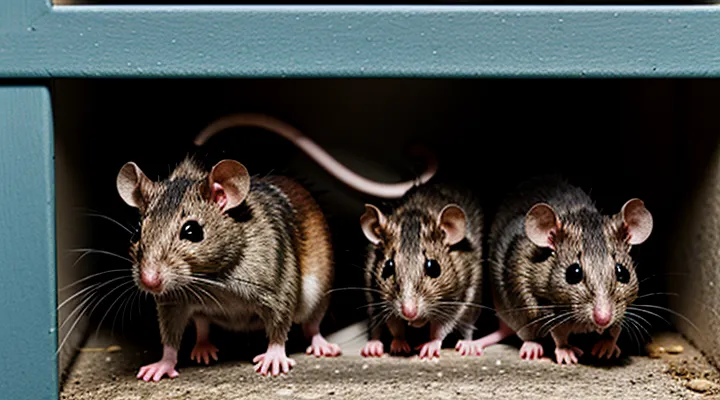
The Primal Fear
Evolutionary Roots
Disease Transmission
Rodents are vectors for numerous pathogens that affect humans, creating a rational basis for widespread apprehension. Their close proximity to food stores, waste, and human dwellings facilitates the transfer of infectious agents through urine, feces, saliva, and bite wounds.
Key diseases transmitted by mice and rats include:
- Hantavirus pulmonary syndrome, spread by inhalation of aerosolized rodent excreta.
- Leptospirosis, contracted through contact with contaminated water or soil.
- Salmonellosis, resulting from ingestion of food contaminated by rodent droppings.
- Lymphocytic choriomeningitis, transmitted by direct contact with infected rodent secretions.
- Plague, historically linked to flea bites originating from infected rats.
Transmission pathways are reinforced by rodents’ high reproductive rates and adaptability, which allow rapid population growth in urban and rural environments. Their nocturnal foraging behavior often brings them into kitchens, pantries, and storage areas, increasing the likelihood of contaminating food and surfaces.
Effective control measures—such as sealing entry points, maintaining sanitation, and employing integrated pest management—reduce the risk of disease spread. Public health guidelines emphasize regular monitoring, prompt removal of infestations, and education on safe handling practices to mitigate exposure.
The direct association between rodent-borne illnesses and human health concerns underpins the persistent fear of these animals, reinforcing the necessity for vigilant prevention and control strategies.
Instinctive Aversion
Instinctive aversion to small rodents stems from evolutionary survival mechanisms. Early humans who reacted quickly to the sight or scent of mice and rats avoided contamination and predation, increasing reproductive success. The nervous system encodes these reactions as rapid, automatic responses rather than learned judgments.
Key elements of the instinctive response include:
- Visual detection of rapid, erratic movements that signal potential threat.
- Olfactory cues indicating the presence of pathogens carried by rodents.
- Auditory perception of high‑frequency squeaks that trigger startle reflexes.
- Somatosensory sensitivity to unexpected contact, prompting immediate withdrawal.
These components operate through the amygdala and brainstem, generating heightened arousal and avoidance without conscious deliberation. The resulting fear is therefore rooted in hard‑wired biological processes rather than cultural narratives.
Psychological Factors
Neophobia and the Unknown
Neophobia, the innate aversion to unfamiliar stimuli, amplifies anxiety toward small mammals such as mice and rats. Encountering a creature that moves quickly, remains largely hidden, and exhibits erratic patterns triggers a rapid assessment of threat. The brain’s amygdala receives sensory input, interprets the unpredictability as potential danger, and initiates a fight‑or‑flight response before conscious evaluation can occur.
Key mechanisms linking neophobia to rodent aversion include:
- Sensory ambiguity: whisker motion and squeaking generate sounds and vibrations that differ from common household noises, preventing easy categorization.
- Spatial concealment: rodents exploit narrow gaps and darkness, creating a perception of unseen presence that heightens vigilance.
- Evolutionary conditioning: ancestral environments associated small, fast‑moving prey with disease vectors and predation, embedding a bias toward avoidance.
These factors converge to produce a heightened state of alertness whenever a mouse or rat appears in an unfamiliar setting. The combination of sensory uncertainty, hidden movement, and deep‑seated evolutionary warnings explains why the unknown nature of these animals provokes strong fear responses.
Unpredictability and Quick Movements
Rodents’ erratic locomotion triggers a rapid threat assessment in the human nervous system. Sudden direction changes exceed the brain’s predictive models, generating a spike in amygdala activity that signals danger. The visual system, tuned to detect fast, unpredictable motion, prioritizes these stimuli because ancestral predators often displayed similar patterns.
- Unpredictable paths prevent anticipation of escape routes, prolonging the perceived exposure time.
- Accelerated bursts of movement compress the interval between stimulus onset and required response, heightening stress hormones.
- Irregular pacing interferes with motor planning, causing a mismatch between expected and actual motion, which the brain interprets as a potential attack.
These mechanisms explain why the swift, erratic behavior of mice and rats elicits an instinctive fear response, even when the animals pose no real harm.
Societal and Cultural Influences
Media Portrayals
Horror and Thriller Tropes
Rodents dominate horror and thriller narratives because they embody instinctual threats that bypass rational analysis. Their small size, rapid movements, and nocturnal habits create a sense of invasion that aligns with deep‑seated survival instincts.
- Infestation: crowds of rats overwhelm environments, suggesting loss of control.
- Disease vector: portrayal of plague‑carrying rodents links animal presence to lethal contagion.
- Hidden menace: rats appear from walls or sewers, reinforcing fear of unseen danger.
- Swarm aggression: mass attacks amplify panic through visual overload.
- Symbolic corruption: rodents accompany decay, reinforcing association with moral or physical degradation.
These motifs exploit the human response to disgust and unpredictability. Studies show that exposure to rodent imagery activates the amygdala and insular cortex, regions responsible for fear and aversion. The combination of tactile revulsion and uncertainty about the animal’s intentions intensifies emotional arousal.
Filmmakers reinforce these effects with auditory cues such as high‑pitched squeaks, sudden scurrying sounds, and echoing footsteps. Visual techniques—tight framing on whiskers, rapid cuts of clawed paws, and low‑angle lighting—magnify the perceived threat without relying on explicit violence.
The cumulative impact of these conventions sustains audience dread of mice and rats, ensuring that the creatures remain effective instruments for generating tension and terror in visual storytelling.
Exaggerated Characteristics
Fear of rodents often relies on traits that are magnified beyond factual limits. People perceive mice and rats as far larger, faster, and more dangerous than they truly are, which fuels anxiety and avoidance behavior.
- Size: Small mammals are imagined as towering threats, despite average lengths of 5–12 cm for mice and 20–30 cm for rats.
- Speed: Reports exaggerate sprint capability; actual bursts reach only 8–13 km/h, insufficient to outpace human reflexes.
- Disease transmission: Media emphasizes plague and hantavirus, overlooking low infection rates and modern sanitation that curb pathogen spread.
- Aggressiveness: Stories portray rodents as hostile attackers, while they generally flee when confronted.
- Intelligence: Popular culture depicts cunning schemers; scientific studies show limited problem‑solving skills compared with other mammals.
- Stealth: Supposed silent movement is overstated; audible squeaks and rustling are typical.
- Reproductive capacity: Numbers are inflated; a pair may produce 5–10 offspring per litter, not the dozens suggested in sensational accounts.
- Noise: Screams and shrieks are dramatized; normal vocalizations are brief chirps.
These inflated attributes persist because evolutionary mechanisms favor rapid threat assessment, and sensational narratives reinforce the perception of imminent danger. Visual media, horror films, and anecdotal reports repeatedly present rodents as monstrous, embedding the exaggerations in collective memory.
Recognizing the disparity between myth and reality diminishes irrational aversion. Accurate data on size, speed, disease risk, and behavior provide a factual foundation that counters inflated fears, allowing rational interaction with these common urban mammals.
Folklores and Superstitions
Associations with Evil and Decay
Rodents appear repeatedly in myth, religion, and literature as symbols of moral corruption and physical deterioration. Ancient plague narratives describe rats as agents that spread pestilence, linking their presence to the breakdown of communal health. Religious texts label mice and rats as unclean creatures, reinforcing the notion that contact with them contaminates both body and soul.
Folklore repeatedly casts these animals as emissaries of malevolent forces. Tales from various cultures portray rats emerging from hidden chambers to announce disaster, while mice infiltrate sacred spaces to sabotage rituals. Such stories embed the idea that rodents embody concealed decay, ready to undermine order from within.
Literary works often employ rodents as visual metaphors for societal rot. In gothic novels, a swarm of rats signals impending ruin; in modern thrillers, a solitary mouse signifies the erosion of personal stability. The recurring visual of gnawed furniture or chewed walls conveys the relentless, insidious nature of decay.
Common associations include:
- Vectors of disease, reinforcing fear of contamination.
- Inhabitants of waste and filth, embodying physical decay.
- Subterranean dwellers, representing hidden threats.
- Symbols of moral decline in religious and mythic narratives.
- Visual motifs for societal breakdown in artistic expression.
Historical Narratives
Throughout antiquity, narratives linked rodents to divine displeasure and disease. Egyptian texts portray mice as agents of the god Seth, whose presence signaled chaos and demanded ritual offerings to avert pestilence. Similarly, the Hebrew Bible describes a plague of mice as a divine judgment against Israel, reinforcing the association between vermin and supernatural retribution.
Classical authors amplified the fear. Aristotle classified mice among “harmful creatures,” noting their capacity to contaminate grain stores and spread illness. Roman poets invoked rats as symbols of famine, reflecting a societal belief that rodent infestations presaged food scarcity and social disorder.
Medieval chronicles repeatedly attribute the Black Death to rat-borne fleas, despite later scientific clarification. Contemporary accounts emphasize the visual horror of swarming vermin, reinforcing a collective memory that links rodents to mortality. This narrative persisted into early modern literature, where playwrights depicted rats as embodiments of moral decay and societal collapse.
Key historical episodes illustrating the development of rodent fear:
- Egyptian ritual sacrifices to appease mouse deities (c. 1500 BCE)
- Biblical plague of mice in the Book of Samuel (c. 1000 BCE)
- Aristotle’s zoological observations on rodent threats (4th century BCE)
- Medieval plague chronicles attributing disease to rat infestations (14th century)
- Early modern theatrical portrayals of rats as symbols of corruption (17th century)
Learned Responses
Parental and Peer Influence
Parental reactions to rodents often set the initial emotional template for children. When a caregiver displays alarm, disgust, or avoidance toward mice or rats, the child observes and internalizes those cues, interpreting the animals as threats. Repeated exposure to adult distress signals—such as sudden movements, verbal warnings, or protective actions—strengthens the association between rodents and danger. Studies show that children whose parents explicitly label rodents as “dangerous” or who consistently intervene during encounters develop heightened physiological responses, including increased heart rate and skin conductance, when later faced with similar stimuli.
Peer environments further modify these early impressions. In group settings, children exchange anecdotes about rodent encounters, often exaggerating negative outcomes to gain social approval. Acceptance of fear‑based jokes, shared stories of infestations, or collective avoidance behaviors reinforce the perception of rodents as undesirable. Observational learning within peer groups leads to conformity: individuals who notice friends reacting with disgust are more likely to adopt comparable attitudes, even if they have not personally experienced a threatening incident.
Key mechanisms through which adults and peers shape rodent aversion:
- Modeling of emotional responses (facial expressions, tone of voice, body language).
- Verbal transmission of risk assessments (“they carry disease,” “they bite”).
- Social reinforcement of fear‑related jokes or narratives.
- Group avoidance practices that limit direct exposure, preventing habituation.
Overall, the combined influence of caregivers and social circles creates a layered fear structure, where early parental cues establish baseline anxiety and peer dynamics amplify and sustain that response throughout development.
Conditioned Aversion
Conditioned aversion develops when an individual experiences an unpleasant physiological response after encountering a mouse or rat, leading the brain to associate the animal with nausea, pain, or distress. The association is stored in the amygdala and insular cortex, regions responsible for threat detection and interoceptive awareness. Once formed, the aversive memory triggers rapid avoidance behavior, even in the absence of a current threat.
Key characteristics of conditioned aversion in the context of rodent fear include:
- Rapid acquisition after a single negative encounter; the learning curve is steep compared to other fear mechanisms.
- High resistance to extinction; repeated exposure without reinforcement does not easily diminish the aversion.
- Generalization to similar stimuli; sight, scent, or sound of any small rodent can activate the same avoidance response.
Neurochemical evidence shows elevated cortisol and norepinephrine levels during the initial aversive episode, reinforcing synaptic connections that encode the negative experience. Pharmacological interventions that block adrenergic receptors or disrupt memory consolidation can reduce the strength of the conditioned aversion, offering a potential pathway for therapeutic desensitization.
Biological and Behavioral Aspects
Sensory Sensitivities
Nocturnal Activity
Mice and rats are primarily active after dark, when human visual acuity declines and ambient noise rises. Their movements become harder to anticipate, increasing the likelihood of sudden encounters that trigger instinctive alarm responses. The darkness also masks scent cues, making it difficult for people to detect the presence of these rodents before they appear.
Nocturnal habits intensify perceived threat through several mechanisms:
- Limited visibility forces reliance on auditory cues; scurrying sounds are often interpreted as ominous.
- Sudden appearances in low light evoke surprise, a well‑documented trigger of fear responses.
- Nighttime activity coincides with human sleep cycles, disrupting rest and reinforcing negative associations.
- The cover of night facilitates hidden foraging and nesting, suggesting concealment and potential disease vectors.
Evolutionary research links heightened vigilance at night with survival strategies against predators. Rodents’ ability to exploit this period exploits the same protective bias, resulting in an amplified aversion toward them that persists in modern contexts.
Close Proximity
People often experience a heightened fear response when a mouse or rat enters their immediate personal space. The small size of the animal allows it to slip into tight areas, creating a sense that it is suddenly present and difficult to see. This sudden appearance triggers a rapid activation of the amygdala, the brain region responsible for processing threats, leading to an instinctive fight‑or‑flight reaction.
Close proximity also intensifies concerns about disease transmission. Rodents can carry pathogens such as hantavirus, leptospirosis, and salmonella. When an animal is within arm’s length, the perceived risk of contamination rises sharply, even if actual exposure is minimal. The visual and olfactory cues—quick movements, whisker twitching, and a faint odor—reinforce the association between proximity and health danger.
The invasion of personal space disrupts the human need for control over one’s environment. A rodent moving across a kitchen counter or a bedroom floor challenges the expectation of a clean, orderly setting. This breach can provoke disgust and loss of perceived safety, which together amplify the fear response.
Key factors linking close proximity to fear:
- Immediate visual detection of rapid, unpredictable motion.
- Activation of neural pathways for threat assessment.
- Elevated perception of pathogen exposure.
- Disruption of personal space and environmental order.
Understanding these mechanisms clarifies why the mere presence of a mouse or rat within a short distance can provoke intense anxiety, even in individuals without a history of phobias.
Reproductive Capacity
Rapid Infestation Potential
Mice and rats can establish a breeding population within weeks. A single female mouse produces up to ten litters per year, each containing five to eight offspring. When food, water, and shelter are readily available, the number of individuals can double every 30 days, turning a minor intrusion into a sizable colony in a matter of months.
Conditions that accelerate infestation include:
- Unsealed entry points such as gaps around pipes, doors, and vents.
- Accumulated food waste or improperly stored provisions.
- Cluttered storage areas that provide hiding places.
- Warm indoor temperatures that shorten gestation periods.
Rapid population growth increases the likelihood of disease transmission, structural damage, and audible activity, all of which intensify human aversion to these rodents. Early detection and prompt exclusion measures are essential to prevent the exponential rise of an infestation.
Perceived Loss of Control
The fear of rodents frequently originates from a perceived loss of control over their environment. When a mouse or rat appears unexpectedly, the individual experiences a sudden disruption of the predictable order that underlies daily routines.
Research indicates that unpredictability intensifies anxiety. Small size, rapid, erratic movement, and the ability to hide in walls or ceilings create a sense that the animal operates beyond the observer’s reach. This perception of invisibility eliminates the possibility of direct observation, reinforcing feelings of helplessness.
Key manifestations of perceived loss of control include:
- Inability to detect the animal before it surfaces, leading to surprise reactions.
- Difficulty in eliminating the infestation despite cleaning or trapping efforts.
- Uncertainty about the extent of contamination, such as droppings or disease vectors.
- Rapid re‑appearance after apparent removal, suggesting that the threat persists.
These factors trigger avoidance behavior and heightened vigilance. The individual may restrict movement within the home, impose excessive sanitation measures, or develop a generalized aversion to spaces where rodents could reside. The cycle of perceived helplessness and avoidance consolidates the fear response, making future encounters more distressing.
Damage and Contamination
Food Spoilage
Rodents often infiltrate storage areas, directly damaging food and accelerating spoilage. Their constant gnawing creates openings for air and moisture, conditions that promote bacterial and fungal growth. Saliva and feces deposited on edible products introduce pathogens such as Salmonella, E. coli, and Listeria, rendering the food unsafe for consumption.
The impact of rodent‑induced spoilage includes:
- Loss of marketable inventory due to contamination
- Increased costs for disposal and replacement of spoiled goods
- Heightened risk of food‑borne illness among consumers
- Damage to brand reputation and consumer trust
These outcomes reinforce public aversion to mice and rats, especially in settings where food safety is critical. Effective control measures—sealed containers, regular inspections, and integrated pest management—reduce the likelihood of rodent access, thereby limiting spoilage and the associated fear of these pests.
Property Destruction
Mice and rats inflict extensive damage on homes, businesses, and agricultural facilities, reinforcing the widespread aversion to these rodents. Their incisors continuously gnaw through wood, plastic, insulation, and electrical wiring, compromising structural integrity and creating fire hazards. Contamination of food stores and surfaces with urine, feces, and saliva introduces pathogens that jeopardize health and force costly sanitation measures. Burrowing activity weakens foundations, floors, and walls, leading to costly repairs and reduced property value.
Key forms of property destruction include:
- Chewed electrical cables that trigger short circuits or outages.
- Compromised insulation that diminishes energy efficiency.
- Damaged drywall and plaster from nesting and movement.
- Contaminated stored goods that become unsellable.
- Eroded structural timber that requires replacement.
These tangible threats explain why many individuals experience strong apprehension toward rodents, as the potential financial and safety repercussions are immediate and measurable.