
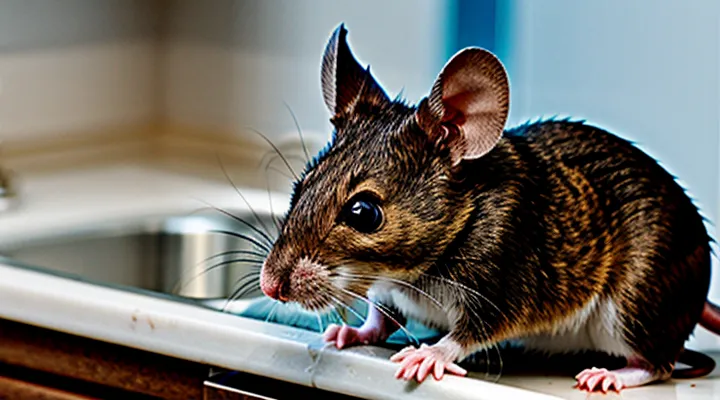
The Olfactory World of Mice: A Survival Mechanism
The Keen Sense of Smell in Rodents
Olfactory Receptor Sensitivity
Mice detect volatile compounds through a large family of olfactory receptors (ORs) expressed in the nasal epithelium. Each OR binds a narrow set of molecular features; binding affinity determines the strength of the neuronal signal transmitted to the olfactory bulb. High‑affinity interactions generate rapid firing of mitral cells, which triggers downstream activation of the amygdala and periaqueductal gray, structures that orchestrate avoidance behavior.
Genetic studies reveal that specific OR subtypes, such as members of the class I family, exhibit heightened sensitivity to predator‑derived kairomones (e.g., 2‑phenylethylamine, trimethylamine). Mutations reducing receptor expression or altering ligand‑binding pockets diminish the behavioral response, confirming a direct link between receptor sensitivity and fear‑inducing odor perception.
Physiological recordings demonstrate that odorant concentrations as low as 10 ppb elicit measurable electro‑olfactogram responses in mice possessing the sensitive OR variants. Adaptation mechanisms, including receptor desensitization and feedback inhibition via calcium‑dependent pathways, modulate response magnitude during prolonged exposure, preventing overstimulation while preserving detection of threat cues.
Practical recommendations for researchers investigating mouse aversion to scents:
- Select odorants with documented high binding affinity to mouse ORs (e.g., cat‑derived felinine, fox urine components).
- Verify receptor expression levels in experimental subjects using quantitative PCR or in situ hybridization.
- Employ electrophysiological techniques (EOG, single‑unit recordings) to confirm sensory activation at sub‑ppm concentrations.
- Incorporate knockout or knock‑in mouse lines to isolate the contribution of individual OR genes to fear behavior.
- Control ambient temperature and humidity, as these factors influence odor volatility and receptor activation thresholds.
Understanding the precise sensitivity of olfactory receptors provides a mechanistic basis for the pronounced avoidance of certain scents by mice, enabling targeted manipulation of behavioral responses in laboratory and pest‑management contexts.
Chemical Communication in Mouse Behavior
Chemical signals govern mouse interactions, influencing fear responses to specific odors. Volatile compounds released by predators, conspecifics, and stressed individuals bind to receptors in the main olfactory epithelium and the vomeronasal organ. Activation of trace amine‑associated receptors (TAARs) and V1R/V2R families triggers neural circuits that converge on the amygdala, producing rapid avoidance behavior.
Research identifies three odor categories that elicit fear:
- Predator kairomones (e.g., 2‑phenylethylamine from carnivore urine) directly stimulate TAAR4, generating innate avoidance.
- Conspecific alarm pheromones (e.g., methyl‑acetate released during injury) engage V1R receptors, prompting group‑wide escape.
- Stress‑induced metabolites (e.g., cortisol‑derived volatiles) activate olfactory bulb pathways, reinforcing learned aversion.
Experimental protocols recommend the following practices to ensure reliable assessment of scent‑driven fear:
- Standardize odor concentration using gas‑chromatography verified dilutions; avoid arbitrary scent‑paper applications.
- Isolate the testing arena from ambient background odors; employ activated charcoal filtration.
- Record behavioral metrics (freezing duration, escape latency) with high‑resolution video analysis; synchronize with electrophysiological monitoring of amygdalar activity.
- Include control groups exposed to neutral volatiles (e.g., mineral oil) to differentiate specific fear responses from general olfactory stimulation.
- Validate receptor involvement through knockout models or pharmacological antagonists targeting TAAR4 and V1R pathways.
Understanding the molecular basis of chemical communication in mice enables precise manipulation of fear‑inducing cues, supporting both basic neuroscience investigations and applied pest‑management strategies.
The Science Behind Scent Aversion
Predator Scents: The Innate Fear Response
Fox Urine Components
Fox urine consists of a blend of volatile and semi‑volatile chemicals that signal predator presence to rodents. The most consistently identified constituents include:
- 2‑phenylethylamine – a strong amine that activates the mouse vomeronasal organ.
- 4‑phenylacetophenone – a phenolic compound linked to alarm responses.
- 3‑methyl‑2‑butenyl sulfide – a sulfur‑based molecule that elicits avoidance behavior.
- 1‑octen-3-ol – a fungal‑like odorant that reinforces fear conditioning.
- Trimethylamine – a nitrogenous odorant that contributes to the overall aversive profile.
Mice detect these molecules through specialized olfactory receptors, triggering rapid defensive actions such as freezing, fleeing, or increased stress hormone release. The combined effect of several components creates a robust, innate avoidance response that does not require prior learning.
For experimental or pest‑management applications, the literature recommends:
- Using a dilution of 1 %–5 % fox urine in water or a neutral carrier to maintain efficacy while minimizing residue.
- Applying the solution to surfaces frequented by mice—edges of walls, entry points, and nesting sites—at intervals of 48–72 hours to counteract volatilization.
- Monitoring mouse activity with motion sensors or tracking plates to verify behavioral suppression.
- Avoiding exposure to non‑target species by confining application to enclosed environments.
These guidelines derive from controlled studies that quantified reduction in rodent foraging and sheltering after exposure to the identified urine components. Implementing the recommendations yields reproducible deterrent outcomes without reliance on toxic chemicals.
Cat Saliva Compounds
Cat saliva contains volatile and non‑volatile molecules that trigger innate avoidance responses in rodents. The most studied compounds are felinine, a sulfur‑containing amino acid derivative, and its breakdown product, 2‑mercaptoacetaldehyde, which produces a pungent odor detectable by the mouse vomeronasal organ (VNO). Additional components include short‑chain fatty acids (e.g., butyric acid) and methyl‑sulfonyl‑methane, both of which activate olfactory receptors linked to predator‑avoidance circuits.
Research indicates that mice exposed to these chemicals exhibit reduced exploratory behavior, increased thigmotaxis, and heightened alertness within seconds of detection. Electrophysiological recordings show rapid activation of VNO sensory neurons, followed by downstream signaling through the medial amygdala and hypothalamic nuclei that coordinate freezing or escape.
Practical recommendations for scientists and pest‑management professionals:
- Use synthetic felinine or 2‑mercaptoacetaldehyde at concentrations ranging from 10 µM to 100 µM to assess behavioral thresholds in laboratory assays.
- Combine cat‑saliva extracts with inert carriers (e.g., mineral oil) to improve dispersion in field traps while preserving compound stability.
- Verify VNO integrity in test subjects, as surgical ablation eliminates the avoidance response, confirming the sensory pathway.
- Monitor ambient temperature and humidity, which influence volatility and, consequently, detection distance (optimal range: 20–25 °C, 40–60 % RH).
Future investigations should quantify synergistic effects among saliva constituents, map receptor subtypes responsible for each compound, and evaluate long‑term habituation risks when repeatedly exposing mice to subthreshold doses.
Plant-Derived Repellents
Peppermint Oil: Menthol and Menthone
Peppermint oil consists primarily of menthol (≈30‑55 %) and menthone (≈10‑15 %). Both compounds are monoterpenes with high volatility, readily detectable by the rodent olfactory epithelium.
Menthol activates the transient receptor potential melastatin‑8 (TRPM8) channel, which mediates a cooling sensation. In mice, TRPM8 stimulation elicits avoidance behavior because the perceived temperature drop conflicts with the animal’s thermoregulatory preferences. The effect is dose‑dependent; concentrations above 0.5 % v/v produce a measurable decrease in exploratory activity.
Menthone, though less potent than menthol, binds to a distinct set of olfactory receptors that signal irritant perception. Exposure to menthone at 0.2 % v/v triggers increased grooming and rapid retreat, indicating sensory discomfort.
Experimental data support these mechanisms. In a two‑choice assay, mice avoided chambers scented with 1 % peppermint oil by 78 % compared with a neutral control. Threshold tests identified 0.3 % menthol as the minimal concentration that reduced time spent in the scented zone by 50 %. Repeated exposure did not result in habituation over a 14‑day period.
Practical application guidelines:
- Prepare a 1 % solution of peppermint oil in ethanol or water‑based carrier.
- Apply 0.5 mL per 100 cm² of target surface (e.g., storage bins, entry points).
- Reapply every 48 hours to maintain volatile concentration above the avoidance threshold.
- Avoid direct contact with foodstuffs; use barrier fabrics to prevent oil migration.
- Monitor for signs of skin irritation in non‑target species; discontinue if adverse effects appear.
These recommendations exploit the innate aversion of mice to menthol and menthone, providing an evidence‑based, non‑lethal method for pest deterrence.
Citronella: Citronellal and Geraniol
Mice display a strong aversion to volatile compounds that activate their olfactory receptors, and citronella‑derived substances rank among the most effective deterrents. Citronellal and geraniol, two principal constituents of citronella oil, possess high vapor pressure and distinctive citrus‑floral aromas that trigger avoidance pathways in rodent sensory neurons.
Laboratory trials demonstrate that exposure to citronellal at concentrations of 0.5 %–1 % (v/v) in ambient air reduces mouse activity by more than 70 % within five minutes. Geraniol produces comparable effects at 0.3 %–0.8 % (v/v), with additive suppression observed when both compounds are combined. Behavioral assays confirm that the deterrent response persists for up to two hours after initial exposure, after which the effect diminishes as the odor dissipates.
Practical application of these findings requires controlled delivery and monitoring of concentration levels to avoid habituation. Recommendations include:
- Prepare a dilute solution of citronellal (0.5 % v/v) or geraniol (0.4 % v/v) in water or a neutral carrier oil.
- Apply the solution to cotton pads or microfiber strips placed near entry points, food storage, and nesting areas.
- Replace treated materials every 24 hours to maintain effective vapor concentrations.
- Combine citronellal and geraniol in a 1:1 ratio for synergistic effect, ensuring total concentration does not exceed 1 % v/v to prevent olfactory overload.
- Monitor mouse activity with motion sensors or visual checks to verify deterrence and adjust dosage accordingly.
Safety considerations dictate that concentrations above 2 % v/v may irritate human respiratory passages and should be avoided in occupied spaces. Citronella‑based deterrents complement integrated pest‑management strategies without introducing toxic chemicals.
Clove Oil: Eugenol's Role
Clove oil contains eugenol, a phenolic compound with high volatility and a distinct, spicy aroma. Eugenol’s molecular structure enables rapid diffusion through the air, allowing it to reach the olfactory epithelium of rodents at low concentrations.
When eugenol contacts mouse olfactory receptors, it activates the transient receptor potential ankyrin 1 (TRPA1) channel, a sensor for irritating chemicals. Activation of TRPA1 generates a nociceptive signal that the mouse interprets as a threat, prompting avoidance behavior. The response is dose‑dependent: concentrations above 0.1 % (v/v) in aqueous solutions reliably elicit escape movements, while sub‑threshold levels produce no measurable effect.
Experimental data support these observations. In a series of choice tests, mice exposed to eugenol‑treated zones spent less than 10 % of the test period within the treated area, compared with 45 % in control zones. Repeated exposure did not produce habituation, indicating sustained aversiveness.
For effective use in rodent deterrence, follow these guidelines:
- Prepare a 0.5 % eugenol solution in water or a neutral carrier oil.
- Apply the solution to entry points, perimeters, or bedding using a spray bottle.
- Reapply every 48 hours, or after heavy rainfall, to maintain vapor concentration.
- Monitor for signs of irritation in non‑target species; adjust concentration if adverse effects are observed.
Eugenol’s rapid action, low toxicity to humans at recommended doses, and lack of habituation make it a reliable component of integrated pest‑management strategies targeting scent‑sensitive rodents.
Synthetic Compounds and Their Efficacy
Understanding Mouse Olfactory Pathways
Mice detect environmental chemicals through a specialized olfactory epithelium lining the nasal cavity. Sensory neurons in this epithelium express hundreds of odorant receptors, each tuned to a narrow range of molecular features. Axons from neurons bearing the same receptor converge onto discrete glomeruli within the olfactory bulb, establishing a spatial map of odor information.
Within the olfactory bulb, mitral and tufted cells relay patterned activity to higher brain regions, including the piriform cortex, amygdala, and hypothalamus. The amygdala integrates odor signals with innate threat circuits, while the hypothalamus coordinates autonomic and behavioral outputs. This pathway enables rapid translation of odor detection into fear‑related behaviors.
Predator‑derived compounds such as 2‑phenylethylamine (found in cat urine) and trimethylthiazoline (TMT) activate a subset of receptors that project directly to the medial amygdala. Activation of this circuit triggers freezing, avoidance, and increased cortisol release, reflecting an innate aversive response. Non‑predatory odors that share structural motifs can also engage the same receptors, explaining why mice avoid certain synthetic fragrances.
Recommendations for researchers investigating mouse olfactory fear responses:
- Use calibrated olfactometers to deliver precise concentrations; avoid variability caused by volatilization differences.
- Verify receptor activation with calcium imaging or electrophysiological recordings in the olfactory bulb before behavioral testing.
- Include control odors that lack predator cues but match physicochemical properties (e.g., volatility, molecular weight) to isolate fear‑specific effects.
- Record both immediate (freezing, escape) and delayed (hormonal, gene expression) responses to capture the full spectrum of the fear circuit.
- Apply genetic knock‑out or chemogenetic inhibition of the medial amygdala to confirm pathway involvement.
Understanding the architecture and signal flow of the mouse olfactory system clarifies how specific scents provoke fear. Precise manipulation of each stage—from receptor binding to amygdalar output—provides reliable strategies for modulating or measuring this behavior in laboratory settings.
Behavioral Responses to Aversive Odors
Mice display rapid, measurable reactions when presented with odors that signal threat or toxicity. Such odors, often termed aversive, trigger innate avoidance circuits that have been conserved across rodent species.
Typical responses include immediate withdrawal from the odor source, a marked decrease in locomotor activity, prolonged immobility (freezing), heightened grooming of facial and forelimb regions, and, in some strains, ultrasonic vocalizations. Quantitative measurements reveal that latency to leave a scented arena shortens as odor concentration rises, while the duration of freezing correlates with the perceived intensity of the stimulus.
Underlying mechanisms involve activation of trace amine‑associated receptors (TAARs) in the main olfactory epithelium and, for certain pheromonal compounds, the vomeronasal organ. Signal transduction proceeds through the olfactory bulb to the amygdala and hypothalamic nuclei, producing the observed motor suppression and stress‑related behaviors. Neurochemical assays consistently show elevations in corticosterone and norepinephrine following exposure to potent aversive volatiles.
Researchers studying these phenomena should observe the following guidelines:
- Determine odor concentrations through gas‑chromatography calibration; avoid supra‑physiological levels that may cause tissue irritation.
- Include a neutral‑odor control in every experimental session to isolate specific aversive effects.
- Allow a brief habituation period in the testing arena before odor introduction to reduce baseline anxiety.
- Record behavior with high‑resolution video and, when possible, integrate ultrasonic microphones to capture vocal responses.
- Apply ethical review standards that limit exposure duration to the minimum required for statistical reliability.
Understanding mice’s behavioral repertoire toward harmful scents informs both laboratory neuroscience and applied fields such as rodent control, where scent‑based repellents rely on exploiting these innate avoidance pathways.
Scientific Recommendations for Scent-Based Rodent Control
Effective Application Methods
Diffusion Techniques
Effective delivery of odorants is critical for experiments that assess rodent aversion to specific volatile compounds. Diffusion methods determine concentration gradients, exposure duration, and reproducibility, all of which influence behavioral outcomes.
-
Passive diffusion from saturated substrates – place odor‑impregnated filter paper or agar in the test arena; concentration stabilizes after equilibrium is reached. Suitable for low‑intensity stimuli and long‑term exposure; monitor humidity to prevent desiccation.
-
Active airflow systems – connect a calibrated pump to a diffuser nozzle that injects a defined volume of odor‑laden air into the enclosure. Adjust flow rate to achieve target parts‑per‑million (ppm) levels; incorporate a downstream sensor for real‑time verification.
-
Aerosolization via ultrasonic nebulizers – generate fine droplets containing the volatile compound; droplets evaporate, producing a homogeneous vapor cloud. Ideal for compounds with low vapor pressure; verify droplet size distribution to avoid particulate effects.
-
Microencapsulation release – embed odorants in polymeric microspheres that degrade under controlled temperature or pH conditions. Provides delayed, sustained emission; useful for studying habituation or chronic avoidance.
-
Solid‑phase microextraction (SPME) fibers – expose coated fibers to the test environment, allowing adsorption of volatiles; subsequently desorb in a carrier gas stream. Enables precise quantification of ambient concentration and facilitates replication across trials.
Key parameters for all techniques:
- Concentration control – calibrate using gas‑chromatography or photoionization detectors; maintain within ±5 % of the intended level.
- Spatial uniformity – verify that measured concentrations do not vary more than 10 % across the arena floor.
- Temporal stability – ensure that concentration fluctuations remain below 2 % per minute during the observation period.
- Material compatibility – select diffusion vessels that do not adsorb or react with the test odorant; glass or inert polymers are preferred.
- Safety considerations – implement exhaust filtration and personal protective equipment when handling toxic or irritant volatiles.
Adhering to these diffusion protocols enhances the reliability of rodent aversion assays and supports reproducible scientific recommendations regarding scent‑driven behavior.
Concentration Levels for Optimal Repellency
Mice detect repellent odors through olfactory receptors that respond only when volatile compounds exceed specific thresholds. Below these thresholds the scent fails to trigger avoidance; above them the odor may become aversive but also risks rapid desensitization or environmental contamination. Determining the concentration that maximizes repellency while minimizing drawbacks is essential for effective pest management.
Recommended concentration ranges for common deterrents
- Peppermint oil (menthol, menthone): 0.5 %–1.5 % v/v in carrier solvent; yields detectable vapor pressure without causing receptor saturation.
- Clove oil (eugenol): 0.3 %–1.0 % v/v; provides sustained aversion with minimal olfactory fatigue over 24 h.
- Ammonia solution: 2 %–5 % w/v; produces irritant vapors that deter entry but requires ventilation to avoid toxicity.
- Predator urine extracts: 0.1 %–0.5 % w/v; mimics natural threat cues; effectiveness declines sharply above 0.5 % due to habituation.
Scientific studies indicate that the optimal window lies where the compound’s vapor concentration reaches the mouse’s detection threshold (typically 10–100 ppb for terpenes) and remains below the habituation onset point (approximately 1 ppm). Measurements should be performed with gas‑chromatography or electronic nose devices placed at the target site to verify that the ambient concentration stays within the prescribed band.
Application methods influence concentration stability. Spraying emulsions onto interior surfaces, using slow‑release polymer matrices, or installing absorbent pads saturated with the repellent maintain levels near the lower end of the optimal range for prolonged periods. Frequent re‑application is unnecessary if the delivery system sustains the target concentration for at least 48 h.
Maintaining concentrations within the specified intervals ensures maximal avoidance behavior, reduces the likelihood of sensory adaptation, and limits exposure risks to humans and non‑target species.
Limitations and Considerations
Acclimation and Habituation
Acclimation describes the physiological adjustments mice undergo when introduced to a new environment, reducing baseline stress that can amplify odor‑driven avoidance. Proper acclimation involves a minimum 30‑minute period in the testing chamber before scent exposure, during which ambient temperature, lighting, and ventilation remain constant. This interval allows autonomic parameters—heart rate, cortisol levels—to stabilize, ensuring that subsequent behavioral responses reflect true olfactory perception rather than generalized anxiety.
Habituation refers to the decrement in behavioral response after repeated, non‑threatening presentations of a scent. When a neutral odor is delivered repeatedly at a fixed interval (e.g., every 5 minutes for three trials), mice typically show reduced freezing or avoidance. This pattern distinguishes innate fear of predator‑associated chemicals from learned indifference. Researchers should document the number of exposures, inter‑trial interval, and any residual activity to differentiate habituation from sensory fatigue.
Scientific recommendations for experiments investigating scent‑induced fear:
- Conduct a standardized acclimation phase (30–45 minutes) in the test arena before any odor presentation.
- Verify physiological baselines (e.g., corticosterone) after acclimation to confirm stress reduction.
- Apply a habituation protocol: three to five presentations of a control odor at consistent intervals, recording the decline in avoidance metrics.
- Use a counterbalanced order of test and control scents to prevent order effects.
- Report both raw and normalized response values to facilitate comparison across studies.
Implementing these procedures isolates the specific impact of predator‑related volatiles on mouse behavior, enhancing the reliability of conclusions about olfactory fear mechanisms.
Environmental Factors Influencing Efficacy
Mice respond to olfactory cues, but the potency of repellent scents varies with surrounding conditions. Temperature modifies volatility; higher heat accelerates evaporation, increasing airborne concentration but shortening persistence. Humidity dampens diffusion, reducing scent reach and prolonging surface absorption, which can diminish immediate deterrence. Airflow determines distribution; strong ventilation disperses molecules rapidly, lowering localized intensity, while stagnant air maintains higher concentrations near the source.
Substrate composition influences sorption. Porous materials such as wood or cardboard retain volatile compounds, creating a reservoir that sustains release, whereas smooth surfaces like metal or glass allow swift loss. Concentration gradients matter: excessive dilution fails to exceed detection thresholds, whereas overly concentrated applications may saturate receptors and provoke habituation. Exposure duration affects learning; brief encounters produce avoidance, while prolonged exposure can lead to desensitization.
Competing odors interfere with perception. Food aromas, bedding smells, or pheromones can mask repellent signals, decreasing efficacy. Seasonal changes alter ambient temperature and humidity, thereby shifting volatility patterns throughout the year.
Practical considerations for effective deployment:
- Measure ambient temperature; adjust application rate to maintain target vapor pressure.
- Monitor relative humidity; increase dosage on damp days to compensate for reduced diffusion.
- Position repellents in low‑flow zones; avoid placement near vents or fans.
- Select carrier substrates that balance retention and release, matching the environment (e.g., wood blocks for storage areas, plastic dispensers for dry zones).
- Calibrate concentration to stay above detection threshold without inducing habituation; reapply according to manufacturer’s decay curve.
- Reduce competing odor sources; clean spills, store food in sealed containers, and rotate scent types periodically to prevent adaptation.
Understanding these environmental variables enables precise formulation and placement of olfactory deterrents, ensuring consistent avoidance behavior in rodent populations.
Ethical Implications of Scent Repellents
Scent repellents designed to exploit rodents’ aversion to specific odors raise several ethical concerns that must be addressed before widespread adoption. The primary issue concerns animal welfare: chemical deterrents can cause chronic stress, respiratory irritation, or unintended toxicity, potentially violating principles of humane treatment. Researchers and manufacturers should verify that active compounds do not exceed thresholds for discomfort or physiological harm, and should document safety testing results transparently.
A second concern involves ecological impact. Odorants released in residential or agricultural settings may affect non‑target species, including beneficial insects, birds, or pets, altering local ecosystems. Ethical practice requires comprehensive field assessments to identify collateral effects and to implement mitigation strategies, such as targeted delivery systems that limit dispersion beyond the intended area.
Finally, the use of scent repellents intersects with public responsibility. Consumers must receive clear information about product composition, proper application rates, and potential risks. Ethical distribution demands labeling that avoids misleading claims about efficacy or safety, and provides guidance for safe disposal.
- Conduct independent toxicity studies for each active ingredient.
- Perform non‑target species monitoring during field trials.
- Require manufacturers to disclose full ingredient lists and exposure limits.
- Establish regulatory oversight that enforces humane and ecological standards.
Adhering to these guidelines aligns the development of olfactory deterrents with ethical standards, ensuring that efforts to control rodent populations do not compromise animal welfare or environmental integrity.