
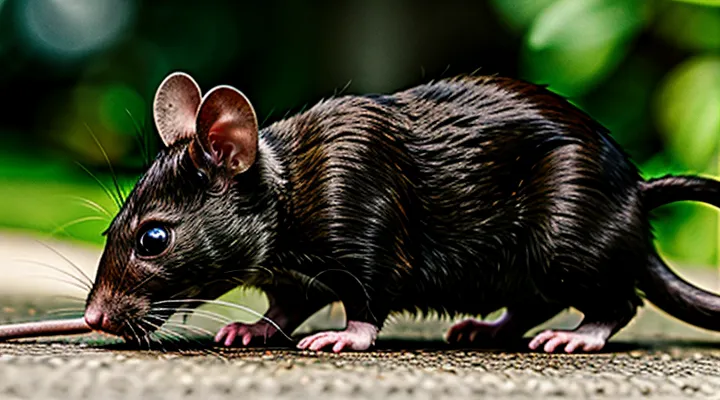
The Curious Case of Rat Paw Licking
Grooming: A Primary Instinct
Maintaining Hygiene
Rats engage in regular paw licking as an integral component of self‑maintenance. The behavior removes debris, reduces bacterial load, and restores sensory function. Saliva contains enzymes that break down organic residues, while the mechanical action of the tongue dislodges particles adhered to fur and skin. This dual action prevents infection and preserves tactile acuity essential for navigation and foraging.
Key hygiene functions of paw licking include:
- Elimination of soil, fecal matter, and food remnants that accumulate during exploration.
- Reduction of pathogenic microorganisms through antimicrobial compounds present in saliva.
- Restoration of paw pad elasticity, ensuring reliable grip on varied substrates.
- Prevention of skin irritation by clearing irritants that could provoke inflammation.
Neglecting this grooming activity compromises barrier integrity, increases susceptibility to dermatological disorders, and may impair locomotor efficiency. Environmental enrichment that encourages natural grooming supports overall health and reduces the incidence of disease‑related mortality in captive populations.
Removing Debris and Odors
Rats lick their paws primarily to eliminate foreign particles and reduce scent signatures that could attract predators. The act removes dust, food fragments, and microbial growth, while saliva contains enzymes that break down odor‑producing compounds.
The cleaning process functions on two levels. First, the physical motion of the tongue scrapes debris from fur and skin surfaces. Second, saliva’s antimicrobial properties degrade volatile organic compounds, diminishing the animal’s olfactory footprint. The combined effect maintains a low‑profile presence within confined environments.
Practical measures to support this natural behavior:
- Keep cage bedding dry and replace it regularly to limit particulate accumulation.
- Provide chewable grooming tools, such as wooden blocks, to encourage additional cleaning.
- Monitor paw condition; excessive licking may indicate irritation or infection requiring veterinary assessment.
- Ensure ventilation reduces ambient odors, complementing the rat’s own scent‑control efforts.
«Effective debris removal and odor suppression enhance rat health and reduce the risk of predator detection».
Spreading Saliva for Scent Marking
Rats frequently lick their paws to distribute saliva across the ventral surface of their limbs. This action transfers chemical compounds from the oral cavity onto the skin, creating a volatile scent trail that other conspecifics can detect.
Key aspects of saliva‑based scent marking include:
- Deposition of pheromonal proteins that convey individual identity, reproductive status, and hierarchical rank.
- Rapid dissemination of odorants as the rat moves, reinforcing territory boundaries without the need for dedicated scent glands.
- Enhancement of tactile exploration; saliva moistens the paw pads, allowing finer detection of substrate textures while simultaneously leaving a chemical signature.
The practice integrates grooming with communication, enabling rats to maintain social cohesion and territorial organization through a simple, low‑energy mechanism.
Self-Soothing and Stress Reduction
Calming Behavior
Rats frequently lick their paws as a form of self‑soothing. The action reduces physiological stress markers and promotes a state of relaxation.
Licking stimulates sensory nerves in the forelimbs, triggering the release of endogenous opioids. This neurochemical response lowers heart rate and diminishes cortisol concentrations, creating a feedback loop that reinforces the behavior.
Common triggers for increased paw‑licking include:
- Handling or restraint
- Introduction of unfamiliar objects
- Sudden changes in lighting or temperature
- Presence of predator scent cues
Observation of paw‑licking provides a reliable indicator of an animal’s emotional state. Providing nesting material, stable cage conditions, and regular enrichment opportunities can mitigate excessive licking and support overall welfare. The behavior itself exemplifies «calming behavior» employed by rats to maintain equilibrium.
Displacement Activity
Displacement activity refers to a stereotyped behavior that emerges when an animal experiences conflicting motivations or heightened stress. The response appears unrelated to the immediate stimulus yet serves to alleviate internal tension.
Rats exhibit paw‑licking as a classic example of displacement activity. When confronted with a predator cue, a novel environment, or competition for resources, the animal may momentarily abandon the primary response (flight, freeze, or aggression) and engage in self‑directed grooming of the forepaws. This action reduces physiological arousal and provides a measurable indicator of the animal’s emotional state.
Key mechanisms underlying the behavior include:
- Activation of the hypothalamic‑pituitary‑adrenal axis, leading to elevated cortisol levels.
- Modulation of dopaminergic pathways in the basal ganglia, which coordinate motor patterns associated with grooming.
- Sensory feedback from mechanoreceptors in the paws, reinforcing the soothing effect of licking.
Experimental observations consistently show increased frequency of paw‑licking during:
- Exposure to unfamiliar scents.
- Presentation of a conspecific displaying dominant behavior.
- Application of mild restraint or handling.
Quantitative analysis of these episodes allows researchers to infer the intensity of the conflict and to evaluate the efficacy of anxiolytic interventions. The presence of paw‑licking therefore constitutes a reliable behavioral marker for displacement activity in rodent models.
Responding to Environmental Changes
Rats’ paw‑licking behavior serves as a rapid response mechanism to fluctuating environmental conditions. When ambient temperature rises, saliva applied to the paws enhances evaporative cooling, allowing the animal to maintain thermal equilibrium without relying on whole‑body panting, which could expose it to predators. Conversely, in cold or damp settings, licking removes excess moisture, preventing heat loss through conduction and reducing the risk of fungal growth on the skin.
Key functions of this grooming action include:
- Removal of foreign particles such as dust, chemicals, or pathogens introduced by changes in habitat.
- Regulation of skin pH and microbial balance, which stabilizes the integumentary barrier against opportunistic infections.
- Adjustment of tactile sensitivity; a clean, moisturized paw surface improves proprioception and grip on altered substrates.
Experimental observations show that rats increase licking frequency after exposure to novel odors, altered lighting, or cage reconfiguration. The behavior correlates with heightened activity of the trigeminal nerves, which detect tactile and chemical cues, triggering a reflex arc that directs salivation to the paws. This reflex provides immediate protection while the central nervous system evaluates longer‑term adaptive strategies, such as relocating to a more suitable microhabitat.
In summary, paw licking operates as an adaptive grooming response, enabling rats to mitigate the physiological challenges posed by rapid environmental shifts. The process integrates thermoregulation, hygiene, and sensory optimization, ensuring survival across diverse and changing habitats.
Communicative Functions
Social Bonding
Rats frequently clean their paws with their tongues, a behavior that extends beyond personal hygiene. When an individual directs licking toward a cage‑mate’s paws, the act functions as allo‑grooming, a direct exchange of tactile stimulation that reinforces affiliative links.
Allo‑grooming transfers scent markers from the groomer to the recipient, aligning chemical profiles across the group. This chemical convergence supports recognition of conspecifics and reduces aggression during resource competition.
Experimental observations indicate that pairs engaging in mutual paw licking display increased proximity, synchronized activity, and diminished latency to share food. The correlation between grooming frequency and subsequent cooperative tasks suggests that the behavior contributes to group stability.
Key aspects of paw‑licking as a social mechanism:
- Direct tactile contact that strengthens pair bonds.
- Scent sharing that harmonizes group odor signatures.
- Reduction of hierarchical tension, promoting egalitarian interactions.
- Enhancement of cooperative behaviors in foraging and nest building.
Signaling Health and Status
Rats engage in frequent paw‑licking as a means of communicating physiological condition to conspecifics. The act removes debris and parasites, producing a clean surface that indicates effective grooming ability. Clean paws reduce the risk of infection, and visible grooming success serves as a reliable cue of individual health.
Observational studies show that dominant individuals display higher grooming frequency, reinforcing status hierarchies. Rapid, thorough licking conveys confidence in self‑maintenance, discouraging challenges from subordinates. Conversely, reduced paw‑licking correlates with illness or injury, prompting avoidance behavior among peers.
Key implications of paw‑licking include:
- Immediate assessment of sanitary condition by nearby rats.
- Reinforcement of social ranking through observable grooming effort.
- Early detection of health decline, influencing group dynamics and resource allocation.
Potential Medical Reasons
Irritation or Injury
Rats exhibit frequent paw‑licking when the skin or surrounding tissue experiences discomfort. The act serves as a self‑soothing mechanism aimed at removing irritants and promoting wound healing.
Common sources of irritation include:
- Dry or cracked pads caused by low humidity or abrasive surfaces
- Flea or mite infestations that provoke itching
- Contact with chemicals, dust, or scented products that irritate the epidermis
When an injury occurs, the animal instinctively cleans the affected area. Typical injuries prompting this behavior are:
- Small lacerations from sharp objects or cage fixtures
- Abrasions resulting from excessive grooming or rough terrain
- Fractures or sprains that generate swelling and pain
The licking action helps remove debris, distribute saliva’s antimicrobial compounds, and stimulate circulation, thereby accelerating tissue repair. Persistent or excessive «paw licking» may indicate an unresolved problem and warrants veterinary assessment.
Allergic Reactions
Rats often lick their paws when the skin experiences an immune‑mediated response to environmental allergens. Exposure to dust mites, mold spores, or rodent‑specific feed additives can trigger a hypersensitivity cascade, releasing histamine and other mediators that provoke itching and inflammation. The resulting discomfort prompts the animal to groom the affected area, leading to observable paw‑licking behavior.
Key characteristics of an allergic response in rodents include:
- Redness and swelling of the paw pads
- Presence of small vesicles or crusted lesions
- Increased frequency of licking or grooming episodes
The underlying mechanism involves IgE antibodies binding to mast cells within the dermis. Upon re‑exposure to the allergen, cross‑linking of IgE induces degranulation, releasing histamine, prostaglandins, and leukotrienes. These substances increase vascular permeability and stimulate sensory nerves, producing the sensation of itch that drives the licking reflex.
Management strategies focus on eliminating the offending allergen, applying topical corticosteroids, or administering antihistamines to reduce mediator release. Monitoring the frequency and intensity of paw licking provides a practical indicator of treatment efficacy.
Parasites and Skin Conditions
Rats frequently lick their paws as a self‑grooming response to irritation caused by external agents. The act reduces discomfort and removes harmful organisms that accumulate on the extremities.
Common ectoparasites prompting this behavior include:
- Mites that burrow into the skin
- Fleas that feed on blood and leave irritating saliva
- Ticks that attach to the pads and release toxins
- Lice that crawl across the fur and paws
Skin disorders that may trigger paw licking comprise:
- Allergic dermatitis resulting from contact with irritants
- Bacterial infections such as cellulitis, producing swelling and pain
- Fungal infections like ringworm, causing itching and crust formation
- Hyperkeratosis, leading to thickened, rough pads that feel uncomfortable
By removing parasites and soothing inflamed tissue, paw licking serves as an immediate, instinctive treatment. Persistent or excessive licking often signals an underlying infestation or dermatological problem that requires veterinary assessment.
Understanding Rat Behavior: Broader Implications
Behavioral Indicators for Rat Owners
Recognizing Normal vs. Excessive Licking
Rats lick their paws as part of routine grooming, a behavior that maintains cleanliness and protects the delicate skin on the feet. The action supports sensory function and prevents debris accumulation.
Typical grooming patterns include short, intermittent licking sessions lasting a few seconds, occurring several times a day. Licking is usually confined to the paws and does not interfere with eating, nesting, or exploration. Healthy fur around the paws remains intact, and no lesions are visible.
Excessive licking manifests as prolonged, repetitive bouts that dominate the animal’s daily schedule. Indicators include:
- Persistent contact with the paws for minutes at a stretch
- Redness, swelling, or ulceration on the pads
- Hair loss or scabbing around the digits
- Reduced activity, weight loss, or signs of distress
Underlying factors that drive abnormal licking comprise:
- Parasitic infestations such as mites or fleas
- Dermatological infections, including bacterial or fungal agents
- Chronic pain from injuries, arthritis, or nail overgrowth
- Psychological stress caused by overcrowding, inadequate enrichment, or sudden environmental changes
Management requires systematic observation and prompt veterinary consultation. Recommendations include regular health checks, parasite control, environmental enrichment, and, when necessary, targeted medical treatment to address infection or pain. Early detection prevents progression to severe tissue damage and supports overall well‑being.
When to Seek Veterinary Advice
Rats frequently clean their paws as part of regular grooming. This activity typically leaves no residue and does not interfere with mobility.
When the licking becomes excessive, produces blood, or is accompanied by swelling, discoloration, or limping, the behavior signals a possible health issue. Persistent odor, crusty lesions, or visible parasites also indicate a problem that requires professional assessment.
Indicators that veterinary advice is necessary
- Continuous paw licking lasting more than a few days
- Presence of blood, pus, or ulceration on the paws
- Swelling, redness, or heat in the affected area
- Limping, reluctance to walk, or loss of balance
- Unusual odor or foul smell emanating from the paws
- Visible parasites, mites, or fungal growth
- Sudden change in grooming frequency without an obvious environmental cause
In such cases, contact a veterinarian experienced with small mammals promptly. Provide a detailed description of the observed symptoms, the duration of the behavior, and any recent changes in diet, habitat, or handling. Early intervention improves the likelihood of successful treatment and prevents complications.
Evolutionary Significance of Grooming
Survival Advantages
Rats regularly lick their paws to remove debris, maintain tactile sensitivity, and regulate body temperature. This self‑grooming behavior confers several survival benefits.
- Eliminates dust and foreign particles, preventing infection and preserving the integrity of sensory receptors.
- Reduces the load of ectoparasites, lowering the risk of disease transmission.
- Cleans minor injuries, facilitating faster tissue repair and decreasing the chance of bacterial colonisation.
- Enhances grip by keeping pads moist, improving locomotion on varied surfaces.
- Assists in thermoregulation through evaporative cooling, especially in warm environments.
Collectively, these functions support health, mobility, and reproductive success, reinforcing the species’ adaptability in diverse habitats.
Role in Colony Health
Rats routinely clean their paws by licking, a behavior that directly influences the health of the colony. Saliva contains enzymes that break down debris and reduce bacterial load on the limbs, preventing the spread of pathogens through shared tunnels and nesting material. By maintaining clean extremities, individuals lower the risk of wound infection, which in turn minimizes the incidence of disease outbreaks that could compromise group stability.
Key health‑related effects of paw‑licking include:
- Removal of soil and fecal particles that harbor parasites, limiting parasite transmission among nest mates.
- Application of antimicrobial compounds present in saliva, decreasing surface colonization by harmful microbes.
- Stimulation of circulation in the digits, promoting faster tissue repair after minor injuries.
The cumulative impact of these actions sustains a hygienic environment, supports efficient foraging, and contributes to the overall resilience of the rat community.