
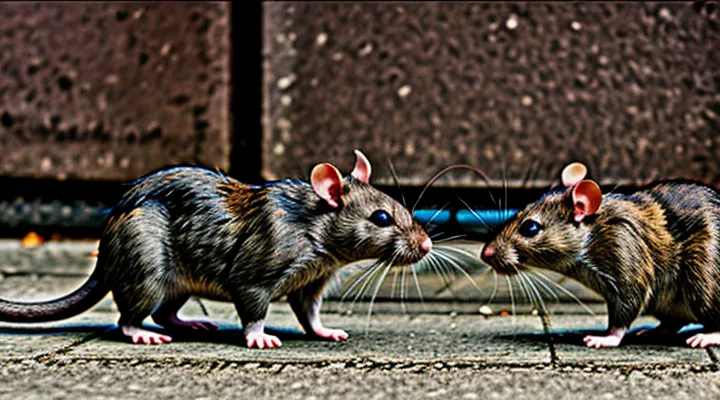
The Nature of Rat Social Structures
Dominance Hierarchies
Rats organize social groups into linear dominance hierarchies where each individual occupies a relatively stable rank. Hierarchies emerge from repeated aggressive encounters, with dominant individuals consistently winning contests and subordinate rats yielding to higher‑ranking opponents.
Aggressive bouts serve to clarify rank, reduce long‑term conflict, and allocate access to resources such as food, nesting sites, and mates. When a subordinate challenges a dominant, the interaction often escalates to physical fighting; the outcome reinforces the existing order or triggers a reshuffling of positions.
Dominant rats display characteristic behaviors that signal status: elevated body posture, tail‑up stance, rapid grooming of the dorsal surface, and aggressive vocalizations. Subordinates exhibit avoidance, freezing, and retreat to peripheral areas of the enclosure. Scent marking with urine and glandular secretions further communicates rank without direct confrontation.
Experimental studies using laboratory colonies demonstrate that removal of a dominant individual precipitates a surge in fighting among remaining rats, confirming that hierarchy stability suppresses unnecessary aggression. Re‑establishment of order occurs within a predictable number of encounters, after which overall aggression declines.
Typical behaviors observed during hierarchy formation:
- Postural elevation and forward lunges
- Rapid whisker movement toward opponent
- Tail‑up display combined with dorsal grooming
- Bite attempts directed at the neck or flanks
- Submission signals such as crouching and retreat
Understanding dominance hierarchies clarifies why rats engage in fights: aggression functions as a mechanism for rank determination, resource allocation, and social cohesion within the group.
Territoriality and Resource Defense
Rats engage in aggressive encounters primarily to protect a defined area and the supplies it contains. A stable territory provides exclusive access to food caches, nesting sites, and escape routes, reducing competition and enhancing survival prospects.
- Boundary marking: Rats deposit urine, feces, and scent glands along perimeter edges, creating chemical cues that signal occupancy to conspecifics.
- Resource valuation: When food availability is limited, individuals increase patrol frequency and respond more intensely to intrusions, reflecting the direct link between resource scarcity and combat intensity.
- Nest defense: Breeding females guard burrows vigorously, as offspring vulnerability elevates the cost of losing a shelter.
- Hierarchy reinforcement: Dominant rats assert control over high‑quality zones, using fights to confirm status and deter challengers.
Physiological mechanisms support these behaviors. Elevated testosterone and cortisol levels accompany confrontations, amplifying aggression and vigilance. Neural pathways involving the amygdala and hypothalamus coordinate threat detection and motor responses, ensuring rapid escalation when a rival breaches a marked boundary.
Consequences of territorial aggression shape population dynamics. Successful defenders secure higher reproductive output, while subordinates adopt avoidance strategies, such as shifting to peripheral foraging zones or forming temporary alliances to access resources indirectly. This balance between conflict and coexistence maintains ecological stability within rat communities.
Common Triggers for Conflict
Introducing New Rats
Introducing unfamiliar rats into an established colony triggers a cascade of behavioral responses that often culminate in aggression. Newcomers lack the scent signatures and social cues that resident individuals use to recognize allies, prompting dominant members to challenge the intruder’s presence. The resulting confrontations serve to assess the newcomer’s rank potential, enforce territorial boundaries, and preserve access to limited resources such as food and nesting sites.
Key factors influencing the intensity of fights when new rats are added:
- Dominance hierarchy – Established alpha individuals initiate attacks to reaffirm their status.
- Scent familiarity – Absence of colony-specific odor cues provokes defensive aggression.
- Resource availability – Scarcity amplifies competition, increasing the likelihood of violent encounters.
- Age and sex – Mature males display higher aggression levels than juveniles or females.
Effective integration strategies reduce conflict. Gradual exposure through a neutral arena allows scent exchange without immediate physical contact. Providing surplus food and additional nesting material diminishes competition for essential resources. Monitoring interactions for prolonged biting or severe injuries enables timely removal of overly aggressive individuals, preserving overall colony stability.
Competition for Mates
Rats engage in aggressive encounters primarily to secure access to receptive females. When estrous cycles align, multiple males converge on the same nesting area, each attempting to establish dominance and exclusive breeding rights. Dominant individuals obtain priority mating opportunities, while subordinates are forced to wait or seek alternative partners.
Key mechanisms of mate competition include:
- Physical bouts that establish a hierarchy; the winner retains the female and the surrounding territory.
- Scent marking with urine and glandular secretions; dominant males amplify their olfactory signal to deter rivals.
- Vocalizations such as ultrasonic chirps; these serve both as threats and as alerts to nearby competitors.
The intensity of these confrontations rises with population density, skewed sex ratios, and limited nesting sites. Under conditions of abundant resources, aggression diminishes, allowing subordinate males to adopt alternative reproductive tactics, such as sneaking copulations or forming temporary alliances.
Food Scarcity and Water Access
Limited food and water create direct competition among rats, prompting aggressive encounters. When supplies dwindle, individuals prioritize immediate intake, leading to confrontations that reinforce dominance hierarchies.
Food scarcity triggers several behavioral responses:
- Increased foraging range, exposing rats to unfamiliar conspecifics.
- Elevated scent marking to claim resources, which rivals perceive as challenges.
- Rapid escalation from avoidance to physical bouts when access is blocked.
Water access functions similarly. Dehydration intensifies motivation, reducing tolerance for interference. Rats defending a water source display heightened vigilance, frequent attacks on intruders, and persistent territorial patrols.
Physiological stress from nutrient deficits amplifies cortisol levels, lowering aggression thresholds. Consequently, even minor disputes over crumbs or droplets can evolve into prolonged fights, reinforcing social order and ensuring that dominant individuals secure essential sustenance.
Overcrowding and Stress
Overcrowding compresses individuals into limited space, forcing constant proximity and competition for food, nesting material, and shelters. The resulting scarcity of resources triggers repeated encounters in which dominant rats assert control, while subordinates experience repeated displacement. Such interactions raise circulating glucocorticoids, elevate heart rate, and suppress immune function, creating a physiological state that lowers the threshold for aggressive responses.
Stress generated by high density manifests behaviorally as heightened vigilance, reduced grooming, and increased frequency of bite and chase events. When environmental cues indicate limited escape routes, rats adopt more rigid territorial boundaries, defending even marginal patches of bedding or tunnel. The combination of chronic hormonal activation and intensified resource rivalry produces a feedback loop: stress amplifies aggression, and aggression further intensifies stress.
Key mechanisms linking crowding to fighting:
- Elevated corticosterone levels under sustained high‑density conditions.
- Increased competition for food, water, and nesting sites.
- Restricted ability to retreat, leading to forced confrontations.
- Reinforced dominance hierarchies that become more rigid as space shrinks.
- Suppressed affiliative behaviors such as allogrooming, which normally mitigate tension.
Understanding these dynamics clarifies why rats in densely populated habitats exhibit more frequent and severe conflicts, emphasizing the necessity of adequate space and resource distribution in laboratory and pest‑management settings.
Types of Aggressive Behavior
Threat Displays and Posturing
Rats rely on visual, auditory, and tactile signals to resolve conflicts without physical injury. When a contest begins, the challenger assumes a high‑stance, arches its back, and flares its fur, creating a conspicuous silhouette that exaggerates body size. Simultaneously, the animal emits high‑frequency squeaks and ultrasonic chirps that convey agitation and dominance to the opponent. The aggressor may also perform a “boxing” motion, extending forepaws forward while maintaining a rigid posture, a behavior that signals readiness to strike while offering the rival a chance to withdraw.
Key components of the display include:
- Body elevation – lifts the center of gravity, making the rat appear larger.
- Fur puffing – increases apparent volume, deterring approach.
- Tail positioning – raised or curled tail serves as an additional visual cue.
- Vocalizations – sharp squeaks and ultrasonic calls encode intensity of threat.
- Forepaw extension – mimics striking motion, tests opponent’s willingness to retreat.
If the rival perceives the combined cues as overwhelming, it typically backs away, avoiding a costly melee. When the display fails to elicit retreat, the interaction escalates to physical combat, characterized by bites, lunges, and grappling. The initial threat posture thus functions as a cost‑saving mechanism, allowing rats to assess each other's strength and resolve disputes with minimal injury.
Chasing and Biting
Rats display chasing and biting as primary components of aggressive interactions. Chasing occurs when an individual perceives another as a threat to its territory, food supply, or position within the social hierarchy. Immediate triggers include intrusion into a familiar burrow, sudden appearance of an unfamiliar conspecific, and competition for limited resources such as nesting material or water.
Biting functions as a direct assertion of dominance or a defensive maneuver. A bite delivers nociceptive feedback that can deter an opponent, reinforce the attacker’s status, or incapacitate a rival. Biting intensity correlates with the aggressor’s hormonal state; elevated testosterone and corticosterone levels increase the likelihood of severe bites.
Underlying mechanisms involve:
- Olfactory cues that signal dominance or reproductive status.
- Neurotransmitter activity in the amygdala and hypothalamus that mediates threat perception.
- Hormonal fluctuations that modulate aggression thresholds.
Consequences of chasing and biting include:
- Establishment of a stable dominance hierarchy.
- Physical injury ranging from superficial wounds to fatal trauma.
- Elevated stress markers in subordinates, potentially affecting growth and immune function.
Understanding these behaviors clarifies how rat populations self‑organize and maintain social order through direct physical contests.
Submission and Retreat
Rats resolve disputes through two complementary strategies: submission and retreat. Both tactics allow individuals to avoid the high costs of physical injury while preserving the social order of the colony.
Submission is expressed by a set of stereotyped signals that convey acquiescence to a dominant opponent. Typical indicators include lowered head, flattened ears, crouched body, and a prolonged immobility period. Vocalizations such as high‑frequency squeaks accompany these postures, and the release of specific pheromones reinforces the subordinate status. The dominant rat often responds with brief, non‑aggressive contact, confirming the hierarchy without escalating to a fight.
Retreat involves the rapid withdrawal of an individual from the contested area. Key behaviors are:
- Sudden sprint away from the aggressor,
- Rapid tail flicking to signal alarm,
- Emission of ultrasonic calls that alert conspecifics to potential danger.
Retreat is chosen when the subordinate assesses the odds of winning as unfavorable, or when environmental constraints (e.g., limited escape routes) demand immediate disengagement.
The functional outcome of both strategies is a reduction in physical harm and a maintenance of group stability. Submission preserves the dominant rat’s authority without resorting to lethal force, while retreat removes the subordinate from immediate threat, allowing it to rejoin the colony after the conflict subsides. Together, these behaviors illustrate how rats balance aggression with self‑preservation in their social interactions.
Factors Influencing Aggression Levels
Genetics and Breed Differences
Genetic composition shapes the propensity of rats to engage in aggressive encounters. Variations in genes regulating neurotransmitters—such as MAOA, serotonin transporter (SLC6A4), and dopamine receptor D4—correlate with heightened territorial and dominance behaviors. Polymorphisms that reduce serotonin availability or increase dopamine signaling tend to lower the threshold for fight initiation.
Breed-specific traits amplify or mitigate these genetic effects. Laboratory strains exhibit distinct aggression profiles, while wild-derived lines retain stronger defensive instincts. Notable differences include:
- Sprague‑Dawley: low baseline aggression, rapid habituation to conspecifics.
- Long‑Evans: moderate aggression, pronounced territoriality in enriched environments.
- Wistar: variable aggression, influenced by early social exposure.
- Wild‑caught Norway rats: high aggression, robust response to intruders.
- Fischer 344: elevated aggression under stress, linked to heightened cortisol response.
Environmental factors interact with genetic predispositions; isolation, resource scarcity, and overcrowding intensify aggressive displays across all breeds. Selective breeding programs that prioritize low-aggression phenotypes have produced strains suitable for behavioral research, while lines emphasizing competitive behavior serve as models for studying neurobiological mechanisms of conflict.
Understanding the genetic and breed-related foundations of rat combat behavior informs experimental design, improves animal welfare, and guides the development of interventions targeting maladaptive aggression.
Age and Hormonal Status
Rats exhibit heightened aggression during specific life stages, and both age and endocrine condition critically shape these patterns. Juvenile rodents, typically 3‑5 weeks old, display frequent territorial disputes as they establish dominance hierarchies. This period coincides with rapid brain maturation, particularly in regions governing social cognition, which amplifies sensitivity to conspecific cues. In contrast, adult males (≥ 12 weeks) show reduced baseline fighting but can revert to intense confrontations when hormonal fluctuations occur.
Key hormonal influences include:
- Testosterone: Elevated levels correlate with increased attack frequency and reduced latency to initiate aggression. Castration markedly diminishes these behaviors, while testosterone replacement restores them.
- Estradiol: Conversion of testosterone to estradiol within the brain modulates aggression in both sexes. High estradiol concentrations in females enhance competitive interactions, especially during estrus.
- Cortisol (corticosterone in rodents): Chronic stress elevates corticosterone, which can suppress aggressive displays in older rats but may provoke irritability and sporadic attacks in younger individuals.
Age‑related hormonal trajectories further clarify the interaction. Puberty triggers a surge in gonadal steroids, amplifying male-male competition. After sexual maturity, hormone levels plateau, and aggression stabilizes unless external factors (e.g., social disruption, pheromonal cues) provoke hormonal shifts. In aged rats (> 18 months), declining testosterone and altered glucocorticoid regulation often accompany diminished aggression, though some individuals retain high fighting propensity due to retained neuroendocrine sensitivity.
Empirical studies consistently demonstrate that manipulating hormonal status—through gonadectomy, hormone replacement, or stress induction—produces predictable changes in fighting behavior across age groups. Consequently, age and endocrine condition constitute primary determinants of why rats engage in combat, providing a robust framework for interpreting observed aggression in laboratory and field settings.
Early Life Experiences
Early life conditions shape the neural circuits that regulate aggression in rats. Variations in maternal licking, grooming, and nursing frequency alter the development of the hypothalamic‑pituitary‑adrenal axis, producing long‑term differences in stress reactivity that predispose individuals to engage in more frequent or more intense fights.
Social environment during the first three weeks of life determines baseline territoriality. Pups raised in litters of eight or more experience higher competition for milk and space, which correlates with increased aggression after weaning. Conversely, rats reared in isolated cages or without peer interaction exhibit heightened defensive aggression when later confronted with unfamiliar conspecifics.
Experimental manipulations illustrate causal links:
- Cross‑fostering pups from high‑care mothers to low‑care dams raises aggression levels to those typical of the low‑care lineage.
- Daily handling of neonates (5 min, 3 times per week) reduces the frequency of aggressive bouts in adulthood by approximately 30 %.
- Early exposure to a novel arena for brief periods each day diminishes latency to attack in subsequent resident‑intruder tests.
Neurochemical studies confirm that early adversity elevates monoamine turnover in the amygdala and prefrontal cortex, regions critical for threat assessment and impulse control. These changes persist into adulthood, making previously stressed rats more likely to initiate or sustain combat during social encounters.
Understanding how neonatal experiences program aggression provides a framework for interpreting variability in rat fighting behavior across laboratory and field observations.
Environmental Enrichment
Environmental enrichment provides stimuli that satisfy rats’ innate exploratory, foraging, and social needs. Enrichment items such as shelters, chew blocks, and complex cage layouts increase opportunities for natural behaviors and reduce chronic stress.
Insufficient stimulation correlates with heightened aggression. When rats cannot express nesting or foraging activities, competition for limited resources intensifies, leading to frequent territorial disputes and bite injuries.
Effective enrichment interventions that mitigate fighting include:
- Nesting material (e.g., shredded paper, cotton) that allows construction of private burrows.
- Multi‑level cage structures and tunnels that create visual barriers and escape routes.
- Chewable objects (wood blocks, sisal ropes) that redirect oral exploration away from conspecifics.
- Foraging puzzles that disperse food throughout the enclosure, encouraging individual problem‑solving.
- Controlled group sizes that balance social interaction with space availability.
Implementation requires regular assessment of aggression indicators (wound counts, dominance displays) before and after enrichment changes. Adjustments should be made promptly if conflict persists, ensuring that enrichment remains functional and clean.
Consequences of Rat Fights
Physical Injuries
Rats engage in aggressive encounters that frequently produce tangible wounds, influencing individual health and group dynamics. Physical trauma arises from biting, clawing, and trampling during these confrontations.
- Puncture wounds from incisors, often deep and prone to infection.
- Lacerations caused by forelimb claws, varying from superficial scratches to extensive skin tears.
- Contusions resulting from body impacts, leading to bruising and internal bleeding.
- Fractures of small bones, especially in the skull and vertebrae, when forceful bites target vulnerable areas.
- Tail injuries, including severed tips or bruised tissue, which impair balance and sensory function.
Wound severity correlates with dominance hierarchies; dominant individuals typically sustain fewer injuries, while subordinates bear the brunt of damage. Infected lesions can progress to abscesses, reducing mobility and feeding efficiency. Healing time depends on wound depth, environmental hygiene, and the rat’s immune status; chronic injuries may alter grooming behavior and increase vulnerability to predators. Persistent pain can suppress reproductive activity, affecting population structure. Monitoring injury patterns provides insight into the intensity of aggression and the stability of social organization within rat colonies.
Stress and Psychological Impact
Stress triggers a cascade of hormonal and neural changes that directly influence rat aggression. Activation of the hypothalamic‑pituitary‑adrenal (HPA) axis releases corticosterone, which alters amygdala excitability and reduces inhibitory control from the prefrontal cortex. Elevated corticosterone levels correlate with increased frequency of attacks, shortened latency to initiate combat, and higher win rates among stressed individuals.
Psychological consequences of chronic stress manifest as heightened anxiety, reduced social exploration, and impaired cognition. Rats exposed to unpredictable noise, crowding, or intermittent food deprivation display:
- Persistent hypervigilance during social encounters
- Diminished grooming and nesting behaviors
- Lower thresholds for territorial intrusion
These behavioral shifts create a feedback loop: anxiety amplifies threat perception, prompting more aggressive responses, which further elevate stress hormones.
Experimental data support a causal link. In a controlled study, rats subjected to a two‑week restraint protocol exhibited a 35 % increase in aggressive bouts compared with unstressed controls. Administration of a glucocorticoid receptor antagonist normalized aggression levels, confirming the mediating role of stress hormones.
Understanding the stress‑aggression relationship informs laboratory housing standards and experimental design. Minimizing environmental stressors reduces confounding aggression, improves welfare, and enhances reproducibility of behavioral research.
Social Instability within Colonies
Social instability within rat colonies creates conditions that precipitate aggressive encounters. Disruptions in hierarchical order, such as the removal of dominant individuals, lead to uncertainty about rank and resource allocation. When dominance cues are ambiguous, subordinate rats may challenge each other to reestablish a clear hierarchy, increasing the frequency of fights.
Key contributors to instability include:
- Rapid population turnover that introduces unfamiliar individuals.
- Limited space that prevents the formation of distinct territories.
- Inconsistent availability of food or nesting material, causing competition.
- Environmental stressors, such as noise or temperature fluctuations, that elevate cortisol levels.
These factors interact to erode predictable social structures. Elevated stress hormones lower aggression thresholds, allowing minor disputes to escalate. As a result, colonies exhibit higher rates of biting, chasing, and prolonged confrontations.
Stabilizing the social environment mitigates conflict. Maintaining a stable dominant individual, providing ample space, and ensuring consistent resource distribution reduce the need for rank renegotiation. Consequently, aggression diminishes, and colony cohesion improves.
Managing and Preventing Aggression
Proper Introductions
A proper introduction for a study on rat aggression must establish the scientific context, define the research gap, and present clear objectives. Begin with a brief overview of existing knowledge about conflict behavior in rodents, citing key findings on territoriality, resource competition, and social hierarchy. Follow with a concise statement of what remains unresolved, such as the neuroendocrine mechanisms driving escalated fights or the influence of environmental stressors.
Next, articulate the specific aims of the investigation. For example:
- Determine how pheromonal cues modulate aggression intensity.
- Assess the effect of housing density on fight frequency.
- Evaluate the role of serotonin receptors in conflict resolution.
Conclude the introductory section by outlining the hypothesis that manipulating a single hormonal pathway will reduce the occurrence of violent encounters. This structure provides readers with a logical progression from background to purpose, ensuring the study’s relevance is immediately evident.
Adequate Space and Resources
Adequate space and resource availability directly influence the frequency and intensity of aggressive encounters among rats. When individuals are confined to a limited area, the likelihood of territorial overlap rises, prompting more frequent confrontations over preferred zones.
Insufficient space forces rats into constant proximity, reducing opportunities for avoidance. This condition accelerates the establishment of dominance hierarchies, which often manifest as physical bouts. The stress associated with overcrowding also heightens irritability, further increasing the probability of conflict.
Scarcity of essential resources—food, water, nesting material—creates competition that can trigger aggression. Rats prioritize access to these items; when supply is limited, individuals engage in contests to secure their share, leading to escalated fighting behavior.
Research on laboratory housing demonstrates that increasing enclosure dimensions and ensuring plentiful, evenly distributed resources markedly lower aggression rates. Recommended standards include:
- Minimum floor area of 0.1 m² per adult rat.
- Multiple nesting sites spaced at least 30 cm apart.
- Continuous access to fresh food and water without monopolization.
Implementing these parameters reduces territorial disputes and resource-driven aggression, promoting a more stable social environment.
Environmental Enrichment Strategies
Environmental enrichment reduces the frequency and intensity of rat aggression by providing stimuli that satisfy natural exploratory and foraging behaviors. When rats encounter varied and challenging surroundings, their motivation to dominate conspecifics declines, leading to fewer fights.
Effective enrichment can be grouped into four categories:
- Physical structures: tunnels, climbing ladders, nesting materials, and platforms that increase vertical space.
- Social opportunities: group housing with compatible individuals, rotating cage mates, and shared play objects.
- Cognitive challenges: puzzle feeders, hidden treats, and problem‑solving devices that require manipulation.
- Sensory inputs: varied textures, scents, and auditory stimuli that mimic natural habitats.
Implementation guidelines include:
- Introduce items gradually to avoid overwhelming the colony.
- Rotate enrichment objects on a weekly schedule to maintain novelty.
- Monitor individual behavior and adjust resources based on observed aggression levels.
- Keep enrichment clean and safe to prevent injury or disease transmission.
Consistent application of these strategies results in measurable declines in combat behaviors, lower injury rates, and improved overall health markers. The reduction in aggression also facilitates more reliable experimental outcomes by minimizing stress‑related confounds.
Veterinary Intervention for Chronic Aggression
Veterinary assessment of persistent aggression in rats begins with a thorough physical examination to exclude pain, infection, or metabolic disorders that can amplify hostile behavior. Laboratory testing should include complete blood count, serum chemistry, and parasitology screens; abnormal results often correlate with heightened irritability.
Pharmacological management targets neurochemical pathways implicated in aggression. Typical regimens employ low‑dose benzodiazepines or atypical antipsychotics such as clozapine, titrated to the minimum effective concentration. For chronic cases, selective serotonin reuptake inhibitors may be introduced after evaluating hepatic function and potential drug interactions.
Environmental modification complements medical therapy. Providing ample nesting material, hiding spaces, and vertical structures reduces territorial stress. Cohabitation strategies involve gradual introduction, visual barriers, and controlled exposure periods to prevent escalation. Nutritional adjustments—high‑fiber diets and limited high‑fat supplements—support stable gut microbiota, which recent studies link to behavioral regulation.
Behavioral conditioning, administered by a qualified animal behaviorist, reinforces non‑aggressive responses. Techniques include positive reinforcement for calm interactions, desensitization to provocatory stimuli, and systematic extinction of attack patterns.
Monitoring protocols require weekly weight checks, behavior scoring sheets, and periodic re‑evaluation of drug plasma levels. Adjustments are made based on trend analysis, ensuring that therapeutic goals—reduced frequency of attacks, improved social tolerance, and maintenance of overall health—are consistently met.