
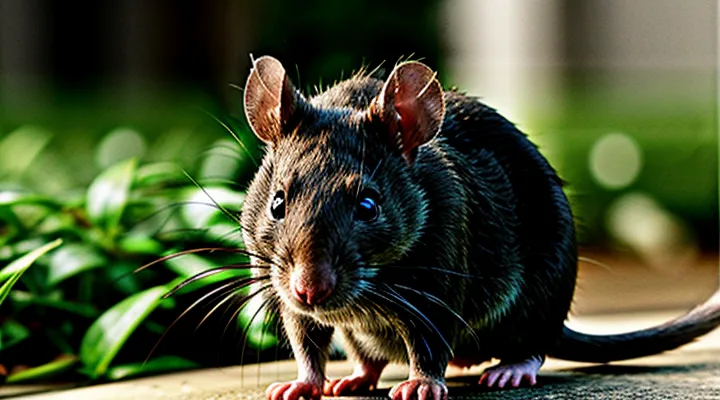
The Brain's Architecture
Comparative Brain Size and Complexity
Rats possess a brain-to-body mass ratio that rivals many small mammals, positioning them among the most neurologically efficient rodents. Their cerebral cortex occupies roughly 20 % of total brain volume, a proportion comparable to that of squirrels and higher than that of shrews. This cortical expansion supports sophisticated sensory integration and problem‑solving abilities.
When comparing neuronal density, rats exhibit approximately 200 million neurons in the cerebral cortex, surpassing the 150 million found in mice and approaching the 250 million typical of ferrets. The high density of pyramidal cells in the prefrontal region underlies advanced planning and flexible behavior.
Key comparative metrics:
-
Brain mass relative to body weight:
-
Cortical surface area:
- Rat: ~2.5 cm²
- Mouse: ~1.2 cm²
- Guinea pig: ~3.0 cm²
-
Synaptic connectivity:
- Rat cortical neurons: ~10,000 synapses per neuron
- Mouse cortical neurons: ~8,000 synapses per neuron
- Hamster cortical neurons: ~7,500 synapses per neuron
These figures illustrate that rats combine a relatively large brain, dense neuronal networks, and extensive synaptic connections, creating a platform for complex cognition. The balance of size and intricacy distinguishes them from smaller rodents and aligns their neural architecture with those of more behaviorally versatile mammals.
Neural Density and Connectivity
Rats possess one of the highest neuronal densities among mammals, with up to 120 million neurons packed into a brain weighing roughly 2 grams. This compact arrangement yields a cortical thickness comparable to larger species, allowing extensive processing power within a limited volume. The high concentration of pyramidal cells in the prefrontal cortex supports rapid integration of sensory input and executive functions.
Connectivity in the rat brain exhibits several distinctive features:
- Dense thalamocortical loops provide swift relay of tactile and olfactory signals.
- Extensive hippocampal–entorhinal pathways enable efficient spatial mapping and memory consolidation.
- Robust dopaminergic projections to the nucleus accumbens facilitate reward‑based learning and adaptive behavior.
- Numerous reciprocal connections between the amygdala and sensory cortices enhance threat detection and emotional modulation.
These structural attributes create a neural network capable of fast signal propagation, flexible pattern recognition, and sophisticated problem‑solving. The combination of high neuronal packing and intricate interregional wiring underlies the remarkable cognitive abilities observed in laboratory experiments, such as maze navigation, tool use, and social learning.
Cognitive Abilities That Shine
Problem-Solving Prowess
Rats demonstrate remarkable problem‑solving abilities that rival those of many larger mammals. Their neocortex, though proportionally smaller, contains densely packed neurons that support rapid integration of sensory input and flexible decision‑making. Experiments with maze navigation, lever manipulation, and obstacle avoidance consistently show that rats can form abstract representations of spatial relationships and adjust strategies when conditions change.
Key demonstrations of their cognitive flexibility include:
- Learning to open a hinged lid to retrieve food after observing a conspecific’s actions.
- Solving a multi‑step puzzle box that requires pulling a string, then pushing a door, to access a reward.
- Adapting to altered water levels in a Morris water maze by selecting a new escape route without trial‑and‑error repetitions.
Neurophysiological studies reveal that the hippocampus and prefrontal cortex cooperate during these tasks, generating synchronized theta oscillations that facilitate memory encoding and retrieval. This neural coordination underlies the capacity for planning, inhibition of irrelevant responses, and rapid reassessment of goals, confirming that rats possess sophisticated problem‑solving prowess.
Maze Navigation Skills
Rats excel at navigating complex mazes, a capability that reveals the sophistication of their neural architecture. Laboratory studies consistently show rapid acquisition of optimal routes after only a few trials, indicating strong spatial learning and memory consolidation.
The underlying mechanisms involve:
- A highly developed hippocampus that encodes environmental cues and forms cognitive maps.
- Dense networks of place cells that fire in relation to specific locations, enabling precise position tracking.
- Efficient use of olfactory and tactile information to supplement visual inputs, enhancing route discrimination.
- Adaptive flexibility, allowing rats to modify strategies when obstacles are introduced or pathways are altered.
Neurophysiological recordings demonstrate that during maze exploration, rats exhibit synchronized theta rhythms across the hippocampus and prefrontal cortex. This oscillatory coupling supports the integration of sensory data with decision‑making processes, facilitating swift adjustment to new maze configurations.
Behavioral experiments also highlight the role of reinforcement learning. Rats quickly associate reward locations with distinct spatial patterns, updating their internal models to prioritize high‑value paths while minimizing travel distance.
Collectively, these findings illustrate that maze navigation is not merely a learned habit but a manifestation of advanced cognitive functions rooted in the rodent brain’s structural and functional specialization.
Tool Use and Innovation
Rats demonstrate sophisticated tool‑use behaviors that rival those of many larger mammals. Laboratory experiments have shown that individuals can manipulate objects to obtain food, solve puzzles, and access hidden compartments. Their success stems from a combination of tactile acuity, flexible problem‑solving strategies, and a highly adaptable neocortex.
Key observations of rat innovation include:
- Construction of simple bridges from sticks or paper to cross gaps, enabling access to distant food sources.
- Use of sand or water to adjust the weight of objects, allowing precise placement of heavy items.
- Sequential actions such as opening a latch, pulling a rope, and then moving a platform to reach a reward.
- Rapid adoption of novel techniques after observing a conspecific perform the task, indicating social transmission of knowledge.
Neurobiological studies link these abilities to dense connections between the hippocampus and prefrontal cortex, regions responsible for spatial mapping and executive planning. Synaptic plasticity in these circuits supports the formation of new strategies after a single successful attempt, reducing reliance on trial‑and‑error learning.
Field observations confirm that wild rats exploit human‑made debris, repurposing bottle caps, wires, and discarded containers as tools for foraging or nest construction. This opportunistic behavior highlights an inherent capacity to modify the environment to meet immediate needs, a hallmark of innovative cognition.
Overall, rat tool use reflects a blend of sensory precision, neural flexibility, and cultural learning, underscoring their status as highly intelligent rodents.
Memory and Learning
Rats demonstrate sophisticated memory and learning capacities that rival many mammals. Their performance in spatial navigation, pattern recognition, and conditioned responses stems from distinct neuroanatomical and physiological traits.
The hippocampus, a brain region devoted to spatial encoding, exhibits dense synaptic connections and continuous generation of new neurons. This neurogenesis enhances the formation of episodic maps, allowing rats to recall complex routes after a single exposure. The dentate gyrus, a subfield of the hippocampus, processes incoming sensory cues and integrates them into coherent representations of the environment.
Learning in rats relies heavily on operant conditioning mechanisms. When presented with a reward contingency, they modify behavior within a few trials. This rapid adaptation reflects efficient dopamine signaling in the basal ganglia, which updates action values based on outcome feedback. The prefrontal cortex contributes by maintaining task rules and suppressing irrelevant responses, supporting flexible problem solving.
Experimental paradigms illustrate these abilities:
- Radial arm maze: rats retrieve food from multiple arms, displaying minimal revisits and accurate spatial memory.
- T‑maze alternation: subjects alternate choices without explicit cues, demonstrating working memory.
- Fear conditioning: pairing a tone with a mild shock leads to immediate avoidance, evidencing associative learning.
These findings underscore the relevance of rodent models for studying memory disorders and neural plasticity. The combination of hippocampal plasticity, dopaminergic reinforcement, and prefrontal executive control equips rats with a highly adaptable cognitive system.
Spatial Memory Excellence
Rats demonstrate exceptional spatial memory, allowing them to navigate complex mazes, locate food caches, and return to nesting sites after extended periods. Their hippocampus contains densely packed place cells that fire when the animal occupies a specific location, forming a neural map of the environment. Continuous synaptic remodeling within this region preserves route information and supports rapid adaptation to new layouts.
The rodent brain also employs grid cells in the entorhinal cortex, generating a hexagonal coordinate system that complements place-cell activity. This dual coding scheme produces precise distance and direction estimates, enabling rats to calculate shortcuts and avoid obstacles without visual cues. Long‑term potentiation strengthens connections among these cells after repeated exposure, consolidating spatial representations for future use.
Key mechanisms underlying this capability:
- Dense network of place cells creates location‑specific firing patterns.
- Grid cells provide metric framework for distance measurement.
- Head‑direction cells encode orientation relative to the environment.
- Synaptic plasticity consolidates learned routes, supporting memory retention over weeks.
These neural components interact to produce a robust spatial memory system that rivals that of many larger mammals, explaining why rats excel at tasks requiring navigation and environmental awareness.
Associative Learning Capabilities
Rats excel at forming associations between stimuli, rewards, and actions, a core component of their cognitive repertoire. Classical conditioning experiments demonstrate that a neutral tone paired repeatedly with a food reward elicits anticipatory licking within a few trials, indicating rapid linkage of auditory cues to nutritional outcomes. Operant conditioning paradigms reveal that rats adjust lever‑pressing frequency to maximize pellet delivery, adjusting behavior after a single negative outcome and reinforcing successful strategies after positive reinforcement.
Neurophysiological studies locate associative processing in the hippocampus and basal ganglia, where synaptic plasticity strengthens connections during learning episodes. Long‑term potentiation observed in hippocampal CA1 neurons correlates with the acquisition of spatial and contextual associations, while dopamine release in the striatum modulates reward‑related learning signals. These mechanisms enable rats to generalize from limited experiences, applying learned rules to novel contexts.
Key observations supporting advanced associative ability include:
- Rapid acquisition of taste‑aversion learning after a single exposure to a toxin‑paired flavor.
- Ability to navigate mazes using distal visual cues after minimal training.
- Transfer of learned discrimination between auditory and visual modalities within one session.
Collectively, these capacities illustrate that rats possess sophisticated associative learning systems, underpinning their reputation for problem‑solving and adaptability.
Social Intelligence and Communication
Rats demonstrate sophisticated social cognition that rivals many mammals. Their ability to recognize individual conspecifics relies on olfactory signatures and ultrasonic vocalizations, allowing them to maintain stable hierarchies within colonies. Studies using maze tasks show that rats adjust their behavior after observing peers, indicating observational learning and empathy-like responses.
Communication among rats occurs through multiple channels:
- Ultrasonic calls: frequencies above 20 kHz convey alarm, mating, and territorial information; acoustic analysis reveals distinct patterns for each context.
- Scent marking: pheromonal deposits on objects and bedding transmit reproductive status and dominance cues; receivers detect these cues with a highly sensitive vomeronasal organ.
- Tactile interaction: grooming and whisker contact reinforce social bonds and synchronize group activity; neural recordings link these touches to oxytocin release.
- Body posture: subtle shifts in stance and tail position signal aggression or submission; observers interpret these cues within seconds.
Neurobiologically, the rat prefrontal cortex and amygdala coordinate processing of social signals, while the hippocampus stores relational memories that guide future interactions. Lesion experiments demonstrate that disruption of these areas diminishes group cohesion and reduces the accuracy of peer‑based decision making.
Collectively, these mechanisms enable rats to navigate complex social environments, cooperate in foraging, and transmit knowledge across generations, underscoring their remarkable cognitive adaptability.
Empathy and Prosocial Behavior
Rats demonstrate complex social cognition that includes empathy and prosocial actions, indicating a level of mental sophistication comparable to that of larger mammals. When a conspecific experiences distress, observers often exhibit increased attention, approach behavior, and attempts to alleviate the discomfort, reflecting an affective response that goes beyond mere conditioning.
Key observations of empathetic and prosocial behavior in rats:
- Rescue trials: Subjects free trapped partners from sealed chambers, showing rapid problem‑solving and a willingness to assist.
- Food sharing: Individuals voluntarily provide food to hungry cage‑mates after receiving a reward themselves, suggesting a motivation to benefit others.
- Emotional contagion: Rats synchronize ultrasonic vocalizations and stress hormone levels with distressed peers, indicating shared affective states.
Neurobiological studies link these behaviors to the anterior cingulate cortex and the oxytocin system, regions associated with social bonding and affect regulation. Manipulations that enhance oxytocin signaling increase helping actions, while lesions in the cingulate reduce rescue performance.
The presence of empathy and prosocial conduct supports the view that rat intelligence encompasses not only problem‑solving but also sophisticated social processing, which contributes to their adaptability in group environments.
Olfactory Communication Networks
Rats rely on an intricate olfactory system to gather and transmit information essential for survival and social organization. The nasal cavity houses millions of odor receptors, while the vomeronasal organ detects pheromonal cues that influence reproductive and territorial behaviors. Signals travel to an expanded olfactory bulb, where neural circuits translate chemical patterns into perceptual maps.
Communication occurs through several channels:
- Scent marking: urine and glandular secretions deposit volatile compounds that encode individual identity, reproductive status, and hierarchical rank.
- Trail following: sequential deposition of odorants creates pathways that guide conspecifics toward food sources or nesting sites.
- Pheromone exchange: direct contact or airborne molecules trigger immediate physiological responses, such as estrus synchronization or aggression modulation.
These pathways form a dynamic network that supports rapid information transfer without visual input. Rats memorize specific odor signatures, enabling recognition of familiar individuals after prolonged separation. Olfactory cues also shape problem‑solving strategies; laboratory tests show that rats navigate mazes more efficiently when scent cues are available, indicating reliance on chemical memory for spatial reasoning.
The sophistication of this chemical communication system underlies the high cognitive performance observed in rodents. Understanding olfactory networks provides insight into the neural architecture that powers learning, social cognition, and adaptive behavior in rats.
Environmental Factors and Adaptability
Urban Survival Strategies
Rats thrive in metropolitan environments by exploiting cognitive abilities that enable rapid learning, flexible problem‑solving, and social coordination. Their brains support a suite of behaviors that convert urban challenges into survival opportunities.
- Resource identification – Rats detect food odors at low concentrations, remember the locations of reliable sources, and adjust for seasonal changes in waste management.
- Structural navigation – Spatial memory allows them to map complex sewer systems, subway tunnels, and building interiors, creating efficient routes that avoid predators and human interference.
- Social information sharing – Vocalizations and scent marks convey warnings about traps or toxic substances, while grooming interactions reinforce group cohesion and collective foraging efficiency.
- Adaptive nesting – Individuals assess temperature, humidity, and predator presence, selecting hidden crevices, abandoned utilities, or insulated walls for shelter.
- Risk assessment – Exposure to novel objects triggers exploratory behavior followed by rapid habituation, reducing fear responses after repeated safe encounters.
These strategies illustrate how rodent neural architecture translates into practical tactics that sustain populations amid dense human activity.
Rapid Adaptation to New Challenges
Rats demonstrate extraordinary speed in confronting unfamiliar obstacles. Their brains contain densely packed neurons in the prefrontal cortex, enabling swift assessment of novel stimuli and immediate formulation of effective responses. This neural architecture supports real‑time modification of behavior without extensive trial‑and‑error cycles.
Key mechanisms underlying rapid adaptation include:
- Synaptic plasticity: Long‑term potentiation occurs within minutes, strengthening connections that encode successful strategies.
- Hippocampal mapping: Spatial representations are updated instantly when environments change, allowing rats to reroute paths efficiently.
- Neurochemical flexibility: Dopamine release adjusts quickly to reward prediction errors, directing attention toward advantageous actions.
Experimental evidence shows that when presented with a new maze configuration, rats can locate the exit after a single exposure, leveraging previously stored spatial schemas and integrating fresh cues. In laboratory tests involving variable food locations, individuals modify foraging routes in under ten seconds, illustrating an ability to generalize learned patterns to altered contexts.
The combination of high‑density cortical circuitry, fast‑acting synaptic mechanisms, and adaptable neurotransmitter systems equips rats with a cognitive toolkit that resolves new challenges with minimal delay. This capacity for immediate behavioral revision underpins their reputation as highly intelligent rodents.
Scientific Insights and Research
Neurological Studies and Models
Neurological research on rats employs electrophysiological recordings, functional imaging, and genetically engineered strains to map brain circuits underlying problem‑solving, memory, and social behavior. In vivo multi‑unit recordings from the hippocampus reveal place‑cell sequences that reorganize during maze navigation, demonstrating rapid spatial encoding. Simultaneous calcium imaging in the prefrontal cortex shows task‑related activity patterns that predict decision points seconds before behavioral execution.
Computational models translate these empirical findings into formal representations of rodent cognition. Reinforcement‑learning algorithms calibrated with rat performance on operant tasks reproduce learning curves and capture the influence of dopamine‑mediated prediction errors. Network simulations of cortical‑striatal loops reproduce habit formation and flexible rule switching, illustrating how synaptic plasticity mechanisms generate adaptive behavior.
Key experimental approaches include:
- Whole‑brain functional magnetic resonance imaging under awake conditions, providing whole‑system connectivity maps.
- Optogenetic manipulation of specific neuronal populations to test causal roles in learning paradigms.
- Single‑cell RNA sequencing of brain regions implicated in cognition, revealing gene expression profiles linked to neuronal plasticity.
These studies and models collectively elucidate the neural architecture that endows rats with advanced cognitive abilities, offering a framework for comparative analysis across mammalian species.
Ethical Considerations in Research
Research on the cognitive abilities of rats demands strict adherence to ethical standards that protect animal welfare while enabling scientific progress. Researchers must demonstrate that each experiment addresses a clear hypothesis, offers measurable benefits, and cannot be achieved through non‑animal methods.
- Procedures should minimize pain, distress, and lasting harm.
- Sample sizes must be calculated to avoid unnecessary duplication of subjects.
- Housing conditions need to meet species‑specific requirements for enrichment, social interaction, and environmental control.
Institutional review committees evaluate protocols against the three‑Rs principle—Replacement, Reduction, and Refinement. Replacement requires consideration of alternative models such as computational simulations or in‑vitro systems. Reduction obliges investigators to use the smallest number of rats that still yields statistically robust data. Refinement calls for continuous improvement of techniques, including the use of analgesics, humane endpoints, and less invasive monitoring technologies.
Regulatory frameworks, including national animal welfare acts and international guidelines, provide enforceable criteria for experiment approval, periodic inspection, and reporting of adverse events. Compliance records must be maintained, and any deviation from approved procedures triggers immediate review.
Ethical responsibility extends to data transparency; publishing complete methodological details allows replication without additional animal use. By integrating these safeguards, scientists ensure that insights into rodent cognition are obtained with respect for the subjects and integrity of the research enterprise.
Implications for Human Understanding
Lessons from Rodent Cognition
Rats exhibit sophisticated learning abilities, spatial navigation, and adaptive problem‑solving that rival many larger mammals. Their neural architecture, characterized by a highly plastic hippocampus and extensive cortical connections, provides a practical model for studying cognition.
- Rats can adjust strategies after a single failure, demonstrating rapid behavioral flexibility.
- Social transmission of information occurs through observation, allowing naïve individuals to acquire complex tasks without direct reinforcement.
- Continuous neurogenesis in the adult brain supports memory formation and recovery after injury, highlighting mechanisms of resilience.
- Performance in maze and operant‑conditioning tests correlates with measurable changes in dopamine signaling, linking motivation to neural activity.
- Ethical considerations arise from their demonstrated sentience, prompting refinement of experimental protocols and welfare standards.
These observations inform artificial intelligence development, educational theory, and biomedical research, offering concrete examples of how small mammals contribute to broader scientific understanding.
Future Research Directions
Future investigations should prioritize integrative approaches that combine neuroimaging, electrophysiology, and genetic manipulation to map the circuitry underlying complex problem‑solving in rodents. Longitudinal studies tracking neural plasticity from early development through adulthood will clarify how environmental enrichment shapes cognitive capacity. Comparative analyses across murine strains and related species can identify genetic variants that correlate with enhanced learning speed and memory retention.
Key research avenues include:
- High‑resolution functional MRI to visualize real‑time activation patterns during maze navigation and tool use.
- CRISPR‑based editing of candidate genes implicated in synaptic modulation, followed by behavioral assays for adaptability.
- Optogenetic interrogation of hippocampal‑prefrontal pathways to determine causal links between oscillatory dynamics and decision‑making.
- Multi‑omics profiling of brain tissue after exposure to novel challenges, revealing metabolic pathways that support rapid information processing.
- Development of artificial intelligence models trained on rodent behavioral data to predict performance trends and guide experimental design.