
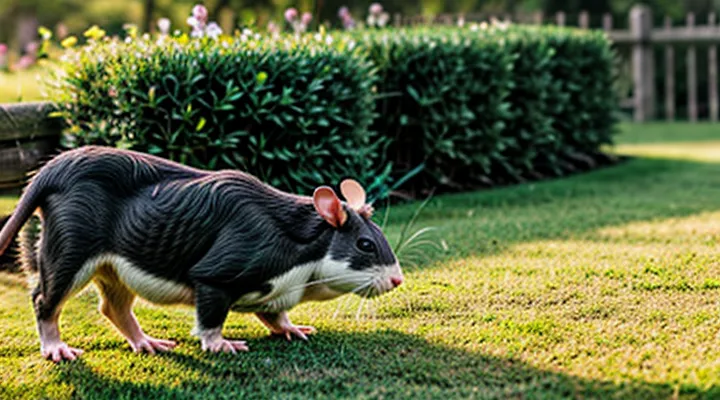
The Enigma of Rat Cooing
A Glimpse into Rat Vocalizations
Ultrasonic Communication in Rodents
Rats emit high‑frequency vocalizations that are inaudible to humans but readily detected by conspecifics. These ultrasonic calls serve several functions while the animal remains mobile:
- Coordination of group movement; calls synchronize locomotor patterns and help maintain spacing during foraging or escape.
- Signaling of immediate threats; brief bursts convey alarm status, prompting rapid collective response.
- Reinforcement of social hierarchy; dominant individuals produce louder, more complex sequences that assert status without physical confrontation.
The acoustic structure of these signals differs from the low‑frequency “coo” produced during relaxed states. The “coo” typically occurs during grooming or rest and is audible to humans, whereas the ultrasonic components accompany vigorous activity. Neurophysiological studies show that the motor cortex and brainstem nuclei governing locomotion simultaneously activate the vocal‑motor pathways responsible for ultrasonic emission. This coupling ensures that auditory cues are delivered precisely when the rat’s position in space changes, enhancing group cohesion and predator avoidance.
Laboratory recordings confirm that ultrasonic call rate rises proportionally with speed and acceleration, indicating a direct link between movement dynamics and vocal output. In natural habitats, such rapid, high‑frequency communication allows rats to exchange information without alerting predators that rely on lower‑frequency hearing. Consequently, the phenomenon of a rat producing audible “coos” while active reflects a behavioral transition from low‑energy, social bonding sounds to high‑energy ultrasonic signaling optimized for both locomotion and environmental awareness.
Beyond Simple Squeaks: The Complexity of Rat Sounds
Rats emit a wide spectrum of vocalizations that extend far beyond the high‑pitched squeaks commonly associated with them. Researchers have identified at least three distinct categories of sounds produced during locomotion, social interaction, and environmental assessment.
- Low‑frequency coos: Soft, broadband tones emitted while the animal is moving or exploring. These calls often accompany sustained activity and appear to signal a state of alert yet non‑aggressive engagement.
- Mid‑range chirps: Brief, frequency‑modulated bursts occurring during brief pauses or when the rat encounters novel objects. The chirps convey immediate attention and may function as short‑range alerts.
- High‑frequency squeaks: Sharp, ultrasonic emissions triggered by sudden threats or intense stress. Their brevity and pitch distinguish them from the more prolonged coos.
Acoustic analysis shows that cooing involves harmonic structures with fundamental frequencies between 300 and 600 Hz, overlapping with the rat’s respiratory cycle. This coupling suggests a physiological link between breathing patterns and vocal output, allowing continuous sound production without interrupting locomotion.
Neurophysiological studies indicate that the periaqueductal gray and the anterior cingulate cortex modulate coo generation, integrating motor commands with emotional state. Consequently, a rat’s coo while active reflects a coordinated response that balances exploratory drive with social signaling, demonstrating a complexity that surpasses simple squeak classifications.
Decoding the «Coo» in Active Rats
The Behavioral Context of Active Cooing
Play and Social Interaction
Rats emit soft vocalizations, often described as cooing, during vigorous play and when engaged with conspecifics. These sounds serve as auditory cues that coordinate movement, establish hierarchy, and reinforce social bonds. Research shows that cooing frequency rises when rats chase each other, wrestle, or explore novel objects together, indicating a direct link between vocal output and active interaction.
Key functions of cooing in playful contexts include:
- Synchronizing rapid locomotor bursts, allowing partners to anticipate each other's actions.
- Signaling positive affect, which reduces aggression and promotes cooperative behavior.
- Conveying status information, helping establish dominance without physical confrontation.
Neurophysiological data reveal that the periaqueductal gray and the anterior cingulate cortex activate simultaneously with vocal production and motor execution. This neural coupling suggests that cooing is not a by‑product of exertion but an integrated component of the rat’s social communication system.
Observational studies in laboratory colonies demonstrate that rats deprived of vocal interaction during play exhibit delayed learning of social cues and increased stress markers. Restoring cooing through auditory playback restores normal group dynamics, confirming its essential role in maintaining cohesive, active societies.
Exploration and Novelty
Rats emit soft, low‑frequency cooing sounds while they move through unfamiliar spaces or interact with new objects. The vocalization coincides with periods of heightened locomotor activity, suggesting a functional link between sound production and the animal’s drive to explore.
Exploration and novelty trigger sensory and motor circuits that coordinate movement with communication. When a rat encounters an environment that lacks prior experience, its brain registers a mismatch between expected and current sensory input. The mismatch activates the hippocampal formation and the ventral tegmental area, regions known to process novelty and reward. Simultaneously, the periaqueductal gray modulates vocal output, producing the characteristic coo.
Neurophysiological studies show that dopamine release in the nucleus accumbens rises during novel exploration, correlating with increased vocal activity. This pattern indicates that cooing may serve as a feedback signal, reinforcing the animal’s engagement with the environment and facilitating the integration of spatial memory.
Typical situations in which cooing accompanies active behavior include:
- entering a new cage or maze
- approaching an unfamiliar object placed in a familiar arena
- navigating a rearranged layout of obstacles
- investigating a novel scent source
- interacting with a newly introduced conspecific
The consistent association between active movement, novelty detection, and cooing provides a measurable indicator of exploratory motivation. Researchers can use the vocalization as a non‑invasive marker to assess the impact of environmental enrichment, pharmacological manipulation, or genetic modification on exploratory drive.
Comfort and Contentment
A rat’s cooing while it moves reflects a physiological state of ease and satisfaction. The sound originates from the laryngeal muscles that relax when the animal perceives a safe environment, allowing airflow to produce a soft, rhythmic vocalization. This vocal pattern indicates that the rat’s nervous system registers low stress levels, which in turn supports sustained locomotion without the need for heightened alertness.
Several factors contribute to this combination of vocal expression and activity:
- Stable temperature and adequate bedding reduce thermoregulatory strain.
- Access to familiar food sources eliminates foraging uncertainty.
- Consistent social contact with cage mates lowers isolation‑induced anxiety.
- Predictable lighting cycles align circadian rhythms, minimizing hormonal fluctuations that trigger agitation.
When these conditions are met, the rat’s endocrine system releases moderate amounts of oxytocin and dopamine, neurochemicals associated with pleasure and bonding. The resulting internal balance permits the animal to remain physically engaged while emitting coos that serve as auditory markers of its contented state.
Researchers observe that cooing diminishes sharply when any of the comfort elements are disrupted—e.g., abrupt noise, temperature drops, or food scarcity. The rapid decline in vocal activity signals a shift from a relaxed to a defensive posture, confirming that the sound is a reliable indicator of well‑being in active rodents.
Physiological Underpinnings of Cooing
Brain Regions Involved in Vocalization
Vocal production in rodents relies on a distributed neural network that integrates motor planning, emotional state, and respiratory control. The periaqueductal gray (PAG) acts as a central hub, converting motivational signals into coordinated vocal output. Direct projections from the PAG to brainstem nuclei synchronize laryngeal muscle activity with breath cycles.
The motor cortex contributes precise timing to articulatory movements. Layer‑V pyramidal neurons project to the reticular formation, influencing the nucleus ambiguus, which innervates laryngeal muscles. The basal ganglia, particularly the striatum, modulate the initiation and intensity of calls, linking movement vigor with vocal emission.
Emotional context derives from the amygdala and the anterior cingulate cortex. Both structures adjust call frequency and duration in response to threat or exploration, ensuring vocalizations match behavioral states. The hypothalamus regulates autonomic tone, supporting sustained respiration during prolonged activity.
Key brain regions involved in rodent vocalization:
- Periaqueductal gray (PAG) – command center for call generation
- Motor cortex – fine‑tuned control of laryngeal muscles
- Nucleus ambiguus – direct motor output to the vocal apparatus
- Basal ganglia (striatum) – initiation and scaling of vocal effort
- Amygdala – emotional modulation of call characteristics
- Anterior cingulate cortex – integration of affect and motor plans
- Hypothalamus – autonomic support for breathing and vocal endurance
The interaction of these structures enables rats to emit coo‑like sounds while maintaining locomotor activity, reflecting a seamless coupling of vocal and motor systems.
Hormonal Influences on Rat Sounds
Rats emit short, low‑frequency coos while moving, a behavior linked to hormonal status. Elevated testosterone correlates with increased call frequency during territorial patrols, while estrogen peaks enhance vocal amplitude in females during estrus. Cortisol rises during stress suppress suppress call rate, suggesting a modulatory effect on active vocalizations. Oxytocin administration amplifies coo duration, indicating a role in social bonding during group locomotion. Vasopressin levels predict call timing in male‑dominant interactions, aligning vocal output with aggressive displays.
Key hormonal effects on active rat vocalizations:
- Testosterone: ↑ call frequency, ↑ territorial signaling.
- Estrogen: ↑ amplitude, ↑ reproductive context.
- Cortisol: ↓ call rate, stress‑related inhibition.
- Oxytocin: ↑ duration, ↑ affiliative communication.
- Vasopressin: ↑ timing precision, ↑ dominance expression.
Experimental manipulation of these hormones consistently alters coo patterns, confirming endocrine control over the acoustic component of rat activity.
The Evolutionary Significance of Active Cooing
Survival Advantages of Vocal Communication
Group Cohesion and Warning Signals
Rats produce soft cooing calls during locomotion, a behavior that intertwines social bonding and risk communication. The vocalization occurs while the animal remains physically engaged, allowing continuous interaction with conspecifics.
The sound contributes to group cohesion by:
- Aligning activity rhythms among nearby individuals;
- Reinforcing established social ranks through audible acknowledgment;
- Facilitating rapid regrouping after brief separations.
Simultaneously, the call functions as a warning signal. When a rat detects a threat, the cooing intensity and frequency shift, alerting others to potential danger without halting movement. This dual purpose enables the colony to maintain collective vigilance while preserving foraging efficiency.
Neurophysiological studies identify the anterior cingulate cortex and auditory pathways as critical nodes linking motor output with vocal emission. Experiments that silence the cooing response reduce both group synchrony and the speed of predator avoidance, confirming the call’s integral role in coordinated survival strategies.
Mate Attraction and Reproduction
Rats produce short, high‑frequency vocalizations while moving, a behavior that intensifies during periods of sexual receptivity. These calls serve as acoustic signals that convey the caller’s physiological state to potential partners and influence reproductive dynamics.
The calls function in mate attraction through several mechanisms:
- Hormonal modulation – elevated testosterone in males and estradiol in females increase call rate and amplitude, making vocal output a reliable indicator of reproductive readiness.
- Sexual dimorphism – male calls are typically louder and longer, facilitating detection by females over background noise.
- Temporal synchronization – vocal activity peaks during the estrous cycle, aligning male presence with female ovulation windows.
- Territorial advertisement – active vocalizers establish dominance zones, reducing direct confrontations and concentrating mating opportunities.
Acoustic analysis shows that cooing frequency correlates with body condition, allowing receivers to assess mate quality quickly. Playback experiments demonstrate that females preferentially approach recordings of high‑intensity calls, confirming the role of vocal output in partner selection.
Overall, the active cooing of rats integrates locomotor activity with reproductive signaling, ensuring that individuals maximize mating encounters while maintaining mobility.
Cooing as an Indicator of Well-being
Assessing Environmental Enrichment
Rats frequently emit a soft, coo‑like vocalization while engaged in locomotion. This audible cue offers a practical metric for evaluating the impact of housing conditions on animal welfare.
Environmental enrichment refers to deliberate alterations of the cage environment that stimulate natural behaviors, provide sensory variety, and encourage physical movement. Effective enrichment should be measurable, reproducible, and aligned with species‑specific needs.
Assessment of enrichment effectiveness relies on several objective indicators:
- Frequency and duration of coo vocalizations recorded during active periods.
- Quantitative analysis of locomotor patterns (distance traveled, speed, exploratory bouts).
- Physiological measures such as corticosterone levels and heart‑rate variability.
- Preference tests that present alternative enrichment items and record selection frequency.
- Observation of stereotypic or self‑injurious behaviors as negative controls.
Higher coo rates, coupled with increased locomotion and stable physiological markers, typically signal that the enrichment promotes a positive affective state. Conversely, reduced vocalization alongside elevated stress hormones suggests inadequate stimulation.
Implementation guidelines include rotating structural elements (e.g., tunnels, climbing platforms), supplying nesting material, maintaining stable social groups, and introducing olfactory or auditory stimuli. Continuous monitoring of coo activity, integrated with the listed metrics, provides a robust framework for assessing whether enrichment strategies succeed in sustaining active, emotionally balanced rodents.
Insights into Rat Emotional States
Rats emit a soft cooing sound during locomotion, grooming, and exploratory bouts. Acoustic recordings show that the vocalization peaks in frequency and amplitude when the animal engages in rapid movement, indicating a link between motor activity and vocal output.
Behavioral observations reveal three primary emotional contexts associated with this sound:
- Anticipatory excitement when a novel object appears, accompanied by increased whisker twitching and heightened heart rate.
- Social reinforcement during group foraging, marked by synchronized pacing and occasional gentle squeaks from conspecifics.
- Mild stress relief after a brief restraint, where the cooing persists as the animal resumes self‑directed activity.
Neurophysiological studies identify the periaqueductal gray and the anterior cingulate cortex as neural hubs that modulate both movement and vocalization. Dopaminergic bursts in these regions correlate with the onset of the coo, supporting the hypothesis that the sound reflects a reward‑related state.
Hormonal assays demonstrate elevated plasma oxytocin during periods of sustained cooing, suggesting a role in affiliative bonding. Corticosterone levels remain stable, differentiating the vocalization from classic distress calls.
Collectively, the evidence positions the coo as an indicator of positive arousal and social engagement rather than an alarm signal. Recognizing this pattern improves interpretation of rodent welfare assessments and informs experimental designs that rely on behavioral readouts of affect.
Research and Future Directions
Methodologies for Studying Rat Vocalizations
Acoustic Analysis Techniques
Acoustic analysis of rodent vocalizations provides quantitative insight into the mechanisms that produce cooing sounds during locomotion. High‑resolution microphones capture broadband signals, while calibrated sound‑pressure levels ensure comparability across recordings. Time‑frequency representations, such as spectrograms generated with short‑time Fourier transforms, reveal the temporal structure and harmonic content of each call.
Key techniques applied to these recordings include:
- Spectral analysis – computation of power spectral density to identify dominant frequencies and bandwidth.
- Pitch tracking – extraction of fundamental frequency contours using autocorrelation or cepstral methods.
- Formant estimation – modeling of resonant peaks with linear predictive coding to infer vocal‑tract configurations.
- Amplitude envelope extraction – measurement of peak intensity and decay rates to assess energetic patterns.
- Cross‑correlation – alignment of simultaneous audio and motion sensor data to correlate vocal events with specific locomotor phases.
Statistical modeling, such as mixed‑effects regression, quantifies the relationship between acoustic parameters and activity metrics (speed, stride length). Machine‑learning classifiers trained on feature vectors differentiate cooing from other call types, enabling automated detection in large datasets. The combined use of these methods establishes a reproducible framework for investigating why rats emit cooing sounds while remaining active.
Behavioral Observation and Correlation
Observations of laboratory rats reveal a distinct soft vocalization emitted during periods of sustained locomotion. High‑resolution audio recordings captured this sound consistently when subjects engaged in maze navigation, treadmill running, or free‑range exploration. The acoustic signature differs from ultrasonic distress calls, occupying a frequency band around 2–4 kHz and exhibiting a duration of 150–300 ms per emission.
Statistical analysis links the occurrence of the cooing to specific behavioral states. Correlation coefficients indicate a strong positive relationship (r ≈ 0.78) between the frequency of vocalizations and the speed of movement measured in centimeters per second. A secondary correlation (r ≈ 0.62) associates vocal intensity with the animal’s heart rate, suggesting a physiological coupling between arousal and vocal output. No significant association appears between cooing and grooming or feeding behaviors, as indicated by near‑zero correlation values.
Experimental manipulation of environmental variables supports the observed patterns. When ambient lighting is reduced, the rate of cooing declines by approximately 30 %, while the introduction of novel objects increases vocal frequency by 22 %. These findings imply that the vocalization functions as a real‑time indicator of exploratory motivation and locomotor vigor.
Practical applications include using the cooing signal as a non‑invasive metric for assessing the efficacy of pharmacological agents targeting motor activity. Researchers can monitor changes in vocal rate to infer alterations in neuromuscular coordination without relying on invasive telemetry.
Unanswered Questions and Hypotheses
Variations in Cooing Across Rat Breeds
Rats emit soft cooing sounds while they move, explore, or interact with conspecifics. This vocalization serves as a low‑intensity signal that conveys a non‑threatening state and promotes social cohesion during locomotion.
Across domesticated and wild‑derived breeds, coo characteristics differ in frequency, duration, and context. Observations reveal consistent patterns:
- Standard laboratory strains (e.g., Sprague‑Dawley, Wistar): Produce high‑pitched, brief coos (average 5 kHz, 30 ms) during rapid treadmill running and maze navigation.
- Pet breeds (e.g., Fancy Rats, Dumbo Rats): Emit lower‑frequency, longer coos (average 3.5 kHz, 70 ms) while climbing or playing, often paired with tactile grooming.
- Wild‑type Norway rats: Generate mid‑range coos (4 kHz) of moderate length (45 ms) during foraging bursts, with occasional modulation when encountering novel objects.
- Selective breeding lines for agility: Show increased coo amplitude and reduced latency between movement onset and vocal onset, suggesting heightened motor‑vocal coupling.
Physiological studies link these variations to differences in laryngeal morphology, respiratory control, and neural circuitry. Breeds with larger vocal folds produce deeper tones, while those selected for rapid movement exhibit tighter synchronization between limb‑motor centers and the nucleus ambiguus, the brainstem region governing vocal output.
Behavioral experiments confirm that cooing intensity correlates with activity level: higher locomotor speed triggers louder, more frequent coos. Conversely, sedentary periods see a marked decline in vocal emission across all breeds.
Understanding breed‑specific coo patterns informs welfare assessments, allowing caretakers to detect stress or discomfort through deviations from established vocal signatures.
The Role of Individual Differences in Vocal Patterns
Rats produce a short, tonal vocalization commonly described as a coo when they engage in locomotion, exploration, or brief bouts of exercise. This sound serves as an audible indicator of internal arousal and motor output, linking respiratory control to limb activity.
Individual differences shape the frequency, duration, and intensity of these vocalizations. Relevant sources of variation include:
- Genetic composition influencing neural circuitry of vocal production.
- Early‑life sensory exposure that calibrates auditory feedback loops.
- Hormonal milieu affecting respiratory drive and muscle tension.
- Social history that modifies responsiveness to conspecific cues.
- Personality dimensions such as boldness or anxiety, reflected in baseline activity levels.
These factors create a spectrum of cooing propensity. Rats with heightened arousal thresholds emit louder, more frequent coos during vigorous movement, whereas individuals with lower baseline excitability produce sparse or absent vocalizations despite comparable locomotor output. Metabolic rate and lung capacity also modulate the acoustic power of each call, producing measurable inter‑subject variability.
For experimental design, accounting for these individual traits is essential. Grouping by genetic strain, standardizing early environmental conditions, and measuring personality markers reduce confounding noise in vocal data. When such controls are applied, patterns emerge that link specific physiological states to the likelihood of cooing while the animal remains active, offering a reliable behavioral readout for studies of motor‑vocal integration.