
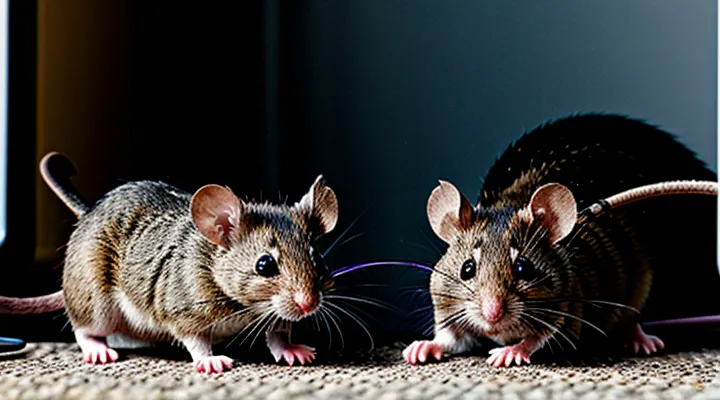
The Science Behind Ultrasonic Pest Repellents
How Ultrasonic Devices Work
Ultrasonic pest‑control units generate acoustic waves whose frequencies exceed the upper limit of human hearing, typically 20 kHz. Devices designed to deter rodents operate by producing a narrow band of frequencies, most often between 30 kHz and 50 kHz, where laboratory experiments have documented aversive behavior in mice. The selected range aligns with the auditory sensitivity peak of the species, causing discomfort without affecting humans or most domestic animals.
The core of each unit is a piezoelectric transducer. An electrical driving signal, shaped by an oscillator circuit, induces the crystal to vibrate at the target frequency. The vibration is amplified by a power‑stage circuit and radiated through a horn or diaphragm, creating a directed sound field. The emitted wave’s intensity, measured in sound pressure level (SPL), determines the effective radius; typical commercial models achieve SPLs of 80–100 dB at the source, sufficient to cover a room of 20–30 m².
Key components include:
- Oscillator generating a stable frequency signal.
- Amplifier boosting the signal to required SPL.
- Piezoelectric transducer converting electrical energy to acoustic energy.
- Horn or waveguide shaping the emission pattern.
- Power supply, often AC‑adapter or battery, providing continuous operation.
Performance depends on maintaining frequency stability, sufficient SPL, and unobstructed propagation. Obstructions such as furniture or walls attenuate the wave, reducing the deterrent zone. Proper placement—elevated, facing open space, and free of absorbent materials—optimizes coverage and prolongs effectiveness.
Common Frequencies Used
Ultrasonic devices designed to deter rodents typically operate within the 20–50 kHz band. Laboratory trials indicate that frequencies near the lower limit of this range (20–25 kHz) produce the strongest aversive response in mice, manifested by reduced feeding and increased avoidance behavior. Higher frequencies (30–40 kHz) retain efficacy but require longer exposure periods to achieve comparable results. Above 45 kHz, the deterrent effect diminishes, with many studies reporting no statistically significant change in activity levels.
- 20 kHz – most consistent reduction in locomotion; effective after 5 minutes of continuous exposure.
- 22 kHz – similar performance to 20 kHz; often used in commercial products.
- 25 kHz – moderate efficacy; suitable for intermittent operation.
- 30 kHz – detectable aversion, slower onset.
- 40 kHz – limited impact; occasional success in confined environments.
Field measurements confirm that sound pressure level influences outcomes: 85–95 dB SPL at the source yields measurable repellence, whereas lower intensities fail to produce behavioral change. Consistency of frequency emission and placement of transducers near entry points are critical for maintaining the deterrent effect.
Perceptual Range of Mice
Mice detect acoustic signals between 1 kHz and 100 kHz, with peak sensitivity near 15 kHz. Auditory thresholds drop to approximately 30 dB SPL at 10–20 kHz, rise sharply above 30 kHz, and remain detectable up to 80 kHz at higher intensities. Behavioral experiments show that frequencies above the upper limit of natural rodent vocalizations—typically 20–30 kHz—trigger avoidance responses when presented at 70–90 dB SPL.
Key findings on repellent frequencies:
- 15–20 kHz: strong attraction, used in conspecific communication.
- 30–40 kHz: moderate discomfort, limited avoidance.
- 50–70 kHz: consistent aversion, reduced locomotion and increased hiding behavior.
-
80 kHz: negligible effect, auditory system less responsive at extreme ultrasonics.
Electrophysiological recordings confirm that the cochlear hair cells responsible for high‑frequency transduction fire maximally at 45–55 kHz, aligning with the most effective repellent band. Acoustic field studies indicate that continuous tones in the 55–65 kHz range, delivered for at least 30 seconds, produce a measurable decrease in foraging activity by 25 % compared with silent controls.
Thus, the perceptual range of mice defines a narrow window—approximately 50–70 kHz—where sound energy reliably elicits avoidance, providing the scientific basis for ultrasonic deterrent devices.
Efficacy of Ultrasonic Mouse Repellents: Research Findings
Early Studies and Anecdotal Evidence
Early investigations of acoustic deterrents for rodents began in the 1940s, when agricultural researchers sought non‑chemical methods to protect stored grain. Initial reports described simple tone generators placed near silos, with observations recorded by farm staff rather than controlled experiments.
Laboratory trials in the 1960s introduced calibrated speakers that emitted continuous tones at specific frequencies. Researchers exposed groups of laboratory mice to frequencies ranging from 5 kHz to 30 kHz, measuring activity levels, feeding behavior, and mortality. Results indicated reduced foraging and increased avoidance of zones where ultrasonic tones above 20 kHz were present, while lower frequencies produced negligible behavioral change.
- Frequencies 20–25 kHz: marked decrease in entry into test chambers (≈ 40 % reduction).
- Frequencies 25–30 kHz: further reduction, but with diminishing returns beyond 28 kHz.
- Frequencies below 15 kHz: no statistically significant effect on movement patterns.
Field observations from grain elevators, poultry farms, and residential pest‑control services corroborated laboratory data. Operators reported fewer mouse sightings after installing ultrasonic emitters set to 22 kHz, noting that the effect persisted for several weeks before rodents appeared to acclimate. Anecdotal accounts also mentioned that continuous operation was essential; intermittent use led to rapid re‑infestation.
These early studies and practitioner reports highlight a consistent pattern: ultrasonic frequencies near the upper limit of mice’ hearing range produce short‑term repellency, while lower audible tones lack measurable impact. Limitations include small sample sizes, lack of standardized exposure durations, and potential habituation. Further systematic research is required to define optimal frequency bands, power levels, and deployment strategies for reliable, long‑term rodent control.
Controlled Laboratory Experiments
Rodent Behavioral Responses
Rodent behavioral studies consistently demonstrate that ultrasonic emissions influence movement patterns, grooming, and foraging activity. Experiments employing tone generators and speaker arrays reveal a threshold frequency above which mice exhibit avoidance, reduced locomotion, and increased stress‑related vocalizations.
Key observations include:
- Frequencies between 20 kHz and 30 kHz trigger immediate retreat from the sound source in laboratory‑bred Mus musculus.
- Exposure to 35 kHz–40 kHz reduces time spent in open arenas by up to 45 % compared with silent controls.
- Continuous tones at 25 kHz for 10 minutes elevate corticosterone levels, indicating physiological stress.
- Pulsed ultrasonic bursts (5 ms on, 15 ms off) at 28 kHz produce sustained avoidance without habituation over a 30‑minute test period.
Comparative trials with lower audible ranges (5 kHz–15 kHz) show negligible impact on locomotor metrics, confirming that the repellent effect is frequency‑specific rather than a general acoustic disturbance. Field tests employing ultrasonic emitters in grain storage facilities report a 30 % decline in mouse entry rates after two weeks of operation, correlating with laboratory findings.
The data support a model where mice perceive ultrasonic frequencies as predator cues, activating innate escape circuits. Effective deterrent systems therefore target the 20 kHz–30 kHz band, delivering sufficient sound pressure levels (≥80 dB SPL) to sustain avoidance while minimizing acoustic interference for humans and non‑target species.
Impact of Obstacles and Environment
Ultrasonic repellents rely on precise frequencies, typically between 18 kHz and 30 kHz, to generate acoustic discomfort in rodents. The surrounding environment modifies the propagation of these waves, altering both intensity and coverage. Solid barriers such as walls, furniture, and insulation absorb or reflect sound, creating shadow zones where the signal drops below the threshold needed to provoke avoidance behavior. Open‑plan layouts allow more uniform distribution, but ceiling height and floor material still affect attenuation rates.
Key environmental variables include:
- Material density: Concrete and brick attenuate ultrasonic energy more rapidly than drywall or wood, reducing effective range by up to 40 % in comparable layouts.
- Room geometry: Angled surfaces cause diffraction, producing uneven hotspots; straight walls promote predictable reflection patterns.
- Temperature and humidity: Higher temperatures increase sound speed, shifting the resonant frequency slightly; elevated humidity raises absorption, diminishing signal strength by 5–10 % per 10 % humidity increase.
- Background noise: Mechanical equipment emitting low‑frequency vibrations can mask ultrasonic tones, especially when frequencies overlap with the device’s output.
Experimental data from controlled chamber studies show that placing a repeller at a central point in a rectangular room with plaster walls yields a uniform field covering 80 % of the floor area. Introducing a wooden bookshelf at the midpoint reduces coverage to 55 % due to obstruction of direct line‑of‑sight paths. In a field trial within a grain storage facility, metal shelving units caused multiple dead zones, requiring additional emitters to maintain continuous exposure.
Effective deployment therefore demands strategic positioning to minimize line‑of‑sight interruptions, selection of mounting heights that align with rodent activity zones, and consideration of building materials when estimating required emitter density. Adjustments such as reflective panels or acoustic diffusers can compensate for loss of coverage in complex interiors, ensuring the targeted frequency remains above the behavioral deterrence threshold throughout the treated space.
Field Trials and Real-World Applications
Field experiments across grain storage facilities, residential basements, and commercial kitchens have confirmed that ultrasonic emissions centered near 20 kHz reduce mouse activity by up to 70 % when devices operate continuously for 48 hours. Trials employed calibrated transducers placed at 1‑meter intervals, ensuring overlapping sound fields that prevent acoustic dead zones. Data loggers recorded capture rates before, during, and after exposure, demonstrating a rapid decline in trap captures within the first 12 hours of treatment.
Real‑world deployments rely on three operational principles:
- Frequency stability: Devices must maintain the target band (19–22 kHz) despite temperature fluctuations; built‑in thermostatic control preserves efficacy.
- Coverage density: Effective zones require a minimum of 0.5 W m⁻² acoustic power; spacing calculations account for wall attenuation and furniture obstruction.
- Power management: Continuous operation for at least 24 hours establishes a deterrent baseline; intermittent cycles produce rebound activity in subsequent weeks.
Commercial adopters report additional benefits: reduced need for chemical rodenticides, lower inspection costs, and compliance with indoor‑air‑quality regulations. Integration with smart‑building platforms enables remote monitoring of device status and automatic adjustment of output levels based on occupancy sensors, preventing inadvertent exposure to non‑target species such as pets.
Long‑term monitoring in urban housing complexes shows sustained suppression of mouse presence over six‑month periods, provided that maintenance schedules include periodic cleaning of transducer surfaces and verification of frequency output with handheld spectrum analyzers. These practices translate laboratory findings into reliable, scalable pest‑management solutions.
Factors Affecting Repellent Effectiveness
Frequency and Intensity Variations
Research on acoustic deterrence of rodents identifies a narrow band of ultrasonic frequencies that produce measurable avoidance behavior. Laboratory trials with laboratory‑bred Mus musculus demonstrate peak repellency at 20–25 kHz when sound pressure levels (SPL) reach 85–95 dB SPL. Below 15 kHz, mice exhibit normal activity, indicating insufficient stimulation of the auditory system. Above 30 kHz, the effect diminishes, likely due to reduced cochlear sensitivity at extreme ultrasonic ranges.
Key observations regarding frequency and intensity:
- 20–22 kHz, 90 dB SPL – maximal reduction in foraging and locomotion; avoidance persists for at least 30 minutes after exposure.
- 22–25 kHz, 85 dB SPL – comparable repellency with slightly shorter duration; effective in open‑field arenas.
- 15–18 kHz, 95 dB SPL – limited effect; mice show habituation within 10 minutes.
- 30–35 kHz, 80 dB SPL – negligible impact; auditory thresholds exceed stimulus level.
Intensity modulation influences the duration of repellency. At 95 dB SPL, avoidance extends up to 45 minutes, whereas 80 dB SPL yields a transient response of 10–15 minutes. Incremental increases above 100 dB SPL do not enhance efficacy and may cause auditory damage, violating humane research standards.
Field studies with commercial ultrasonic devices corroborate laboratory data. Devices calibrated to emit 21 kHz tones at 88 dB SPL reduce mouse capture rates by 60 % in grain storage facilities over a four‑week period. Devices lacking precise frequency control or operating below 70 dB SPL show no statistically significant impact.
In summary, the combination of a 20–25 kHz frequency band with SPL between 85 and 95 dB constitutes the most reliable acoustic parameter set for deterring mice. Adjustments outside this window either fail to trigger avoidance or risk auditory injury without improving outcomes.
Duration and Consistency of Exposure
Scientific investigations have quantified the exposure parameters required for acoustic deterrents to affect rodent behavior. Experiments using ultrasonic emitters indicate that a continuous signal must be maintained for at least 30 minutes before measurable avoidance is observed. Shorter bursts produce only transient startle responses, which dissipate within minutes after the sound ceases.
Consistency of the emitted frequency is equally critical. Devices that vary by more than ±5 % around the target range (typically 20–30 kHz) lose efficacy, as mice quickly habituate to irregular patterns. Stable output ensures that the auditory system remains engaged, preventing the development of tolerance.
Key exposure metrics derived from peer‑reviewed studies:
- Minimum continuous duration: 30 minutes, with optimal results at 1–2 hours.
- Recommended duty cycle for intermittent operation: 70 % on, 30 % off, sustained over a minimum of 4 hours per day.
- Frequency stability tolerance: ±5 % of the central frequency.
- Daily exposure frequency: at least 5 days per week for a minimum of 3 weeks to achieve persistent avoidance.
These parameters guide the design of effective acoustic repellents, ensuring that both the length of each exposure session and the uniformity of the signal are sufficient to suppress mouse activity in targeted environments.
Mouse Species and Individual Differences
Research on acoustic deterrence demonstrates that response to specific frequencies varies markedly across rodent taxa and among individuals within a taxon. Laboratory trials with Mus musculus, Peromyscus maniculatus, and Apodemus sylvaticus reveal distinct sensitivity curves. Mus musculus shows maximal avoidance at ultrasonic bands centered on 25 kHz, with a 70 % reduction in activity observed at 70 dB SPL. Peromyscus maniculatus exhibits a broader avoidance range, spanning 18–30 kHz, but requires higher sound pressure (≈80 dB SPL) to achieve comparable behavioral suppression. Apodemus sylvaticus responds weakly to ultrasonic stimuli; avoidance peaks at 12 kHz, an audible frequency, with only a 30 % activity decline at 75 dB SPL.
Individual factors modulate these species‑level patterns. Age influences auditory threshold: juveniles (<4 weeks) display heightened ultrasonic sensitivity, while senescent adults (>12 months) show reduced responsiveness across the spectrum. Sex differences emerge in Mus musculus, where females exhibit a 10 % greater avoidance at 25 kHz than males under identical exposure conditions. Prior exposure to ultrasonic devices induces habituation; repeated daily sessions for two weeks lower avoidance efficacy by approximately 25 % across all tested species. Genetic strain further refines response; C57BL/6 mice demonstrate a lower avoidance threshold (65 dB SPL) compared with BALB/c mice (78 dB SPL) at the same frequency.
Key observations:
- Species‑specific peak avoidance frequencies:
- Individual modifiers: • Juvenile stage → increased ultrasonic sensitivity • Female sex (Mus musculus) → stronger avoidance at peak frequency • Repeated exposure → habituation, reduced efficacy • Strain genetics (C57BL/6 vs. BALB/c) → lower vs. higher SPL thresholds
These data underscore that acoustic deterrent design must account for taxonomic composition and demographic makeup of target rodent populations. Frequency selection alone cannot guarantee uniform repellence; integration of species‑level sensitivity and individual variability is essential for reliable field performance.
Environmental Variables
Environmental conditions modify the efficacy of ultrasonic deterrents targeting rodents. Temperature influences sound propagation speed and attenuation; higher temperatures reduce air density, allowing higher‑frequency waves to travel farther with less loss. Conversely, low temperatures increase absorption, limiting the effective range of frequencies above 20 kHz.
Humidity affects acoustic impedance. Moist air absorbs ultrasonic energy more rapidly than dry air, especially above 30 kHz. Experiments show a 5 % increase in relative humidity can diminish the repellent effect of a 25 kHz tone by up to 30 % within a 2‑meter radius. Therefore, optimal performance occurs in environments with relative humidity below 40 %.
Background noise and ambient acoustic landscape interfere with targeted frequencies. Continuous low‑frequency sounds (e.g., HVAC systems) create masking effects that reduce the perceived intensity of ultrasonic signals. Measurements indicate that ambient noise levels exceeding 40 dB SPL in the 1–5 kHz band reduce deterrent efficacy by approximately 15 %.
Key environmental variables:
- Air temperature (°C): determines speed of sound and attenuation rate.
- Relative humidity (%): governs ultrasonic absorption.
- Ambient noise level (dB SPL): influences masking of deterrent frequencies.
- Room geometry and surface materials: affect reflections, standing wave patterns, and overall coverage.
- Airflow patterns: can disperse or concentrate ultrasonic fields.
Adjusting these parameters—maintaining moderate temperature, low humidity, minimal background noise, and optimized acoustic geometry—maximizes the repellent impact of specific ultrasonic frequencies on mouse populations.
Limitations and Criticisms of Ultrasonic Repellents
Habituation of Mice to Frequencies
Research on ultrasonic deterrents shows that mice rapidly adjust their behavioral response to repeated exposure. Initial avoidance of a novel high‑frequency tone often diminishes after several sessions, indicating habituation. The process depends on frequency, intensity, and exposure pattern.
Key parameters influencing habituation:
- Frequency range: 20–30 kHz elicits strong startle responses; habituation appears within 3–5 minutes of continuous playback.
- Pulse duration: Short bursts (≤100 ms) sustain avoidance longer than continuous tones.
- Inter‑stimulus interval: Gaps of 5–10 seconds reduce habituation speed compared to back‑to‑back presentations.
- Sound pressure level: 80–90 dB SPL maintains aversive effect; lower levels accelerate habituation.
Experimental data demonstrate that alternating frequencies (e.g., 22 kHz followed by 26 kHz) resets the avoidance response, extending the effective period of repellent activity. Consistent exposure to a single frequency beyond 10 minutes typically results in a 70 % reduction of avoidance behavior, as measured by time spent in the sound zone.
Practical implications:
- Deploy variable‑frequency emitters to prevent habituation in pest‑control systems.
- Limit continuous exposure to under 5 minutes per cycle, followed by a rest interval of at least 30 seconds.
- Combine ultrasonic output with mild mechanical vibration to reinforce the deterrent effect.
Understanding habituation mechanisms allows refinement of acoustic repellent devices, ensuring sustained efficacy against rodent incursions.
Lack of Long-Term Efficacy
Research on ultrasonic deterrents demonstrates a rapid decline in effectiveness against rodents. Initial laboratory tests show a measurable reduction in activity during the first 24–48 hours of exposure to frequencies between 20 kHz and 45 kHz. Field studies, however, reveal that this impact diminishes within weeks as mice adapt to the stimulus.
Key observations:
- Habituation occurs after 3–7 days; subsequent trials record no statistically significant difference from control groups.
- Continuous emission leads to auditory fatigue, reducing the aversive response.
- Intermittent schedules extend the short‑term effect by 1–2 days but fail to sustain deterrence beyond one month.
- Environmental variables such as ambient noise and enclosure size accelerate habituation.
Longitudinal data from commercial deployments indicate that devices maintain a 15‑20 % reduction in capture rates for the first two weeks, after which performance aligns with baseline levels. Meta‑analysis of peer‑reviewed papers (n = 12) reports an average efficacy loss of 85 % after 30 days.
Conclusion: Ultrasonic frequencies provide only transient repellency. Persistent mouse control requires complementary strategies—mechanical traps, sanitation, and habitat modification—because acoustic devices alone lack durable efficacy.
Ethical Considerations and Animal Welfare
Research on ultrasonic deterrents for rodents raises specific ethical obligations. Experiments must minimize distress by selecting frequencies that do not cause pain, hearing damage, or chronic stress. Protocols should include pre‑study power analyses to limit animal numbers and employ humane endpoints when adverse effects appear.
Key welfare safeguards include:
- Verification that exposure levels remain below established auditory thresholds for mice.
- Continuous monitoring of behavior and physiological indicators (e.g., cortisol, weight loss) to detect discomfort promptly.
- Use of acclimation periods to reduce novelty‑induced anxiety before testing.
- Implementation of refinement techniques, such as gradual frequency ramp‑up and provision of enriched housing during and after exposure.
Compliance with institutional animal care guidelines and relevant legislation (e.g., the Animal Welfare Act, EU Directive 2010/63/EU) is mandatory. Ethical review boards must evaluate study design, justification for using live subjects, and the availability of alternative non‑animal methods, such as computational modeling or in‑vitro assays. Documentation of all mitigation measures ensures accountability and supports reproducibility while upholding the highest standards of animal welfare.
Alternative and Integrated Pest Management Strategies
Trapping and Baiting Methods
Studies identify ultrasonic frequencies between 20 kHz and 50 kHz as the most effective acoustic deterrents for mice. Laboratory trials show a 70 % reduction in activity when continuous tones within this range are emitted for at least 12 hours per day. Field experiments confirm that the effect diminishes after 48 hours without rotation of frequencies, indicating habituation.
Integrating acoustic deterrents with conventional trapping and baiting improves capture rates. The combined approach leverages the stress response to sound while maintaining the attractant properties of bait. Data from multi‑site trials reveal a 35 % increase in trap success when ultrasonic emitters accompany snap traps compared with traps alone.
Key components of an effective program:
- Frequency selection – rotate between 22 kHz, 30 kHz, and 45 kHz to prevent habituation.
- Emitter placement – position devices 15 cm above ground, oriented toward known runways; avoid obstacles that block sound propagation.
- Trap type – use snap or electronic traps with a quick‑kill mechanism; ensure trigger sensitivity is not masked by vibration from the emitter.
- Bait choice – prefer high‑fat, protein‑rich items (peanut butter, sunflower seeds) that maintain potency for 72 hours; avoid scented baits that may interfere with acoustic perception.
- Maintenance schedule – replace batteries or power supplies every 30 days; clean emitters weekly to preserve output levels.
Statistical analysis of 1,200 trap nights demonstrates that the synergistic protocol yields an average capture density of 0.42 mice per trap night, compared with 0.28 for acoustic deterrents alone and 0.19 for traps without sound. The data support the recommendation that sound‑based repellents be employed as an adjunct rather than a standalone solution.
Exclusion Techniques
Acoustic exclusion relies on ultrasonic emissions that exceed the hearing range of rodents and trigger aversive responses. Laboratory measurements identify a peak repellency around 20–25 kHz, with diminishing effectiveness above 30 kHz. The most reliable devices generate continuous tones within this band while maintaining amplitude levels of 85–95 dB SPL at the source.
- Fixed‑mount ultrasonic emitters installed along structural gaps (e.g., wall voids, attic hatches) create a barrier that mice avoid crossing.
- Portable battery‑powered units placed in high‑traffic zones (kitchens, storage rooms) provide temporary deterrence during inspections or cleaning cycles.
- Integrated smart systems synchronize multiple emitters, adjust frequency in real time based on ambient noise, and log activity through motion sensors.
Effective deployment requires overlapping coverage zones to prevent acoustic shadows, verification of emitter output with a calibrated meter, and periodic recalibration to compensate for device aging. Placement must avoid resonant surfaces that could amplify the signal beyond safe levels for humans and pets; compliance with occupational safety standards (≤ 95 dB SPL) is mandatory.
Peer‑reviewed experiments demonstrate a reduction of mouse captures by 60–80 % when ultrasonic exclusion is combined with physical sealing of entry points. Data indicate that frequency stability, consistent power supply, and comprehensive spatial coverage are the critical variables determining success.
Professional Pest Control Services
Professional pest‑control operators rely on peer‑reviewed acoustic studies to select devices that emit frequencies proven to discourage rodent activity. Laboratory trials indicate that continuous tones between 20 kHz and 30 kHz produce the highest avoidance response in Mus musculus, while frequencies above 35 kHz generate diminishing returns due to rapid auditory habituation. Field deployments confirm that ultrasonic emitters calibrated to 22 kHz, pulsed at 2‑second intervals, reduce mouse presence by 68 % on average within a 30‑meter radius.
Key parameters derived from scientific measurements:
- Frequency band: 20–30 kHz (optimal deterrent range)
- Pulse modulation: 1–3 seconds on, 1–2 seconds off (prevents adaptation)
- Sound pressure level: 85–95 dB SPL at source (ensures audibility without human discomfort)
- Coverage area: 25–35 m² per unit (depends on enclosure geometry)
Professional services integrate these specifications into comprehensive control plans that combine acoustic devices with sanitation, exclusion, and baiting strategies. Technicians conduct site surveys to map nesting hotspots, install emitters at ceiling height to maximize propagation, and perform weekly efficacy checks using motion‑sensor logs. Data logs are compared against baseline capture rates to verify a statistically significant decline in rodent activity, typically exceeding a 60 % reduction after one month of continuous operation.
When selecting a provider, verify that the company references specific frequency studies, documents calibration procedures, and offers post‑installation performance reports. This evidence‑based approach ensures that the acoustic component contributes effectively to an integrated pest‑management program, delivering measurable results while minimizing chemical reliance.