
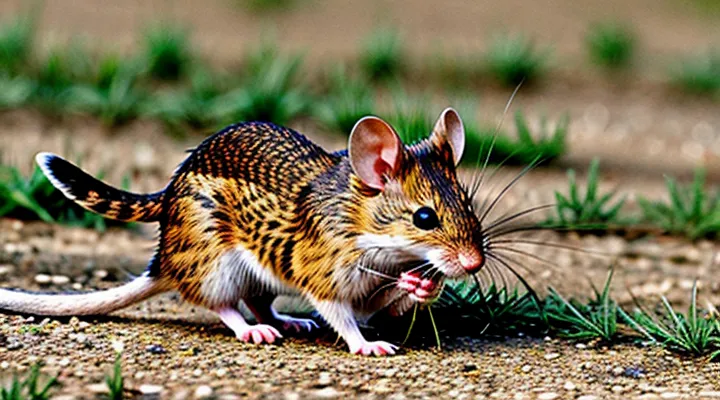
Understanding the Field Mouse
What is a Field Mouse?
Field mice belong to the genus Apodemus and the family Muridae. They are small, nocturnal rodents native to open habitats such as grasslands, agricultural fields, and hedgerows. Adult body length ranges from 7 to 10 cm, with a tail of comparable length; weight typically falls between 15 and 30 g. Fur coloration varies from brown to gray, providing camouflage against soil and vegetation.
These mammals exhibit rapid breeding cycles, producing up to five litters per year, each containing three to eight offspring. Diet consists primarily of seeds, grains, insects, and occasional plant material. Foraging activity peaks at dusk and continues throughout the night, reducing exposure to diurnal predators.
Field mice serve as prey for a wide array of predators that generate natural fear responses:
- Birds of prey (e.g., hawks, owls) attack from above.
- Carnivorous mammals (e.g., foxes, weasels, domestic cats) hunt on the ground.
- Reptiles (e.g., snakes) locate mice by scent and vibration.
- Invertebrate predators (e.g., centipedes) target young or injured individuals.
Their presence influences seed dispersal, soil aeration, and the population dynamics of predator species, linking them tightly to ecosystem health.
Habitat and Behavior
Nocturnal Habits
Field mice exhibit heightened vigilance during the night because many of their predators are active after dark. Their sensory systems—particularly whisker and auditory acuity—are tuned to detect low‑light movement, allowing rapid identification of threats such as owls, foxes, and feral cats that hunt by sound and silhouette.
Nocturnal activity patterns of predators impose specific risks:
- Owls rely on silent flight and acute vision to locate prey in dim conditions. Their calls can trigger immediate freeze responses in mice.
- Foxes increase foraging after sunset, using scent trails left by rodents. Their keen sense of smell can locate hidden nests.
- Ferrets and domestic cats exploit crepuscular periods, employing swift, low‑profile attacks that reduce the mouse’s reaction time.
To mitigate these dangers, field mice adjust their behavior. They limit surface foraging to brief intervals, retreat to burrows before peak predator activity, and increase communal alarm calling. These adaptations reflect an evolutionary response to the predictable nocturnal threat landscape.
Social Structures
Field mice encounter a range of natural threats, including avian predators, snakes, and mammals. Their social organization determines how individuals perceive and react to these dangers.
Larger aggregations modify fear responses in several ways:
- Increased number of eyes improves early detection of predators.
- Collective movement reduces the probability that any single mouse will be captured.
- Shared alarm signals synchronize escape behavior across the group.
Hierarchical arrangements affect information flow:
- Dominant individuals often occupy central positions, receiving and transmitting threat cues more rapidly.
- Subordinate mice tend to follow the movements of higher‑ranking members, relying on their assessment of risk.
- Leadership during flight initiates coordinated retreats, minimizing confusion.
Territorial structures influence exposure to predators:
- Defined home ranges concentrate foraging activity, allowing mice to learn localized hazard patterns.
- Boundary patrols by a few individuals generate regular scanning of perimeters, alerting the entire population to approaching threats.
- Overlapping territories create contact zones where alarm calls can spread between neighboring groups.
These social mechanisms shape the intensity and timing of fear reactions, providing a framework for predicting mouse behavior under predatory pressure. Understanding the link between social structure and threat perception assists in designing effective field studies and conservation measures.
Natural Predators and Threats
Avian Predators
Owls
Owls are the most effective aerial predators of field mice, combining silent flight, acute night vision, and precise hearing. Their ability to detect the faintest rustle of grass enables them to locate prey hidden beneath cover. Once a mouse is spotted, the owl’s sharp talons and beak deliver a swift, lethal strike, leaving little chance for escape.
Key factors that generate fear in field mice when an owl is present:
- Silent wing beats – turbulence is minimal, preventing early detection.
- Binocular vision – forward‑facing eyes provide depth perception for accurate targeting.
- Asymmetrical ears – allow triangulation of sound sources, even when the mouse is stationary.
- Camouflaged plumage – blends with the night sky, reducing visual cues of predator approach.
- Rapid descent – enables attacks from above, a direction mice cannot easily monitor.
Behavioral responses in mice reflect these threats. Upon hearing an owl’s low hoot, mice freeze, reduce movement, and seek dense cover. In open fields, they increase nocturnal activity only after the owl’s hunting period ends, demonstrating a clear avoidance pattern driven by predator detection cues.
Overall, owls’ specialized sensory and physical adaptations create a persistent, instinctive alarm in field mice, shaping their foraging schedules and habitat use.
Hawks and Falcons
Raptors dominate the predator landscape for field rodents, with hawks and falcons representing the most immediate threat. Their aerial agility, sharp eyesight, and rapid attack vectors create a constant predation pressure that shapes mouse behavior.
Hawks rely on exceptional visual acuity to detect small mammals from great distances. Their soaring flight maintains a high perch, allowing a sudden, steep dive that reduces the mouse’s reaction window to fractions of a second. The silhouette of a hawk against the sky, combined with the characteristic whistling of its wings, triggers an acute startle response in field mice.
Falcons employ a different strategy. High-speed stoops generate a shock wave that disorients prey. Their streamlined bodies and powerful wingbeats enable close-range pursuits through dense vegetation, where mice often seek refuge. The sudden appearance of a falcon’s dark form, followed by a rapid, low-altitude pass, elicits a freeze‑or‑flee reaction.
The presence of these raptors influences mouse activity patterns:
- Reduced foraging during daylight hours when raptor hunting peaks.
- Preference for concealed ground cover and burrow entrances.
- Increased vigilance, evidenced by frequent head lifts and ear twitches.
- Adoption of erratic, zigzag escape routes when a predator is detected.
Collectively, hawks and falcons impose a potent, sensory‑driven fear that conditions field mice to prioritize concealment and rapid evasion, thereby shaping their ecological niche.
Mammalian Predators
Foxes
Foxes represent the most immediate natural danger for field mice. Their predatory status forces mice to adopt constant alertness and rapid escape responses.
The threat stems from several sensory and physical attributes:
- Hearing tuned to detect high‑frequency rustles produced by small rodents.
- Olfactory system capable of tracking mouse scent trails across meters of vegetation.
- Vision adapted for low‑light conditions, allowing detection of movement at dusk and night.
- Body size and agility that enable swift pursuit through dense cover.
Foxes employ hunting tactics that amplify fear:
- Nocturnal foraging aligns with the periods when mice are most active, increasing encounter probability.
- Stealthy approach, low‑profile movement, and occasional use of short bursts of speed reduce the chance for mice to perceive an approaching predator.
- Territorial marking with urine and feces spreads chemical cues that mice recognize as a sign of predator presence.
- Opportunistic ambush near mouse pathways, such as burrow entrances and feeding sites, creates predictable danger zones.
Consequences for field mice include:
- Elevated vigilance, manifested by frequent head lifts and ear twitches.
- Preference for dense ground cover and avoidance of open foraging patches.
- Reduced travel distances during peak fox activity, limiting resource access.
- Development of alarm calls that trigger collective escape behavior among nearby conspecifics.
These factors combine to make foxes the principal source of terror for field mice in natural ecosystems.
Weasels and Stoats
Weasels and stoats represent the most immediate predatory threat to field mice. Their slender bodies, rapid acceleration, and ability to pursue prey through dense vegetation enable them to close distances that many larger carnivores cannot. Both species rely on acute hearing and a highly developed sense of smell to locate hidden rodents, detecting subtle rustles and scent trails that escape the mice’s own sensory awareness.
Key factors that heighten mouse anxiety toward these mustelids include:
- Stealthy approach: Low‑profile movement and the capacity to slip through narrow burrow entrances reduce the chance of early detection.
- Explosive bursts: Acceleration rates exceed 30 km h⁻¹ in short sprints, leaving mice little time to flee.
- Killer instinct: Specialized jaw muscles generate a crushing bite, capable of subduing prey larger than the predator’s body mass.
- Territorial persistence: Individuals patrol defined ranges, repeatedly returning to known mouse habitats, reinforcing the perception of an ever‑present danger.
The combination of sensory superiority, rapid pursuit, and lethal efficiency makes weasels and stoats the principal natural fear factor for field mice, shaping their foraging patterns and habitat use.
Domestic Cats
Domestic cats represent the primary predator that triggers avoidance behavior in field mice. Their presence introduces several sensory cues that mice associate with danger.
- Sharp, low‑frequency vocalizations signal a hunting animal.
- Rapid, low‑to‑ground movement creates visual silhouettes that mice recognize as a threat.
- Scent of feline pheromones and urine marks territories, reinforcing the perception of a predator nearby.
- Sudden pounces generate vibrations and air displacement that mice detect through whisker receptors.
These cues activate the mice’s innate fear circuitry, prompting immediate flight or freezing responses. Laboratory observations show that exposure to cat odor alone reduces foraging activity by up to 45 %, while visual and auditory cues increase escape latency. In natural fields, the combination of scent trails, audible growls, and occasional visual sightings maintains a high level of vigilance among mouse populations, limiting their exposure to open habitats and influencing their spatial distribution.
Reptilian Predators
Snakes
Snakes represent a primary threat to field mice, prompting rapid escape responses. Their elongated bodies enable swift, silent movement through grass and burrows, reducing the time mice have to detect and react. Heat‑sensitive pits allow snakes to locate warm‑blooded prey even in low‑light conditions, creating a detection advantage that field mice cannot match.
- Rapid, serpentine locomotion eliminates visual warning cues.
- Chemical secretions leave a trail that mice recognize as predator odor.
- Infrared sensing bypasses visual camouflage, revealing mouse presence.
- Sudden lunges generate air pressure changes perceived as danger.
Field mice possess innate neural circuits that trigger freezing or fleeing when exposed to these cues. Laboratory studies show increased cortisol levels and accelerated heart rates upon exposure to snake scent or visual patterns, confirming a hard‑wired fear response. This avoidance behavior reduces predation risk and contributes to mouse survival rates in open habitats.
Predation pressure from snakes shapes mouse foraging patterns, limiting activity to times and locations where snake presence is minimal. Consequently, snake‑induced fear influences population distribution, resource use, and the broader dynamics of meadow ecosystems.
Human-Induced Threats
Habitat Loss
Field mice occupy grasslands, hedgerows, and low‑lying agricultural fields where cover and food are abundant. Their survival depends on dense vegetation that shields them from predators and extreme weather.
When those environments shrink or disappear, field mice experience heightened stress. The loss of shelter forces them into open ground, exposing them to aerial and terrestrial hunters. Reduced foraging zones increase competition for limited resources, amplifying the risk of starvation.
- Increased predation rates due to lack of concealment
- Greater exposure to temperature fluctuations and moisture loss
- Disruption of breeding sites, leading to lower reproductive success
- Forced migration into fragmented habitats, raising mortality during movement
These effects combine to create a pervasive sense of danger that directly influences field mouse behavior, movement patterns, and population dynamics.
Pesticides and Traps
Pesticides used in agricultural and residential settings create a chemical environment that field mice quickly associate with danger. Exposure to organophosphates, carbamates, and pyrethroids disrupts nervous function, producing immediate disorientation, loss of coordination, and avoidance behavior. Sublethal doses trigger heightened alertness, causing mice to retreat from treated zones and avoid foraging in areas where residues persist. Residual toxicity remains in soil and vegetation for weeks, extending the deterrent effect beyond the initial application.
Traps exploit the innate wariness of field mice toward sudden mechanical stimuli and unfamiliar objects. Two primary categories dominate:
- Snap traps: deliver a rapid, high‑impact strike that eliminates the target instantly. The sharp sound and vibration generate an acute startle response, discouraging nearby individuals from approaching similar devices.
- Live‑capture traps: present a concealed entry point that closes abruptly when triggered. The sudden enclosure produces a strong escape‑avoidance reaction, prompting mice to learn to recognize and avoid comparable structures after a single encounter.
Both chemical and mechanical deterrents rely on the mouse’s sensory perception of threat. Pesticide residues activate olfactory and gustatory warning pathways, while traps stimulate auditory and tactile alarm systems. The combined use of these methods reinforces avoidance patterns, reducing field mouse activity in treated areas.
Non-Predatory Fears
Environmental Factors
Loud Noises
Field mice possess highly developed auditory systems that detect sounds well beyond human hearing ranges. Sudden, high‑intensity noises trigger immediate escape responses, overriding foraging or nesting activities. The auditory startle reflex is mediated by the cochlear nuclei, which transmit rapid signals to the brainstem and the amygdala, prompting flight.
Typical loud noises that elicit fear in field mice include:
- Thunderclaps and heavy rainstorms, producing broadband pressure waves.
- Predator vocalizations such as owl hoots or fox barks, which combine high amplitude with species‑specific frequencies.
- Agricultural machinery (tractors, combine harvesters) generating low‑frequency rumble and sudden mechanical bursts.
- Human activities that generate sharp sounds, e.g., gunshots, fireworks, and shouting.
- Urban construction noise, especially jackhammer impacts and metal collisions.
Exposure to any of these sounds raises cortisol levels, accelerates heart rate, and induces freezing or rapid retreat. Repeated encounters condition mice to associate specific acoustic signatures with danger, reinforcing avoidance behavior across generations.
Sudden Movements
Sudden movements trigger a rapid escape response in field mice because their sensory systems are tuned to detect abrupt changes in the visual field. A swift shift in light or shadow activates the retina’s motion-sensitive cells, which send immediate signals to the brainstem’s reticular formation, prompting locomotor circuits to initiate fleeing.
Typical stimuli that elicit this reaction include:
- A predator’s pounce or lunging motion.
- A falling leaf or seed that briefly blocks a familiar pathway.
- A sudden gust of wind that displaces surrounding vegetation.
- The rapid flick of a human hand or tool near the mouse’s burrow entrance.
These cues share a common characteristic: they generate a high‑frequency, short‑duration visual change. The mouse’s nervous system interprets this pattern as a potential threat, overriding foraging or social behaviors and prioritizing rapid displacement to a safe refuge.
Bright Lights
Bright lights constitute a potent visual threat for field mice. Sudden increases in illumination activate retinal photoreceptors, triggering a rapid cascade of neural signals that alert the animal to potential danger. This response is rooted in the species’ evolutionary history, where open, well‑lit environments expose individuals to aerial predators such as owls and hawks.
The physiological impact includes heightened heart rate, increased cortisol release, and accelerated respiration. These changes prepare the mouse for a fight‑or‑flight reaction, yet the dominant behavioral outcome is immediate retreat to covered, shadowed areas. Field mice typically seek burrows, dense vegetation, or underground tunnels within seconds of detecting strong light sources.
Practical observations reveal consistent patterns:
- Mice avoid illuminated pathways in laboratory mazes, opting for darker corridors even when food rewards are present.
- In agricultural fields, artificial lighting near crop rows reduces mouse activity, leading to lower foraging rates.
- Light‑intensity thresholds vary by species, but intensities above 100 lux reliably induce avoidance behavior in most common field mouse populations.
Understanding the aversion to bright illumination assists in designing effective pest‑management strategies and informs habitat‑conservation efforts by minimizing unnecessary light exposure in natural mouse habitats.
Chemical and Olfactory Repellents
Predator Urine Scents
Predator urine provides a strong olfactory signal that field mice recognize as a direct threat. Mice detect the scent through specialized receptors in the nasal epithelium, triggering rapid avoidance behaviors without prior learning.
- Red fox (Vulpes vulpes) urine
- Domestic and feral cat (Felis catus) urine
- Stoat (Mustela erminea) urine
- Tawny owl (Strix aluco) urine
- Grass snake (Natrix natrix) urine
These scents contain volatile compounds such as sulfur‑rich thiols, phenolic acids, and short‑chain amines. Concentrations as low as a few parts per billion activate mouse olfactory neurons, producing measurable electrophysiological responses.
Upon exposure, mice typically freeze, retreat to cover, or alter their foraging routes. Studies using Y‑maze tests show a 70 % reduction in time spent in the arm scented with predator urine. Field experiments report a 45 % decline in trap captures near urine‑treated bait stations compared with untreated controls.
The reliability of predator urine as a deterrent supports its inclusion in integrated pest‑management programs. Commercial formulations dilute fresh urine to maintain efficacy while minimizing environmental impact. When applied around storage facilities or garden borders, the scent reduces mouse activity for several weeks, after which re‑application restores the repellent effect.
Plant-Based Deterrents
Plant-based deterrents rely on volatile compounds that trigger aversive responses in field mice, reducing the likelihood of foraging and nesting. These compounds interfere with the rodents’ olfactory receptors, creating an environment perceived as hostile.
- Mint (Mentha spp.) – high menthol content repels mice; fresh leaves or dried mulch placed around crop edges deter entry.
- Lavender (Lavandula angustifolia) – essential oil concentration of linalool and camphor produces a strong scent that mice avoid; dilute oil in water and spray on soil surface.
- Rosemary (Rosmarinus officinalis) – rosmarinic acid and cineole act as olfactory irritants; crushed stems or powdered leaves spread along furrows are effective.
- Marigold (Tagetes spp.) – thiophenes emitted from flowers and leaves discourage rodents; interplanting rows of marigold with vegetables creates a chemical barrier.
- Garlic (Allium sativum) – allicin released upon crushing creates a pungent odor; thin layers of crushed garlic cloves or garlic-infused water applied to planting beds repel mice.
Application guidelines emphasize consistent coverage and renewal of plant material. Volatile compounds degrade within 7‑10 days under sunlight; reapplication should coincide with weather events that diminish scent strength. Combining multiple species enhances deterrent breadth, as mice may habituate to a single odor profile.
Potential drawbacks include allelopathic effects on neighboring crops and the need for regular maintenance. Selecting non-invasive, locally adapted varieties mitigates ecological impact while maintaining deterrent efficacy.
Behavioral Responses to Fear
Freezing and Hiding
Field mice rely on two primary immediate responses to perceived danger: immobility and concealment. When a sudden stimulus—such as the movement of a predator or a sharp sound—triggers a threat perception, the mouse often enters a state of tonic immobility. Muscles contract minimally, heart rate drops, and the animal remains motionless to reduce detection by visual hunters. This freeze response is mediated by the amygdala’s rapid signaling to brainstem nuclei, which suppresses motor output while preserving sensory awareness.
Concurrently, mice employ strategic hiding. After freezing, they may relocate to pre‑identified refuges—burrows, dense vegetation, or crevices—where their small size and cryptic coloration provide camouflage. The hiding phase involves:
- Rapid assessment of nearby shelter options.
- Quick entry into the chosen cover, often using a low‑profile gait.
- Sustained stillness within the refuge until the threat subsides.
Both behaviors are reversible. Once the predator’s presence diminishes, the mouse resumes normal activity, guided by the hypothalamic‑pituitary‑adrenal axis resetting cortisol levels. Freezing buys time for the animal to evaluate risk, while hiding offers a physical barrier against attack. Together, they constitute an effective survival toolkit against natural predators in agricultural and wild habitats.
Fleeing and Escape Routes
Field mice rely on rapid flight when confronted with predators, sudden noises, or abrupt visual disturbances. Their nervous system processes auditory and olfactory cues within milliseconds, triggering a cascade that prioritizes locomotion over foraging. Muscular coordination shifts to the hind limbs, producing bursts of speed up to 8 m s⁻¹, while the tail provides balance during sharp turns.
Escape routes are selected based on three criteria: proximity to cover, structural complexity, and distance from the threat source. Mice evaluate these factors instinctively, favoring pathways that minimize exposure and maximize concealment.
- Burrow entrances – Direct access to underground chambers offers immediate shelter and reduces visibility.
- Dense vegetation – Tall grasses, clover, and low shrubs create visual barriers that disrupt predator sightlines.
- Ground fissures and debris – Cracks in soil, fallen logs, and rock piles serve as temporary hideouts and facilitate quick directional changes.
- Horizontal tunnels – Interconnected burrow networks allow lateral movement away from the point of danger without surfacing.
When a predator approaches, the mouse initiates a stereotyped escape pattern: a straight sprint toward the nearest qualifying route, followed by a series of zig‑zag motions to evade pursuit. The pattern persists until the animal reaches a secure location, at which point freezing behavior may replace movement to avoid detection.
Environmental modifications that increase the availability of suitable escape routes—such as maintaining ground cover and preserving natural burrow systems—enhance survival rates. Conversely, habitat fragmentation and removal of vegetation diminish the options for rapid withdrawal, heightening vulnerability to predation.
Alarm Calls and Communication
Field mice rely on acoustic signals to convey imminent danger. When a predator approaches, an individual emits a high‑frequency trill that travels up to several meters through dense vegetation. The trill’s pitch and duration correlate with threat level; sharper, shorter bursts indicate aerial predators, while longer, lower‑frequency calls signal ground‑based hunters. Receivers interpret these variations and adjust their escape response accordingly.
The alarm system operates on a simple conditional framework: detection of a predator triggers vocalization, which then initiates a cascade of defensive actions among nearby conspecifics. Immediate reactions include freezing, rapid retreat to burrows, or dispersal along established runways. Secondary responses involve heightened vigilance; mice remain motionless but scan the environment more frequently, reducing the likelihood of subsequent detection.
Communication extends beyond vocalization. Mice also release alarm pheromones from specialized scent glands when startled. These chemicals linger on substrates, providing a lingering cue that persists after the initial sound has faded. Combined acoustic and olfactory signals reinforce the warning, ensuring that individuals arriving later still receive the alert.
Key characteristics of the alarm network:
- Signal specificity: distinct call patterns encode predator type and proximity.
- Rapid propagation: calls reach conspecifics within milliseconds, minimizing reaction time.
- Multi‑modal reinforcement: pheromonal traces supplement auditory warnings.
- Adaptive flexibility: mice modify call intensity based on group size and habitat density.
Through this coordinated system, field mice maintain a high level of predator awareness, allowing swift collective avoidance and enhancing survival rates in environments where threats are frequent and varied.
Survival Strategies
Camouflage and Scent Masking
Camouflage reduces visual detection by blending predators into the surrounding vegetation, grass, or soil. Field mice rely on acute eyesight to spot movement and contrast; when a predator’s outline merges with the background, the mouse’s alert distance shortens, delaying escape response. Studies show that predators with cryptic fur patterns achieve higher hunting success in open fields, directly increasing the perceived threat to rodents.
Scent masking limits olfactory cues that mice use to locate predators. Many carnivores secrete substances that neutralize their own odor or coat themselves with plant material that absorbs scent molecules. This chemical concealment interferes with the mice’s ability to detect predator presence through whisker‑linked sniffing. As a result, the mouse’s risk assessment becomes less reliable, prompting more cautious foraging behavior.
Key mechanisms:
- Color and pattern matching to substrate
- Disruption of body outline through mottled fur
- Application of scent‑absorbing debris
- Production of odor‑neutralizing secretions
- Behavioral adjustments such as reduced movement during foraging
Collectively, visual camouflage and scent masking create a multi‑sensory barrier that heightens predatory pressure on field mice, shaping their survival strategies.
Burrowing and Shelter Construction
Field mice rely on underground nests to reduce exposure to predators. Burrows provide visual obstruction, limiting the line of sight of aerial hunters such as hawks and owls. The darkness inside a tunnel also diminishes the effectiveness of nocturnal predators that depend on low‑light vision.
The architecture of a shelter influences its defensive value.
- Entrance tunnels are short and angled downward, forcing predators to navigate a confined space before reaching the nesting chamber.
- Side chambers are positioned laterally, allowing rapid escape routes that lead to separate exits.
- Soil compactness is adjusted to create stable walls while retaining enough softness for quick digging if a threat appears.
Construction behavior reflects innate risk assessment. Mice select sites with dense vegetation cover, which masks burrow openings from distant predators. They reinforce entrances with loose soil plugs that can be displaced quickly, creating a temporary barrier against larger mammals such as foxes or domestic cats.
Seasonal variations affect burrow depth. In winter, mice extend tunnels several centimeters deeper to avoid ground‑borne predators that hunt near the surface. In summer, shallow networks suffice because heat‑seeking predators are less active underground.
Overall, the design and maintenance of subterranean shelters constitute the primary strategy field mice employ to counteract natural animal threats. The combination of concealed entrances, multiple escape passages, and adaptive depth provides a robust defense against both aerial and terrestrial predators.
Reproductive Adaptations
Field mice exhibit reproductive traits that directly mitigate the threat of predation. Short gestation periods enable rapid production of offspring, reducing the window during which a pregnant female remains immobile and vulnerable. Early sexual maturity, often reached within six weeks, allows individuals to contribute to population growth soon after birth, offsetting losses caused by predators.
High litter sizes compensate for elevated juvenile mortality. A typical clutch contains five to eight pups, increasing the probability that some will survive to independence. Rapid weaning, occurring at 18‑21 days, limits the duration of nest exposure, after which juveniles become more mobile and less dependent on concealed burrows.
Adaptive nesting behaviors further protect reproductive success. Females construct concealed nests using dense vegetation or underground chambers, positioning them away from common predator pathways. Some species employ communal nesting, sharing burrows with relatives to dilute individual risk and enhance vigilance.
- Multiple estrous cycles per season extend breeding opportunities.
- Seasonal breeding aligns peak fertility with periods of reduced predator activity.
- Scent-masking secretions reduce detection by olfactory hunters.
- Offspring display cryptic coloration that blends with the substrate, lowering visual predation.