
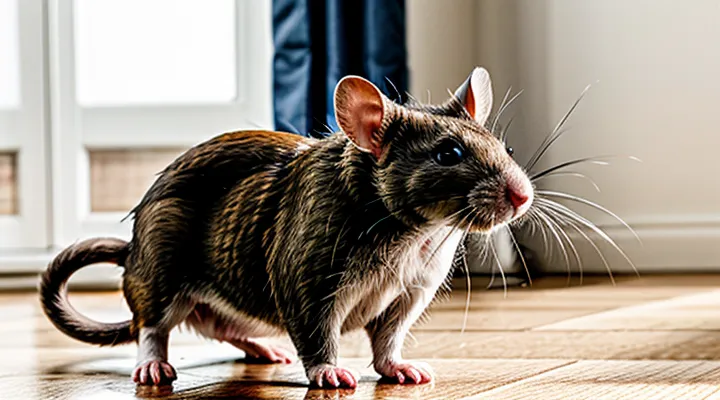
General Appearance and Size
Body Shape and Proportions
Domestic rats exhibit a compact, streamlined silhouette optimized for agility. The head is proportionally large, with a rounded skull, short muzzle, and prominent whisker pads. Eyes are situated on the sides of the head, providing a wide field of vision, while ears are small, rounded, and lie close to the skull.
The torso forms a short, cylindrical trunk that tapers slightly toward the hindquarters. The spine maintains a gentle curvature, allowing the animal to bend and squeeze through narrow openings. The ribcage is broad, supporting robust respiratory muscles.
A defining feature is the tail, which matches the body length or exceeds it by a few centimeters. The tail is hairless, tapering toward the tip, and exhibits a slight tapering in diameter, contributing to balance during rapid movements.
Limbs are proportionally short with sturdy forepaws equipped with dexterous digits, each ending in a small claw. Hind limbs are slightly longer, facilitating powerful jumps and swift sprints. The overall body‑to‑tail ratio typically ranges from 1:1 to 1:1.2, depending on breed and age.
Key proportional metrics:
- Head length: 2.0–2.5 cm
- Body length (head to base of tail): 15–20 cm
- Tail length: 16–22 cm
- Shoulder height: 5–7 cm
- Weight: 150–500 g, varying with sex and genetics
These dimensions collectively give domestic rats a balanced, muscular appearance suited to both climbing and ground locomotion.
Typical Size Range
Domestic rats that are kept as pets exhibit a consistent size spectrum, allowing owners to anticipate their growth and space requirements. Adult individuals usually measure between 9 and 12 inches (23–30 cm) from nose to the base of the tail, with the tail adding an additional 7 to 10 inches (18–25 cm). Body mass falls within 300 to 500 grams (10.5–17.5 oz), although some larger specimens may reach 600 g (21 oz).
Size variation correlates with genetic lines:
- Standard fancy rats: 9–12 in (23–30 cm) body length, 7–10 in (18–25 cm) tail, 300–500 g (10.5–17.5 oz).
- Dwarf varieties (e.g., Dumbo, Hairless): 7–9 in (18–23 cm) body length, 6–9 in (15–23 cm) tail, 200–300 g (7–10.5 oz).
- Large‑frame strains (e.g., “Big” or “Giant” rats): up to 13 in (33 cm) body length, tail up to 12 in (30 cm), weight can exceed 600 g (21 oz).
These measurements provide a reliable framework for evaluating the physical dimensions of pet rats, informing enclosure sizing, handling expectations, and health monitoring.
Key Physical Features
Fur Characteristics
Domestic rats display a coat that varies widely in color, texture, and length, reflecting selective breeding and genetic diversity. The fur is generally short to medium in length, lying close to the skin, which facilitates agility and thermoregulation. Individual hairs possess a soft, dense undercoat beneath a slightly coarser outer layer, providing insulation while maintaining a sleek appearance.
Key fur attributes include:
- Color spectrum: black, brown, white, cream, gray, and mixed patterns such as sable, agouti, and roan; pigment distribution results from melanin variants and selective breeding.
- Pattern types: solid, brindle, spotted, and “hooded” markings; each pattern follows Mendelian inheritance patterns.
- Texture: fine to medium; some strains exhibit a wiry or glossy surface due to differences in hair shaft structure.
- Length: typical domestic rat fur measures 0.5–1.5 cm; hairless or “nude” varieties lack the outer coat entirely.
- Shedding cycle: seasonal shedding occurs primarily in spring and fall, with increased hair loss during molting periods; regular grooming reduces loose hair accumulation.
Health considerations link fur condition to overall wellbeing. A glossy, evenly distributed coat indicates adequate nutrition and hygiene, while patchy fur, excessive dullness, or bald spots may signal parasites, nutritional deficiencies, or dermatological disorders. Routine observation of fur quality enables early detection of such issues.
Color Variations
Domestic rats display a wide range of coat colors, each defined by specific genetic markers. The most frequently encountered colors include:
- Black – solid, deep black fur; often referred to as “black”.
- Brown – uniform dark brown or chocolate shade.
- White – pure white coat; may accompany pink or ruby eyes.
- Agouti – mixed pattern of light and dark hairs giving a speckled appearance.
- Cinnamon – reddish‑brown tone, lighter than chocolate.
- Chocolate – medium‑dark brown, richer than standard brown.
- Albino – white fur with red eyes, resulting from lack of pigment.
Additional patterns combine solid colors with distinct markings:
- Hooded – color restricted to the head and shoulders, rest of the body remains white.
- Blaze – a stripe of color runs from the nose across the forehead.
- Tuxedo – dark mask on the face with a lighter body, resembling formal wear.
- Mottled – irregular patches of two or more colors across the coat.
Breeders also produce rarer variants such as blue, lilac, and pearl, which arise from recessive gene combinations. Coat color does not affect the animal’s health; it serves primarily as a visual identifier for owners and veterinarians.
Texture and Length
Domestic rats display a coat whose texture and length vary by breed, age, and grooming practices. The fur on the back and sides is typically short, dense, and smooth to the touch, providing a sleek appearance. In contrast, the underbelly may feature slightly longer, softer hair that feels plush but remains manageable. Long‑haired varieties, such as the Rex or Satin, possess a velvety coat where each hair measures up to 1 cm, creating a noticeable contrast with the standard short‑haired texture.
The tail, an extension of the spinal column, is covered with a thin layer of fine, hairless skin. Its length ranges from 15 cm to 25 cm, proportional to the body size, and feels smooth and slightly moist. Whiskers (vibrissae) are rigid, tapering hairs extending from the snout; they measure 1–2 cm and serve a sensory function. Foot pads are covered with short, coarse hair, offering traction without affecting overall texture.
Key characteristics:
- Back and side fur: short, dense, smooth; 0.5–0.8 cm in length.
- Underbelly fur: slightly longer, soft; up to 1 cm.
- Long‑haired breeds: velvety coat, 0.8–1 cm.
- Tail: hairless, smooth, 15–25 cm long.
- Whiskers: stiff, 1–2 cm, tactile.
Understanding these elements clarifies the visual and tactile profile of a pet rat, aiding identification and proper care.
Head and Facial Features
Domestic rats possess a compact, triangular head that tapers toward a pointed snout. The skull length averages 2–3 cm, proportionally larger in males than females. Ears are rounded, thin‑skinned, and free of fur; they sit low on the head and measure roughly 1 cm in diameter, providing acute auditory perception.
Eyes are large, dark, and situated on the sides of the skull, granting a wide field of view. The pupil is round, and the iris lacks distinct coloration, appearing black in most individuals. Vision emphasizes motion detection rather than detail.
The nasal region features a moist, black nose with a pronounced philtrum leading to a set of continuously growing incisors. The upper and lower incisors are chisel‑shaped, extending slightly beyond the cheeks when the mouth is closed.
Whiskers (vibrissae) emerge from the mystacial pad on either side of the snout, each whisker measuring 2–3 cm. They serve as tactile sensors, enabling precise navigation in confined spaces.
Key facial characteristics:
- Rounded, hair‑free ears positioned low on the skull
- Large lateral eyes with dark pupils
- Pointed, moist nose with a short philtrum
- Prominent, ever‑growing incisors visible when the mouth is open
- Long, stiff whiskers extending from the mystacial pad
These elements collectively define the head and facial appearance of a typical pet rat.
Eyes: Size and Color
Domestic rats have relatively large eyes for their skull size, positioned laterally to provide a wide field of vision. Adult specimens typically exhibit eye diameters ranging from 6 mm to 9 mm, with slight enlargement in younger individuals due to proportionally larger craniums. The ocular dimensions contribute to the animal’s ability to detect movement and navigate dimly lit environments.
Eye color in pet rats falls into a limited spectrum, governed by genetics and selective breeding. Common hues include:
- Black (dark brown): Most prevalent, resulting from high melanin concentration.
- Red (pink): Appears in albino individuals lacking pigment.
- Blue: Found in specific coat color lines, such as “blue-eyed white.”
- Yellow (golden): Occasionally observed in strains with diluted melanin.
Variations may occur within a single litter, reflecting the inheritance of pigment genes. The iridescent quality of the eye surface, known as the tapetum lucidum, is absent in rats, so eye color remains consistently visible under normal lighting.
Ears: Shape and Placement
Domestic rats possess small, rounded ears that sit high on the skull, close to the eyes. The external ear, or pinna, is a thin, pliable flap of skin supported by a simple cartilage framework. Its diameter typically ranges from 1.5 cm to 2 cm in adult specimens, varying with breed and individual size.
Key characteristics of the ears include:
- Shape: Oval to slightly circular, with a smooth edge and a subtle notch at the upper margin where the cartilage bends.
- Placement: Symmetrical on either side of the head, positioned laterally and slightly forward of the midline, allowing a broad field of auditory perception.
- Mobility: Limited movement; the pinna can tilt a few degrees in response to sound direction but does not swivel extensively.
- Fur coverage: Sparse, fine hairs cover the outer surface, providing minimal insulation while preserving sensitivity.
The high placement and compact form enable domestic rats to detect high‑frequency sounds essential for communication and predator awareness, contributing to their acute hearing capabilities.
Snout and Whiskers
Domestic rats possess a distinct snout that projects forward from the skull, forming a short, triangular muzzle. The length typically measures 1.5–2 cm in adult specimens, with a smooth, hair‑free surface that contrasts with the surrounding fur. The snout’s skin is pigmented in shades ranging from pink to light brown, reflecting underlying vascularization. Dental structures are visible at the tip: a pair of continuously growing incisors that extend slightly beyond the lower jaw, enabling efficient gnawing.
Whiskers, or vibrissae, emerge from the snout and adjacent facial regions in organized rows. Each whisker is a thick, tapered hair anchored in a deep follicle rich in nerve endings. Rats usually display 12–14 macrovibrissae on each side of the snout, aligned in a curved pattern that sweeps outward and backward. Additional smaller vibrissae, called microvibrissae, cover the cheeks, above the eyes, and on the upper lip, providing a dense sensory network.
Key functions of the snout and whiskers include:
- Detection of tactile cues: vibrissae transmit precise information about object size, shape, and texture through rapid deflection.
- Spatial orientation: coordinated whisker movements allow rats to navigate narrow passages and assess obstacles without visual input.
- Environmental monitoring: the snout’s olfactory receptors, concentrated at the tip, work in conjunction with whisker feedback to locate food and identify pheromonal signals.
- Communication: whisker positioning can indicate emotional states, such as alertness or aggression, while the snout may display subtle muscular contractions during vocalizations.
Overall, the snout’s compact form and the whiskers’ organized array create an integrated sensory apparatus that defines the rat’s facial morphology and supports its exploratory behavior.
Tail: Description and Function
Domestic rats possess a long, hair‑less tail that typically measures between 12 and 20 cm, roughly equal to the length of the body. The skin is thin and covered with a fine layer of scales, giving the tail a smooth, glossy appearance. Coloration mirrors the coat, ranging from black and brown to white, while the tip may appear slightly darker due to reduced blood flow. The tail is highly flexible, capable of bending in multiple directions without losing structural integrity.
Functionally, the tail serves several physiological and behavioral purposes:
- Thermoregulation: Blood vessels in the tail dilate or constrict to release or conserve heat, helping the animal maintain a stable core temperature.
- Balance: When climbing or navigating narrow surfaces, the tail acts as a counterweight, allowing precise adjustments of the body’s center of gravity.
- Communication: Movements such as twitching or curling convey emotional states to conspecifics and humans, providing non‑verbal cues.
- Fat storage: Small deposits of adipose tissue can be found beneath the skin, offering an additional energy reserve during periods of scarcity.
Overall, the tail integrates structural, metabolic, and social functions that are critical to the domestic rat’s adaptation to both indoor and outdoor environments.
Paws and Digits
Domestic rats possess four‑digit forepaws and five‑digit hind paws. Each forepaw includes a thumb‑like digit that opposes the other three, enabling precise manipulation of objects and food. The hind paws lack a true opposable digit but feature a broad fifth toe that aids in balance and climbing.
Key anatomical features of rat paws and digits:
- Digit count: Forepaws – four digits; Hind paws – five digits.
- Nail structure: Sharp, curved claws on each digit, facilitating grip on surfaces.
- Pad composition: Thick, leathery pads on the underside of each paw, providing traction and cushioning.
- Sensory innervation: Dense concentration of mechanoreceptors in the pads and digit tips, allowing acute tactile perception.
- Flexibility: Jointed digits permit a wide range of motion, essential for burrowing and navigating narrow passages.
Variation among individuals is minimal; however, genetic mutations can produce extra digits (polydactyly) or reduced digit length. Regular grooming maintains pad health, preventing overgrowth of keratin and ensuring optimal traction.
Distinguishing Domestic Rats from Wild Rats
Behavioral Differences (Brief Mention)
Domestic rats typically measure 20–25 cm from nose to the base of the tail, with a tail length of 15–20 cm. Their bodies are compact, featuring a rounded head, small rounded ears, and a short, whiskered snout. Fur varies from sleek and glossy to slightly wiry, displaying colors such as black, brown, white, cream, or mixed patterns. Eyes are large and dark, providing keen vision in low light, while hind limbs are strong enough for agile climbing and jumping.
Behavioral distinctions between pet rats and their wild counterparts are modest but observable:
- Social interaction: Pet rats form tighter bonds with humans and exhibit frequent grooming of each other, whereas wild rats maintain looser colony structures.
- Activity cycle: Domestic individuals often adjust to a diurnal schedule when housed with people; wild rats remain primarily nocturnal.
- Tameness: Selective breeding yields reduced fear responses, allowing handling without aggressive defenses.
- Exploratory drive: Companion rats display heightened curiosity toward novel objects, facilitating enrichment activities.
- Vocalization: Domestic rats emit a broader range of audible squeaks and chirps to communicate with owners, while wild rats rely more on subtle ultrasonic calls.
Physical Markers for Identification
Domestic rats display a consistent set of anatomical features that enable reliable identification. Body length ranges from 15 cm to 25 cm, with tail length approximately equal to or slightly longer than the torso. Weight varies between 150 g and 500 g, depending on age, sex, and strain.
Coat characteristics provide the most visible markers. Coloration includes solid hues (black, white, brown, gray) and patterned variants such as agouti, brindle, or roan. Patterns manifest as distinct patches, stripes, or mottled areas on the dorsal and ventral surfaces. Fur texture differs among strains: standard rats possess short, dense hair; “dumbo” rats exhibit a softer, longer coat; hairless rats lack visible fur, revealing pinkish skin.
Facial and cranial markers further distinguish individuals. Eye color may be pink, red, or brown, correlating with coat pigment. Whisker length ranges from 4 mm to 7 mm, with a characteristic forward sweep. Nose shape is uniformly pointed, while ear size varies: “dumbo” rats have enlarged, low‑set ears that fold outward, contrasting with the small, high‑set ears of standard varieties.
Limbs and paws present additional identifiers. Front paws contain five toes; hind paws have four. Pad coloration matches overall coat tone but may appear lighter on the ventral side. Tail scutes—small, overlapping plates—are visible under close examination, providing a tactile reference for age and health.
Key physical markers for identification:
- Body length and tail proportion
- Weight range
- Coat color and pattern (solid, agouti, brindle, roan)
- Fur texture (short, long, hairless)
- Eye pigmentation (pink, red, brown)
- Whisker length and orientation
- Ear size and placement (standard vs. “dumbo”)
- Toe count and pad coloration
- Tail scute visibility
These attributes, observed together, allow precise differentiation of domestic rats for breeding, veterinary care, and scientific documentation.
Common Breeds and Their Unique Looks
Fancy Rat Varieties (Overview)
Domestic rats display a wide range of physical characteristics because breeders have emphasized specific coat textures, color patterns, and body sizes. These selectively bred groups are commonly referred to as fancy rat varieties and form the primary classification system used by pet owners and exhibitors.
Coat texture distinguishes the major groups:
- Standard (smooth, short hair) – the baseline phenotype for most pet rats.
- Rex – curly, plush fur resulting from a recessive mutation.
- Hairless – virtually no fur, exposing thin, wrinkled skin.
- Satin – glossy, slightly longer hair with a sheen.
- Curly – tightly curled hair, often combined with other color patterns.
Color and pattern categories provide further differentiation:
- Solid – uniform coloration across the entire body.
- Agouti – banded hairs producing a speckled effect, typically brown or gray.
- Hooded – darker coloration restricted to the head, shoulders, and tail, with a lighter body.
- Blaze – a sharp, contrasting stripe across the nose and forehead.
- Pied – irregular patches of two or more colors, often with a white background.
- Tortoiseshell, blue, chocolate, lilac, and other recognized shades expand the palette.
Size classifications affect overall appearance:
- Dwarf – reduced body length and weight, maintaining proportionate features.
- Standard – average adult size, approximately 200–300 g.
- Macro – larger individuals exceeding 350 g, often with a more robust build.
Breed standards established by organizations such as the American Rat & Fancy Rat Association (ARBA) define acceptable traits for each variety, ensuring consistency in shows and breeding programs. Understanding these categories enables accurate identification of pet rats and informs responsible selection for specific aesthetic or research purposes.
Dumbo Rats
Dumbo rats are a distinct variety of pet rats recognized primarily by their oversized, low‑set ears that sit close to the head rather than atop it. The ears are round, soft, and often appear larger in proportion to the body, giving the animal a characteristic “floppy” silhouette.
The overall body shape matches that of a typical domestic rat: a streamlined torso, a short, thick tail, and a compact, muscular build. Fur can range from short and sleek to semi‑long, with colors including black, brown, white, agouti, and patterned combinations such as brindle or sable. Coat texture varies by genetic line, but all Dumbo rats share a dense, glossy appearance that reflects good health.
Key visual markers include:
- Ears positioned low on the skull, covering part of the cheekbones.
- Large, round eyes that may be dark or light, often accentuated by the ear placement.
- A rounded head with a slightly broader muzzle compared to standard rats.
- Tail length proportional to body size, typically 7–10 cm, with a thin, hairless surface.
Behavioral traits do not affect external description, but the combination of ear placement, head shape, and coat diversity makes Dumbo rats easily identifiable among other pet rat varieties.
Rex Rats
Rex rats are a distinct variety of domesticated rats recognized primarily by their unusually curly or wavy coat. The fur grows in tight, spring‑like spirals that give the animal a plush, almost textured appearance, unlike the sleek hair of standard pet rats. The coat may range from short, dense curls to longer, looser waves, depending on the individual’s genetic line.
Body size aligns with typical adult domestic rats, measuring 18–25 cm from nose to the base of the tail, with a tail length of 15–20 cm. Weight generally falls between 250 g and 350 g, though heavily muscled specimens can exceed 400 g. The head is broad with a rounded forehead; eyes are large, dark, and slightly bulged, providing excellent peripheral vision. Whiskers are long and stiff, aiding navigation in low‑light environments.
Common color patterns among Rex rats include:
- Solid shades (black, white, chocolate, lilac)
- Dilute variants (light gray, pale cream)
- Patterned coats (agouti, sable, tuxedo, bicolor)
The skin beneath the curls is usually pink or lightly pigmented, and the tail is typically hairless, smooth, and semi‑transparent, mirroring the texture of standard rat tails.
Skeletal structure mirrors that of other domestic rats: a compact skull, strong mandibles, and agile limbs. The paws feature five toes on the forefeet and four on the hind feet, each equipped with sharp, retractable claws for climbing. Despite the unique fur, Rex rats retain the same social behaviors, intelligence, and health considerations as their smooth‑furred counterparts.
Hairless Rats
Hairless rats represent a distinct phenotype within the species commonly kept as pets. Their most obvious feature is the complete absence of fur, exposing a thin layer of skin that varies from pink to dark brown, depending on genetic background. The skin is delicate, highly vascularized, and prone to dehydration, requiring consistent humidity control in the living environment.
Typical physical dimensions match those of standard domesticated rats: body length 7–10 cm, tail length 12–16 cm, weight 200–350 g. Ears remain proportionally large, and eyes are prominent, often appearing reddish due to the lack of pigment covering. The tail retains the usual scaly texture, providing a reliable indicator of health when checked for lesions or discoloration.
Key considerations for owners include:
- Temperature regulation – maintain ambient temperature between 20 °C and 24 °C; avoid drafts.
- Humidity – keep relative humidity at 50–60 % to prevent skin cracking.
- Skin care – apply veterinarian‑approved moisturizers sparingly; monitor for infections.
- Handling – use gentle, gloved contact initially to reduce stress and protect the skin.
Overall, hairless rats exhibit the same skeletal and muscular structure as their furred counterparts, but their naked appearance demands heightened environmental management and vigilant health monitoring.
Health and Appearance Cues
Signs of a Healthy Rat
A healthy domestic rat displays several clear physical and behavioral indicators. Observers can assess wellness by noting the following characteristics:
- Coat – smooth, glossy, and free of bald patches, sores, or excessive dandruff.
- Eyes – bright, clear, and free of discharge or cloudiness.
- Ears – clean, without crust, swelling, or strong odor.
- Nose – moist but not dripping; absence of crust or scabs.
- Teeth – continuously growing incisors that are even, without sharp points or overgrowth.
- Weight – stable body mass appropriate for the rat’s age and breed; no rapid loss or gain.
- Appetite – regular consumption of food and water; no prolonged refusal to eat.
- Activity – alert, curious, and capable of climbing, exploring, and interacting with its environment.
- Grooming – frequent self‑grooming that leaves the fur tidy; lack of excessive scratching or self‑injury.
- Breathing – quiet, unobstructed respiration; no wheezing, rattling, or labored breaths.
These markers provide a reliable framework for evaluating the health of a pet rat without reference to broader descriptive contexts.
Indicators of Illness or Stress
Domestic rats exhibit clear signs when they are unwell or experiencing stress. Recognizing these cues allows timely veterinary intervention and improves animal welfare.
Physical changes often precede more serious conditions. Common indicators include:
- Fur that appears dull, ragged, or falls out in patches.
- Noticeable weight loss or a sudden increase in abdominal size due to fluid accumulation.
- Eyes that are cloudy, red, or produce excessive discharge.
- Nasal secretions, sneezing, or a persistent wheeze.
- Swollen or reddened limbs, paws, or tail tips.
- Unusual posture such as hunching, a lowered head, or difficulty moving.
Behavioral alterations also reveal health concerns. Watch for:
- Reduced activity, reluctance to explore, or frequent hiding.
- Decreased appetite, refusal to eat, or excessive drinking.
- Aggressive biting, sudden vocalizations, or signs of anxiety.
- Excessive grooming that results in hair loss or skin irritation.
- Irregular breathing patterns, including rapid or shallow breaths.
Monitoring these physical and behavioral markers provides a reliable baseline for assessing a pet rat’s condition. Prompt observation and professional evaluation are essential when any of these signs emerge.