
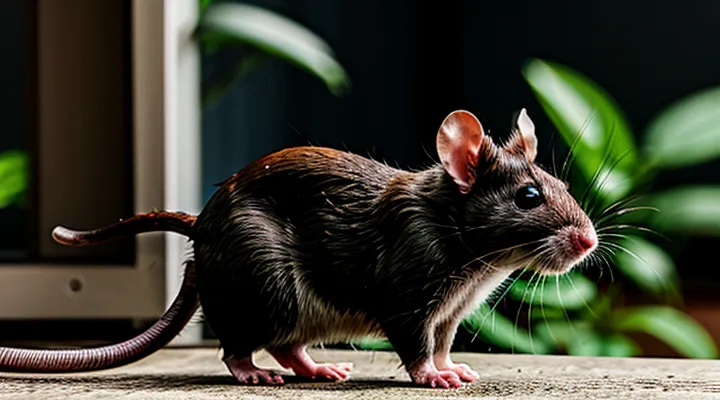
Week One: The First Seven Days of Life
Neonatal Stage: Days 1-3
Sensory Development: Touch and Smell
During the first four weeks after birth, a rat pup undergoes rapid development of tactile and olfactory systems, enabling interaction with its environment and littermates.
Touch:
- By day 1, the skin is covered with fine hairs that provide limited mechanoreceptive input.
- Around day 5, the development of Merkel cells and Meissner‑type receptors increases sensitivity to light pressure.
- By the end of week 2, whisker follicles (vibrissae) become functional, allowing precise detection of surface textures and spatial navigation within the nest.
- At four weeks, coordinated forepaw movements and enhanced proprioceptive feedback support exploratory behavior outside the nest.
Smell:
- Nasal passages are patent at birth, but functional olfactory receptors emerge between days 3 and 5.
- By day 7, the olfactory bulb shows heightened activity, facilitating discrimination of maternal scent and littermate odors.
- Between weeks 2 and 3, the vomeronasal organ becomes operational, enabling detection of pheromonal cues that influence social hierarchy.
- At the conclusion of the first month, the rat exhibits robust odor‑guided foraging and avoidance responses.
The integration of tactile and olfactory signals during this period establishes the sensory foundation required for survival, social interaction, and subsequent learning tasks.
Physical Characteristics: Pinkies and Size
Newborn rats display distinct physical traits that differentiate them from older individuals. Their extremities—ears, tail, paws, and genitalia—appear almost translucent, lacking fur and revealing a delicate pink coloration. This characteristic gives rise to the informal term “pinkies,” used by breeders and researchers to identify neonates.
The overall size of a rat in its first month follows a rapid growth curve. At birth, average weight ranges from 4 g to 7 g, and body length (excluding the tail) measures approximately 3 cm to 4 cm. By the end of the fourth week, weight typically reaches 30 g to 45 g, while body length extends to 10 cm to 12 cm. Tail length grows proportionally, attaining roughly 15 cm to 18 cm.
Key measurements:
- Weight: 4–7 g at birth; 30–45 g at four weeks
- Body length (head‑to‑base of tail): 3–4 cm at birth; 10–12 cm at four weeks
- Tail length: 5–7 cm at birth; 15–18 cm at four weeks
- Extremity color: Pink, hairless, semi‑transparent
These parameters provide a reliable baseline for assessing development, health status, and suitability for experimental or breeding programs.
Early Development: Days 4-7
Motor Skills: Wriggling and Crawling
During the initial weeks after birth, a rat’s locomotor abilities progress from involuntary reflexes to purposeful movement. Muscle fibers develop rapidly, enabling the newborn to generate coordinated contractions that produce a characteristic wriggling motion. This undulating activity serves as a precursor to crawling, allowing the pup to navigate the nest while maintaining contact with the mother’s fur.
By the end of the second week, the animal demonstrates controlled crawling. The pattern consists of alternating fore‑ and hind‑limb extensions, combined with a forward thrust of the torso. This gait emerges as neural pathways mature and sensory feedback from the whiskers and paws refines spatial awareness. The transition from wriggling to crawling involves:
- Strengthening of axial musculature, providing stability for limb placement.
- Myelination of spinal neurons, increasing signal transmission speed.
- Development of proprioceptive circuits, enhancing balance and coordination.
Around the fourth week, crawling becomes efficient enough for brief excursions beyond the nest. The rat can negotiate small obstacles, adjust stride length, and exhibit rapid directional changes. These motor milestones lay the foundation for later climbing and running behaviors observed in adolescent rodents.
Physiological Changes: Skin and Fur Development
During the initial four weeks, a newborn rat’s epidermis undergoes rapid keratinization. The outermost layer thickens, reducing permeability and enhancing barrier function. By the end of the second week, the stratum corneum exhibits a measurable increase in lipid content, which improves water retention.
Fur development follows a predictable sequence. The first visible hair is a fine, downy coat that appears around day three. This “soft down” («soft down») provides minimal thermal insulation but protects the skin from abrasion. Between days seven and fourteen, the down is gradually replaced by longer, coarser guard hairs. By the fourth week, the coat consists of a mixed layer of guard hairs and underlying underfur, delivering effective heat conservation.
Pigmentation emerges concurrently with hair growth. Early down is typically pale, lacking melanin. Melanocyte activity intensifies during weeks two and three, resulting in the characteristic brown or black coloration of mature fur. The distribution of pigment follows the pattern established in the embryo, creating the familiar dorsal‑ventral contrast observed in adult specimens.
Key physiological outcomes of these changes include:
- Enhanced thermoregulation through layered fur architecture.
- Strengthened barrier against pathogens due to a more robust epidermis.
- Improved tactile sensitivity as hair follicles mature and integrate with sensory neurons.
Collectively, skin thickening and progressive fur maturation define the visual appearance of a juvenile rat during its first month of life.
Week Two: Rapid Growth and Sensory Awakening
Transition Phase: Days 8-11
Eye and Ear Development: Opening and Unfolding
During the first four weeks after birth, a rat’s visual and auditory organs undergo rapid transformation. At birth the eyes remain sealed, and the external ear structures are rudimentary. By the second week, both systems reach functional thresholds that define the animal’s capacity to respond to environmental cues.
The ocular apparatus opens between post‑natal days 10 and 14. Initial opening reveals a pink, vascularized cornea; pigmentation intensifies over the following days. Lens curvature stabilizes, and retinal layers complete differentiation, enabling photic responsiveness. Pupillary reflexes become detectable shortly after the eyelids part, indicating functional neural pathways to the visual cortex.
Auditory development follows a comparable schedule. The pinna enlarges and folds into its characteristic shape by day 12. The external auditory canal clears of residual tissue, and the middle‑ear ossicles attain full mobility. Acoustic startle responses emerge around day 14, confirming that the cochlear hair cells and associated neural circuits are operational. By the fourth week, frequency discrimination improves, aligning with adult‑like hearing thresholds.
Key milestones in the first month:
- Day 0: Eyes closed; ear pinna flat, canal occluded.
- Days 10‑14: Eyelids part; corneal transparency increases; pupillary reflex appears.
- Days 12‑14: Pinna fully formed; auditory canal opens; startle response observed.
- Day 21‑28: Visual acuity and auditory discrimination approach mature levels.
Initial Explorations: Limited Movement
During the first four weeks of life, a newborn rat exhibits minimal locomotor ability. Muscular development remains confined to the forelimbs and hindlimbs, which generate only short, uncoordinated twitches. These movements serve primarily to stretch the skin and stimulate blood circulation rather than to enable purposeful navigation.
Key characteristics of this early stage include:
- Absence of sustained crawling; locomotion consists of brief, irregular bursts lasting less than one second.
- Limited grasping capacity; the paws can cling to the nest material but cannot support the body weight.
- Reliance on maternal warmth and grooming; the infant rat remains largely immobile within the nest until the second week.
By the end of the fourth week, the frequency and amplitude of limb movements increase, preparing the animal for more complex exploration. The transition from limited motion to coordinated crawling marks a critical developmental milestone.
Socialization and Activity: Days 12-14
Interaction with Littermates and Mother
During the first four weeks, a newborn rat’s coat, ear position, and eye development are directly influenced by social contact with its mother and siblings. The mother provides warmth and nourishment, which accelerates fur darkening and the emergence of whisker length. Continuous nursing stimulates the release of growth‑related hormones, resulting in a noticeable increase in body mass and a more defined head shape by the end of week three.
Interaction with littermates shapes motor coordination and sensory perception. Frequent grooming among pups encourages the tightening of fur along the dorsal line, while tactile play promotes the opening of the eyes and the sharpening of visual acuity. Observations show that pups engaged in regular sibling contact develop:
- more uniform fur coloration,
- earlier ear cartilage stiffening,
- enhanced tail length proportionality.
Maternal behavior also regulates stress levels, preventing premature shedding of the newborn’s lanugo. The mother’s vocalizations and scent cues reinforce the pups’ orientation toward the nest, ensuring consistent exposure to ambient temperature, which supports the progressive development of the skin’s insulating properties.
Overall, the combined effect of maternal care and sibling interaction produces a cohesive physical profile that distinguishes a one‑month‑old rat from its earlier, less differentiated stage.
First Attempts at Solid Food
During the first four weeks of life, rat pups transition from exclusive milk consumption to experimenting with solid food. This shift begins around day 10 – 12, when the incisors emerge and the stomach adapts to digest carbohydrates and proteins beyond lactation.
Key observations during the initial solid‑food trials:
- Approach behavior – Pup explores the cage floor, sniffing and nibbling at softened pellets or soaked mash.
- Consumption pattern – Small, intermittent bites replace continuous suckling; total intake gradually rises as milk supply diminishes.
- Physical response – Stools become firmer and contain visible plant fibers, indicating successful digestion of new nutrients.
- Weight trend – Growth rate steadies; weight gain remains positive despite reduced milk intake, confirming adequate caloric replacement.
Nutritional recommendations for this stage:
- Provide a semi‑moist diet, such as finely ground laboratory chow mixed with warm water to a paste‑like consistency.
- Offer a protein source (e.g., boiled egg yolk or commercial rodent formula) in limited quantities to avoid gastrointestinal upset.
- Ensure continuous access to fresh water; hydration supports the developing renal system and facilitates digestion of solid matter.
- Monitor for signs of refusal or regurgitation; adjust texture or temperature of the food to encourage acceptance.
By the end of the fourth week, most pups consume solid food independently, gradually reducing reliance on maternal milk. This milestone marks a crucial step toward full dietary autonomy and prepares the young rat for subsequent developmental phases.
Week Three: Emerging Independence
Increased Mobility: Days 15-18
Coordinated Movement and Play
During the first four weeks after birth, a juvenile rat exhibits rapid refinement of locomotor coordination. By the end of the second week, the animal can sustain forward movement on a flat surface without frequent pauses. Muscular strength increases, allowing vertical climbing of low obstacles and brief jumps across gaps.
Play behavior emerges concurrently with motor development. Typical activities include:
- Chasing and pouncing on littermates, which tests balance and timing.
- Tactile exploration of objects such as paper strips or plastic tubes, encouraging precise paw placement.
- Rapid reciprocal wrestling, providing feedback on force modulation and spatial awareness.
These interactions serve as practical rehearsal for adult competencies such as foraging and predator evasion. Observation of coordinated movement and play offers a reliable indicator of normal neurological maturation during the initial month of life.
Exploration of Surroundings
During the first four weeks, a newborn rat rapidly expands its sensory range. The eyes remain closed for the initial ten days; tactile and olfactory cues dominate navigation. By the end of the second week, whisker development enables detection of subtle surface variations, prompting the animal to crawl along the nest walls and explore adjacent corners.
From the third week onward, the rat begins to venture beyond the immediate nest. Key behaviors include:
- Surface probing – whiskers and forepaws assess texture, temperature, and moisture.
- Scent mapping – nasal receptors record pheromonal trails left by littermates and the mother.
- Auditory orientation – emerging ear canals allow response to rustling or vocalizations, guiding movement toward safe zones.
By the fourth week, fur coloration becomes distinguishable, displaying a gray‑brown dorsal coat and a lighter ventral side. The increased mobility and refined sensory apparatus allow the juvenile to investigate the broader enclosure, locate food sources, and establish preliminary territorial boundaries.
Dietary Changes: Days 19-21
Weaning Process Begins
In the initial weeks after birth, rat pups rely exclusively on their mother’s milk. Around the third week, the weaning process begins, marking the shift toward independent nutrition.
Physical indicators of the transition include increased activity, exploration of solid materials, and the appearance of fully erupted incisors. Pup weight stabilizes as caloric intake from solid food supplements maternal milk.
Key steps for successful weaning:
- Provide a shallow dish with soft, nutritionally balanced pellets or lab chow; ensure food is easily accessible.
- Offer fresh water in a low‑profile bottle to prevent spillage.
- Introduce a small amount of high‑protein supplement (e.g., boiled egg yolk) once daily for the first two days, then gradually reduce.
- Monitor consumption; adjust portion size to maintain steady weight gain of 2–3 g per day.
Health considerations during this period focus on digestive adaptation. Observe stool consistency; loose or watery feces may signal intolerance to the new diet. If signs of dehydration or weight loss appear, increase water availability and assess food quality. Regular visual checks for nasal discharge or abnormal behavior help identify early infections, which can be more severe during the nutritional transition.
Developing Taste Preferences
During the first four weeks of life, a juvenile rat undergoes rapid maturation of its gustatory system, influencing observable feeding behavior and facial responses.
Taste buds appear on the tongue and soft palate by the end of the second post‑natal week. Neural connections to the brainstem and cortex become functional shortly thereafter, allowing the animal to discriminate basic taste modalities.
Preference development follows a predictable sequence:
- Preference for high‑energy solutions marked by a strong attraction to «sweet» substances emerges within the first ten days.
- Aversion to bitter compounds, typically associated with toxins, becomes evident by the third week.
- Moderate attraction to saline solutions, indicating a developing need for electrolytes, appears around day twenty‑five.
- Acceptance of umami‑rich foods, reflecting protein requirements, is observable in the final week of the month.
Physical signs accompany these preferences. When exposed to a favored sweet solution, the rat displays rapid whisker forward movement, increased licking frequency, and a relaxed jaw posture. Exposure to bitter agents triggers reduced licking, head retraction, and a tightened jaw.
By the end of the first month, the rat’s taste profile transitions from innate, high‑energy attraction to a balanced set of preferences that support growth, immune function, and preparation for independent foraging.
Week Four: Pre-Weaning Stage
Enhanced Sensory Perception: Days 22-25
Sharpened Senses: Vision and Hearing
During the first four weeks of life, a rat’s sensory systems undergo rapid refinement, allowing it to navigate its environment more effectively.
Vision develops from near‑blindness at birth to functional acuity by the end of the fourth week. The retinal photoreceptors mature, increasing light sensitivity and enabling detection of movement. By day 10, pupil dilation improves, and by day 21, the animal can discriminate shapes and moderate distances.
Hearing follows a comparable trajectory. The inner ear structures complete ossification within the first two weeks, permitting sound transmission. At approximately day 14, auditory thresholds drop, and the rat begins to respond to frequencies between 2 kHz and 80 kHz. By the end of the month, the auditory cortex processes complex vocalizations and environmental noises.
Key sensory milestones in the first month:
- Day 3–5: eyelids open; limited light perception.
- Day 10: pupil dilation; improved visual tracking.
- Day 14: onset of auditory responsiveness; startle reflex to loud sounds.
- Day 21: functional depth perception; discrimination of conspecific calls.
- Day 28: mature visual and auditory integration; coordinated response to multimodal stimuli.
Response to External Stimuli
The first month of a rat’s life marks rapid development of the sensory systems that govern its reaction to environmental cues. Neural pathways mature enough to translate light, sound, touch, and odor into coordinated motor responses.
Vision emerges within the first two weeks. By day ten, pup pupils dilate in response to bright illumination, and head movements align with moving objects. Light avoidance behavior becomes evident as the animal seeks darker shelters when exposed to intense glare.
Auditory capacity appears around day twelve. Startle reflexes trigger rapid neck and limb contractions upon sudden noises. Frequency discrimination improves progressively, allowing discrimination between low‑frequency thumps and higher‑pitched squeaks.
Tactile sensitivity develops concurrently with whisker (vibrissae) growth. Contact with textured surfaces elicits immediate exploratory whisking, directing the rat toward or away from objects. Pressure on the paw pads produces withdrawal reflexes that protect against potential injury.
Olfactory detection is functional from birth. Neonates locate the mother’s nest by following scent gradients, displaying directed crawling toward urine or milk odor sources. Chemical cues also modulate social bonding and feeding behavior.
Key milestones in response to external cues during the initial month:
- Day 5‑7: reflexive twitching to gentle touch
- Day 10‑12: light‑induced pupil dilation and head turning
- Day 12‑14: acoustic startle and basic sound localization
- Day 15‑20: whisker‑driven surface exploration
- Day 21‑30: robust odor tracking and nest‑seeking behavior
These stages illustrate the progressive integration of sensory input with motor output, shaping the early behavioral repertoire of the young rodent.
Developing Personalities: Days 26-28
Individual Traits and Behaviors
During the first four weeks after birth, a newborn rat exhibits distinct physical and behavioral characteristics that differentiate it from later developmental stages. At birth, the pup is hairless, with pink, translucent skin that reveals underlying blood vessels. Eyes and ears remain sealed, limiting sensory input to tactile and olfactory cues. By the end of the third week, fur begins to appear, eye pigments develop, and the animal gains the ability to regulate its own body temperature.
Motor skills progress rapidly. Initially, pups cling to the mother’s nipples, relying on reflexive grasping. Around day ten, the first coordinated movements emerge: crawling across the nest, attempting brief sprints, and exploring the immediate environment. By the fourth week, the rat can navigate complex structures, exhibit climbing behavior, and demonstrate early signs of problem‑solving, such as maneuvering around obstacles to reach food.
Key individual traits and behaviors observed in this period include:
- Strong dependence on maternal care for nutrition, warmth, and protection.
- Rapid weight gain, averaging a 10‑fold increase from birth to the end of the first month.
- Development of scent marking, using urine to establish a personal odor profile.
- Emergence of social interaction, characterized by gentle grooming and brief vocalizations during contact with littermates.
- Early exploratory drive, expressed through increased locomotor activity and curiosity toward novel objects.
Growing Curiosity and Adventurousness
During the first four weeks of life, a juvenile rat displays rapid morphological transformation. The newborn possesses a hairless, pink body, closed eyes, and limited mobility. By the end of the third week, fur covers the dorsal surface, eyes open, and the animal gains coordination for upright movement. Tail length approaches that of an adult, while the whiskers lengthen to enhance tactile perception.
Sensory maturation coincides with heightened curiosity and adventurousness. The opening of the eyes triggers visual exploration; the emergence of whiskers enables detection of subtle air currents. These developments prompt the young rat to investigate its immediate environment, testing boundaries of the nest and venturing toward novel objects. The drive to explore supports the formation of neural pathways associated with spatial memory and problem‑solving.
Key observable indicators of growing inquisitiveness include:
- Increased frequency of nose‑to‑object contact.
- Repeated climbing attempts on cage bars or bedding structures.
- Persistent investigation of unfamiliar textures and scents.
- Rapid adaptation to minor changes in enclosure layout.
Collectively, the physical evolution of a rat in its first month provides the foundation for exploratory behavior, illustrating the direct link between anatomical development and the emergence of curiosity‑driven activity.
The End of the First Month: A Growing Rodent
Physical Maturation: Days 29-31
Fur Coat Completion and Coloring
During the first four weeks after birth, a newborn rat’s fur undergoes rapid maturation. Initial soft, almost translucent hair gives way to a denser, protective coat that reaches full coverage by the end of the third week. The progression follows a predictable sequence that can be observed in all standard laboratory strains.
- Days 1‑3: Sparse, pale hair; skin remains visible.
- Days 4‑7: Emergence of short, fine guard hairs; coat thickness increases.
- Days 8‑14: Guard hairs become more numerous; under‑coat begins to develop, providing warmth.
- Days 15‑21: Full coat density achieved; hair length approaches adult proportion.
- Days 22‑28: Coat coloration stabilizes; patterning reflects genetic background.
Color development proceeds concurrently with coat completion. Pigmentation starts as a faint pink‑brown tint that deepens as melanin production intensifies. By the fourth week, the dominant hue—whether agouti, albino, or laboratory strain‑specific—appears uniformly across the body, while characteristic markings such as dorsal stripes or ventral lighter patches become discernible. Variations in shade may result from environmental temperature, nutrition, or hereditary factors, but the overall pattern remains consistent within a given genotype.
Size and Weight Milestones
During the initial four weeks of life, a rat experiences rapid somatic development. Size and weight measurements serve as reliable indicators of normal growth patterns and help distinguish healthy individuals from those requiring veterinary attention.
- Day 0–3: body mass ≈ 5–7 g; total length ≈ 5–7 cm, tail proportion ≈ 50 % of total length.
- Week 1: body mass ≈ 10–12 g; total length ≈ 6–8 cm.
- Week 2: body mass ≈ 15–20 g; total length ≈ 8–10 cm.
- Week 3: body mass ≈ 25–30 g; total length ≈ 10–12 cm.
- Week 4: body mass ≈ 30–40 g; total length ≈ 12–15 cm.
Typical variation falls within ±10 % of the values listed, reflecting genetic background, litter size, and nutrition quality. Consistent upward trends in both dimensions indicate normal development, whereas stagnation or regression may signal underlying health issues that warrant immediate assessment.
Preparation for Independence: Day 30 and Beyond
Readiness for Separation from Mother
During the first four weeks after birth, a newborn rat undergoes rapid physiological and behavioral changes that signal its capacity to detach from the dam. By the end of the third week, fur development is complete, eyes open, and thermoregulation becomes independent, indicating that the young animal can maintain body temperature without maternal warmth. The transition from nursing to solid food typically begins around day 14, when incisors emerge and the pup learns to gnaw, reducing reliance on milk.
Key indicators of separation readiness include:
- Solid fur covering the entire body, replacing the initial soft lanugo.
- Open eyes and functional vision, allowing navigation of the nest environment.
- Ability to consume solid chow and exhibit exploratory behavior.
- Independent thermoregulation, demonstrated by stable body temperature when removed from the nest for brief periods.
These milestones collectively demonstrate that a rat in its first month attains the physical and behavioral competence required to survive apart from its mother.
Continuing Social and Physical Development
During the first four weeks of life, rat pups transition from a primarily dependent state to increasingly autonomous individuals. Physical growth is evident in measurable increases in body weight, length, and skeletal development. By the end of the third week, fur coverage becomes complete, and the eyes, which opened at day 14, reach full visual acuity.
Social maturation proceeds alongside physical changes. Interaction patterns evolve from simple huddling for thermoregulation to complex play and hierarchy formation. Key observations include:
- Day 7–10: vocalizations peak, indicating heightened communication with littermates.
- Day 12–15: initiation of brief chase sequences, establishing early dominance cues.
- Day 18–21: emergence of grooming exchanges, reinforcing social bonds.
- Day 22–28: participation in group foraging activities, demonstrating coordinated behavior.
Neuromotor abilities develop rapidly. By day 10, forelimb coordination allows the pups to grasp objects, while by day 20, balance improves sufficiently for climbing within the nest. These milestones reflect the integration of muscular strength, sensory processing, and motor planning.
Nutritional intake adapts to the growing demands of tissue synthesis. Transition from exclusive maternal milk to the introduction of solid food occurs around day 21, supporting the heightened metabolic rate associated with rapid somatic expansion.