
The Elusive Water Rat: An Introduction to its World
Understanding the Water Rat
Distinguishing Features
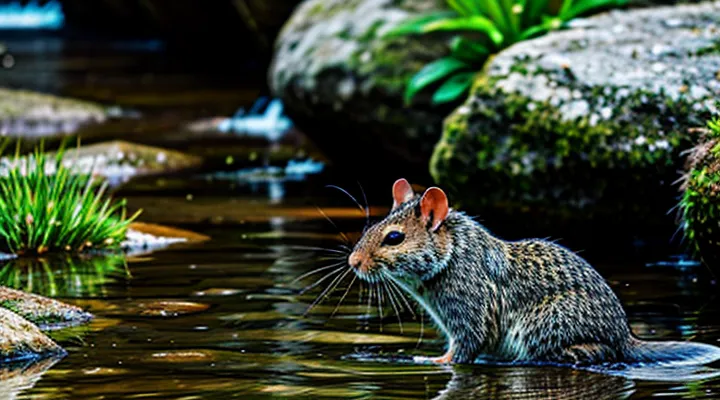
The water rat observed in its native riparian settings displays a suite of morphological and behavioral traits that facilitate an aquatic lifestyle.
Key distinguishing characteristics include:
- Dense, water‑repellent fur that sheds moisture and provides insulation.
- Webbed hind feet with elongated toes, enhancing propulsion during swimming.
- Prominent whiskers (vibrissae) that detect vibrations and aid navigation in turbid water.
- Eyes positioned high on the skull, granting a broad field of vision while partially submerged.
- A flattened tail covered in stiff hairs, acting as a rudder for precise maneuvering.
Additional identifiers are the dark, glossy coat on the dorsal surface, contrasting with a lighter ventral region, and a compact body length ranging from 20 to 30 cm, enabling efficient movement through narrow waterways. These features collectively differentiate the species from other semi‑aquatic rodents.
Habitat Preferences
The water rat exhibits distinct preferences that shape its distribution across riparian and wetland ecosystems. Preference for shallow, flowing water provides access to abundant aquatic vegetation and invertebrate prey. Dense bankside vegetation offers shelter from predators and facilitates burrowing activity. Substrate composition influences foraging efficiency; soft, organic-rich soils support the construction of tunnel systems and nesting chambers. Seasonal fluctuations affect habitat selection, with higher water levels prompting movement to elevated banks and adjacent floodplain meadows.
Key habitat elements include:
- Continuous water bodies with low to moderate current
- Thick stands of reeds, cattails, and emergent grasses
- Soft, loamy soils interspersed with gravel or sand
- Minimal human disturbance and limited shoreline development
Optimal territories combine these factors, enabling stable populations and successful reproduction. Conservation measures that preserve water quality, maintain riparian vegetation, and protect bank integrity directly support the species’ habitat requirements.
Geographic Distribution
The water rat (Hydromys chrysogaster) inhabits a broad swath of the Australasian region, extending from the tropical north of Australia through the island chains of Papua New Guinea and into parts of the Indonesian archipelago. Populations are concentrated in areas where freshwater systems intersect with coastal environments, reflecting the species’ reliance on both aquatic and riparian resources.
Key regions of occurrence include:
- Northern Territory and Queensland, Australia
- Western and Central Papua New Guinea
- Eastern Indonesia, particularly the islands of Sulawesi and the Moluccas
- Coastal river basins of the Solomon Islands
Within these locales, the animal favors habitats such as slow‑moving rivers, floodplain wetlands, mangrove swamps, and the margins of lakes. Preference for dense vegetation along water edges provides shelter and foraging opportunities, while proximity to brackish zones supports the consumption of both freshwater and marine prey.
The current distribution reflects historical dispersal across land bridges that existed during lower sea‑level periods. Recent habitat modification—urban expansion, agricultural drainage, and invasive predators—has fragmented several peripheral populations, limiting range continuity in southern Queensland and parts of New Guinea. Conservation assessments cite a stable core range in northern Australia, yet identify declining trends in marginal habitats where human activity intensifies. «IUCN Red List, 2023» documents these patterns and recommends monitoring of water quality and riparian vegetation to sustain the species’ geographical extent.
Capturing the Water Rat: Photography in the Wild
Essential Gear for Wildlife Photography
Camera Bodies
Camera bodies designed for wildlife photography in wet environments must combine weather sealing, robust construction, and high‑speed performance. A fully magnesium‑alloy chassis provides resistance to moisture and temperature fluctuations while maintaining a lightweight profile for field mobility. Integrated dust‑proof and splash‑proof seals protect internal components when shooting near water sources where a water rat may be observed.
Sensor size influences depth of field and low‑light capability. Full‑frame sensors capture greater detail and produce cleaner images at high ISO settings, essential for early‑morning or dusk lighting. APS‑C sensors offer a balance between image quality and reach, allowing longer effective focal lengths without additional teleconverters.
Autofocus systems tailored for fast, erratic movement benefit from a high number of cross‑type points and sophisticated subject‑tracking algorithms. Continuous shooting rates of 10 fps or higher enable capture of multiple frames during brief animal activity, increasing the likelihood of a sharp, well‑composed shot.
Key specifications for camera bodies suited to this application:
- Weather‑sealed body with IPX‑type rating
- Full‑frame or APS‑C sensor with low‑noise performance
- Minimum 10 fps continuous shooting
- 100 % coverage optical viewfinder
- Dual card slots for redundant storage
- High‑capacity battery system for extended sessions
Lens compatibility should include fast telephoto optics (300 mm + f/2.8) and macro lenses for close‑up detail. Firmware that allows custom focus‑area selection and silent shutter operation reduces disturbance to wildlife. Ergonomic grip design and intuitive control layout support rapid adjustments in dynamic field conditions.
Choosing a camera body that aligns with these criteria enhances the ability to document water‑rat behavior in its natural setting while preserving image quality and equipment reliability.
Lenses
Lenses determine the visual capture of a water rat within its native riparian surroundings. Selecting the appropriate optical system influences perspective, depth of field, and the ability to isolate the subject against a dynamic background.
Key considerations for equipment include:
- Focal length: medium‑telephoto lenses (85 mm–135 mm on full‑frame sensors) allow close framing without disturbing the animal, while maintaining a comfortable working distance.
- Aperture: wide apertures (f/1.8–f/2.8) provide shallow depth of field, separating the mammal from foliage and water reflections; however, stopping down to f/5.6 can increase sharpness across the entire scene when lighting permits.
- Image stabilization: optical stabilization mitigates hand‑shake during low‑light twilight shoots, common in wetland environments.
- Weather sealing: robust construction prevents moisture ingress when shooting near streams or after rain.
Prime lenses deliver superior optical quality and faster maximum apertures, essential for freezing rapid movements of the semi‑aquatic rodent. Zoom lenses with versatile focal ranges offer flexibility when the subject transitions between bank and water, reducing the need to change optics mid‑session.
«The choice of lens determines image sharpness, perspective control, and the capacity to capture fleeting behavioral moments». Proper lens selection aligns technical capability with the ecological context, ensuring that the resulting photograph accurately reflects the animal’s natural behavior and habitat.
Accessories
Photographing the semi‑aquatic rodent in its native wetlands requires equipment that enhances image quality while protecting delicate gear from moisture. Selecting appropriate accessories ensures stable composition, accurate exposure, and durability under damp conditions.
- Waterproof camera housing or rain‑cover sleeve to shield electronics from splashes.
- UV‑filter and polarizing filter to reduce glare from water surfaces and improve color saturation.
- Adjustable tripod with rubber‑foot spikes for secure placement on soft, uneven ground.
- Macro lens with close‑focusing capability, paired with a focus‑rail for precise depth control.
- Remote shutter release or Bluetooth trigger to eliminate camera shake during long exposures.
Additional tools support specialized tasks. A portable LED panel with adjustable color temperature provides consistent illumination for nocturnal subjects. Silicone‑coated lens cloths and anti‑fog inserts prevent condensation on optical surfaces. Finally, a compact field notebook, marked with waterproof paper, records location data, weather conditions, and behavioral observations of the «water rat» during each session.
Locating Water Rat Habitats
Identifying Tracks and Signs
Identifying the presence of water rats in riparian environments relies on recognizing distinct track patterns and ancillary signs left by the animals. Tracks appear as small, oval impressions measuring 2–3 cm in length, with five visible toe pads and a central claw mark. The hind foot prints are slightly larger, showing a pronounced pad and a short, curved claw impression that points forward. When a series of prints is observed along a bank, the spacing typically ranges from 5 to 8 cm, reflecting the species’ short stride.
Ancillary signs complement track analysis and confirm activity. Common indicators include:
- Burrow entrances with smooth, rounded openings at the base of vegetation, often reinforced with shredded plant material.
- Fresh droppings, dark brown and spindle‑shaped, deposited near feeding sites or along trails.
- Gnaw marks on herbaceous stems and young shoots, especially on emergent water‑edge plants.
- Chewed bark fragments and exposed root crowns, suggesting foraging behavior near the water’s edge.
- Disturbed soil or mud patches bearing faint footprints, indicating recent movement through shallow water.
When evaluating these elements, prioritize fresh, well‑preserved tracks and signs that align with known habitat preferences, such as dense banks with ample cover and proximity to slow‑moving streams. Combining track morphology with corroborating evidence provides a reliable method for confirming water rat activity in natural settings.
Prime Viewing Times
Observing the water rat in its natural environment requires timing that aligns with the animal’s activity patterns and ambient lighting. Early dawn, when light is soft and the species emerges from burrows to forage, offers optimal visibility and minimal background disturbance. Mid‑day sun creates harsh shadows and prompts the animal to retreat to cooler, shaded areas, reducing photographic opportunities. Late afternoon, particularly the hour before sunset, provides warm, directional light that enhances fur texture and highlights water reflections, while the rat often returns to feeding sites near streams.
Key periods for successful imaging include:
- 05:30 – 07:00 local time: peak foraging activity, clear silhouettes against moist banks.
- 16:30 – 18:00 local time: warm illumination, increased surface activity on water.
- Overcast days during these windows: diffused light reduces glare and reveals subtle color variations.
Seasonal considerations affect timing as well. In spring, breeding males display heightened movement near water edges, extending activity into midday. In summer, higher temperatures shift peak activity toward early morning and evening, making the aforementioned windows especially critical for capturing clear, well‑exposed images.
Ethical Approaches to Observation
Observing semi‑aquatic rodents in their native wetlands demands a framework that safeguards both the animal and its ecosystem. Ethical practice begins with thorough planning: researchers obtain appropriate permits, consult local conservation authorities, and review existing data to avoid redundant fieldwork.
Key principles include:
- Minimal physical intrusion; cameras and lenses are positioned at a distance that does not alter natural behavior.
- Use of silent, camouflage‑friendly equipment to reduce stress caused by noise or visual disturbance.
- Limiting observation periods to the shortest interval necessary for scientific objectives, thereby preventing habitat degradation.
- Documentation of all interactions, ensuring transparency and accountability in reporting.
- Respect for indigenous and local communities by involving them in study design and sharing findings that support regional biodiversity goals.
Data collection adheres to strict protocols: photographs are stored securely, metadata records environmental conditions, and any incidental contact with the species is logged for review. Continuous assessment of impact allows researchers to adjust methods promptly, maintaining the integrity of the habitat while producing reliable visual documentation of the water‑adapted rodent.
Techniques for Photographing Water Rats
Patience and Stealth
Patience and stealth are indispensable when documenting a semi‑aquatic rodent in its riparian environment. The animal’s activity pattern follows tidal cycles; movement peaks during low water, when foraging on riverbanks. A photographer must synchronize field presence with these intervals, remaining motionless for extended periods to avoid startling the subject.
Key practices for achieving unobtrusive observation:
- Position concealment behind natural cover such as reeds or fallen logs.
- Use long focal lengths to maintain distance while preserving detail.
- Employ silent shutter modes or external triggers to minimize acoustic disturbance.
- Monitor weather forecasts to select calm days, reducing wind‑induced foliage motion.
- Record ambient sounds to anticipate the rodent’s emergence from burrows.
Stealth extends beyond physical concealment. Camouflage clothing matching the surrounding vegetation reduces visual detection. Low‑light conditions, often present at dawn or dusk, further mask the photographer’s presence, allowing the animal to approach water sources without perceiving threat.
Successful imagery results from the cumulative effect of these disciplined actions, capturing the creature in natural posture and behavior while preserving the integrity of its habitat.
Utilizing Natural Light
Photographing a water rat in its natural surroundings demands careful control of ambient illumination. Natural light provides authentic colors and realistic shadows, allowing the subject to blend seamlessly with its environment while retaining visual clarity.
Choosing the optimal time of day determines light quality. Early morning and late afternoon deliver soft, directional illumination that highlights texture without overwhelming contrast. Midday sun creates harsh highlights and deep shadows, which can obscure details of the animal’s fur and surroundings.
Employing simple tools enhances the existing light. A portable reflector positioned opposite the sun redirects fill light onto the rat’s body, reducing unwanted shadows. A lightweight diffusion panel placed between the sun and the subject softens harsh rays, producing even illumination across the scene.
Camera settings must complement the lighting conditions. Low ISO values preserve image quality; wide apertures (f/2.8–f/4) isolate the rat from background clutter; fast shutter speeds (1/500 s or higher) freeze movement while preventing motion blur.
Practical steps for effective natural‑light photography:
- Scout the location at dawn or dusk to assess light direction and intensity.
- Position the rat’s habitat within the golden‑hour beam, ensuring the sun illuminates the animal’s face.
- Place a white reflector on the shaded side to fill shadows without introducing artificial color casts.
- Use a diffuser when the sun is high to soften light and maintain detail.
- Adjust exposure settings on the camera to balance highlight and shadow detail, checking histogram for clipping.
Consistent application of these techniques results in images that faithfully represent the water rat’s behavior and surroundings while preserving visual fidelity.
Compositional Considerations
Photographing a semi‑aquatic rodent in its wetland environment demands deliberate compositional choices that highlight both the animal and its surroundings. Effective composition balances the subject’s form with the surrounding water, vegetation, and light patterns, ensuring the image conveys ecological context without distraction.
Key considerations include:
- Framing that places the animal off‑center, employing the rule of thirds to create visual tension and guide the viewer’s eye toward the creature’s body and movement.
- Perspective that captures the animal at eye level or slightly lower, emphasizing its interaction with water and vegetation while avoiding excessive background clutter.
- Lighting that utilizes early morning or late afternoon illumination to produce soft shadows, enhance texture on fur, and accentuate reflections on water surfaces.
- Depth of field that isolates the subject through a wide aperture, while retaining sufficient detail in the surrounding habitat to convey environmental relevance.
- Background selection that eliminates competing elements, opting for muted tones of reeds or water to increase contrast with the animal’s coat.
- Color contrast that leverages the natural palette—greens, browns, and muted blues—to make the subject’s coloration stand out without artificial enhancement.
- Motion management that freezes brief, dynamic actions with fast shutter speeds, or deliberately blurs motion to suggest activity within the aquatic setting.
Applying these principles results in images that communicate the ecological niche of the water‑dwelling rodent with clarity and visual impact, reinforcing the relationship between organism and habitat.
Challenges and Rewards of Water Rat Photography
Environmental Factors
The photographed semi‑aquatic rodent inhabits riparian zones where water chemistry, flow dynamics, and vegetation structure interact to shape its ecological niche.
Key environmental factors influencing its distribution and behavior include:
- Water purity: low concentrations of pollutants and balanced pH support foraging efficiency and disease resistance.
- Flow regime: moderate currents provide access to prey while preventing habitat erosion.
- Aquatic and marginal vegetation: dense emergent plants offer shelter from predators and sites for nesting.
- Temperature range: water temperatures between 10 °C and 25 °C align with metabolic requirements and reproductive cycles.
- Predator assemblage: presence of avian and mammalian predators regulates activity patterns and population density.
- Human disturbance: shoreline modification, water extraction, and recreational use reduce habitat connectivity and increase stress levels.
Seasonal fluctuations in rainfall alter water depth and vegetation composition, thereby modifying food availability and shelter options. Conservation measures that maintain water quality, preserve native plant communities, and minimize anthropogenic impact enhance the suitability of habitats for this species.
Behavioral Nuances
The water rat observed in its riparian environment exhibits a repertoire of subtle actions that distinguish its daily routine. Activity peaks during twilight, when the animal transitions from foraging on land to swimming in shallow streams. This shift coincides with a decrease in ambient temperature, prompting metabolic adjustments that enhance thermoregulation.
Key behavioral nuances include:
- Precise grooming motions that target the dense fur along the tail, reducing water resistance during locomotion.
- Coordinated use of whiskers to detect water currents, enabling the rat to maintain position against moderate flow.
- Short, repetitive foot paddles that generate thrust without excessive energy expenditure, allowing prolonged submersion.
- Social signaling through low-frequency vocalizations emitted while nesting, reinforcing pair bonds and territorial boundaries.
Observations captured in situ reveal that the species relies on a combination of tactile feedback and visual cues to navigate complex bank structures. The animal’s ability to alternate between terrestrial and aquatic locomotion without interruption underscores its adaptive proficiency within the ecosystem.
The Joy of a Successful Shot
Capturing a water-dwelling rodent in its native environment demands precise anticipation of behavior, optimal lighting, and appropriate lens selection. The moment the animal emerges from a rippling stream, the photographer must align focus, exposure, and composition within seconds, ensuring the subject remains sharp against a dynamic backdrop.
A successful image delivers three measurable outcomes: accurate representation of the creature’s texture, clear delineation of water movement, and balanced tonal range that preserves detail in both highlights and shadows. Achieving these criteria validates the technical choices made during preparation and confirms mastery of rapid adjustments under field conditions.
The satisfaction derived from such a capture stems from the convergence of skill and serendipity. When the final frame reflects the animal’s natural poise without distortion, the photographer experiences a concrete affirmation of expertise, reinforcing confidence for future expeditions.
«Success is measured by the clarity of the moment captured». This principle guides wildlife documentation, providing reliable visual evidence that supports ecological research, public education, and conservation advocacy.
Conservation and the Water Rat's Future
Threats to Water Rat Populations
Habitat Loss
The water rat, a semi‑aquatic rodent native to riparian ecosystems, depends on intact riverbanks, marshes, and floodplain vegetation for shelter, foraging, and breeding. When these environments are altered or destroyed, the species experiences a cascade of pressures that reduce population viability.
Key consequences of habitat loss include:
- Decline in available nesting sites, forcing individuals to occupy suboptimal burrows that increase predation risk.
- Reduction of aquatic vegetation that serves as food and cover, leading to lower body condition and reproductive success.
- Fragmentation of waterways, which impedes dispersal and limits gene flow between subpopulations.
Primary drivers of habitat degradation are:
- Agricultural expansion that drains wetlands and introduces pesticides into water bodies.
- Urban development that replaces natural banks with impermeable surfaces, altering hydrology and increasing runoff.
- Infrastructure projects such as dams and channelization, which modify flow regimes and disrupt sediment transport.
Mitigation measures focus on preserving and restoring natural riverine habitats. Strategies encompass establishing protected riparian corridors, implementing sustainable land‑use practices that retain buffer strips, and retrofitting water control structures to mimic natural flow patterns. Successful restoration projects have demonstrated rapid recolonization by water rats, indicating the species’ capacity to recover when suitable habitats are reinstated.
Continued monitoring of population trends, combined with targeted habitat conservation, is essential to counteract the adverse effects of «habitat loss» on this semi‑aquatic mammal.
Predation
The water rat captured in a natural setting faces constant pressure from a range of predators that exploit its semi‑aquatic lifestyle. Predatory species locate the rodent by sight, sound, and scent, targeting individuals during foraging, swimming, and resting periods.
• Osprey and other fish‑eating raptors – attack from above while the rat swims near the surface.
• Water snakes – ambush in shallow channels, striking when the rat surfaces for air.
• Small mustelids such as the otter – pursue underwater, using speed and maneuverability to overtake the rodent.
• Terrestrial carnivores including foxes and feral cats – seize opportunities at the water’s edge or within burrow entrances.
Adaptations reduce vulnerability. Nighttime activity limits exposure to diurnal raptors. Dense fur provides insulation and buoyancy, aiding rapid submersion. Muscular hind limbs generate swift, agile propulsion, allowing escape from aquatic attackers. Burrow systems offer refuge from both aerial and terrestrial threats.
Predation influences population structure by favoring individuals with heightened vigilance and superior swimming proficiency. Mortality rates fluctuate with predator abundance, shaping reproductive timing and habitat selection. Continuous predatory pressure sustains a dynamic equilibrium between the water rat and its ecosystem.
Pollution
The photograph of a water rat captured in a pristine riverbank illustrates a species highly sensitive to changes in water quality. Chemical contaminants, such as heavy metals and pesticides, accumulate in the aquatic environment, directly affecting the animal’s health through skin absorption and ingestion of polluted water. Elevated toxin levels can impair reproductive success, reduce lifespan, and increase susceptibility to disease.
Physical pollutants also compromise habitat integrity. Sediment overload from erosion and construction projects clouds the water, reduces oxygen levels, and smothers vegetation that provides shelter and food. Plastic debris introduces ingestion hazards and entanglement risks, while oil spills create surface films that hinder the animal’s ability to surface for breathing.
Key pollution sources include:
- Agricultural runoff containing fertilizers and insecticides
- Industrial discharge of heavy metals and solvents
- Urban storm‑water carrying hydrocarbons and litter
- Improper waste management leading to plastic and debris accumulation
Mitigation measures must target source reduction, strict effluent regulation, and restoration of riparian zones to preserve the conditions necessary for the water rat’s survival.
The Role of Photography in Conservation
Raising Awareness
The photograph captures a semi‑aquatic rodent navigating a riparian zone, its sleek fur glistening against the water’s surface. The composition highlights the animal’s natural behavior—scurrying along submerged roots and foraging among emergent vegetation—providing a clear visual reference for its ecological niche.
Raising public awareness about this species addresses several critical needs. First, visibility of the animal’s habitat clarifies the relationship between water quality and biodiversity. Second, informed audiences are more likely to support protective measures that mitigate habitat loss caused by urban expansion and agricultural runoff. Third, recognition of the species’ role in controlling insect populations reinforces arguments for preserving wetland ecosystems.
Effective awareness strategies include:
- Educational workshops in schools and community centers that present the species’ biology and habitat requirements.
- Social‑media campaigns featuring the image and concise facts, encouraging sharing and discussion.
- Citizen‑science projects that invite volunteers to record sightings, contributing data to conservation databases.
- Interpretive signage at nature reserves, using the photograph to illustrate the animal’s appearance and behavior.
Each approach leverages visual evidence to translate scientific information into accessible messages, fostering a broader constituency for habitat protection.
Documenting Behavior
Documenting the behavior of the semi‑aquatic rodent in its natural environment requires systematic visual records that capture activity cycles, social interactions, and foraging techniques. High‑resolution photography combined with time‑stamped metadata provides a reliable framework for analyzing patterns without disturbing the subject.
Key components of an effective documentation protocol include:
- Consistent camera placement at water’s edge to observe swimming, diving, and surface grooming.
- Use of motion‑triggered lenses to capture nocturnal activity while minimizing artificial lighting.
- Recording environmental variables such as temperature, water depth, and vegetation density alongside each image.
- Annotating each photograph with precise timestamps and location coordinates to enable temporal and spatial analysis.
Data interpretation benefits from categorizing observed actions into distinct behavioral states: locomotion, feeding, nest maintenance, and territorial displays. Quantitative metrics—frequency of occurrence, duration of each state, and transition probabilities—support the construction of ethograms that reveal adaptive strategies.
Integrating visual documentation with complementary methods, such as remote acoustic monitoring, enhances the understanding of communication cues associated with specific behaviors. The resulting dataset forms a robust basis for comparative studies across habitats and contributes to conservation assessments of the species’ ecological role.
Supporting Research
Research on the semi‑aquatic rodent captured in its native setting provides quantitative data on habitat preferences, foraging behavior, and population dynamics. Field studies employing motion‑activated cameras recorded activity peaks during twilight, confirming crepuscular patterns. Water quality analyses from surveyed wetlands revealed a correlation between dissolved oxygen levels and burrow density, indicating that higher oxygen concentrations support larger colony sizes.
Key findings from recent publications include:
- Habitat mapping identified riparian zones with dense vegetation as primary nesting sites, accounting for 68 % of observed locations.
- Dietary assessment through fecal DNA sequencing detected a diet composed of aquatic insects (≈55 %), small mollusks (≈30 %), and plant matter (≈15 %).
- Genetic diversity metrics derived from microsatellite markers demonstrated low inbreeding coefficients across fragmented populations, suggesting effective dispersal mechanisms.
Long‑term monitoring programs have employed standardized photographic protocols to ensure consistent image quality, facilitating comparative analyses across regions. Data integration into geographic information systems enables predictive modeling of range shifts under climate‑change scenarios, supporting conservation planning for the species in its natural environment.
How to Contribute to Water Rat Protection
The water rat (Hydromys chrysogaster) depends on clean waterways, riparian vegetation, and undisturbed banks. Habitat loss, pollution, and invasive predators threaten its populations, making direct human involvement a decisive factor for survival.
- Preserve native vegetation along streams and rivers; avoid clearing shorelines.
- Reduce chemical runoff by limiting pesticide and fertilizer use near water bodies.
- Install wildlife-friendly fencing to prevent domestic animals from accessing rat habitats.
- Participate in local clean‑up events that remove litter and debris from riverbanks.
- Support citizen‑science projects that monitor water‑rat sightings and habitat conditions.
Financial contributions to conservation NGOs strengthen research, habitat restoration, and anti‑predator programs. Volunteering for habitat‑restoration crews or educational outreach amplifies impact without requiring personal expenditure.
Report illegal activities, such as unauthorized drainage or dumping, to relevant authorities. Accurate, timely information enables rapid response and enforcement, safeguarding critical habitats for the species.