
Introduction to the Confusion
The Popular Misconception
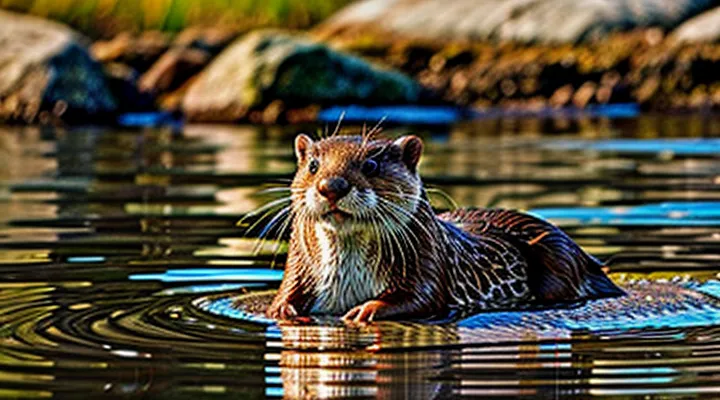
The term “water rat” is frequently applied to otters, leading to a persistent identification error. This mislabeling appears in popular media, casual conversation, and some educational materials, despite clear biological distinctions.
Otters belong to the family Mustelidae, order Carnivora, and exhibit adaptations such as webbed feet, dense water‑repellent fur, and a diet rich in fish and crustaceans. In contrast, true water rats—species of the genus Rattus or Hydromys—are rodents, possess fur lacking the specialized oil glands of otters, and consume a broader range of plant and animal matter.
Key differences:
- Taxonomy: Mustelid (otter) vs. rodent (water rat).
- Morphology: Streamlined body, webbed hind limbs, flattened tail (otter) versus more generalized rodent shape and tail.
- Habitat use: Otters spend extensive time swimming and diving; water rats occupy riverbanks and occasionally enter water but are not as aquatic.
- Behavior: Otters display complex social structures and vocalizations; water rats are typically solitary and less vocal.
The misconception originates from early European explorers who described unfamiliar aquatic mammals using familiar terrestrial terms. Subsequent translations perpetuated the label, embedding it in regional vernaculars.
Correct usage separates the two groups, reserves “otter” for mustelids, and reserves “water rat” for the specific rodent species. This precision improves scientific communication and public understanding.
Why the Mix-Up Occurs
The confusion between the terms “water rat” and “otter” stems from several intersecting factors.
- Common‑name overlap – Early naturalists applied the label “water rat” to various semi‑aquatic rodents, while local populations also used the same phrase for otters, creating parallel vernacular usage.
- Geographic variation – In some regions the name refers exclusively to the native water vole, whereas elsewhere it denotes the Eurasian otter, causing regional inconsistency.
- Morphological similarity – Both groups exhibit streamlined bodies, webbed feet, and dense fur, leading observers unfamiliar with taxonomic details to group them together.
- Historical taxonomy – Early classifications placed otters within the Mustelidae family, distinct from rodents, but older literature sometimes blended the categories, preserving the ambiguity.
- Translation errors – Non‑English sources frequently translate the Latin Lutra as “water rat,” propagating the mix‑up across languages and scientific publications.
These elements combine to produce persistent misidentification in field reports, educational materials, and popular media.
Water Rat: The True Identity
Physical Characteristics of the Water Rat
Size and Appearance
The terms “water rat” and “otter” often refer to distinct semi‑aquatic mammals, yet their physical dimensions and external features sometimes cause confusion. Accurate identification hinges on measurable traits.
Body length of true water rats (genus Arvicola) typically ranges from 12 to 20 cm, with a tail adding another 8 to 12 cm. European otters (Lutra lutra) exceed 70 cm in head‑to‑body length, and their muscular tails can reach 50 cm. Weight reflects this disparity: water rats weigh 100–250 g, while otters range from 5 to 15 kg.
Key appearance markers include:
- Fur texture – Water rats possess short, dense fur that repels water but appears matte. Otters display thicker, oily coats that create a glossy sheen.
- Head shape – Water rats have a rounded skull with a blunt muzzle; otters feature a streamlined skull and elongated snout adapted for catching fish.
- Foot structure – Water rats’ hind feet are partially webbed, supporting modest swimming. Otters exhibit fully webbed feet with powerful claws, enabling agile propulsion.
- Tail form – The water rat’s tail is relatively thin and tapered, serving balance on land. Otters possess a broad, flattened tail that functions as a rudder underwater.
These measurable differences provide a reliable basis for distinguishing the two groups, eliminating ambiguity caused by overlapping common names.
Distinctive Features
The term “water rat” is often applied to several semi‑aquatic rodents, whereas “otter” designates members of the family Mustelidae. The two groups occupy separate taxonomic categories, exhibit distinct anatomical adaptations, and follow different ecological strategies.
- Body shape: otters possess streamlined torsos, long, muscular tails and webbed feet; water rats retain a more cylindrical body, short tail and relatively simple digits.
- Fur: otter pelage is dense, water‑repellent and typically darker; water rat fur is coarser, less oily, and varies from brown to gray.
- Dentition: otters have sharp, carnivorous teeth suited for fish; water rats display omnivorous dentition with flatter molars for plant material.
Behavioral traits also diverge. Otters hunt actively, using tactile whiskers and keen vision to capture fish and crustaceans. Water rats forage opportunistically, consuming insects, seeds and occasional aquatic prey, and they spend more time on land than in water.
Habitat preferences differ. Otters favor clean rivers, lakes and coastal zones with abundant fish stocks. Water rats inhabit slower‑moving streams, marshes and flood‑plain wetlands where vegetation provides cover and food.
Conservation assessments reflect these distinctions. Many otter species are listed as vulnerable or endangered due to habitat degradation and pollution. Water rat populations generally show greater resilience, though some regional subspecies face localized threats.
Habitat and Behavior
Preferred Environments
The terminology surrounding semi‑aquatic mammals often leads to confusion, particularly when distinguishing between the species commonly called water rats and those identified as otters. Both groups occupy habitats that provide abundant water, but their environmental preferences differ in measurable ways.
Water rats thrive in habitats where fresh water combines with dense vegetation. Typical settings include:
- Slow‑moving rivers with overhanging banks
- Marshes and swamps rich in emergent plants
- Lakeshores that offer both open water and shelter among reeds
- Coastal estuaries where brackish conditions support diverse prey
These environments supply the cover needed for burrowing, foraging for crustaceans, and evading predators. The species’ physiological adaptations, such as webbed hind feet and a water‑tight fur coat, enable efficient swimming while retaining the ability to navigate tight, vegetated spaces.
Otters, by contrast, exhibit a broader range of aquatic habitats. River otters favor clear, fast‑flowing streams with rocky substrates that facilitate diving and catching fish. Sea otters are specialized for marine coastal zones, often inhabiting kelp forests and nearshore waters where they can exploit shellfish populations. Some otter species also occupy freshwater lakes, but they generally require open water surfaces for long‑distance travel and foraging.
The distinction in preferred environments reflects divergent evolutionary strategies: water rats prioritize concealed, vegetated freshwater zones, whereas otters exploit a spectrum from pristine rivers to coastal marine ecosystems. Understanding these preferences clarifies the ecological niches each group occupies, thereby reducing nomenclatural ambiguity.
Dietary Habits
The animal commonly referred to as a “water rat” is the Australian water vole (Hydromys chrysogaster), while the term “otter” applies to members of the family Mustelidae, such as the Eurasian otter (Lutra lutra). Both groups are semi‑aquatic predators, yet their diets differ markedly.
The water vole exploits shallow freshwater habitats. Its diet consists primarily of:
- Aquatic and marginal vegetation (young shoots, leaves, tubers);
- Small invertebrates (freshwater insects, crustaceans, mollusks);
- Occasionally fish fry and amphibian larvae when available.
In contrast, otters are obligate carnivores. Their feeding pattern includes:
- Fish of various sizes, especially species with high fat content;
- Crustaceans (crabs, crayfish);
- Amphibians and reptiles;
- Small mammals and birds, captured during shoreline forays;
- Scavenged carrion when opportunistic.
Digestive adaptations reflect these preferences. Water voles possess a relatively long gut suited for processing plant material and chitinous exoskeletons. Otters have a short, highly acidic stomach that rapidly breaks down protein and fat, enabling efficient absorption of nutrients from vertebrate prey.
Seasonal shifts influence intake. During winter, water voles increase consumption of stored plant matter and benthic invertebrates, while otters rely more heavily on fish species that remain active under ice or on carrion. Both species exhibit opportunistic behavior, but the otter’s diet remains dominated by animal tissue, whereas the water vole maintains a balanced mix of plant and animal sources.
Common Names and Taxonomy
The terms “water rat” and “otter” refer to distinct groups of semi‑aquatic mammals, yet common language often conflates them. “Water rat” is a colloquial label applied to several rodent species that inhabit wetlands, notably the Australian Hydromys chrysogaster (Australian swamp rat) and the African Nectogale elegans (elegant water vole). In contrast, “otter” designates members of the family Lutrinae, carnivorous mammals adapted for swimming and hunting fish. The overlap arises because both groups share similar habitats and behaviors, prompting lay observers to use analogous descriptors.
Taxonomic placement clarifies the divergence:
- Rodent “water rats”
- Kingdom Animalia
- Phylum Chordata
- Class Mammalia
- Order Rodentia
- Family Muridae (or Cricetidae for some species)
- Genus Hydromys, Nectogale, etc.
- Otters
- Kingdom Animalia
- Phylum Chordata
- Class Mammalia
- Order Carnivora
- Family Lutrinae
- Genus Lutra, Enhydra, Lontra, among others
Scientific names provide precision that common names lack, preventing misidentification in research, conservation, and regulation. When communicating about these animals, referencing the binomial nomenclature eliminates ambiguity and aligns discussion with established taxonomic frameworks.
Otter: A Separate Species
Physical Characteristics of the Otter
Size and Appearance
The mammals commonly called “water rat” and “otter” differ markedly in body dimensions and visual characteristics.
The water rat typically measures 30–40 cm in head‑body length, with a tail adding another 20–30 cm. Adult weight ranges from 400 g to 1 kg. Its fur is dense, dark brown to black, and the tail is flattened laterally, aiding swimming. The head is rounded, ears small and often concealed by fur, and the whiskers are short.
In contrast, an otter displays a head‑body length of 60–90 cm, plus a muscular tail of 30–45 cm. Adult weight varies between 5 kg and 14 kg, depending on species. The coat is sleek, ranging from brown to gray, with a lighter throat patch in many species. The tail is thick and tapered, not flattened. Ears are visible, and the facial mask is pronounced in several otter species.
Key comparative points:
- Length (head‑body): water rat ≈ 30–40 cm; otter ≈ 60–90 cm
- Tail length: water rat ≈ 20–30 cm, laterally flattened; otter ≈ 30–45 cm, tapered
- Weight: water rat ≈ 0.4–1 kg; otter ≈ 5–14 kg
- Fur coloration: water rat uniformly dark; otter variable with possible lighter throat or chest patches
- Ear visibility: water rat ears hidden; otter ears conspicuous
These measurements and traits provide a clear basis for distinguishing the two groups despite overlapping habitat terminology.
Adaptations for Aquatic Life
Otters, frequently mislabeled as water rats, exhibit a suite of morphological and physiological traits that enable efficient existence in aquatic environments.
Their bodies are elongated and tapered, reducing drag while swimming. Muscular, webbed hind feet generate propulsion, complemented by a laterally flattened tail that provides steering and thrust. The forelimbs retain dexterity for handling prey and constructing nests, illustrating a balance between aquatic performance and terrestrial maneuverability.
A dense undercoat, overlain by water‑repellent guard hairs, maintains insulation even when the animal’s skin is wet. This fur structure traps air, creating a thin insulating layer that preserves core temperature during prolonged immersion.
Respiratory adaptations include enlarged lungs and a high concentration of myoglobin in skeletal muscles, allowing extended submersion periods. Otters can close their nostrils and ears securely, preventing water entry while diving.
Sensory systems are optimized for underwater detection. Vibrissae (whiskers) transmit minute water movements, enabling precise localization of prey. Eyes possess a reflective layer that enhances vision in low‑light aquatic settings.
Key adaptations summarized:
- Streamlined, torpedo‑shaped body
- Webbed hind feet and flattened tail for propulsion and steering
- Dual‑layer fur with air‑trapping properties for insulation
- Enlarged lungs and abundant myoglobin for extended dives
- Sealed nostrils and ear canals to block water ingress
- Highly sensitive whiskers and reflective eye structures for prey detection
Collectively, these features illustrate how otters thrive in both freshwater and marine habitats, despite the frequent confusion surrounding their common name.
Habitat and Behavior
Geographic Distribution
The term “water rat” commonly refers to members of the genus Hydromys and the closely related Nectogale species, while “otter” designates members of the family Mustelidae within the subfamily Lutrinae. Their ranges rarely overlap, reflecting distinct evolutionary histories.
Water rats inhabit:
- New Guinea’s lowland rainforests and mountain streams
- Eastern Australia, primarily in coastal rivers of Queensland and New South Wales
- Islands of the Indonesian archipelago, especially Sulawesi and the Moluccas
Otters occupy:
- Freshwater systems across Europe, Asia, and North America, including rivers, lakes, and wetlands
- Coastal marine environments of temperate and tropical seas, extending from the Atlantic coasts of Europe and Africa to the Pacific shores of Japan and the Americas
- Isolated populations in South America’s Amazon basin and Africa’s Nile and Congo basins
The separation of these groups results from habitat preferences: water rats favor densely vegetated, fast‑flowing streams in tropical regions, whereas otters adapt to a broader spectrum of freshwater and marine habitats across temperate and subtropical zones.
Social Structures
The naming debate between water rats and otters often obscures the distinct social organization each group displays. Understanding these patterns clarifies identification and informs conservation efforts.
Water rats, primarily species of the genus Nectogale and Arvicola, maintain small, fluid assemblages. Individuals occupy overlapping home ranges, with males defending limited territories that contain multiple female burrows. Breeding pairs form seasonally; females raise litters alone, and offspring disperse shortly after weaning. Social interactions center on scent marking and brief vocal exchanges, without long‑term cooperative behavior.
Otters, represented by Lutrinae species such as the Eurasian otter (Lutra lutra) and sea otter (Enhydra lutris), exhibit more stable family units. Typical groups consist of a breeding pair and their dependent young, occasionally joined by juveniles from previous litters. Cooperative hunting, mutual grooming, and coordinated defense of dens are common. Some coastal species form larger aggregations during feeding events, yet retain clear parental roles.
Key contrasts:
- Group stability: transient for water rats, persistent for otters.
- Parental care: solitary female effort in water rats, biparental investment in otters.
- Communication: limited scent‑based signals in water rats, extensive vocal and tactile exchanges in otters.
- Territoriality: male‑centric in water rats, pair‑based in otters.
These structural differences reinforce taxonomic distinctions and aid field researchers in correctly assigning observations to the appropriate species.
Types of Otters
Eurasian Otter
The Eurasian otter (Lutra lutra) is the species most frequently implicated in the “water rat” versus “otter” naming debate. It inhabits rivers, lakes, and coastal waters across Europe and much of Asia, preferring clean, well‑oxygenated habitats with abundant fish.
Physically, the Eurasian otter displays a streamlined body, webbed feet, and a dense, water‑repellent coat. Its tail is thick and tapered, contrasting with the slender, hairless tail of the semi‑aquatic rodent commonly called a water rat. Dental structure further separates the two: otters possess carnivorous dentition suited for catching fish, whereas water rats have omnivorous teeth adapted to a broader diet.
Key distinctions relevant to the naming confusion:
- Taxonomy: Mammalia → Carnivora → Mustelidae → Lutra lutra (otter).
- Diet: Primarily piscivorous; occasional amphibians and crustaceans.
- Behavior: Solitary or in small pairs; extensive use of latrines along waterways.
- Conservation status: Near‑threatened; populations decline where water quality deteriorates.
The term “water rat” is applied locally to several rodent species, such as Rattus norvegicus (brown rat) or Nectomys spp., which differ markedly from the otter in morphology, ecology, and taxonomy. Mislabeling arises from superficial observations of both animals swimming and hunting near water, yet scientific classification and anatomical traits provide clear separation.
Understanding these differences resolves the ambiguity in common language and supports accurate communication in wildlife management, research, and public education.
North American River Otter
The North American river otter (Lontra canadensis) is a semi‑aquatic mustelid native to rivers, lakes, and coastal waters across the continent. It possesses a streamlined body, dense waterproof fur, and webbed feet, adaptations that enable efficient swimming and diving. Adult size ranges from 50 cm to 80 cm in body length, with a tail adding up to 40 cm; weight varies between 5 kg and 14 kg.
Key characteristics that differentiate the species from other small aquatic mammals often labeled “water rats” include:
- Muscular, tapered tail used for steering rather than a rat‑like, hairless tail.
- Large, dark eyes and whiskers that enhance underwater vision and tactile sensing.
- Dental formula of 3/3 incisors, 1/1 canines, 4/4 premolars, and 1/1 molars, suited for a diet of fish, amphibians, and crustaceans.
- Vocal repertoire featuring chirps, whistles, and growls, unlike the squeaks typical of true rodents.
Habitat preference centers on clean, well‑oxygenated waterways with abundant prey and shelter such as fallen logs or dense vegetation. Population health serves as an indicator of freshwater ecosystem quality; declines often correlate with pollution, habitat fragmentation, or overfishing.
Conservation status, classified as Least Concern by the IUCN, reflects a broad distribution and successful reintroduction programs in parts of the United States and Canada. Ongoing management emphasizes water‑quality monitoring, protection of riparian zones, and mitigation of road mortality.
Understanding the distinct morphology, behavior, and ecological role of Lontra canadensis resolves the common misnomer that equates otters with water rats, reinforcing accurate scientific communication.
Sea Otter
Sea otters (Enhydra lutris) are marine mammals native to the northern Pacific coast, ranging from Alaska to California and across to Japan and Russia. They belong to the Mustelidae family, which also includes weasels, ferrets, and badgers, distinguishing them from the semi‑aquatic rodents sometimes called “water rats.” Their scientific name reflects their true taxonomic position, eliminating confusion caused by colloquial labels.
Physical traits include a dense, water‑repellent fur—the thickest of any animal—measuring up to 1 cm per hair. Adult body length averages 1.2–1.5 m, with weight between 14 and 45 kg. Adaptations for diving comprise webbed hind feet, a flattened tail for propulsion, and a high metabolic rate that requires frequent feeding.
Key ecological aspects:
- Diet consists primarily of hard‑shelled invertebrates such as sea urchins, crabs, and mollusks; otters use rocks as tools to crack shells.
- Home ranges are coastal kelp forests and rocky shorelines, where they create “rafts” of kelp to anchor themselves while resting.
- Predators include orcas, sea lions, and great white sharks; otters rely on agility and dense fur for protection.
Conservation status is listed as “Threatened” under the U.S. Endangered Species Act. Primary threats involve historic fur trade exploitation, oil spills, and habitat degradation. Current management strategies focus on habitat preservation, pollution control, and regulated fisheries to maintain prey availability.
Key Differences and Distinctions
Anatomical Contrasts
Tail Shape
The tail of a water vole (often called a water rat) is long, slender, and almost uniformly cylindrical. Its surface is covered with fine, dense fur that gives a smooth appearance and provides little propulsion in water. Muscular development is modest, reflecting the animal’s reliance on terrestrial locomotion and occasional swimming.
In contrast, an otter’s tail is robust, laterally flattened, and typically broader at the base. The flattening creates a paddle‑like shape that enhances thrust during aquatic movement. The tail is heavily muscled, allowing rapid, forceful strokes that contribute significantly to the animal’s swimming speed and maneuverability.
Key morphological distinctions:
- Cross‑section: water vole – round; otter – dorsoventrally flattened.
- Length relative to body: water vole – proportionally longer; otter – shorter but thicker.
- Fur density: water vole – dense, uniform; otter – coarser, with a distinct dorsal‑ventral gradient.
- Muscle mass: water vole – minimal; otter – well‑developed, especially in the caudal region.
These anatomical differences reflect divergent ecological strategies: the water vole’s tail supports limited swimming and balances the body on land, while the otter’s tail functions as a primary propulsive organ in aquatic environments.
Head and Snout
The head of an otter is broad, with a relatively flat cranial vault and pronounced cheekbones that support strong jaw muscles. The muzzle is short, ending in a rounded tip, and the eyes sit high on the skull, giving a wide field of vision suited for surface hunting. Fur on the head is dense and water‑repellent, often darker than the body coat.
In contrast, the water rat possesses a narrower skull and a more elongated head. The snout extends noticeably beyond the eye line, forming a pointed rostrum adapted for probing underwater vegetation and small invertebrates. Facial whiskers are longer and more numerous, enhancing tactile detection in murky waters.
Key morphological distinctions:
- Skull width: otter – wide; water rat – narrow.
- Muzzle length: otter – short, rounded; water rat – long, tapered.
- Eye placement: otter – high, lateral; water rat – lower, forward‑oriented.
- Fur texture on head: otter – dense, oily; water rat – softer, less oily.
These characteristics provide reliable criteria for separating the two species in field observations and taxonomic references.
Fur Texture
The fur of the animal commonly called a water rat differs markedly from that of an otter, a distinction that clarifies the naming confusion.
Water rats possess a short, coarse outer layer that resists abrasion when moving through dense vegetation and shallow streams. The undercoat is sparse, providing minimal insulation; the coat overall offers limited waterproofing, relying on frequent grooming to shed excess moisture.
Otters exhibit a dense, layered pelage. Guard hairs are long and oily, shedding water on the surface, while a thick undercoat traps air for insulation. The fur’s structure creates a continuous barrier that maintains body heat even during prolonged submersion.
Key texture attributes:
- Length: water rat – short; otter – long guard hairs.
- Density: water rat – low; otter – high.
- Oil content: water rat – minimal; otter – abundant, enhancing water repellency.
- Insulation: water rat – limited; otter – superior, due to trapped air in the undercoat.
Behavioral Differences
Swimming Styles
The terminology debate surrounding semi‑aquatic mammals often mixes the common names “water rat” and “otter,” yet their locomotion in water differs markedly. Understanding these differences clarifies identification and informs ecological studies.
Otters employ a fore‑limb‑dominant propulsion. Muscular shoulders generate powerful strokes, while a streamlined torso reduces drag. The hind limbs assist in steering, and the tail provides occasional thrust during rapid maneuvers. This style supports sustained submergence and high‑speed pursuit of prey.
Water rats rely primarily on tail‑driven movement. A laterally flattened tail sweeps rhythmically, creating thrust that pushes the body forward. The fore limbs act as rudders, allowing precise adjustments near the water’s surface. This method favors short bursts of speed and maneuverability among vegetation.
Key characteristics of each swimming style:
- Fore‑limb thrust (otter)
- Continuous paddle strokes
- Low drag torso
- Extended dive capability
- Tail sweep (water rat)
- Lateral tail motion
- Surface‑oriented locomotion
- Rapid directional changes
Recognizing these distinct swimming mechanics resolves much of the confusion generated by overlapping common names and supports accurate species classification.
Diet and Hunting Techniques
The semi‑aquatic mustelids often referred to as water rats or otters exhibit diets closely tied to their habitats. Freshwater populations consume primarily fish, supplemented by amphibians, crustaceans, and occasionally small mammals. Marine relatives rely heavily on fish and cephalopods, adding crustaceans and carrion when available. Typical prey items include:
- Small to medium fish (e.g., minnows, trout, herring)
- Amphibians (frogs, tadpoles)
- Crustaceans (crayfish, crabs)
- Cephalopods (squid, octopus)
- Terrestrial vertebrates (rodents, birds)
Hunting techniques reflect morphological adaptations. Stream‑dwelling forms employ tactile foraging, using whisker sensitivity to locate prey in turbid water, followed by rapid, sinusoidal body undulations to capture fish. Coastal variants execute pursuit dives, relying on streamlined bodies and strong forelimb strokes to chase agile fish. Both groups use a combination of stalking on land, ambush from submerged perches, and opportunistic scavenging. Prey handling involves precise bite placement to immobilize and dismember, minimizing loss of slippery catches.
Ecological Roles
The terms “water rat” and “otter” refer to two distinct mammals that share riparian habitats but occupy separate niches within freshwater ecosystems.
The semi‑aquatic rodent, commonly called a water rat, contributes to ecosystem dynamics through several mechanisms:
- Consumes aquatic insects, crustaceans, and small mollusks, thereby regulating invertebrate populations.
- Serves as prey for birds of prey, larger fish, and carnivorous mammals, transferring energy up the food chain.
- Transports plant material and seeds between water and land, facilitating vegetative spread along shorelines.
- Excretes nitrogen‑rich waste that enriches water chemistry and supports primary productivity.
The otter, a member of the Mustelidae family, influences freshwater systems in a different capacity:
- Predates on fish, amphibians, and crustaceans, exerting top‑down control that shapes community composition.
- Reduces overabundant fish species, preventing trophic cascades that could destabilize habitat structure.
- Leaves discarded prey parts that create microhabitats for scavengers and detritivores.
- Exhibits sensitivity to pollutants; its presence often signals high water quality and ecosystem health.
Both species occupy overlapping territories yet differ markedly in trophic level and functional impact. The water rat operates primarily as a mid‑level consumer and prey item, while the otter functions as an apex predator and bioindicator. Recognizing these divergent roles is essential for accurate species management, habitat restoration, and biodiversity assessments in freshwater environments.
Cultural Perceptions and Folklore
Water Rats in Literature and Media
Water rats and otters have appeared repeatedly in narrative traditions, shaping audience perception of semi‑aquatic mammals. Authors often select these creatures to embody resourcefulness, adaptability, or mischievous charm, thereby reinforcing characteristic traits through plot devices.
Literary examples include:
- Kenneth Grahame’s “The Wind in the Willows” – the character Ratty, a water vole mistakenly identified as a rat, illustrates riverine lifestyle and camaraderie.
- E.B. White’s “Charlotte’s Web” – the pig’s companion, the rat, provides comic relief while navigating farm waterways.
- J.K. Rowling’s “Harry Potter” series – the magical creature called “water rat” appears in the Triwizard Tournament, emphasizing agility in water challenges.
Cinematic and broadcast portrayals feature:
- The animated series “The Adventures of Otter” – otter protagonists demonstrate problem‑solving skills within coastal environments.
- Documentary “River Monsters” – otter footage underscores predatory behavior and ecological significance.
- Japanese film “The Water Rat” (1995) – a folkloric narrative where a water rat guides a lost traveler, highlighting cultural symbolism.
Graphic media also exploit the motif. In the comic strip “Otter Tales,” visual humor derives from exaggerated swimming techniques, while the graphic novel “Rats of the River” employs stark art to explore environmental degradation.
Across mediums, the recurring presence of water‑adapted rodents serves as a narrative tool for illustrating resilience, environmental interaction, and anthropomorphic storytelling.
Otters in Mythology and Conservation Efforts
Otters appear repeatedly in ancient narratives, symbolizing agility, cunning, and the boundary between land and water. In Norse lore, the sea‑god Njörðr is associated with otter‑like creatures that guide sailors. Japanese folklore features the kawauso as a mischievous water spirit that rewards respectful fishermen. Celtic myths recount otters as guardians of rivers, often linked to otherworldly journeys. Indigenous cultures of North America describe the river otter as a trickster figure, teaching lessons about adaptability.
These mythic portrayals influence contemporary attitudes toward otter protection. Recognizing cultural significance strengthens public support for habitat preservation and legal safeguards. Conservation programs now integrate traditional knowledge with scientific monitoring to address declining populations.
Key actions in current otter conservation:
- Protection of riparian zones through legal designation of wildlife corridors.
- Restoration of fish stocks to ensure adequate prey availability.
- Anti‑poaching patrols combined with community education initiatives.
- Use of non‑invasive genetic sampling to track population health.
- Collaboration with indigenous groups to incorporate ancestral stewardship practices.
Effective implementation of these measures has led to measurable rebounds in several European and Asian otter populations, demonstrating the impact of coordinated, evidence‑based management. Continued investment in habitat connectivity and public outreach remains essential for sustaining otter species across their historic ranges.